Buyer Fit Snapshot
| Best fit | Custom Poly Mailers with Coextruded Film projects where brand print, material claims, artwork control, MOQ, and repeat-order consistency need to be specified before quoting. |
|---|---|
| Quote inputs | Share finished size, material target, print colors, finish, packing count, annual reorder estimate, ship-to region, and any compliance wording. |
| Proofing check | Approve dieline scale, logo placement, barcode or warning zones, color tolerance, closure strength, and carton packing before bulk production. |
| Main risk | Vague material claims, crowded artwork, missing packing details, or unclear freight terms can make a low unit price expensive after revisions. |
Fast answer: Custom Poly Mailers with Coextruded Film: Film, Print, MOQ, and Carton Packing should be specified like a repeatable production item. The safest quote records material, print method, finish, artwork proof, packing count, and reorder notes in one written spec.
Production checks before approval
Compare the actual filled-product size with the drawing, then confirm tolerance on folds, seals, hang holes, label areas, and retail display edges. Reserve space for logos, QR codes, warning copy, and material claims before decorative graphics fill the panel.
Quote comparison points
Review material grade, print process, finish, sampling route, tooling charges, carton quantity, and freight assumptions side by side. A quote is only useful when the supplier can repeat the same color, closure quality, and packing count on the next order.
Custom Poly Mailers with coextruded film solve a simple but costly problem: a light shipment still has to survive a network built for speed, friction, and occasional indifference. The right mailer protects the product, holds its shape under pressure, and reduces the damage claims that quietly drain margin from otherwise healthy orders. If you are comparing options across Custom Packaging Products, this is one of the clearer places to spend carefully because the bag looks plain while the performance details do most of the work.
Brands choose this format for practical reasons, not trendiness. Coextruded film usually offers a better balance of puncture resistance, flexibility, print quality, and seal reliability than a basic single-layer bag. That matters in the real world, where a customer may open the parcel in a lobby, a stockroom, or a kitchen counter with no patience left for packaging that feels flimsy. A mailer is transport packaging, yes. It is also the first physical proof that someone thought through the shipment instead of treating it as an afterthought. When it looks thin or poorly finished, the brand starts losing credibility before the product is even visible.
What custom poly mailers with coextruded film actually are
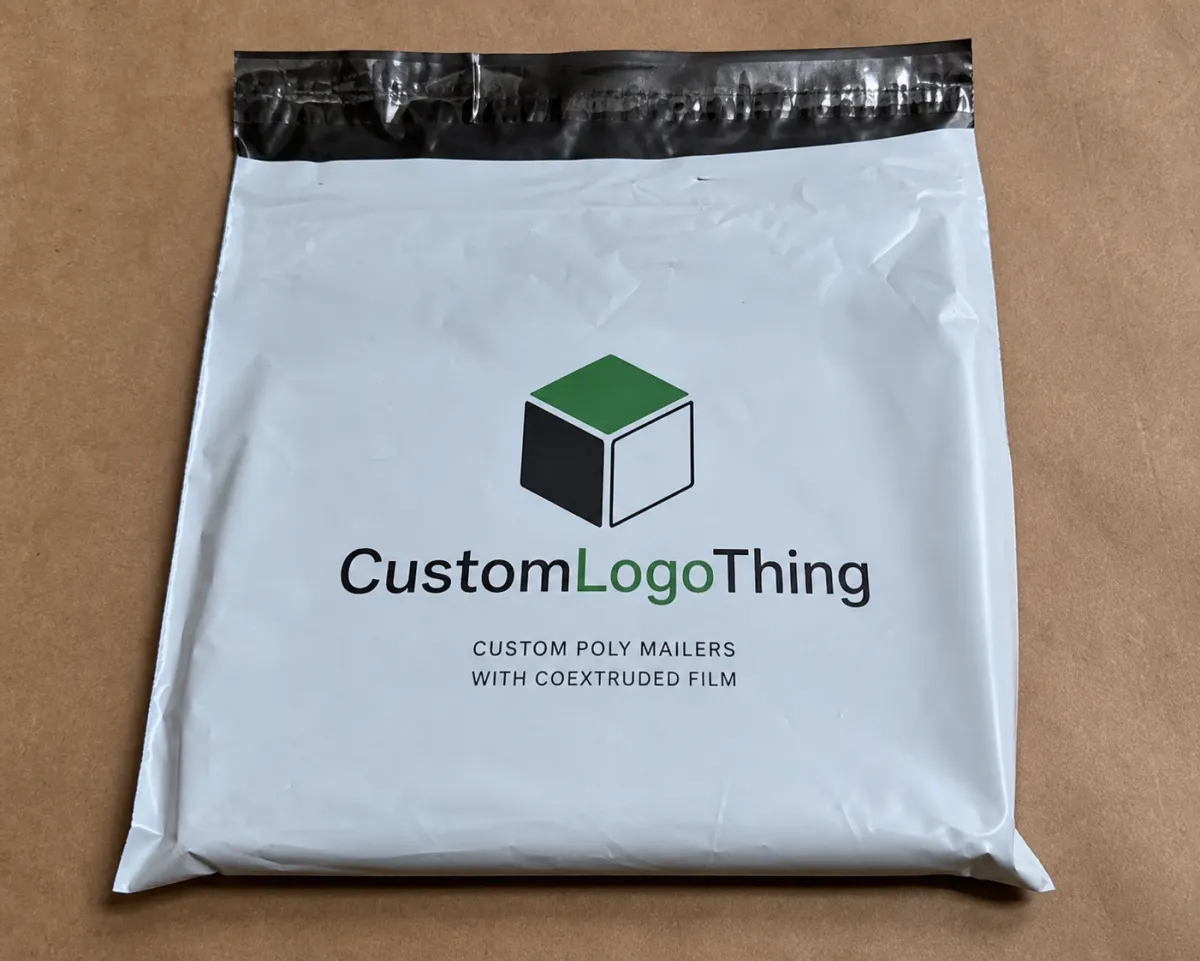
Custom Poly Mailers with coextruded film are shipping bags made from multiple bonded layers of plastic film rather than one uniform sheet. Each layer can be tuned for a specific job, which is why these mailers often feel more controlled in the hand than simple monolayer bags. One layer can help with print reception. Another can add toughness. Another can improve the seal so it behaves predictably instead of peeling apart after a humid day or a rushed packing shift.
That layered structure matters because shipping damage rarely comes from a single dramatic hit. More often, it comes from a chain of smaller stresses: corners rubbing, seams flexing, a hard edge nudging the film, or a bag stretching beyond what the material can handle. A coextruded structure resists those smaller failures better than a single-layer bag, especially for apparel, soft goods, accessories, and other products that do not need a rigid carton. The result is a mailer that looks clean and still behaves like packaging with some discipline.
Compared with a basic monolayer mailer, coextruded film usually brings better puncture resistance and less stretch failure. That sounds technical, but the buyer-facing meaning is easy to see: the bag is less likely to tear when someone packs it aggressively or when a shipment gets handled roughly in transit. It also tends to feel more consistent from unit to unit, which sounds minor until you realize that customers notice touch before they notice print. For brands already investing in custom printed boxes or polished retail packaging, this is the mailer equivalent of finishing the job properly.
The practical question is not whether the bag can hold the product for a few seconds on a packing table. It is whether the mailer can hold the product and still look intentional after the trip. That is the line that matters. The cheapest option often looks acceptable on paper and then behaves like it was designed by someone who never packed orders in volume. A difference of even one cent per mailer can look trivial until you multiply it across 25,000 orders and compare it with a return rate that creeps up by just 1 percent.
For a small apparel brand shipping folded tees, that difference may show up as fewer crushed corners and cleaner presentation on arrival. For a cosmetics seller, it may mean a printed pouch that keeps the brand front and center while protecting sharp-edged boxes from rubbing through the side seam. For a subscription box program, it may mean fewer last-mile complaints from customers who expect the outer package to look as finished as the contents inside.
How coextruded film works inside a poly mailer
Think of the film stack in plain language. The outer layer handles appearance and print. The middle layer carries much of the strength. The inner layer helps the seal behave the way it should. That is not the only possible structure, but it is the easiest way to understand why coextruded film works better than a single sheet trying to do every job at once. One layer can be optimized for ink adhesion or opacity, another for puncture resistance, and another for slip or seal behavior.
That division of labor is the point. A film that prints beautifully is not automatically durable. A film that feels thick is not automatically good. A seal that looks fine in a sample can still fail if the inner layer does not cooperate under heat, pressure, or rough handling. Layered construction lets manufacturers balance those tradeoffs instead of betting everything on thickness, which is a shortcut buyers still get handed far too often.
A monolayer bag is simpler, and sometimes simple is enough. Low-risk soft goods can ship that way without much drama. Once the order needs better puncture resistance, less awkward stretch, or a more premium feel, coextruded film starts making more sense. You are not paying only for plastic. You are paying for how the layers behave under stress, and that is where the value sits.
Seal performance deserves equal attention. A strong film with a weak closure is still a weak package. Peel-and-seal adhesive, tamper evidence, and seal width all affect whether the bag survives the trip. If the seal area is narrow or the adhesive is inconsistent, the mailer can fail even when the film itself is sound. A supplier worth listening to will talk about the whole system, not just the thickness number.
For structured package testing, the ISTA shipping test standards are a practical reference. You do not need a lab coat, but you do need enough vocabulary to ask for drop handling, compression, and abrasion checks that reflect real transit, not wishful thinking. A few minutes of testing beats a week of replacements, refunds, and customer complaints. The math turns ugly quickly: 200 damaged shipments in a 20,000-unit run is not a rounding error, and 50 damaged shipments in a launch batch can distort the whole first impression.
One more practical point: print construction and seal behavior are linked more often than buyers expect. Heavy ink coverage can change how the film feels in hand, and that matters if the artwork sits close to a fold, seam, or heat-seal zone. A seasoned supplier will flag those risks early. A weak one will wait until proofing, after the layout has already been built around the wrong assumptions.
Cost, pricing, and MOQ: what changes your quote
Pricing for custom poly mailers with coextruded film usually comes down to a handful of variables, and most of them are easy to predict once you know what to ask. Film gauge is one of the first. Bag size matters just as much. Then come print coverage, number of colors, seal style, finish, and extras such as tear strips, extra opacity, or custom sizing. Freight and outbound packing can move the total in a way that surprises buyers who only compare unit cost.
MOQ changes the number too. Smaller runs cost more per bag because setup, film conversion, printing prep, and waste are spread across fewer pieces. That is ordinary manufacturing math, not a trick. A 3,000-piece order will almost always cost more per unit than a 10,000-piece run with the same spec. If a quote looks unusually low at a tiny quantity, something is being softened or omitted. Usually both.
| Mailer type | Typical structure | Best use | Typical unit price at 5,000 pcs | What you are really buying |
|---|---|---|---|---|
| Single-layer poly mailer | One film layer | Very light apparel or low-risk items | $0.07-$0.16 | Lowest cost, basic protection, less margin for rough handling |
| 2-layer coextruded mailer | Outer print layer + core strength layer | Most branded apparel and soft goods | $0.10-$0.24 | Better balance of print, toughness, and seal reliability |
| 3-layer coextruded mailer | Print layer + toughness layer + seal/support layer | Higher-value shipments or tougher handling | $0.14-$0.32 | More controlled performance, better feel, usually more consistent quality |
Those ranges are not fixed law. They move with size, gauge, artwork coverage, and the way the order is packed for shipment. Still, they are close enough to keep you from being dazzled by nonsense. For standard sizes around 6 x 9 to 10 x 13, a simple one- or two-color design often lands lower than a full-bleed, high-opacity build. Add matte finish, custom seals, or extra thickness and the quote climbs quickly. That is not a mystery. It is material plus labor.
There are savings available, though they are not hidden. Standard bag sizes usually cost less than custom dimensions. Fewer ink colors cost less than a full-color build. Simpler artwork is easier on the press. A clean, bold layout often looks better anyway, which irritates people who assume more decoration automatically equals more brand value. It usually does not. Clarity beats crowding in most mailer programs.
A bag that saves one cent and causes one return is not a savings. It is paperwork with a ribbon on it.
When you compare quotes, ask exactly what is included. Is artwork setup included? Are plates included? Is freight included? Is the quoted thickness the actual film gauge or just a marketing number? Is the seal width the same across all units? Those details matter because vague pricing often hides a vague build, and vague builds are where shipment problems live. Even a small ambiguity at the quoting stage can become a large expense later, especially once reprints and rush freight enter the conversation.
It also helps to ask for pricing at two or three quantity tiers rather than one. A jump from 5,000 to 10,000 pieces can change the unit economics enough to justify a slightly larger buy if storage and cash flow allow it. On the other hand, if your order volumes move unpredictably, a lower MOQ with a stable structure may be the safer choice. The right answer is rarely the cheapest line on the quote sheet. It is the one that fits the inventory plan without creating a pile of unused packaging.
Process and timeline: how an order moves from spec to shipment
A normal order starts with the brief, not the artwork. The brief should cover bag size, estimated product weight, closure type, print area, finish, quantity, and whether the mailer needs to work with inserts, tissue, or secondary product packaging. Skip that step and jump straight to design, and you end up drawing attractive graphics on a bag that may not fit the item properly. That is an expensive way to discover a simple mistake.
From there, the supplier usually handles artwork review, material confirmation, proof approval, production, packing, and shipping. Each step can add or remove time. Artwork revisions are a common delay. Material sourcing is another, especially if you want a specific gauge, finish, or opacity that is not part of the standard line. A more complex order needs a longer proof cycle because the details keep doing what details always do: they consume time and attention.
For straightforward custom poly mailers with coextruded film, the timeline often lands around 12-20 business days from proof approval to production completion, then shipping on top of that. A more customized spec usually lands closer to 18-30 business days, especially if there are multiple print colors or an unusual structure. Samples are often ready faster, though not always. Rush service is possible in some cases. It usually costs more, and it usually narrows the room for revision.
Rush production comes with tradeoffs: higher cost, fewer art changes, fewer finishing options, or tighter tolerance on schedule slips. That is not a supplier being dramatic. It is what happens when normal manufacturing work gets compressed. If your launch date is fixed, build in enough lead time to catch the small problems before they become expensive ones. The awkward truth is that most delays are not dramatic. They are a stack of little misses.
One practical rule helps more than it gets credit for: finalize the bag size before polishing the final artwork. The print area, bleed, and logo placement should be built around a real spec instead of a guess. If the dimensions change after design is finished, the layout may need to be reworked, and that can push the schedule. Clean timelines usually come from clean sequencing, not optimism.
For broader sourcing decisions, especially if you are comparing shipping pouches against other Custom Poly Mailers or other branded packaging formats, treat artwork approval like a checkpoint rather than a casual thumbs-up. Casual approvals are how production finds a way to surprise you.
If your team also cares about waste reduction or material selection across the rest of the line, the EPA materials management guidance is a sensible place to pressure-test assumptions. It will not choose your mailer spec for you, obviously, but it does help frame the bigger picture when you are balancing protection, cost, and waste. That wider view matters more than many sourcing conversations admit.
One reason buyers misread lead times is that they count only the press schedule and ignore the back-and-forth before production starts. A clear proof can move quickly. A proof with missing measurements, unclear Pantone targets, or a seal that lands too close to the artwork can sit in review while everyone waits for someone else to make the first useful decision. That is why the shortest projects are usually the ones with the cleanest inputs.
Step-by-step: choosing the right custom poly mailer spec
Start with what is actually going inside the bag. Not the idealized version where the product is perfectly folded, compressed by good intentions, and packed by someone with endless patience. Real packing is messier. A folded tee with a card insert behaves differently from a hoodie, a small accessory kit, or a cosmetic item with sharp corners. Size the mailer around the packed version, then leave a little room so the seal is not forced shut under stress.
For apparel, many brands land around 2.0-2.5 mil for lighter items and 2.5-3.0 mil for heavier garments or programs with more frequent returns. For accessories or cosmetics, puncture resistance can matter more than weight suggests because corners, caps, and edges create pressure points. For slightly heavier retail packaging, stepping up the gauge and choosing a stronger seal is usually cheaper than paying for damage claims later. Boring decisions are often the ones that quietly save the most money.
Next, match the film construction to the job. A cleaner print surface helps branded packaging look sharper. A tougher core layer helps the bag survive rough handling. Better seal behavior matters if the mailer runs through fulfillment machinery or if the adhesive area gets touched during packing. If the shipment needs to open cleanly, a tear strip or easy-open feature can reduce the frustration that otherwise gets aimed at your brand. Customers rarely separate the packaging from the experience, even when they say they do.
- Size: Choose based on packed dimensions, not product dimensions alone.
- Gauge: Use the lightest gauge that still survives drop and puncture testing.
- Closure: Confirm whether you need peel-and-seal, self-seal, or a tear strip.
- Opacity: Decide how much content concealment you need for retail presentation and privacy.
- Print area: Make sure the logo, copy, and any regulatory marks fit without crowding.
Then look at the role the mailer plays inside the full program. If the bag is the only branded touchpoint, it may need to carry more visual weight. If you are already shipping in custom printed boxes for premium items, the mailer can be more restrained while still matching the same brand system. Good package branding is consistent, not noisy. The same color, logo treatment, and tone should feel deliberate across product packaging, inserts, and outer shipping materials. Consistency is often more persuasive than decoration.
At that point, ask for samples. Not one sample. A few. Put the options side by side and test fit, seal strength, print quality, and how the bag opens and closes. If the mailer is for e-commerce, try a few rough handling checks: shake it, drop it from table height, rub the print with a dry cloth, and see whether the seam stays intact. If the spec fails there, it is not a good bulk buy. It is a lesson with a unit cost.
That sample round is also the right time to compare your intended use against the supplier's advice. If they recommend a different gauge or closure type, ask why. A useful answer will point to load, print build, or seal behavior. A vague answer will sound confident without evidence. Those two things are not the same, even if they arrive in the same email.
For a brand shipping limited-edition apparel, the decision may lean toward a thicker film and a fuller print area because presentation matters as much as protection. For a high-volume basics line, the best spec may be a simpler build that performs consistently and keeps cost in check. The right answer changes with the product mix, the order frequency, and how often the parcel is likely to be handled by people who do not care about your brand at all. That is the reality packaging has to survive.
Common mistakes when ordering coextruded film mailers
The biggest mistake is judging the bag by thickness alone. Thickness matters, but it is not the whole story. Two mailers can carry the same gauge and still behave very differently because the film structure, seal area, and print layer are doing different jobs. A quote that only talks about thickness is a quote trying to keep you from asking the useful questions.
Seal failure is another common issue. The film can be fine while the closure is weak, which means the bag bursts, peels, or opens during handling. Seam bursts show up after shipping, not during the sales conversation, which is why they are so irritating. Print scuffing works the same way. The sample looks sharp, then the first few hundred miles of friction turn the logo into a faint memory. That is not a luxury problem. It is a brand problem.
Artwork timing causes trouble too. If you design the print before you finalize the size, placement can drift, bleed can get awkward, and logos can end up too close to fold lines or seal zones. That is especially true with mailers that have a clear front, a colored back, or a full-wrap design. The bag needs to be treated like a packaging surface with boundaries, not like a poster that forgot it has to fold.
Skipping samples is the last classic mistake, and it remains popular because people think they are saving time. They are not. They are postponing the cost of a bad decision. A sample shows whether the bag feels flimsy, opens cleanly, holds the product without strain, and survives basic abrasion. That is cheap insurance. Bulk regret is far more expensive.
There is also a softer but equally real mistake: approving a spec that does not match the channel. A mailer that works for direct-to-consumer apparel may be the wrong choice for wholesale replenishment, fulfillment center workflows, or products with sharp hardware. The pack-out environment matters. So does how the parcel is stored before it ships. A good spec should fit the actual operation, not an abstract version of it.
If you want a structured check before approval, use a short test list:
- Does the product fit without forcing the seams?
- Does the closure stay shut after handling and a simple drop test?
- Does the print keep its color and edge sharpness after rubbing?
- Does the bag feel consistent from unit to unit?
- Does the finished mailer still match the tone of the rest of the branded packaging?
The smartest buyers do not chase the lowest quote first. They compare structure, seal, and finish against the actual shipping risk. That is the difference between buying packaging and buying a future headache. A cheap bag that fails twice costs more than a better bag that works once.
Expert tips and next steps for custom poly mailers with coextruded film
Use side-by-side samples. Not because that sounds clever, but because your hand catches things the spec sheet will not. One mailer may feel stiffer and more premium. Another may open more cleanly. Another may keep print sharper even if the film thickness is nearly the same. Those differences matter at scale, because a bag that feels wrong in the hand usually feels wrong to the customer too.
Ask the supplier to spell out the film structure. A serious quote should say what each layer does, not just "durable film" and a smile. You want the gauge, the number of layers, the seal style, and whether the print is on the outer layer or protected in a way that reduces rub-off. If the answer stays vague, treat that as a warning. Vague specs lead to vague outcomes, and then everyone acts surprised when the shipment reflects that.
Create a short approval checklist before sign-off. Keep it boring and practical: size, color, print placement, finish, closure, and sample performance. If the team wants to add a last-minute flourish, make them explain what job the flourish is supposed to do. Decorative choices are easy to approve and hard to fix after production. Functional choices are the ones that save money and prevent friction later.
For brands tightening sustainability claims or trying to cut excess packaging, the conversation should stay concrete. Use the lightest structure that still passes real tests, and do not overbuild the mailer just because it feels safer on paper. Do not underbuild it just to chase the cheapest unit price either. The better answer usually sits in the middle, where performance and waste stay in check. If you need a wider lens on material choices and waste reduction, the EPA's materials management resources are worth a look.
Here is the shortest version of the buying process:
- Request samples in the sizes and print styles you are considering.
- Confirm MOQ, pricing bands, and any setup charges before you lock the artwork.
- Verify the film structure, seal type, and print durability in writing.
- Run a simple fit and handling test using your real product.
- Approve bulk production only after the mailer survives that test without drama.
That is the part most buyers already know, even if they do not say it out loud: custom poly mailers with coextruded film are worth buying when they help the package look better and survive shipping without adding fluff to the spec. If the sample passes fit, seal, and abrasion checks, and the quote makes sense against the actual production details, you are in a good place to move forward with Custom Poly Mailers that actually earn their keep.
The final decision should be grounded in three things: the product's packed dimensions, the route it will travel, and the impression you want customers to have before they touch the item itself. If those three align, the mailer is doing its job. If they do not, no amount of glossy artwork will fix the mismatch.
FAQs
What are custom poly mailers with coextruded film made of?
They are made from multiple bonded layers of plastic film, with each layer handling a different job such as print quality, toughness, or seal support. The structure is built to balance strength and flexibility instead of forcing one thick layer to do everything badly.
Are coextruded film poly mailers stronger than single-layer mailers?
Usually yes, because layered construction can improve puncture resistance, stretch control, and seal reliability. The real answer still depends on gauge, closure design, and how the mailer is used, so stronger is not automatic.
What affects the price of custom poly mailers with coextruded film the most?
Size, thickness, print coverage, number of colors, and MOQ are usually the biggest pricing levers. Special features like matte finishes, tear strips, or custom seals can push the quote up quickly.
How long does production usually take for custom coextruded film mailers?
Timeline depends on artwork readiness, sample approval, and whether materials are standard or need to be sourced. Rush jobs are possible sometimes, but they usually cost more and leave less room for changes.
What should I test before placing a bulk order?
Test fit, seal strength, print rub resistance, and how the bag holds up during drops or rough handling. If the mailer ships product cleanly and still looks branded after abrasion, you are in a much better position.
Do custom poly mailers with coextruded film always need a higher gauge?
No. A higher gauge can help, but the better choice depends on film structure, item shape, seal quality, and handling conditions. A well-designed lower-gauge mailer can outperform a poorly designed thicker one.

