Buyer Fit Snapshot
| Best fit | Custom Poly Mailers for Online Boutiques Better projects where brand print, material claims, artwork control, MOQ, and repeat-order consistency need to be specified before quoting. |
|---|---|
| Quote inputs | Share finished size, material target, print colors, finish, packing count, annual reorder estimate, ship-to region, and any compliance wording. |
| Proofing check | Approve dieline scale, logo placement, barcode or warning zones, color tolerance, closure strength, and carton packing before bulk production. |
| Main risk | Vague material claims, crowded artwork, missing packing details, or unclear freight terms can make a low unit price expensive after revisions. |
Fast answer: Custom Poly Mailers for Online Boutiques Better: Film, Print, MOQ, and Carton Packing should be specified like a repeatable production item. The safest quote records material, print method, finish, artwork proof, packing count, and reorder notes in one written spec.
Production checks before approval
Compare the actual filled-product size with the drawing, then confirm tolerance on folds, seals, hang holes, label areas, and retail display edges. Reserve space for logos, QR codes, warning copy, and material claims before decorative graphics fill the panel.
Quote comparison points
Review material grade, print process, finish, sampling route, tooling charges, carton quantity, and freight assumptions side by side. A quote is only useful when the supplier can repeat the same color, closure quality, and packing count on the next order.
Custom Poly Mailers for online boutiques tend to get treated like a style choice first and a shipping decision second. That order is backwards. A mailer has to protect soft goods, keep packing fast, and still look intentional enough to support the brand. If it does those three things well, it earns its place. If it only looks pretty in a mockup, it becomes expensive decoration.
The package is usually the first physical object a customer touches from the brand. Before they feel the fabric or judge the fit, they see the shipping pouch on a porch, at a front desk, or in a lobby pile of deliveries. A plain mailer says the order arrived. A branded one says someone planned for the experience. That difference is small in size and large in perception.
That is why Custom Poly Mailers for online boutiques matter so much for apparel, accessories, swimwear, and other foldable products. They are not the right answer for every catalog, and they should not be forced onto rigid or fragile items. But for soft goods, they can improve shipping efficiency and presentation at the same time. That combination is hard to beat.
Custom Poly Mailers for Online Boutiques: Why They Work
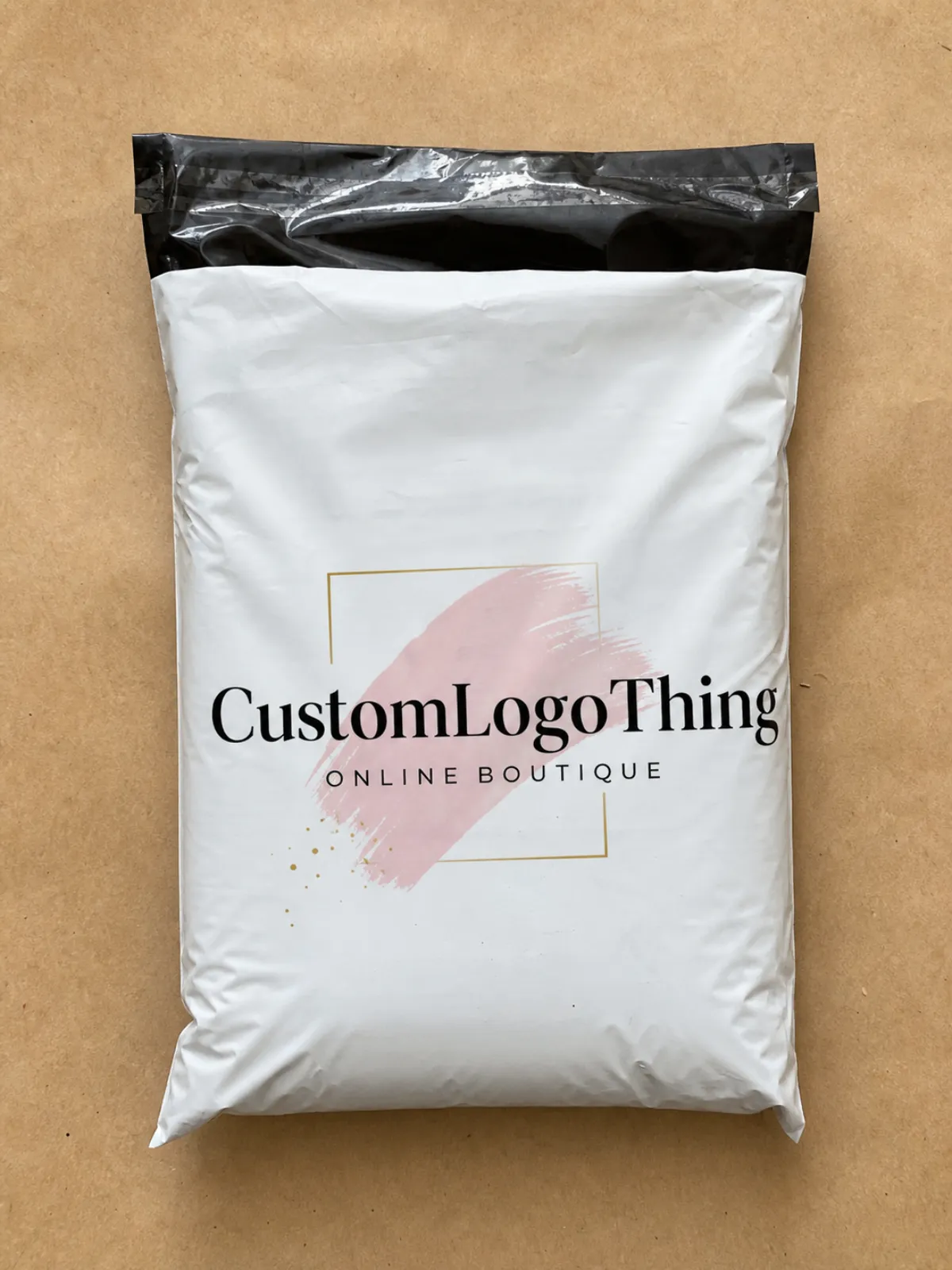
Many boutiques spend money making a shipment look like a luxury gift box even when the order is a folded tee or a scarf that does not need a box at all. Custom Poly Mailers for online boutiques close that gap. They are lightweight shipping pouches made from plastic film, usually printed with a logo, color system, message, or repeating pattern, and built to move soft goods through transit without much added weight or volume.
Three advantages stack up quickly. Material use is lower than many custom printed boxes. Packing labor is lighter because there is less tape, less void fill, and less assembly. Postage pressure is often lower too, since thin packaging usually weighs less and takes up less space than a rigid box. For a boutique shipping leggings, knitwear, swimwear, or small accessories, those differences show up in every order.
The brand effect is real, but it should not be exaggerated. A customer does not buy a blouse because the mailer was glossy. Still, the package sends a message before the product is even unfolded. A custom mailer can make a small operation feel organized, consistent, and deliberate. That is not theater. It is the retail equivalent of a clean storefront.
Important limit: these mailers are not meant to replace structural packaging for fragile items. I have seen people try to ship candles, glass, and ceramic goods in a poly mailer because the print looked appealing. The results were predictable and costly. A folded sweater or knit top is a natural fit. A candle needs another plan. If your assortment includes hard goods, you may need a mixed packaging system with inserts, sleeves, or custom printed boxes for items that require real structure, such as Custom Packaging Products.
Another advantage gets overlooked because it sounds too ordinary: consistency. When a boutique uses the same mailer format across repeat orders, customers begin to recognize the brand before they even open the parcel. They may never say that out loud, but they notice. Repetition builds memory. In packaging, memory often matters more than flash.
"If the mailer tears, the logo does not rescue the order. Protection comes first, because branding only works after the package survives the trip."
The best mailer is usually not the most dramatic proof file on the screen. It is the one that fits the product mix, speeds up packing, and keeps costs sane. Custom Poly Mailers for online boutiques work best when they make the operation cleaner, not more complicated.
How Custom Poly Mailers for Online Boutiques Are Printed and Sealed
Custom poly mailers for online boutiques are simpler than many first-time buyers expect, although the number of choices can still create confusion. The outer film is the visible layer, and that is where the logo, pattern, and color live. The closure is usually a peel-and-seal adhesive strip. Some versions include a tear notch. Others add bubble lining for extra cushioning. The format shifts depending on the product and the level of protection the shipment actually needs.
Printing choices shape both cost and appearance. Digital printing works well for shorter runs, variable artwork, and designs that may change often. Flexographic printing and gravure usually make more sense at scale, since the unit cost drops as quantity rises even though setup takes longer. If you are ordering custom poly mailers for online boutiques with a narrow color palette, cost control becomes easier. If you want full-bleed art or a photo-style finish, expect the proofing and pricing process to reflect that complexity.
Branding decisions influence production more than many boutique owners expect. A one-color logo is generally the most straightforward route. Repeating a pattern across the film can look polished, but it requires more planning. Seasonal graphics may work well for a launch, though they can complicate reorders if the line changes often. A QR code, social handle, or short thank-you line can fit on custom poly mailers for online boutiques, but every added element needs space, legibility, and approval time.
The packing flow itself is almost boring, and that is the point. Insert the product, peel the liner, seal the flap, apply the label, and send it out. No tape maze. No oversized box. No air filling up cubic space the carrier may still charge for. Small teams feel that difference quickly, especially when order volume rises. Faster packing means less friction when the back room gets busy.
That routine shapes customer perception too. A package that looks intentional feels like it came from a brand with a system, not from a table of supplies and guesswork. Unboxing photos, repeat orders, and simple trust all benefit from that kind of order. Nothing magical. Just competent packaging design, which is rarer than it should be.
For buyers comparing the main packaging categories, this view helps:
| Mailer Type | Best For | Typical Print Style | Usual Tradeoff |
|---|---|---|---|
| Stock poly mailer | Fast shipping, no branding needs | None | Lowest visual impact |
| Custom poly mailers for online boutiques | Apparel, accessories, soft goods | Logo, repeat pattern, message, QR code | Better brand lift, slightly higher unit cost |
| Bubble mailer | Light protection for small items | Limited branding options | More protection, less flexibility |
| Custom printed boxes | Rigid or premium goods | Full-surface graphics, inserts | Higher material and shipping cost |
If the product does not need a box, do not buy one because the render looked polished. Custom poly mailers for online boutiques are often the cleaner operational choice, and the carrier does not reward overdesign.
Custom Poly Mailers for Online Boutiques: Cost, Pricing, and MOQ
Cost is where custom poly mailers for online boutiques either make immediate sense or get inflated by packaging theater. The main drivers are size, film thickness, print coverage, number of colors, closure style, and whether the mailer is a stock item or fully custom. Size changes material use. Thickness changes puncture resistance and feel. Print coverage changes ink and setup. MOQ, the minimum order quantity, changes how much risk you carry before the design proves itself in real use.
Useful planning starts with ranges, not fantasies. Simple branded custom poly mailers for online boutiques at higher quantities can sometimes land around $0.10-$0.18 per unit, depending on size and print complexity. Add heavier film, full-color artwork, or specialty finishes and the cost may move into roughly $0.18-$0.35 per unit or higher. Smaller runs usually cost more per piece because setup work is spread across fewer units. Packaging math is rarely kind to tiny orders.
MOQ matters because it controls risk. Lower minimums let a small boutique test a new look, run a seasonal design, or see whether the packaging feels right before committing to a larger order. Higher quantities lower unit cost, which helps if the artwork is stable and sales volume is predictable. The risk shows up when the logo changes, the product line shifts, or brand colors are still in flux. A huge order of custom poly mailers for online boutiques can turn into inventory that no longer matches the brand.
Overspending usually comes from a few familiar places. Some buyers order oversized mailers because they want room to grow, then pay more in material and postage. Others choose too many print colors when one strong logo would have done the job. A few add premium features customers never notice. I have also seen teams order three mailer styles before they have one packing workflow locked down. That is packaging by impulse, and it often ends with a storage closet full of decisions nobody wants to revisit.
Compare quotes by landed cost per shipped order, not by the headline unit price alone. Include the mailer cost, freight, the labor saved by faster packing, and any effect on postage weight or dimensional pricing. A slightly higher-priced mailer can still win if it reduces labor and ships better. Custom poly mailers for online boutiques should be measured like a business tool, not like decoration.
It also helps to compare packaging cost against order value. A $24 apparel order carries a very different packaging ratio than a $90 bundle order using the same mailer. Better packaging design should support margin, not quietly eat it. If you want to compare formats, a page like Custom Poly Mailers is a practical starting point for sizes, film options, and construction choices alongside other branded packaging.
For quick planning, these ranges are a useful reference. They are not promises, just the kind of numbers worth using before requesting formal quotes for custom poly mailers for online boutiques:
| Order Profile | Typical Quantity | Approx. Unit Range | Best Use Case |
|---|---|---|---|
| Simple logo on standard film | 1,000-3,000 | $0.14-$0.24 | Testing a first branded run |
| Custom poly mailers for online boutiques with fuller print coverage | 3,000-5,000 | $0.18-$0.30 | Core apparel and accessory orders |
| Heavier film or premium finish | 5,000+ | $0.22-$0.38 | Higher-pick volume or rougher transit |
| Short-run custom test order | 500-1,000 | $0.25-$0.45 | Seasonal launch or logo refresh |
Supplier capability, shipping distance, and artwork complexity all shift the final price. Even so, these ranges are helpful because they keep custom poly mailers for online boutiques from feeling like a mystery item. There are known variables here, and better questions usually lead to better quotes.
If sustainability matters to your brand, ask for documentation instead of slogans. A supplier saying "eco-friendly" without a material breakdown is selling a feeling, not a specification. Look for recycled content percentages, recycling guidance, and any recognized standard behind the claim. The Forest Stewardship Council and the EPA both publish useful background on sourcing and waste reduction. For shipping performance, many packaging teams also review ISTA methods when they want to understand how shipments behave under stress.
Choosing the Right Specs for Custom Poly Mailers
Specs are where custom poly mailers for online boutiques turn into either a clean fit or a recurring headache. Size comes first. The mailer should fit the packed product with enough room for folding and sealing, but not so much space that the item slides around like it has nowhere to sit. Oversized mailers look careless and waste material. Undersized mailers can crumple the product or make sealing awkward. Neither helps the customer experience.
Thickness is the next decision. Lightweight apparel often does well in the 2.5-3 mil range if folding is neat and transit is not unusually rough. Heavier products, sharper corners, or puncture-prone shipments deserve more film, usually 4 mil or above. Custom poly mailers for online boutiques do not need to be overbuilt, but they do need enough strength to survive handling without splitting, scuffing, or making the customer suspect the order was packed in a hurry.
Finish changes both feel and appearance. Matte film usually reads softer and more upscale. Gloss tends to feel louder and more retail-forward. Metallic effects can be useful, although they can drift toward overworked if the rest of the design is already busy. Good branded packaging does not shout. It looks like someone made decisions with restraint, which is harder than flooding a bag with color.
Logo placement deserves more attention than it usually gets. Put the mark where it survives label placement and remains visible on arrival. Leave enough whitespace for the art to breathe. If your colors matter, test them against product photography and the website palette. The mailer should feel like part of the same system, not like a file pulled from a folder because somebody needed a print-ready answer quickly. Package branding works best when it matches the rest of the product packaging.
There is also the reverse-side question: should you print a message, care note, or return reminder on the back? Sometimes yes, sometimes no. A clean back can feel premium. A useful back can reduce customer service questions. One strong message usually beats five tiny ones fighting for attention. Custom poly mailers for online boutiques work best when the design supports logistics and brand memory at the same time.
Sustainability deserves a practical read. Recycled-content film, recyclable material claims, and lower-material designs can help, but buyers usually notice performance first. They care whether the mailer feels durable, whether the print is sharp, and whether the package arrives intact. That means the environmental claim has to survive actual shipping, not just a product page. A mailer that tears more easily because it is marketed as greener can cost more in damage and reputation than it saves in messaging.
For many boutiques, the best answer is to keep the format simple and make one or two smart choices well. A clean custom poly mailer with the right size, a dependable seal, and a print that matches the brand usually performs better than an overdesigned version trying to do too much. The customer sees confidence. The packing team sees speed. That is a useful combination.
Production Steps, Timeline, and Lead Time
Custom poly mailers for online boutiques usually follow a predictable production path, and knowing that path keeps last-minute panic orders to a minimum. The sequence is quote, artwork prep, proofing, production, inspection or curing if needed, packing, and shipment. That sounds plain because it is plain. Delays typically come from bad inputs, not mysterious factory drama. Send blurry artwork, missing dimensions, or a logo file that cannot print cleanly, and the schedule starts slipping before production has a chance to move.
Artwork approval is the stage that causes the most friction. If the logo needs cleanup, if the brand colors are not defined, or if placement still needs adjustment, time disappears quickly. A good spec sheet saves days. For custom poly mailers for online boutiques, one clearly labeled file with dimensions, color targets, and placement notes is more useful than a long thread of "can you make it pop more?" messages.
Timeline ranges depend on the order type. Simple printed orders can move quickly once the proof is approved. Fully custom runs, special finishes, or larger quantities usually take longer because setup and production both expand. If a supplier gives you a lead time, ask whether that number covers production only or total time including shipping. Those two answers are not the same, and the difference is how launch dates end up built on optimism.
Lead time and transit time deserve separate attention. Lead time is the factory side: proofing, production, and packing. Transit time is the delivery side: how long the cartons take to reach you. Both matter. If you need custom poly mailers for online boutiques before a sale or collection drop, count backward from the date you need them in hand, not from the date on the quote. That small habit prevents a lot of frustration.
Most boutique owners should reorder before the last carton is opened. That sounds obvious until promotion volume spikes and packaging starts being rationed like it is limited stock. Seasonal peaks, influencer bursts, and new collection launches all create demand swings. A reorder that lands a week late can slow the packing line and erase the savings you expected from custom poly mailers for online boutiques through rush freight and staff scrambling.
A realistic planning window for many printed packaging jobs is often 12-15 business days from proof approval, plus freight time, though the actual number can move shorter or longer depending on quantity and print method. Some quick-turn jobs are faster. Some detailed ones are slower. The useful part is not memorizing one number. The useful part is knowing where time goes and which parts you can control.
One more operational note: if you are adding other packaging pieces at the same time, stagger the rollout. Do not change mailers, inserts, and labels all at once unless you have a team that can isolate the result. Otherwise you will never know which change helped or hurt. Controlled testing is not dramatic, but it pays off.
Common Mistakes When Ordering Custom Poly Mailers
The first mistake is chasing the lowest quote without checking film thickness, adhesive strength, or print quality. Custom poly mailers for online boutiques can look cheap on paper and still become expensive in practice if they tear, fail to seal, or arrive with muddy color. The cheapest unit price is not the lowest total cost once replacements, returns, and packing frustration enter the picture.
The second mistake is designing for the mockup instead of the mailbox. A crowded layout may look strong on a screen and still fail in real use if the colors clash with the product photography or the logo disappears under the shipping label. Good retail packaging has to handle dust, scuffs, and transit conditions that do not care about the mood board.
Size mismatch is another classic. Too much empty space makes the mailer look lazy. Too little space makes packing awkward and can damage presentation once the customer opens the package. For custom poly mailers for online boutiques, the right fit usually allows a neat fold and a clean seal without forcing the product into a shape it does not want to hold.
Brand consistency falls apart quickly when the packaging gets updated in fragments. One order uses warm cream, the next bright white, and suddenly the mailer no longer matches the site, the product tags, or the social feed. That kind of drift weakens package branding more than people expect. Custom poly mailers for online boutiques should support a repeatable visual system, not become a design experiment at every reorder.
Buying too much too early is the operational mistake that stings later. A boutique gets excited about a new logo or seasonal campaign, commits to a giant run, then the brand changes direction or the product mix shifts. The unsold mailers become expensive inventory with a print job attached. That lesson rarely needs to be repeated twice.
There is also a hidden mistake that shows up in daily workflow: forgetting the packing process. If the team has to wrestle the mailer open, align the product awkwardly, or spend extra time smoothing the flap, the packaging is not helping the business. It is repeating a small inefficiency hundreds of times. Custom poly mailers for online boutiques should reduce friction. If they do not, they are just branded clutter.
Quick reality check: a nicer-looking mailer does not fix a weak product. It can support the sale, yes. If the item arrives wrinkled, under-protected, or not as described, the packaging ends up carrying blame it never earned.
Expert Tips and Next Steps for Online Boutiques
If you are starting from zero, begin with one hero size and one backup size. For most boutiques selling apparel or soft accessories, that is enough. Custom poly mailers for online boutiques often work better as a lean system because it simplifies inventory, packing, and reordering. Big systems look impressive. Simple systems ship orders.
Order samples or a small test run before you commit to a larger quantity. Check seal strength, print clarity, shelf appearance, and how the mailer behaves under actual shipping conditions. Bend it. Fold it. Pack real product into it. Send a few test shipments if you can. The only opinions that matter are the ones formed after the package has had a rough day and still holds together.
Build a spec sheet before you request quotes. Include dimensions, thickness, color count, artwork files, estimated monthly volume, and target budget. That reduces back-and-forth and helps suppliers quote the same thing. It also makes comparison shopping easier when you are weighing custom poly mailers for online boutiques against other branded packaging options like sleeves, inserts, or custom printed boxes.
Think like a buyer, not a browser. A browser asks, "What looks nice?" A buyer asks, "What does this cost per shipped order, what labor does it save, and how does it support repeat sales?" Those are different questions, and the second set usually leads to better decisions. If you want packaging that scales with your store, custom poly mailers for online boutiques should be judged as part of the whole system: product packaging, shipping efficiency, and brand perception working together.
It also helps to keep the rollout focused. Choose the main use case first. If you sell tees and leggings, build around those. If you also sell hair accessories or light outerwear, make sure the same custom poly mailers for online boutiques can handle those orders without forcing every shipment into a different format. The fewer exceptions you create, the easier it is to run the business.
Finally, compare two or three quotes before you place the first order. Do not stop at unit price. Ask about film thickness, adhesive type, print method, proofing, and freight. The best result is usually not the cheapest quote and not the loudest design. It is the one that fits the product, the budget, and the workflow without turning your packaging table into a mess.
If you measure your products, request samples, and compare a few options carefully, custom poly mailers for online boutiques can become one of the better packaging upgrades you make. They protect soft goods, reduce waste, and make every shipment feel like it came from a brand that pays attention. The practical takeaway is simple: pick the smallest size that fits, choose enough film to survive transit, and order only after you have seen how the mailer behaves with real product in real hands.
What size custom poly mailers for online boutiques should I order?
Choose the smallest size that fits your most common packed product with a little room for folding and sealing. Measure the item after it is packed, not just by flat dimensions, because fabric bulk changes the real size quickly. If your catalog is mixed, start with one standard size and one backup size rather than buying five different options. That keeps custom poly mailers for online boutiques easier to manage and usually reduces the chance of dead inventory sitting in storage.
Are custom poly mailers for online boutiques cheaper than boxes?
Usually yes, especially for soft goods like apparel, because they use less material and weigh less to ship. The answer still depends on print coverage, order quantity, product protection needs, and how you pack. Compare total landed cost, not just the mailer price. If boxes reduce damage or improve the customer experience enough to justify the cost, they can still be the right call. For most foldable products, custom poly mailers for online boutiques are the cheaper and faster option.
How long does it take to produce custom poly mailers for online boutiques?
Simple orders can move quickly once the proof is approved, while fully custom artwork, special finishes, or higher volumes take longer. Most delays happen before production, usually during artwork approval or when logo files are not clean enough to print well. Plan backward from the date you actually need them in hand, not from the date the quote lands in your inbox. That is the difference between a calm reorder and a last-minute scramble for custom poly mailers for online boutiques.
What thickness is best for custom poly mailers for online boutiques?
For lighter apparel, thinner film can work well if the packing method is consistent and the shipping route is not unusually rough. For heavier items, sharper edges, or more puncture-prone shipments, thicker film is the safer choice. A common practical range is 2.5-3 mil for lighter use and 4 mil or above for more demanding orders. The best thickness is the one that protects the product without adding unnecessary weight or cost to custom poly mailers for online boutiques.
Can custom poly mailers for online boutiques be eco-friendly?
Some options use recycled content or recyclable materials, but the exact claim depends on the supplier and the material blend. Ask for documentation instead of trusting vague marketing language. Also check durability and print quality, because a greener mailer that tears in transit is not a win. If sustainability matters to your brand, make sure the claim is real, the performance is acceptable, and the packaging still feels right for the customer. That is the practical way to approach custom poly mailers for online boutiques.

