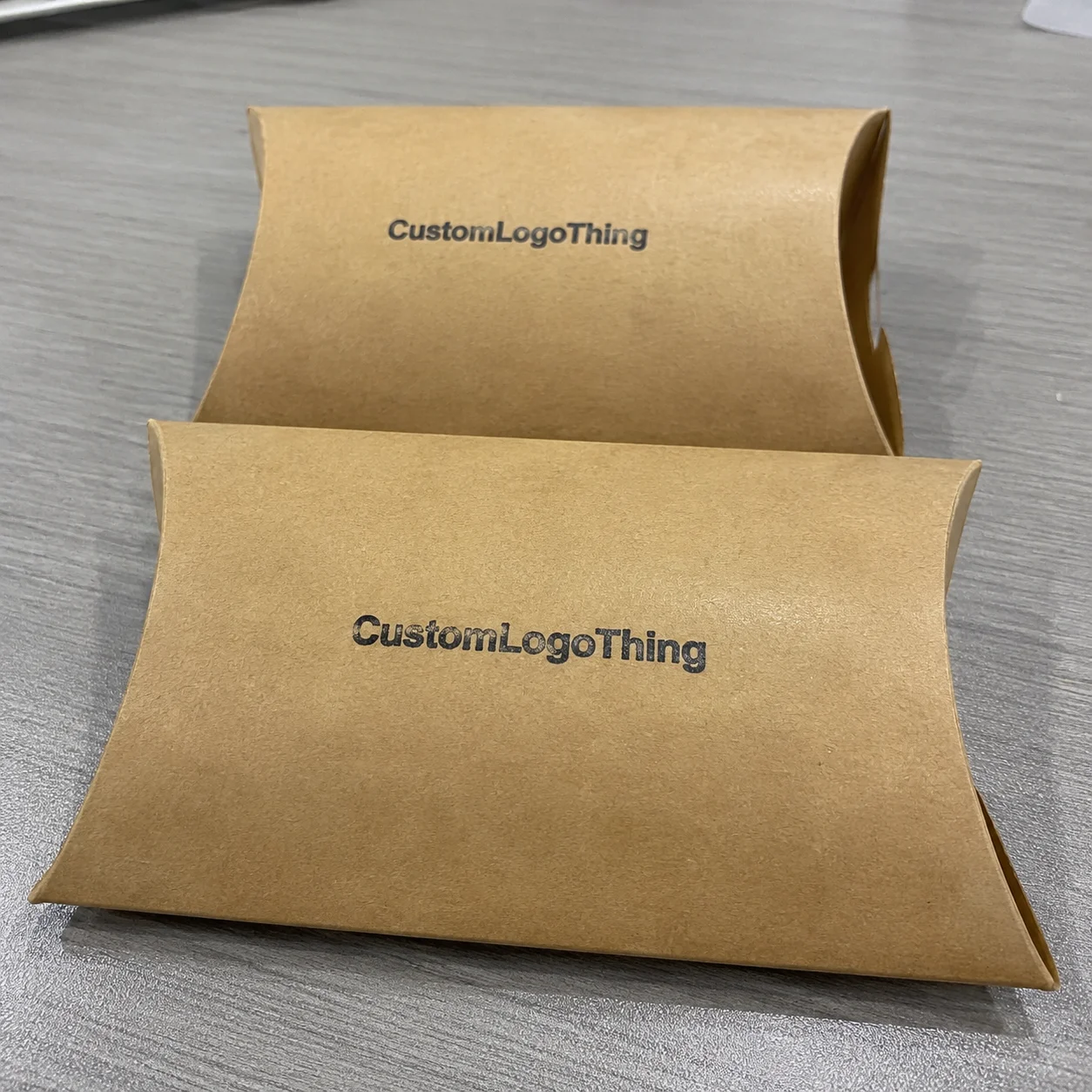
Buying custom printed bags wholesale is a specs decision, not a branding exercise. The bag has to carry product, protect the contents, print cleanly, and still work on the invoice. If the order misses any of those points, the low unit price stops mattering.
A stock bag moves product. A printed bag does that and adds recognition, cleaner handoff, and a more consistent customer experience. For retail, takeout, fulfillment, and light industrial packing, the bag is often the last branded surface the customer sees.
If the business already uses custom printed boxes or labels, the bag should match the rest of the packaging system. Inconsistency is what makes an otherwise decent order look improvised.
Why custom printed bags wholesale usually beats generic stock
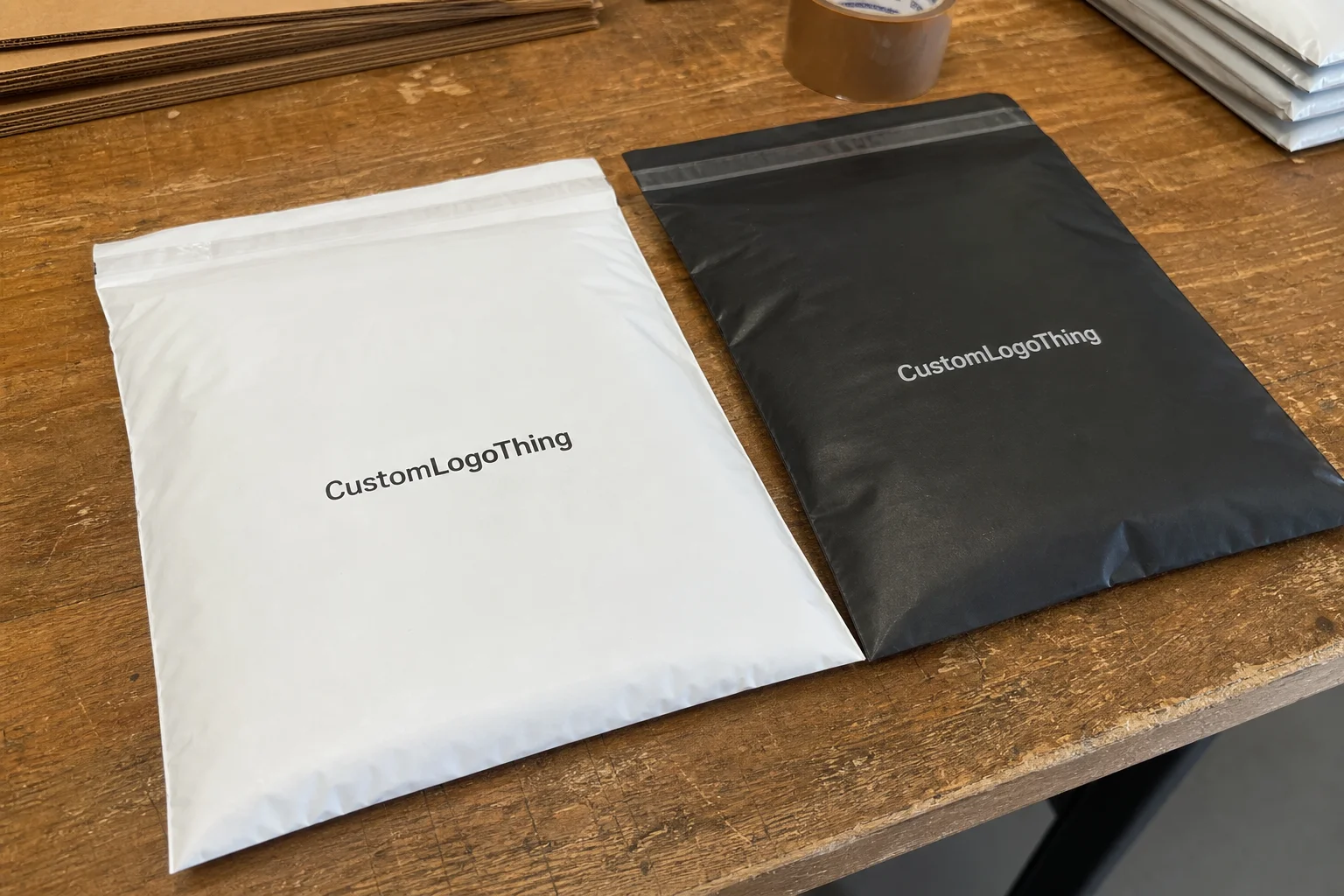
Generic stock bags are fine for basic transport, but they create hidden costs at scale. Stickers fall off, handwritten labels look uneven, and mixed inventory makes orders harder to standardize. A printed bag removes a manual step and gives every location the same output.
The main economic benefit is cost per impression. Every time the customer carries the bag, the logo gets another exposure. That includes the sidewalk, the car, the office, and sometimes social media if the packaging is clean enough to be noticed. A blank bag cannot do that job.
Presentation matters more than buyers sometimes admit. A simple one-color print on the right film often looks more intentional than a thicker unbranded bag. People read clarity as quality. They may not analyze it, but they react to it.
Best-fit use cases:
- Retail orders where the bag leaves the store with the customer.
- Promotions and events where brand recall matters.
- Food service takeout where presentation and repeatability matter.
- Light industrial packing where separation and visibility matter.
- Subscription and fulfillment programs that need repeatable pack standards.
“If the bag is only there to carry something, stock might be enough. If it is part of the brand experience, print it properly.”
The practical reason to order printed bags wholesale is repeatability. Fewer manual decisions at pack time means fewer mistakes in the carton.
Printed bag formats, film types, and print options that matter
Not every bag format behaves the same. The right choice depends on the product, the pack line, and how the bag is handled after it leaves the warehouse.
Common formats include flat poly bags, gusseted bags, wicketed bags, die-Cut Handle Bags, and mailer-style bags. Flat bags are simple and low cost. Gusseted bags give more room for bulky products. Wicketed bags support faster packing. Die-cut handle bags are common for retail handoff. Mailer-style bags work for direct fulfillment only if the contents fit without crushing or shifting.
Film choice affects both feel and print result. LDPE is flexible and usually better for presentation. HDPE is lighter, crisper, and often less expensive. If puncture resistance matters, a better gauge or construction usually solves the problem more effectively than just asking for “more plastic.”
Print method matters too. For larger runs, flexographic printing is the standard workhorse. It is efficient for repeat orders and handles spot colors well. More colors, tiny text, gradients, or edge-to-edge coverage increase setup time and raise the risk of registration issues.
What affects print quality most
Three things usually decide whether the print looks sharp or cheap: contrast, line thickness, and registration tolerance. Thin lines disappear faster than buyers expect, especially on clear film. Small text can turn muddy quickly. A logo that looks fine on a screen may lose clarity once it is printed on a thin substrate.
Clear and opaque films behave differently. Clear bags show the product, which is useful for some retail and food applications. Opaque films create stronger brand space and more privacy. Frosted and matte finishes feel softer. Glossy film reflects light more strongly and tends to make colors read bolder. None is universally better.
Before artwork approval, ask the supplier about the print method, color limit, and registration constraints. If the design needs simplification, that should be clear early. A supplier that accepts every detail without comment is not necessarily confident.
Spec sheet basics: size, thickness, load, and finish
Start with actual dimensions. Width, gusset, height, and usable fill space all matter. “Roughly this size” is how people end up with a bag that looks fine empty and awkward once product is inside.
Thickness is usually listed in mils or microns. More thickness improves puncture resistance and changes the hand feel, but it also raises material cost. More material is not automatically better. For apparel, stationery, inserts, and other light products, a mid-gauge film is often enough. For heavier contents or sharp corners, the bag needs more structure and stronger seals.
Finish changes both appearance and handling. Common options include clear, frosted, matte, glossy, and tinted film. Clear works when product visibility is part of the sale. Frosted and matte finishes feel more deliberate. Glossy bags reflect light strongly. Tinted film adds privacy without going fully opaque.
Closures and features matter more than they get credit for. Depending on the format, the bag may need:
- Heat seal for secure closure.
- Resealable zipper for products that get opened repeatedly.
- Hang hole for retail display.
- Tear notch for easier opening.
- Reinforced handle areas for carry strength.
The best spec is the one that matches product weight, shipping method, and display environment. Under-specced bags tear. Overbuilt bags waste money. That is the decision buyers are actually making when they compare options.
| Bag type | Typical use | Price impact | Branding impact |
|---|---|---|---|
| Flat poly bag | Light, simple packing | Lowest | Good for one-color logos |
| Gusseted bag | Bulkier items | Moderate | More room, better product fit |
| Die-cut handle bag | Retail handoff | Moderate to higher | Strong customer-facing presentation |
| Wicketed bag | Fast packing lines | Depends on quantity | Efficient, less decorative |
For buyers comparing bag programs across multiple SKUs, line up the bag spec with matching inserts, labels, or custom printed boxes. Consistency reduces packing errors and makes reorders easier to manage.
Cost, pricing, and MOQ: what actually drives unit cost
Unit price is mostly math. The main drivers are bag size, film thickness, print colors, print sides, and total quantity. Bigger bags use more material. More colors add setup work. Two-sided printing adds inspection and registration complexity. Higher quantity spreads setup cost across more units and usually lowers the per-bag number.
Short runs are where setup charges matter most. On a 1,000-piece order, the plate charge and machine setup can be a large part of the quote. On a larger run, those same costs are diluted. That is why small orders often look expensive and larger orders look much better.
Buy against actual consumption, not hoped-for demand. If the business uses 2,500 bags per quarter, buying 20,000 because the unit price drops can create slow-moving inventory. The order only saves money when quantity and reorder timing match real usage.
For simple one-color LDPE bags, volume pricing usually improves quickly once setup costs are spread across enough units. Small runs can be several times more expensive per unit than larger ones. That gap is normal.
| Cost driver | Lower-cost choice | Higher-cost choice | What changes |
|---|---|---|---|
| Film thickness | Standard gauge | Heavy gauge | Material cost and feel |
| Print colors | 1 color | 3-4 colors | Setup and registration complexity |
| Print sides | Single side | Two sides | Ink, setup, and inspection time |
| Quantity | Higher volume | Short run | Unit cost drops with scale |
The cheapest quote is not automatically the best value. If the bag tears, prints unevenly, or slows packing, the hidden costs show up fast. Ask for landed cost, not just factory price.
Process and turnaround: from artwork to shipment
The production process should be predictable: request quote, confirm specs, review artwork, approve proof, produce, inspect, pack, ship. If a supplier skips a step, there is usually a reason, and it is rarely a good one.
The biggest delays are usually self-inflicted. Incomplete artwork, wrong dimensions, changes after proof approval, and vague print placement instructions all add friction. Machine time is often the easy part.
Lead time depends on complexity. A simple one-color bag with a clean spec can move faster than a multi-color job, but timing still depends on proof approval and production scheduling. Special film, unusual dimensions, or multiple print areas take longer. International freight can add a meaningful chunk to the calendar.
A typical timeline looks like this:
- Quote stage - send dimensions, quantity, print colors, and usage.
- Artwork review - the supplier checks fit, line thickness, and placement.
- Proof approval - the final layout is confirmed.
- Production - printing, converting, and finishing.
- Inspection and packing - count, carton, label, palletize.
- Shipment - air, ocean, or domestic freight depending on urgency.
Proof approval is the main choke point in many orders. A clean proof approved on time is cheaper than a rushed reprint. That applies to custom printed bags wholesale, but the same logic applies to other branded packaging runs.
“A clean proof approved on time is cheaper than a rushed reprint.”
Quality checks and supplier terms that protect a bulk order
Before production starts, confirm the dimensions, gauge, print layout, color targets, and carton count. Those five items prevent most disputes later and make it easier to compare suppliers on something real.
For higher-value retail packaging, ask for a pre-production proof, sample photos, or a physical sample. Small print errors become obvious when the bag is carrying premium product. So do off-center logos, fuzzy copy, and color drift.
Commercial terms matter too. Ask about tolerances, defect allowance, remake policy, payment terms, and shipping responsibility. Buyers get burned when they assume “acceptable variation” means the same thing everywhere. It does not.
Useful supplier questions:
- What is the acceptable dimension tolerance?
- How many defective bags are allowed per carton or lot?
- Who pays for replacement if the print is off spec?
- How are cartons marked and counted?
- How are pallets configured for warehouse handling?
Carton counts and pallet configuration matter more than they sound. If the count per carton is wrong, receiving turns into a manual audit. If pallets are packed badly, damage risk goes up. A supplier who can explain QC clearly is usually easier to work with than one hiding behind vague promises.
For buyers who need a reference point on packaging and shipping expectations, the following resources are useful: ISTA testing standards and FSC certification information. If a program includes recycled content or sustainability claims, documentation matters.
How to place the right order and avoid rework
Before requesting quotes, gather the exact size, thickness, print colors, quantity, and usage case. If you send multiple suppliers vague descriptions, you will get quotes that cannot be compared cleanly.
Send reference photos and a simple layout sketch. It cuts down on mistakes, especially when the bag needs front-only print versus two-sided print. If brand colors matter, provide them in a usable format. If there is no die line yet, ask for one before final artwork.
Ask for unit cost at multiple quantities. A price at 5,000 units tells you little unless you also see 10,000 and 20,000. The break point matters. Sometimes moving up a tier saves enough to justify a bigger order. Sometimes it does not.
Use this short checklist:
- Verify specs - size, thickness, film, and closure.
- Request a proof - check logo placement and text legibility.
- Confirm lead time - production plus freight, if relevant.
- Lock freight terms - avoid surprises on landed cost.
- Approve quickly - protect the schedule and avoid stale artwork.
If broader sourcing support is useful, our Wholesale Programs page covers the larger ordering structure. If the bag is part of a bigger packaging system, our Custom Packaging Products page helps align the format with other branded materials without adding disconnected vendors.
For most buyers, the hard part is not finding a bag. It is specifying one well enough that the order arrives useful. That is the difference between a clean re-orderable program and a one-time experiment.
FAQ
What affects the price of custom printed bags wholesale most?
Quantity usually has the biggest impact because setup costs spread over more units. Film thickness, bag size, color count, and print coverage also move the price quickly. Shipping method and carton configuration can change landed cost more than people expect.
What is the usual MOQ for custom printed bags wholesale?
MOQ depends on bag type, print method, and film specification. Simple one-color runs usually support lower minimums than multi-color or special-size bags. A supplier should state MOQ by SKU, not hide behind a vague general number.
How long does production usually take for custom printed bags wholesale?
Simple orders with approved artwork move faster than complex multi-color jobs. Proof approval is often the main bottleneck, not the machine time. Add freight time to production time if the order ships internationally.
Can I order custom printed bags wholesale with my logo on both sides?
Yes. Most bag formats support front-and-back printing if the artwork and budget allow it. Two-sided print usually increases setup complexity and unit cost. The supplier should confirm print placement, registration, and any side limitations before production.
What files do I need to place an order for custom printed bags wholesale?
Send the logo in vector format if possible, plus any brand colors and copy you want printed. Provide exact bag dimensions, thickness target, quantity, and preferred print areas. If there is no die line yet, ask for a template before finalizing artwork.