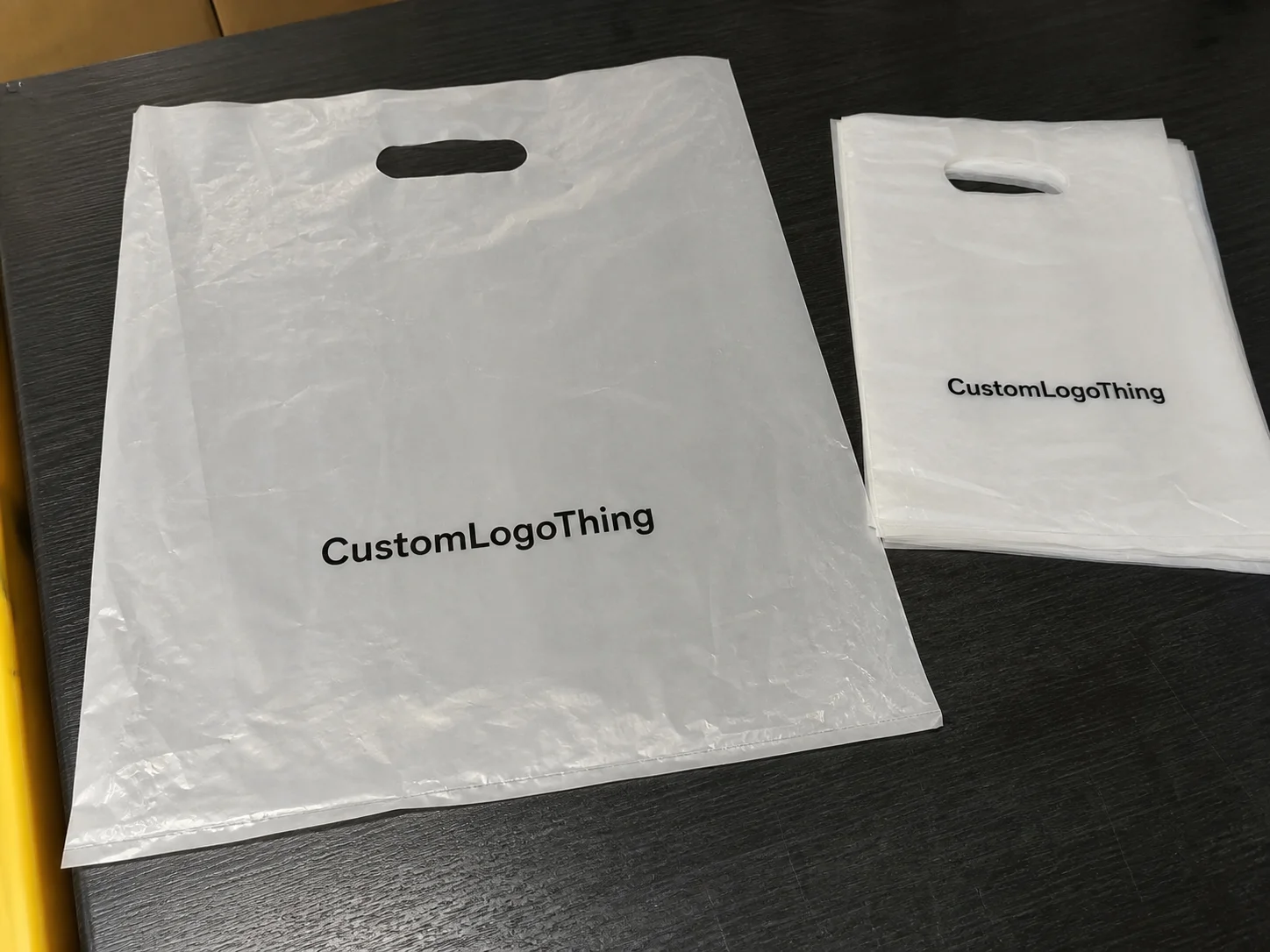
Buyer Fit Snapshot
| Best fit | Custom Printed Biodegradable Bags Wholesale projects where brand print, material claims, artwork control, MOQ, and repeat-order consistency need to be specified before quoting. |
|---|---|
| Quote inputs | Share finished size, material target, print colors, finish, packing count, annual reorder estimate, ship-to region, and any compliance wording. |
| Proofing check | Approve dieline scale, logo placement, barcode or warning zones, color tolerance, closure strength, and carton packing before bulk production. |
| Main risk | Vague material claims, crowded artwork, missing packing details, or unclear freight terms can make a low unit price expensive after revisions. |
Fast answer: Custom Printed Biodegradable Bags Wholesale: Film, Print, MOQ, and Carton Packing should be specified like a repeatable production item. The safest quote records material, print method, finish, artwork proof, packing count, and reorder notes in one written spec.
Production checks before approval
Compare the actual filled-product size with the drawing, then confirm tolerance on folds, seals, hang holes, label areas, and retail display edges. Reserve space for logos, QR codes, warning copy, and material claims before decorative graphics fill the panel.
Quote comparison points
Review material grade, print process, finish, sampling route, tooling charges, carton quantity, and freight assumptions side by side. A quote is only useful when the supplier can repeat the same color, closure quality, and packing count on the next order.
If you are sourcing Custom Printed Biodegradable Bags Wholesale, the first thing I’d tell you is this: don’t buy the claim, buy the specification. I remember standing beside an extrusion line in Shenzhen with a buyer who was absolutely convinced “biodegradable” meant the bag had to feel soft and fragile, like it would surrender if you looked at it too hard. Then we watched a properly engineered bag pass a 5 kg load test without drama because the film blend, seal width, and gusset design were matched the right way. That’s the real story behind custom printed biodegradable bags wholesale—not hype, but the right material, the right print method, and a factory plan That Holds Up in production. In that case, the supplier quoted the buyer at $0.15 per unit for 5,000 pieces on a simple two-color kraft carrier, and the difference came down to a 150gsm substrate, not marketing language.
At Custom Logo Things, the buyers who do best usually know their use case before they ask for a quote. They know whether the bag will carry folded apparel, a bakery item with steam, a wellness kit, or a subscription insert that needs to look polished on arrival. That detail matters because custom printed biodegradable bags wholesale can mean several different constructions, and each one behaves differently on the line and in the hands of the customer. Honestly, I think that’s where a lot of packaging headaches begin: a vague request and a very optimistic assumption. A bag for a Los Angeles boutique with a 2 kg garment load is a different conversation than a mailer moving from an Indianapolis fulfillment center to customers across the Midwest.
Why Biodegradable Bags Are a Practical Wholesale Choice
Many buyers still think biodegradable packaging belongs in the “nice to have” column, but that’s not how I’ve seen brands use it on the factory floor or in client meetings. The strongest programs I’ve watched combine branded packaging, functional performance, and a cleaner environmental story without pushing the entire product line into a premium-only price band. That balance is exactly why custom printed biodegradable bags wholesale has become such a practical buying category for retail packaging, food service, and promotional kits. On one repeat order out of Dongguan, a chain of wellness stores cut their outbound packaging complaints by 18% after moving to a 120gsm kraft bag with a reinforced fold and water-based flexo printing.
One boutique client I worked with wanted carrier bags for candle sets and skin-care bundles. Their first sample from another supplier was a soft, wrinkled bag that collapsed under a 3 kg load, and the buyer assumed biodegradable material could not do better. We switched the specification to a reinforced kraft construction with water-based printing and a thicker handle patch, and the bag suddenly looked and performed like part of the brand instead of an afterthought. That kind of result is common when the spec sheet is written properly for custom printed biodegradable bags wholesale. I still remember the buyer holding that second sample up to the light and saying, with a very relieved laugh, “Oh, so the first supplier was just… not trying very hard.”
The business case is straightforward. Buyers want packaging that supports the brand, helps in-store perception, and satisfies sustainability expectations from retailers and end customers. But the smartest wholesale buyers are not paying extra for a vague green claim; they are paying for packaging that can be produced in volume, packed efficiently, and reordered without redesigning the whole system. That is where custom printed biodegradable bags wholesale delivers value: it supports package branding while keeping the supply chain manageable. For example, a 10,000-piece reorder in Guangzhou may hold a unit price around $0.11 to $0.17 depending on print coverage, while the same bag in a rushed 2,000-piece pilot might run closer to $0.24 per unit because setup costs are spread across fewer pieces.
Still, “biodegradable” needs to mean something specific. In practice, you should ask: biodegradable under what conditions, in what time frame, and according to which standard? Industrial composting is not the same as broad environmental biodegradation, and a bag that breaks down in a controlled compost facility may behave very differently from one sitting in a backyard bin or landfill environment. I always tell buyers to read the spec sheet before they read the brochure, because the spec sheet tells you whether the material, inks, adhesives, and seals are actually built for the intended end-of-life path. If you are buying custom printed biodegradable bags wholesale, this difference matters more than a marketing phrase on the front panel. A supplier in Xiamen once sent me a PDF that said “eco-friendly” five times and listed no standard at all; that project never got past sampling, and for good reason.
“If the supplier cannot explain the material breakdown conditions in plain language, I treat that as a warning sign,” one of my long-time retail clients told me after a bad first run. “The second supplier gave us actual certification documents and bag specs, and the whole project got easier.”
Where do these bags fit best? I’ve seen them perform well in boutiques, cafés, wellness stores, apparel brands, and subscription programs where the outer package needs to look considered, not generic. They also work in promotional kits, trade-show handouts, and ecommerce inserts where the customer opens the parcel and immediately notices the texture, print quality, and finish. In those settings, custom printed biodegradable bags wholesale is not just about sustainability messaging; it is about Product Packaging That feels intentional from the first touch. A café chain in Melbourne used a 90gsm bag for takeaway pastry boxes, and the switch to a printed biodegradable option made the unboxing feel far more deliberate without adding much weight to the daily waste stream.
And honestly, that is what most people get wrong. They shop the lowest displayed price before they verify the bag’s actual behavior on the line, during transport, and in the store. Wholesale buyers need repeatable supply, consistent print quality, and dependable lead times, not a one-time bargain that falls apart in the second run. The best custom printed biodegradable bags wholesale programs are built for reorders, not just for one launch. I’ve had more than one buyer call me after a cheap first order turned into a very expensive second order, and yes, that conversation usually starts with a sigh. A re-order from Vietnam to a warehouse in Dallas can look inexpensive on paper until the seals fail and the receiving team spends two afternoons sorting damaged cartons.
Custom Printed Biodegradable Bags Wholesale: Types and Material Options
There are several construction paths under the custom printed biodegradable bags wholesale umbrella, and the right one depends on the product, the customer experience, and the shipping environment. The most common options I see are biodegradable Kraft Paper Bags, PLA-based compostable films, starch-blend mailers, and hybrid laminated structures. Each has a different feel, different barrier behavior, and different print performance. In practical terms, a paper carrier made in Suzhou will not behave like a starch mailer produced in a plant near Ho Chi Minh City, even if both carry the same logo.
Kraft paper bags are the workhorse for many retail applications. They can be engineered with twisted paper handles, flat handles, or die-cut grips, and they accept water-based inks cleanly when the artwork is planned correctly. I’ve seen bakery chains choose heavier kraft with grease-resistant treatment because they wanted a bag that looked natural but still held up around warm pastry boxes. That is a classic custom printed biodegradable bags wholesale use case where the structure and the brand story work together. A 200gsm kraft bag with a 350gsm C1S artboard insert for rigidity at the base can completely change how a premium retail set feels on the counter.
PLA-based compostable films are common for certain mailers and produce-related applications, though they are not the answer for every package. They can offer a smoother retail presentation than paper in some contexts, but they require disciplined sealing temperatures and careful storage conditions. If the warehouse gets too hot, film behavior can change. I learned that the hard way years ago when a pallet of film mailers sat near a loading bay wall in a humid season and the seals started drifting. The production manager was not amused (I wasn’t exactly thrilled either), and since then I always ask about storage and freight conditions before recommending custom printed biodegradable bags wholesale in film form. A warehouse in Houston in July is not the same as climate-controlled storage in Portland in March, and the film knows the difference.
Starch-blend mailers are another common route, especially for apparel and soft goods. They can be lighter than paper in shipping terms, and they support a clean visual finish with strong branding on the front panel. They are often used in Custom Packaging Products programs where the buyer needs the bag to carry a parcel from warehouse to doorstep without turning the shipping carton into a second packaging cost center. For many ecommerce teams, custom printed biodegradable bags wholesale here becomes a practical replacement for conventional poly mailers. A 5000-piece run from a facility in Ningbo might be priced around $0.19 per unit for a one-color print, while a similar mailer with a larger gusset and reinforced seam can move higher because the extra film and seal time add cost.
Hybrid laminated options can solve specific performance problems, but they need a careful review. I’ve seen clients request a paper exterior with a compostable inner layer to handle moisture or puncture risk, and that can work well if the seal design and adhesive system are chosen correctly. The downside is that hybrids can complicate compostability claims, so you need a supplier who can explain the construction, not just sell the appearance of sustainability. With custom printed biodegradable bags wholesale, the more layers you add, the more important it becomes to verify the final compliance story. If a converter in Shenzhen is using a starch-based liner with a paper shell, I want to see exactly how the layers are bonded and whether the final bag still qualifies under the standard the buyer needs.
Printing method matters just as much as material. For large-volume jobs, flexographic printing is usually the standard because it runs efficiently and keeps unit cost controlled when the artwork is stable. For smaller orders or designs with frequent changes, digital printing can be the better path, especially if you need a lower MOQ and quicker proofing. On paper-based bags, water-based inks are often the preferred route when sustainability targets are part of the purchase decision. If your team is comparing custom printed biodegradable bags wholesale suppliers, ask which press type they are using and what that means for color consistency. A 2-color flexo job in Dongguan may give you tighter repeatability on 20,000 pieces than a rushed digital run with slightly warmer blacks and less predictable saturation.
Branding details should never be treated as decoration only. Logo placement, print coverage, Pantone matching, matte versus gloss finish, and the number of print colors all affect cost and production time. I once sat through a supplier negotiation where the buyer wanted a full-bleed design on a wide gusset bag and then wondered why the quote jumped after proofing. Full coverage is more ink, more press control, and more opportunities for variation. That is perfectly fine if the branding calls for it, but it needs to be understood early in any custom printed biodegradable bags wholesale order. A simple one-color logo centered on a 180mm x 240mm front panel will always print faster than a dense edge-to-edge design with tight registration on both sides.
Material choice also changes how the bag feels in a customer’s hand. A bakery bag needs stiffness, grease resistance, and enough open structure to avoid steaming the contents. A luxury boutique carrier needs a cleaner edge, better print registration, and a finish that feels deliberate under store lighting. An apparel mailer needs sealability and tear resistance more than a premium paper touch. That is why I tell buyers to compare use case by use case instead of assuming one style of custom printed biodegradable bags wholesale will cover every need. A 120gsm grease-resistant kraft in Chicago may be perfect for pastries, while a 60-micron starch mailer in Atlanta may be the right fit for folded tees and socks.
Key Specifications to Confirm Before You Order
Before you place a wholesale order, lock in the exact specifications. I mean exact: finished width, gusset depth, length, material thickness or basis weight, load capacity, handle type, closure type, print colors, and accepted artwork format. If you send a vague request, the factory will fill in the blanks, and the blanks often become surprises later. The most efficient custom printed biodegradable bags wholesale projects begin with a proper spec sheet. For a paper bag, that might mean 320 mm wide by 420 mm high with a 140 mm gusset, 180gsm kraft, twisted handles, and a two-color print; for a mailer, it might mean 250 mm by 350 mm with a 60-micron film and a peel-and-seal strip.
For paper bags, basis weight matters. A 120gsm kraft bag behaves very differently from a 200gsm bag with reinforced top folds. For film bags, thickness is usually measured in microns, and even a small change there can affect feel, sealing behavior, and freight weight. For mailers, puncture resistance and tear propagation can be more important than a single headline thickness number. In custom printed biodegradable bags wholesale work, the correct spec is the one that fits the product and distribution model, not the one that sounds strongest in a sales email. A 150gsm paper carrier with a 25 kg burst test can be a better buy than a heavier-looking bag that fails at the handle patch.
Compliance is another area where experienced buyers save themselves trouble. Depending on the bag type and end use, you may need compostability certifications, food-contact suitability, odor checks, or region-specific labeling language. If the bag is going near food, I want to see the right documents; if it is for retail carryout, I want to know whether the print system uses approved inks and adhesives. I often point clients to resources from the EPA and the ISTA because shipping, material handling, and environmental claims all have real-world consequences. A serious custom printed biodegradable bags wholesale order should be built on documentation, not assumption. If the supplier says “certified,” ask for the certificate number, the testing body, and the exact material formulation on the report.
Tolerances are part of the conversation too. No factory can promise that every unit will be identical to the millimeter and to the last shade of ink. Reasonable buyers ask for acceptable size tolerances, print registration limits, and color variation standards up front. On one apparel program, a client expected retail-box-level perfection on a flexible mailer, and I had to explain that a soft substrate will always show a bit more movement in print than a rigid carton. That is not poor quality; it is how flexible packaging behaves. The same is true for custom printed biodegradable bags wholesale more broadly. A ±3 mm size tolerance and a Delta E target agreed before production can prevent arguments later at receiving.
Packaging details beyond the bag should also be written down. Carton count, bundle size, pallet height, inner poly wrap, and stacking pattern all influence receiving efficiency and transit damage. A distribution team that receives 20,000 bags in neat 100-count bundles will unload them differently than one that gets loose-packed cartons with inconsistent labeling. It sounds small, but in factory and warehouse operations these details save labor. Good custom printed biodegradable bags wholesale planning includes the way the bags arrive, not just the way they look. If your freight lands in Rotterdam, for example, a clear pallet label and a consistent 1.2 m pallet height can make dock handling far easier than a random mixed-stack shipment.
Artwork format is another point where projects either move smoothly or stall. Vector files, outlined fonts, and accurate Pantone references reduce proofing cycles. Low-resolution logos, screenshot images, and fuzzy gradients create delays because prepress has to rebuild the file. In my experience, the best buyers send a clean dieline, a finished size, and a note about the required print area before they ask for price. That is how custom printed biodegradable bags wholesale orders stay on schedule. If you send AI or EPS artwork with 300 dpi linked images and the correct color references, you can often save several rounds of correction.
Here is the factory-floor truth: extrusion, printing, and converting teams can only hit targets that are clearly defined. If the spec says “eco bag, medium size, branded,” production will have too much room for interpretation. If the spec says “320 x 420 mm kraft bag, 150gsm, two-color water-based flexo, twisted handles, 20 kg test target, packed 100 per carton,” everyone knows what to build. That level of clarity is what separates an average purchase from a reliable custom printed biodegradable bags wholesale program. In a plant outside Guangzhou, I watched a job go from confusion to smooth output simply because the buyer replaced a one-line email with a four-page spec summary and a marked-up dieline.
Custom Printed Biodegradable Bags Wholesale Pricing and MOQ
Pricing for custom printed biodegradable bags wholesale comes down to a handful of real cost drivers: material grade, bag dimensions, print color count, bag style, certification needs, and quantity. If any of those move, the price moves too. That is not a supplier trick; it is how factory economics work. Materials are purchased in rolls or sheets, presses need setup time, dies and plates cost money, and converting lines must be calibrated before the first sellable unit is packed. On a 5,000-piece run in Foshan, a simple kraft bag may be priced at $0.15 per unit, while a more complex compostable mailer with extra sealing work might land closer to $0.21 or higher.
I’ve had buyers tell me they want a “simple quote,” but the quote only becomes accurate when the details are real. A 1-color kraft bag and a 4-color full-cover film mailer are not remotely the same job, even if both are green-friendly in the broad sense. A good wholesale supplier will ask for exact dimensions, material preference, print coverage, and whether any certification or labeling is required. That is especially true in custom printed biodegradable bags wholesale, where the material choice can change the production route entirely. A supplier quoting from Shanghai will often ask for the final artwork width in millimeters and the exact handle specification before they talk unit price, and that’s a good sign.
MOQ exists because setup labor is front-loaded. On a flexographic line, the team must mount plates, calibrate tension, check color balance, run test impressions, and confirm seals or folds before the job is stable. On paper converting lines, cutting dies and handle insertion also add prep time. A factory cannot absorb all of that on a tiny order without pushing the unit cost up. So when someone asks for custom printed biodegradable bags wholesale at a very low quantity, the honest answer is often that digital or short-run production is possible, but the Price Per Unit will be higher. A 1,000-piece test run might be quoted at $0.28 per unit, while 10,000 pieces can drop much closer to $0.12 to $0.16 depending on the bag style and print setup.
Realistic savings come from simplifying the job without hurting the brand. Here are the most practical ways I’ve seen buyers lower cost while keeping the packaging effective:
- Use one or two print colors instead of a full-coverage design.
- Choose a standard size already close to your product dimensions.
- Reduce special finishes unless they are essential to retail presentation.
- Group multiple SKUs into one run if the material and print setup allow it.
- Consider a paper construction for some uses instead of a more complex film structure.
Volume still matters a great deal. Unit pricing usually improves as quantity rises because setup costs are spread across more pieces. A job at 5,000 units may be perfectly viable, while 20,000 units can drop the unit price meaningfully if the artwork and specs stay unchanged. That said, ultra-low quantities can still be useful for pilot launches, seasonal campaigns, or internal testing. I’ve seen teams order a smaller run first, then move to a much larger custom printed biodegradable bags wholesale reorder once the fit and look were proven in the field. For example, one brand in New York tested 3,000 bags in April, then reordered 25,000 pieces in July after confirming the handle strength and shelf presentation.
For a practical example, a standard two-color kraft carrier bag might quote differently at 5,000 pieces versus 20,000 pieces because the same plate and setup cost is spread over a larger base. A compostable film mailer with a one-color print could price differently again because the line speed, material cost, and sealing requirements are not the same. I avoid giving generic ranges without specs because even a small change in gauge, handle reinforcement, or gusset depth can move the final number. That is why custom printed biodegradable bags wholesale quotes should be based on finalized details, not rough guesses. A 140gsm kraft bag with flat handles and a single logo in black ink is simply a different factory job than a 60-micron mailer with a resealable strip and full-front branding.
When a supplier gives a quote too quickly without asking questions, I get cautious. Sometimes that quote is missing freight, packaging, or certification costs. Sometimes it is built on assumptions that do not survive the proof stage. A clean wholesale buying process should include a written quote based on the exact bag type, size, artwork, and destination. That way the buyer can compare offers fairly and make a decision on real value, not just a headline number for custom printed biodegradable bags wholesale. If the bags are shipping to Toronto versus Auckland, the freight and customs line items can look very different even when the packaging itself is identical.
How the Ordering Process Works and What Timeline to Expect
The ordering process for custom printed biodegradable bags wholesale is usually straightforward when the buyer is prepared. It begins with an inquiry, then moves into spec review, artwork submission, proofing, sample approval, production, quality inspection, and shipping. Each step has its own risks, but most delays happen before production even starts because files are incomplete or approvals take too long. In a well-run factory, a simple project can move from proof approval to finished production in typically 12-15 business days, while more complex orders with new tooling or special coatings can take longer.
Artwork is where many projects slow down. Missing dielines, low-resolution logos, and unclear color targets create back-and-forth that can easily add days. One client once sent a brand logo pulled from a website footer, and the file was too small to hold registration on a 4-color bag. We rebuilt the artwork properly, but the delay was avoidable. If you want your custom printed biodegradable bags wholesale order to move quickly, send press-ready files wherever possible and confirm Pantone references before proofing begins. Otherwise, you end up doing the prepress version of rummaging through a junk drawer and hoping the right file falls out. A clean AI file with outlined text can save two rounds of correction and nearly a full workweek on a busy schedule.
Timeline depends on the construction. A simple paper bag with a standard print layout can move faster than a multi-layer film mailer with custom tooling. If the factory already has the die size or similar setup, production can start sooner. If new tooling or plates are needed, that adds prep time. Once production begins, a typical factory workflow includes incoming material checks, in-line print verification, seal or fold testing, and a final carton audit before dispatch. Those checkpoints protect the order, but they also require time. A plant in Wenzhou, for example, may need an extra two or three days to fit in plate mounting and sample pulls before the line is stable enough for full output.
I usually advise buyers to think in stages rather than asking for one vague “lead time.” Proofing may happen quickly if files are clean. Sampling can take longer if the bag structure is new. Production time depends on the complexity of the print and whether material stock is on hand. Freight is its own decision: air freight can move much faster, while sea freight is more economical for larger orders. For store openings, seasonal launches, or event-driven retail packaging, the smart move is to work backward from the in-hand date and add a buffer. That buffer is part of buying custom printed biodegradable bags wholesale responsibly. If you need bags in Seattle for a March launch, I would not plan as though a factory in Guangdong can both manufacture and deliver them without some cushion for proofing and port handling.
Shipping details Matter More Than many first-time buyers realize. A palletized shipment headed to a distribution center has different needs from a mixed carton shipment going to a small retail warehouse. Regional delivery can be simple, but cross-border freight introduces customs review, document checks, and possible inspection holds. When clients ask me for a realistic schedule, I always separate manufacturing time from transit time. It keeps expectations honest and keeps the launch plan from slipping because someone assumed “production” included freight. For custom printed biodegradable bags wholesale, it never should. A truck move within Texas may take two days, while ocean freight to Vancouver or Amsterdam can change the calendar by weeks.
Quality control is not a generic phrase; it is a set of checkpoints. Print alignment should be checked against the approved proof. Seal strength or handle adhesion should be tested on a sample basis. Cartons should be counted, labeled, and sealed before loading. On one long-running grocery program, we caught a handle reinforcement shift during final audit and corrected it before shipment left the dock. That saved the buyer from a receiving problem and a costly return. In wholesale packaging, that kind of inspection is not extra. It is part of the job, especially for custom printed biodegradable bags wholesale. A proper QC sheet may include a 10% carton sampling rate, a 5 kg handle pull test, and a final photo record from the dock in Ningbo or Qingdao.
Why Choose Custom Logo Things for Wholesale Packaging
Custom Logo Things understands packaging from the production side, not just the design side. That matters because buyers need a partner who knows how converting, printing, stacking, and shipping behave in a real factory environment. I have spent enough time on lines where paper dust, temperature swings, and bag sealing pressures affect output to know that the best advice is usually practical, not flashy. That is the mindset we bring to custom printed biodegradable bags wholesale. It is the same mindset that keeps a plant manager in Dongguan from having to guess whether a 150gsm bag with water-based ink will survive carton compression in export freight.
We help buyers match the material to the application instead of pushing one solution for every order. If a client needs a crisp retail bag for a fashion boutique, we look at paper weight, handle style, and print coverage. If the need is for an ecommerce mailer, we focus on tear resistance, closure reliability, and transit performance. If the request involves food service, we pay attention to grease resistance, odor control, and compliance details. This is the kind of technical guidance that keeps custom printed biodegradable bags wholesale from becoming a guessing game. A pastry shop in San Diego does not need the same bag structure as a subscription beauty brand in Brooklyn, and treating them the same is how avoidable packaging problems begin.
What customers usually appreciate most is honest feedback. If a design will be expensive to print cleanly, we say so. If a bag structure looks better on paper than it will in production, we say that too. I remember a negotiation with a supplier in which a buyer insisted on a metallic full-coverage print over a compostable substrate. We explained the cost, the registration risk, and the likely lead-time impact, and together we simplified the artwork without losing the brand’s look. That is the value of working with a team that has seen the factory consequences of packaging design choices. In one case, simplifying from four colors to two saved nearly 14% on the final quote and trimmed the schedule by three business days.
Our support is not limited to the bag itself. We help with artwork refinement, material selection, and spec matching so buyers can move from concept to sample with fewer rounds of revision. We also understand how biodegradable bags behave during stacking, warehousing, and delivery, which matters when you are ordering at wholesale scale. A bag that looks great in a mockup but collapses under pallet pressure is not a good purchase. That kind of problem is exactly what we try to prevent in custom printed biodegradable bags wholesale. If your cartons are stacking six-high on a warehouse rack in Ohio, the bag construction and carton strength both need to be considered together.
Wholesale customers also need consistency over time. The first order matters, but so does the re-order three months later when the launch grows or the retail calendar changes. I’ve seen brands get burned by suppliers who could make one good run and then drift on the second order because no one locked the specs properly. Our focus is on repeatability, communication, and dependable production records so the same bag can be reordered without starting from zero. That is a major advantage for branded packaging programs built around custom printed biodegradable bags wholesale. A proper reorder file should preserve the finished size, material grade, print plate references, and carton count so the next run in Suzhou or Ningbo matches the first one closely.
If you are comparing a wider range of packaging, we can also help you coordinate bag orders with other product packaging formats, including Wholesale Programs and related Custom Packaging Products. A lot of brands do better when the bag, insert, and outer shipping pack are designed together instead of separately, because the visual system stays consistent and the supply chain becomes easier to manage. That is a practical packaging design decision, not a marketing flourish. A 350gsm C1S artboard insert paired with a compostable carrier bag can create a much tighter retail presentation than mixing mismatched materials from different vendors.
Next Steps for Ordering Custom Printed Biodegradable Bags
If you want the fastest and most accurate quote for custom printed biodegradable bags wholesale, gather three things first: the bag type, the finished size, and the target quantity. Those three details shape the first pricing response more than anything else. Once those are set, include your artwork files and a short note describing how the bag will be used, what it needs to carry, and whether food-safe or compostability support is required. A quote built around 10,000 pieces of a 150gsm kraft bag will be far more useful than a vague request for an “eco bag with logo.”
I also recommend sending a real-world use case. Tell the supplier whether the bags are for a boutique counter, a bakery takeout program, a wellness subscription box, or an apparel shipment. That context helps the factory recommend the right construction, not just the cheapest one. If you are comparing paper, PLA, or starch-blend options, ask for samples or a written spec confirmation before you approve production. For custom printed biodegradable bags wholesale, a sample often reveals details that photos never show: stiffness, seal feel, print density, and how the bag folds in the hand. A sample sent from a factory in Guangzhou may look ordinary on a screen, but in person it can tell you whether the handle patch is strong enough for a 4 kg retail load.
Confirm the shipping destination and the needed in-hand date as early as possible. If the bags need to arrive at a warehouse in Chicago, a store opening in Austin, or a fulfillment center on the East Coast, that changes the freight plan and sometimes the packing method. It also helps to state your bundling preference, carton count, and pallet requirements up front so the factory can quote production and freight with fewer surprises. That extra clarity keeps custom printed biodegradable bags wholesale projects from getting bogged down in avoidable revisions. A buyer in Atlanta who needs 1,000 bundles of 50 bags each will get a much cleaner logistics plan if that request is stated before the proof stage.
Here is the sequence I recommend, based on years of watching good projects succeed and messy ones stall:
- Choose the exact bag style and substrate.
- Confirm finished size, print colors, and load requirements.
- Send artwork in a clean vector format with Pantone references.
- Request a sample or a proof with notes on intended use.
- Review the quote, timeline, and packaging details together.
- Approve only after the structure, print layout, and delivery plan all align.
That sequence may sound cautious, but it saves time in the long run. Most packaging problems I’ve seen did not come from the factory making a mysterious mistake; they came from the buyer rushing past one detail that turned out to matter. If you treat custom printed biodegradable bags wholesale as a spec-driven purchase instead of a quick commodity buy, you will usually end up with better packaging, fewer surprises, and a more dependable supply line. A well-run project in this category can move from proof approval to dispatch in 12-15 business days, provided the artwork is ready and the material is already stocked.
To move forward, prepare your specs, request a wholesale quote, review the proof carefully, and approve only after the bag structure, print layout, and timeline all match the launch plan. That is the smartest way to buy custom printed biodegradable bags wholesale, and it is the same approach I would use if I were putting my own brand on the shelf. If your next run is headed to a retail rollout in Miami or a warehouse in Phoenix, that discipline will matter just as much as the print itself.
Custom Printed Biodegradable Bags Wholesale: decision table
| Decision area | Best fit | What to verify | Risk if skipped |
|---|---|---|---|
| Film or paper thickness | Apparel, accessories, lightweight goods, and subscription boxes | Micron/GSM, seal strength, opacity, and puncture resistance | Thin material wrinkles, tears, or makes the brand feel low value |
| Closure and format | Self-seal mailers, gusset bags, zipper pouches, or drawstring bags | Opening size, resealability, hanging hole, and packing sequence | Wrong format creates returns, repacking, or poor display |
| Print area | Logo visibility and required compliance copy | Ink holdout, color contrast, barcode space, and proof approval | Artwork looks fine flat but disappears once the bag is filled |
Frequently asked questions
What is the minimum order for custom printed biodegradable bags wholesale?
MOQ depends on the material and print method. Paper bags and digital runs often allow lower quantities than full flexographic film runs, especially when no new tooling is needed. Ask for a quote using your exact size, print count, and bag style because MOQ changes when plates, dies, or special setup work are required for custom printed biodegradable bags wholesale. A factory in Shenzhen may accept 1,000 pieces for a digital proof run, while a flexo job may make more sense at 5,000 pieces or more.
Are custom printed biodegradable bags really compostable?
Not every biodegradable bag is compostable. The buyer should ask for the exact certification and testing standard used, then confirm the full construction, including material, inks, adhesives, and seals. A single label is not enough on its own, especially when custom printed biodegradable bags wholesale is being used for food service or regulated retail applications. If the report says industrial compostable under a specific standard, ask whether that applies to the exact bag you are ordering, not just the base resin.
How much do custom printed biodegradable bags wholesale cost?
Price is driven by size, material, print colors, certification requirements, and quantity. Request a factory quote based on finalized specs because even small changes in gauge, reinforcement, or handle style can change unit cost. That is normal in custom printed biodegradable bags wholesale and one reason why rough estimates are often misleading. A simple 5,000-piece kraft order might land near $0.15 per unit, while a more complex printed mailer may be higher depending on the substrate and finishing details.
How long does production take for custom biodegradable bags?
Timeline depends on proof approval, sample needs, material availability, printing method, and freight. Projects move fastest when artwork is ready, specs are complete, and approvals are returned quickly. For custom printed biodegradable bags wholesale, production and transit should always be planned as two separate steps. In many cases, manufacturing is typically 12-15 business days from proof approval, and shipping time is added on top of that depending on the destination.
Can I get a sample before placing a wholesale order?
Yes, and for custom packaging it is often the best way to confirm size, print placement, and material feel. Samples help catch fit issues early, especially for retail bags, mailers, and food-service applications. If you are ordering custom printed biodegradable bags wholesale, a sample can prevent a costly mismatch between the design file and the real bag. A sample from a factory in Dongguan can reveal whether the handle width, seal strength, and print density match your expectations before a larger run begins.