Buyer Fit Snapshot
| Best fit | Price of Custom Freight Boxes projects where brand print, material claims, artwork control, MOQ, and repeat-order consistency need to be specified before quoting. |
|---|---|
| Quote inputs | Share finished size, material target, print colors, finish, packing count, annual reorder estimate, ship-to region, and any compliance wording. |
| Proofing check | Approve dieline scale, logo placement, barcode or warning zones, color tolerance, closure strength, and carton packing before bulk production. |
| Main risk | Vague material claims, crowded artwork, missing packing details, or unclear freight terms can make a low unit price expensive after revisions. |
Fast answer: Price of Custom Freight Boxes: Board, Finish, Dieline, and Unit Cost should be specified like a repeatable production item. The safest quote records material, print method, finish, artwork proof, packing count, and reorder notes in one written spec.
Production checks before approval
Compare the actual filled-product size with the drawing, then confirm tolerance on folds, seals, hang holes, label areas, and retail display edges. Reserve space for logos, QR codes, warning copy, and material claims before decorative graphics fill the panel.
Quote comparison points
Review material grade, print process, finish, sampling route, tooling charges, carton quantity, and freight assumptions side by side. A quote is only useful when the supplier can repeat the same color, closure quality, and packing count on the next order.
Price of Custom Freight Boxes: What Drives the Cost?
The Price of Custom freight boxes can swing 18% to 40% between two cartons that look almost identical on a sample table, and I have seen that happen more times than I care to admit. I remember one buyer in Columbus, Ohio setting two 24 x 18 x 16 boxes side by side, same print, same rough footprint, same "this should be easy" attitude, and then blinking when one spec saved him $0.19 per unit because the die line used 12% less board and stacked better on a 40 x 48 pallet. That kind of difference looks tiny until you multiply it across 3,000 pieces, or 6,000, and suddenly the spreadsheet is doing something emotional in front of everyone.
Online estimates miss the mark because they price a box like it is just a box, instead of pricing the job it has to survive. The Price of custom freight boxes depends on cube efficiency, board grade, stacking load, labor at pack-out, and damage risk in transit. If the shipment is moving by LTL freight from Chicago to Atlanta, crossing humid terminals in Houston, or sitting two deep in a warehouse in Phoenix, the cheapest-looking option can turn into the expensive one very quickly. A carton does not need to be glamorous; it needs to survive a 1,200-mile lane, a dock transfer, and a forklift operator who is already behind schedule.
That is the framework I use in client meetings and plant walk-throughs: the price of custom freight boxes should reflect product weight, shipping method, print complexity, and interior support needs, not a generic online size chart with a polished slider. If you are ordering branded packaging for a retail launch in Dallas or Nashville, the box has to do double duty. It needs to protect the product and support the package branding without piling on unnecessary board, ink, or labor, and those little extras have a habit of sneaking into the quote one line item at a time.
In practical terms, the best quote is the one that matches the real shipment, not the hopeful version of it. I have had buyers hand me a spec that looked fine until the product insert, wrap, and master carton all got added together. Then the math changed, and not in a cute way. If that sounds familiar, you are not alone.
In the sections that follow, I break down where the number comes from, how volume changes the rate, and what details you need before requesting an exact quote from Custom Logo Things. If you are comparing Custom Packaging Products for freight, pallet, or warehouse use, the goal is simple: get the spec right the first time so the price of custom freight boxes stays predictable instead of turning into a guessing game nobody asked for. The fastest way to do that is to anchor the project to real dimensions, real weight, and a real destination, not a hopeful estimate scribbled on a Monday morning.
Price of Custom Freight Boxes: Why the First Quote Misleads
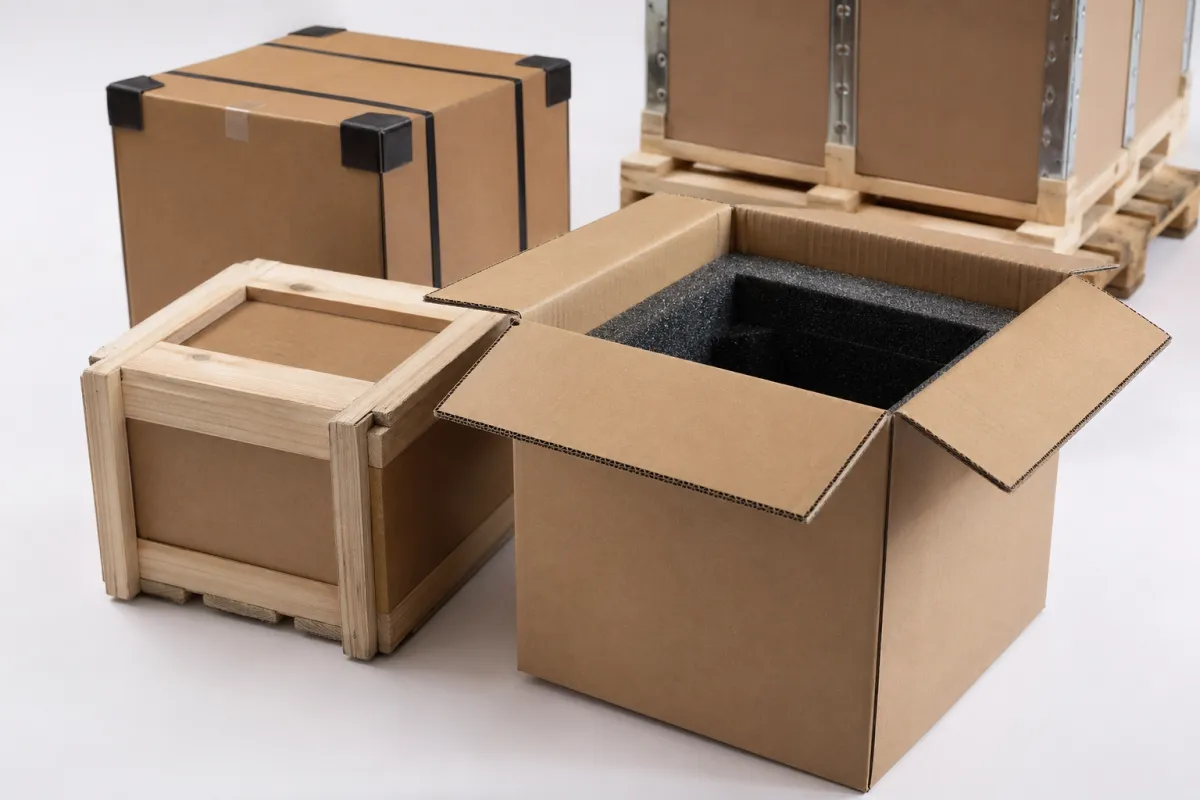
The first quote usually looks clean, but it is often built on incomplete inputs. I have seen buyers request the price of custom freight boxes with only length, width, and height, then wonder why the final figure changes after the structural review. A box that looks "standard" on paper may need stronger board, tighter tolerances, or a different flute profile once the real product weight lands at 42 pounds, 68 pounds, or 94 pounds. The carton did not change; the job did, and the job is what the quote actually has to survive.
Freight packaging is priced by performance, not appearance. Two boxes can share the same outer dimensions and still produce very different price of custom freight boxes outcomes because one uses ECT 32 single-wall corrugation while the other needs 44 ECT double-wall to survive stacking, vibration, and forklift handling. On a pallet, the difference between "close enough" and "actually passes transit conditions" can mean fewer claims, fewer reprints, and fewer phone calls that start with somebody saying, "I do not understand why it crushed." I understand why it crushed. The board did too much with too little, and the pallet told the truth.
Cube efficiency matters more than most buyers expect. If a box wastes even 1.5 inches on each side, the dimensional footprint can force a different pallet pattern or add shipping cost on an LTL lane. That is why the price of custom freight boxes should be reviewed with the product packed inside, not with the product floating loose on a CAD screen like it is waiting for a miracle. I watched a customer in Dallas cut $1,800 off monthly freight by trimming void space and tightening the carton footprint by 7%, which was enough to drop the pallet count from 18 to 16 on some runs.
The better question is not "What is the cheapest box?" It is "What is the lowest total cost after damage prevention, labor, and shipping are included?" A box that adds $0.22 per unit but prevents a 3% damage rate is usually the smarter buy. That lesson showed up clearly in a factory meeting I had near Shenzhen, where one supplier wanted to shave the board grade by 0.5 mm on a 500-unit shipment of precision parts headed for San Jose, California. The lower quote looked tempting until we calculated the replacement cost, the labor to rework the shipment, and the freight back to the dock, and the savings vanished in about 90 seconds.
There is a reason seasoned buyers get a little skeptical when the first number comes back unusually low. Usually, something is missing. It might be the insert cost, the right board caliper, the true pallet count, or the fact that the box will sit in a humid cross-dock before it ever sees a customer. That missing detail is what bites later.
"We thought we were saving on packaging, then the freight claims told a different story." A purchasing manager said that to me after his team switched to a tighter spec and stopped treating the price of custom freight boxes as a line item instead of a system cost.
What affects the price of custom freight boxes most?
The biggest drivers are box size, board grade, flute profile, print complexity, and order volume. Larger footprints use more linerboard and can raise the price of custom freight boxes quickly, while double-wall corrugated, moisture-resistant coatings, and die-cut inserts add protection and cost. Shipping method matters too, because LTL freight, palletized freight, and long-haul lanes all change the level of compression strength and transit durability the carton needs to deliver.
If you want a fast read on the quote, start with the product weight and the stack environment. A 25-pound shipper for warehouse distribution does not need the same build as a 90-pound carton that will sit three high in a humid cross-dock. That is why the price of custom freight boxes is really a pricing conversation about risk, not just paper.
The product itself matters more than many first-time buyers realize. A rigid metal component, a boxed consumer appliance, and a kit of smaller parts all behave differently inside the same outer dimension. Even the way the item is packed changes the stress on the box. One layer of foam, one cardboard divider, one wrapped part sheet, and the whole cost picture shifts. Funny thing is, that part is often what gets skipped in early sourcing calls.
What Custom Freight Boxes Are Built to Do
Custom freight boxes are heavy-duty corrugated containers engineered for palletized freight, LTL shipments, warehouse movement, and bulk product handling. The price of custom freight boxes rises when the structure has to carry more load, resist edge crush, or hold shape through long-haul vibration from a plant in Monterrey to a distribution center in Texas. In practice, you are buying a container that can survive a shipping lane, not just a print run, and there is a real difference between those two things.
Standard cartons work for light retail goods, but freight boxes are built for different abuse. They need stronger seams, more reliable compression strength, and a fit that keeps the product from shifting under 180-degree turns, drop events, and stack pressure. I have opened boxes on factory floors in Indiana where the carton was intact but the product inside had walked 2 inches sideways because the fit was too loose, and that kind of failure is preventable with a 1/4-inch tighter insert or a better inner brace. Once you see it happen, you never forget it, and it changes the price of custom freight boxes conversation immediately because failed shipments get expensive in batches.
The main use cases are industrial parts, replacement components, small equipment, retail bulk goods, and boxed shipments that need better stacking strength. A machine shop sending 55-pound metal assemblies from Detroit will not use the same spec as a supplement brand shipping branded kits at 14 pounds each out of Charlotte. That distinction affects board grade, flute selection, and the price of custom freight boxes before any print is added. The box is not a decoration; it is part of the shipping system, and the system starts with the load, not the logo.
Custom sizing matters because freight packaging should fit the product with just enough clearance for inserts, dividers, or protective wraps. Oversized boxes increase dimensional cost and waste board. Undersized boxes can trigger repacking, collapse, or surface damage. I have seen procurement teams lose a week because the original carton spec was 1.25 inches too small after the foam insert was added, and one inch sounds trivial until it destroys the whole build on the line in Memphis. That is why accurate measurements are the starting point for the price of custom freight boxes.
Environmental conditions matter too. Humidity, hot trailers, cold warehouse floors, and repeated stacking all affect performance. If a shipment sits in a damp cross-dock in the Gulf region, a single-wall spec that looked fine in a dry test room in Phoenix may fail earlier than expected. For that reason, I like to pair carton selection with transit testing references from ISTA testing standards and sourcing benchmarks that align with responsible fiber use through FSC certification. Those standards do not set the price of custom freight boxes by themselves, but they make the spec more defensible when a finance team wants evidence instead of optimism.
Our team sees the same pattern across repeat orders: freight buyers want consistency. Once the carton, insert, and pallet pattern are locked, the price of custom freight boxes becomes easier to forecast, and reorders stop feeling like guesswork. That is one reason many customers eventually move their freight line items into a standardized Custom Packaging Products program instead of buying ad hoc cartons lane by lane. It is less chaotic, and frankly, everybody sleeps better when the same 40 x 48 pallet build works in March, June, and October.
There is also the hidden factor of how the box gets handled inside the warehouse. A carton that needs extra tape, more time to fold, or a second person to load is not really cheap, even if the paper price looks nice. Those labor minutes add up fast in a busy plant, and they absolutely belong in the conversation.
Price of Custom Freight Boxes by Material and Specs
Board type is the first place I look when I price a freight project. The price of custom freight boxes shifts quickly between kraft single-wall, reinforced single-wall, and double-wall corrugated because each step adds material, weight, and machine time. A 32 ECT box is not comparable to a 44 ECT double-wall carton just because the outside dimensions match. One is built for lighter freight; the other is built to keep its shape under stack pressure, which is usually the part people forget until the pallet starts leaning like a tired man at 4:30 p.m.
Flute profile changes the economics too. A B flute carton behaves differently from a BC double-wall build, and those differences show up in both protection and production efficiency. On one supplier visit in Dongguan, I watched a 0.5 mm flute adjustment reduce the board consumption on a 10,000-piece job by 8.4%, which changed the price of custom freight boxes more than the print did. That kind of detail is why spec sheets matter, even if they look a little dull sitting on the conference table next to a roll of tape and a coffee cup.
Dimensions are not just measurements; they are a cost lever. Larger panels consume more linerboard, increase scrap if the die is inefficient, and may force more expensive sheet sizes. If a carton grows from 20 x 16 x 12 to 24 x 18 x 16, the price of custom freight boxes usually moves more than buyers expect because the box area increases on every face, not just one side. Smaller, tighter packaging design often saves more than a discount negotiation, which is annoying to hear and still true.
Print and finishing add another layer. Plain kraft freight boxes are cheaper than branded packaging with four-color exterior graphics, handling icons, and coated surfaces. Spot varnish, moisture-resistant coatings, and higher ink coverage all raise the price of custom freight boxes, but they may be worth it if the shipment is part of a retail packaging program or sits in public view at a distribution center in Pennsylvania or New Jersey. In packaging design, the cheapest print is not always the best commercial choice, even if somebody in marketing loves the mockup more than the loading dock does.
Structural upgrades are where the conversation gets practical. Die-cut inserts, reinforced corners, and dividers all increase the quote, but they can reduce crush damage, rubbing, and internal shifting. I have seen a $0.28 insert eliminate a $14 replacement event on a high-value component shipment, and I have also seen a 350gsm C1S artboard sleeve printed in one color protect a retail-facing inner pack without forcing the whole freight carton to become overbuilt. That is why the price of custom freight boxes should be evaluated with the product's failure cost in mind, not just with carton material cost. A good box earns its keep quietly, and a bad one announces itself in returns.
| Option | Typical Build | Illustrative Unit Price | Best Fit | Cost Signal |
|---|---|---|---|---|
| Economy freight carton | 32 ECT single-wall, kraft, no print | $0.15-$0.32 at 5,000 units | Light industrial parts up to about 20 lb | Lowest price of custom freight boxes, but limited stack reserve |
| Mid-tier branded freight box | 44 ECT single-wall or reinforced single-wall, 1-2 color print | $0.78-$1.15 at 1,000 units | Retail packaging, replacement kits, warehouse distribution | Balanced protection and package branding |
| High-protection freight system | Double-wall, inserts, moisture-resistant finish | $2.10-$4.85 at 1,000 units | Heavy, fragile, or high-value goods | Higher upfront price of custom freight boxes, lower damage exposure |
Those numbers are illustrative, not a promise, because the price of custom freight boxes moves with quantity, tooling, sheet utilization, and freight destination. A plain 32 ECT shipper at 5,000 pieces can land near $0.15 per unit, while the same footprint with one-color branding, a label panel, and a moisture-resistant coating may sit closer to $0.42 or $0.58 depending on the plant. Still, the table shows the real shape of the conversation: a modest spec change can move the unit price by cents or dollars, and a poor spec can cost more in damage than the carton saved on paper. I have seen that play out often enough that I now trust the boring details more than the flashy mockup.
Honestly, buyers sometimes overvalue print and undervalue structure. A clean logo on a weak box still leaves you with claims, returns, and wasted labor. If you want branded packaging that carries a freight load, the material spec has to earn its place before the artwork does. That is the practical lens I use when comparing the price of custom freight boxes across quotes, and it usually saves everybody from a very avoidable headache.
One more thing: sample pricing can fool people too. A prototype may cost a bit more per unit than production because the setup is doing all the heavy lifting. That is normal. A sample is supposed to answer questions, not compete with the final run on cost.
Pricing and MOQ: How Volume Changes the Price of Custom Freight Boxes
Volume changes almost everything. The price of custom freight boxes usually falls as order size rises because setup costs, plate charges, and tooling are spread over more units. A 500-piece run can look expensive on a per-box basis, while a 5,000-piece run may feel far more efficient even if the total check is larger. That is the trade-off procurement teams have to model, and it is one of those places where finance nods slowly while operations quietly does the real math on a Tuesday afternoon.
Minimum order quantity is not a fixed industry number; it depends on box size, print method, material availability, and tooling complexity. A plain freight carton might have a lower MOQ than a complex Custom Printed Box with special inserts. I have seen one buyer order 750 units of a simple shipper, then need 2,500 units once he added four-color branding and a custom die. The price of custom freight boxes moved because the setup no longer fit a short-run logic. The box was still a box, but the job turned into a production schedule instead of a quick fill-in order.
Samples and prototypes also change the budget. Some programs bill the sample separately at $45 to $180 depending on structure, while others credit the proof cost against production. If you are comparing the price of custom freight boxes across suppliers, ask whether the sample is a paid prototype, a digital proof, or a fully made physical mockup. Those are not the same thing, and mixing them up leads to unpleasant surprises. I have watched people compare a PDF to a die-cut sample and act confused when the pricing conversation falls apart, which is confusing in exactly the way packaging people keep warning about.
Freight and handling can distort the quote if you focus only on carton unit cost. A strong box that ships flat efficiently may cost more to make but less to move. The landed cost includes palletization, warehouse handling, and inbound freight from the plant. In one negotiation, I watched a customer pick a supplier whose carton price was 6% higher, only to save 11% after pallet count dropped from 18 to 14 per truckload. That is why the price of custom freight boxes should always be reviewed as a landed number. The box does not live alone; it lives in a truck, on a pallet, in a warehouse, and eventually in somebody's hands.
There are straightforward ways to reduce cost without weakening the package. Standardize dimensions across SKUs, remove print elements that do not support sales, avoid unnecessary inserts, and forecast in stable volume bands. If a company orders 1,000 units in January and 900 in March, it usually pays more than a buyer who commits to a quarterly schedule of 3,000. Predictability lowers the price of custom freight boxes because the production plan gets cleaner, and cleaner schedules usually make everyone in the plant less grumpy, especially the folks running a die cutter at 6:00 a.m.
- Send one common footprint for three similar products, and the price of custom freight boxes often drops because tooling is shared.
- Choose a lighter print package, such as one-color ink and a single label panel, if the freight shipment does not need full-bright graphics.
- Request two board options, such as 32 ECT and 44 ECT, so the price of custom freight boxes can be weighed against stacking risk.
- Lock a quarterly forecast of 2,500 or 5,000 units if your replenishment cycle is steady, because volume planning usually improves the quote.
That is also why I encourage buyers to compare Custom Packaging Products on a side-by-side basis instead of asking for one-line pricing with no alternatives. A two-option comparison makes the price of custom freight boxes easier to explain to finance, operations, and sales at the same time, which is helpful because those three groups rarely arrive at the same conclusion by accident. If one option is a blank 32 ECT shipper and the other is a printed 44 ECT build with a reinforced bottom, the value conversation becomes much more concrete.
And if you are buying freight boxes on a repeat schedule, the best savings usually come from consistency, not bargaining harder. A stable spec, ordered in the same band every quarter, is a much friendlier setup for a converter than a surprise rush order that changes every time the calendar flips.
Process and Timeline: From Quote to Delivery
The quote process moves fastest when you give complete data up front: dimensions, product weight, shipping mode, branding needs, and target quantity. I have seen the price of custom freight boxes arrive within the same business day when the buyer sent a full brief, including pallet pattern and stack height, instead of a vague request for "heavy-duty boxes." The difference between a 24-hour response and a 4-day back-and-forth is usually information quality, not magic, and the plant in Tampa or the plant in Suzhou will both work faster when the brief is precise.
After the quote, the review path typically runs through structure, artwork, sample approval, and production release. The structural check confirms board grade and fit; the artwork proof confirms bleed, logo placement, and barcode space; and the sample sign-off locks the job. Each step can touch the price of custom freight boxes if changes arrive late, especially when a die line has already been approved and then resized by 0.75 inches. That sort of late change tends to feel harmless right up until production asks for another round of setup and another day on the schedule.
Timeline expectations should match complexity. A straightforward freight box with a single-color logo may move from proof approval to production in 12 to 15 business days, while a more complex build with inserts, coatings, and custom print can take 18 to 25 business days. Rush requests usually raise the price of custom freight boxes because they compress scheduling, add changeovers, or force a priority slot on the line. I prefer honest lead times over optimistic promises that slip by a week and leave everybody pretending not to notice.
Delays usually come from missing measurements, late artwork, unclear loading requirements, or spec changes after approval. In one client meeting, a team approved a carton at 30 x 20 x 18, then changed the product insert to a thicker foam pack two days later. The carton no longer fit, the carton had to be resized, and the price of custom freight boxes changed because the board yield changed with it. That is a costly way to learn how packaging design works, but apparently it remains a popular method in enough conference rooms to keep me busy.
A cleaner brief gives you a faster quote and a more reliable delivery schedule. I ask for four things first: product weight in pounds, outside dimensions in inches, shipping method, and whether the box must carry retail graphics or just handling marks. With that information, the price of custom freight boxes becomes less of a guess and more of a controlled spec. It also lets everyone avoid the awkward "we meant inches, not centimeters" conversation, which I wish I could say never happens in a plant in Houston or a sourcing office in Los Angeles.
If you need a test-ready comparison, ask for a structural PDF, a plain mockup, and one branded sample. Those three pieces answer different questions: fit, appearance, and production risk. They also reveal whether the supplier understands product packaging as a working system rather than a decorative shell. That distinction matters more than people admit in first meetings, especially when the product is worth $18,000 and the box costs less than lunch for the team.
There is also a trust element here. If a vendor is vague about lead time, sample charges, or what happens after artwork approval, that is a sign to slow down. Good packaging partners are usually plainspoken about what they can and cannot do, and that honesty is worth more than polished language.
Why Choose Us for Custom Freight Boxes
Custom Logo Things focuses on freight packaging that performs in transit, not just on a mockup sheet. The price of custom freight boxes should make sense against the lane, the load, and the cost of failure, and that is the standard we use when reviewing specs. If a box is overbuilt, we will say so. If it is too light for the job, we will say that too. Honest comparison is part of the service, because sugarcoating a weak carton helps nobody once it is on a truck headed from Michigan to Nevada.
Repeatability matters just as much as first-run quality. A buyer may get one good carton from any vendor, but reorders reveal the real story. We pay attention to consistent flute structure, stable print registration, and dimension control across lots because freight buyers cannot afford a 0.25-inch swing on a standardized shipper. That consistency is part of why the price of custom freight boxes should be judged alongside variation, not just unit cost. A cheap quote is not much comfort if every third shipment has to be reworked at the dock.
I have sat across from sourcing teams who were told to choose the lowest quote, then asked to explain three months later why damage claims doubled. That is usually where the conversation changes. Buyers stop asking for the absolute cheapest carton and start asking for the right spec, the right lead time, and the right service response. A supplier should make the price of custom freight boxes clearer, not more confusing, and if a quote leaves you more puzzled than when you started, that is not a good sign.
Our support also helps buyers compare options in plain language. You may need one version for freight, another for retail packaging, and a third for warehouse replenishment. That is where branded packaging and package branding need to stay aligned with operational reality. If the logo looks good but the box collapses under stack weight, the design missed the point. If the structure is strong but the print does not match the product line, the marketing team notices immediately, usually before anyone else gets to the dock in Atlanta or Portland.
For customers who want a broader view of what we make, the Custom Packaging Products catalog is useful because it shows how freight, display, and retail structures can share common dimensions and materials. That kind of standardization often helps the price of custom freight boxes move downward over time, especially when multiple SKUs can share one carton family. I like that kind of order in a packaging program; it makes sourcing feel less like a scavenger hunt and more like a controlled build schedule.
I also appreciate the value of simple documentation. Clear dielines, board callouts, and handling notes reduce rework. In my experience, a neat spec sheet with 32 ECT, 1-color print, and a 25-pound max load is worth more than three pages of vague adjectives. It keeps the price of custom freight boxes anchored in something the plant can actually build, which is the part that matters after all the polished language is gone. A factory in Suzhou or a converter in Ohio can both work from that kind of clarity without chasing someone for missing details.
That reliability is a big part of the value. Anyone can chase the low quote once. The real test is whether the same spec keeps working six months later when reorder season hits and nobody wants surprises.
Next Steps to Lock in Your Price
If you want a faster quote, send dimensions, product weight, shipping method, target quantity, and any print or handling requirements in one message. That one packet can cut the price of custom freight boxes turnaround time dramatically because it removes the back-and-forth that usually slows spec review. I usually ask for the carton size, the load weight, and whether the shipment will be palletized or loose packed before anything else, because those three details tell me a lot about the right starting point and the right plant schedule.
Ask for at least two spec options so you can compare protection and pricing side by side. One should be the lightest viable build, and the other should be the safer build for higher-risk lanes. That comparison makes the price of custom freight boxes easier to defend internally because operations can see the difference in board strength, while finance can see the difference in unit cost. A side-by-side spec sheet tends to settle arguments faster than a long email thread ever will, especially when the numbers are written next to a 40 x 48 pallet layout.
Request samples or dielines before you approve a full run, especially if the product is fragile, high-value, or unusually shaped. A sample that costs $60 can prevent a 2,000-piece error that costs far more. Confirm the timeline, reorder policy, and freight assumptions before you sign off. Once those details are fixed, the price of custom freight boxes becomes a planning tool instead of a surprise, which is the whole point of doing this work in the first place. In a clean program, the sample is approved on Tuesday, the proof is signed on Wednesday, and production starts the following Monday.
My direct advice is simple: do not buy the carton first and the answer later. Buy the spec, then buy the quantity. If you do that, the price of custom freight boxes stops looking like a mystery and starts looking like a controllable part of your supply chain. That shift alone can save a lot of time, money, and exasperation, and it usually makes the next replenishment cycle in Nashville, Oakland, or Orlando much easier to run.
If you already have a rough sketch, even better. Start with the heaviest unit in the shipment, the worst transit lane, and the tightest pallet pattern. Those three things usually tell you more about the real cost than any glossy spec sheet does.
What affects the price of custom freight boxes most?
Box size is usually the biggest driver because it changes material usage and shipping cube, and that alone can move the price of custom freight boxes by a meaningful amount. Board grade and flute structure follow close behind; a move from single-wall to double-wall can change the quote faster than print does. Order volume also matters because setup costs spread out over larger runs, which is why 5,000 units often price better than 500. I have watched a 2-inch footprint change turn into a freight cost change of $240 per truckload, which is why the details matter so much.
How can I lower the price of custom freight boxes without reducing protection?
Start with fit. A tighter carton that removes excess void space often lowers the price of custom freight boxes because it uses less board and may improve pallet density. Then choose the lightest board grade that still meets stacking and transit needs, and simplify print or accessories that do not help performance. I have seen a $0.22-per-unit insert removed only after testing proved it was not needed, and that was a very satisfying day for the budget and the dock team alike.
What is a typical MOQ for custom freight boxes?
MOQ depends on size, construction, and print method rather than one fixed number, so the price of custom freight boxes should be quoted with your actual specs in hand. Larger or more complex boxes often carry higher minimums because setup costs are greater and sheet efficiency is lower. If your forecast is uncertain, ask for tiered pricing at 500, 1,000, and 5,000 units so you can compare the break points clearly. That kind of spread gives you a much better read on where the real value sits.
How long does it take to get a custom freight box quote and sample?
A complete quote is usually faster when you provide dimensions, weight, quantity, and shipping details upfront, and that usually keeps the price of custom freight boxes stable while the quote is being built. Sample or proof timing depends on artwork and structural complexity. A simple proof can move quickly, while a complex build with inserts, coatings, or custom print may need extra review before production is released. For many standard programs, the path from proof approval to production is typically 12 to 15 business days, and I always recommend building in a little breathing room because packaging schedules love to be slightly more dramatic than anyone planned.
Are custom freight boxes cheaper than crates or pallets?
Often yes when you compare total landed cost, not just material cost, because boxes can reduce labor, shipping cube, and handling time for many freight shipments. That does not mean they always win. Very heavy or irregular loads may still justify crates or pallets. The right answer is the one that gives the lowest damage rate and the best price of custom freight boxes relative to the shipment's real risk. I have seen plenty of cases where the "cheaper" structure was not the cheaper outcome once the freight got out the door and the claims started coming back.

