Custom Printed Canvas bags have a peculiar advantage: they feel substantial before a logo ever touches the fabric. The weave is visible, the body holds shape, and even a plain tote suggests repeat use instead of disposal. That matters in retail packaging, branded packaging, and event kits, where the bag is not just a carrier. It is part of the product story.
Buyers often focus on artwork first. In practice, the fabric and construction decide whether the print looks intentional or merely applied. A good canvas bag can carry the same brand language as custom printed boxes, but with a softer, more reusable form factor. A weak spec, by contrast, makes even strong artwork look underdeveloped.
The best results come from matching three things: the material weight, the print method, and the way the bag will be used. A tote for a bookstore, a conference, and a bottle set are not the same job, even if they share the same shape. That is where most of the useful detail sits.
Why canvas feels premium before the print even starts
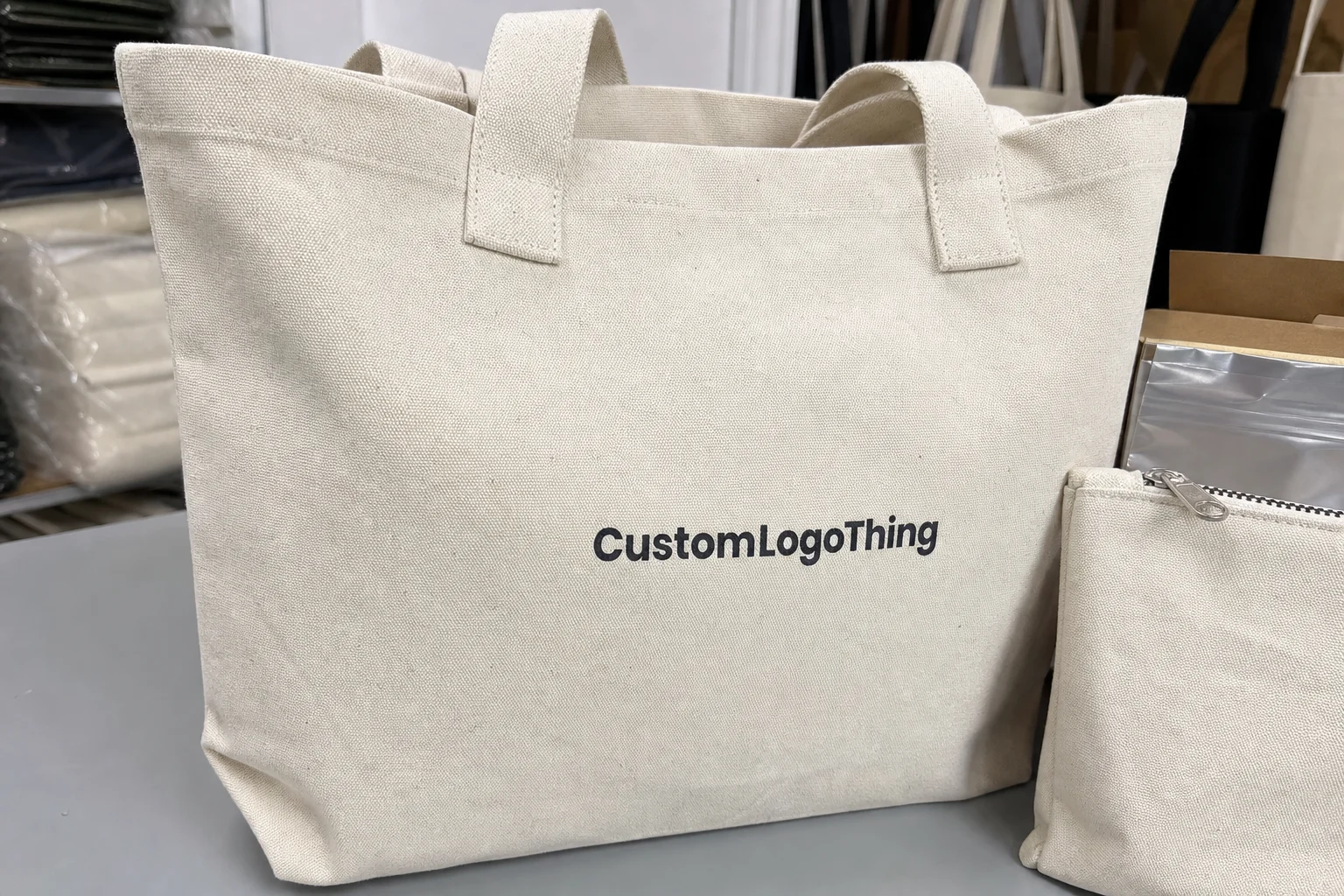
Canvas signals durability through texture alone. It is woven rather than flimsy, matte rather than glossy, and it tends to hold its profile instead of collapsing into a wrinkle-heavy sheet. That changes perception immediately. A bag that stands up on a counter feels like merchandise. A bag that slouches feels like a throwaway promo item.
This is one reason custom Printed Canvas Bags show up in retail gifting, bookstore merchandise, trade show kits, and premium event packaging. The material does part of the branding work before decoration is added. Minimal logos, clean type, and simple illustrations tend to perform well because the fabric already contributes visual interest. Overdesign can fight the weave. Simpler layouts usually read better from arm’s length and survive real use more gracefully.
A canvas bag prints best when the artwork respects the surface. Push tiny type or thin lines across a coarse weave, and the design starts to fight the fabric instead of working with it.
There is also a tactile effect that gets underestimated. People handle a bag for a second or two, then decide whether it feels keepable. That short contact window is enough to shape brand memory. If the handle feels weak, the seam looks sloppy, or the bag has no structure, the logo has less credibility attached to it. The same artwork on a better-built tote lands differently.
For buyers coordinating the bag with other packaging items, consistency matters more than novelty. A tote can echo the same typography, color palette, or minimalist treatment used on a carton, insert, or hangtag. That is how packaging begins to feel designed as a system rather than assembled from separate parts. For a broader reference point, the Custom Packaging Products catalog can help compare bag formats with other packaging structures before a spec is locked.
How the printing process works on canvas fabric
Canvas is forgiving in some ways and demanding in others. It accepts ink well enough, but the weave softens small details. What looks crisp on a monitor can blur when it meets textured cloth. That is why file preparation matters more than most first-time buyers expect. The bag is not a poster. It behaves like fabric, which means line weight, contrast, and spacing all need to be adjusted with that in mind.
Screen printing is still the most common choice for bold logos and flat spot colors. It is efficient on larger runs and reliable when the design is simple. Heat transfer is better suited to more detailed art or color variation, though it needs careful alignment and testing against the specific bag surface. Embroidery and woven labels add texture and a more elevated finish, but they are not interchangeable with ink-based methods. They create a different look entirely, closer to sewn-on branding than printed graphics.
- Screen printing works well for strong logos, solid fills, and high-volume orders.
- Heat transfer suits finer detail or more complex artwork, but it needs careful placement control.
- Embroidery creates depth and a premium feel, though it works best with simpler artwork.
- Woven labels are useful when the brand wants a textile-forward finish without a large print area.
Dark or dyed canvas complicates color management. Light ink may need an underbase to stay visible. Saturated base colors can shift how a brand color reads. A red logo on natural canvas is straightforward; the same red on navy or olive cloth may require proofing, and the final result can be warmer or duller than expected. That is not a defect. It is the basic physics of print over substrate.
Pre-production checks are where problems are prevented, not solved. Artwork cleanup, scale review, placement marking, and seam awareness all happen before a run starts. If the artwork sits too close to a fold, crosses a gusset awkwardly, or crowds a handle stitch, the final bag can look distorted even if the print itself is technically clean.
For programs where the bag will travel inside cartons or kits, the packaging logic should be treated seriously. The same discipline used in transit testing, including the sort of thinking behind ISTA standards, applies here: protect the contents, reduce damage, and avoid surprises after packing. A reusable bag that fails in shipping is not only a decoration issue. It becomes a packaging failure.
Key spec factors that change look, feel, and durability
Fabric weight is the first number worth checking. It changes drape, stiffness, and perceived value. A 6 oz canvas bag feels lighter and more promotional. A 10 oz bag has more body and tends to hold shape better. Heavier constructions can go higher still, but the point is not to chase the largest number. The point is to match the bag to the load and the brand moment.
Size is just as important. A tote that looks generous in a mockup can be too shallow in real use. Buyers usually notice this only after they try to fit boxed goods, apparel, or literature into it. Handle length changes the carrying experience as well. Short handles work for hand carry; longer straps are more practical for shoulder use and repeated reuse. Gussets expand capacity and make the bag easier to load, which is valuable if the bag must carry more than a flat set of brochures.
Construction details tend to separate an acceptable bag from a durable one. Reinforced stitching, seam finish, lining, inner pockets, and label placement are not decorative extras. They affect how the bag behaves after it is filled, dropped, folded, and reused. A buyer may not describe those details verbally, but they feel them immediately. A well-built tote has a quiet confidence. A flimsy one advertises its limits.
Color choice also changes how the brand is read. Natural canvas is common because it is neutral, warm, and easy to print on. Dyed canvas can feel more premium or more fashion-driven, depending on the palette, but it asks for more proofing. The base color influences contrast, and poor contrast can make even good artwork disappear at a distance. Bright logos on dark cloth can be striking. They can also fail if the ink system is not chosen carefully.
There is a practical tradeoff between print area and production risk. Bigger graphics create more visual presence, but they also increase the chance of misalignment, distortion near seams, and inconsistency across the run. Smaller, cleaner marks often look stronger because they are easier to place accurately. The best bag graphics are usually not the most ambitious. They are the ones that survive repeat handling and still look clear after the bag has been folded, packed, and carried a few times.
| Option | Typical Use | Common Unit Range | Notes |
|---|---|---|---|
| 8 oz natural tote, 1-color screen print | Events, giveaways, lightweight retail packaging | $1.80-$2.40 at 1,000 pcs | Usually the most budget-friendly setup |
| 10 oz reinforced tote, 1-color screen print | Merchandise, gift sets, repeat-carry use | $1.95-$2.85 at 1,000 pcs | Better structure and better shelf feel |
| 10 oz tote, 2-color print | Branded packaging with stronger visual impact | $2.25-$3.35 at 1,000 pcs | Additional setup and labor raise the price |
| Canvas bag with embroidery or woven label | Premium retail programs and higher-end kits | $2.80-$4.50 at 1,000 pcs | Texture and finish feel more elevated |
Those numbers are working ranges, not promises. Final pricing shifts with bag size, fabric weight, print method, total quantity, packing format, and shipping terms. Still, they reveal the basic structure of the market: every added color, premium finish, or custom construction choice pushes labor or setup cost upward. No supplier escapes that arithmetic.
Cost and pricing: what drives your quote
Quantity is the biggest pricing lever after the basic spec. Setup costs do not change much from one order size to another, so smaller runs carry a heavier burden per unit. That is why a 250-piece order can look expensive beside a 5,000-piece run even if the bag is identical. Screens still need to be prepared. Artwork still needs to be checked. The press still needs to be set.
Decoration method is the next major factor. Single-color screen printing is usually the most economical choice for canvas. Add a second print location, more colors, a larger imprint, or a more specialized finish, and the price climbs because the process slows down. Heat transfer can raise costs when the artwork is more complex or when extra handling is required. Embroidery often sits higher still because digitizing, thread density, and machine time all matter.
There are also small costs that quietly reshape the total. Sampling, freight, rush fees, custom labels, insert packing, and specialty inks can add up. Even the way bags are packed for shipment matters. Bulk packing is usually simpler and cheaper. Individual polybagging costs more, but it may be required for retail packaging or fulfillment workflows. A quote that only covers the bag and the print is not the full landed cost.
One useful rule: start with a standard bag shape, keep the art clean, and print in one strong location. That usually gives the best balance between cost, appearance, and production risk. If the first run performs well in actual use, it becomes easier to justify upgrades like heavier cloth, added stitching, or a secondary label on the next order.
That same unit-economics mindset applies if the bag is being compared with inserts, cartons, or custom printed boxes. The cheapest item on paper is not always the cheapest item in practice. If a lighter bag wears out quickly or prints poorly, it can do more damage to perceived value than the small savings were worth.
Production steps and timeline from artwork to delivery
The production path is straightforward, but each stage creates room for delay if the information is incomplete. It usually starts with artwork submission, followed by a digital proof. Some orders need a sample or strike-off before mass production begins. After approval, the run moves into printing, finishing, packing, and shipping. For simple tote orders, a lead time of about 12 to 15 business days from proof approval is common, though custom dyeing, embroidery, or complex finishing can stretch that window.
Artwork quality affects the timeline more than many buyers expect. Low-resolution files, missing fonts, unconverted spot colors, or unclear placement notes all create back-and-forth. That slows everything down. PMS matching requests can also add time, especially on dyed fabrics or when multiple decoration methods are involved. Even a small late-stage change can trigger a new proof, and a new proof moves the schedule.
Good suppliers define the checkpoints clearly. The buyer should know when proof approval is needed, whether a sample is required, and at what point the order is considered locked. That matters because screens, machine settings, and packing plans are not infinitely adjustable once production begins. Change after that point and the job becomes more expensive, or sometimes impossible without rework.
Lead time should be judged against use case. A tote for a trade show brochure kit has a different burden than a reusable bag meant to carry bottles, boxed merchandise, or apparel. If the tote is going into a mail-ready set, carton fit and shipping weight matter early. A bag can be visually correct and still fail the real assignment if it is too shallow, too flimsy, or awkward to pack.
For teams sourcing through Custom Packaging Products, the practical move is to settle the spec before chasing the fastest ship date. Speed has value. It just should not outrun fit, print clarity, or structural confidence.
Common mistakes that make printed canvas bags miss the mark
The first mistake is artwork that is too delicate for the fabric. Tiny type, thin rules, and photographic effects often look sharper on a screen than on woven canvas. Screen printing magnifies that problem. The ink can only do so much when the substrate is textured. Clear shapes, decent spacing, and moderate line weight usually deliver a stronger result.
Size mismatch is next. A bag can look right in a mockup and still fail once the real product goes inside. That issue shows up in merchandising, event work, and retail packaging, where the tote has to hold not one item but a small kit. If the opening is too narrow or the gusset too shallow, the bag may technically work while feeling wrong in use. Practical failure does not always look dramatic. Sometimes it just looks awkward.
Color contrast gets misjudged often. Light logos on natural canvas can be elegant, but if the shade is too close to the fabric tone, the mark fades from view. The same problem appears on dark dyed fabric if the art lacks enough separation. Visibility is not a decorative detail. It is part of brand recall. If a logo disappears at conversational distance, the bag has stopped doing its job.
Handle and seam strength are easy to overlook until the tote is loaded. That is the point where weak construction reveals itself. If the bag will carry glass, books, bottles, or multiple boxed items, it should be built for that load from the start. Saving a few cents on structure is a poor trade if the result stretches, twists, or fails after a few uses. At that point, the issue is not decoration. It is Product Packaging Design.
A proof that only checks the logo is not enough. Dimensions, placement, seam lines, handle construction, and the intended load should all be verified before release.
The approval stage is where good orders are protected. If the proof does not show the final print area, real dimensions, and the relationship between artwork and seams, the job is not fully ready. Buyers who spend time here usually avoid the most common delivery problems.
Expert tips for a cleaner print and stronger brand impression
Design for the material, not against it. Canvas works best with bold shapes, medium-weight type, and enough empty space around the logo to let the eye settle. If the art is too crowded, it disappears into the weave. If the type is too fine, it loses edge. The strongest canvas graphics are usually simpler than the initial concept board.
One placement often works better than several. A single front mark gives the bag a clearer hierarchy and makes the branding easier to read. A small woven label or side-seam detail can add refinement without cluttering the bag. That approach tends to feel more deliberate than covering every surface with messages. In packaging terms, restraint often reads as confidence.
Match the bag weight to the product inside. It is basic advice, but it saves a lot of trouble. A tote for a two-pound apparel kit does not need the same structure as one carrying bottles or boxed goods. If the bag is going into a retail environment, it should feel like part of the offer, not like a disposable carrier attached at the end.
Ask for a proof or sample when color accuracy matters. Natural canvas is relatively forgiving because the neutral base helps the print stand out. Dyed canvas is less forgiving, so proofing becomes more useful. For a launch, seasonal drop, or customer-facing gift, that extra step usually earns its place. The cost of a sample is small compared with the cost of hundreds or thousands of bags that miss the intended look.
Consistency across packaging pieces also matters. If the tote shares the same typeface, color family, or visual rhythm as the carton and insert, the whole package feels considered. That does not require a dramatic concept. It requires discipline. Small alignment choices often do more for perception than expensive embellishment.
Next steps to request the right specification and quote
Before requesting pricing, gather the basics: bag style, dimensions, fabric weight, color, print method, quantity, artwork file, and deadline. Add intended use if you know it. A tote for retail merchandise is specified differently than a tote for a conference kit or a mailer insert. The supplier needs that context to recommend the right structure.
It helps to request two specs side by side. Compare a standard tote with a reinforced version, or a one-color print with a two-color version. That makes the tradeoff visible. Sometimes the heavier construction only changes the price slightly. Other times the lighter build is enough because the bag will never carry a heavy load. Seeing both options prevents guessing.
Ask for a timeline with the quote. Price and delivery should be evaluated together. A lower number is not useful if it misses an event, a store launch, or a seasonal release. If the order needs custom labels, embroidery, or special packing, disclose that early. Those choices affect both schedule and cost.
If the bag is part of a broader merchandising or packaging rollout, the supplier should understand the whole presentation, not only the tote itself. That context informs print area, handle length, closure style, and overall feel. The finished item should sit naturally beside the rest of the package system.
Custom printed canvas bags remain one of the most practical ways to make reusable packaging feel intentional. The formula is not complicated: Choose the Right cloth weight, keep the art legible, and specify construction that matches the load. That combination does more for brand perception than extra decoration or overly clever design.
What makes custom printed canvas bags different from other reusable bags?
Canvas is woven, thicker, and more structured than many nonwoven or thin plastic alternatives. It usually feels more premium and supports repeat use, which improves brand perception. The texture also affects print quality, so artwork should be prepared for a fabric surface rather than a flat paper stock.
Which print method works best for custom printed canvas bags?
Screen printing is often the best fit for bold logos and simple spot colors. Heat transfer handles more detailed artwork when the design needs finer control. Embroidery and woven labels are better when the goal is a textured, premium finish rather than a flat printed mark.
How do I know what canvas weight to choose?
Heavier canvas generally feels sturdier and keeps its shape better. Lighter canvas can work for giveaways or low-load use. The right choice depends on what the bag needs to carry, how often it will be reused, and whether the bag should feel casual or retail-ready.
Why does pricing vary so much for printed canvas bags?
Price changes with bag size, fabric weight, decoration method, and quantity. Setup costs matter more on smaller runs. Rush timing, sampling, special inks, and extra packing steps can also change the final number.
What should I send when requesting a quote for custom printed canvas bags?
Send artwork, preferred bag size, color, quantity, and any deadline. Include the intended use so the supplier can suggest the right construction and print method. If possible, ask for a proof or sample so placement and print quality can be checked before production starts.
For most buyers, the smartest path is simple: define the bag spec first, confirm the print method second, and then ask for a quote that reflects the real use case. That keeps the bag aligned with the rest of the packaging program instead of treating it as an afterthought.

