Buyer Fit Snapshot
| Best fit | Custom Printed Poly Mailers for Boutiques projects where brand print, material claims, artwork control, MOQ, and repeat-order consistency need to be specified before quoting. |
|---|---|
| Quote inputs | Share finished size, material target, print colors, finish, packing count, annual reorder estimate, ship-to region, and any compliance wording. |
| Proofing check | Approve dieline scale, logo placement, barcode or warning zones, color tolerance, closure strength, and carton packing before bulk production. |
| Main risk | Vague material claims, crowded artwork, missing packing details, or unclear freight terms can make a low unit price expensive after revisions. |
Fast answer: Custom Printed Poly Mailers for Boutiques: Film, Print, MOQ, and Carton Packing should be specified like a repeatable production item. The safest quote records material, print method, finish, artwork proof, packing count, and reorder notes in one written spec.
Production checks before approval
Compare the actual filled-product size with the drawing, then confirm tolerance on folds, seals, hang holes, label areas, and retail display edges. Reserve space for logos, QR codes, warning copy, and material claims before decorative graphics fill the panel.
Quote comparison points
Review material grade, print process, finish, sampling route, tooling charges, carton quantity, and freight assumptions side by side. A quote is only useful when the supplier can repeat the same color, closure quality, and packing count on the next order.
For a lot of shoppers, custom Printed Poly Mailers for boutiques are the first physical thing they touch from a brand, which means the packaging is already doing a bit of selling before the product is even unwrapped. That sounds small, maybe even fussy, but it is not. Packaging has a way of setting expectations fast. A mailer can signal care, speed, and consistency, or it can quietly suggest the opposite.
Think about the doorstep moment. A plain gray bag says very little. A well-printed mailer with clean logo placement, controlled color, and a tidy seal feels more like retail packaging than a shipping afterthought. For apparel, scarves, swimwear, and small accessory lines, that difference matters because the customer starts judging the brand long before they get to the hanger or the tissue paper.
The practical side matters just as much as the visual one. Boutique owners are not buying packaging only because it looks nice in photos. They need a film that survives transit, a size that does not waste material, and a print layout that still reads clearly after folding, stacking, and label application. The best packaging decisions usually sit right at that intersection: attractive, efficient, and workable in a real packing room.
That is the real value of custom Printed Poly Mailers for boutiques. They can lift package branding without the cost and bulk of boxes for every order, and they fit naturally into apparel fulfillment where a flexible bag is often the better tool. Still, they are not the right answer for every product. Rigid items, fragile goods, and heavier merchandise may need Custom Packaging Products with more structure, or even Custom Poly Mailers in a heavier gauge. The trick is to match the package to the inventory, not the other way around.
A mailer is not just a shipper. It is the first piece of product packaging your customer actually touches, and that touch can feel intentional or forgettable.
Custom Printed Poly Mailers for Boutiques: Why They Stand Out
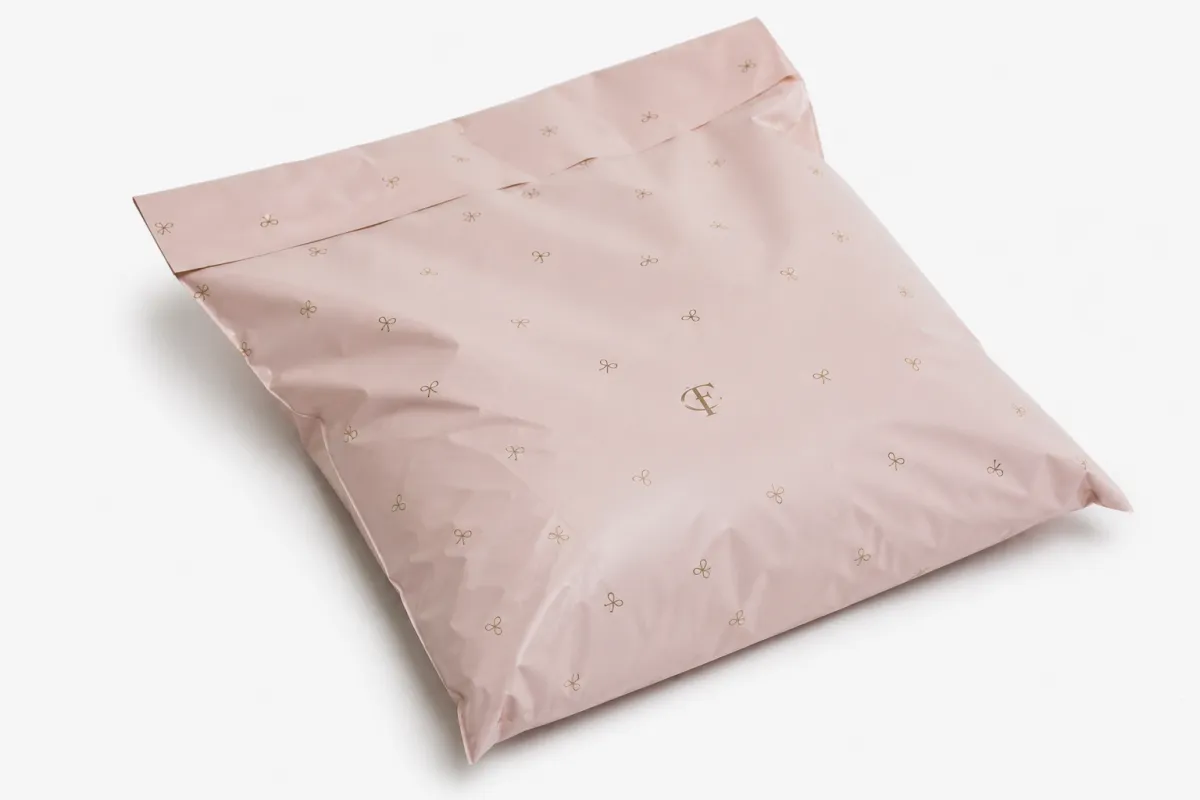
Custom printed poly mailers for boutiques stand out because they turn a necessary shipping supply into a visible brand asset. A boutique may not have the footprint of a national chain, but a well-designed mailer can make the operation feel more established, more polished, and more consistent from order to order. In a market where customers often judge the whole brand from one delivery, that has real weight.
The difference between plain shipping bags and custom printed poly mailers for boutiques is not only the logo. It is the total impression. When the color is controlled, the type is readable, and the artwork is placed with intent, the package feels finished. That is especially useful for small apparel brands that want their package branding to hold up across social media, unboxing videos, and repeat orders.
There is also a shelf-to-door continuity that many buyers miss. A customer may see the same logo on the boutique's tag, website, tissue paper, and shipping bag. That repetition builds recognition in a way that is almost stubbornly practical. The bag does not need to be loud to work. It just needs to be coherent. A lot of package branding succeeds through restraint and consistency rather than flash.
Another reason boutiques use custom printed poly mailers for boutiques is simple efficiency. Lightweight apparel and soft goods usually do not need the rigidity of boxes. A flexible mailer keeps shipping volume lower, reduces unnecessary weight, and speeds up packing. Compared with some forms of Custom Printed Boxes, a poly mailer can often be a leaner fit for the same product category, especially when the order is a folded garment or a soft accessory.
That said, there is a tradeoff. Poly mailers do not offer the crush protection of a corrugated box, and they will not fix a poor size choice. If the bag is too tight, seams can stress. If it is too large, the contents can shift around, making the package look sloppy. So the appeal of custom printed poly mailers for boutiques is real, but the sizing discipline has to be real too.
Good boutiques use that reality to their advantage. They pick one or two mailer formats that match the bulk of their assortment, then use design, color, and seal quality to make the packaging feel intentional. That is the sweet spot: lower friction in the packing room, stronger presence at the doorstep. I have seen smaller brands look more established with a simple, well-specified mailer than with a fancy box they could barely afford to keep in stock.
How Custom Printed Poly Mailers for Boutiques Work
At the core, custom printed poly mailers for boutiques are built from a flexible polyethylene film that is folded and sealed into a pouch, usually with an adhesive closure strip. The film is thin enough to keep the mailer light and compact, but strong enough to protect the contents from dust, light moisture, and routine handling during parcel movement. That basic construction is one reason boutiques rely on them for everyday product packaging.
The print is applied directly to the film, so artwork choices need to be planned with the material in mind. Paper packaging behaves differently. Poly film stretches less, reflects light differently, and can make tiny type harder to read if the design is too fine. That is why successful custom printed poly mailers for boutiques usually use bold logos, clear contrast, and artwork that tolerates a little movement during printing and sealing.
From the packing bench to the doorstep, the process is straightforward. An order is picked, folded, and inserted; the adhesive flap is closed; a shipping label is applied; and the package moves into the courier network. That simplicity is part of the appeal. For boutiques shipping apparel, the fewer steps there are between picking and dispatch, the easier it is to keep labor predictable and errors low.
These mailers are especially useful for flat-folded tees, leggings, socks, scarves, small gift items, and subscription-style assortments. They can also work for swimwear or lightweight athleisure, as long as the selected film thickness matches the load. In that sense, custom printed poly mailers for boutiques are not just a branding choice; they are a fit-for-purpose shipping format.
Think of the mailer as part of a broader product packaging system. The bag protects the contents, the label gets the parcel to the right address, and the printed surface communicates brand identity. Those three jobs need to work together. If one of them is weak, the whole experience feels less credible.
If you want a reality check on shipping performance, the packaging industry has long used test methods and transport expectations to gauge parcel durability. Organizations such as ISTA publish distribution testing guidance, and that mindset is useful even for smaller boutique programs. You do not need a lab for every decision, but you do need to ask whether the package can survive the trip without arriving tired, scuffed, or oddly collapsed.
Some boutiques also pair poly mailers with paper inserts, thank-you cards, or tissue. If those items matter to your presentation, the paper side of the package can be sourced with sustainability goals in mind through standards like FSC. That is where packaging design becomes more than a bag choice. It becomes a coordinated system that supports both function and brand voice.
Material Choices, Print Quality, and Finish Options
Material choice changes everything about custom printed poly mailers for boutiques. Standard polyethylene is the baseline and works well for many soft goods. Recycled-content film appeals to brands that want to speak more clearly about waste reduction, although availability, print behavior, and surface feel can vary. Thicker gauges improve tear resistance and usually feel more premium in hand, which can matter if the boutique wants a sturdier, more polished delivery experience.
Print quality depends on the design and the production method. A one-color logo on a solid field is usually the easiest to keep crisp. Two-color artwork can still look excellent if the contrast is strong and the logo lines are not too delicate. Full-coverage graphics can be striking, but they often raise cost and increase the risk of minor registration issues. For custom printed poly mailers for boutiques, the best artwork is often the one that reads clearly at arm's length, not the one that tries to cram every brand detail onto a shrinking surface.
Finish matters as much as color. Matte film tends to look softer and more contemporary, while gloss can make the colors pop and reflect light more dramatically. Opaque mailers hide the contents better, which is useful for privacy and presentation. Translucent film can save cost or create a lighter look, but it may reduce perceived value if the product shows through in a way that feels messy. Those tradeoffs are not abstract. They show up every time a customer touches the package.
Design limits are real on film. Safe margins around the seal, fold lines, and adhesive area should be protected, and the artwork should be planned so it remains legible after the bag is filled. Fine script fonts, thin lines, and tiny legal text can disappear quickly on poly surfaces. That is why experienced buyers of custom printed poly mailers for boutiques usually keep the design bold, centered, and simple enough to survive production realities. Fancy is fine. Fragile is not.
| Mailer Option | Typical Boutique Use | Typical Unit Range at 5,000 Pieces | Visual Effect | Notes |
|---|---|---|---|---|
| Standard polyethylene, 2.5-3 mil | Tees, scarves, light basics | $0.12-$0.20 | Clean and simple | Good for everyday fulfillment and lower weight shipping |
| Recycled-content film, 3 mil | Eco-positioned apparel and accessories | $0.15-$0.24 | Similar to standard film, sometimes slightly softer | Ask for documentation on recycled content claims |
| Premium opaque film, 3.5-4 mil | Higher-end boutique drops | $0.18-$0.30 | More substantial and private | Better for a polished unboxing presentation |
| Heavy-duty film, 4.5-5 mil | Denser knits, layered apparel, rougher transit | $0.22-$0.36 | Sturdy, premium feel | Useful when you want extra tear resistance |
For boutiques comparing these choices, the most useful question is not simply "What is cheapest?" It is "What film, print, and finish combination gives me the best result for the way my products actually ship?" That is a very different decision. Custom printed poly mailers for boutiques can look elevated at a modest cost, but only if the material specification fits the merchandise and the printing stays within realistic design limits.
If your assortment includes both basics and premium pieces, you may not need one universal spec. A lighter bag can work for small accessories, while a thicker, more opaque mailer may be better for hero items or seasonal launches. That kind of segmentation is classic packaging design: use the right level of material where the customer will feel it most.
Cost, Pricing, and MOQ: What Boutiques Should Expect
Pricing for custom printed poly mailers for boutiques is driven by a handful of variables that are easy to measure once you know what to ask. Film thickness is one. Bag size is another. Print coverage matters a lot, because a simple one-color logo on a white background is cheaper to run than a full-bleed design with multiple colors. Quantity is often the biggest factor of all. Once you move from a small pilot to a larger run, the unit cost usually drops in a noticeable way.
Minimum order quantity, or MOQ, matters because setup costs have to be spread across the run. A boutique ordering a small quantity may see a much higher unit price than a store committing to a full seasonal quantity. That does not automatically make the small order a bad move. It just means the economics are different. If the product line is unproven, a smaller run of custom printed poly mailers for boutiques can be a sensible test. If the design and size are already validated, a larger order often makes more sense.
When you request a quote, ask for the full landed picture. Freight can move the final number more than buyers expect. So can proofing, artwork cleanup, reruns, and specialty features. If a supplier only gives a unit price and leaves out the rest, the comparison is not honest yet. For custom printed poly mailers for boutiques, clear quoting is part of the buying discipline.
Here is a practical budgeting frame:
- Use a lower-cost mailer for everyday apparel that ships in volume.
- Reserve a more premium film for special drops, holiday packaging, or higher-margin items.
- Build in freight and proofing so the quote reflects real landed cost.
- Compare the same size, same film, same print colors, and same quantity across vendors.
That kind of discipline keeps the conversation grounded. A low quote can disappear quickly if the material is thin, the seal is weak, or the freight bill is heavy. A slightly higher quote can be a better value if it gives you better print clarity, lower waste, and fewer shipping complaints. That is why many buyers treat custom printed poly mailers for boutiques as a packaging investment rather than just a supply expense.
Some boutiques also discover that they can reduce spend by simplifying elsewhere. A mailer with strong printed branding may reduce the need for extra printed sleeves or branded outer cartons for every order. That does not mean eliminating all secondary packaging. It just means the printed mailer can carry more of the brand story, which is often enough for apparel and soft goods.
If you need a realistic starting point, many buyers look at small-to-mid volume runs in the range of 1,000 to 5,000 units for testing, then scale once the dimensions and artwork are settled. The exact MOQ varies by supplier and print method, but the logic stays the same: the more settled your spec, the easier it is to make custom printed poly mailers for boutiques work economically.
Process, Timeline, and Lead Time From Proof to Delivery
The ordering process for custom printed poly mailers for boutiques is usually simple on paper, but every step depends on a clean handoff. It starts with artwork submission. Then comes proof review, where size, placement, color expectations, and spelling are checked. After that is approval, which should only happen once the team is comfortable with the layout. Production follows, then quality checks, then final shipment.
That sequence sounds obvious, yet it is where many boutique launches get squeezed. If a pop-up, influencer capsule, or holiday drop is scheduled tightly, even a few days of delay on proof approval can ripple into the final delivery window. I have seen enough packaging schedules to say this plainly: lead time is not just a factory concern. It is a retail planning concern. For custom printed poly mailers for boutiques, a poor timeline plan can create a very visible problem at the exact moment the product is supposed to shine.
Typical lead time depends on artwork complexity, order volume, production queue, and shipping distance. Simple jobs can move fairly quickly once the proof is approved. More elaborate print coverage, special film, or heavier order quantities can add time. A practical rule works better than wishful thinking: many buyers build in a buffer beyond the promised production window so they are not forced to accept a generic fallback or rush a design they do not love.
If your boutique has multiple launches, treat packaging like inventory. It should be forecasted, not guessed. That means deciding on the bag size early, finalizing the print files before the rush, and keeping the approval process tight. The cleaner the process, the better the result. That is especially true for custom printed poly mailers for boutiques, because the package is visible enough that every small mistake gets noticed.
A decent ordering rhythm looks like this:
- Confirm your folded garment dimensions and choose the bag size.
- Gather logos, Pantone references if needed, and shipping details.
- Request quotes from at least two or three suppliers with the same specs.
- Review proofs carefully for color, size, and seal placement.
- Approve production only when the artwork and timing both work.
That workflow protects both the visual result and the calendar. It also gives your team a better shot at a smooth launch. The best custom printed poly mailers for boutiques are not the result of lucky timing. They come from a process that respects the lead time and the proofing stage.
Common Mistakes Boutiques Make When Ordering
One of the biggest mistakes with custom printed poly mailers for boutiques is ordering the wrong size. A bag that is too small creates stress at the seal and can make folding inefficient. A bag that is too large wastes material and creates a loose, underfilled look. The right size should fit the folded product, any tissue or insert, and the seal margin without forcing the packer to wrestle the item into place.
Another common issue is artwork that is too detailed for the medium. Thin lines, tiny text, low contrast, and edge-to-edge designs can all be trouble on film. The print may look fine on screen and still disappoint on the actual bag. That is not because the supplier did something mysterious. It is because poly film rewards bold, clear graphics. When buyers design custom printed poly mailers for boutiques, the simplest, strongest artwork usually prints best.
Cost mistakes happen too. Some buyers chase the lowest quote and forget to compare film gauge, adhesive quality, and freight. A cheaper bag that tears easily or seals poorly is not really cheap. It is expensive in returns, rework, and customer frustration. The smarter comparison is always total value, not just the sticker number. That is true for package branding and shipping performance alike.
Timing errors are just as common. A boutique may wait until the product is ready to ship before ordering the mailers, only to discover that artwork approval and production time push the delivery past the launch date. Since proof approval pauses the clock, it helps to get packaging into the calendar early. For custom printed poly mailers for boutiques, that timeline awareness can save a launch from unnecessary stress.
There is also the mistake of ignoring how the mailer performs after it leaves the table. A bag may look excellent in the studio and still crease badly, scuff easily, or show the contents in a way that feels unplanned. This is where a sample run pays for itself. If you can inspect the bag under store lighting, stack it, fill it, and close it the way your staff actually will, you learn far more than from a PDF proof.
These errors are avoidable. In fact, avoiding them is often what separates an ordinary shipping supply from a packaging system that feels deliberate. When custom printed poly mailers for boutiques are sized right, printed clearly, and ordered on time, they contribute to a smoother operation and a stronger first impression.
From a buyer's point of view, the packaging should make the work easier, not harder. If the mailer slows packing, confuses staff, or looks off-brand in person, it is not doing its job. Good retail packaging should disappear into the workflow while still being visible enough to carry the brand story. That balance is harder than it sounds, which is why the best packaging teams sweat the boring details.
Expert Tips and Actionable Next Steps for Boutique Buyers
If you are narrowing down custom printed poly mailers for boutiques, start with the assortment, not the artwork. Look at your best-selling folded garments and your most common accessory bundles. That data tells you which sizes will cover the most orders with the fewest SKUs. One or two core mailer sizes usually beat a scattered lineup of niche dimensions, especially for small teams that need simple fulfillment.
Order samples or printed mockups whenever possible. A proof on a screen cannot tell you how the film feels, how opaque it really is, or whether the logo stays readable when the bag reflects overhead light. When you hold the sample, you can see whether the color feels true, whether the seal closes cleanly, and whether the design fits the actual package shape. For custom printed poly mailers for boutiques, that tactile check is worth the time.
It also helps to build a packaging spec sheet before quoting. Keep it simple and precise. Include folded garment dimensions, average order weight, logo files, preferred finish, target quantity, and the date you need the bags in hand. A clean spec sheet makes it easier to compare suppliers fairly and keeps the conversation focused on real packaging design details instead of vague assumptions.
When you compare suppliers, use the same numbers across the board. Same size. Same film thickness. Same number of colors. Same print coverage. Same quantity. That keeps the comparison honest. If one quote is much lower, you can see whether the difference comes from material, print complexity, or a hidden charge. For custom printed poly mailers for boutiques, that kind of apples-to-apples review prevents surprises later.
Here is a simple next-step plan that works well for many boutique buyers:
- Choose one main apparel size and one smaller accessory size.
- Collect your logo files, brand colors, and target ship date.
- Request sample films or printed mockups before placing the full order.
- Ask for quotes that include freight, setup, and proofing.
- Lock production early enough to leave a shipping buffer before launch.
If you want to connect packaging to the rest of the store experience, it can be helpful to review your broader branded packaging plan at the same time. A mailer, a tissue wrap, a hangtag, and even the way a return slip is inserted can all support the same look. That does not mean everything needs to match perfectly. It means the materials should feel like they belong to the same brand.
My practical view is this: custom printed poly mail
Confirm the product size, material, print method, quantity, sample route, packing count, and delivery date. A clear packaging spec is easier to quote, easier to approve, and easier to reorder. At minimum, review one production-grade sample or proof that shows scale, color, logo placement, finish, and packing fit. For high-volume orders, keep the approved sample as the reference standard. Material grade, printing method, finish, tooling, quantity, packing method, revision count, and freight assumptions can all move the final price.FAQ
What should I verify before ordering Custom Printed Poly Mailers for Boutiques?
How many samples should I review before bulk production?
What usually changes the final cost?

