Custom printed reusable grocery bags look simple from a distance. They are not. A bag that gets used for weekly shopping, pharmacy runs, school pickups, and random errands can rack up dozens of brand impressions. The real question is not “What does it cost?” but “How many trips will it survive before it starts looking tired?” That change in thinking matters for branded packaging, package branding, and retail packaging that has to do more than carry weight from point A to point B.
For buyers at Custom Logo Things, the job is to match material, print method, and construction to actual use. Get that right, and custom printed reusable grocery bags become a low-friction piece of product packaging that keeps working. Get it wrong, and the bag may be cheap on paper but expensive in practice. That happens more often than people admit.
Why these bags outperform disposable packaging in the real world
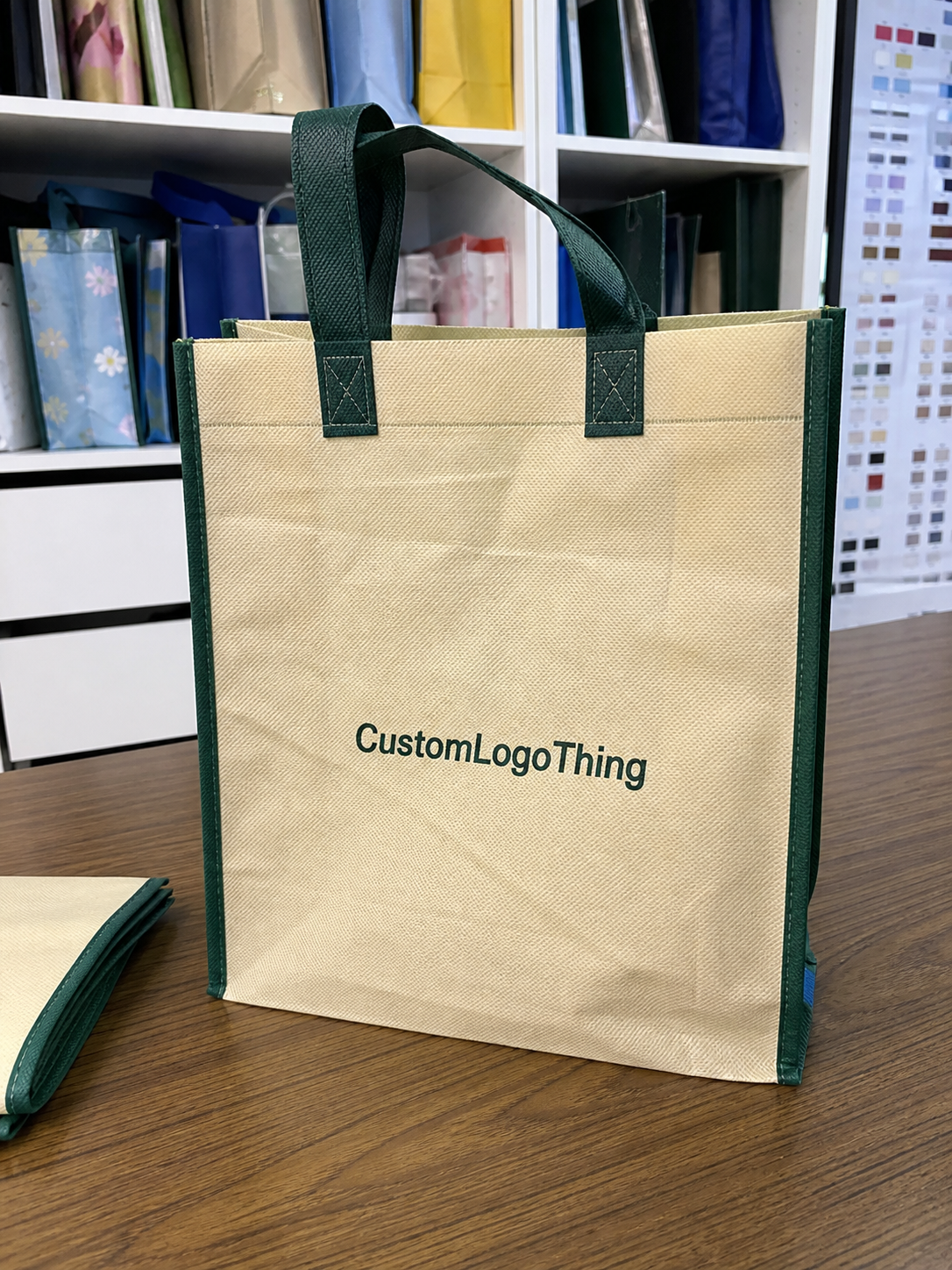
A disposable bag only has to survive one trip home. A reusable grocery bag lives a longer, messier life. It gets folded into a car trunk, stuffed under a stroller, carried into a market, and occasionally forgotten in the back seat for a week. If the bag still looks decent after all that, the logo keeps earning its keep.
That is the value of custom printed reusable grocery bags. One bag can cycle through thirty or more uses, sometimes far more if the material and stitching are decent. The logo is not printed once. It is seen repeatedly, often by more than one person. That repeated exposure is the reason buyers keep coming back to reusable formats even when a disposable option is cheaper on the quote sheet.
Most grocery bag programs use one of five materials: nonwoven polypropylene, woven PP, cotton, jute, or RPET. Each has a different cost curve, hand feel, and print behavior. Nonwoven PP is usually the practical choice for high-volume grocery promotions because it is light, inexpensive, and prints cleanly. Woven PP adds strength and structure. Cotton feels more premium. Jute gives a natural, textured look. RPET supports recycled-content messaging without pretending that every sustainability story is the same. Because, frankly, it isn’t.
Buyers tend to focus on artwork first. That is backwards. Handle strength, seam quality, gusset depth, and fabric weight will decide whether the bag gets reused or quietly retired after the first heavy load. A torn handle does more damage to brand perception than a dull logo ever could. No one admires a bag that fails in the parking lot.
Small changes in construction often matter more than buyers expect. A slightly wider gusset improves capacity. Reinforced stitching at the handles extends life. A heavier fabric adds a few cents but can double the number of usable trips. That is why the cheapest unit price is not always the smartest spec. Sometimes it is just the most optimistic one.
“The best grocery bag is not the prettiest sample. It is the one that still looks presentable after ten folds, three car rides, and a heavy cart load.”
If you are comparing packaging options beyond grocery bags, Custom Logo Things also carries a range of Custom Packaging Products that can be used to build a more consistent branded packaging system across retail, events, and gifting.
How print method, material, and construction work together
The print process sets the ceiling for what the bag can look like. Screen printing is still the workhorse for simple logos, bold shapes, and spot colors. It lays down ink cleanly and holds up well on larger runs. Heat transfer can handle more detail, though results vary depending on the substrate. Digital printing gives more freedom with gradients and multi-color artwork, but it is not always the best value for high volumes. Fancy is nice. Efficient is better.
Material changes the result just as much as the print method. Smooth nonwoven polypropylene tends to accept crisp logos and solid fills. Cotton absorbs ink differently, which creates a softer and more natural finish. Jute has a rough texture that looks attractive with bold contrast but can swallow fine details. RPET sits in the middle for many buyers: practical, familiar, and easier to position in sustainability-focused programs.
Construction is the part people forget until a sample fails. Gussets expand volume. Side seams determine how much load the bag can really take. Handle attachment affects comfort, weight distribution, and trust. If the handles are weak or poorly placed, shoppers stop using the bag for heavy items. That limits impressions and defeats the point of investing in a reusable format.
The artwork should fit the substrate instead of fighting it. A thin script logo on coarse jute can disappear. A crowded multi-color illustration on a budget nonwoven bag may print muddy if the ink coverage is too high or the mesh count is wrong. The goal is not to make the design as dramatic as possible. The goal is to make sure the logo still reads clearly at arm’s length, in daylight, while someone is carrying groceries and probably trying not to drop the eggs.
For buyers comparing sustainability language, it helps to separate material facts from marketing gloss. The EPA’s reuse and waste-reduction resources at epa.gov are a useful reminder that reuse only matters when the item is actually used again. A bag that sits in a closet is not doing much for anyone.
| Material | Typical look | Print behavior | Best use case |
|---|---|---|---|
| Nonwoven PP | Clean, lightweight, practical | Good for bold logos and spot colors | Grocery promotions and large giveaways |
| Woven PP | Stronger, more structured | Handles broader print areas well | Heavier loads and repeated retail use |
| Cotton | Soft, premium, lifestyle-driven | Great for simple, refined graphics | Membership gifts and higher-end branding |
| Jute | Natural, textured, earthy | Best with bold art and strong contrast | Eco-focused retail and gift programs |
| RPET | Modern, recycled-content story | Usually solid for clean logos | Sustainability-led promotions |
A buyer also needs to think about print area in relation to seams, folds, and handle placement. Artwork that looks centered on a flat template can shift once the bag is filled. If the design runs too close to the side gusset or handle anchor, it may distort during use. The best proof is not just visually neat. It is structurally honest.
Cost, pricing, and MOQ: what changes the quote
Pricing for custom printed reusable grocery bags comes down to a few predictable variables: bag size, material weight, print coverage, number of colors, handle style, and whether the logo appears on one side or both. A 1-color logo on a standard nonwoven bag will almost always cost less than a full-coverage, multi-color design on cotton or jute. Buyers know this in theory. They still compare quotes as if every supplier used the same spec. They do not.
For realistic budgeting, many buyers see ranges like these on common promotional runs:
- Nonwoven PP, 1-color print, 5,000 pieces: often about $0.18-$0.28 per unit before freight, depending on size and handle construction.
- Woven PP or thicker material: commonly $0.28-$0.55 per unit at similar volumes.
- Cotton or jute: frequently $0.55-$1.50+ per unit, especially when the artwork uses more than one color.
Those numbers move with freight, tariff conditions, and labor intensity. They are still useful because they show the relationship between material choice and landed cost. A low unit price does not mean much if the delivery is wrong, the bags sit in storage too long, or the spec is weaker than the use case demands. Ordering 20,000 bags for a campaign that needs 6,000 is not savings. It is inventory with a logo on it.
MOQ, or minimum order quantity, exists because setup takes time and money. Screen setup, plate charges, proofing, and production alignment all need to be recovered across the run. On larger orders, that cost gets spread out. On smaller orders, it lands heavily on each bag. That is why small runs often look surprisingly expensive compared with the headline price people expected.
Hidden line items are usually where the final quote changes:
- Setup fees or plate charges
- Digital proofing
- Physical samples or pre-production samples
- Packaging upgrades, such as banding or carton labeling
- Freight and import duties
The cleanest comparison is a like-for-like quote using the same bag size, fabric weight, handle style, print colors, and packing method. If one quote uses a thinner fabric or smaller panel, it is not cheaper. It is a different product. That distinction gets ignored all the time, usually right before a buyer regrets not asking one more question.
Pricing also shifts based on finishing details. Hemming, reinforced stitching, lamination, zipper closures, and interior pockets can all increase labor and extend production time. Those features may be worth it for retail or gift programs, but they do not belong in a basic grocery promotion unless the use case really supports them. Add-ons sound harmless until they show up on the invoice.
Process and timeline: from artwork file to delivery
The order process is straightforward on paper. The weak point is usually not the factory floor. It is everything around it. A standard job starts with a brief, then artwork submission, proofing, sample approval, production, quality check, and shipping. If any of those steps stall, the schedule slips.
For custom printed reusable grocery bags, a typical timeline often looks like this: proofing in 1-3 business days, sample approval in 2-5 days if a sample is requested, production in about 12-20 business days for common specs, and shipping that can take anywhere from a few days to several weeks depending on destination and freight mode. Large shipments can spend as much time in transit as the bags spent being made.
The delays I see most often are practical, not dramatic:
- Low-resolution artwork that needs to be rebuilt
- Missing fonts or unembedded files
- Color revisions after the first proof
- Material substitutions when stock runs tight
- Slow approvals from internal brand teams
That last one causes more schedule damage than most buyers want to admit. A project can sit for days while marketing, procurement, and compliance all weigh in on the exact same shade of green. Meanwhile, the production slot moves. Machinery does not wait for committee consensus.
If the bag includes sustainability claims or is meant to support environmental messaging, ask what documentation is actually available. For fiber-based components, FSC-related language may apply in some programs, and the FSC site at fsc.org is a useful reference. That does not make a bag sustainable by default. It just gives buyers a better way to verify what is being claimed.
Before approving a schedule, ask three questions: how long proofing will take, whether stock is on hand, and what the packing method will be. Those are the details that decide whether the bags arrive on time or show up after the promotion has already started.
A step-by-step ordering guide for first-time buyers
First-time buyers often start with the logo. That is backwards. Start with the use case. A grocery retail chain needs a different bag from a farmers market giveaway, and both are different from a membership gift or seasonal promotion. If the bag must carry frozen items and canned goods, it needs stronger seams, wider gussets, and probably a sturdier handle. If it is mainly for light shopping, a lighter spec may be enough.
Step 1: define the use case
Write down where the bag will be used, how much it should carry, and whether shoppers will carry it by hand or over the shoulder. That one note changes the size, handle style, and material weight more than most buyers expect. Guessing here is how orders become awkward later.
Step 2: choose the spec before the art
Lock the material, dimensions, color, gusset, and reinforcement first. Then price the artwork against that spec. This keeps quotes comparable and prevents the common mistake of approving a design that only works on a different substrate.
Step 3: submit clean artwork
Vector files are usually the safest option. If only a raster file is available, make sure it is high-resolution and expect small text to need cleanup. Provide Pantone references if color matters. Keep notes on placement, preferred margins, and any no-print zones near seams or handles.
Step 4: review proof or sample carefully
Check readability at arm’s length. Check logo size relative to the panel. Check whether the bag still looks balanced when folded and when filled. A mockup on a screen is useful, but it does not tell you everything about scale or texture. Materials behave differently once ink hits them.
Step 5: confirm delivery details
Ask how the bags will be packed: bulk-packed, banded, carton labeled, or palletized. If your team needs them by store, by event, or by distribution center, say so early. A lot of delivery headaches are really packing instructions that were never clarified.
A simple buyer checklist helps:
- Use case defined
- Material and size selected
- Print method matched to artwork
- Proof approved by the right person
- Packing and freight instructions confirmed
That is the difference between a bag order that feels manageable and one that turns into endless email threads.
Common mistakes that waste budget and weaken the bag
The first mistake is buying on unit price alone. A thin bag with weak stitching may look like a bargain until the handles stretch out or the side seam fails. Then the brand is left with a product that feels disposable, which defeats the purpose of reusable packaging. Cheap and durable are not the same thing, even when the spreadsheet wants them to be.
The second mistake is making the artwork more complex than the substrate can support. Small type on jute. Fine gradients on rough material. Tiny legal text on a bag panel that folds in half half the time. These choices look fine on screen and weak in hand. If the message cannot survive the material, the design needs to change.
The third mistake is choosing a premium visual without matching the use case. A cotton tote with a beautiful print can work well for higher-end retail or gifting, but if the buyer needed a high-volume grocery promotion, the budget may fit better on a durable nonwoven or woven PP option. The bag should fit the behavior of the user, not just the mood board.
The fourth mistake is ignoring how the bag is carried. Branding visibility depends on placement, contrast, and movement. A logo near the bottom of a bag may disappear when it is full. Light gray text on tan jute may look stylish, but if the shopper is outside in weak light, the logo becomes hard to read. Good packaging design respects real usage conditions, not just a render.
Handle style matters more than many buyers realize. A shoulder-carry tote shows the front panel differently than a short-handle grocery bag. That affects visibility in public and can change how the bag is perceived. A practical handle choice can make the branding work harder without adding any ink at all. Nice trick, if you like useful things.
Buyers also underestimate packing and transit stress. Bags shipped flat by the thousands can crease, scuff, or pick up edge wear if they are overpacked or poorly cartonized. If the order is going straight to stores, event teams, or fulfillment centers, the packing spec matters as much as the print spec. Transit is part of the product.
For a reference point on performance testing language, packaging professionals often look at ISTA standards for transit and distribution stress, especially when bulk shipments have to survive vibration, stacking, and handling. ISTA’s site at ista.org is a useful benchmark for understanding how packaging gets evaluated in movement. Grocery bags are not fragile electronics, but they are still packaging. Packaging gets tested because reality is not especially gentle.
Expert tips before you place the order
Compare suppliers on the same spec sheet. This sounds basic because it is. If one supplier quotes a 13x15 bag with 80gsm nonwoven and another quotes a 10x12 bag with 60gsm, the lower price is not proof of a better deal. It is a different bag. Different bag, different outcome.
Ask for a sample or pre-production proof on the actual substrate whenever the artwork is color-sensitive, the logo is intricate, or the bag is meant to represent a premium brand. A bag can look fine in a mockup and still disappoint in print because the material texture changes color density or line clarity.
When possible, build two design tiers. One can be cost-focused: fewer colors, simple layout, durable but standard material. The other can be tuned for stronger retail impact: heavier fabric, better finishing, larger print zones, and more refined handles. That gives you flexibility across campaigns without starting from scratch every time.
Before ordering custom printed reusable grocery bags, the most useful next step is to narrow the spec, not to chase a prettier mockup. A strong order usually comes from a short list of decisions made early: the bag’s purpose, the fabric, the handle style, the print method, and the packing method. Everything else sits on top of those choices.
If the goal is repeat visibility, the bag should be practical enough to stay in rotation. If the goal is a premium feel, the material and finish need to support that claim. If the goal is pure volume, the design should stay simple and the construction should not cut corners. That is the real balance. Not a brand deck. Not a mood board. A useful bag that gets carried again.
That is why custom printed reusable grocery bags remain a practical option for retail packaging and branded packaging programs: they travel, they repeat, and they keep showing up long after checkout is over.
What materials are best for custom printed reusable grocery bags?
Nonwoven polypropylene is usually the budget-friendly choice for large giveaways and grocery promotions. Woven PP, cotton, and jute offer stronger or more premium looks, but they can raise the cost and change print behavior. RPET is worth considering when sustainability messaging matters and the buyer wants a recycled-content story.
How much do custom printed reusable grocery bags usually cost?
Price depends most on material, size, print coverage, and how many bags you order at once. Setup charges and freight can move the final landed cost more than buyers expect, especially on smaller runs. The best comparison is a like-for-like quote using the same bag spec, because a lower quote may simply mean a thinner or smaller bag.
What is the normal turnaround for printed reusable grocery bags?
Turnaround usually includes proof approval, production, quality checks, and shipping, so the fastest step is not always manufacturing. Artwork revisions and sample approval are common delay points, especially when colors or sizing are still being negotiated. Rush orders are possible in some cases, but they often cost more and reduce flexibility on materials or shipping.
How do I choose the right size and handle style for grocery use?
Match the size to the heaviest and bulkiest load the bag must carry, not just the average basket of items. Choose handle length based on whether shoppers will carry by hand or over the shoulder. Check gusset width and seam strength, because those details affect comfort, stability, and total usable volume.
What artwork format works best for custom printed reusable grocery bags?
Vector files are usually the safest starting point because they hold edges and text better than low-resolution raster art. Keep color counts and line detail realistic for the chosen material and print method. Leave clear margins around logos and text so the design still reads when the bag is folded, filled, or carried.