Buyer Fit Snapshot
| Best fit | Custom Retail Paper Bags projects where brand print, material claims, artwork control, MOQ, and repeat-order consistency need to be specified before quoting. |
|---|---|
| Quote inputs | Share finished size, material target, print colors, finish, packing count, annual reorder estimate, ship-to region, and any compliance wording. |
| Proofing check | Approve dieline scale, logo placement, barcode or warning zones, color tolerance, closure strength, and carton packing before bulk production. |
| Main risk | Vague material claims, crowded artwork, missing packing details, or unclear freight terms can make a low unit price expensive after revisions. |
Fast answer: Custom Retail Paper Bags: Design, Cost, and Strategy should be specified like a repeatable production item. The safest quote records material, print method, finish, artwork proof, packing count, and reorder notes in one written spec.
Production checks before approval
Compare the actual filled-product size with the drawing, then confirm tolerance on folds, seals, hang holes, label areas, and retail display edges. Reserve space for logos, QR codes, warning copy, and material claims before decorative graphics fill the panel.
Quote comparison points
Review material grade, print process, finish, sampling route, tooling charges, carton quantity, and freight assumptions side by side. A quote is only useful when the supplier can repeat the same color, closure quality, and packing count on the next order.
Custom retail paper bags do a lot more than carry a purchase out the door. They are the last physical handshake between brand and customer, and in retail that final touchpoint can shape how finished, thoughtful, and premium the whole transaction feels. If a brand already invests in branded packaging, packaging design, custom printed boxes, or polished product packaging, the bag should not be treated like an afterthought; it is package branding in motion, handled in public, and judged in a split second.
Custom retail paper bags deserve the same scrutiny buyers give to print quality, shelf presentation, and unit economics. A boutique owner, a bookstore manager, and a cosmetics buyer may all use paper carriers, but they are not buying the same thing. One needs strength. Another wants a clean gift feel. A third needs a bag that can survive a mall walk or a subway ride without slumping and looking tired. The decision sits at the intersection of retail packaging, merchandising, and margin control, which is why it rewards a careful spec rather than a quick guess.
A bag is never just a bag. In practice, it is a small branding system that has to look good, hold up, and stay inside budget.
If you are comparing formats and print options, our Custom Packaging Products page is a useful starting point. The same logic that applies to custom printed boxes and inserts also applies to custom retail paper bags: define the use case first, then decide how much visual impact and structural strength you actually need.
What Custom Retail Paper Bags Really Change at Shelf Level
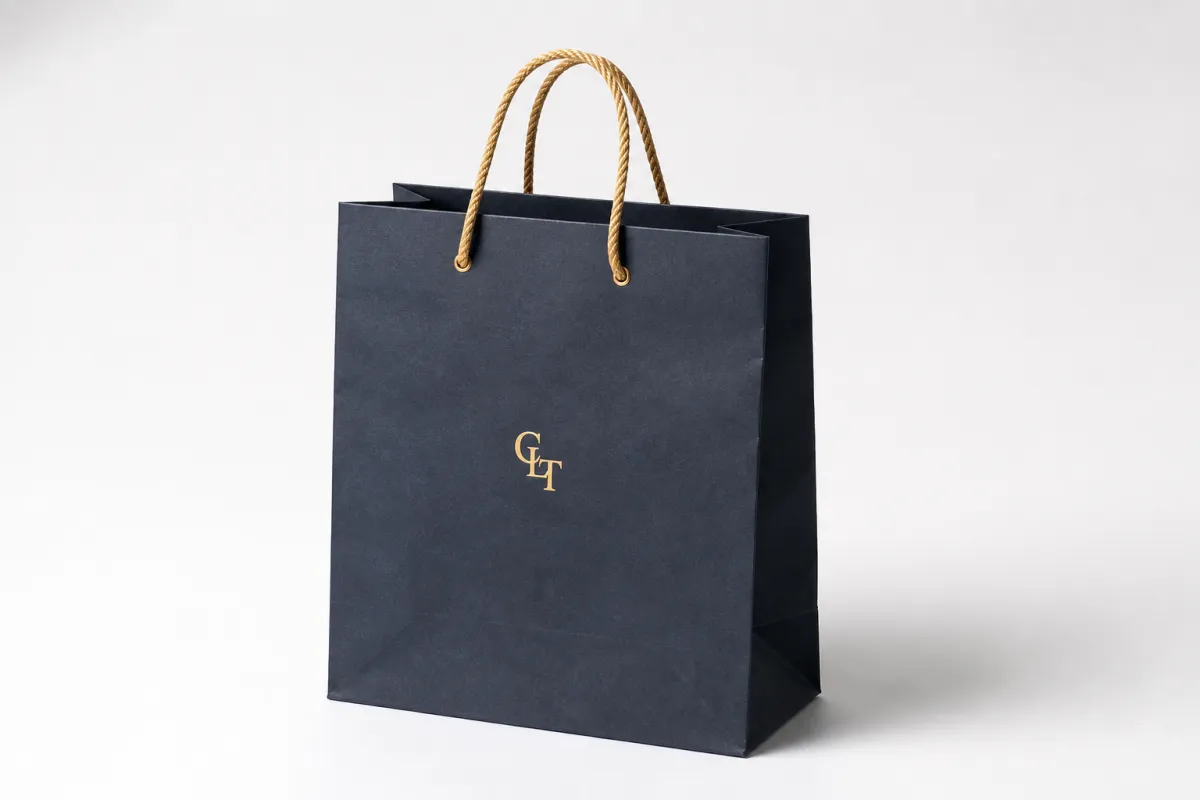
Most people think of custom retail paper bags as a checkout item. That view misses a lot of their value. On the sales floor, they function as moving signage. On the street, they act like a walking ad. At home, they can extend the memory of the purchase because the bag stays visible long after the receipt is gone. Customers rarely remember the exact bag material, yet they do remember how the purchase felt when it was handed over. That feeling often transfers to the brand itself, and that is no small thing.
From a packaging buyer's point of view, the bag also answers a practical question: does the product feel worth what the customer just paid? A $48 candle in a flimsy carrier can feel oddly downgraded. A $28 accessory in a sturdy, well-printed bag can feel more gift-worthy than the item alone might suggest. Custom retail paper bags work because they make the transaction feel finished. They close the loop between product packaging and retail packaging in a way that is visible, tangible, and easy for customers to understand without being told.
A simple two-color logo on a clean kraft bag can do more for memory than a cluttered full-bleed layout that fights the product category. For many retailers, the smartest move is not the most expensive one. It is the one that matches how customers actually shop. I have seen buyers get seduced by a dramatic render and then regret it when the bag hits the floor and starts competing with the merchandise instead of supporting it.
Think about a boutique, a bookstore, or a cosmetics counter. A boutique might need custom retail paper bags that feel elevated enough for apparel and accessories, with soft rope handles or matte lamination. A bookstore might prioritize flat-bottom strength and a straightforward one-color imprint because volumes are high and margins are tighter. A beauty counter may need a smaller format with sharper print contrast so logos remain legible against a white or tinted stock. In each case, the bag does a different job, and the best spec reflects that.
That difference also changes the cost model. A paper carrier is not just a branded accessory; it is a recurring operational expense. If a store hands out 300 bags per week, a $0.12 difference per bag adds up quickly over a year. That is why smart teams treat custom retail paper bags as a packaging decision, a branding asset, and a line item that deserves forecasting. It is not glamorous work, but it keeps the numbers honest.
How Custom Retail Paper Bags Work From Spec to Store
At a high level, custom retail paper bags are built from a handful of variables: paper grade, format, handle style, print method, reinforcement, and finish. Each one affects how the bag looks, how it carries weight, and how much it costs. Once you see the construction logic, the rest of the process becomes easier to manage. The brief is not "make it prettier." The brief is "make it fit the product, the store, and the budget."
A typical spec sheet starts with dimensions. Width, gusset, and height matter because they determine whether a bag can handle a shoebox, folded apparel, a candle set, or a gift box. Then comes paper stock. Lightweight kraft may work for small accessories, while coated art paper or heavier SBS-style board can create a more premium feel. Many retailers land somewhere between 120 gsm and 200 gsm for standard paper carriers, though heavier constructions may climb higher depending on print coverage and handles. That range is one reason custom retail paper bags vary so much from brand to brand.
Next is the handle. Twisted paper handles are common because they balance cost and strength. Rope handles often feel more upscale and can improve hand comfort, but they also raise unit cost. Flat tape handles can be practical for some categories. Reinforcement matters too. A glued patch under the top fold, a bottom board, or a reinforced fold line can change how the bag behaves under load in a very real way. In retail packaging, a bag that collapses awkwardly can make even a premium purchase feel temporary.
Artwork is where packaging design turns into production reality. A good supplier will ask for a dieline, bleed, safe zones, and the final logo files. If your artwork uses spot colors, Pantone targets usually give tighter control than CMYK, especially on uncoated kraft where the paper tone influences the result. Digital printing can work well for shorter runs and fast approvals. Flexographic printing may be better for repeat volumes and cleaner spot-color output. For custom retail paper bags, the print method should follow the artwork, not the other way around.
If you want the simplest possible mental model, think in this order:
- Confirm what the bag must carry.
- Measure the products that go in it most often.
- Choose the paper grade that supports that load.
- Select handles and reinforcement based on feel and strength.
- Match print method to artwork complexity and run size.
- Approve a proof or sample before release.
That sequence sounds basic, but it prevents a lot of expensive rework. It also keeps custom retail paper bags aligned with the rest of the packaging system. A brand that already uses custom printed boxes for gift sets should not default to an underbuilt bag just because it is "only a carrier." Customers notice the mismatch immediately, even if they cannot name the technical reason.
For sourcing and material claims, it is wise to ask for chain-of-custody documentation if you need FSC-certified stock. The FSC framework does not guarantee a perfect bag, but it does give you a clearer paper trail for responsibly sourced fibers. That matters when purchasing decisions are tied to branded packaging claims and internal sustainability reporting, and it is a better basis for trust than a vague green label on a quote sheet.
Key Factors That Shape Custom Retail Paper Bags
Buyers usually start with size, but the strongest custom retail paper bags programs are built from several linked decisions. Size, paper weight, handle type, print coverage, finish, insert options, and shipping requirements all push the bag in different directions. Change one of them, and you often change three more. That is why packaging design needs a systems view rather than a single-spec mindset.
Product category is the easiest way to see this. Apparel bags usually need width and height more than crush resistance. Beauty bags often need a cleaner look, a smaller footprint, and enough structure to protect boxed sets or glass items. Gift bags need presentation first, which may justify lamination, foil, or textured stock. Specialty food brands may need a more careful conversation about grease resistance, moisture exposure, and local compliance. In every case, custom retail paper bags should fit the product instead of forcing the product to fit the bag.
Sustainability is where buyers need a clear head. Recycled content can help, but it is not a magic badge. FSC-certified paper can support responsible sourcing, but it does not automatically make a bag recyclable in every local system. A laminated finish can improve durability and print quality, yet it may complicate end-of-life options depending on the construction and local recycling stream. The honest answer is always "it depends on the whole build." That is more useful than a generic claim. It is also better for trust, which is probably why the straight answer usually ages better than the polished one.
There is a useful comparison here between a minimal one-color bag and a fully printed retail bag. The one-color version usually has lower prepress complexity, fewer setup steps, and a cleaner cost structure. The fully printed version can create stronger package branding, but only if the visual lift is visible to the customer. A bag covered with busy graphics may look more expensive on a sample board and less effective on the floor. Custom retail paper bags are not a place to print for the sake of printing.
Here is a practical way to think about the tradeoff:
- Minimal print: best for high-volume stores, fast reorders, and brands that want a restrained premium look.
- Two-color print: often the sweet spot for retailers that want clear branding without pushing unit cost too far.
- Full-coverage print or specialty finish: useful when the bag is part of the story, such as luxury gifting or launch programs.
There is also a structural angle that buyers sometimes miss. A bag with a bottom board may add a few cents, but it can reduce failure rates when customers carry heavier purchases. A slightly wider gusset may use more paper, yet it can reduce awkward loading at the register and improve store efficiency. Custom retail paper bags should help the staff as much as they help the brand. If the team hates handing them out, the spec is probably off, plain and simple.
For broader packaging strategy, the same logic applies across custom packaging products. The best programs do not treat paper bags, cartons, and inserts as separate spending buckets. They align materials, graphics, and customer experience so the whole system looks intentional. That is the difference between decent packaging and packaging that feels owned.
Custom Retail Paper Bags Production Steps and Timeline
The production path for custom retail paper bags is not mysterious, but it is easy to compress in ways that create avoidable problems. A clean run usually follows a sequence: brief, spec confirmation, artwork setup, proofing, sample approval, production, finishing, packing, and shipment. Each stage matters because a small change early can ripple into a larger delay later.
Simple repeat orders can move quickly because the supplier already has the tooling, artwork structure, and construction notes. First-time custom projects take longer because the bag has to be translated from a concept into a manufacturable file. Bags with foil, embossing, specialty coatings, or imported materials add more lead time. In many cases, a straightforward order can land in the 12-15 business day range after final proof approval, while a more complex run can stretch beyond that depending on the factory calendar and freight plan. Custom retail paper bags are forgiving only when the spec is already locked.
Artwork revision is a common slowdown. Teams often spend too much time shifting logos by a few millimeters after the proof arrives, which sounds minor until the change touches handle clearance or a trim edge. Color matching is another risk point. Pantone approval can take more than one round if the brand is particular about a core shade. If the bag uses a dark stock, a metallic ink, or a full-bleed background, the proof conversation gets even more detailed. That is normal, not a sign that something is broken. It is also where planning discipline pays off.
Sampling deserves more attention than it gets. A digital mockup is useful, but it does not tell you how the handles feel, how the base sits, or whether the bag holds shape with a real item inside. A physical sample is better. A preproduction sample is better still if the order is valuable or the product is heavy. That is especially true for custom retail paper bags used in beauty, wine, or gift programs where presentation and load performance both matter.
Rush orders sound attractive until you examine the tradeoffs. Compressed timelines usually reduce flexibility on testing, inspection, and packaging optimization. They can also increase freight costs and limit paper or handle choices. If the goal is to protect margin, speed alone is not the answer. The real target is a timeline that leaves enough room for proofing without creating stock gaps on the floor.
A practical planning rule helps: the more custom the bag, the earlier procurement should start. If the store launches a seasonal line in six weeks, the bag brief should be written now, not after merchandising is already set. That rule becomes even more important if you are managing multiple SKUs and need custom retail paper bags sized to more than one basket profile. When stores run out of bags, the customer sees a process failure, not an inventory issue.
If you want a good quality check, borrow a little thinking from shipping test standards. The ISTA framework is built for transit performance, not retail handoff, but its logic is useful: test under realistic stress, not ideal conditions. If a bag will carry heavy boxed items, you want to know how it behaves when loaded, tilted, and handled quickly at the counter, not just when it is sitting flat on a table.
Custom Retail Paper Bags Pricing: What Drives Cost
Pricing for custom retail paper bags is shaped by a short list of variables that are easy to understand but hard to optimize all at once. Dimensions, paper stock, print complexity, finish, handle material, order volume, and whether the bag is built from stock or truly custom all move the number. If you want cleaner quotes, ask suppliers to separate those variables instead of bundling everything into one line. That makes comparison much easier and exposes where the real cost sits.
MOQ matters here. Minimum order quantity is not just a manufacturing preference; it is the point at which setup, material procurement, and run efficiency make sense for the supplier. Smaller runs usually have higher unit cost because setup is spread over fewer bags. That does not mean small orders are bad. It means the buyer has to understand the economics. A 1,000-piece order for custom retail paper bags will almost always cost more per unit than a 10,000-piece order with the same artwork and construction.
Here is a realistic pricing snapshot for comparison purposes only. Actual quotes vary by region, freight, artwork, and finish, but the spread below is a useful planning tool for retail buyers.
| Option | Typical Spec | Approx. Unit Cost at 5,000 Pieces | Best For | Main Trade-Off |
|---|---|---|---|---|
| Value build | Twisted paper handle, one-color print, uncoated kraft | $0.18-$0.30 | High-volume basics, apparel, everyday retail packaging | Lower visual impact and fewer finish options |
| Balanced build | Heavier kraft or coated stock, two-color print, reinforced top | $0.32-$0.60 | Boutiques, gift programs, standard branded packaging | Higher cost, but much better shelf presence |
| Premium build | Laminated stock, rope handle, specialty finish, full-coverage print | $0.65-$1.25+ | Luxury retail, seasonal launches, giftable product packaging | Best look, highest unit cost, longer lead time |
That table makes one thing clear: the cheapest custom retail paper bags are not always the least expensive to own. A low-cost bag that tears, crushes, or looks generic can quietly damage customer experience. A better-built bag may cost more upfront but reduce complaints, replacements, and awkward checkout moments. The real question is not "What is the cheapest quote?" It is "Which spec protects the brand and the margin at the same time?"
When reviewing quotes, ask for a clear breakdown. Tooling, printing, freight, packaging, sampling, and any color-matching surcharges should be visible. If a supplier includes a rush fee, ask what it actually buys: faster press time, priority scheduling, or reduced proof rounds. That detail matters. A vague rush fee is hard to compare across vendors, while a named cost driver is easier to manage. For custom retail paper bags, transparency is usually worth more than a tiny price difference.
There are smart ways to reduce spend without flattening the bag. Standardize sizes across SKUs where possible. Reduce ink coverage. Use one strong logo placement instead of multiple graphic zones. Choose a handle that feels good but does not over-spec the program. Those moves often save more than bargain-hunting on paper alone. In practice, a bag with clean branding and good structure tends to outperform a busier one that only looks premium in a render.
If you are comparing more than bags, it helps to think in terms of system cost. The same budget logic that shapes Custom Packaging Products for inserts, cartons, and carrier solutions should shape custom retail paper bags too. One weak packaging element can drag down a stronger one. That is especially true in retail, where the customer sees the whole set, not just the individual component.
Common Mistakes When Ordering Custom Retail Paper Bags
The most common mistake with custom retail paper bags is sizing from memory instead of from actual product measurements. A bag that is too narrow wastes staff time at the register. One that is too shallow can make a purchase look crammed. One that is too tall may waste material and increase freight volume. This is why the best briefs start with the widest, tallest, and deepest items that go into the bag most often, not with a rough guess.
The second mistake is designing from a mockup instead of a dieline. A mockup looks polished, but it hides the realities of trim zones, fold lines, handle anchors, and glue areas. Artwork that looks elegant on screen can be impossible to place cleanly on a finished bag. That is especially frustrating when the logo crosses into an area that wraps around the gusset or disappears under a handle patch. Custom retail paper bags reward teams that respect the production template, because the template is where the real constraints live.
Load capacity is another weak point. A bag for folded tees is not the same as a bag for glass bottles or boxed skincare kits. If the product is heavy, the handles, paper weight, and base reinforcement need to be tested as a system. Teams sometimes assume "paper" means lightweight, but good paper construction can carry serious weight if it is built correctly. Ignore that, and the bag becomes a liability instead of a helpful handoff item.
Approvals create their own problems. I have seen teams sign off on a visual proof without confirming the exact paper stock, handle type, finish, or final dimensions. Then the bag arrives looking close, but not right. That is avoidable. Ask what the supplier means by sample, proof, and final production version. Those words are not interchangeable. For custom retail paper bags, precision in the approval stage protects both timing and trust.
Inventory planning also trips people up. Retailers often order too few bags for peak season, then scramble when traffic spikes. Or they forget to include transit time for reorders and end up paying more for expedited freight. A good rule is to build a reorder trigger based on average weekly usage plus lead time plus a small buffer. That buffer can be the difference between smooth restocking and a last-minute packaging emergency.
Here is a short checklist that catches many of the failures before they become expensive:
- Measure real products, not the idealized version.
- Confirm the dieline before final design.
- Verify handle strength against actual load.
- Get paper stock and finish named in writing.
- Approve a physical sample if the bag carries heavy goods or a sensitive logo color.
- Plan reorder timing before the season starts.
None of that is glamorous. It is, however, how strong custom retail paper bags programs avoid waste. The stores that do this well usually spend less time firefighting and more time selling.
Expert Tips and Next Steps for Custom Retail Paper Bags
If you want a cleaner ordering process, start with a one-page brief. Include the product dimensions, expected monthly usage, preferred paper style, handle preference, logo files, and the date you need stock in hand. That one sheet gives suppliers enough information to quote accurately. It also reduces back-and-forth, which matters when procurement, merchandising, and marketing all want a say in custom retail paper bags.
Requesting two or three quote scenarios is even better. A premium version, a balanced version, and a cost-controlled version show where the money moves. In one scenario, you might keep rope handles and add lamination. In another, you might keep the same structure but simplify the print. In a third, you might standardize the size across multiple SKUs. That side-by-side view makes tradeoffs obvious instead of theoretical, and it helps teams stop arguing in circles.
Ask for a sample or prototype before full production, especially if the bag must carry heavier goods or match a precise brand color. A sample lets you feel the handles, check the gusset, and see how the logo behaves on the chosen stock. For custom retail paper bags, that practical test often saves more than it costs. A few days spent on sampling is cheaper than a full run that misses the mark.
Set a reorder trigger point based on average weekly usage plus lead time. If a store uses 400 bags a week and the replenishment cycle is three weeks, the reorder point should be high enough to cover that window with cushion. This is a simple operational move, but it protects brand consistency. Nothing makes a retailer look less prepared than running out of bags during a busy Saturday rush.
It also helps to think beyond the bag itself. If your brand uses custom packaging products across multiple touchpoints, keep the visual language aligned. The same logo placement rules, paper tone, and finish logic that guide custom printed boxes can guide paper carriers too. That creates a stronger package branding story without forcing every format to look identical.
My practical advice is straightforward: get the size right, get the art right, get the budget right, and get the delivery timing right. If those four pieces are aligned, custom retail paper bags stop being a recurring headache and start behaving like a predictable part of the retail system. That is the real win, because the bag then supports the sale instead of complicating it.
From a packaging buyer's point of view, the best custom retail paper bags are the ones customers barely think about because they just work. They carry the product, protect the brand, and stay inside the numbers. That is not flashy, but it is the kind of packaging that keeps a retail operation moving. If you are mapping out your next order, the cleanest path is to confirm the real item dimensions, lock the construction choice, ask for a physical sample, and build the lead time into the calendar before the floor gets busy.
Frequently Asked Questions
How do I choose the right size for custom retail paper bags?
Measure the widest, tallest, and deepest products you expect to pack, then add enough clearance for easy loading and a clean fold or tuck. The best sizing choice is usually the most common basket size, not the rare outlier, because that keeps custom retail paper bags efficient on the sales floor and easier for staff to use quickly.
What affects the price of custom retail paper bags the most?
Paper weight, print coverage, handle type, order quantity, and special finishes usually have the biggest impact on pricing. Small runs and complex artwork tend to raise unit cost because setup and production effort are spread across fewer bags, which is why custom retail paper bags can vary widely between quotes even when the bag looks similar at first glance.
How long does production usually take for custom retail paper bags?
Simple reorders can move faster, while first-time custom runs usually need time for proofing, approval, and manufacturing. Add extra time if you need specialty handles, custom colors, or imported materials, since each of those can extend the timeline for custom retail paper bags and add a little more back-and-forth before the run is released.
What artwork do I need for custom retail paper bags?
Use vector logo files when possible and provide brand color references, placement notes, and a clear approval contact. Ask the supplier for a dieline before finalizing design so the artwork lands correctly around folds, handles, and trim areas on custom retail paper bags. That one step prevents a lot of avoidable cleanup later.
How can I keep custom retail paper bags cost-effective without looking cheap?
Simplify the print layout, standardize sizes across products, and choose a paper stock that balances strength with print quality. Put premium details where customers actually notice them, such as handle feel or a sharp logo placement, rather than overspending everywhere on custom retail paper bags. A clean, well-built bag usually does more for the brand than a busy one with too many extras.

