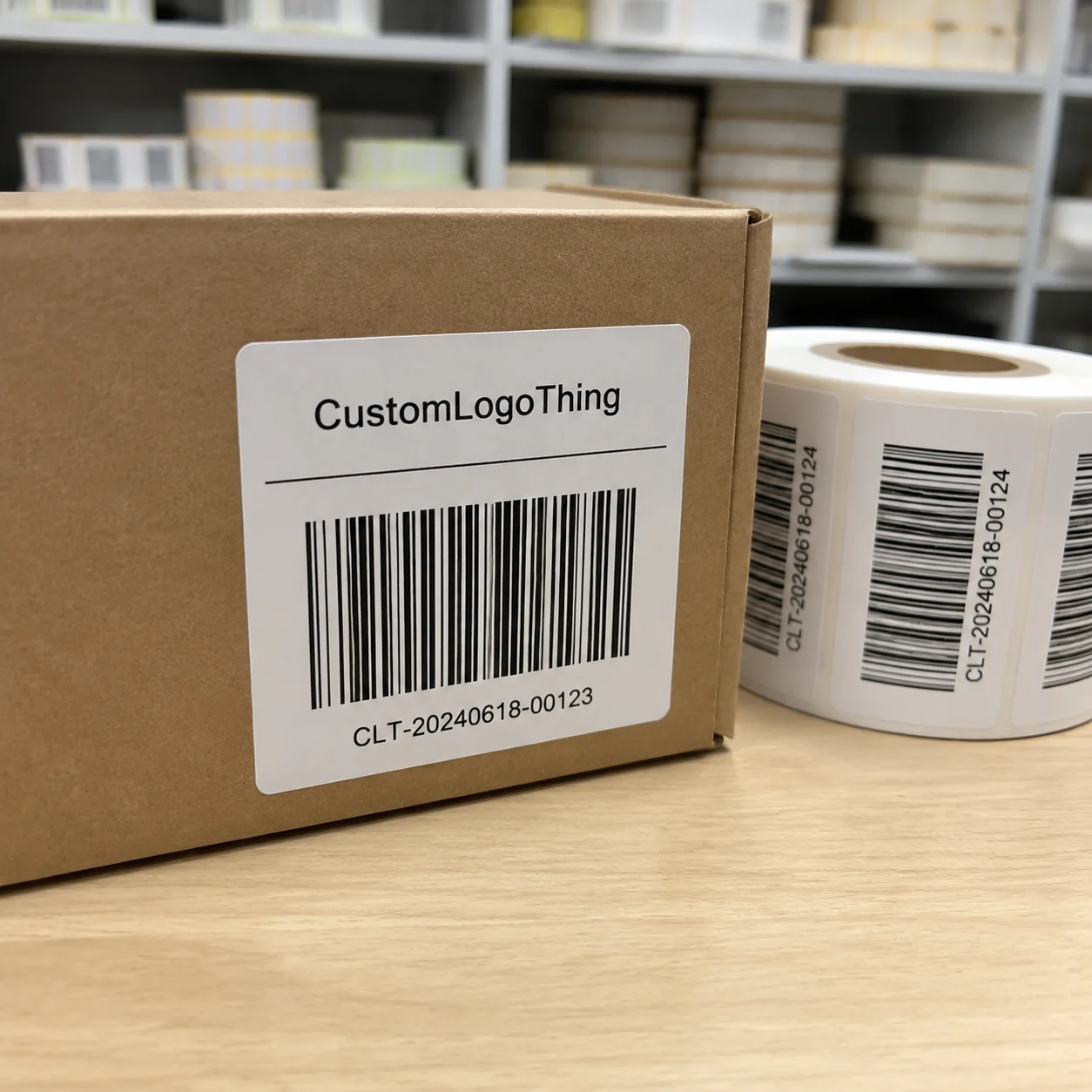
For apparel brands, custom Return Address Labels with logo do one practical job and one branding job at the same time. They identify the sender clearly, keep packing moving, and make each parcel look consistent. That matters when the return address is one of the few printed elements on every shipment.
A clean sender label reduces handwriting errors, helps returns route correctly, and avoids the cheap look that comes from smudged or crooked stickers. On clothing shipments, small packaging details carry more weight than people expect because customers see them up close and carriers scan them immediately.
Brands that focus on package branding usually treat return labels as part of the packaging system, alongside mailers, inserts, and seals. The goal is simple: readable, durable, and consistent without adding unnecessary cost or complexity.
What Custom Return Address Labels Actually Do on Clothing Shipments
A return address label tells the carrier and the customer where a package came from. In apparel fulfillment, it also supports sorting, return handling, and brand consistency. If the label is easy to read and stays in place, it does its job quietly. If it peels, smears, or looks off-center, it creates avoidable friction.
Custom Return Address Labels with logo combine sender information with a small brand mark, website, support email, or QR code. Some brands keep the layout minimal. Others add a return note or a short help line. The format is compact, but it still signals that the shipment came from a real business with an organized process.
For apparel brands, the practical value is straightforward:
- Fewer handwriting errors on sender details.
- Faster fulfillment at the packing table.
- More consistent branding across outgoing parcels.
- Cleaner return routing because the address is standardized and easy to read.
Plain address stickers cover the basics, but branded labels also support presentation. That is why brands investing in Custom Labels & Tags often use the same approach for seals, inserts, and other small print pieces.
Small packaging parts do their best work when they disappear into the workflow: easy to grab, easy to read, and easy to apply.
How the Labeling Process Works from Artwork to Application
The process is usually simple: share artwork, confirm size and quantity, review a proof, then move to production. The details matter more than the sequence. Small-format print exposes mistakes quickly, and a bad choice at the proof stage becomes a batch problem later.
Vector artwork is the safest starting point because it stays sharp when reduced to label size. Low-resolution PNGs and screenshots can look fine on-screen and then blur once the design is shrunk. On a two-inch label, fuzzy text is not a minor issue. It is the label.
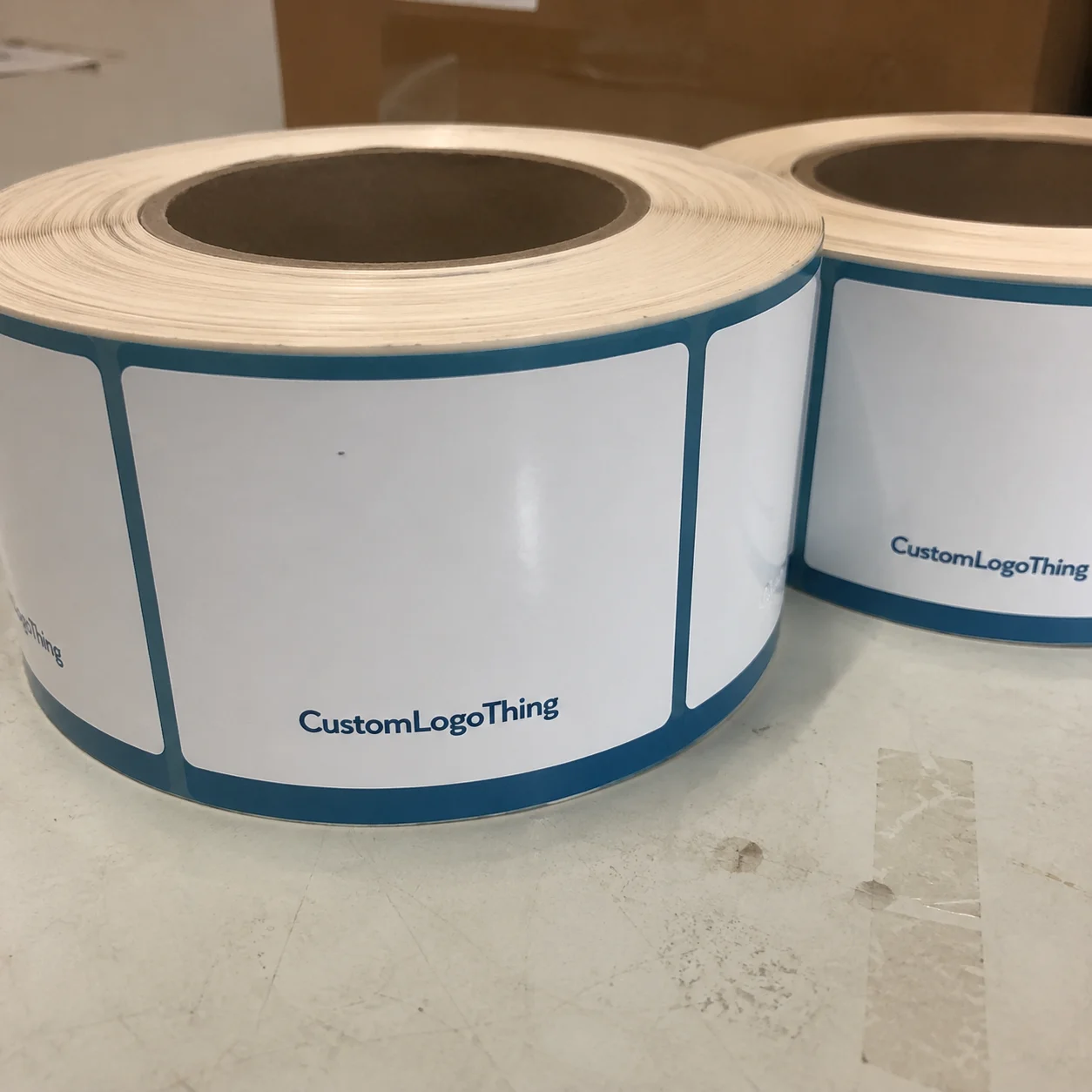
Format also affects workflow. Sheets work well for small teams packing by hand. Rolls are better for higher-volume stations where speed matters. Kiss-cut sheets can make manual peeling cleaner, though they require more setup discipline.
| Format | Best for | Typical strength | Tradeoff |
|---|---|---|---|
| Sheets | Small teams, manual packing | Easy storage and picking | Slower on high-volume lines |
| Rolls | Faster fulfillment stations | Quick peel-and-apply | Needs a dispenser or compatible setup |
| Kiss-cut sheets | Neat manual application | Clean edge release | Slightly more setup-sensitive |
Adhesive selection matters just as much as format. A smooth poly mailer, a textured kraft carton, and a recycled corrugated box do not behave the same way. Temperature and humidity can also change how a label performs. A sample that sticks perfectly in a proof room may lift on a warehouse floor if the surface is rough or damp.
Before shipment, a good supplier checks print clarity, registration, and cut accuracy. That is the difference between receiving a usable batch and discovering that the address sits too close to the edge or the logo prints off-center.
Cost and Pricing Factors That Change Your Quote
Pricing for custom return address labels with logo depends on more than size. Quantity, stock, finish, cut shape, and print coverage all affect the quote. Standard rectangles are usually easier to price than custom shapes because they need less setup.
Volume is the biggest driver. Larger runs usually lower the per-unit cost, while smaller runs carry more setup and proofing overhead. That is why a 500-piece order and a 5,000-piece order can land in very different price ranges even with the same artwork.
Paper labels are usually cheaper than synthetic options. For most dry apparel shipments, paper stock is enough. Matte paper reads clean and understated. Gloss paper adds shine but can make small type feel busier. Synthetic stock costs more, but it handles moisture and scuffing better.
Logo complexity can change cost too. A simple one-color mark is easier to print consistently than a badge with gradients or fine detail. If brand color matching is strict, expect extra checks and possibly a longer proof cycle.
For planning, many straightforward paper-label runs land around $0.18 to $0.28 per unit at 5,000 pieces. Smaller orders, specialty materials, custom shapes, and tighter print requirements usually push the price higher. That range is not universal, but it is more useful than vague "affordable" language.
Cheapest is not always cheapest. A label that peels, prints soft, or needs a reprint after approval creates labor waste, freight waste, and delay. Buyers usually understand that once the first avoidable rework hits the schedule.
| Option | Typical Cost Pressure | Performance | Best Use Case |
|---|---|---|---|
| Standard paper rectangle | Lowest | Good for clean, dry shipping | Routine apparel fulfillment |
| Matte paper die-cut | Moderate | Better brand presentation | Premium mailers and boxes |
| Synthetic or weather-resistant | Higher | Best durability | Rough handling or moisture exposure |
Process, Turnaround, and Lead Time: What Buyers Should Expect
Lead time usually breaks into proofing, approval, printing, finishing, and shipping. The first two are mostly controlled by the buyer. Delays often come from slow proof review rather than production itself.
Custom shapes and specialty finishes usually take longer than standard rectangle labels. Rush orders can stretch further during seasonal peaks, when every packaging supplier is dealing with the same launch calendar. If your custom printed boxes and labels are both being refreshed, plan enough time for each proof to move cleanly.
There is also a difference between production time and total delivery time. A supplier may quote a print window of several business days, but carrier transit is separate. Buyers sometimes mistake transit time for production delay.
For standard orders, 12 to 15 business days from proof approval to delivery is a reasonable planning range. Simpler jobs can move faster. Specialty work can take longer. If the label needs a custom cut, unusual adhesive, or exact color matching, build in more cushion.
For broader packaging and transit context, the International Safe Transit Association offers useful packaging test methods at ISTA. For waste reduction and recycling guidance, the U.S. EPA provides practical information at EPA.
Material, Adhesive, and Design Choices That Affect Performance
Material choice should start with use, not appearance. Paper, matte, gloss, and synthetic stocks all behave differently once they meet an actual shipping surface. For apparel brands, paper is common because it is economical and clean-looking. Matte finishes feel restrained, while gloss finishes look brighter but can feel busier on small labels.
Adhesive matters just as much. Textured kraft boxes often need a different tack profile than smooth coated mailers. Recycled cartons can be less uniform than they look. If you use labels on both retail packaging and shipping cartons, test both surfaces before locking the spec.
Design should support readability first. Small text needs enough size to read at arm's length, and contrast between type and background should stay strong. A label that looks polished but cannot be read quickly has failed.
At minimum, include the sender address. Some brands add a website, support email, or a short help line for returns. Others include a QR code, but only if it is large enough to scan reliably. Tiny QR codes on tiny labels usually become decoration.
There is also a practical sustainability angle. Right-sizing the label reduces waste, and recyclable materials can support broader packaging goals. If your packaging already uses FSC-certified paper elsewhere, it is reasonable to ask whether the label stock can align with that approach. The Forest Stewardship Council provides sourcing information at FSC.
Small packaging decisions compound. A label that matches the mailer, survives handling, and supports the brand without taking over the package is doing real work.
Step-by-Step Guide to Ordering Labels Without Delays
If you want the order to move quickly, treat it like a production task rather than a casual purchase. The best buyers are prepared before they ask for a quote.
- Audit your packing workflow. Decide whether labels will be applied by hand, in batches, or at a higher-volume station. That determines whether sheets or rolls make more sense.
- Gather exact details. Confirm the sender address, logo file, label size, and any extra text. Small errors here become expensive after the run starts.
- Request a proof. Check spelling, layout, color balance, barcode or QR placement, and trim lines. If the proof is hard to read on-screen, it will not improve on paper.
- Test the label on your actual packaging. Apply one to a real mailer or carton and inspect it at arm's length. Check whether the corners lift and whether the address reads clearly.
- Set a reorder trigger. Do not wait until the last stack is gone. Build a threshold based on weekly shipping volume so replenishment happens before supply gets tight.
A basic spec sheet prevents repeat problems later. Include approved artwork, color references if needed, dimensions, stock type, adhesive notes, and the intended shipping surface. If the label is reordered months later, that sheet keeps the format consistent across runs.
Common Mistakes That Raise Reprint Risk and Hidden Costs
The biggest mistake is low-resolution artwork. On a monitor, a slightly soft logo can seem acceptable. On a compact label, it can look cheap fast. Vector files are safer whenever possible.
Another common problem is cramming too much into the design. When brands try to fit a logo, full address, order instructions, QR code, social handle, and support line into a small space, the layout gets crowded and the text shrinks. A return label has a narrow job.
Adhesive mismatch is another hidden cost. Labels can look perfect in a proof and still peel after rubbing against other parcels or sitting on a rough carton. That creates waste and rework. The adhesive has to match the surface and shipping conditions, not just the artwork.
Fast proof approval can also create problems. A typo, an outdated email, or a shifted logo becomes a batch issue once production starts. Proofing should be treated as the last quality check, not a formality.
Some buyers oversize the label because they want the branding to stand out. Bigger is not automatically better. A compact label can improve efficiency, reduce material use, and still look strong on smaller apparel cartons and poly mailers.
Expert Tips and Next Steps for a Better Ordering Decision
If you are comparing vendors, keep the criteria practical. Look at proof process, minimum order quantity, available materials, reorder consistency, and whether the supplier can match your current label size on repeat runs. A small size shift between orders can create visible inconsistency.
Sample packs are worth asking for because they let you test adhesive on your actual mailers and cartons. If you ship in poly mailers, test on poly mailers. If you use kraft boxes, test on kraft boxes. Real substrates expose issues that spec sheets will miss.
Standardizing a label spec sheet helps more than many teams expect. Include approved artwork, dimensions, stock, finish, and application notes. When someone new joins the team or the order is repeated later, nobody has to guess.
A reorder trigger tied to shipment volume is another simple improvement. If one packer uses 200 labels a week, reorder when inventory drops below three weeks of supply. That keeps rush fees off the table and protects fulfillment schedules.
For brands refining their packaging system, custom return address labels with logo are a sensible place to start because the risk is low and the payoff is visible. Measure the packaging surface, choose one material to test, request a proof, and confirm the timeline before the first run.
What size should custom return address labels with logo be for clothing packaging?
Most apparel brands choose a compact size that fits neatly on a mailer or box corner without overpowering the package. The right size depends on how much text you include and whether the logo needs extra breathing room. If the layout includes a QR code or support line, you usually need more space.
Are custom return address labels with logo better on rolls or sheets?
Rolls are usually better for higher-volume packing lines because they speed up application. Sheets work well for smaller brands, manual fulfillment, or flat storage. If you pack in batches and want easy handling, sheets are often the simpler choice.
How much do custom return address labels with logo usually cost?
Pricing depends on quantity, material, size, finish, and print complexity. Unit cost usually improves as order volume rises, but premium materials and rush turnaround can raise the total. A simple paper label is generally less expensive than a synthetic option built for tougher shipping conditions.
How long does production usually take for custom return address labels with logo?
Timeline depends on proof approval speed, material choice, and order size. Standard orders are often faster than specialty finishes or custom shapes, and shipping time adds to the total. If you need labels for a launch or seasonal peak, order early enough to absorb one round of proof changes.
What should I check before approving custom return address labels with logo?
Check spelling, address accuracy, logo clarity, color consistency, and final dimensions. Also confirm the adhesive and label shape will work on your actual clothing packaging surface. A quick test on a real mailer or carton is worth more than a perfect-looking proof alone.