Buyer Fit Snapshot
| Best fit | Custom Rigid Setup Boxes Wholesale projects where brand print, material claims, artwork control, MOQ, and repeat-order consistency need to be specified before quoting. |
|---|---|
| Quote inputs | Share finished size, material target, print colors, finish, packing count, annual reorder estimate, ship-to region, and any compliance wording. |
| Proofing check | Approve dieline scale, logo placement, barcode or warning zones, color tolerance, closure strength, and carton packing before bulk production. |
| Main risk | Vague material claims, crowded artwork, missing packing details, or unclear freight terms can make a low unit price expensive after revisions. |
Fast answer: Custom Rigid Setup Boxes Wholesale: Direct Factory Pricing should be specified like a repeatable production item. The safest quote records material, print method, finish, artwork proof, packing count, and reorder notes in one written spec.
Production checks before approval
Compare the actual filled-product size with the drawing, then confirm tolerance on folds, seals, hang holes, label areas, and retail display edges. Reserve space for logos, QR codes, warning copy, and material claims before decorative graphics fill the panel.
Quote comparison points
Review material grade, print process, finish, sampling route, tooling charges, carton quantity, and freight assumptions side by side. A quote is only useful when the supplier can repeat the same color, closure quality, and packing count on the next order.
I still remember the look on that brand owner's face when I showed him the price breakdown from the factory in Dongguan. He'd been paying $4.20 per unit for custom Rigid Setup Boxes wholesale through his broker—same factory, same materials, same finishing. The actual cost: $2.67 per unit. That's $15,330 wasted on a 10,000-piece order. I've seen this exact scenario play out dozens of times over my twelve years in custom packaging, and it's why I started this guide.
Here's what gets me: this isn't a rare situation. It's the default Experience for Brands that haven't built direct factory relationships. The good news? You don't have to be a Fortune 500 company to access factory-direct pricing. Whether you're launching a new product line or ready to scale your retail packaging, buying custom rigid setup boxes wholesale directly from manufacturers is simpler than most people think. This guide gives you the exact numbers, timelines, and specifications you need to start sourcing with confidence.
Why Brands Are Ditching Brokers for Custom Rigid Setup Boxes Wholesale
Last spring, I visited the Jinzhijie factory in Dongguan with a client who's a mid-sized watch brand. We walked through their finishing department, watched the foil stamping in action, and I introduced him to the production manager. Six weeks later, he placed his first direct order at $2.80 per unit—down from the $4.20 his broker had been charging for nearly two years. The quality was identical because it was identical. The only difference was eliminating the middleman.
That 33% markup isn't paying for expertise or better service. I've negotiated with enough brokers to know what most of them do: they email your artwork to the same factories I'm talking to, add 30-40% to the invoice, and call it "relationship management." When I toured a packaging expo in Guangzhou last year, I counted fourteen booths selling other brokers' services. Not one of them had a factory behind them. Fourteen!
Direct factory sourcing delivers real advantages beyond price. You get faster communication—I've had production managers answer WhatsApp messages at 9 PM when I needed something corrected. You get quality control visibility; I visited our partner facility in Shenzhen last October and spotted a misalignment in the embossing rollers that would've caused problems on our client's next run. No broker would've ever shown me that floor. And you get flexibility for custom modifications, whether that's adjusting insert dimensions for a new SKU or testing a different cover paper that's not in the standard catalog.
The math is straightforward: custom rigid setup boxes wholesale pricing from factories typically runs 20-40% below broker quotes, depending on order volume and complexity. For a brand ordering 5,000 units monthly, that's potentially $50,000-$100,000 in annual savings that go straight to your bottom line. That's not chump change—that's a marketing budget, a product development fund, or frankly, a really nice office espresso machine.
What Exactly Are Custom Rigid Setup Boxes?
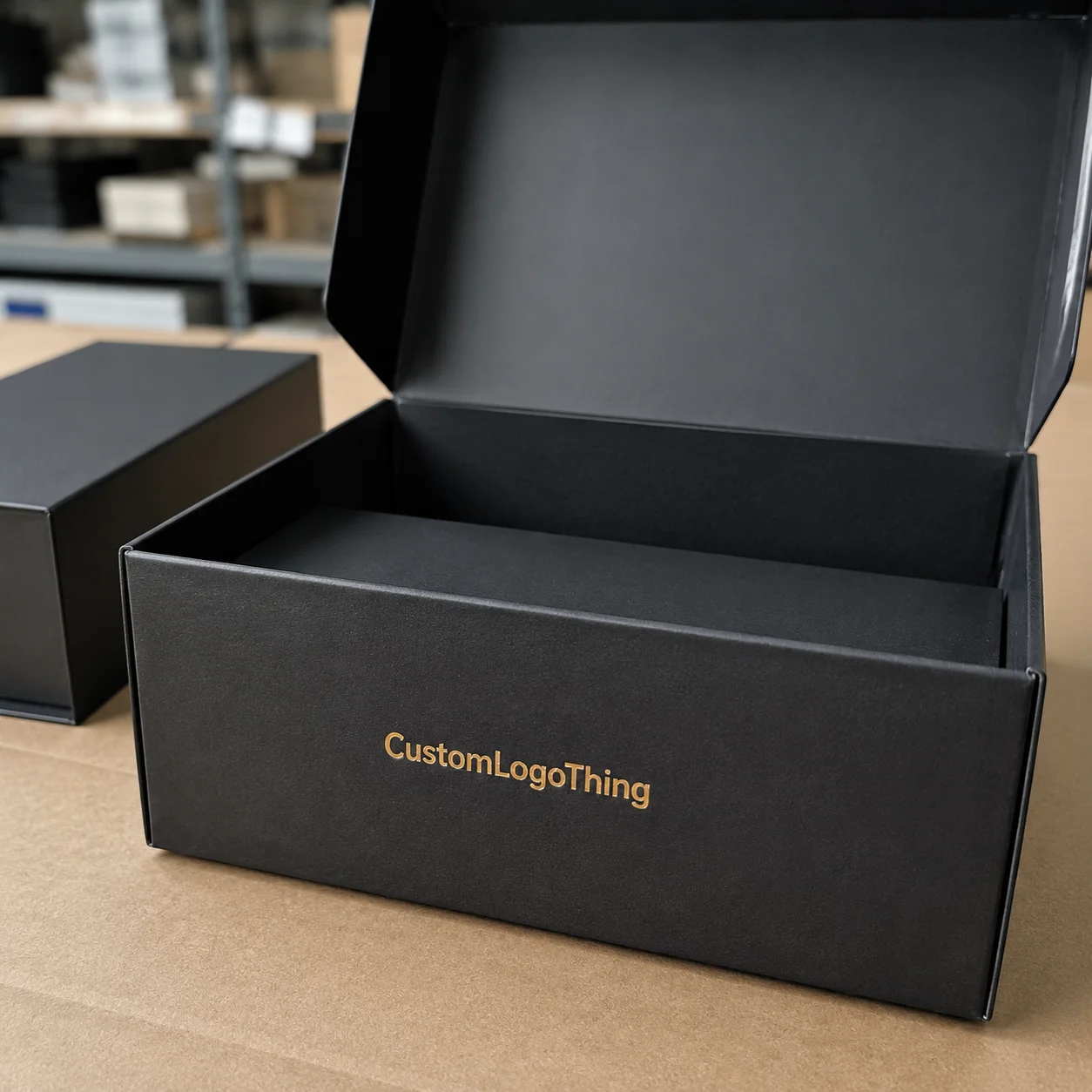
If you're comparing packaging options for premium products, understanding the structural differences matters. Custom rigid setup boxes are non-collapsible packaging constructed from separate panels joined together—typically with adhesive—to create a sturdy, permanent container. Unlike folding cartons that ship flat and assemble on-demand, rigid setup boxes arrive ready to use.
The core construction involves chipboard, usually ranging from 0.080 to 0.120 inches thick (about 2-3mm). This chipboard core provides the structural integrity that makes rigid boxes ideal for protecting delicate or valuable items during shipping and display. I've seen these boxes survive drops from warehouse shelves without damaging the contents inside—that's the difference proper construction makes.
These boxes dominate the luxury and premium retail space. Walk into any high-end jewelry store, electronics boutique, or perfume counter and you'll almost certainly find products packaged in rigid setup boxes. The presentation quality matches the price point of what's inside. Watches from brands like Omega and Tag Heuer arrive in rigid boxes that feel substantial when you pick them up. Apple's AirPods packaging uses rigid construction to create that satisfying unboxing experience. The premium perception is tangible.
Common applications span multiple product categories:
- Watches and jewelry — where presentation and protection both matter
- Consumer electronics — headphones, earbuds, smart devices
- Perfumes and cosmetics — where visual appeal drives purchase decisions
- Premium food items — confectionery, specialty teas, artisanal products
- Tech accessories — cables, chargers, phone cases
The customization possibilities are where custom rigid setup boxes wholesale sourcing really shines. You can specify cover papers from PMS-matched colors to textured surfaces like Italian linen. Finishing options include foil stamping in gold, silver, rose gold, or holographic patterns. Embossing and debossing create tactile logos and patterns. Magnetic closures make opening and closing feel premium. Foam, velvet, or custom paper inserts position your product perfectly inside.
Honestly, the options can be overwhelming at first. I remember spending three hours on a call with a client deciding between matte soft-touch and linen paper for what was essentially a very expensive cable organizer box. We eventually made the call, but those three hours taught me that sometimes "good enough" is actually good enough.
Custom Rigid Setup Box Specifications & Material Options
Getting specific about materials helps you make better decisions and communicate clearly with suppliers. Here's the technical breakdown I've used with clients to spec out their packaging design.
Core board thickness varies based on your structural requirements. Standard specifications range from 1.5mm (approximately 600gsm) for lighter products like scarves or small accessories, up to 3mm (1200gsm) for heavy items like watch sets or premium electronics. Most clients ordering wholesale quantities specify 2mm board for a balance of sturdiness and cost. I've had a client manufacturing ceramic home goods specify 2.5mm to ensure their boxes could handle the weight without deformation during retail display stacking.
Cover material options include several categories:
- PMS-matched paper with solid color coverage
- Soft-touch lamination for that velvety texture premium brands love
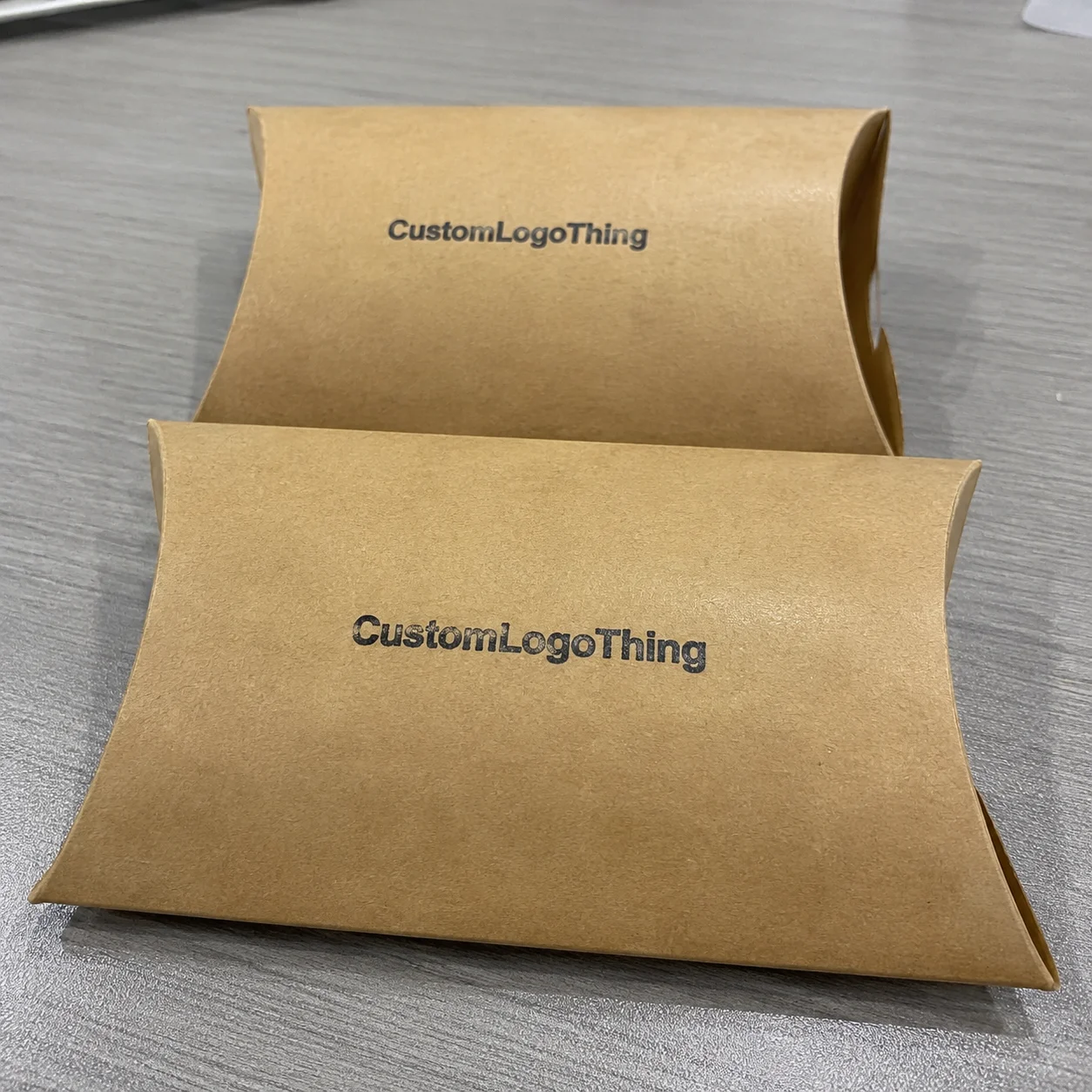
- Natural kraft for eco-positioned products
- Italian linen paper with woven texture
- Metallic papers for sparkle and visual impact
- Cotton canvas for artisanal or heritage positioning
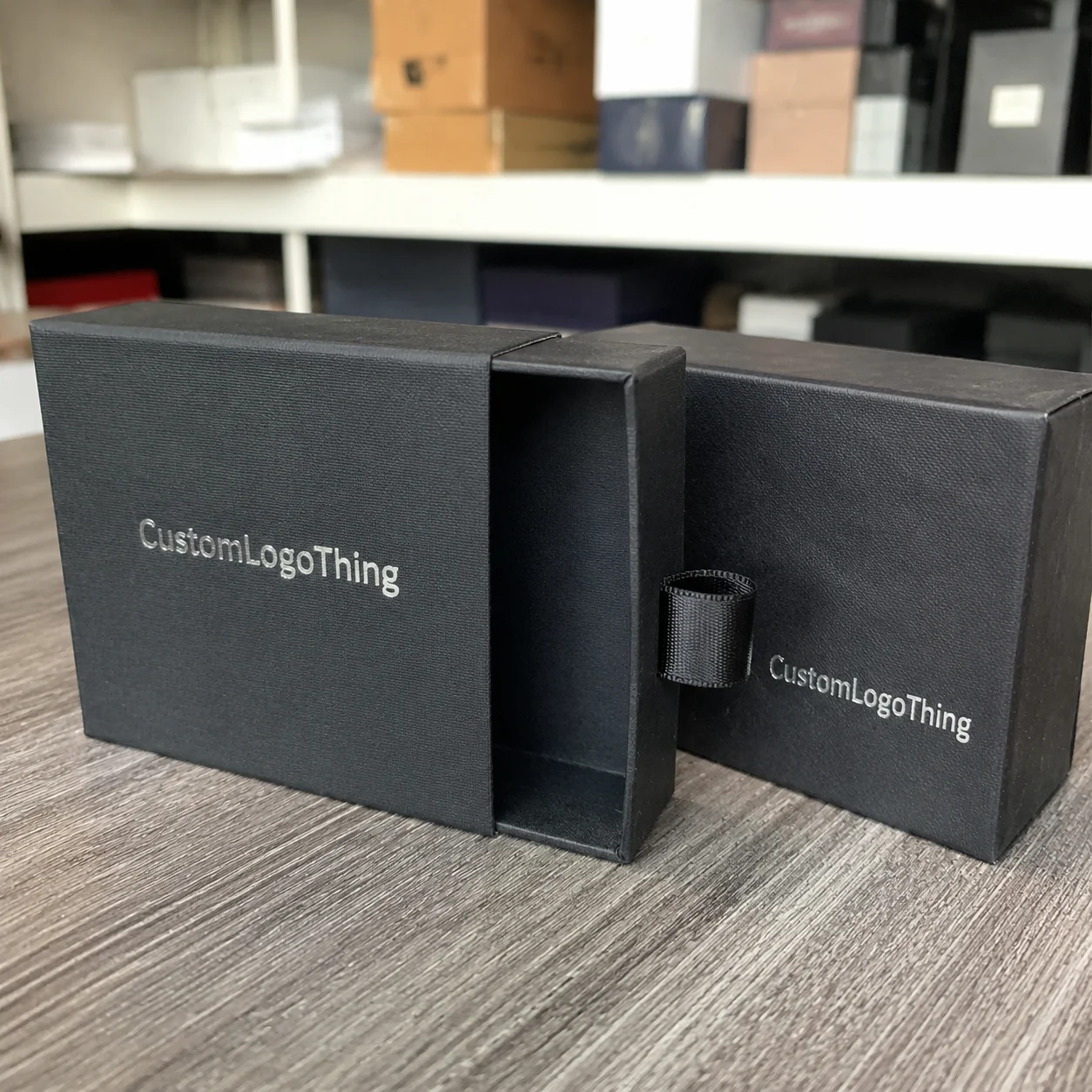
Finishing techniques transform plain boxes into branded statements. Spot UV highlights specific areas while leaving the rest matte. Foil stamping in metallic colors (gold, silver, copper, holographic) catches light and communicates luxury. Blind embossing creates raised texture without color—elegant and subtle. Debossing presses the design into the surface for a more understated appearance. Soft-touch aqueous coating provides a fingerprint-resistant satin finish.
Standard size ranges for custom printed boxes in this category typically fall between 4x4x1.5 inches for small jewelry pieces up to 18x14x6 inches for electronics bundles or gift sets. Custom dimensions outside these ranges are absolutely possible but may affect pricing and tooling requirements.
Insert options deserve serious consideration because they affect both unboxing experience and product protection. Die-cut foam with logoed top foam creates that "everything in its place" presentation. Velvet trays with shaped compartments work beautifully for jewelry sets. PVC windows let customers see the product without opening the box. Magnetic closures add a satisfying snap and keep boxes securely closed during retail handling.
"The cover material you choose affects perceived value more than almost any other specification. A $0.40 difference in paper grade can transform how a customer reacts to your product on a retail shelf." — from a conversation with a packaging buyer at a major department store group
Wholesale Pricing & Minimum Order Quantities
Let me give you the numbers that matter. This is where I see most brands make decisions based on incomplete information, so I'll be thorough.
Minimum order quantities (MOQs) for custom rigid setup boxes wholesale typically start between 500 and 2,000 units. The exact threshold depends on box dimensions, complexity of construction, and finishing requirements. Simple single-color boxes without specialty features often have 500-unit minimums. Complex boxes with multiple finishing techniques or custom inserts may require 1,000-2,000 unit starts. If someone tells you they can do 100 units custom? Run the other direction—they're either lying about the quality or charging so much per unit that your per-box cost would make you cry.
Here's a realistic price breakdown based on current factory pricing I've seen in recent quotes:
| Order Quantity | Price Range (Standard Box)* | Price with Premium Finishing |
|---|---|---|
| 500 units | $3.20 – $4.50 each | $4.50 – $6.50 each |
| 1,000 units | $2.40 – $3.20 each | $3.50 – $5.00 each |
| 2,000 units | $1.90 – $2.60 each | $2.80 – $4.00 each |
| 5,000 units | $1.50 – $2.00 each | $2.20 – $3.20 each |
| 10,000+ units | $1.10 – $1.60 each | $1.70 – $2.50 each |
*Standard box defined as: 8x6x3 inches, 2mm chipboard core, PMS-matched paper cover, single-color foil stamp, basic foam insert
Notice how the per-unit cost drops as quantity increases? That's the power of volume in custom rigid setup boxes wholesale procurement. A 5,000-unit order at $1.60 each totals $8,000. Order the same boxes individually at $3.50 each, and you're paying $17,500. The math heavily favors consolidation when your product roadmap allows it. I once had a client insist on ordering 500 units at a time because "cash flow." I did the math with him—showing him he'd pay $18,000 more over a year than if he'd saved up for the 2,000-unit order. He ordered 500 units anyway.
Setup fees (also called tooling or die costs) are one-time charges that occur at the beginning of a new project. These cover the creation of cutting dies, embossing tools, and any custom fixtures needed for your specific box design. Typical ranges:
- Basic cutting die: $200 – $400
- Foiling/stamping die: $150 – $300
- Embossing/debossing die: $200 – $400
- Custom insert tooling: $100 – $250
For a fully custom box with cutting die, foil stamp, and embossing, expect $500-$800 in setup fees. These costs amortize across your order—on 5,000 units, a $600 tooling fee adds just $0.12 to each box. Order 20,000 units over two years and that same $600 becomes $0.03 per unit.
Sample costs deserve separate budgeting. Before committing to bulk production, you'll want pre-production samples to verify quality, color accuracy, and fit. Individual samples typically run $50-$150 each depending on complexity. Most clients order 2-5 samples before approving full production. This is not the place to cut corners—I've seen brands lose thousands because they approved production without proper samples and received boxes with wrong PMS colors. The worst one? A brand that shipped 8,000 boxes to retail before anyone opened one and noticed the gold foil was actually more of a bronze-tinted mustard. They ate the entire order.
Price factors that increase cost beyond base specifications include specialty papers (Italian linen runs 25-40% more than standard coated), multiple foil stamp colors, custom inserts with multiple compartments, magnet closures, and finishing techniques like soft-touch coating or spot UV that require additional production steps.
The Production Process & Timeline from Order to Delivery
Understanding the production timeline helps you plan launches, manage inventory, and avoid the panic calls I've received from clients who didn't build in enough buffer time.
Week 1-2: Design finalization and material selection
This phase involves locking your artwork files in production-ready format, confirming PMS colors, and selecting cover materials and finishing options. Your supplier should provide die-line templates showing exact dimensions, bleed requirements (typically 3mm), and safe margins (5mm). Expect 2-4 rounds of communication during this phase if you're making significant design changes or working with a new supplier who hasn't produced your style before.
Week 2-3: Tooling creation and sample production
Once files are approved, factories create the physical dies and tooling needed for your boxes. This involves CNC cutting for dies, laser or chemical etching for embossing tools, and any custom fixtures for inserts. Sample production typically takes 7-10 days with 1-2 rounds of revisions standard. I always tell clients to budget for at least two sample iterations—that's saved me from production errors more times than I can count.
Week 3-5: Bulk production run
With samples approved, production shifts to the main run. Standard cover paper printing and finishing takes 10-14 days. Specialty materials or complex finishing can extend this to 18-21 days. During this phase, factories are printing, laminating, cutting, assembling, and inspecting your order. Expect periodic updates with photos of production progress—suppliers who don't provide these are harder to trust.
Week 5-6: Quality inspection, packaging, and shipping preparation
Finished boxes go through quality checks—typically AQL sampling at 2.5% or 4% depending on your standards. Boxes are counted, packed according to your specifications, and prepared for shipping. If you're doing sea freight, this is when containers get loaded. For air freight, boxes are packaged for faster transit.
Total timeline: 4-6 weeks for standard orders with existing tooling or straightforward custom requirements. 8-10 weeks when ordering new materials, creating new tooling, or when factories are operating at capacity during peak seasons (Q4 before holidays is notoriously busy).
Shipping considerations:
- Sea freight: Adds 2-4 weeks depending on origin port and destination. Cost for 5,000 units typically $800-$1,500 from Chinese ports to West Coast US ports.
- Air freight: Adds 1 week but costs 3x more than sea. Usually only justified for urgent reorders or trade show displays.
- Express courier (DHL, FedEx): 5-7 days but very expensive for large quantities. Practical for samples and small reorders.
Pro tip from warehouse visits: always build 1-2 weeks of buffer into your timeline for potential delays. Weather, port congestion, customs clearance, and carrier issues can all extend transit times unexpectedly. I've seen orders delayed three weeks because of Typhoon season in the South China Sea. I've also seen a single sick dock worker halt an entire LA port operation for two days. Assume chaos. Plan accordingly.
How to Vet a Custom Rigid Setup Box Supplier
I've toured factories in Dongguan, Shenzhen, and Shanghai. I've seen operations that would make you weep for the workers and others that run with Swiss-watch precision. The difference between them affects your product quality, timeline, and sanity. Here's how to separate the legitimate manufacturers from the brokers and marginal operations.
Request physical samples from at least three suppliers. This is non-negotiable in my book. Quality variance between factories is real and significant. I visited two facilities last year that were within 20 miles of each other—one produced crisp foil stamps with perfect registration, the other's samples had noticeable edge bleed and color variation. Both quoted similar prices. You need to see what you're actually getting.
Examine those samples with a critical eye: check corner joints for gaps or lifting, verify foil stamp adhesion (try scratching with a fingernail—I sound ridiculous when I suggest this, but you'd be amazed how many stamps fail this test), inspect embossing depth and clarity, and test inserts for proper fit with your product. If a supplier hesitates to send samples, that's a red flag. Legitimate factories expect this process and budget for it.
Certification verification matters. ISO 9001 certification indicates a functional quality management system. FSC certification (available from fsc.org) confirms responsible paper sourcing if environmental positioning matters for your brand. Request copies of certificates and verify them with the issuing bodies—I've seen forged documents. Seriously. One looked so legitimate that I almost didn't check, but something felt off about the stamp. Turns out the "ISO auditor" they claimed visited their factory had retired three years before the date on their certificate.
Ask for references from your specific product category. A factory might excel at watch packaging but struggle with the foam insert tolerances your electronics product requires. When I was sourcing for a client launching Bluetooth speakers, I specifically asked for references from electronics packaging clients. One factory had done precisely that work; another had primarily done jewelry boxes. Both could technically produce our design, but the electronics-experienced factory had already worked through the insert density issues we'd have encountered.
Verify experience with your specific finishing requirements. Not every factory has in-house foil stamping capability. Many outsource certain finishing processes, which adds time and potential quality inconsistencies. Ask specifically about capability for your needed techniques—spot UV, soft-touch lamination, multi-color foil, etc. Request examples of each technique they've actually produced. I've learned the hard way that "we can do that" and "we regularly do that with consistent quality" are two very different answers.
Transparency tells you a lot. Good suppliers share factory photos, worker conditions, and production footage. They should be willing to show you their facility via video call. If a supplier only sends stock images from the internet and gets defensive when asked for real photos, move on. When I vet new suppliers now, I always ask for a video walkthrough of the specific department that will handle my work.
Payment terms reveal confidence. Standard terms for established relationships are 30-50% deposit with balance before shipping. Be suspicious of suppliers requiring 100% upfront payment—especially for first orders. This often indicates they need the cash flow to purchase materials, which suggests thin margins or cash flow problems. I've seen factories disappear after collecting full payment from overseas buyers.
Ready to Source Custom Rigid Setup Boxes Wholesale?
Whether you're launching a new product line, transitioning away from a broker, or simply exploring better pricing, taking the first step is straightforward. Here's what I recommend based on your current situation.
If you're comparing suppliers: Download our wholesale pricing worksheet that breaks down current material costs, MOQ tiers, and setup fee structures. This gives you concrete numbers to compare against your current source—no more vague "contact us for pricing" situations where you can't make apples-to-apples comparisons. I built this worksheet after getting tired of doing the same calculations for every new client. Use it. It exists for a reason.
If you have specific dimensions and artwork ready: Submit your box specifications and design files for a detailed quote. We typically respond within 24 hours with per-unit pricing, tooling costs, and production timeline. Include your quantity requirements, material preferences, and any finishing techniques you've specified. The more detail you provide upfront, the faster you get accurate numbers. I've seen quotes come back wildly off because someone wrote "maybe gold foil, or maybe silver, or maybe nothing" in the notes field.
If you're still evaluating materials: Request our complimentary sample kit with five different cover material swatches—soft-touch, linen texture, metallic finish, natural kraft, and standard coated stock. Each swatch comes with finishing examples showing foil stamp, embossing, and spot UV so you can see how your logo will actually look on each material. This is genuinely useful—I keep samples from every supplier I've ever worked with in my office, and I still reference them when clients ask "will this paper work with our logo?"
We operate from our Los Angeles warehouse for West Coast brands needing faster turnaround on smaller orders. Full container orders ship direct from our factory partners for the most competitive pricing. We work with brands ranging from early-stage startups ordering 500 units to established companies managing 50,000+ unit monthly programs.
The shift to direct factory sourcing changed my business fundamentally. My clients save money, get better quality visibility, and maintain direct communication with the people actually building their packaging. That $1.53 per unit difference I mentioned at the start? On a three-year production run of 10,000 units monthly, that's over $550,000 in savings that could go back into product development, marketing, or your actual business instead of a broker's margin. I've seen that money build entire product lines.
Where Can I Buy Custom Rigid Setup Boxes Wholesale at Factory Prices?
Finding a reliable rigid box manufacturer for wholesale orders requires understanding where these products are actually made and how to access them directly. Most custom rigid setup boxes wholesale are manufactured in Chinese factories concentrated in the Pearl River Delta region, particularly around Dongguan, Shenzhen, and Guangzhou. These facilities produce the majority of luxury Packaging for Brands worldwide, including boxes for major watch, jewelry, and electronics companies.
The challenge isn't finding manufacturers—it's accessing them without paying broker markups of 30-40%. Look for rigid box suppliers who operate their own production facilities rather than acting as middlemen. Request documentation of their manufacturing capabilities, ask for video tours of their actual factory floor, and verify their production capacity matches your order requirements.
When evaluating a setup box supplier, confirm they have in-house finishing capabilities for your specific requirements. Some manufacturers specialize in basic construction but outsource foil stamping, embossing, or lamination to other facilities. This outsourcing adds lead time and potential quality inconsistencies. A true rigid box manufacturer with complete in-house production will give you better control over timelines and quality consistency.
For brands in the US market, consider both direct factory ordering and domestic warehouse options. Direct factory orders from China offer the lowest unit pricing but require longer lead times (8-12 weeks including shipping) and larger minimum quantities. US-based distribution centers can provide faster fulfillment for smaller orders or time-sensitive needs, though unit costs will be higher. The best approach depends on your production volume, timeline requirements, and budget constraints.
What's the difference between rigid setup boxes and folding cartons?
Rigid setup boxes ship fully assembled and don't fold flat—they're constructed from separate rigid panels bonded together with adhesive. Folding cartons ship flat and are scored to fold during fulfillment. The structural difference means folding cartons are cheaper for shipping but offer less protection and a less premium presentation. Rigid boxes justify 2-4x higher unit costs through superior product protection and retail shelf presence. For products where unboxing experience matters—watches, premium electronics, luxury goods—rigid construction delivers the tactile quality customers expect.
Can I get custom rigid setup boxes with low MOQs for testing?
Yes, but expect to pay 40-60% more per unit at 200-300 unit orders compared to standard 500+ quantities. Some suppliers offer 100-unit sample runs for first-time buyers, though setup fees increase proportionally because the tooling cost gets spread across fewer units. If budget is tight, consider testing market response with a smaller run of your core product while developing other SKU packaging simultaneously. Another approach: use a competitor's packaging for initial test runs to validate demand before investing in custom branded packaging.
How do I ensure color accuracy on my custom rigid setup boxes?
Always request a pre-production sample with your exact artwork and chosen materials—digital proofs can't replicate foil stamping or embossing effects. Provide specific Pantone (PMS) codes rather than CMYK values, as PMS matching gives you reproducible color across production runs. For brands with strict guidelines, request swatches matched to your PMS values before approving full production. I've had clients use x-Rite color guides and Pantone formula guides to verify supplier color matching before approving sample runs. The extra week this adds to your timeline is absolutely worth it.
What file formats do custom rigid setup box suppliers need?
AI or PDF files with outlined fonts and embedded images at 300 DPI minimum. Die-line templates with 3mm bleed and 5mm safe margin should be provided by your supplier—never assume your design files are production-ready without confirmation. For foil stamping or embossing, provide separate artwork files for each finish layer so the factory can create individual dies. CMYK files work for full-color printing but expect slight color shifts when converted to production inks—always request proofs for color-critical applications.
Are custom rigid setup boxes eco-friendly or recyclable?
The chipboard cores and paper covers in rigid setup boxes are recyclable in standard paper streams. The challenge comes from finishing materials: foil stamping with metallic foil complicates recycling because the metal coating doesn't separate cleanly. Consider alternatives like eco-foil (a cellulose-based metallic finish), blind embossing without foil, or debossing that creates visual interest without adding non-recyclable materials. Request FSC-certified paper stock (verified through fsc.org) and soy-based inks for better environmental positioning. Some manufacturers offer water-based adhesives and laminates for fully compostable options—these cost more but serve brands with strong sustainability commitments. I'm not gonna pretend there's a perfect solution here; luxury packaging and zero environmental impact are still uncomfortable bedfellows. But every choice toward better materials matters.