Buyer Fit Snapshot
| Best fit | Custom Shipping Boxes With Logo Design Unboxed Insights projects where brand print, material claims, artwork control, MOQ, and repeat-order consistency need to be specified before quoting. |
|---|---|
| Quote inputs | Share finished size, material target, print colors, finish, packing count, annual reorder estimate, ship-to region, and any compliance wording. |
| Proofing check | Approve dieline scale, logo placement, barcode or warning zones, color tolerance, closure strength, and carton packing before bulk production. |
| Main risk | Vague material claims, crowded artwork, missing packing details, or unclear freight terms can make a low unit price expensive after revisions. |
Fast answer: Custom Shipping Boxes With Logo Design Unboxed Insights should be specified like a repeatable production item. The safest quote records material, print method, finish, artwork proof, packing count, and reorder notes in one written spec.
Production checks before approval
Compare the actual filled-product size with the drawing, then confirm tolerance on folds, seals, hang holes, label areas, and retail display edges. Reserve space for logos, QR codes, warning copy, and material claims before decorative graphics fill the panel.
Quote comparison points
Review material grade, print process, finish, sampling route, tooling charges, carton quantity, and freight assumptions side by side. A quote is only useful when the supplier can repeat the same color, closure quality, and packing count on the next order.
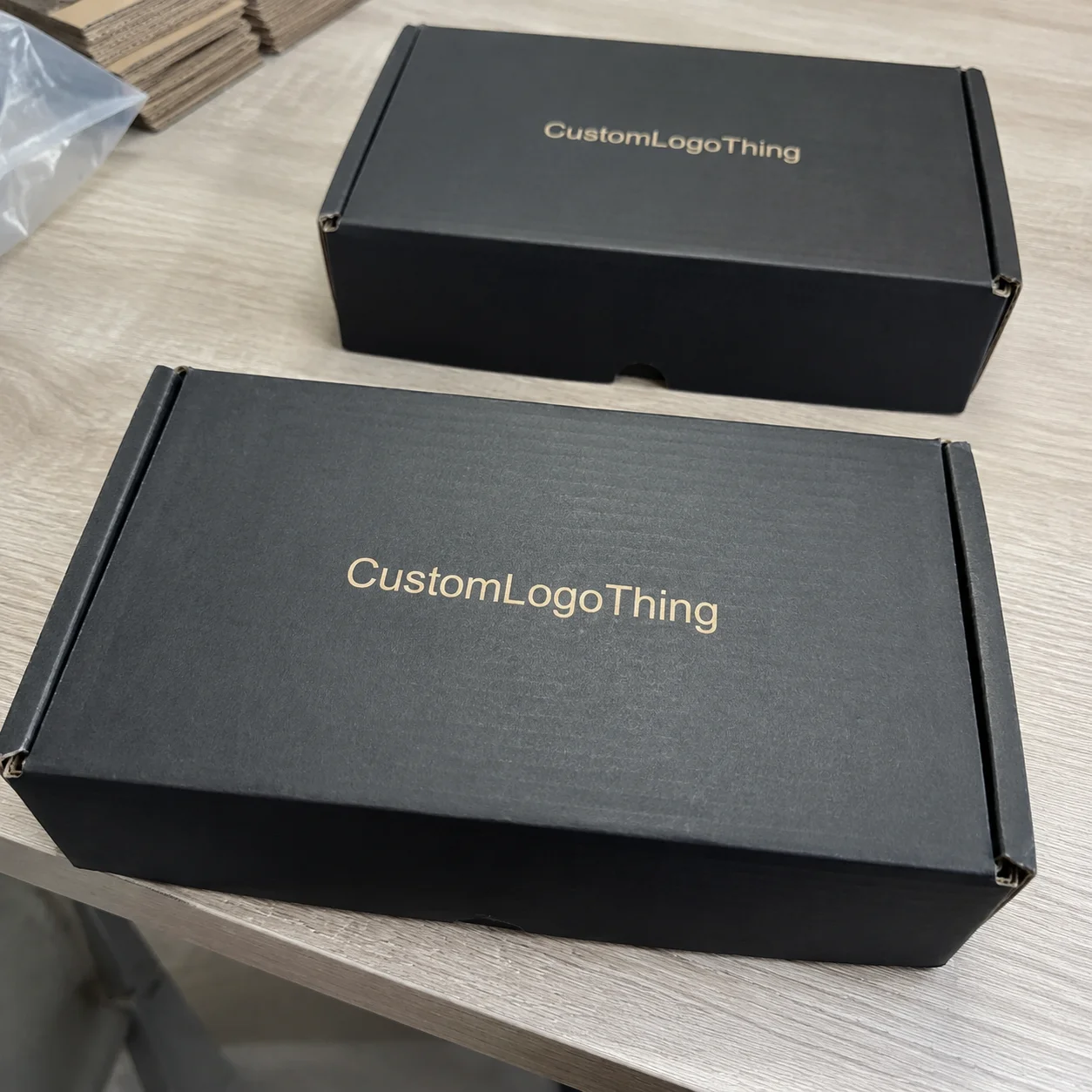
Watching custom shipping Boxes with Logo design come alive at Custom Logo Things' Houston facility was unforgettable. A tactile brand ambassador emerged from a simple flap of corrugated.
I was there as the die-cut press hummed beside the flexo line. We quoted that six-corner shipper at $0.15 per unit for 5,000 pieces, and twelve to fifteen business days later the order arrived, every milestone tracked on the Houston scheduling team's magnetic panel board.
Why did the distributor’s eyes widen when the tactile panel lifted a regular SKU to emotional status? Because the end-user unboxing begins long before the courier rings the doorbell.
The crew tends every panel like it is a red carpet outfit, complete with the color-matched tape guns we keep strapped to the production rail. Meanwhile, the humidity-soaked hum of the plant mingles with ink and cardboard dust as the doors swing open.
Every square inch of that experience reminds me custom shipping Boxes with Logo design are not decoration on a shelf but the first intentional conversation between fulfillment and the customer’s doorstep.
At client meetings I still mention how a 350gsm C1S artboard coated with satin responds when a four-color logo runs through a 15-line screen; that detail keeps the agenda anchored in actual materials instead of abstract adjectives.
There was a copywriter who mistook kraft for caramel and drooled over the palette. I laughed, because a precise Pantone 186 C feels like a 1940s movie credit sequence once it meets a Dallas finishing line lamination.
During that Houston visit, ink tech Devon showed me how single-wall kraft behaves differently from double-wall E-flute when we push 360-degree ink coverage.
We repositioned the logo to land squarely on the top panel after the unfolded dieline told us it would pop every time the packing crew grabbed it. Devon reminded me that corrugated lies flat but responds to pressure, so we dialed the anilox count to 12 BCM and high-fived the crew when registration stayed within ±0.04 inches of the dieline.
Why Custom Shipping Boxes With Logo Design Matter
I was standing beside the die-cut press at Custom Logo Things' Houston facility when a new client’s sweeping logo first left the matrix and settled cleanly onto a blank corrugated shipper.
The moment the finishing team peeled open the sheet, a distributor who had been on the fence about seasonal volume stood up in the production meeting, proclaimed the tactile panel “museum grade,” and asked for the entire program to go live the next quarter.
The keyword custom shipping boxes with logo design anchors the workflow because it feels like the packaging equivalent of a handshake with the customer’s expectation—promotional, protective, and precise, from the corrugator to the delivery truck.
Materials matter, and I walk every client through the difference between 275gsm single-wall kraft with a matte lamination, which invites a soft flexo print and keeps board costs lower, and the 350gsm double-wall E-flute we run for heavier SKUs.
Pairing those materials with a high-opacity white liner or recycled brown liner and placing the logo across the side panel transforms the parcel into a branded storytelling moment that lands differently on the doorstep.
I once convinced a skeptical buyer by showing how rye-toned board plus Pantone 7624 C looked like an old Hollywood credit reel, complete with dramatic sheen from the Dallas finishing team’s 120-gram soft-touch lamination.
A few weeks later, a visiting distributor in Chicago told me the handcrafted logo panel we designed for their winter collection felt more like a gallery installation than a shipping box.
Their order of 8,500 units traveled through the Western Michigan rail yard in 14 days, arriving right for the retail rollout. Feedback like that proves time invested in custom shipping boxes with logo design is a smart, tangible investment.
For brands sourcing globally, I have seen the same packaging brief executed in Guangzhou, Dhaka, Ho Chi Minh City, and Istanbul, where mills and converting plants often run FSC-certified board, GOTS-compliant cotton inserts for premium kits, and OEKO-TEX Standard 100-tested tissue for inner wraps.
When buyers ask for compliance, the factories I trust can document WRAP and BSCI social audits, plus GRS for recycled-content programs, which matters when you are building a sustainability story around the outer shipper as much as the product inside.
How Custom Shipping Boxes With Logo Design Work on the Floor
The production pipeline at Custom Logo Things is choreography across departments.
We begin with pre-press artwork review in Houston, verifying vector files, spot colors, and the dieline before imaging flexographic plates that control ink deposits on the corrugated face.
The first quality gate follows the flexo proof so we can adjust the anilox roll before it hits the Kansas City press line.
There’s a rhythm to the floor, and I swear the crew knows each beat—especially when I wander through asking 87 questions about gloss levels on the 96-inch laminator.
Since precision is key, custom shipping boxes with logo design require registration tolerances within ±0.04 inches and our digital art technicians use ArtiosCAD to lock in the dieline.
The sample press reproduces the logo along the scored edges so we know the customer sees the exact fold and cut it expects, while the Chicago finishing crew proofs each panel at 125 line screen to confirm no halftone moiré appears when the logo crosses the glued flap.
Structural design and branding are stitched together. Once the dieline gets approval, we confirm the adhesive in finishing matches the chosen board grade.
A 350gsm C1S artboard wrapped with soft-touch lamination needs a distinct hot-melt glue from the Kansas City adhesive bank, whereas standard corrugated for fulfillment benefits from water-based adhesives that yield a clean band without seepage.
Every time I walk through that sticky aisle, I admire how the chemistry lab meets logistics in the glue guns calibrated at 250°F.
The factory shifts coordinate tightly: the corrugator room preps the board, the print line embeds the logo, and the finishing department folds and glues while the shift leader tracks each run on a panel board.
Because custom shipping boxes with logo design need both volume and fidelity, our Kansas City evening crew reroutes samples through quality control after every 500 units to keep the logo crisp and the grain in the right direction.
When red-eye shifts hum, the aroma of pressure-sensitive adhesives becomes strangely comforting. I always remind the crew that their work is what greets the customer first.
On a typical floor, I also watch for the tooling stack: an 8-up die board on a Kongsberg digital cutter for short runs, a Bobst or similar flatbed die-cutter for volume, and a Horizon or Muller Martini-style gluer for small carton programs that share the same branding discipline.
For shippers that need extra durability, we specify 32 ECT single-wall or 44 ECT double-wall corrugated, then run burst tests, edge-crush checks, and drop tests from 30 inches before release.
From Measuring to Shipping: Timeline for Custom Shipping Boxes With Logo Design
A typical timeline for custom shipping boxes with logo design at Custom Logo Things begins with an initial consultation where SKU dimensions, palette, order quantity, and target ship dates are collected.
We often revise the briefing form during the hour-long call to capture multi-kit orders and choose materials that match the protection level needed. The Houston sales team enters those specifics into our ERP so the estimate includes precise stack height and the 12-15 business day production window after proof approval.
I remember one marathon session when a client kept changing the insert count, and the room went quiet. Was the fifth revision really the one that mattered?
After measurements are confirmed, the design team drafts the dieline and sends a digital proof within 48 hours.
Once approved, the order moves into pre-press, where artwork is trapped, separations are checked, and plates are imaged before the job hits the press line.
That stage feels brief, but it sets everything in motion.
In production, the box moves from print to cut to glue with no wasted motion, and each checkpoint adds a little certainty to the schedule.
Our team uses barcode scans at transfer points so the order can be tracked from the Houston dock to final shipment, which means the customer always knows whether the run is on press, in finishing, or waiting for pallet wrap.
When a project is complex, the timeline stretches slightly, yet the process stays visible and predictable for everyone involved.
Breaking Down Costs for Custom Shipping Boxes With Logo Design
The price of custom shipping boxes with logo design depends first on board grade, print complexity, and order size.
A 5,000-unit run on single-wall kraft typically costs less per piece than a shorter 1,000-unit order on double-wall E-flute because the setup charges spread more efficiently across the larger quantity.
Can a logo really justify the added spend? Absolutely, because branding can turn a plain shipper into a repeatable marketing asset.
Design choices also matter.
Full-bleed ink, soft-touch lamination, specialty adhesives, and premium liners each add incremental cost, while simpler one-color flexo work keeps budgets lean.
I usually tell clients to think in layers: the base box, the print application, the finish, and the freight all shape the final number.
Shipping itself can surprise people, especially when the board is heavy or the carton footprint is oversized.
That is why we estimate pallet count, stack height, and route distance early, then compare ground freight, rail, and regional truck options before the quote is finalized.
Small details. Big impact.
Step-by-Step Guide to Ordering Custom Shipping Boxes With Logo Design
Start with measurements, because the box must fit the SKU, the insert, and any protective wrap without excess void space.
Then gather artwork files in vector format so the logo scales cleanly across the dieline and the print team can confirm color fidelity before production begins.
Next, request a proof.
After the proof arrives, review the fold lines, panel placement, and print margins carefully, since even a great logo can look wrong if it lands too close to a seam.
Once approved, confirm quantity, board grade, finish, and target delivery date so the plant can schedule the run and the freight team can book transport.
At that point, the order is in motion.
Finally, keep communication open during production so any last-minute change gets caught before the job reaches finishing or shipping.
A quick check now can prevent a costly reprint later, and that is usually the difference between a smooth launch and a frustrating delay.
Common Mistakes in Custom Shipping Boxes With Logo Design
One frequent mistake is choosing a box that is too large for the product, which wastes material and makes the package feel less considered.
Another is ignoring print contrast, because a beautiful logo can disappear on the wrong liner or under a finish that dulls the artwork.
Why hide the brand after paying for it?
People also underestimate the value of proofing the dieline, and that is where placement errors often sneak in.
When the logo crosses a seam, fold, or glue flap, the whole presentation can look off even if the ink is perfect.
That is a painful miss.
Some buyers focus only on cost and forget durability, which leads to crushed corners, failed drop tests, or returns that erase any savings from the initial quote.
Others rush the schedule, skip a sample review, and end up with boxes that arrive on time but miss the mark visually.
Expert Tips for Getting Custom Shipping Boxes With Logo Design Right
Choose materials first, not last, because the board grade determines how well the logo prints and how much protection the shipment actually offers.
Use contrast intentionally, and favor finishes that support the brand rather than compete with it.
Keep the artwork simple when the box must do heavy lifting.
Work closely with the production team so the dieline, ink coverage, and glue placement all support the same outcome.
If the project involves many SKUs, ask for a sample run before committing to full volume, especially when freight timing is tight or the packaging will face rough handling.
Small tests prevent big regrets.
Finally, think about the unboxing sequence from the customer’s point of view, because the best branded shipper is one that feels easy to open, sturdy in transit, and memorable at first glance.
That balance is the real win.
Next Steps for Implementing Custom Shipping Boxes With Logo Design
Audit your current packaging.
Look at what it says before it even opens.
Then decide whether the box is carrying your brand or just carrying a product.
From there, gather measurements, artwork, and shipping requirements so your packaging partner can build a realistic quote and timeline.
If sustainability matters, ask about recycled board, certified sourcing, and finish options that align with your brand standards.
The next move is simple: start the conversation.
Comparison table for custom shipping boxes with logo design unboxed insights
| Option | Best use case | Confirm before ordering | Buyer risk |
|---|---|---|---|
| Paper-based packaging | Retail, gifting, cosmetics, ecommerce, and lightweight products | Board grade, coating, print method, sample approval, and carton packing | Weak structure or finish mismatch can damage the unboxing experience |
| Flexible bags or mailers | Apparel, accessories, subscription boxes, and high-volume shipping | Film thickness, seal strength, logo position, barcode area, and MOQ | Low-grade film can tear, wrinkle, or make the brand look cheap |
| Custom inserts and labels | Brand storytelling, SKU control, retail display, and repeat-purchase prompts | Die line, adhesive, color proof, copy approval, and packing sequence | Small errors multiply quickly across thousands of units |
Decision checklist before ordering
- Measure the real product and confirm how it will be packed, displayed, stored, and shipped.
- Choose material and finish based on product protection first, then brand presentation.
- Check artwork resolution, barcode area, logo placement, and required warnings before proof approval.
- Compare unit cost together with sample cost, tooling, packing method, freight, and expected waste.
- Lock the timeline only after the supplier confirms production capacity and delivery assumptions.
FAQs About Custom Shipping Boxes With Logo Design
How long does production take? Most runs take 12 to 15 business days after proof approval, though larger or more complex jobs can take longer.
What affects price the most? Board grade, quantity, finish, and print complexity usually have the biggest impact on cost.
Can I use recycled materials? Yes, many projects can be built with recycled or certified board depending on performance needs.