Custom Snapbacks for Apparel Brands: What They Really Signal
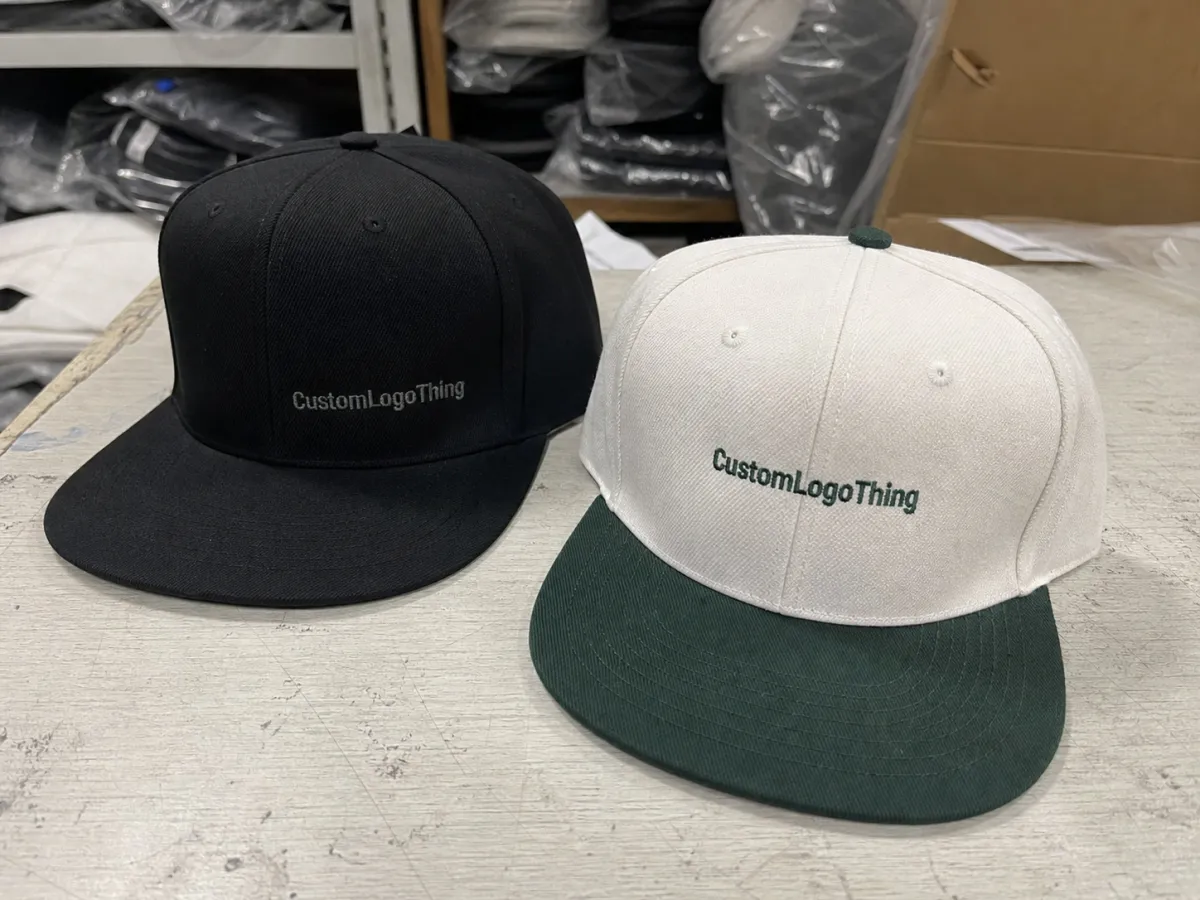
A cap is often the first branded product a customer wears in public. Many labels still treat custom snapbacks for apparel brands like a cheap add-on, even though headwear has its own fit expectations, margin structure, packaging risks, and influence on how the brand is read from across the room.
That visibility changes the stakes. A T-shirt may sit under a jacket. A hoodie rotates with the weather. A snapback sits at eye level in photos, at events, behind the wheel, on sidewalks, and sometimes on a shelf like a collectible. Good headwear does more than display a logo; it gives customers a simple way to show allegiance.
Custom snapbacks are structured, adjustable caps customized through embroidery, patches, woven labels, print applications, specialty trims, private labels, or branded packaging. Most use a firm crown, flat or slightly curved visor, and plastic snap closure, while more developed retail versions may add custom taping, woven labels, barcode stickers, protective inserts, and cap-specific boxes.
The mistake is treating a snapback as a promotional hat with a flatter brim. It carries streetwear cues, drop culture, team identity, resale potential, and a certain public confidence. A dad hat reads relaxed. A trucker cap can feel useful, nostalgic, or outdoorsy. A fitted cap suggests team affiliation or collector precision. A snapback sits between merch, accessory, and statement piece, which is why the smallest spec choices can change the entire product.
From a buyer's point of view, headwear is appealing because it behaves like apparel and advertising at the same time. If a customer wears a cap dozens of times, the cost per visible impression can become unusually low. The math is never perfect; location, design, styling, and the customer's willingness to wear the cap matter. Still, a well-built hat can stay in rotation long after a campaign email or paid ad has disappeared.
There are two common use cases. One is a retail-ready accessory for clothing labels that want a sellable product with a clean margin. The other is brand-extension merchandise for launches, collaborations, events, loyalty programs, employee kits, or influencer seeding. Both can work, and both can fall flat if the cap feels like an afterthought.
The better buying question is not, “Can we put our logo on a hat?” It is, “Will this cap feel valuable enough for someone to choose it repeatedly?”
How Snapback Customization Works From Blank Cap to Retail Product
A snapback looks simple until you separate the parts: crown, panels, visor, sweatband, closure, eyelets, top button, interior taping, and front decoration area. Each piece can push the finished product toward budget merch or credible retail. Small decisions compound quickly.
Most apparel brands start with a 5-panel or 6-panel shape. A 5-panel cap gives a clean, uninterrupted front, which helps with larger patches, printed graphics, and logos that need a smooth field. A 6-panel cap feels more traditional, although the center seam can interfere with tight lettering, symmetrical marks, or small embroidery. High-profile crowns look bold and streetwear-led. Mid-profile crowns are easier for a wider customer base to wear. Flat bills feel sharper; slightly curved bills soften the silhouette.
Fabric sets the tone before the logo does. Cotton twill is a practical choice for accessible streetwear because it balances durability, hand-feel, and cost. Wool blends suggest classic sportswear. Nylon and polyester suit performance capsules, travel stories, golf drops, or outdoor-inspired collections. Corduroy can make a small run feel tactile and seasonal. Foam fronts work for retro campaigns, music merch, and playful releases. Suede and faux suede can look premium, but they need better handling and more protective packing because scuffs and pressure marks show quickly.
Decoration is the next major fork. Flat embroidery is clean, durable, and familiar. 3D puff embroidery creates a raised streetwear effect, though it needs simple shapes, enough spacing, and careful digitizing. Woven patches can hold more detail than direct stitching. Leather or faux-leather patches can lift perceived value on neutral caps, especially when the branding is restrained. Screen printing and heat transfers are less common on structured snapbacks, but they can work on foam fronts or graphic-heavy concepts.
Artwork built for a T-shirt does not automatically translate to a cap. A shirt is flat. A cap is curved, paneled, stitched, and often interrupted by seams. Tiny text closes up, thin outlines disappear, and dense embroidery can pull fabric out of shape. A logo that looks sharp at 10 inches across the chest may fail at 2.25 inches on the front panel.
The quiet details often separate sellable headwear from giveaway headwear: custom inner taping, branded snaps, woven size labels, hangtags, UPC stickers, care labels, tissue, cap boxes, and inserts. These pieces are not decoration for decoration's sake. They help the product feel intentional from the first touch and can support retail scanning, fulfillment, and reorder consistency.
There is also a meaningful difference between decorating blanks and full custom manufacturing. Blank decoration is usually faster, lower risk, and better for test drops. Full custom production gives more control over fabric, fit, panel shape, labels, closures, and retail packaging, but it normally brings higher MOQs, more sampling, and a longer approval path.
Packaging belongs in the same conversation as the cap. A poly bag may be enough for bulk event merch. E-commerce retail may need tissue, a cap box, or a protective insert to prevent crushed crowns and scuffed visors. If the launch includes coordinated Custom Packaging Products, align the hat packaging with the rest of the drop so the customer experience feels planned rather than patched together during packing.
Key Specs That Decide Whether a Branded Snapback Feels Premium
Fit comes first. Returns, weak reviews, and low wear rates often begin with crown height, panel shape, sweatband comfort, and adjustability. A cap can photograph beautifully and still feel wrong on the head.
Profile is one of the strongest perception drivers. A tall crown can feel confident and specific to streetwear, but it may look bulky on customers who usually wear lower-profile caps. A mid-profile structure is safer for broader retail. A collapsed crown, uneven front panel, or scratchy sweatband will make even strong artwork feel cheap.
Fabric should follow brand position. Cotton twill is reliable for everyday apparel brands because it is durable, familiar, and cost-effective. Wool blends lean classic. Poly and nylon suit activewear, golf, travel, or weather-resistant concepts. Corduroy can justify a higher retail price when the color palette and logo execution stay controlled. Foam is not automatically low-end; used deliberately, it can make a campaign feel specific instead of generic.
The visor deserves more attention than it usually gets. A stiff flat bill points toward skate, music, and streetwear. A slightly curved bill can move the cap toward outdoor, golf, or lifestyle styling. Even the underside color affects the read. Green underbrims reference vintage sports caps. Black feels cleaner. A contrast underbrim can become a quiet brand signature if it is repeated across future drops.
Logo scale needs discipline. Oversized embroidery can work for bold streetwear, but it may feel heavy on a minimalist premium label. Tonal embroidery often feels more elevated. Contrast stitching is louder and easier to sell at events because the branding reads from a distance. Limited colorways reduce buying risk; one hero color and one neutral usually produce better data than five thinly stocked options.
Before approving custom snapbacks for apparel brands, ask suppliers how they check stitching consistency, crown symmetry, colorfastness, sweatband quality, embroidery backing, closure strength, patch edge finish, and packaging protection. If sustainability claims matter, ask whether paper components can be FSC-certified and confirm chain-of-custody details through the Forest Stewardship Council. Claims on mailers, hangtags, or inserts should be supported by actual documentation, not just a recycled-looking paper texture.
| Spec Choice | Best Fit | Typical Buyer Risk | Premium Signal |
|---|---|---|---|
| Cotton twill, flat embroidery | Everyday streetwear and core merch | Can look generic without strong color and fit choices | Clean stitching, tonal thread, structured crown |
| Wool blend with woven patch | Sportswear-inspired retail drops | Higher material cost and warmer wear | Badge detail, firm visor, polished interior labels |
| Nylon or poly cap | Performance, golf, travel, outdoor capsules | Decoration compatibility and shine level | Lightweight hand-feel, clean sweatband, water-resistant story |
| Corduroy with leather patch | Heritage or seasonal limited drops | Color matching and crush protection | Tactile fabric, restrained logo, careful retail packaging |
Two hats can look nearly identical online. In hand, one feels like a $12 giveaway and the other feels like a $38 product. Weight, crown shape, finishing, decoration control, and package protection usually explain the difference.
Pricing, MOQ, and Unit Cost: What Apparel Brands Should Expect
Pricing depends on more than the cap itself. The main cost drivers are blank quality or custom construction, decoration method, stitch count, patch type, number of logo placements, fabric choice, trims, packaging, sampling, and freight.
As a practical range, simple embroidered blank snapbacks may land around $7-$14 per unit at moderate quantities before premium packaging or complex freight. More developed retail caps with patches, private labels, custom trims, and protective packaging may sit closer to $12-$24 landed. Full custom programs can move higher, especially at lower quantities or with specialty fabrics. These ranges are directional, not fixed; supplier geography, freight mode, duty treatment, currency shifts, and order size can change the final number.
The cheapest unit cost is not always the most profitable choice. If the cap looks promotional, the brand may have to discount it from $34 to $18, which destroys margin faster than a better $3 trim decision would have. A clean $13 landed cost selling at $36 can outperform a weak $8 cap that sits in inventory.
MOQs should be treated as risk management rather than a supplier nuisance. A small run helps test demand and protect cash. A larger run improves unit economics once the color, fit, and decoration are proven. For many first drops, one strong colorway with enough depth to photograph, seed, and restock selectively is a better move than a scattered assortment.
Read the quote structure carefully. Setup charges, digitizing fees, sample fees, rush charges, packaging, inbound freight, storage, fulfillment labor, and expected markdowns all affect the real margin. A low base quote can become expensive after the missing pieces are added.
For a clean quote, send the cap style, quantity, artwork file, decoration method, number of placements, packaging needs, target delivery date, shipping destination, and whether the project is retail or promotional. If product packaging needs to match apparel mailers, Custom Printed Boxes, or a broader launch kit, mention that early. Packaging design is cheaper and cleaner when planned before production, not forced into place during final packing.
Process and Timeline: From Artwork Approval to Finished Caps
The process usually follows a predictable path: project brief, cap selection, artwork review, decoration recommendation, quote, digital proof, physical sample if needed, approval, bulk production, quality control, packing, and shipping. Skip steps and the risk simply moves downstream.
Timeline depends on customization depth. Decorating stock blanks is the faster route and may move from proof approval to completion in roughly 10-20 business days, depending on quantity and decoration load. Full custom manufacturing can require 45-90 days or more because fabric, closures, labels, sampling, and packaging all need coordination.
Artwork readiness saves time. Vector files such as AI, EPS, or editable PDF are preferred. Pantone references and thread color targets reduce guessing. Placement dimensions matter, and simplification often matters even more. If a logo has hairline strokes, tiny legal text, gradients, or distressed texture, expect revisions before embroidery can be approved.
Sampling is not bureaucracy; it is evidence. A physical sample can reveal whether puff height is too aggressive, patch edges curl, logo detail disappears, crown shape feels too tall, or brand color looks off under indoor light. Digital mockups are useful for layout, but they cannot prove hand-feel, fit, or material behavior.
Lead time risks are predictable: holiday congestion, fabric availability, artwork revisions, failed samples, freight delays, and last-minute quantity changes. If the hats are tied to a drop, pop-up, wholesale delivery, or event, the production calendar is as strategic as the design.
Build backward from the launch date. Add time for photography, e-commerce setup, influencer seeding, retail allocation, barcode creation, and contingency stock. If packaging must pass through a fulfillment center, check carton labels and packing rules early. For transit testing principles, the International Safe Transit Association is a useful reference point, especially for brands shipping structured caps in larger e-commerce programs.
Step-by-Step Buying Guide for a First Snapback Drop
A first drop should produce information, not just inventory. The goal is to learn which fit, color, price, and logo treatment customers will actually choose.
- Define the commercial goal. Is the cap meant for retail revenue, community merch, employee outfitting, event resale, influencer kits, or wholesale expansion? A resale product needs a different spec than a loyalty gift.
- Choose the profile based on the customer. Founder taste is useful, but existing bestsellers, audience style, and target retail price are better evidence. If your buyers already prefer relaxed apparel, a very tall crown may be a mismatch.
- Narrow the palette. One hero color and one safer neutral are enough for most first tests. Black, navy, stone, forest, and washed brown usually carry less risk than bright seasonal colors.
- Adapt the logo for headwear. Simplify fine lines, check stitch limits, choose embroidery or patch execution, and confirm placement against seams. A 2.5-inch front logo behaves differently than a 10-inch chest print.
- Request a transparent quote. Ask for decoration, setup, packaging, and freight to be separated. Hidden costs are easier to manage before approval than after invoices arrive.
- Approve the proof slowly. Check spelling, logo proportions, thread color, panel placement, bill color, closure type, and label details. One wrong thread color can make a reorder useless.
- Inspect the sample or production photos. Document approved standards for stitch quality, patch alignment, crown shape, and packing method so future reorders have a benchmark.
- Plan launch support. Product photography, fit notes, care copy, packaging instructions, and inventory allocation all influence sell-through.
For brands building a full merch system, review examples in Case Studies and compare how headwear, hangtags, mailers, and retail packaging work together. The cap rarely lives alone in the customer experience.
Common Mistakes That Make Custom Hats Look Like Giveaways
The first mistake is using a logo file designed for a website or shirt without reworking it for embroidery. Tiny text, thin outlines, gradients, and distressed textures can turn muddy fast. Thread has physical limits, and digitizing cannot rescue every mark.
The second mistake is choosing a blank only by price. A low-cost cap may have a crown that collapses, a scratchy sweatband, inconsistent panels, or a bill shape that misses the brand's aesthetic. Customers may not know the spec language, but they feel the compromise.
Over-branding is another common problem. Front logo, side logo, back logo, underbrim print, woven label, and hangtag can become too much visual noise. For custom snapbacks for apparel brands, restraint often looks more expensive than coverage.
Packaging gets ignored until cartons arrive. Then the crowns are crushed, visors are scuffed, hangtags are loose, and e-commerce customers receive a product that feels handled before they touch it. Product packaging is not only presentation; it protects margin.
Skipping samples is risky when the design includes puff embroidery, specialty patches, unusual fabrics, tight brand color matching, or premium trims. A $75-$200 sample can prevent a much larger inventory problem. Not always, but often enough to justify the pause.
Ordering too many colorways too early spreads demand thin. Four colors at 50 units each usually produce weaker data than one or two colors with enough stock to support photos, seeding, and a credible launch. Dead inventory is quiet, but it ties up cash and makes the next drop harder to fund.
Delivery assumptions create another trap. Proof approval deadlines, production capacity, freight method, and buffer time should be confirmed before the launch date is announced. A calendar built on hope is not a production plan.
Finally, many buyers fail to define quality standards before production. Without agreed tolerances for stitching, placement, crown shape, and packaging condition, every defect conversation becomes subjective. Put the standard in writing, even if the order is small.
Next Steps Before You Request a Snapback Quote
Before asking for pricing, gather the basics: target quantity, launch date, budget range, preferred cap profile, colorways, logo files, decoration preference, packaging needs, and shipping destination. A supplier can quote faster and more accurately when these details are clear.
Collect three physical reference caps if possible. One for fit. One for fabric or finish. One for decoration style. Physical references reduce translation errors because words like “premium,” “structured,” and “soft” mean different things to different people.
Decide whether the cap is a test drop or a replenishable core product. That answer changes the MOQ strategy, packaging investment, reorder planning, color selection, and margin expectations. A test drop can be lean. A core product needs repeatability.
Prepare a best-case design and a fallback. The first concept may be too detailed, too expensive, or too slow to produce. A simplified embroidery version or patch version can save days during proofing without compromising the larger brand idea.
Ask specific supplier questions: What stitch count do you recommend? Can you show similar caps? What is the sample timeline? What packaging protects the crown? What happens if QC finds defects? Are setup, freight, and packaging included or separate?
Then evaluate quotes beyond price. Compare cap quality, decoration method, included services, approval steps, freight assumptions, communication clarity, and packaging fit. Custom snapbacks for apparel brands work best when they are treated like a real product launch: spec the fit, price the landed cost, protect the packaging, and build the timeline before announcing the drop.
FAQs
What is the best decoration method for custom snapback hats for clothing brands?
Flat embroidery works well for clean logos and everyday retail caps. 3D puff embroidery gives a bolder streetwear look, but it requires simpler artwork with enough spacing. Woven or embroidered patches are better for detailed logos, badges, and heritage-style branding. The best method depends on logo complexity, cap fabric, price point, and the brand image you want customers to feel.
How much do custom snapbacks for apparel labels usually cost?
Cost depends on quantity, cap quality, decoration type, number of placements, packaging, sampling, and freight. Simple embroidered blank snapbacks usually cost less than fully custom caps with private labels, specialty fabrics, and custom packaging. Compare landed unit cost, not only factory unit price, because shipping, setup, packaging, storage, and fulfillment can change the true margin.
What MOQ should a new apparel brand choose for branded snapbacks?
A new brand should start with the smallest quantity that still supports a clean launch and acceptable unit economics. Lower MOQs reduce inventory risk but may raise the unit cost. Higher MOQs can improve margins once demand is proven, especially for core colors or repeatable designs. For a first drop, one strong colorway often performs better than several weakly stocked options.
How long does custom snapback production take from proof to delivery?
Timeline depends on whether the project uses stock blanks or full custom manufacturing. Stock blank decoration may take roughly 10-20 business days after proof approval, while full custom production can take 45-90 days or more. Artwork revisions, sample approval, specialty trims, packaging, and freight method can all add time, so confirm approval dates and shipping assumptions before announcing a launch.
What files do I need to order custom caps for an apparel brand?
Vector artwork is preferred, typically AI, EPS, or editable PDF files. Include Pantone or thread color references when brand color accuracy matters. Send logo placement notes, target decoration size, cap color preferences, and examples of hats you like. If packaging is included, provide label files, barcode requirements, care copy, and any retail compliance details.


