Custom Plastic Bags for Toy Retailers That Sell
Learn how custom plastic bags for toy retailers protect products, speed checkout, control costs, and make your store branding hard to miss.
Custom Plastic Bags for Toy Retailers: What They Actually Need to Do
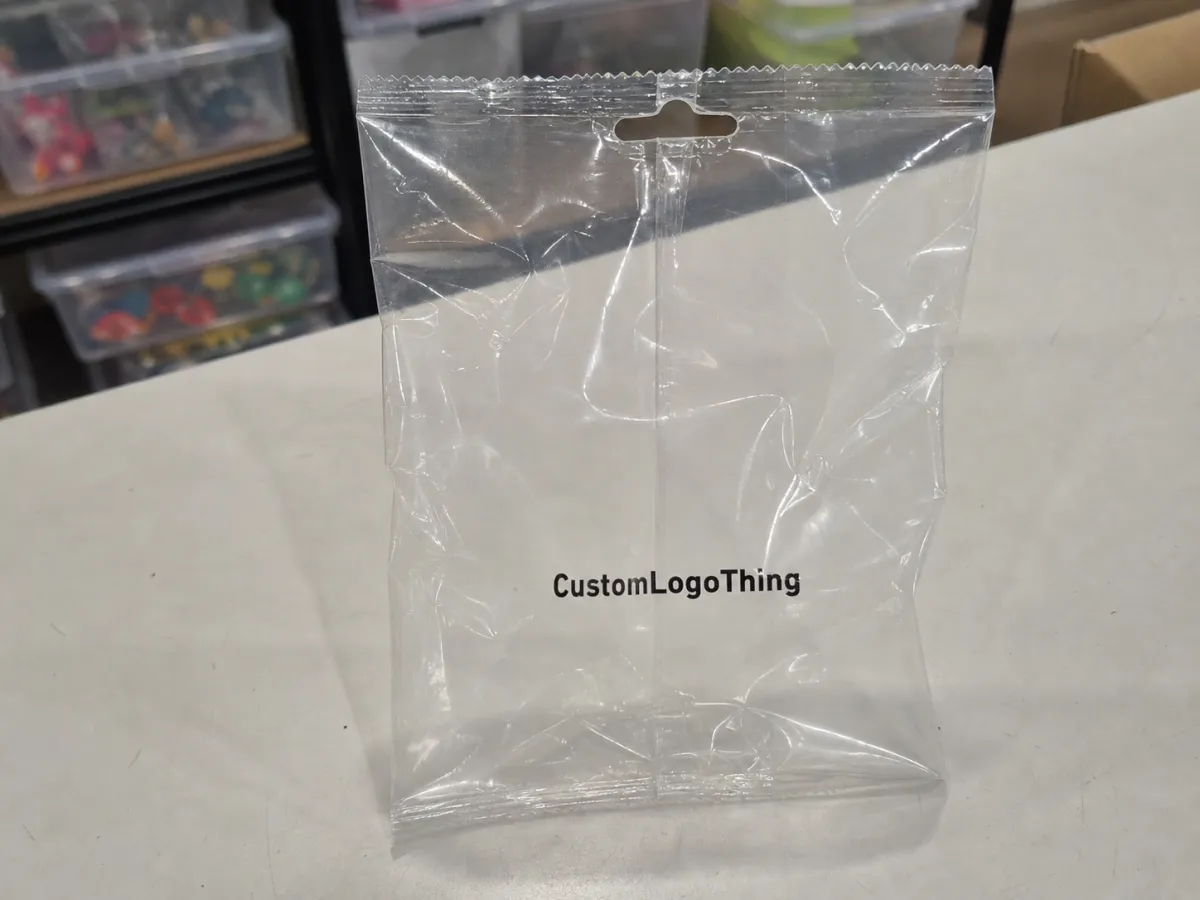
A parent leaves your shop with three small toys, one boxed building set, and a plush dinosaur wedged under one arm. The bag has a simple first assignment: survive the walk to the car without turning into sad confetti.
The logo matters, of course. A custom bag should make the store recognizable after the sale leaves the counter. But toy retail bags are not just moving billboards. They are product protection, checkout equipment, brand presentation, and a small mercy for the cashier who does not want to fight a flimsy bag while a birthday shopper waits in line.
Toy retailers usually work with six practical plastic bag formats. Die-cut handle bags look clean and flat, especially for boutique retail packaging. Soft loop handle bags feel more premium and are easier to carry with heavier boxed toys. Patch handle bags reinforce the handle area without making the whole bag overly thick. T-shirt bags are fast and economical for high-volume checkout. Drawstring bags suit gift-style presentation, party favors, and reusable promotions. Zip bags are useful for small accessories, collectible parts, game pieces, or branded kits.
Toy packaging behaves differently from apparel, skincare, or jewelry. A folded hoodie settles into a bag. A puzzle box does not. Toy purchases include sharp box corners, mixed basket sizes, kid-handled bags, impulse buys under $10, birthday gifts, plush animals that swallow counter space, and rigid boxes that stress seams in exactly the wrong place. That mix makes bag size and film strength more than a design preference.
The goal is not to buy the thickest bag or the prettiest bag. The goal is to choose the lowest practical spec that still fits your product mix, carries the likely weight, prints clearly, and protects margin on low-ticket items. A cheap bag becomes expensive quickly if staff double-bag every third order, customers complain about tearing, or the finished print looks generic from five feet away.
How Toy Store Plastic Bags Work From Checkout to Home
A good toy store bag has a short, demanding life. Staff grab it fast. The product slides in without a wrestling match. The handle holds under uneven weight. The customer carries it through a mall, sidewalk, parking lot, stroller basket, or back seat. During that brief trip, the logo gets seen outside the store, which is practical package branding rather than decoration for its own sake.
Film thickness drives much of that performance. Light retail bags often sit around 1.5 to 2 mil. These can work for blind boxes, trading cards, small plush toys, lightweight accessories, and small boxed items. Sturdier boutique bags often run 2.5 to 3 mil, giving better hand feel and more confidence for boxed toys with corners. Heavier reusable-style plastic bags go above that, but material cost, carton weight, freight, and storage space climb with them.
Material choice affects feel, price, and print behavior. LDPE feels softer and more flexible, which makes it a common choice for nicer retail bags with a smooth finish. HDPE is crinklier, lighter, and common in economical T-shirt bags. Recycled-content plastic can support a sustainability claim if the claim is accurate, documented, and allowed under local rules. Plastic is not a halo, but recycled content can still be a valid specification for retailers trying to reduce virgin material use.
Handle choice changes both speed and comfort. Die-cut handles look tidy, though heavier boxed toys may require patch reinforcement around the cutout. Soft loop handles cost more, but they feel better on larger bags and gift purchases. T-shirt handles are fast, familiar, and cheap enough for busy checkout lanes. Patch handles sit in the middle: cleaner than a basic cutout and often less expensive than loop-handle construction.
Printing does not need to be complicated. Spot color works well for bold logos and simple graphics. One-color printing keeps costs under control and often gives the strongest read at a distance. Full-color printing makes sense for character-heavy branding, seasonal artwork, or detailed promotional packaging, but it adds proofing steps and cost. A shop selling $6 collectibles should not use the same bag strategy as a premium toy boutique selling $85 construction sets. Different basket, different math.
Bag size mix is the quiet killer. A puzzle box, blind box, plush animal, and birthday gift bundle are not the same packaging problem. Start with what sells every week, not the oversized item that moves twice a quarter.
Key Specs to Choose Before You Ask for a Quote
Before asking for pricing, define the core specification: bag size, film thickness, handle style, material, print colors, finish, quantity, packing method, and recycled-content requirement if applicable. Vague specs create vague quotes. Vague quotes create surprise price jumps. Nobody enjoys that little circus.
Measure the products customers actually buy. Width, height, depth, and weight all matter. Add enough room for easy loading, including gusset space if boxes are thick. If staff have to bend a package into the bag like a county fair contest, the bag is too small or the wrong format.
Thickness is a tradeoff, not a virtue contest. Thinner bags reduce unit cost and carton weight, but they may tear, stretch, or require double-bagging. Thicker bags feel better, protect better, and carry branding with more presence, but they use more material and cost more to ship. From a packaging buyer’s point of view, the useful question is not “What is cheapest?” It is “What is the lowest spec that works reliably with our real checkout baskets?”
Gussets deserve more attention than they usually get. Side gussets or bottom gussets help boxed toys sit properly inside the bag and reduce pressure on seams. A flat bag can be fine for thin items, but many toy retailers need depth. Plush toys, board games, craft kits, puzzles, and boxed sets all punish narrow bags.
Branding decisions should be simple and visible. Use a large logo, strong contrast, a short tagline if needed, and a readable website or store location. Decide whether the bag should feel playful, premium, nostalgic, educational, or value-driven. Those are different visual languages. A curated wooden-toy boutique should not look like a clearance-heavy party toy shop, and the bag is one of the places where that difference becomes obvious.
Compliance belongs in the spec sheet too. Local plastic bag rules can include fees, bans, minimum thickness, recycled-content requirements, warning labels, or reusable bag definitions. For broader packaging standards and distribution testing, resources from ISTA are useful when products are shipped, while EPA guidance can help retailers understand recycling language and environmental claims. Check local rules before ordering. The printer is not your municipal lawyer.
Practical rule: build the bag around the product mix first, the logo second, and the fantasy budget third. Reverse that order and the production bag may not hold a LEGO-sized reality check.
| Bag Type | Best Use | Typical Strength Range | Cost Behavior |
|---|---|---|---|
| Die-cut handle bag | Boutique toys, boxed gifts, flat retail purchases | Often 2 to 3 mil, reinforced if needed | Moderate; rises with thickness and print area |
| T-shirt bag | High-volume checkout and mixed small purchases | Often lighter, commonly HDPE | Usually lowest unit cost at volume |
| Soft loop handle bag | Premium gift purchases and heavier boxed toys | Commonly 2.5 mil and up | Higher due to handle construction |
| Zip bag | Small accessories, collectibles, parts, kits | Varies by size and closure | Efficient for small items; custom print adds cost |
Pricing, MOQ, and Unit Cost Without the Guesswork
Custom plastic bags for toy retailers are priced by material, thickness, size, print coverage, ink colors, order quantity, finishing, packing method, and freight. That is the plain, unglamorous truth. A small one-color bag is a different product than a large soft loop bag with full-coverage artwork and recycled-content film.
Small custom runs cost more per bag because setup is spread across fewer units. Larger runs usually lower the unit cost, although storage and cash flow still matter. Heavy film pushes material and freight cost up. Full-coverage printing adds ink, time, and proofing risk. Specialty handles add labor or machine complexity.
As a rough planning range, a simple printed checkout bag may land in the low cents per unit at higher volumes, while heavier boutique-style bags with reinforced or loop handles can move into the higher cents or beyond, especially at lower quantities. Exact pricing changes with resin markets, print method, freight, and order size, so treat any quick number as a planning estimate until the supplier quotes the actual spec.
MOQ ranges vary by supplier and construction. Basic Printed Plastic Bags often start at lower minimums than highly customized reusable-style bags. Complex sizes, unusual handles, special finishes, recycled-content materials, or full-color work can require larger runs. If a supplier offers a surprisingly low minimum on a complex bag, ask what changes at reorder quantity. There is usually a tradeoff hiding somewhere.
Setup costs, plate costs, and artwork fees are not imaginary. Annoying? Sometimes. Fake? No. They cover the work needed to prepare your logo, color, placement, and production tooling. If you reorder the same bag without changes, some of those costs may not repeat, depending on the supplier’s process.
Buyers can control several cost levers. Reduce print colors. Choose a standard size. Order one or two bag sizes instead of five. Increase quantity if storage allows. Use a simpler handle. Keep print coverage focused instead of flooding the whole bag with ink. If you need broader branded packaging, compare bags with other items in your mix through Custom Packaging Products so the bag supports the rest of your retail presentation.
Do not compare quotes by total price alone. Compare thickness, dimensions, material, print area, carton count, freight terms, lead time, proofing process, and whether the handle area is reinforced. A lower quote may be thinner, smaller, unreinforced, or packed in a way that creates receiving headaches. Fun little trap.
| Buyer Decision | Lower-Cost Choice | Higher-Cost Choice | Tradeoff |
|---|---|---|---|
| One-color logo | Full-color artwork | Better artwork costs more and needs tighter proofing | |
| Size | Standard medium bag | Custom oversized gusseted bag | Fit improves, but unit and freight costs rise |
| Handle | T-shirt or simple die-cut | Soft loop or reinforced handle | Comfort improves, especially for heavier toys |
| Quantity | Low MOQ | Larger production run | Lower cash outlay versus lower unit cost |
For mixed-volume toy retailers, choose one workhorse checkout bag first. Dial in the size, strength, and print. Add a premium gift-style bag after the main bag proves itself. Trying to solve every possible packaging scenario in the first order usually creates clutter, confusion, and three cartons of bags nobody reaches for.
Process and Timeline From Artwork to Delivered Bags
The normal production flow is not complicated, but it does have real steps. Define specs. Send artwork. Receive the quote. Approve a digital proof. Confirm a sample if needed. Produce the bags. Inspect them. Pack cartons. Ship. Receive. Put them where staff can actually find them.
Artwork should be vector whenever possible. Send clean logo files, not a screenshot dragged out of an old email. Use AI, EPS, SVG, or editable PDF files when available. Provide Pantone or brand color references if color accuracy matters. Give clear placement instructions: front only, both sides, centered, bottom imprint, handle clearance, or whatever the design requires.
Digital proofs confirm layout, print size, placement, colors, and production notes. Physical samples or pre-production samples are worth considering when thickness, handle feel, opacity, or color matters. A soft loop handle can look fine on paper and feel wrong in hand. Same with film gauge. Specs are useful, but touch tells the truth.
Basic quality checks should happen before cartons disappear into the stockroom. Confirm the printed logo version, ink color, bag dimensions, film feel, handle attachment or reinforcement, carton count, and packing labels. Pull a few bags from different cartons if the order is large. Load them with real products and carry them by the handle. A tiny test can catch a large headache.
Timelines depend on complexity. Simple repeat orders are faster because artwork and specifications are already approved. New custom sizes, specialty materials, full-color printing, or recycled-content requests take longer. Freight can also change the calendar more than people expect. Air freight may save a deadline and punish the budget. Ocean or ground freight may save money and punish procrastination.
For many custom retail bag orders, a practical planning window is several weeks from proof approval to delivery, not from the day someone first asks for a quote. First orders need more buffer. Repeat orders can be tighter. Supplier capacity, material availability, proofing speed, inspection requirements, and shipping method all affect the final schedule.
Toy retailers need extra seasonal discipline. Holiday rush, back-to-school gifting, new product launches, birthday party promotions, and local events all increase bag demand. Everyone suddenly remembers bags exist at the same time. Shocking, I know.
Approval delays are a real timeline killer. One missing logo file or five people debating the shade of red can push production back harder than the supplier can fix. If your store needs bags for a grand opening or holiday sales period, build in buffer time and make one person responsible for approvals.
Common Ordering Mistakes That Make Toy Bags Fail
The biggest mistake is choosing a bag based on flat dimensions without testing real products. Lay out the toys, boxes, plush items, and bundled purchases customers actually buy. Then test the bag. Flat measurements do not show how a box corner stresses a seam or how a plush item steals volume.
Under-specing thickness to save pennies is another classic. Toy boxes often have sharp corners and uneven weight distribution. A bag that works for socks may fail with a boxed construction set and two metal cars. If staff double-bag often, the thinner bag is probably not saving money.
Weak branding wastes the custom print. Tiny logos, low-contrast ink, too much text, or cute artwork that disappears on a moving bag all reduce visibility. Keep the design readable from 6 to 10 feet away. If the bag is walking through a shopping center, your logo has about two seconds to do its job.
Ordering too many sizes too early sounds organized but often causes problems. Multiple SKUs take storage space, confuse staff, and split order volume, which can raise unit costs. Start with one primary checkout bag and one optional premium or gift bag if your sales mix supports it.
Ignoring local plastic bag regulations can get expensive fast. Some areas have fees, bans, thickness rules, recycled-content rules, labeling requirements, or definitions for reusable plastic bags. Ask before ordering. A beautiful noncompliant bag is still a problem with handles.
Freight and storage are easy to underestimate. Plastic bags are light, but cartons are not invisible. Large orders need shelf space, backroom space, and receiving time. Retail backrooms are not magical portals, despite what some purchasing plans seem to assume.
Skipping proof review is risky. Wrong logo version, bad placement, incorrect color, misspelled website, or an outdated store address can turn thousands of bags into very branded regrets. Review the proof slowly. Then have one other detail-oriented person review it too.
Smart Next Steps Before You Place an Order
Start with your top 10 products by sales volume. Measure the largest common boxes, not the biggest oddball item in the store. Weigh typical checkout combinations: one boxed toy plus two small add-ons, three blind boxes, one plush plus a card game, or one birthday gift bundle. Note which items currently need double-bagging.
Choose one primary checkout bag first. For many toy shops, that means a medium gusseted plastic bag with enough thickness to handle boxed toys without feeling flimsy. Add one premium or gift-style bag only if your store sells enough higher-ticket items, party gifts, or curated toy sets to justify it.
Create a simple spec sheet before asking suppliers for quotes. Include bag type, width, height, gusset, thickness, material, handle, print colors, logo placement, quantity, deadline, shipping destination, and any recycled-content requirement. If you also use Custom Printed Boxes, tissue, labels, or other product packaging, keep the visual system aligned so customers see one store brand, not five unrelated design decisions. You can review broader options under Custom Packaging Products if the bag is part of a larger packaging reset.
Ask suppliers for pricing at two or three quantities. For example, request the same spec at 2,500, 5,000, and 10,000 units if those volumes fit your store. The goal is to see where the unit cost actually improves, not to guess. Sometimes the jump from the lowest quantity to the middle quantity is worth it. Sometimes storage costs say no. Both answers are useful.
Test samples with real products and real staff before approving a larger run. Cashiers know immediately if a bag opens poorly, catches on box corners, or feels too thin. If employees hate using the bag, customers will notice. They always do.
Custom plastic bags for toy retailers should be treated like working retail packaging, not an afterthought ordered during a panic week. Finalize the specs, confirm local compliance, approve artwork carefully, and order early enough to avoid panic freight. A good toy store bag should carry the sale, advertise the store, and stay out of the customer’s way, which is exactly what practical packaging is supposed to do.
FAQs
What size custom bags do toy retailers usually need?
Most toy retailers need at least one medium checkout bag for boxed toys and one larger gusseted bag for bulky items like plush toys, puzzles, and gift purchases. Measure your best-selling product boxes first, then add room for easy loading instead of forcing staff to bend packaging at checkout. If you sell many small collectibles, add a smaller bag or zip bag so low-ticket purchases do not look lost in oversized packaging.
How thick should plastic retail bags for toy stores be?
Lightweight bags can work for small toys, but boxed toys with corners usually need a sturdier film to prevent tearing. A practical range is often around 1.5 to 3 mil depending on size, handle style, and expected weight. If staff often double-bag, the current thickness is probably not saving you money.
Are custom plastic bags for toy shops expensive to print?
Cost depends on bag size, thickness, quantity, print colors, material, handle style, and freight. One-color logo printing on a standard-size bag is usually the most budget-friendly custom option. Full-color graphics, specialty handles, recycled materials, and low quantities raise the unit cost.
How long does it take to produce custom toy store bags?
Simple repeat orders usually move faster than first-time custom orders because artwork and specs are already approved. New custom orders need time for quoting, proofing, production, quality checks, packing, and shipping. Order earlier before holidays, grand openings, or big promotions because production calendars fill up fast.
Can toy retailers use recycled or reusable plastic bags?
Yes, many toy retailers can choose recycled-content plastic bags or thicker reusable-style plastic bags depending on local rules and budget. Reusable-style bags usually cost more per unit but can feel more premium and stay in circulation longer. Always check local bag regulations before ordering because thickness, fees, labeling, and recycled-content rules vary by location.
