Ordering custom snapbacks for event staff is really about solving a day-of problem. The hat has to identify people fast, survive a long shift, and still read clearly when the room gets crowded, loud, or dim. If it misses one of those jobs, the uniform starts to feel half-finished.
The best orders tend to be plain and practical: a cap that fits most heads, a decoration method that suits the logo, and delivery that lands cartons where they are actually needed. Most buyers end up comparing the same few things anyway: cost, minimums, turnaround, decoration method, and whether the finished cap still looks sharp after hours of wear.
Why event staff snapbacks solve a real logistics problem
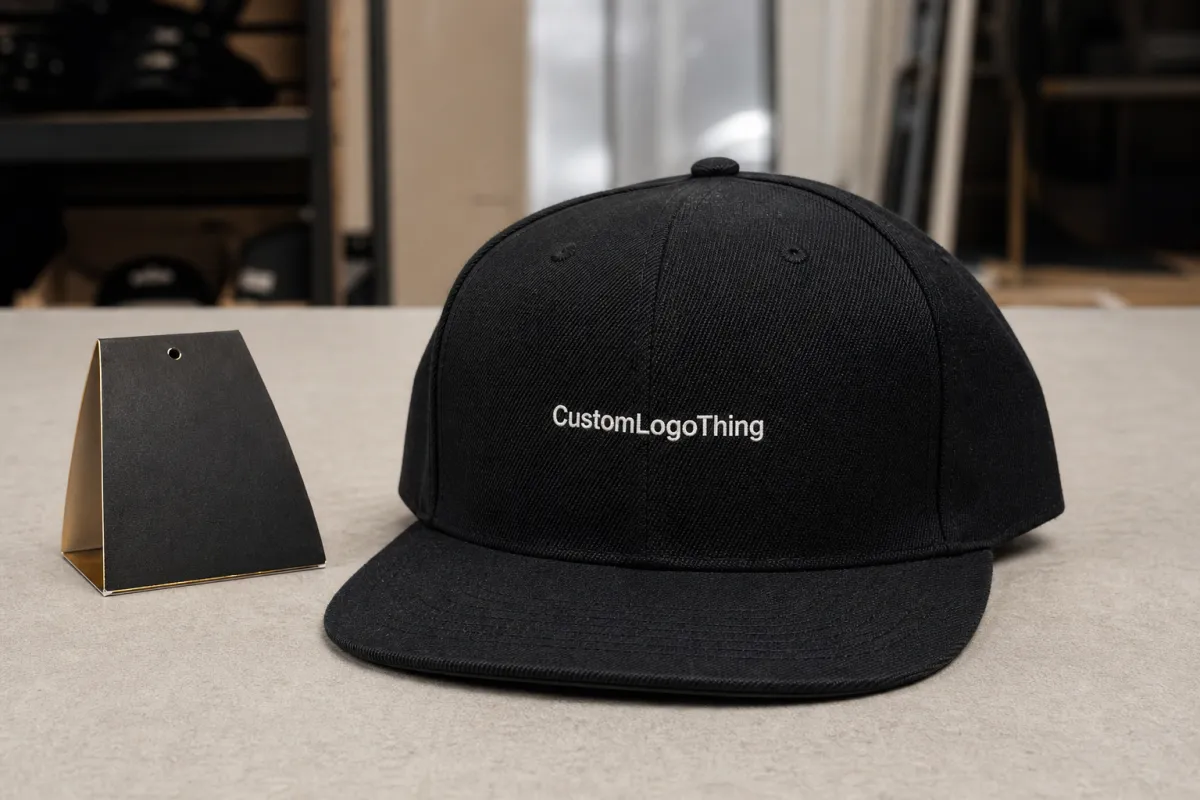
Badges get hidden under lanyards, shirts disappear under jackets, and some staff wear headsets, aprons, or layers that block the usual cues. A snapback stays visible above all that. One size also covers a mixed crew without chasing measurements.
That matters for volunteers, temporary staff, supervisors, and teams that rotate through different stations. A carton of hats moves faster than size-specific apparel, which cuts down on sorting and keeps setup moving. When the event team is already dealing with signage, schedules, and arrivals, a simpler handout helps.
Comfort still matters.
If the cap is too tight, too hot, or too bulky, people take it off. Once that happens, the identification system stops working. The right cap should fade into the shift instead of turning into something the wearer notices every ten minutes.
These hats show up a lot at conferences, festivals, stadium activations, trade shows, and sponsor lounges because they solve a basic problem without much fuss. They are easy to assign, hard to misread, and sturdy enough to travel well.
How the cap gets from artwork to finished uniform piece
The process is simple enough on paper: send artwork, approve a proof, decorate the caps, pack them, and ship. What keeps the order on track is the quality of the input. Clean vector art, a final quantity, and one person who can make decisions prevent more delays than any rush fee can fix.
Decoration method changes both the look and the schedule. Embroidery is the usual choice for event headwear because it lasts and works well for clean, simple logos. Woven patches make more sense when the art has small type or fine detail that would blur in thread. Printed patches or front-panel printing can handle more color, but the supplier should confirm the finish fits the cap style and the logo size.
Ask for a proof that shows placement and scale on the actual cap, not just a floating logo on a blank mockup. Something that looks fine on screen can fail once it is sized for a hat. If the logo has a lot of detail, check the smallest readable size before production starts.
There is no point paying for detail the cap cannot carry.
- Start with vector art, cap color, quantity, and event date.
- Then check the proof for placement, thread color, and crown style.
- If the order matters a lot, approve a sample before the full run.
- Lock the count before decoration begins.
- Send it to a staging address, office, or venue contact that can actually receive cartons on time.
Pack-out matters too. Labeled cartons and grouped bundles make it easier for the receiving team to hand out caps by day, role, or location. If the hats are part of a larger event kit, keep the approval process consistent across the whole order so the cap feels like part of the set instead of an afterthought.
Fit, fabric, and decoration choices that affect wear time
Fit is not just about comfort. It decides whether staff keep the cap on all day or leave it on a table after the first hour. A structured front panel gives the logo a cleaner shape, while the snap closure solves the size problem for mixed teams. That is why these caps are easier to deploy than fitted styles.
Fabric changes the feel over a long shift. Cotton twill is familiar and photographs well, but it can run warmer in direct sun or under venue lights. Polyester and poly-blend blanks usually dry faster and hold their shape better when people are moving, sweating, or loading gear. Mesh-back styles help in hot conditions, though they read more casual and will not suit every brand.
Profile changes both comfort and visibility. A low-profile crown sits closer to the head and feels lighter. A mid- or high-profile crown gives more room for embroidery and usually makes the logo easier to read from a distance. The right choice depends on the brand, the climate, and how long the staff will wear it.
Color has a practical side too. Dark caps hide handling marks and scuffs from packing. Light caps can look crisp under strong lighting. Contrast matters most: the logo has to stand off the cap color or the whole point of the decoration gets lost. If the design leans on subtle shading, test it against the actual blank before production.
Clarity wins.
Keep the placement simple. Front-center branding still reads best because people can see it from more than one angle. Side or back marks can help with role identification, but too many messages weaken the main read. For staff headwear, the cleaner option usually works better.
Small things like sweatband quality, seam finish, and closure strength also affect wear time. Weak stitching and thin sweatbands show up quickly after repeated use, especially in hot or fast-moving environments. Check the blank cap before decoration so problems are caught before they get expensive.
Custom snapbacks for event staff pricing: what drives the quote
Pricing depends on more than the cap blank. Quantity, decoration method, patch type, thread count, packaging, and rush timing all change the quote. A 48-piece order with a detailed woven patch will not price the same as a 500-piece embroidered run, even if the logo is identical. Setup work still has to be spread across the order somehow.
For custom snapbacks for event staff, stock caps with simple embroidery often land around $5.50-$9.00 per unit at larger quantities. Woven patches usually fall around $6.50-$11.50. Premium blanks or multi-color patch work can move into the $8.50-$16.00 range. Small runs under 50 pieces usually cost more per hat because the setup is divided across fewer units.
| Option | Typical unit range | Best fit | Watch-out |
|---|---|---|---|
| Stock cap + single-color embroidery | $5.50-$9.00 | Simple logos, standard staff use | Small text can fill in or lose legibility |
| Stock cap + woven patch | $6.50-$11.50 | Sharper detail, cleaner presentation | Patch shape and size need approval before production |
| Premium cap + multi-color patch | $8.50-$16.00 | Launches, VIP teams, sponsor-heavy events | More setup, more proofing, and a longer lead time |
| Small run under 50 pieces | $10.00-$18.00 | Test orders, executive teams, replacements | Unit cost rises quickly at low volume |
Ask for the quote to break out cap cost, decoration cost, shipping, digitizing, and any rush fee. When everything is folded into one line, it gets harder to see where the money is going and harder to compare one supplier with another.

