For a ceramic shop, ceramic studio Paper Shopping Bags cost is not a random procurement question. It is a decision about whether the packaging can carry real weight, protect the sale, and still look like it belongs in the brand experience. A good bag handles a mug, a bowl, or a boxed set without collapsing into something apologetic on the way to the car. A bad one saves a few cents and creates a problem the moment the customer picks it up.
Ceramic retail pushes paper bags harder than many categories do. Clay pieces are dense. Shapes are awkward. Even a single mug can put more stress on handles and bottom folds than a lightweight apparel item twice the size. Add tissue, a second piece, or a gift box, and the bag has to perform like a small piece of packaging engineering. The goal is not luxury for the sake of luxury. It is a bag that feels steady, stays upright, and does not make the checkout feel flimsy.
That is why the cheapest-looking option is rarely the cheapest option in practice. A weak bag causes awkward repacking, customer complaints, and replacement costs. A slightly better spec usually pays for itself by reducing damage risk and by making the purchase feel finished. For ceramic studios, that last part matters more than many buyers expect.
A retail bag should support the object inside it, not become the weak link in the transaction.
Why ceramic studios need a stronger retail bag
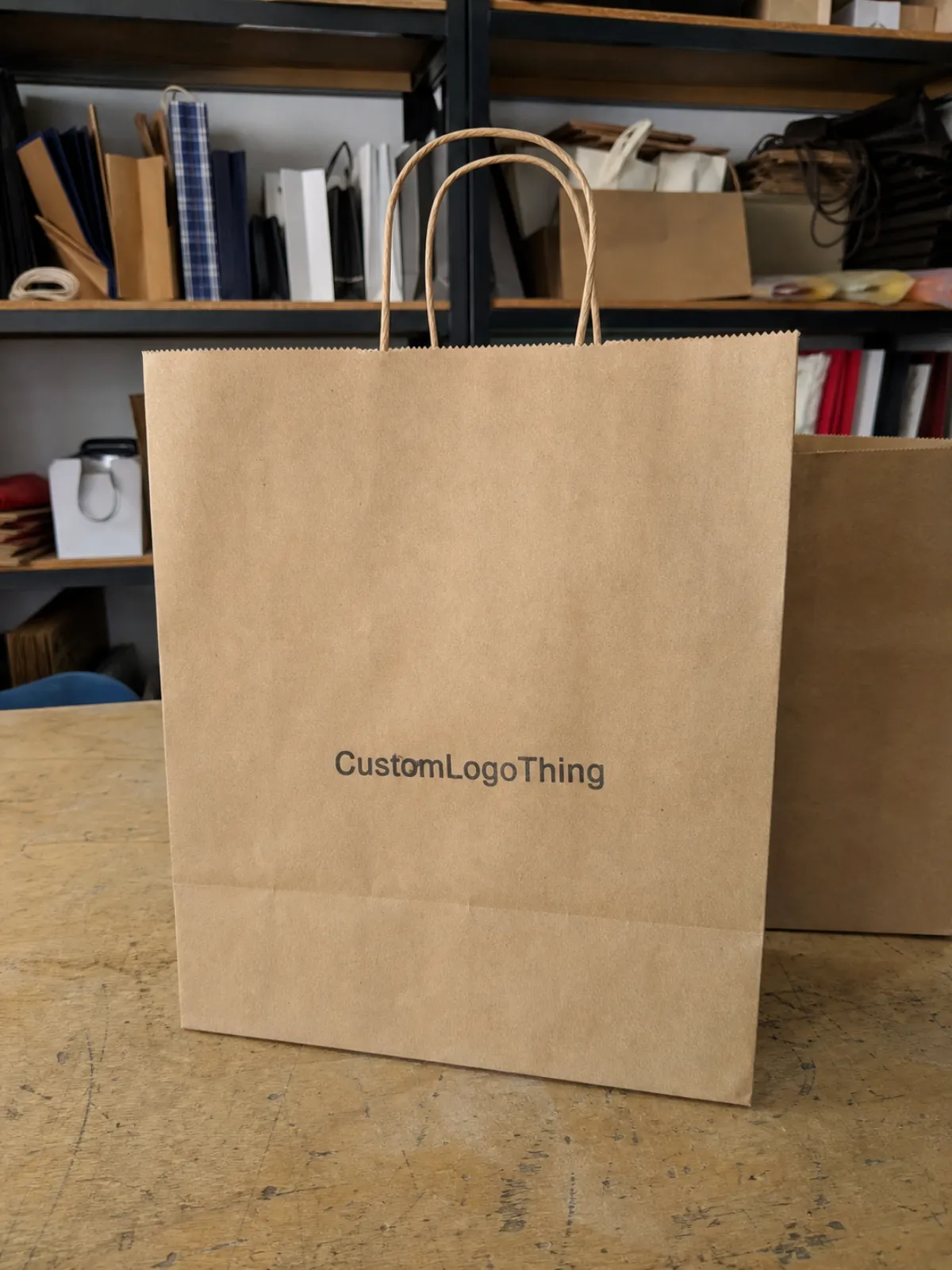
Ceramics create a different carrying profile from most retail goods. The weight is concentrated. The shape is often irregular. Items shift as the customer walks, and that movement puts stress on the handles and seams. A bag that looks fine empty can bow, twist, or crease once a mug and bowl are sitting inside it. That is why handle attachment, gusset depth, and base construction deserve as much attention as artwork placement.
There is also a presentation problem. A fragile bag makes the whole purchase feel improvised. A sturdier paper bag, even a simple kraft version, makes the studio look organized and intentional. Customers read that signal quickly. It affects how they perceive the price of the piece, the care behind the work, and the quality of the store overall. It is packaging, yes. It is also part of the product’s final impression.
From a buyer’s perspective, the key is to size the bag for the actual carry load, not the prettiest mockup. A single small bowl may be fine in a lighter structure. A boxed mug set or a two-item sale usually needs a wider gusset, stronger paper, and better handle reinforcement. If the studio regularly sells bundles, the bag spec should reflect that reality instead of assuming every purchase is light.
Cheap paper bags become expensive the moment they fail. The replacement cost is obvious. The reputational cost is harder to measure, but it is real. A customer who has to support the bottom with one hand while leaving the shop is not thinking about your packaging strategy in a kind way.
For ceramic Shops That Sell at markets, open studios, and gallery events, the bag also has to work in less controlled conditions. Customers may be walking farther. They may be carrying multiple purchases. Weather, crowding, and uneven parking lots make weak packaging more visible. That is a useful reminder: the bag is not tested on a shelf. It is tested in motion.
Bag styles that fit mugs, bowls, and boxed sets
The best paper bag style depends on what leaves your counter most often. Flat-handle kraft bags are the budget-friendly workhorse. They do the job for single mugs, small wrapped pieces, and lighter retail sales. Twisted-handle bags feel more substantial and usually hold their shape better. Rope-handle bags sit higher in the premium range and make more sense for gift-focused studios or heavier boxed purchases.
Gusset width deserves more respect than it usually gets. A narrow gusset looks tidy until the product goes in. Then the bag starts to pinch, lean, and stress the seams. A wider gusset gives the ceramics room to sit naturally and lowers the chance that the handles get pulled out of alignment. For bowls, nested items, and boxed sets, that extra width often matters more than another logo treatment or decorative finish.
Bottom construction matters too. A properly folded or reinforced base spreads the load and keeps the bag upright. That makes packing faster for staff and safer for the customer. It also keeps the bag from turning soft and lumpy after a short walk. If the base gives out, the rest of the bag becomes irrelevant very quickly.
Most studios do better with two or three standard sizes than with one all-purpose bag. A single size rarely serves both a mug and a mixed ceramic set well. Standardizing a small range keeps reorders simpler and gives staff a predictable packing workflow. It also helps reduce waste, because the team is not forcing product into the wrong format just because the bag happens to be nearby.
| Bag style | Best use | Typical spec | Typical cost per piece |
|---|---|---|---|
| Flat-handle kraft bag | Single mugs, small wrapped pieces, lower-cost retail sales | 120-150 gsm kraft, standard gusset, basic bottom fold | $0.45-$0.85 at moderate quantities |
| Twisted-handle paper bag | Bowls, medium gift orders, everyday studio retail | 150-180 gsm paper, reinforced handles, wider gusset | $0.55-$1.05 depending on print coverage |
| Rope-handle shopping bag | Premium sets, workshop gifts, higher perceived value | 157-200 gsm stock, inserted rope handles, optional lamination | $0.90-$1.80 with standard branding |
| Reinforced premium bag | Boxed sets, heavier bundles, boutique presentation | Heavier paper, reinforced mouth and base, specialty finish | $1.25-$2.40 when finishes are added |
Those ranges are practical starting points, not a promise. Artwork, finishing, shipping, and quantity move the numbers. A plain kraft bag with a single-color logo usually costs less than a fully printed bag with a coated finish. That sounds obvious, but it is where many quotes start to drift. The structure of the bag changes the budget long before the branding does.
For studios that want a simple retail look, kraft often makes the most sense. It pairs naturally with handmade ceramics and does not fight the product. White or bleached stock gives a cleaner print surface and more contrast for fine logos. Heavier board-like paper feels more substantial, but it should be used for a reason, not just because it sounds premium in a quote.
Paper, handles, and print specs that shape performance
Paper weight is one of the clearest performance drivers. Thinner stock can work for light purchases, but it folds easily and shows stress sooner. Heavier stock holds its shape better and usually feels more dependable in the hand. For ceramic work, that extra structure is often worth the increase in unit cost. The bag has to look decent when empty and still behave after it has been loaded.
Handle style changes both the feel and the function. Flat handles are economical and common, but they can look less refined if the bag is part of a more elevated retail presentation. Twisted handles usually strike a good middle ground. They add a little more structure and tend to read as more retail-ready. Rope handles give the strongest premium signal and often carry weight well, though they raise the price and are not necessary for every studio.
Handle attachment is where a lot of cheap bags quietly fail. If the glue area is too small or the reinforcement is weak, the handles can start to pull before the bag itself looks damaged. That is the kind of problem buyers do not notice in a spec sheet. They notice it when a customer is halfway to the door. If the product mix includes heavier mugs or boxed sets, ask specifically about reinforcement at the handle points.
Print choices also influence cost and clarity. A single-color logo is usually the most efficient option and often looks best on kraft stock. Full-panel artwork, multiple ink colors, metallic accents, or special finishes can raise setup costs and slow production. That does not make them bad options. It just means they should be used where they add real value. Sometimes the cleanest solution is a restrained logo and a lot of empty space.
That empty space is not wasted. It gives the bag a calmer look and makes room for seasonal messaging, a care note, or a simple thank-you card inside the bag. Too much print can clutter the retail experience. Ceramic brands often look stronger when the packaging is quieter than the product itself.
If sustainability claims matter to your buyers, ask for specifics. Paper source, fiber content, and certification status should be clear enough to verify. FSC certification is one common benchmark for traceability in paper sourcing, and you can review the standard at fsc.org. For packaging transport and handling expectations, standards-driven organizations such as ISTA offer useful context even when a full formal test is not required. The point is not to chase labels. It is to know what is actually being promised.
There is a simple rule here: a bag that looks good in a mockup still has to survive real use. If the paper is too light, the handles too weak, or the base too soft, the packaging will not support the sale. The reverse is rarely a problem. A slightly sturdier bag usually earns its keep.
Ceramic studio paper shopping bags cost, MOQ, and quote drivers
Ceramic studio paper shopping bags cost is shaped by a handful of variables that move faster than most buyers expect. Size comes first. Bigger bags use more material and usually cost more. Paper weight comes next. Then handle style, print coverage, finish, and any reinforcement at the top or bottom. Once those details change, the unit price changes with them. There is no magic formula that ignores structure.
MOQ is the second half of the conversation. Small runs are useful for testing a new size, a seasonal logo, or a branded refresh. The drawback is obvious: setup costs get spread over fewer bags, so the unit price rises. Larger runs usually lower the per-piece cost, but they tie up more cash and require storage space. The right quantity depends on how quickly the studio moves through bags and how often the design changes.
Setup and tooling can show up in different ways depending on the supplier. Print plates, machine setup, and proofing labor are common on custom orders. More complex shapes or custom reinforcement can add tooling charges. If a quote feels unusually low, check whether those costs were separated out or buried somewhere else. A clean quote should tell you the real landed cost, not just the prettiest headline number.
Price comparison is only useful if the specs match. Comparing a flat-handle kraft bag against a twisted-handle bag with full print coverage is not a fair test. Ask for pricing at the same size and paper weight across a few quantity tiers. That makes it easier to see whether ordering 500, 1,000, or 3,000 pieces actually changes the budget in a meaningful way.
Freight deserves a separate look. Paper bags are light but bulky, and shipping costs can erase part of the savings from a lower factory quote. That matters more if the order is split into multiple small shipments. A landed-cost view usually gives a better answer than the base unit price alone.
Common quote drivers include:
- Finished dimensions - larger width, depth, or height means more material.
- Artwork file quality - clean vector files reduce revision time and production delays.
- Print colors - each added color usually adds setup and press cost.
- Handle type - flat, twisted, and rope handles sit at different price levels.
- Shipping destination - freight can change the real budget more than the bag price itself.
For a ceramic studio, that last point is easy to miss. A quote that looks competitive at the factory can land much higher after freight, packing, and import costs are added. Ask for the full picture early. It saves a lot of arithmetic later.
Production steps, proofing, and lead time from file to delivery
Good bag orders move in a predictable sequence. First comes finished size confirmation or a dieline review. Then the artwork is checked against the print area, including bleed and safe zones. After that, a digital proof is sent for approval. Production starts only after the details are confirmed. Then the bags are inspected, packed, and shipped. Simple process. Easy to mess up if people rush it.
Lead time is usually less about the press run and more about how quickly the buyer locks the specs. The delays happen when artwork is incomplete, file formats are wrong, or dimensions need to be changed after proofing starts. A basic one-color bag often moves faster than a heavily printed or reinforced version, but the biggest variable is still the quality of the information sent at the start.
Samples are worth asking for if the bag will carry heavier ceramics. A physical sample tells you more than a render about handle feel, stiffness, and bottom support. If a sample is not practical, a marked proof with dimensions is the next best thing. Approving a bag from a flat image alone is a good way to discover that the handles sit too low or the gusset is too narrow after the order is already in motion.
Rush orders can be done sometimes. They are not a substitute for planning. If a workshop, holiday market, or seasonal collection depends on the packaging arriving by a certain date, build the order backward from that deadline. Leave time for proof corrections and freight. A supplier should tell you whether the schedule is realistic. If they pretend everything is easy, that is not confidence. That is a warning sign.
A reliable production sequence usually includes:
- Dieline review or finished dimension confirmation.
- Artwork cleanup and print-area check.
- Digital proof approval.
- Production, inspection, and packing.
- Shipment with tracking and a realistic delivery window.
That process sounds basic because it is. The value is in keeping mistakes out of the order before the machines start running. Once production begins, corrections get expensive fast.
What a reliable packaging partner should handle for ceramic retail
A packaging partner should do more than quote a number and disappear. For ceramic retail, they should ask what the heaviest typical purchase looks like, how often bundled items are sold, and whether the bag is meant for everyday checkout or higher-ticket presentation. Those answers change the spec. They also reveal whether the supplier understands how the bag will actually be used.
Repeatability matters a lot. If the bag color shifts from reorder to reorder, the retail presentation starts to look less stable. If handle placement changes, the carry feel changes too, even when the artwork looks fine. Studios reorder seasonally and event by event, so consistency is not a luxury. It is the minimum standard.
Clear communication around finish and color matters for the same reason. Some studios need a plain kraft bag with a strong black mark. Others want a more polished matte finish or a paper stock that feels closer to a gift bag. The right partner should explain the tradeoffs without dressing them up. If a simpler bag will do the job, say that. If a premium version makes sense because the product is heavy and giftable, say that too.
A good supplier also knows when not to overbuild the order. Extra features are easy to sell and easy to regret. If the bag only needs to carry one small piece, a heavy premium spec may be wasteful. If the sale often includes boxed sets, cutting corners is just as foolish. Good guidance lives between those two mistakes.
That is the real value of a packaging partner in this category: not flashy language, but useful constraints. The right bag is the one that fits the ceramics, the sales channel, and the budget without forcing the studio to absorb hidden risk.
Common ordering mistakes that raise unit cost or delay reorders
Undersizing the bag is one of the fastest ways to create extra cost. If the bag is too tight, staff may need to use more tissue, choose a stronger structure, or repack the item entirely. That is inefficient and awkward. A little extra room is usually better than forcing a ceramic piece into a bag that barely fits.
Artwork problems cause more delays than most buyers expect. Low-resolution files, missing bleed, or unclear color specifications all slow proofing. Each correction seems minor until it pushes delivery by a week. A clean vector file and a confirmed print area save time and prevent avoidable back-and-forth.
Another common mistake is under-ordering before busy sales periods. Studios often move through bags faster than expected during workshops, holiday events, and market weekends. If the reorder lands late, the only options are rush freight or a temporary downgrade in packaging. Neither is fun. Both are avoidable.
Buyers also compare quotes too quickly. A lower sticker price can hide higher freight, weaker construction, or a larger minimum that does not fit the storage plan. A slightly more expensive bag can be the better buy if it arrives sooner, carries better, and avoids a second order six weeks later. The cheapest quote is not always the cheapest outcome. Shocking, but true.
- Do not approve a size that is tight for the heaviest item.
- Do not send artwork without checking bleed and file format.
- Do not ignore setup charges when comparing quotes.
- Do not order below true usage if event traffic is high.
- Do not assume the lowest quote includes reinforcement or freight.
Most of these problems are preventable with one careful review before approval. That is where the savings usually come from. Fixing a bad order after production starts costs more than choosing the right spec in the first place.
What to prepare before you request a quote or place the order
Fast, accurate quoting depends on giving the supplier the right information up front. Start with finished dimensions, estimated quantity, logo or artwork files, preferred paper style, and print color count. Add the heaviest expected product load, because ceramic items do not behave like light retail goods. If the bag needs to handle a mug plus tissue, a bowl set, or a boxed gift, say so plainly. That changes the recommendation.
Timing matters as much as the spec. If the bags need to arrive before a workshop, market, or seasonal launch, include the date and the shipping destination. That gives the supplier enough context to check the schedule honestly instead of guessing. Packaging tied to events does not leave much room for surprises.
Before sending the request, check that the order details answer the questions that usually drive ceramic studio paper shopping bags cost:
- What size do the ceramics actually need?
- How heavy is the average carry?
- Which handle style matches the brand and budget?
- How many bags are needed for the first run and the next reorder?
- Are the quotes being compared at the same spec?
Once those answers are clear, the conversation gets much simpler. The supplier does less guessing. You do less sorting through vague quotes. The order moves faster, and the final bag is more likely to fit the product instead of forcing the product to fit the bag. That is the whole point.
For ceramic studios, the smartest packaging decision is usually the one that balances structure, brand feel, and landed cost without pretending any one of those things does not matter. A bag does not need to be fancy. It does need to work. If the size, paper, MOQ, and reorder plan are set with the real product in mind, the budget becomes much easier to control.
FAQ
How much do ceramic studio paper shopping bags cost per piece?
Per-piece pricing depends on size, paper weight, handle style, print coverage, finish, and quantity. Larger orders usually lower the cost per piece because setup costs are spread across more bags. The best quote comes from sharing dimensions, artwork, and target MOQ together so the pricing reflects the real spec.
What paper weight is best for ceramic studio shopping bags?
Heavier paper is usually the safer choice for mugs, bowls, and boxed sets because it holds shape better and supports weight more reliably. The right stock also depends on handle type and whether the base needs reinforcement. If the bag will be reused often, a sturdier paper often delivers better value than a light retail bag.
Can I order custom ceramic studio paper shopping bags in a small quantity?
Yes, small orders are possible, but unit cost is usually higher than for larger runs. MOQ varies by size, print method, and whether the bag includes special finishes or reinforced construction. If you are testing a new design, ask for tiered pricing so you can compare a short run with a larger reorder.
How long does production usually take after approval?
Lead time depends on quantity, print complexity, and whether proofs or samples need revisions first. Once artwork is approved and the specs are final, production moves faster and the delivery window becomes easier to predict. If you have an event date, share it early so scheduling can be checked before the order starts.
What should I send for the fastest quote on ceramic studio bags?
Send finished bag dimensions, estimated quantity, logo or artwork files, preferred paper style, and print color count. Include any strength concerns, such as heavier mugs, boxed sets, or bundled purchases, so the quote reflects the actual use case. Add the required delivery date and shipping city if timing matters.

