Buyer Fit Snapshot
| Best fit | custom soap packaging ideas for packaging buyers comparing material specs, print proof, MOQ, unit cost, freight, and repeat-order risk where brand print, material, artwork control, and repeat-order consistency matter. |
|---|---|
| Quote inputs | Share finished size, material target, print colors, finish, packing count, annual reorder estimate, and delivery region. |
| Proofing check | Approve dieline scale, logo placement, barcode or warning zones, color tolerance, and any recyclable or compostable wording before bulk production. |
| Main risk | Vague material claims, crowded artwork, or missing packing details can create delays even when the unit price looks attractive. |
Fast answer: Custom Soap Packaging Ideas: Material, Print, MOQ, and Cost should be specified like a repeatable production item. The safest quote includes material, print method, finish, artwork proof, carton packing, and reorder notes in one written spec.
What to confirm before approving the packaging proof
Check the product dimensions against the actual filled item, not only the sales mockup. Ask for tolerance on folds, seals, hang holes, label areas, and retail display edges. If the package carries a logo, QR code, warning copy, or legal claim, reserve that space before decorative graphics fill the panel.
How to compare quotes without losing quality
Compare board or film grade, print process, finish, sampling route, tooling charges, carton quantity, and freight assumptions side by side. A lower quote is only useful if the supplier can repeat the same color, closure quality, and packing count on the next order.
Custom Soap Packaging Ideas That Actually Sell Better
A bar of soap can feel premium or forgettable before a shopper reads a single ingredient, and the difference can show up in under 7 seconds at shelf level. I remember standing beside a boutique display in Austin with a founder who was convinced the scent would do all the work. Three shoppers picked up the bars, rotated each one once, and chose the carton that looked cleaner and sturdier from about 18 inches away. That is why Custom Soap Packaging Ideas matter so much: they do more than cover the product, they set the price point, tell the shelf story, and quietly build trust.
The strongest soap brands rarely win because the formula is the fanciest on day one. They win because they treat Custom Soap Packaging Ideas as part of the product, not as a last-minute add-on. A label, a sleeve, a carton, a closure, and a finish can change how a 4-ounce bar feels in the hand, how it survives a 24-inch warehouse drop test, and how it sits beside competing retail packaging on a shelf in Toronto, Chicago, or Seoul. Packaging is the first salesperson most buyers ever meet, and it often has about 4 seconds to make a case.
I keep seeing founders underestimate how quickly packaging does its work. Most shoppers do not pause to study fragrance notes and skin-benefit claims; they scan the color block, typography, texture, and whether the bar feels gift-ready at a glance from 3 to 5 feet away. Strong custom soap packaging ideas make that choice easier without shouting for attention, which is harder than it sounds when a display is competing with candles, lotions, and bath bombs. Honestly, that part is kinda brutal in a crowded shop.
What Are the Best Custom Soap Packaging Ideas for Small Brands?
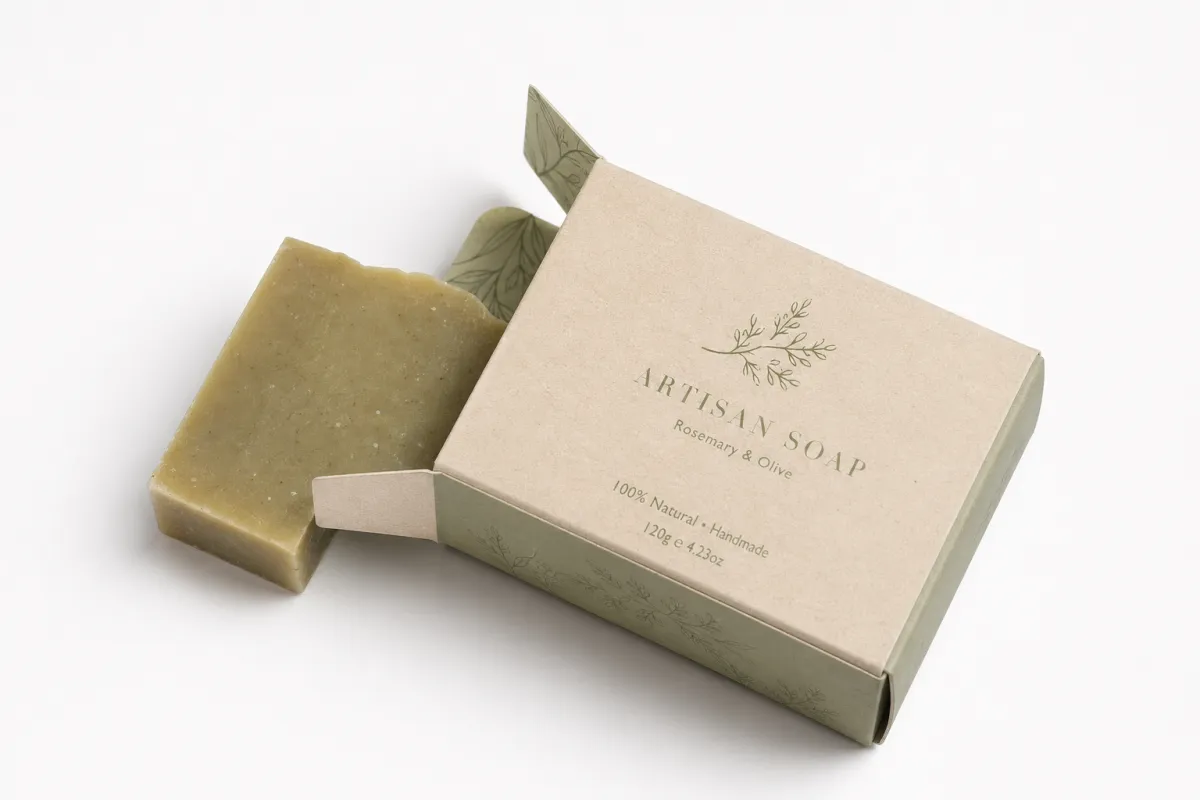
The best custom soap packaging ideas for small brands are the ones that fit the bar, the channel, and the price point without forcing the shopper to guess what the product is trying to be. A simple paper sleeve can be ideal for a test launch. A folded carton can carry more compliance text and stronger shelf presence. A rigid box can move a soap line into gift territory fast. The right choice is usually the one that makes the product easier to buy, easier to ship, and easier to remember.
Custom soap packaging ideas are packaging choices built for your soap, your buyers, and your sales channel. That can mean printed boxes, paper sleeves, folded wraps, pressure-sensitive labels, tamper seals, inserts, or a rigid gift box with a magnetic closure. The goal is not decoration for its own sake. The goal is fit, down to the 1/8-inch. A package should behave like it was made for the bar inside, the way a tailored jacket sits differently from one pulled off a rack at a sample sale.
Shoppers notice faster than many founders expect. I sat through a buyer meeting in a natural-goods chain with 24 stores, and the buyer handled six soap samples in under a minute. The bars in loose wrappers felt handmade but a little unsteady; the one in a crisp kraft carton with a die-cut window read as more expensive, even though the formula cost almost the same to make. That is the odd math of custom soap packaging ideas: a few cents in structure can lift perceived value by several dollars, especially when the carton looks intentional from the front and spine.
Packaging also protects the product. Soap can scuff, lose fragrance, and absorb moisture if it is stored or shipped badly, especially during summer routes through Houston, Miami, or Phoenix where trailer temperatures can climb above 100 degrees Fahrenheit. A thin generic wrap may hide the bar, but a better-designed system can keep scent stable, preserve shape during a 2-day parcel ride, and protect botanical toppings from being crushed. I have seen lavender buds shed through flimsy sleeves after a 48-hour delivery to a Midwestern distribution center, and that was not just cosmetic damage. It led to refunds, replacement shipments, and a very awkward email chain.
"If the box feels cheaper than the soap, customers assume the formula is too."
One client said that to me at a weekend market in Portland, and I still think about it. The best custom soap packaging ideas do three jobs at once: they protect the product, explain the brand, and make the price feel justified before anyone checks the ingredients list or compares the bar against a $9.50 competitor.
How Custom Soap Packaging Ideas Move From Concept to Shelf
Good custom soap packaging ideas move through a real process, and skipping a step usually costs time later. I think of it as a chain with six links: brief, structure, dieline, artwork, proofing, and production. Break one link and the rest feel it. The most expensive mistake I see is approving graphics before the box size is confirmed, because then labels, folds, and barcode placement all need to be redone. That is how a simple project turns into a very expensive round of design revisions.
- Brand brief: define the soap size, target price, scent family, and sales channel.
- Structure selection: choose between wraps, sleeves, cartons, or rigid presentation formats.
- Dieline creation: map the flat layout so every panel, flap, and glue area fits.
- Artwork and copy: place the logo, ingredients, INCI list, net weight, and barcode.
- Proofing and sampling: review fit, color, and finishing on a physical sample.
- Production and assembly: print, cut, finish, pack, and ship the final run.
That sequence looks tidy on paper, and real jobs rarely are. At a converter I visited in Shenzhen, a batch of organic soap cartons failed humidity testing because the coating spec had not been matched to the storage conditions in Guangdong. The cartons looked beautiful in a dry room. In 78% humidity, they softened at the fold lines after two days. That is the kind of detail custom soap packaging ideas have to solve early, not after the cartons are printed and palletized.
Timelines matter too. A straightforward project can move from concept to proof in 5 to 10 business days, then take another 12 to 15 business days from proof approval to production completion, depending on finishing and queue time. Add foil, embossing, or complex die-cuts, and the clock moves again. If you need Custom Printed Boxes for three scent variants, build in extra time for artwork approvals, because one delayed scent name can stall the whole pack set. I have watched an entire launch sit in limbo because one person could not decide whether “oat milk” should be one word or two.
If you are comparing carton styles or want to see how different structures behave, I usually point brands to our Custom Packaging Products page first. It is easier to choose custom soap packaging ideas once you can compare the actual build types side by side instead of guessing from a phone mockup or a PDF on Slack.
Key Factors Behind Custom Soap Packaging Ideas
The smartest custom soap packaging ideas start with five facts: the soap type, the customer, the channel, the shipping method, and the brand position. A 4-ounce olive oil bar sold at a farmers market in Asheville does not need the same package as a botanical gift trio sold through a boutique chain in Seattle. One wants speed and low cost. The other wants shelf drama and stronger protection. That sounds obvious, yet I still see brands design for their own taste instead of the buyer's context.
Material choice changes everything. Kraft paperboard signals earthy and handmade. Coated paperboard feels cleaner and sharper for full-color graphics. Rigid boxes move the product into gifting territory. Labels work well for low-volume runs, and compostable sleeves can support sustainability claims if the material is actually suitable for the climate in which the soap will be stored. In branded packaging, the material is not just a background. It is part of the message, like the paper stock on a high-end wedding invitation.
- Kraft paperboard: good for natural positioning, lower-cost runs, and simple retail packaging.
- C1S or coated paperboard: better for high-contrast graphics and clean product packaging.
- Rigid board: suited to premium sets, holiday bundles, and higher retail price points.
- Labels and wraps: fast to apply, flexible for small batches, and useful for test launches.
- Compostable sleeves: useful when sustainability is part of the brand story, but confirm strength and shelf life first.
Functional needs deserve equal attention. Soap is often a low-mass product with a high surface sensitivity. It can shed fragrance, pick up fingerprints, and scuff during carton handling. A package that looks elegant in a studio photo may fail in a warehouse if it cannot stack neatly or survive a 3-foot drop. I like to ask one blunt question: will this package still look intentional after a distributor touches it four times and turns it sideways in a bin?
Visual choices matter, but they have to serve the structure. Typography should stay legible at 24 inches on shelf. Color palette should make the scent easy to decode, especially if you have six SKUs sitting side by side in a retail bay. Window cutouts can help, but too much exposure can dry the bar faster or make botanicals look dusty under fluorescent lighting in a store in Minneapolis or Dallas. Texture, foil, and embossing can lift perceived value, though not every brand needs all three. A well-composed carton with one tactile detail often beats a crowded design with five finishes.
Regulatory and practical details cannot sit at the end of the line. Most retail packaging needs ingredient lists, net weight, INCI formatting, and enough room for a barcode that scans cleanly at a standard 6 to 8-inch checkout distance. If you sell across multiple channels, the layout has to leave room for lot codes and compliance text without crowding the front panel. For design standards and materials guidance, I recommend checking the industry references at packaging.org and testing protocols at ista.org. They are not flashy resources, but they save money when a carton has to survive the route from Dongguan to Dallas.
One more detail deserves attention: custom soap packaging ideas should fit the way the soap ages. A bar with high glycerin content can sweat in humid rooms, and a bar topped with dried petals may need a taller cavity or a protective insert. If the package ignores those realities, the box becomes a problem instead of a selling tool. In that sense, packaging is not an afterthought; it is a storage environment in miniature.
Custom Soap Packaging Ideas and Cost: What Drives Pricing
Pricing for custom soap packaging ideas usually comes down to five variables: material, size, print method, quantity, and finishing. That sounds basic, but the combinations matter. A 2-piece rigid box with soft-touch lamination and foil can cost several times more than a folded kraft sleeve, even if both carry the same logo. The package is not expensive because it is fancy. It is expensive because setup, board, labor, and finish each take a slice.
Here is the comparison I use with founders who want clearer numbers. These are representative ranges for typical soap packaging runs, and actual pricing depends on size, supplier, and order quantity.
| Packaging Option | Typical Unit Cost | Best Use | Main Trade-Off |
|---|---|---|---|
| Printed label on naked bar | $0.03-$0.08 | Fast-moving test launch or low-complexity product packaging | Less protection and lower shelf presence |
| Paper wrap or band | $0.05-$0.12 | Handmade positioning and lightweight retail packaging | Limited space for compliance text |
| Simple foldable carton | $0.18-$0.42 | Most everyday custom printed boxes for indie brands | Requires accurate dieline and more assembly |
| Window carton with insert | $0.28-$0.65 | Premium shelf appeal and better display of the bar | More tooling, more finishing, and more labor |
| Rigid gift box | $1.10-$3.50 | Gift sets, seasonal bundles, and premium package branding | Highest cost and often higher freight weight |
Those numbers become friendlier at scale. At 5,000 pieces, setup charges are spread across a bigger run, so the per-unit cost usually drops. I have seen a 350gsm C1S carton land at $0.15 per unit for 5,000 pieces when the same die line, one-color inside print, and a matte aqueous finish were reused. At 10,000 pieces, the same style can move closer to $0.11 per unit. That kind of spread is why custom soap packaging ideas should always be reviewed in the context of order volume, not only first impression.
Hidden costs are where budgets get bruised. Proofing can cost $40 to $150 depending on the format. Freight can add another 8% to 15% if the cartons are bulky, especially on lanes from Ningbo or Guangzhou to the U.S. West Coast. Inserts, specialty coatings, spot UV, and hand assembly can change the real math quickly. A client once thought a carton project would save money versus labels, then discovered that hand-folding 3,000 boxes ate 11 labor hours per thousand units. The box was not the expensive part. The assembly was.
My rule of thumb is simple: keep packaging spend in proportion to the soap's retail price. A $6 bar does not need a $2.40 box unless the whole line is meant to feel like a boutique gift. A $22 trio set can support more finish, more board thickness, and a better unboxing moment. Custom soap packaging ideas should lift margin, not swallow it. If the packaging cost exceeds 20% to 25% of retail, it deserves a hard second look.
If sustainability is part of the brief, be careful with claims. Paperboard with FSC certification can help with sourcing transparency, but certification only means something if the supply chain documents are real and current. A recycled look is not the same thing as a recycled spec. That distinction matters to buyers in natural retail packaging channels, especially when they ask for documentation before placing a 2,400-unit reorder.
Step-by-Step Process for Choosing Custom Soap Packaging Ideas
The easiest way to choose custom soap packaging ideas is to start with the product, not the artwork. Measure the bar at its widest point, note the weight, and check whether it shrinks or swells during curing. A 3.25-inch by 2.25-inch bar may fit one carton perfectly on day one and be 1.5 mm too loose after curing. That difference sounds small. It is not small in production, especially if the insert is being cut in batches of 1,000 in Suzhou or Los Angeles.
Next, define the customer and channel. Farmers market buyers usually want fast reads, tactile materials, and easy carrying. Boutique retail buyers often expect cleaner typography and stronger shelf blocking. E-commerce buyers need shipping durability and less abrasion. Subscription buyers care about repeatability and low pack-out time, often under 20 seconds per unit. One design cannot serve every channel equally well, so custom soap packaging ideas should be channel-specific from the beginning.
Then narrow the structure. I like to compare three or four options against the same scorecard: protection, assembly time, cost, and shelf impact. A 350gsm C1S folded carton might score high on print clarity and moderate on protection, while a rigid box may score higher on shelf impact but lower on freight efficiency. If you are sorting through options, our Custom Packaging Products page is a practical starting point because it makes structural trade-offs easier to compare than a mood board ever will.
After structure comes artwork. That order matters. Once the carton shape is fixed, typography can be placed where the hand naturally lands, the scent name can sit on the front panel, and compliance text can move to the back or side panel. I have seen beautiful designs fail because the brand tried to cram a 10-point ingredient list onto a 1.25-inch flap. It printed fine, but nobody could read it without squinting at 6 inches. That is not design. That is a scavenger hunt.
- Audit the soap: record exact dimensions, curing behavior, and scent sensitivity.
- Define the market: decide whether this is gift, everyday, or trial-size product packaging.
- Choose the structure: select the box, wrap, sleeve, label, or insert system.
- Build the copy map: assign front, side, and back-panel content before design starts.
- Prototype the package: test fit, closure strength, and barcode placement.
- Run a shipping test: send a few samples through real handling conditions before full print.
I strongly recommend testing the prototype under real conditions, not just on a desktop. Put it in a warm room at 85 degrees Fahrenheit for 36 hours. Shake it in a mailer. Stack it under three more cartons. Then inspect the corners, the print, and the bar movement inside the pack. That sounds tedious because it is. It also prevents the ugly surprise of 400 units arriving with abraded edges, crushed petals, or scuffed foil on the front panel.
Custom soap packaging ideas work best when the final choice is based on measured trade-offs rather than taste. If a brand wants lower pack-out time, I will often recommend a label or sleeve. If it wants stronger shelf distinction, I will steer it toward a carton with one premium finish, not three. If it wants gifting, I push toward inserts, structural rigidity, and a tighter color system. The answer depends on the target, and that is not always the same as the founder's instinct. I respect instinct, but I trust the numbers when the two start arguing over a $0.09 difference per unit.
Common Mistakes With Custom Soap Packaging Ideas
The biggest mistake is designing for beauty only. I have seen boxes with stunning foil and soft-touch lamination arrive with no room for the barcode, too little contrast for the scent name, and a coating that showed fingerprints after one handling pass. The package looked elegant in a mockup and failed in a real store. That is a painful way to learn that custom soap packaging ideas must survive both the photo shoot and the shelf, not just the design screen.
Oversizing is another trap. A soap bar that rattles inside a carton feels less premium, not more. It also wastes board, increases freight volume, and makes the product look smaller than it is. I remember a negotiation with a supplier in Dongguan where a brand wanted a large box to “feel luxurious.” We ran the numbers and found the oversized carton would raise freight by 14% and increase material use by nearly 22%. After that, the brand switched to a tighter insert and looked better, not worse.
Weak readability is a quieter problem, but it is expensive. Tiny type, low-contrast colors, and crowded front panels slow down shoppers. That slows conversion. A consumer should be able to identify the scent, the skin benefit, and the bar size from arm's length, roughly 24 to 30 inches. If they have to rotate the box three times, the package design is doing too much and helping too little. Good custom soap packaging ideas create clarity in 2 seconds or less.
Late ordering causes a different kind of damage. Compressing the proof stage invites mistakes in dielines, finishes, and compliance copy. I have seen brands discover too late that the lot code needed a blank field of 0.5 inches, or that the foil area would interfere with barcode scanning at a retail register in Denver. Those are avoidable errors if the supplier is involved early. The packaging line does not forgive rushed assumptions, and it definitely does not care about your launch calendar.
Another mistake is skipping environmental testing. Soap packaging gets exposed to humidity, abrasion, and repeated handling. If your products are traveling through summer heat or sitting on a wet market table, test for it. ISO-style lab language helps, but real-world abuse testing catches more. I lean on transport protocols from ISTA and basic abrasion checks because they uncover problems a single desk proof never will, especially on routes that pass through Atlanta distribution hubs or inland California warehouses.
Finally, brands sometimes confuse sustainability language with actual material performance. A compostable sleeve that tears during packing is not a win. A recycled-looking carton that is not actually sourced or documented well is risky. If the structure fails, the environmental story collapses with it. Strong custom soap packaging ideas balance the claim with the practical reality of the product, the line speed, and the climate where the soap will be sold.
Expert Tips and Next Steps for Custom Soap Packaging Ideas
If I had to narrow custom soap packaging ideas down to one principle, it would be this: pick the primary job before you pick the style. Do you need premium positioning, lower cost, stronger protection, faster packing, or better shelf visibility? Choose one as the lead objective. The rest become trade-offs, not guesses. That mindset saves both money and arguments, especially when the difference between two formats is only $0.07 per unit.
I also recommend building a simple scorecard. Rate each option from 1 to 5 on cost, durability, sustainability, shelf appeal, and assembly speed. A folded carton might score a 4 on shelf appeal and a 5 on protection, while a label might score a 5 on speed and a 2 on shelf impact. That kind of comparison makes custom soap packaging ideas easier to defend in a team meeting, a supplier call in Xiamen, or a retail pitch to a buyer who wants the numbers in writing.
Request a prototype before you order volume. This is non-negotiable for unusual bar shapes, delicate dried botanicals, strong scent oils, and any design with cutouts or layered inserts. A prototype catches things that a PDF never will, including fit, glue tolerance, and how the carton feels in the hand. If you are buying custom printed boxes for the first time, the sample is your insurance policy, and it is cheaper than correcting 2,000 finished units.
Here is the checklist I give to founders before they approve a run:
- Confirm exact bar dimensions after curing, not just the mold size.
- Verify the INCI list, net weight, and barcode placement.
- Check whether the package can be assembled in under 20 seconds per unit.
- Inspect the package under store lighting, not only on a screen.
- Test 10 sample units for scuffing, moisture, and closure strength.
Then order smarter. If your first launch is 1,000 bars, you may not need a highly engineered box. A well-designed sleeve or carton can do the job while keeping cash flow healthy. If you are entering wholesale, invest more in consistency and stackability. If the line is gift-focused, spend more on structure and finish. Strong custom soap packaging ideas are not about spending more everywhere. They are about spending in the places customers actually notice, such as the front panel, the closure, and the unboxing moment.
One practical next step: audit your current packaging and write down the top three problems in plain language. Maybe the print smudges after 50 units. Maybe the bars slide inside the box. Maybe the pack takes 40 seconds to assemble and slows down your fill table in a 500-piece run. Then compare two or three structures and ask for quotes. If you need a place to start, our Custom Packaging Products page gives you a fast view of the formats that are easiest to prototype and scale.
My honest view is that the best custom soap packaging ideas do not shout. They clarify. They make a handmade bar feel intentional, a premium bar feel worth the price, and a small brand look organized enough for wholesale buyers to trust. If you are planning your next soap line, measure the bars, define the channel, request samples, and compare two or three structures before you fall in love with a design. That sequence is dull only until it starts selling.
Frequently Asked Questions
What are custom soap packaging ideas for small soap brands?
Custom soap packaging ideas for small brands are packaging formats tailored to the bar size, brand style, and selling channel, such as sleeves, cartons, wraps, or labels. The best option usually balances protection, presentation, and packing speed instead of trying to maximize only one of those goals. For many small makers, the smartest starting point is the simplest structure that still feels intentional and protects the bar well, such as a 350gsm C1S foldable carton or a printed kraft sleeve.
How much do custom soap packaging ideas usually cost?
Cost depends on material, print complexity, order quantity, and finishing choices like foil, embossing, or specialty coatings. Labels and simple wraps are usually the lowest-cost options, while custom boxes and rigid presentation formats cost more. For a 5,000-piece run, a folded carton might land near $0.15 per unit, while a rigid gift box can reach $1.10 to $3.50 per unit, and proofing may add $40 to $150 to the project budget.
How long does it take to create custom soap packaging ideas?
A straightforward project can move from concept to approved proof in 5 to 10 business days, but revisions often add time. Production and shipping time depend on the structure, print method, and supplier capacity, and many carton jobs take 12 to 15 business days from proof approval to completion. If you need die-cuts, custom finishes, or multiple SKUs, plan for extra time so custom soap packaging ideas do not delay the product launch.
Which materials work best for custom soap packaging ideas?
Kraft and paperboard work well for natural, handmade positioning and are common for everyday retail packaging. Coated stocks such as 350gsm C1S artboard and rigid boxes can support more premium branding, while compostable wraps suit sustainability-focused brands. The right material depends on moisture resistance, shipping needs, and the visual story you want the package to tell with your custom soap packaging ideas, especially if the soaps ship through humid regions like Florida or coastal California.
What should I test before ordering custom soap packaging ideas in bulk?
Check fit, closure strength, and whether the bar shifts during shipping or retail handling. Test print readability, barcode placement, and how the package looks under real store lighting. Simulate humidity, abrasion, and a few packing cycles, then run at least 10 sample units through those checks so you catch problems before they become expensive, because that is where custom soap packaging ideas either prove themselves or fail.

