Buyer Fit Snapshot
| Best fit | custom paper sleeve packaging ideas work for packaging buyers comparing material specs, print proof, MOQ, unit cost, freight, and repeat-order risk where brand print, material, artwork control, and repeat-order consistency matter. |
|---|---|
| Quote inputs | Share finished size, material target, print colors, finish, packing count, annual reorder estimate, and delivery region. |
| Proofing check | Approve dieline scale, logo placement, barcode or warning zones, color tolerance, and any recyclable or compostable wording before bulk production. |
| Main risk | Vague material claims, crowded artwork, or missing packing details can create delays even when the unit price looks attractive. |
Fast answer: Custom Paper Sleeve Packaging Ideas Work: Dieline, Finish, Proof, and Buyer Review should be specified like a repeatable production item. The safest quote includes material, print method, finish, artwork proof, carton packing, and reorder notes in one written spec.
What to confirm before approving the packaging proof
Check the product dimensions against the actual filled item, not only the sales mockup. Ask for tolerance on folds, seals, hang holes, label areas, and retail display edges. If the package carries a logo, QR code, warning copy, or legal claim, reserve that space before decorative graphics fill the panel.
How to compare quotes without losing quality
Compare board or film grade, print process, finish, sampling route, tooling charges, carton quantity, and freight assumptions side by side. A lower quote is only useful if the supplier can repeat the same color, closure quality, and packing count on the next order.
Custom paper sleeve packaging ideas can look almost too simple until one of them quietly changes how a product is perceived on a shelf, in a mailer, or on a trade show table. I remember a candle client in Shenzhen, just across the border from Dongguan, who had spent more on the glass jar than on the printed wrap, and the sleeve ended up carrying the entire first impression. We moved the design onto a matte aqueous finish on 350gsm kraft board, kept the copy tight to 18 words on the front panel, and suddenly the candle looked like a $32 retail item instead of a $14 gift set. That run added only about $0.07 per unit at 5,000 pieces, which is exactly why well-made custom paper sleeve packaging ideas can change perception without forcing a brand into a full custom carton.
A paper sleeve is a printed wrap that slides over a carton, tray, pouch, jar, or folded product, usually on 300gsm to 400gsm stock with a scored seam and a glue flap of 6 to 12 mm. It does not replace the primary package; it supports it, and that distinction matters more than most buyers expect. If the base container already handles protection, custom paper sleeve packaging ideas give you a faster route to stronger branding, clearer SKU separation, and better shelf presence without paying for a fully custom rigid structure. I have seen teams quote rigid boxes from a converter in Guangzhou, pause when the price crossed $1.20 per unit at 3,000 pieces, and then ask for something "premium but not wildly expensive" because the budget had already been eaten by the jar and insert.
I have used sleeves for cosmetics launches, stationery kits, tea assortments, and subscription packs where the brand wanted more visual authority but did not want a heavier carton. A founder in Austin once told me she needed "something premium, but not so expensive that finance starts sending polite emails with too many exclamation points," so we landed on a 300gsm SBS sleeve with spot UV on the logo and a plain kraft tray underneath. The finished pack looked closer to a boutique product from Suzhou than a mass-market starter kit, while the total packaging cost stayed under $0.28 per unit at 2,500 pieces. That kind of tradeoff is exactly where custom paper sleeve packaging ideas earn their keep.
That said, sleeves still have limits, and those limits become obvious in production if the product is fragile or the container dimensions wander by more than 1 to 2 mm between batches. They work best when a product already has a primary container and needs a better presentation layer, not when the package itself needs structural rescue. They are not a fix for loose glass, crushed corners, or oily pouches, and they do not replace a shipper when the item needs true transit protection across long-haul freight routes from Ningbo, Yantian, or Qingdao. Used well, custom paper sleeve packaging ideas improve retail packaging, simplify SKU management, and keep artwork changes manageable when a line includes multiple flavors, sizes, or seasonal editions; used poorly, they just become expensive paper that looks unsure of itself.
I will walk through how sleeves are made, what pushes pricing up or down, which parts of production eat time, and the mistakes that make a sleeve feel like a bargain-bin wrap instead of a deliberate piece of packaging design. I will also point out where I would spend the extra $0.04 per unit on a soft-touch laminate or a tighter dieline, and where I would save it without hesitation, because a sleeve with a 0.3 mm misalignment is not improved by another finish layer.
Custom Paper Sleeve Packaging Ideas: What They Are and Why They Work
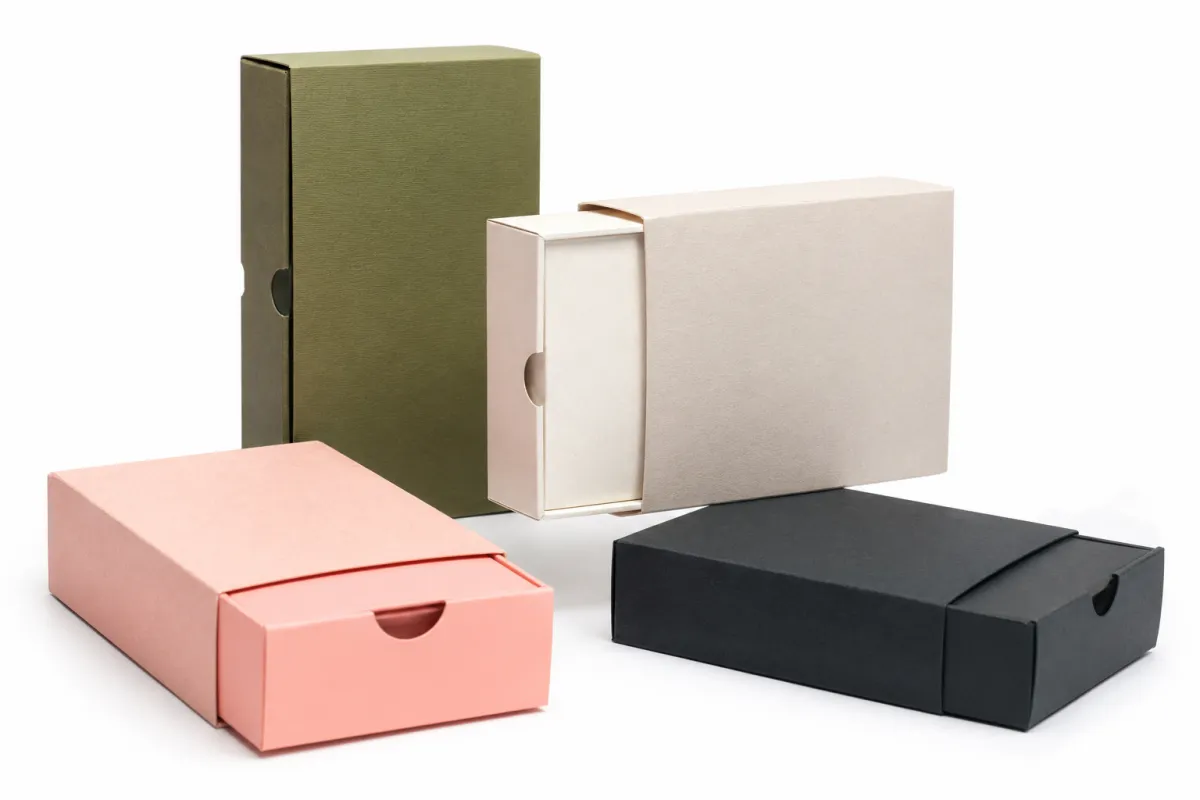
At their best, custom paper sleeve packaging ideas act as a practical branding layer that carries a logo, a color system, a short story, a barcode, and a product claim without forcing you to print everything directly on the primary container. I have seen that pay off in small-batch food, beauty, and gift packaging where the base item is plain but the market expects a more finished presentation. A 350gsm C1S artboard sleeve with a single PMS accent color can do more for shelf recognition than a heavier carton with cluttered graphics. The sleeve handles the narrative; the bottle, jar, or tray just has to do its job.
That distinction matters because many brands do not need another box; they need a smarter signal. A strong sleeve can turn a generic tube into a premium launch piece in a single print run, especially when the structure is already sound and the product is coming out of a consistent assembly line in Dongguan or Foshan. I remember a tea client using off-the-shelf tuck boxes from a standard supplier in Zhejiang. Their sales team assumed they needed fully Custom Printed Boxes, but once I looked at the pack, the structure was fine; the product only needed a printed sleeve with a die-cut window and a stronger color band. They saved close to $0.11 per unit at 5,000 pieces, and the shelf impact improved immediately. That is the kind of decision custom paper sleeve packaging ideas are made for.
The real value is flexibility, and that becomes obvious the moment a brand manages six SKUs with the same bottle or carton. Sleeves make artwork changes easier because you can swap the wrap, keep the insert, and turn the pack into a new flavor, scent, or seasonal variant without re-engineering the whole packaging system. That flexibility matters in retail packaging, subscription boxes, and promotional sets where version control can become messy in a hurry, especially when a warehouse in Los Angeles or Rotterdam is trying to pull the right case pack before a Friday cutoff. If you have ever stood in a warehouse and found six nearly identical cartons, one wrong barcode, and a very unhappy operations manager, you already know why sleeves earn their keep.
There is also a material angle worth paying attention to. A sleeve usually uses less paperboard than a full custom carton, which can reduce waste and trim cost when the specifications are compared honestly and not just advertised in a sales deck. FSC-certified stock can also support sustainability claims if the paperwork is in order, and I stay careful on that point because not every eco claim survives a supplier audit in Shanghai or Ningbo. If a brand wants to make the claim, I ask for chain-of-custody documents, keep the supplier certificate on file, and verify the lot number before print approval. For certified forestry standards, the FSC site is the first place I send clients.
One more reality check: sleeves work best when the base package already has a tidy silhouette and a repeatable closure. A crooked jar label, a flimsy pouch, or a bent tray will still look crooked under a sleeve, even if the print is flawless and the color match lands within Delta E 2.0. I have seen teams spend $8,000 on artwork and finishing only to discover the real problem was the container underneath, which varied by 3 mm from the sample and 4 mm from the production run. That is why I treat custom paper sleeve packaging ideas as a branding upgrade, not a bandage.
"The sleeve was the cheapest part of the pack, but it changed the way buyers talked about the product." That came from a client in Chicago after we shifted from a plain carton to a matte black sleeve with a die-cut window and a 1.5 mm embossed logo.
How Custom Paper Sleeve Packaging Ideas Work in Production
Production starts with dimensions, not artwork, because a sleeve that is 1.5 mm too loose slides during packing and one that is 2 mm too tight tears at the seam or rides up the edge of the container. A good converter starts by measuring the product, the fold points, the seam location, and the amount of wrap tension needed to keep the sleeve seated, usually with calipers and a sample pack on the bench. That is why custom paper sleeve packaging ideas should always begin with the real object on a table in Dongguan, Shenzhen, or Suzhou, not a guess tucked into a spreadsheet.
The basic flow is straightforward: define the size, build a dieline, print the artwork, cut the shape, score the folds, and finish the piece with glue, tuck tabs, or tension depending on the application. A sleeve around a carton is usually easier than a sleeve around a jar because flat edges stay put and the panel registration is more forgiving. A sleeve on a round container can still work, but the construction needs tighter tolerance and usually a test sample, especially if the diameter changes by 1 mm between the sample and the production line. In my experience, the most common production failure is not the print quality; it is the fit. Fit problems are annoying in the most preventable way.
Stock choice changes the result more than most buyers expect. SBS gives you a clean printing surface and strong color reproduction, especially at 4-color process on a Heidelberg press. Kraft gives you a natural look with visible fiber and a less polished feel that works well for coffee, tea, soap, and bakery items. CCNB is common for budget-minded work when one side carries the print and the hidden side handles the structure. Coated boards give you sharper image detail and stronger contrast for photography-heavy artwork. If you are planning custom paper sleeve packaging ideas for cosmetics or premium food, I usually start with SBS or a coated 350gsm C1S artboard because the print behavior is easier to control and the edges stay cleaner after scoring.
Finishing is where both price and mood start to move. Matte lamination feels calm and premium, and on a 24pt board it can bring the tactile feel that clients want for premium skincare or chocolate gift sets. Gloss makes color pop and works well for bright beverage sleeves. Soft-touch feels expensive in hand, although it can show scuffing if the carton is shipped loosely or packed in an uncoated mailer. Embossing adds raised detail. Foil brings shine, but it also adds setup, alignment risk, and a little more production drama, especially if the foil area crosses a fold. Spot UV works well when you want one logo or pattern to catch light without turning the whole sleeve into a nightclub poster. Die-cut windows can show the product or the insert underneath, which helps custom paper sleeve packaging ideas create a fast visual hook on shelf.
What sleeves cannot do is just as important as what they can. They do not replace rigid protection for fragile glass or ceramic, they do not stay stable if the base package is oily, slippery, or inconsistently sized, and they do not rescue artwork that tries to cram six competing messages and a barcode into the fold area. I have seen a beautiful sleeve fail because the carton underneath varied by 3 mm from batch to batch in a factory in Guangzhou. That was not a print issue. That was a manufacturing control issue, and nobody enjoyed that conversation because the rework cost about $0.09 per unit and two extra days on the line.
For transit testing, I like to ask whether the pack needs to survive actual distribution abuse or just sit on a shelf in a controlled retail environment. If the answer includes drops, vibration, or parcel handling, I look at guidance from ISTA and then I test the sleeve on the full package, not on a mockup. A sleeve that survives a desk demo and a sleeve that survives carton packing are not the same object. I learned that the hard way during a subscription launch where the sleeves arrived perfectly printed from a plant in Ningbo and completely useless after the mailers crushed the corners during last-mile delivery. Beautiful, yes. Useful, absolutely not.
Key Factors That Shape Custom Paper Sleeve Packaging Ideas and Cost
The cost of custom paper sleeve packaging ideas comes down to five things: stock, print coverage, finishing, die complexity, and quantity. Buyers often ask for a "ballpark price," which can mean almost anything in practice. A 350gsm SBS sleeve with one-color black print and no coating might land around $0.14 to $0.18 per unit at 5,000 pieces from a factory in Guangdong. Add soft-touch lamination, foil, and a more complex die, and the price can move to $0.32 to $0.48 per unit without anyone doing anything unusual. That is not the printer being dramatic. That is just tooling, labor, and material math doing exactly what math does.
Low-volume jobs feel expensive because setup cost does not shrink just because the run is small. Prepress, proofing, plate making, cutting dies, and make-ready time all exist whether the order is 500 sleeves or 50,000, and the work still has to move through a factory floor in Dongguan or Foshan at the same pace. I once sat with a converter in Guangdong who laid out the math on a 1,000-piece order. The board cost was only a slice of the invoice; the rest was setup, waste, handling, and a modest 5% spoilage allowance. That is why custom paper sleeve packaging ideas can look affordable in theory and then jump in price the moment a buyer asks for a physical sample and a special finish.
Quantity matters more than most teams expect. I usually ask for quotes at 500, 1,000, 5,000, and sometimes 10,000 units because the price drop is rarely linear and the break point often appears between 3,000 and 5,000 pieces. A job might cost $0.61 at 500 pieces, $0.38 at 1,000, and $0.17 at 5,000. That spread tells you where the real break point sits. If your forecast says 3,000 units, you still want to know whether the 5,000-piece run gives you a better landed cost once storage, shrink, and freight are included, especially if the order is heading to a warehouse in Phoenix or Toronto.
Here is the part buyers forget: freight, overage, rush fees, and shipping cartons can blow up the quote. A sleeve packed flat in cartons with corner protection is cheaper to move than a sleeve shipped loosely in a bag, and a palletized carton load from Shenzhen to Long Beach will price very differently from air freight into Chicago. A PMS color match may add a charge, especially if the design uses a special red or metallic blue. A rush order can tack on 10% to 20%. If you only compare unit price, you are not comparing the real cost of custom paper sleeve packaging ideas. You are comparing one line item and pretending the rest of the invoice does not exist.
| Option | Best For | Typical Unit Cost at 1,000 | Typical Unit Cost at 5,000 | Notes |
|---|---|---|---|---|
| 300gsm SBS, matte aqueous | Clean retail packaging and fast-turn branded packaging | $0.24 - $0.32 | $0.13 - $0.19 | Good print clarity, simple finish, solid all-around option, often produced in Dongguan or Shenzhen |
| 350gsm kraft, one-color print | Natural look and low-ink designs | $0.28 - $0.36 | $0.16 - $0.22 | Great for eco-forward package branding, less vivid color, strong tactile feel for tea and soap |
| 24pt coated board, soft-touch + foil | Premium launches and gift sets | $0.52 - $0.78 | $0.29 - $0.44 | Higher setup cost, stronger shelf impact, more handling risk, best when the logo area is large |
| CCNB, four-color process | Budget-conscious custom printed boxes and sleeve systems | $0.19 - $0.27 | $0.11 - $0.16 | Economical, but less premium in hand and on edge detail, useful for short-cycle promotions |
I always tell clients to ask for landed cost, not only per-unit cost. That means the sleeve price, inner packing, freight, duty, palletizing, and any local receiving fees in one number, whether the shipment is going to Atlanta, Manchester, or Sydney. A cheap quote can turn expensive the moment it is loaded onto a pallet and sent across an ocean. I have watched teams celebrate a low factory number and then lose the savings to air freight because production slipped by six days. That is not a win; that is a shorter invoice and a bigger headache.
If you want a cleaner comparison of options, start with the actual product and compare stock, finish, and volume across identical specs. That is also where a sensible supplier earns trust. The right partner will tell you when a glossy finish is a poor fit for a mailer or when your artwork needs a larger quiet zone around the barcode, usually 3 to 4 mm on each side. If you are still weighing formats, I keep our Custom Packaging Products page open during early quoting because it helps clients compare sleeve systems with other Product Packaging Options in one place.
Step-by-Step Process and Timeline for Custom Paper Sleeve Packaging Ideas
Start with a brief that includes exact product dimensions, target shelf style, budget ceiling, target quantity, and any must-have finishes. I want numbers, not adjectives. "Premium" means very little. "350gsm SBS, matte aqueous, black logo, 1,000 units, 12 business days" means something useful. The cleaner the brief, the easier it is to build custom paper sleeve packaging ideas that stay out of guesswork territory, especially when the supplier is building samples in Shenzhen and shipping proofs to your office in 3 to 5 business days.
Next comes the dieline. This is where the sleeve's shape, score lines, seam placement, and fold behavior are mapped out, usually in Adobe Illustrator or a CAD file from the converter. A dieline is not a formality; it controls how the artwork sits in the hand and how the sleeve closes around the product. The placement of the barcode, legal copy, and any QR code should be settled before proofing. I have seen brands move a QR code two millimeters too close to a fold and then wonder why scan rates dropped from 98% to 71% in store tests. That kind of problem is avoidable, and it starts with the dieline for custom paper sleeve packaging ideas.
Proofing usually happens in two stages. A digital proof checks the layout, text, and color logic. A physical sample checks fit, finish, and feel. If the sleeve has a tight tolerance or a premium finish, I push hard for the sample. It may add 3 to 7 business days, but it saves far more than that if the sleeve is off by even a small amount. One factory-floor lesson still sticks with me: the print looked flawless under fluorescent light, but the soft-touch coating showed finger marks the first time the pack was handled with bare hands at a showroom in Los Angeles. The sample caught the issue before the full run was packed, which spared everybody from a very annoying reprint.
Production after approval is usually direct: final print, cutting, scoring, finishing, quality check, then packing and freight booking. A straightforward sleeve job can move in 10 to 15 business days after proof approval, while a more complex one with foil, embossing, or window dies may need 18 to 25 business days. Add sampling and design revisions, and the timeline stretches. That is normal. I would rather give a buyer the truth than promise a miracle and then scramble for an air waybill at the last second from Shanghai to Seattle.
To keep the schedule under control, I break the process into five checkpoints:
- Confirm product dimensions and sleeve clearance.
- Approve the dieline and artwork layout.
- Review digital and physical samples.
- Lock the final finish and print spec.
- Release production only after fit and color are approved.
The list sounds basic, and that is exactly why it works. The best custom paper sleeve packaging ideas are the ones that arrive on time, fit properly, and do not create a headache in the warehouse. Fancy renders are nice. On-time production is better. A beautiful mockup that misses the truck is still a miss, even if it came out of a polished studio in Brooklyn or London.
Common Mistakes That Make Paper Sleeves Look Cheap
The first mistake is visual clutter. A sleeve has limited real estate, so cramming in six claims, three logos, four icons, and a paragraph of copy makes the design feel cheap even when the stock is decent. I have watched brands spend good money on finishes and then bury the hero message under a wall of text on a 320gsm board. Keep the message sharp. A sleeve is not a brochure. For custom paper sleeve packaging ideas, one visual hero usually beats ten average ones, and the shelf never asked for the other nine.
Bad sizing is another classic problem. If the sleeve is loose, it slips and looks careless. If it is tight, it creases or splits at the seam. If the seam lands in a strange place, the whole thing reads as rushed. I still remember a client who sent me a sample where the seam hid the logo halfway through the wordmark because the dieline had been set 4 mm off center. They had approved the artwork on screen and never checked the fold. That mistake cost them a reprint and three days of lost time. A physical sample would have caught it immediately, which is why I trust cardboard more than optimistic emails.
Finishing can also ruin a sleeve if it is used without restraint. Too much foil on a low-end board can look shiny in the wrong way, especially on a 300gsm stock with uneven coating. A coating that feels elegant in the hand can scuff badly in transit if the cartons rub together for 600 miles on a truck run from Guangdong to Hong Kong. Heavy embossing on thin stock can warp the panel. These are not theoretical problems. They show up in real production when a design team gets distracted by effects instead of asking whether the finish actually serves the product. Good custom paper sleeve packaging ideas should feel intentional, not desperate for attention.
Layout mistakes are just as damaging. Small type near fold lines gets crushed. Legal copy placed too close to the seam disappears. A barcode printed over a glossy foil patch can become hard to scan. A QR code too close to the edge can miss scan framing on a busy retail shelf. I always tell clients to leave a 3 mm quiet zone around essential content and treat the fold as a no-go area unless the design was built for it from day one. That small margin is often the difference between a clean pack and a costly remake.
Production mistakes matter too. If the color swatch is not approved against the real board, the final print can drift. If the contrast is weak, the brand mark may disappear under store lighting in a Target aisle or a duty-free display. If the sleeve is packed badly, the corners can arrive bent before the product is even assembled. For custom paper sleeve packaging ideas, the final quality check is not a box-ticking exercise. It is the difference between a polished launch and an expensive shrug.
I have told more than one buyer the same blunt thing: "Your sleeve does not need more effects. It needs less ego and more clarity." Usually, they laugh. Then they approve the cleaner version.
Expert Tips to Improve Custom Paper Sleeve Packaging Ideas
Use the sleeve to tell one story. Not five. If the product is peppermint tea, the sleeve should not also try to explain the farming history, brewing method, brand mission, and ingredient list in tiny type across a 120 mm panel. Pick one hero image, one proof point, and one clear callout. That is how custom paper sleeve packaging ideas stay readable on shelf and in photos. Clarity sells faster than clutter, and I will defend that opinion all day.
I also recommend testing two or three stock options on the actual package. A swatch card lies. A sleeve wrapped around a jar or carton tells the truth. I have had brands fall in love with bright white board from a mill in Zhejiang, only to discover it made their earthy, natural product look sterile in the hand. A warmer kraft or off-white stock fixed the problem instantly. Packaging design should be judged in the hand, not only on a monitor, because monitors never have to sit next to a competitor on a retail shelf in Chicago, Osaka, or Berlin.
Spend premium effects where they matter most. If the logo is the centerpiece, put the foil there and keep the rest matte. If the pattern carries the brand, emboss the pattern and leave the text flat. If special finishes are spread everywhere, nothing feels special. The sleeve starts to resemble a sample sheet from a print shop instead of a confident piece of branded packaging. I would rather see one strong effect at $0.06 extra per unit than three weak effects that chew through budget and confuse the eye.
Be honest about the use case. If the sleeve is going into retail packaging, test for shelf readability at 1.5 to 2 meters. If it is going into e-commerce, test for abrasion and corner wear after a 48-hour transit cycle. If it is part of a subscription kit, test for unboxing speed and barcode legibility. I have watched a team spend half a day debating shade names while the real issue was that the insert would not slide smoothly under the sleeve. That kind of field problem only shows up when someone actually assembles the pack, which is mildly insulting but very useful.
Negotiating smarter matters more than people admit. Lock the specs before asking for quotes. Compare identical paper weights, identical finishes, and identical quantities. Ask about waste allowance, because a supplier quoting 3% waste and another quoting 8% is not quoting the same job. If the supplier uses recycled board, ask whether it is FSC-certified and whether the claim is supportable on the artwork and website. Clean documentation matters. So does not overpaying for features you do not need.
For sustainability-focused brands, I also like to check whether the board choice and inks line up with the company's claims. Some teams want recycled content, but they also want heavy lamination and three foils. That mix is not automatically wrong, but it deserves a hard look. You do not need every sleeve to become a sermon. You do need the materials and the message to stop arguing with each other. Good custom paper sleeve packaging ideas are usually simple, not noisy.
Here is a practical rule I use on almost every project: if the sleeve is not improving shelf impact, speed, or SKU control, it is probably trying to do too much. A sleeve should earn its place. That is the whole point. Honestly, I think that rule saves more money than any fancy finish ever will.
Next Steps for Turning Custom Paper Sleeve Packaging Ideas Into Samples
Pick one product first. Not the whole line. One item with exact dimensions, one target shelf position, one budget ceiling, and one expected order quantity. That focus keeps custom paper sleeve packaging ideas grounded in reality. If you start with three sizes and four finishes, you will burn time and still not know which direction actually works. I have watched smart teams do this to themselves, and it always feels like watching someone assemble furniture without reading the one page of instructions that actually matters.
Then request two or three supplier quotes using the same spec sheet. Same stock, same finish, same die complexity, same quantity. That is the only fair way to compare. If one quote is 20% lower, find out whether it uses thinner board, simpler packing, or a slower timeline. I have seen too many buyers fall for the lowest headline price and then discover the landed cost was higher once freight, import fees, and rush handling were added in from Shenzhen, Ningbo, or Xiamen.
Order a sample or digital mockup before production. Check the fit around the actual product, review color under retail lighting, and confirm that the barcode, QR code, and any legal copy are readable at arm's length. If the sleeve is for e-commerce, test it after transit, not before. If the sleeve is for store shelves, place it next to competing packs and ask whether it stands out in five seconds. That is the real test for custom paper sleeve packaging ideas.
Make the decision based on the full equation: cost, speed, finish, and shelf impact. Not the prettiest render. Not the loudest salesperson. Not the supplier who replied the fastest. The best sleeve is the one that gets printed correctly, ships clean, and looks intentional when a buyer picks it up. That is packaging work, not wishful thinking.
And if you need a place to compare formats, keep your options open with our Custom Packaging Products page while you gather quotes. I have seen teams save days just by reviewing sleeve systems next to other product packaging choices before they send files to print, especially when the first round of samples is coming out of Guangdong or Zhejiang.
If I had to reduce all of this to one line, it would be simple: custom paper sleeve packaging ideas work best when the sleeve is doing one clear job, on one exact product, with one clean spec. Do that, and the pack feels deliberate. Ignore it, and the sleeve turns into expensive paper that nobody remembers.
FAQ
What products work best with custom paper sleeve packaging ideas?
Products that already have a container or folded form are the easiest fit: cosmetics, candles, snack bars, stationery, apparel, and subscription kits. A sleeve around a 50 ml jar, a folding carton, or a 12-inch apparel box adds branding and organization, not structural protection. If the base package is already consistent, custom paper sleeve packaging ideas can add premium shelf presence without redesigning the whole pack, especially when the item is packed in Dongguan, Shenzhen, or Suzhou.
How much do custom paper sleeve packaging ideas usually cost?
Cost depends on stock, size, print coverage, finish, quantity, and whether the job needs special cutting or assembly. A simple sleeve on 350gsm SBS can land around $0.13 to $0.19 per unit at 5,000 pieces, while a premium version with foil, embossing, or soft-touch may run $0.29 to $0.44. Ask for landed cost at several quantities so you can see the real break point for custom paper sleeve packaging ideas, and compare the quote with freight from Shenzhen or Ningbo, not just the factory line item.
How long do custom paper sleeve packaging ideas take to produce?
Simple jobs can move quickly once the dieline and artwork are approved, but sample rounds add time if fit or color matters. A straightforward production run may take 10 to 15 business days after approval, while more complex finishes can stretch that to 18 to 25 business days. The biggest delays usually come from artwork changes, proof approvals, and late finish decisions, plus freight booking if the shipment has to leave Shanghai or Yantian on a tight cutoff.
Are custom paper sleeve packaging ideas strong enough for shipping?
A sleeve can survive shipping if it is wrapping a sturdy primary container, but it should not be treated like a protective shipper on its own. If the product is fragile, pair the sleeve with a carton, tray, insert, or mailer that absorbs impact. For e-commerce, test the sleeve after transit so you know it still looks aligned when it arrives, ideally after a 24- to 48-hour route through parcel handling.
What artwork mistakes hurt custom paper sleeve packaging ideas the most?
The biggest problems are tiny text, weak contrast, crowded layouts, and important copy sitting too close to fold lines. Barcode, QR code, and legal text placement should be checked early so they do not get buried under seams or finishes. Always review a physical sample, because artwork that looks fine on screen can look muddy, cramped, or crooked in print, especially once a 300gsm or 350gsm board is scored and wrapped around the product.