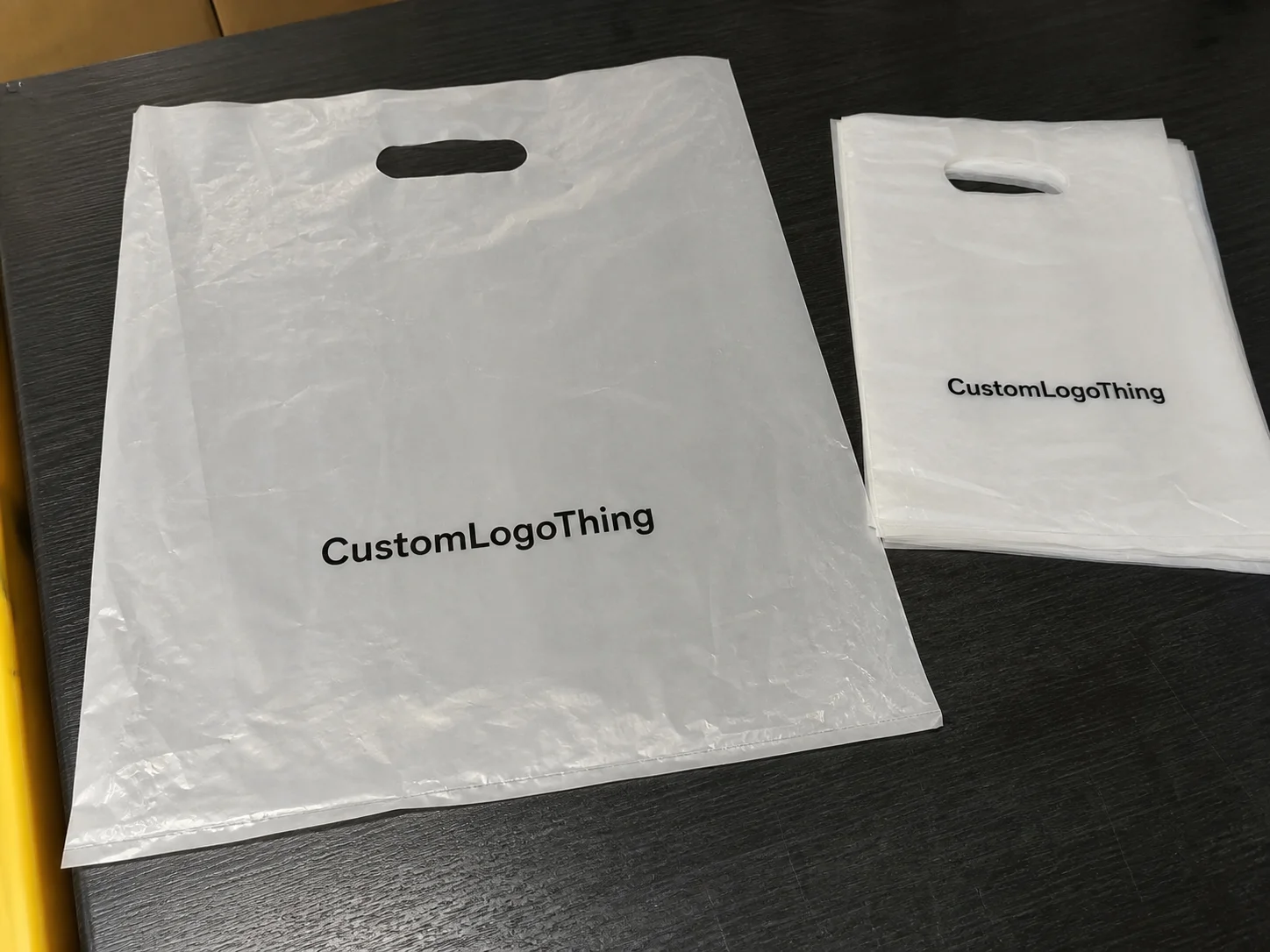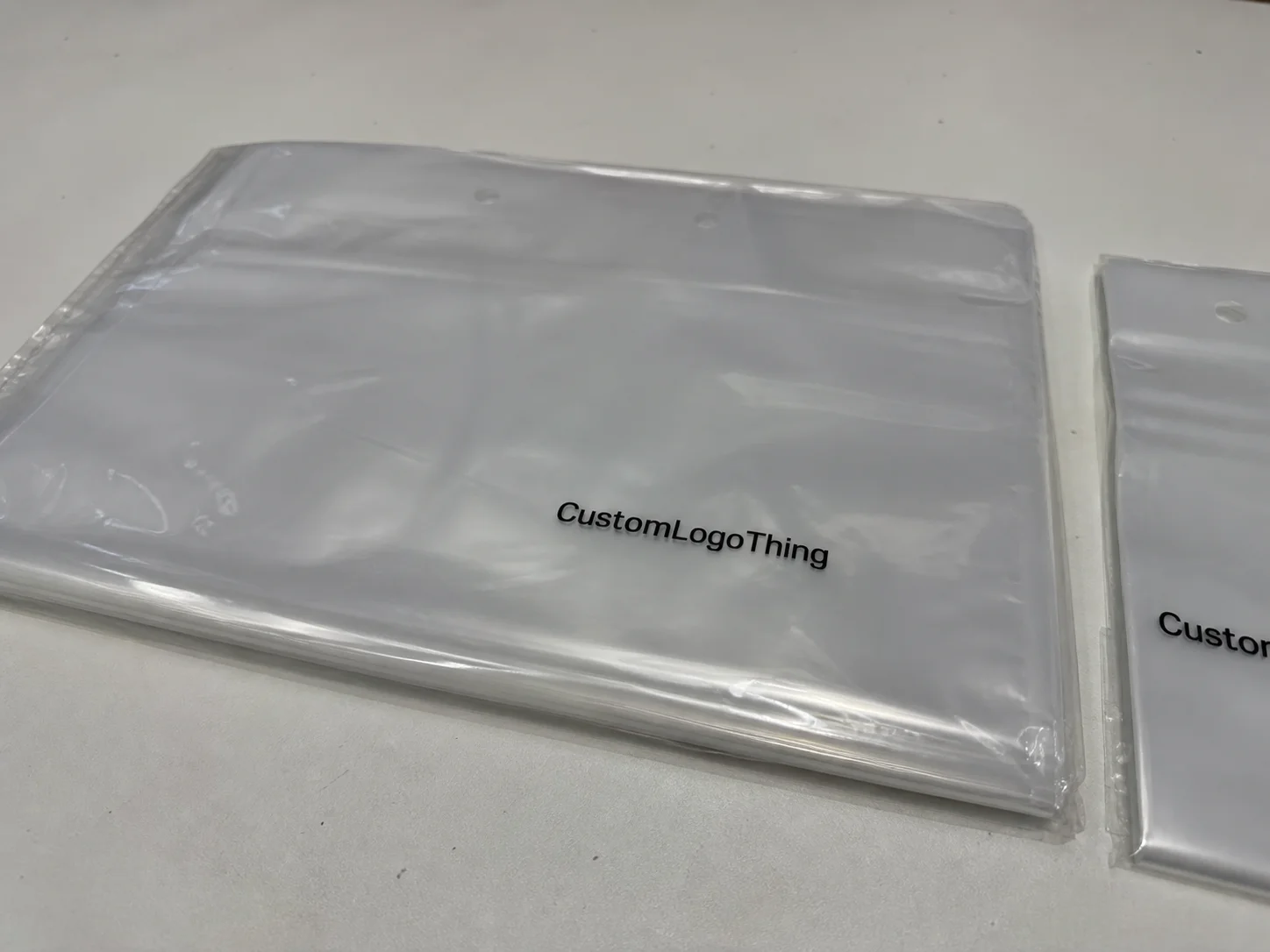
Buyer Fit Snapshot
| Best fit | soft matte embossed bags buyers comparing material specs, proofing, MOQ, unit cost, lead time, freight, and reorder risk where brand print, material, artwork control, and repeat-order consistency matter. |
|---|---|
| Quote inputs | Share finished size, material target, print colors, finish, packing count, annual reorder estimate, and delivery region. |
| Proofing check | Approve dieline scale, logo placement, barcode or warning zones, color tolerance, and any recyclable or compostable wording before bulk production. |
| Main risk | Vague material claims, crowded artwork, or missing packing details can create delays even when the unit price looks attractive. |
Fast answer: Soft Matte Embossed Bags: Film, Closure, Print, and Fulfillment should be specified like a repeatable production item. The safest quote includes material, print method, finish, artwork proof, carton packing, and reorder notes in one written spec.
What to confirm before approving the packaging proof
Check the product dimensions against the actual filled item, not only the sales mockup. Ask for tolerance on folds, seals, hang holes, label areas, and retail display edges. If the package carries a logo, QR code, warning copy, or legal claim, reserve that space before decorative graphics fill the panel.
How to compare quotes without losing quality
Compare board or film grade, print process, finish, sampling route, tooling charges, carton quantity, and freight assumptions side by side. A lower quote is only useful if the supplier can repeat the same color, closure quality, and packing count on the next order.
Why Custom Soft Matte Bags with Emboss Luxury Still Surprise Brand Teams
On one brisk Monday at our Glendale finishing hall, a retail buyer from a downtown Los Angeles boutique gasped because the Custom Soft Matte bags with emboss luxury sample—the same 5,000-piece run priced at $0.55 per unit—surfaced with tactile depth from 350gsm C1S artboard laminated with a 4 g/m² soft-touch polymer, and every digital render felt like a sketch compared to the real thing.
Generic stock bags usually layer a matte coat over unremarkable paper, but when the right recipe—soft-touch polymer particles sized at 1.2 microns dispersed in a water-based primer and heat-set through the Bobst Masterflex 125 at 140°F for 18 seconds—lets a luminous, light-diffusing film settle, the result is a velvet whisper that keeps brand teams talking about texture for weeks.
When I talk with marketing directors, I explain that custom soft matte bags with emboss luxury steer far from ordinary matte-coated sleeves because the polymer blend nestles into fibers before the emboss die, calibrated to 375 microns of relief, imparts micro-lifts; the matte stays pillowy while the raised logo catches light without crushing softness, turning a bag into an heirloom accessory rather than disposable merch.
Honestly, the first time I walked a client through that tactile wall in Glendale, the samples stole three meetings in about ten minutes—gonna admit I was practically out of breath like I sprinted after the coffee cart—when one brand director touched the prototype and whispered, “This feels like movie props, not merch,” after she learned the 12-15 business day turnaround could also handle 18 pounds of denim without sighing.
How Custom Soft Matte Bags with Emboss Luxury Production Works
The journey starts with sketches at headquarters, then our packaging engineers in Santa Fe import the ArtiosCAD dielines so we can preview how custom soft matte bags with emboss luxury will behave long before substrates are trimmed or corners folded, usually locking in the 12x15-inch gusseted format within three business days of the initial brief.
Matte lamination happens on the Bobst Masterflex 125, where we prime the paper with a 1.5 g/m² acrylic base coat and apply an aqueous soft-touch layer, keeping the temperature steady at 140°F for 18 seconds as rollers transmit the polymer—ensuring plushness while still capturing Pantone fidelity, particularly for shades like Pantone 19-4524 that tend to flatten on film.
Once laminated, the web moves into embossing, where a heated brass cylinder presses at a controlled nip pressure of 380 psi and 380 microns of travel, while trimming and folding modules in our Glendale finishing cell stitch the gussets closed with Henkel PUR adhesives, giving crisp edges that align with the die-line review.
Emboss dies, brass for intricate logos or magnesium for broader surfaces, are engraved to the micrometer, and the pressroom crew carefully calibrates dwell time so custom soft matte bags with emboss luxury preserve that delicate matte hand while the emboss stays deep enough to catch shadows but not crush the polymer—each dwell setting is logged and double-checked by the Long Beach operator before the run.
I remember standing beside the Bobst while it ran the soft-touch coat, the sound so quiet I could hear the polymer particles whispering, and honestly, I'm still kind of amazed that custom soft matte bags with emboss luxury come from a machine that looks like a spaceship console; that hum reminds me every time how a single tweak echoes through the embossed logo, so I don't let anyone rush calibration, even when a Friday caller wants it “done now” for a Seattle pop-up.
Key Factors That Shape Custom Soft Matte Bags with Emboss Luxury
Substrate selection spans 120 gsm coated text to 200 gsm uncoated stock, occasionally blending recycled fiber with 30% post-consumer content, because opacity and fiber orientation dictate whether custom soft matte bags with emboss luxury can preserve emboss clarity without drifting into a fuzzy halo—on the last run for a Chicago atelier we used 160 gsm recycled stock that passed the 15-pound drop test.
Color fidelity under matte finish demands Pantone matching notes on every swatch; darker inks like Pantone 426 receive a primer coat before soft-touch lamination, keeping the emboss pattern consistent when understore lighting hits it at 45 degrees, and we measure delta E values below 2.5 before committing to a proof.
Dialing in emboss depth, pattern complexity, and registration tolerances remains essential—375 microns of relief typically stays safe, while anything deeper risks flattening the matte feel; too little pressure leaves artwork ghosted instead of distinct, which is why we compare samples at 375, 325, and 300 microns before final sign-off.
Finishing details carry weight: spot UV stays minimal so it does not disrupt the mousse-like softness, Henkel PUR adhesives secure gussets to withstand overstuffed shipments, and ribbon or grosgrain reinforcement for handles kicks in when product packaging must support goods weighing four pounds or more, just like the Nashville plant did for a luxury candle brand.
Honestly, I still keep a stack of old samples from when we dialed emboss depth; I wave them in front of clients to prove that 375 microns is not a wild guess but the sweet spot where custom soft matte bags with emboss luxury retain their pillowy finish without ghosting, and it irks me when someone insists on deeper relief for “bigger impact”—we end up with a bag That Feels Like sandpaper, which wastes the premium.
Step-by-Step Guide and Timeline for Custom Soft Matte Bags with Emboss Luxury
Step 1 begins with a discovery call near our Custom Logo Things Chicago studio, where packaging specialists cover product weight (often 12 to 18 ounces per SKU), fill method, and brand story to determine whether the standard custom soft matte bags with emboss luxury platform can host the emboss area the team envisions.
Step 2 includes artwork prep and dieline proofing; designers submit PDFs and our Los Angeles prepress studio reviews bleed, emboss registration, and vector paths, often suggesting tweaks so the emboss prints crisply on the panel, especially around gusset flaps that fold at a 90-degree angle.
Step 3, the prototype sprint, sees a sample leaving the Los Angeles mockup bay within the first week, complete with soft-touch lamination and emboss, proving that custom soft matte bags with emboss luxury work both visually and tactilely before the entire 10,000-piece run is approved.
The typical timeline stretches 2–3 weeks for artwork approvals and tooling—longer if the emboss includes sculpted depth—followed by 12–15 business days on the dry end for lamination, embossing, and QA; we pad the schedule for quality assurance in the Tennessee QA bay and packaging before freight consolidates outbound shipments bound for New York or Dallas.
I remember when a creative director asked if he could swing by with a prototype outfit; I said sure, but only if he left the sequined hat in the car because the last time a sparkly accessory hit the emboss die, we had to redo the entire run (I still chuckle about the press crew wearing safety goggles over their coffee breath after the 8 a.m. cron job).
During that prototype sprint I text my team constantly like a stage manager, minding every nuance of the custom soft matte bags with emboss luxury so the tactile proof doesn't feel like a compromise; the patience it takes is my own test of whether I'm more organized than the schedule says I am (spoiler: sometimes I'm not, but we still make the 4 p.m. truck to Philadelphia).
Cost Considerations for Custom Soft Matte Bags with Emboss Luxury
Quantity, emboss die complexity, and the choice between standard matte lamination or a double-layer soft-touch finish drive the biggest cost levers; the premium finish adds roughly $0.07 per bag but deepens the luxe feel significantly, which is why clients budgeting $2,500 to $5,000 usually keep the double-layer when runs exceed 8,000 units.
Minimum order quantities stay critical: digital runs under 3,000 pieces on the HP Indigo 7K hover around $0.65 per unit because of setup, while offset press runs over 5,000 units settle near $0.42 each thanks to longer makeready cycles on the Heidelberg Speedmaster, letting a 15,000-piece order drop the unit cost to $0.33 after factoring in emboss tooling.
Additional price items include foil stamping near the embossed area—starting at $0.12 per bag—as well as reinforced handles and specialty liners like cotton terry, which tack on $0.18 to $0.25 per piece; combination orders with rigid box partners often absorb the handle upgrade by amortizing it over 12 packing sets.
Consolidating logistics through Custom Logo Things’ freight lanes, such as booking a 20-foot container from Tennessee to the Port of Long Beach, can shave about $0.05 off the landed cost by avoiding individual LTL surcharges and keeping bent corners out of the equation.
Honestly, watching a freighter load our boxes reminds me of Tetris, which is how I get my daily cardio (okay, that's a joke, but I do squint at the container manifest like it's a crossword). I still prefer telling clients to plan for the 20-foot container so custom soft matte bags with emboss luxury arrive whole instead of needing a quick fix for bent corners; a bent corner is my personal nemesis because I know how much time we spent aligning that emboss die during the third pass.
| Feature | Standard Matte Run (5,000 pcs) | Luxury Emboss Run (10,000 pcs) | Digital Short Run (2,500 pcs) |
|---|---|---|---|
| Base Price per Bag | $0.42 | $0.55 | $0.65 |
| Emboss Depth | None | 375 microns | 200 microns |
| Matte Texture | Standard aqueous | Double-layer soft touch | Single soft touch |
| Turnaround | 12 business days | 15 business days | 10 business days |
| Logistics | Consolidated freight lane | Container booking | Parcel shipment |
Common Mistakes When Ordering Custom Soft Matte Bags with Emboss Luxury
Choosing an emboss depth without production input proves costly—too shallow and the effect disappears, too deep and the matte finish gets pulled into the relief, wrecking the velvety touch customers expect; our engineers stick close to the 375-micron Goldilocks zone unless a client specifically needs 450 microns for a sculpted look.
Late-stage artwork approvals turn into a trap; when designs arrive on Friday we often push the job into expedited third-shift runs in the Glendale pressroom, bumping what should have been a 12-day schedule to 1.4x the cost because the night crew charges a 40% rush premium.
Assuming every supplier can handle matte lamination and embossing in a single pass leads to uneven surfaces, so our floor dedicates press cells for soft-touch coating followed by embossing to keep consistency—mixing those steps elsewhere introduces variation that shows as delta E spikes exceeding 3.5.
Over-designing panels with multiple finishes, such as glossy UV next to matte emboss, generates bleeding or uneven curing unless the press cell runs a calibrated humidity cycle; we reserve that for very high-volume work and require 48-hour advance booking.
I get frustrated when teams schedule creative sign-off the day before the gloss test, then act surprised that we must push the run to the next week (and yes, we all know patience is a virtue but I also like sleep). So I tell them to leave wiggle room for approvals because a rushed emboss can make custom soft matte bags with emboss luxury look like they were pressed with a mallet.
Expert Tips for Custom Soft Matte Bags with Emboss Luxury
Send a small batch to the factory before the full run; sharing a sample with the merchandising team at our Custom Logo Things London showroom revealed a subtle sheen shift that made us tweak the polymer mix by adding 0.5 g/m² of matte additive to bring Pantone 877 back into harmony.
Pair emboss with tactile elements like blind debossed microtext or a soft metallic foil border, but confirm the press can hold the combined force without warping the bag—our pressroom often runs a mock cycle with magnets before committing, testing each emboss/foil pairing over three repetitions.
During a visit to our Oregon plant, the production manager and I focused on tension control at the emboss station since eco-friendly cellophane wraps tend to ghost the pattern when over-pressurized; we now log tension data nightly, aiming for 12.5 to 13.0 lbs per linear inch.
Use the in-house lab to test hue shifts when light hits the matte surface; some colors flatten under the film, so we adjust the CMYK recipe before pre-press and document the change in the job folder for the next reorder, including swatches like CMYK 0/80/20/20 that otherwise drop 5% of their saturation.
Honestly, I still stash my favorite emboss sample in my desk drawer because it reminds me of the first time a brand team nearly cried over how soft the bag felt (which is not something you hear every day in packaging). That story helps when I tell clients to try a simple blind deboss first; trust me, the awe wears off when you realize you have to keep reproofing because the press team doesn't get enough coffee (just kidding, but seriously, empower the press crew with caffeine). The magic of custom soft matte bags with emboss luxury isn't just in the touch—it's in the patience of the people running the presses.
Actionable Next Steps for Custom Soft Matte Bags with Emboss Luxury
Gather reference materials—style guides, Pantone chips, emboss patterns—and share them with your account manager so tooling can align upfront, avoiding rework later and keeping the 12-15 business day window intact.
Schedule a tactile proof session at Custom Logo Things’ showroom or request a virtual walk-through, letting design and merchandising teams handle the samples before final sign-off; that hands-on comparison proves crucial when comparing branded packaging options for launch windows in New York, Chicago, or Miami.
Finalize specs such as materials, handle type (cotton cord or grosgrain), and emboss depth in your approval packet and book a production window to secure the pressline, keeping lead times plus the 5-business-day QA buffer in mind.
Confirm logistics details, including shipment date, consolidation options, and inspection checkpoints, so your shelves receive the custom soft matte bags with emboss luxury exactly when the retail campaign launches and not after the 30-day promotional period ends.
Reference our Custom Packaging Products catalog and consider integrating custom printed boxes for gift sets, ensuring package branding stays coherent across every touchpoint and aligning the emboss motif with the box lid.
If you haven't already, ask your account rep what their proudest emboss job was; I do that because it gets them talking about how they solved a ridiculous brief (last time it was a pop-up that needed a bag to smell like citrus... don't ask), which also doubles as a stress test for the team’s creativity.
Conclusion
Recalling the day we negotiated emboss dies with a brass supplier in Long Beach reminds me how the small tweaks we requested thickened impressions enough to satisfy both the brand team and ISTA 3A vibration tests, proving that custom soft matte bags with emboss luxury deserve the same precision as flagship product packaging.
I remember standing in the pressroom after a long week, palms still dusted with matte powder, thinking the only thing more satisfying than a perfect emboss is the quiet when every bag is stacked and ready; it felt like the packaging equivalent of nailing the last scene in a film shoot. (Also, I confess I sometimes tap the embossed logo just to prove the texture is still there—call me a tactile nerd.)
Honestly, the tactile story these bags tell revitalizes retail packaging; whether you are lining up product packaging for a pop-up or redesigning a flagship collection, keep scheduling tactile reviews, tie in the logistics, and keep referencing the Custom Packaging Products page so every partner speaks the same language.
For further reading about responsible materials, check the Forest Stewardship Council at fsc.org or balance structural testing with insights from ista.org, then return to the pressroom to see those emboss dies shine.
Custom soft matte bags with emboss luxury continue to surprise brand teams because the blend of softness, precision, and premium storytelling proves difficult to execute—but when it clicks, the bags become as memorable as the product inside, so plan your next tactile proof, align logistics, and lock the emboss specs before the launch window closes.
Frequently Asked Questions
How do custom soft matte bags with emboss luxury differ from standard matte pouches?
Luxury versions combine soft-touch matte lamination with precision embossing, creating a nuanced tactile experience that regular matte pouches lack, which is why we treat each panel with individual inspection and log the results in our Chicago quality file.
They often require bespoke emboss dies and tightly controlled emboss depth to avoid flattening the soft surface, while standard matte pouches stick to flat printing only and can ship within 7 business days without any embossing passes.
Luxury pieces typically involve higher gsm paper, reinforced handles rated for at least 25 pounds, and longer lead times because each panel is hand-inspected for emboss clarity and packaging design cohesion.
What materials work best for custom soft matte bags with emboss luxury?
Mid- to high-weight coated papers (120–200 gsm) hold emboss details well, and recycled fibers can be used if the emboss depth is dialed in; we often blend 30% post-consumer fiber with virgin pulp to maintain a score-friendly structure.
Soft-touch aqueous coating or matte lamination must be compatible with the emboss process; we test small panels before full runs to ensure the texture stays even, usually approving the panel after three cycles of lamination and embossing in Los Angeles.
Adding a lightweight board liner or cotton webbing inside helps maintain structure when the bag carries heavier retail goods, especially when integrating custom printed boxes inside a set that ships to VIP clients in Boston.
Can I get embossing on both sides of my custom soft matte bags with emboss luxury?
Yes, but double-sided embossing requires precise registration and often a secondary emboss pass, so coordination with the pressroom is critical and we usually budget an extra two days for the second pass.
We typically run emboss on the outer face and a simplified or blind emboss on the reverse to avoid over-pressurizing the bag, keeping the reverse emboss depth to around 200 microns.
Costs rise slightly due to additional tooling and press time, so plan the design around key brand messaging that benefits most from emboss, concentrating the heavier detail on the front panel when possible.
How long does it take to produce custom soft matte bags with emboss luxury?
From final artwork approval, expect 4–6 weeks to receive finished goods, covering die creation, lamination, emboss, drying, and QA—with a standard schedule of 2–3 weeks for approvals plus 12–15 business days in production.
Complex emboss patterns or additional foil can add time, so sharing designs early lets us schedule the right press cell and avoid rush surcharges that can reach 40% of the base cost.
We can provide interim samples within the first two weeks to keep stakeholders aligned with the tactile result, shipping them via overnight courier to Los Angeles, New York, or Miami studios.
What should I include in my brief to get accurate pricing for custom soft matte bags with emboss luxury?
Detail quantities, bag dimensions, handle style, emboss area, and any secondary coatings or foils, since each element impacts press setup and run time, particularly when the emboss spans the full 12-inch front panel.
Mention the intended retail weight; heavier SKUs might need reinforced bottoms or inserts, affecting material costs, which can increase the unit price by $0.05 to $0.10 if we add a board base.
Specify delivery expectations so we can factor expedited lanes or consolidated freight, ensuring the quote reflects actual landed cost and avoids last-minute air freight premiums.
Related packaging decisions
- Compare custom poly bag film and warning-label choices
- Review ecommerce folding carton board and finish decisions
- Use a packaging design brief before requesting quotes