Custom SOS bags are a practical choice when you want a flat-shipped paper bag that opens fast, stands on its own, and supports a clean branded presentation without adding much handling complexity. They are widely used in bakery, pharmacy, grocery carryout, retail, samples, and food service because the format works well in quick-pack environments and stores efficiently before use.
For buyers, the real value is operational. The bag should open cleanly, fit the product without overstuffing, print clearly, and move through packing without slowing staff down. If the spec is right, it disappears into the workflow. If the spec is wrong, the cost shows up in labor, waste, freight, or reorders.
What Custom SOS Bags Are and Where They Win
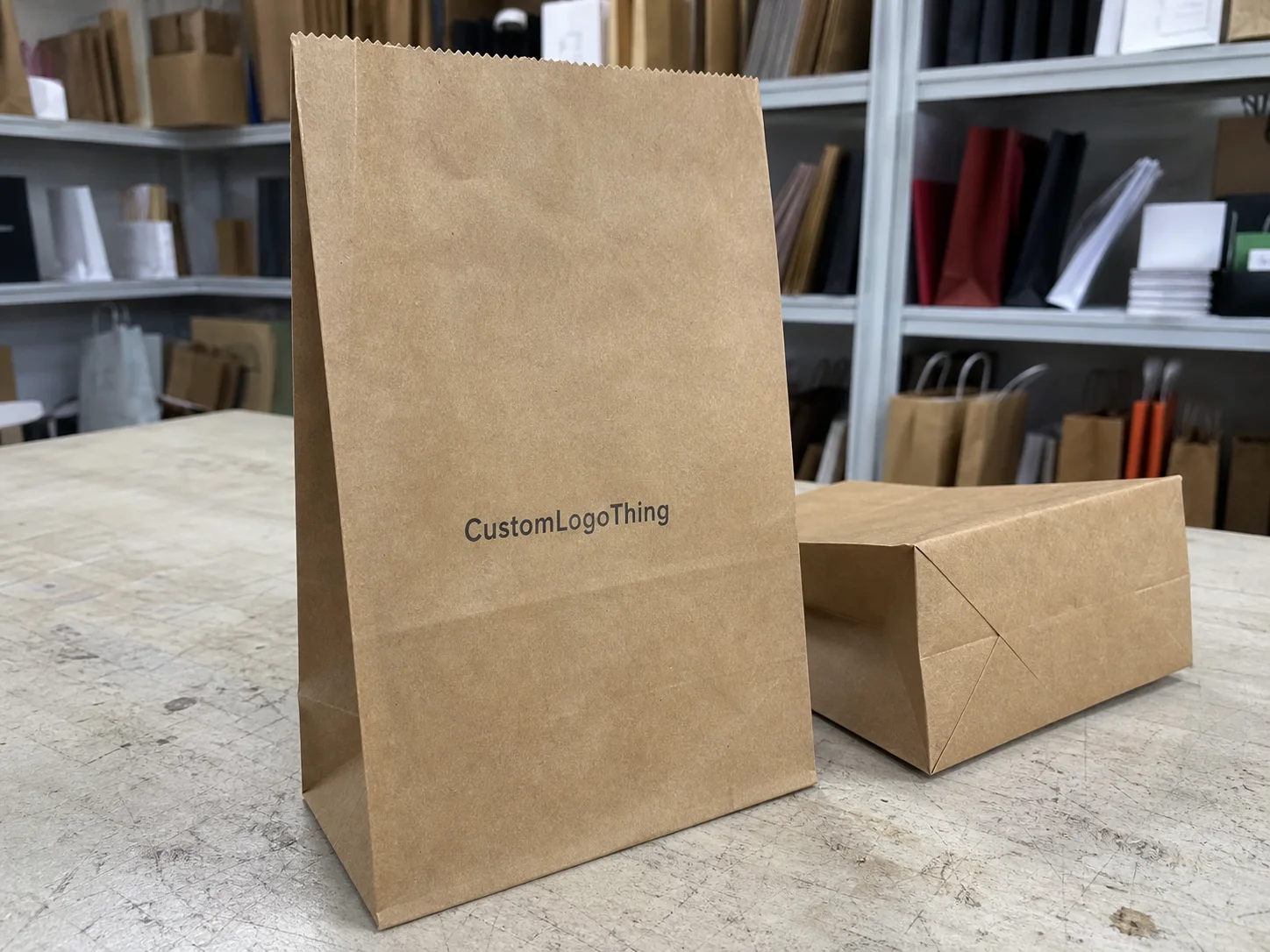
SOS stands for self-opening square. In practice, it means a square- or block-bottom paper bag that ships flat and opens into a stable upright shape without extra support. The format is designed for fast fill and a neat counter presentation, which is why it is common where speed matters more than a handle.
The best use cases are predictable and repetitive. A cashier can pack one quickly. A bakery team can place pastries in it without fighting flimsy sides. A pharmacy can use it for prescriptions or small over-the-counter orders. A retailer can add a logo to a bag that looks intentional instead of temporary.
"The simplest bag is often the most demanding one. It has to open cleanly, stand straight, print clearly, and survive everyday handling while staying economical."
Because the bag is flat before use, it also helps with storage efficiency. That matters in back rooms, on receiving docks, and in programs where carton count and pallet space affect daily operations. For buyers comparing paper packaging options, this format often wins when they want a balance of presentation, speed, and cost control.
The format is less suited to items that need handles, heavy loads, or more rigid support. In those cases, the spec should change rather than forcing a paper bag to do a job it was not built for. For simple takeaway, counter service, and light retail use, custom SOS bags are usually a good fit.
Materials, Size, and Print Specs That Change Performance
Paper grade is the first decision that affects performance. Kraft stocks usually bring a natural look and more forgiveness on scuffs. White stocks tend to show logos more crisply, especially when artwork uses thin lines, small type, or high-contrast graphics. A typical paper range for this kind of bag is often around 30 to 50 lb, but the right choice depends on the product weight and the look you need.
Basis weight affects stiffness, tear resistance, and how easily the bag opens under pressure. Heavier paper is not always better. It can cost more, add shipping weight, and make folding less efficient when the application is light-duty. The right paper is the one that handles the contents without overbuilding the bag.
Size is equally important. A bag should fit the product with enough clearance for fast pack-out, but not so much extra room that the contents shift around. Buyers should think in terms of three dimensions rather than a vague “medium” or “large” bag.
- Width controls face area for the product.
- Gusset controls depth and how boxy the pack-out feels.
- Height controls closure room and stacking capacity.
Print specs affect both appearance and production speed. A simple one-color logo is usually easier to run than a multi-color design with large solids or tight registration. More colors and heavier ink coverage can raise setup sensitivity and waste during make-ready. If the artwork is straightforward, production is usually more efficient and the quote is easier to control.
Artwork quality matters more than many buyers expect. Vector files are the safest option. If you only have a raster file, 300 dpi is the minimum I would trust for production review. Small text, thin outlines, and low-resolution images may look fine on screen and still print poorly on paper.
If color consistency is important, ask how the printer handles matching on kraft versus white stock. The same ink can read differently depending on the paper tone. Brand standards should be checked against the actual material, not just a monitor.
Some applications also need functional performance. Grease resistance can matter for bakery and food programs. A smoother sheet finish can matter for premium retail presentation. If durability is part of the requirement, it is reasonable to ask whether the bag has been evaluated against handling expectations similar to ASTM or ISTA-style packaging tests. For broader packaging context, the Institute of Packaging Professionals is a practical reference.
On the construction side, glue lines, bottom square-up, and fold consistency should be checked. A good bag should open evenly, keep its seams aligned, and avoid cracking at the folds. These details are small, but they reveal whether the bag will work reliably in daily use.
Cost, Pricing, MOQ, and What Drives Unit Cost
Pricing for custom SOS bags usually follows a predictable pattern: quantity, paper stock, number of print colors, artwork complexity, and any finishing or performance upgrades. Quantity matters most because setup costs are spread across more units as the run gets larger.
As a planning range, small custom runs may land around $0.18 to $0.28 per unit for 5,000 pieces, depending on size, paper choice, and print coverage. Larger volumes often bring the unit cost down. That said, the factory price is only part of the story; freight, palletization, and warehouse handling can change the landed cost.
| Order profile | Typical cost drivers | What usually happens |
|---|---|---|
| Low MOQ, single-color print | Setup, proofing, paper grade | Higher unit price, quicker approval if artwork is ready |
| Mid-volume, two-color print | Registration, ink coverage, quantity tier | Better unit economics, moderate lead time |
| High-volume, premium finish | Special stock, finishing, freight planning | Lower unit cost, more attention to logistics |
MOQ matters because fixed production costs do not disappear on a small run. Plate or setup charges, artwork prep, proofing, and conversion costs still have to be covered. A lower MOQ can be useful for a pilot rollout, seasonal program, or store opening, but the unit price will usually be higher.
Hidden costs often come from shipping and packaging logistics. Paper bags are light but bulky, so carton size, pallet count, and freight class can affect the landed price. Rush timing can also add cost. A quote that looks cheap at the factory level may not be the best option once delivery and handling are included.
The most useful pricing comparison is a like-for-like comparison. Keep the dimensions, paper basis, print count, quantity, and delivery location the same. Otherwise the quotes are not directly comparable.
For procurement teams, the other key question is whether the bag performs well enough to avoid replacement orders, labor waste, or complaints. A lower unit price is not a good result if the bag fails in use or creates packing bottlenecks.
Production Steps and Lead Time From Artwork to Delivery
The production path is usually straightforward: quote request, artwork review, proofing, print setup, converting, packing, and freight coordination. Clean input keeps the job moving. Missing dimensions or unclear files usually create the earliest delays.
Artwork is the most common bottleneck. Missing dielines, low-resolution logos, or unclear color targets create back-and-forth before production starts. If the artwork needs a specific Pantone match or must sit cleanly on kraft paper, those details should be confirmed early.
Standard lead time for custom printed paper bags often lands around 12 to 15 business days from proof approval. The actual schedule depends on order size, paper availability, finishing requirements, and the factory calendar. Rush work can shorten some steps, but not all of them.
If the delivery window is fixed, it may be smarter to simplify the print, reduce the quantity, or choose a more available stock. Lead time should be part of the spec. Once the deadline is tight, flexibility is limited.
Quality control matters here too. A good production run should be checked for print registration, fold accuracy, glue strength, and stack count before shipment. Buyers should also ask how defects are handled if cartons arrive with crushed corners, loose seams, or off-color printing.
What usually slows a job down
- Artwork supplied in the wrong format
- No clear bag dimensions or product weight
- Color approvals that take several rounds
- Late changes after proof sign-off
- Freight details that were not confirmed early
A proof schedule is worth asking for before approval. It makes the timeline more realistic and helps identify where the job can move quickly and where it cannot.
How to Spec the Right Bag for Your Product Mix
The best spec starts with the contents. What is going in the bag, how much does it weigh, and is it boxed, wrapped, greasy, fragile, or oddly shaped? A bag that works for folded apparel may be wrong for a clamshell meal or a bundle of pharmacy items.
The use environment matters too. Front-of-house checkout is different from fulfillment-line packing. Counter staff need a bag that opens quickly and stands reliably. Fulfillment teams may care more about stackability and carton efficiency. Food programs may care more about grease exposure and how the bag handles warm containers.
Branding should support function, not override it. A strong logo panel helps presentation, but if the bag is undersized or the paper is too light, the package looks worse the moment it is filled. Good packaging balances appearance with use.
A practical way to narrow the choice is to pick one primary use case first, then decide whether variants are actually needed. If one size can cover most orders, that is usually the best starting point. Additional sizes only make sense when the volume justifies them.
- Will the bag carry a single item or a stacked order?
- Does the product have sharp corners or soft edges?
- Will the bag need to hold heat, moisture, or grease?
- Will staff fill it from a counter or from a packing table?
- Does the logo need to stay visible when the bag is filled?
For broader packaging planning, it can help to compare the bag spec with other materials in the lineup, including Custom Packaging Products such as custom printed boxes or protective inserts. That makes it easier to keep the packaging system aligned across channels.
Common Ordering Mistakes That Raise Cost or Delay Jobs
The most common mistake is undersizing the bag. It seems efficient, but in practice it slows packing, creases the print area, and makes the contents look overstuffed. That creates problems for both staff and customers.
Artwork errors come next. Low-resolution logos, missing bleed, and assuming a screen color will match print output can all lead to disappointment. CMYK and spot-color output will not look the same as a monitor, and kraft paper changes the result again. If brand consistency matters, ask for a printed proof or sample pull before approving the run.
Approval mistakes can be subtle. Some buyers skip carton count, ignore pallet configuration, or approve the proof without checking tiny text and legal copy. Then the job arrives with the right logo but the wrong packaging detail.
Vague specs also cost money. “Need a medium bag for retail” forces the supplier to guess. A better RFQ includes dimensions, paper preference, print count, quantity, and delivery address. If the timeline is fixed, include that too.
If the bags will touch food or carry heavier items, ask for the supplier’s material notes and any relevant compliance statements. For sustainability and sourcing questions, FSC-certified paper is often worth considering; the Forest Stewardship Council is a useful reference for chain-of-custody and fiber sourcing. That does not make every FSC option right for every program, but it gives procurement a clear baseline.
Another common mistake is assuming a design that prints well on white stock will look the same on kraft. Paper tone changes the appearance of the artwork. A size that works for one product family can also fail once the contents change. Sample testing is worth the time when the use case is not fully settled.
Next Steps for a Clean RFQ and Faster Quote
To get a cleaner quote, start with the facts production actually needs: exact dimensions, product weight, paper stock preference, print count, target quantity, and ship-to address. If there is a fixed delivery window, include it in the first message.
Ask for a sample or spec sheet when the bag will carry food, sit in a display area, or hold noticeable weight. That is especially important for custom sos bags used in bakery, deli, pharmacy, and retail programs where presentation and performance need to match. A sample reveals stiffness, fold behavior, seam quality, and print feel in a way a quote cannot.
Compare suppliers on more than price. Ask how quickly they send proofs, how clearly they explain constraints, and whether they flag risks before production starts. A supplier who identifies a risky spec may save more money than one who simply accepts every request.
The best order starts with a clear spec, not a guess. When the dimensions are right, the artwork is print-ready, and the timeline is realistic, the bag becomes a repeatable part of the packaging program instead of a recurring problem.
How do custom SOS bags differ from standard paper bags?
SOS bags use a square, self-opening bottom that makes them easier to fill and helps them stand upright on counters and shelves. They ship flat, which saves storage space, then open quickly during packing or checkout. The format is especially useful when speed, stability, and presentation matter more than a handle.
What size custom SOS bag should I order for my product?
Base the size on the item’s width, depth, height, and any packaging that adds bulk, such as trays or cartons. Leave enough clearance for fast packing without making the bag so large that contents shift around. If you sell more than one product line, spec the bag against the heaviest or most awkward item first.
What affects custom SOS bag pricing the most?
Quantity, paper grade, and print complexity usually have the biggest impact on unit price. Shipping, rush production, and special finishing can change the landed cost more than buyers expect. A low quote can still be expensive if the bag is underspecified or requires rework.
How long does production usually take for custom SOS bags?
Lead time depends on artwork readiness, proof approval, material availability, and run size. Straightforward orders move faster when the spec is complete and the artwork is print-ready. Requests with custom colors, tight deadlines, or missing details usually take longer.
Can custom SOS bags be printed on both sides?
Yes, but both-side printing usually increases setup complexity and cost. It works best when the bag is handled frequently or displayed from multiple angles. If budget is tight, prioritize the side customers see first and keep the back panel simpler.
Are custom SOS bags suitable for food use?
They can be, but the paper grade, ink system, and any grease resistance need to match the application. Dry bakery goods, wrapped items, and some takeaway uses are common fits. For direct food contact or warm, greasy items, ask for material details and compliance information before ordering.