Custom Waterproof Labels: Buy the Right Type for Apparel
A kids' rain jacket, a gym set, or a swim line can look finished on the hanger and still fall apart in presentation if the label peels, smears, curls, or fades. That is why custom waterproof labels matter. They keep branding and care information readable after sweat, detergent, rain, and repeated drying cycles. For packaging buyers, they also sit inside a larger system of packaging design, retail packaging, and package branding; if the label feels cheap, the product often does too.
The real decision is not whether a label resists water for a minute. It is whether it stays legible, stays attached, and still looks intentional after the garment has lived through actual use. For some lines, that means a pressure-sensitive synthetic label. For others, a sew-in construction or heat-transfer finish is the better answer. If you are also sourcing Custom Labels & Tags or building a wider launch with Custom Packaging Products, the label spec should fit the full product experience instead of competing with it.
Why waterproof labels matter when garments get wet
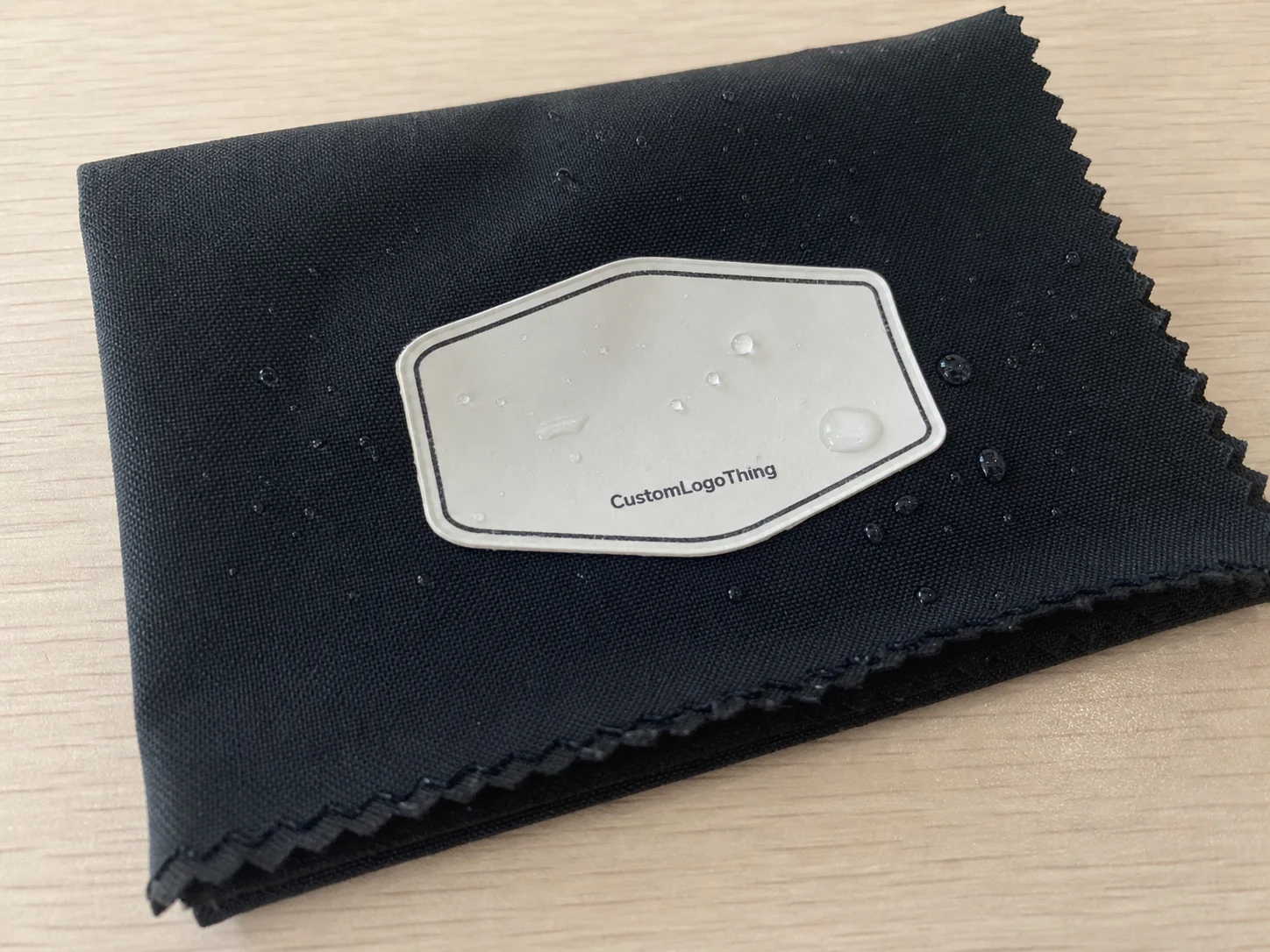
Think about where apparel actually ends up. Activewear gets sweat and friction. Outerwear gets rain, mud, and storage compression. Kids' clothing gets frequent washing, rough handling, and a lot of bending at seams. Swimwear faces chlorinated water, salt, sunscreen, and heat. In those conditions, ordinary paper labels are out quickly, and even basic synthetic labels can start to fray, lift, or lose readability long before the garment itself is worn out.
That is the practical case for custom waterproof labels. They are not just a branding detail. They often carry sizing, fiber content, country of origin, washing instructions, SKU data, and sometimes barcodes or retailer requirements. If that information degrades, the garment can look unfinished and may create avoidable compliance problems.
Buyers sometimes underestimate how much label failure affects perception. A label that bleeds ink after two washes sends the wrong signal immediately. A label that curls at the edges reads as low-grade, even when the fabric itself is well made. One weak detail can drag down the whole product presentation.
“If a garment is built to survive laundering, the label should survive it too.”
That is the standard to use. Not “can it survive water for a minute,” but “will it remain attached and readable after the care routine the customer actually follows?” That difference matters more than the marketing language around waterproofing.
For brands selling through retail packaging or direct-to-consumer channels, the label is part of the shelf story. It may be small, but it is visible at the exact moment the customer judges quality. If you are building product packaging around a durable apparel line, the label should reinforce the same promise the box and hangtag make.
How the material and adhesive system works
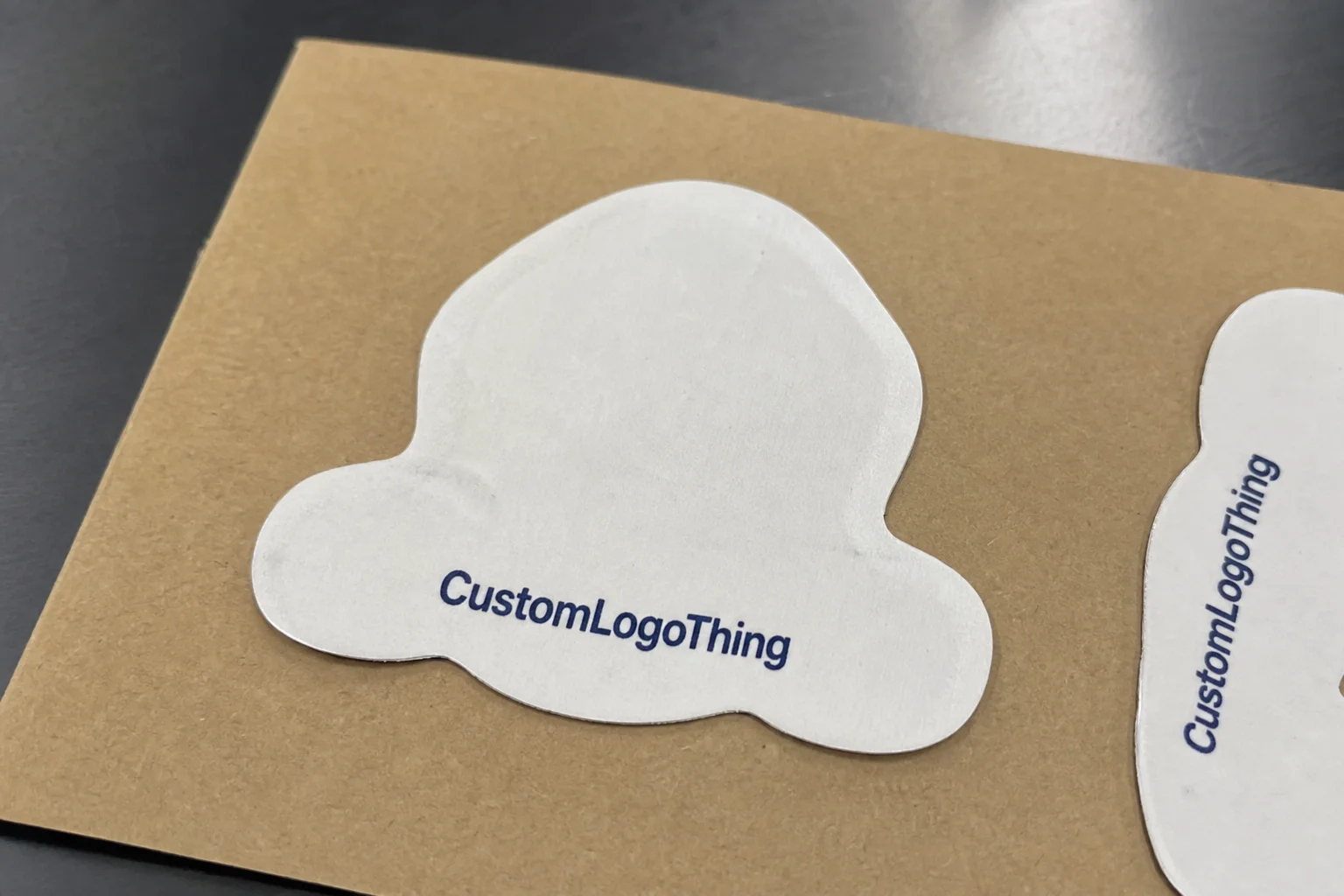
A waterproof label is a stack, not a single thing. The face stock carries the print. The ink or transfer layer carries the graphics. The adhesive or sewn backing carries the holding power. The finish, shape, and cut quality determine how the edges behave. If one layer is wrong, the rest of the build has to compensate.
The most common face materials are polyester, polypropylene, vinyl-like films, and coated synthetics. Polyester is often the default because it balances print quality, dimensional stability, and heat resistance. Polypropylene can work well when weight and cost matter, though it may be less tolerant of high heat. Vinyl-like constructions handle moisture well, but they can feel heavier and may not suit every garment. For some lines, especially activewear, a heat-transfer label may outperform a sewn construction because it avoids stitched edges that can irritate the skin.
Adhesive performance is where many buyers get surprised. A label can feel strong on day one and still fail after detergent, tumble drying, or repeated flexing. The issue is not only stickiness; it is how the adhesive behaves against a specific fabric surface. A smooth synthetic shell is a different problem than brushed cotton or a textured knit. The more irregular the surface, the more likely edge lift becomes if the wrong adhesive is used.
There are three broad attachment paths worth comparing:
- Pressure-sensitive labels: fast to apply, good for smooth surfaces, and common for product identification or packaging inserts.
- Heat-transfer labels: popular for apparel because they remove sew lines and can hold up well in repeated washing when correctly specified.
- Sew-in synthetic labels: better for garments that already have construction seams and need a permanent textile-style finish.
None of those is universally best. The right choice depends on the garment, the care cycle, and where the label sits on the product. If the label is exposed to constant abrasion, a sew-in or high-durability transfer construction usually makes more sense than a thin adhesive film.
For buyers who want a practical benchmark, ask the supplier to describe the face stock in plain terms: thickness, heat tolerance, wash resistance, and whether the print is protected by a laminate or topcoat. If the answer is vague, expect trouble later.
For broader context on materials and packaging performance, the ISTA testing standards are useful when you are thinking about distribution, while the FSC can matter if any paper components, cartons, or liners are part of the supply chain. Those references will not decide the label construction on their own, but they help frame the full sourcing conversation.
Cost, pricing, and MOQ factors that move the quote
Label pricing is usually more predictable than buyers expect, but only if the spec is clear. The biggest drivers are size, print coverage, number of colors, material family, adhesive type, finishing complexity, and cut shape. A simple rectangular synthetic label is one thing. A custom die-cut, full-color, laminated label with variable data is another.
MOQ changes the economics quickly. Smaller runs often cost more per label because setup, proofing, and finishing are spread across fewer pieces. Digital production can sometimes start around 100 to 500 pieces, while screen or flexographic work may favor 1,000 to 5,000 or more, depending on the vendor and construction. The exact threshold depends on tooling and print method, not just the label type.
For planning purposes, these are reasonable ballpark ranges for custom waterproof labels in apparel applications:
| Label Type | Best Use | Typical Durability | Approx. Price at 5,000 Units | Notes |
|---|---|---|---|---|
| Polyester pressure-sensitive | Branding, care info, inserts | High | $0.18-$0.32 each | Works best on smooth surfaces and flat application areas |
| Heat-transfer synthetic | Activewear, kids' basics, inner neck labels | High to very high | $0.14-$0.26 each | No stitched edge; comfort matters on skin-contact garments |
| Sew-in synthetic | Outerwear, swimwear, workwear | Very high | $0.10-$0.22 each | Labor to sew should be considered in total cost |
| Vinyl-like specialty film | Harsh wash or heavy moisture exposure | Very high | $0.22-$0.40 each | Often used when resistance matters more than textile softness |
Hidden costs matter too. A second proof round, custom numbering, barcode setup, special packaging for cartons, or kitting by size can add time and money. If you are comparing suppliers, make sure every quote uses the same inputs. Otherwise, the cheapest quote is often just the least complete one.
Look at the quote through the full product lens. Saving two cents on the label is irrelevant if the result triggers reprints, delays, or customer complaints. In real terms, a slightly higher unit cost can be cheaper overall when it protects consistency across branded packaging and retail packaging.
Production steps and timeline from proof to delivery
The best label orders move through a standard sequence: artwork review, material selection, digital proof, sample approval, production, finishing, and final inspection. Each step is straightforward until a file issue or material mismatch slows it down. Most delays happen because the buyer assumes the supplier can interpret the design intent without precise guidance.
Start with the artwork. Clean dielines, vector logos, correct dimensions, and readable microtext save time. If your file is low resolution or the cut shape is unclear, expect back-and-forth before production even starts. That is especially true when the label includes size marks, care icons, or a compliance panel that must remain readable after trimming.
Lead time depends on the print method and finish. Straightforward digital jobs can sometimes ship in 5 to 8 business days after proof approval. Specialty materials, tighter tolerances, or larger volumes often push that to 10 to 15 business days. If the order needs tooling for a special shape, or if you want a prototype first, add more time.
Here is the part buyers forget: the label schedule has to fit the garment schedule. If the factory is sewing in labels next week, the label cannot arrive two days later. Build in buffer time for sampling, approval, transit, and a second run if the first proof needs corrections. That buffer is cheaper than expediting a reprint.
For production control, ask whether the supplier performs any testing tied to abrasion, wash durability, or transit handling. If your apparel goes through packed shipping or secondary distribution, a supplier familiar with packaging and material performance conversations will usually ask better questions about the final use case. That helps because a label is never isolated from the rest of the package system; it has to survive inside the broader product packaging flow.
How to choose the right label for your garment use case
Match the label to the garment first, then the price. That order matters. Activewear needs stretch tolerance and wash resistance. Swimwear needs moisture tolerance plus durability in chlorine or salt exposure. Outerwear needs weather resistance and long-term legibility. Kids' clothing needs durability, but also comfort and safety at the skin-contact edge.
Fabric surface changes the decision fast. Smooth synthetics usually accept pressure-sensitive or heat-transfer labels well. Brushed cotton and textured knits can be harder because the adhesive has to bridge more irregularity. Coated shells and laminated fabrics can also be tricky; a label that bonds beautifully on one surface may fail on another.
Care requirements narrow the field even more. A garment that sees cold washing and line drying has a different label requirement from one that sees hot washes and tumble drying. Add chlorine, industrial laundering, or heavy abrasion, and many options fall away. The spec should reflect the harshest realistic care condition, not the ideal one.
Here is a simple way to think about it:
- Start with the fabric and note whether the surface is smooth, textured, stretchy, or coated.
- Check the care routine for wash temperature, drying method, and any chemical exposure.
- Confirm the label job: branding only, care instructions, size identification, or compliance data.
- Choose the attachment method that fits the garment construction and the customer experience.
If the label carries critical information, readability matters as much as visual polish. A logo can fade slightly without breaking the product. A size mark or wash instruction that disappears after a few cycles creates a different problem. That is why custom waterproof labels are often worth more on a unit basis than standard options: they reduce the risk of the wrong detail failing at the wrong time.
Common mistakes that shorten label life
The first mistake is assuming one construction fits every textile. It does not. A label that works on a polyester shell may fail on cotton fleece. A heat-transfer option that feels clean on a stretch tee may be the wrong answer for a structured jacket. Fabric compatibility is the starting point, not an afterthought.
The second mistake is choosing a finish because it looks premium in a mockup. Gloss, matte, soft-touch, and metallic effects all have visual value, but not every finish survives repeated laundering in the same way. If the product will get wet often, durability should outrank brochure appeal.
The third mistake is sending artwork that forces the supplier to redraw half the file. That creates proof delays and print inconsistencies. Small text, low-contrast colors, and unclear cut lines are common problems. When the label has to include care icons, batch information, or a barcode, file quality is not optional.
The fourth mistake is ordering for appearance alone. A label can look strong on screen and still be wrong for the garment care routine. If the line is going into active use, the supplier should know about heat, detergent, abrasion, and any chemical exposure before the quote is finalized.
The fifth mistake is skipping a sample. That is especially risky for high-value apparel or difficult fabrics. A sample on the actual garment tells you more in one wash cycle than a dozen emails about spec sheets. If the label fails on the sample, the cost of a correction is still lower than replacing an entire order.
There is one more issue that shows up often in package branding work: mismatched expectations between the garment and the broader presentation. The custom printed boxes may look premium, but if the label feels flimsy, the product experience fractures. Buyers notice the inconsistency even when they cannot name it.
Expert tips for testing, ordering, and next steps
Ask for a sample or prototype and test it on the actual garment fabric before you place the full run. That single step catches more mistakes than any spec sheet review. Try it after washing, after drying, and after a bit of wear and flex. If the edges lift, the print smears, or the surface cracks, you have your answer early.
Use a simple supplier checklist so the quote is based on the same facts every time:
- Garment type and fabric content
- Label placement and contact area
- Expected wash temperature and drying method
- Required size, quantity, and timeline
- Any compliance text, barcodes, or version control needs
If the product is new, start with the smallest viable run. That lets you check real-world performance before committing to a larger order. Once you have feedback from wear tests or customer use, refine the material or finish. That is usually smarter than trying to design the perfect label in one pass.
When speed matters, compare suppliers by durability requirement first, then price and finish. That order keeps the conversation grounded. If one vendor can deliver a synthetic label that survives repeated laundering and another offers a cheaper option with vague performance claims, the cheap quote is not the better buy.
For buyers who want a practical standard, look for suppliers who can discuss abrasion, wash resistance, and transit handling without drifting into generic marketing language. If they can explain the trade-offs clearly, they are probably close to the actual manufacturing reality. If not, keep looking.
The final step is simple: gather the garment specs, confirm the wash requirements, request samples, and compare quotes with identical inputs. That gives you a true apples-to-apples comparison. If you do that well, custom waterproof labels become one of the most dependable parts of the apparel package, not a weak point hiding inside the box.
What are custom waterproof labels made from?
Most are made from synthetic materials such as polyester, polypropylene, or vinyl-like films. The backing can be adhesive, sew-in, or heat-applied depending on the garment construction and wash requirements. A good supplier should explain how the full build handles water, detergent, heat, and abrasion.
Are waterproof labels better than woven labels for clothing?
They are usually better when the garment will face frequent washing, moisture, or heavy abrasion. Woven labels can feel softer and more traditional, but they usually do not offer the same moisture resistance. The right choice depends on whether durability or textile texture matters more for the product.
How do I know which waterproof label type fits my apparel?
Start with the fabric type, care instructions, and label placement on the garment. Choose a construction that matches the expected wash temperature, drying method, and wear environment. Testing a sample on the actual fabric is the safest way to confirm fit.
What affects the price of custom waterproof labels most?
Size, material, print complexity, finishing, and order quantity are the biggest pricing drivers. Special shapes, variable data, and proof revisions can also raise the quote. Higher MOQ usually lowers unit cost, but only if you can use the full run.
How long does it take to produce custom waterproof labels?
Simple orders can move quickly after proof approval, while specialty specs take longer. Artwork readiness is a major factor because unclear files slow down proofing and setup. Build in extra time if the labels must arrive before garment production, packing, or a retail launch.