Buyer Fit Snapshot
| Best fit | Custom Spice Pouches with Resealable Zipper projects where brand print, material claims, artwork control, MOQ, and repeat-order consistency need to be specified before quoting. |
|---|---|
| Quote inputs | Share finished size, material target, print colors, finish, packing count, annual reorder estimate, ship-to region, and any compliance wording. |
| Proofing check | Approve dieline scale, logo placement, barcode or warning zones, color tolerance, closure strength, and carton packing before bulk production. |
| Main risk | Vague material claims, crowded artwork, missing packing details, or unclear freight terms can make a low unit price expensive after revisions. |
Fast answer: Custom Spice Pouches with Resealable Zipper: Film, Print, MOQ, and Carton Packing should be specified like a repeatable production item. The safest quote records material, print method, finish, artwork proof, packing count, and reorder notes in one written spec.
Production checks before approval
Compare the actual filled-product size with the drawing, then confirm tolerance on folds, seals, hang holes, label areas, and retail display edges. Reserve space for logos, QR codes, warning copy, and material claims before decorative graphics fill the panel.
Quote comparison points
Review material grade, print process, finish, sampling route, tooling charges, carton quantity, and freight assumptions side by side. A quote is only useful when the supplier can repeat the same color, closure quality, and packing count on the next order.
Custom Spice Pouches With Resealable Zipper: What to Know
Custom spice pouches with resealable zipper solve a problem jars have treated as ordinary for decades: once a spice blend is opened, its quality starts slipping. The job is not simply getting product onto a pallet and out the door. It is holding onto aroma, color, and texture after the customer tears open the pack, pours out a teaspoon, and seals it again in a pantry drawer. That is the real value of custom spice pouches with resealable zipper.
From a packaging buyer's perspective, the best pack usually does three things at once: it ships efficiently, it sells quickly, and it survives real use. A dependable zipper matters more than a glossy front panel if the seasoning goes flat in two weeks. Flexible packaging can still feel premium. It just needs the right film structure, a clean print build, and a closure that closes the same way on day thirty as it did on day one. If you want to compare formats early, our Custom Packaging Products page is a useful starting point.
I have sat through more package reviews than I care to count, and the same pattern keeps showing up: a pouch looks strong on a render, then the zipper gets tested with actual paprika dust and the story changes. That's the moment the real packaging work starts.
"A spice pouch is not finished when it looks good on screen. It is finished when the zipper still closes cleanly after the fifth trip to the kitchen counter."
Why custom spice pouches with resealable zipper beat rigid jars
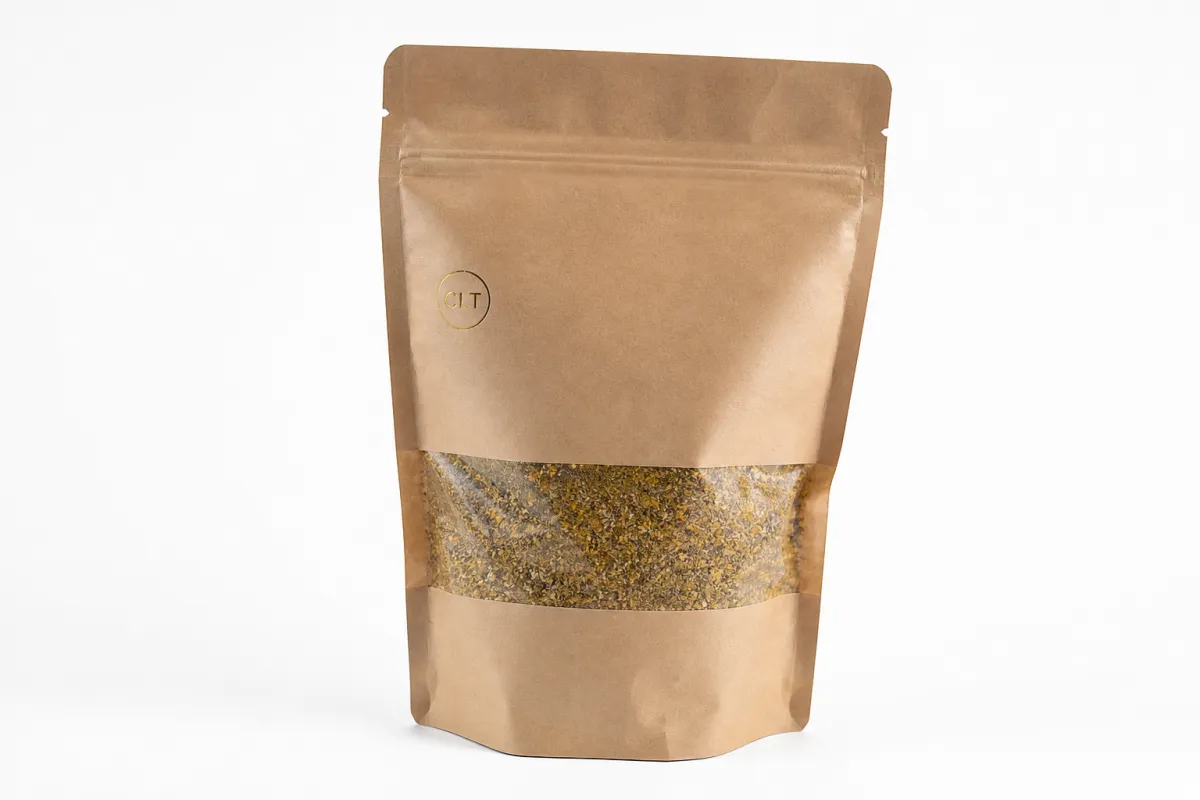
Custom spice pouches with resealable zipper usually outperform rigid jars on the metrics brands care about most: freight cost, shelf efficiency, and repeat use. Jars feel familiar. They also eat space, weigh more, and cost more to move. A glass jar turns a shipping carton into a physics problem. A pouch does not. That difference gets expensive fast when a catalog includes six, ten, or twenty spice SKUs.
The freshness argument is even stronger. Spices begin losing strength the moment oxygen and moisture get a foothold. A customer opens the pack, uses a little, and closes it again. If that closure does not actually work, the rest of the product is on a slow decline. Custom spice pouches with resealable zipper solve that handoff between storage and daily use. The zipper is not a decorative extra. It is the part the customer depends on every time the bag comes out of the pantry.
There is a hard-nosed economics angle here too. A pouch can reduce dimensional weight, make carton packing easier, and cut the wasted dead space that rigid containers create. That sounds kinda boring until you compare freight invoices. Then it suddenly gets interesting.
These pouches can also look premium without pretending to be glass. Matte film, disciplined typography, strong contrast, and a well-proportioned gusset do most of the visual work. No jar-shaped illusion required. In many categories, a well-built pouch reads as more modern than a heavy container with a label that fights the curve of the glass. Retail packaging lives or dies in seconds, and a clean pouch gives the shopper less visual noise to decode.
There is a practical detail that brands sometimes miss. The pack has to feel trustworthy after opening, not only before the sale. If the zipper feels vague, the panel wrinkles like thin paper, or the pouch slumps in the hand, the customer assumes the brand made a cost-cutting decision somewhere. That perception spreads quickly. Custom spice pouches with resealable zipper work best when they feel useful, not delicate. For brands comparing formats, they often land in the sweet spot between cost control and presentation.
If you are building a broader product line, the pouch should sit comfortably beside other formats like custom printed boxes or folding cartons. Good package branding works like a family resemblance. The pieces should look related even when the materials differ.
How custom spice pouches with resealable zipper actually work
Custom spice pouches with resealable zipper are built in layers, and each layer has a specific job. The outer film carries the artwork and takes the abuse from shipping and shelf handling. The barrier layer slows oxygen, moisture, and light. The inner seal layer allows the pouch to be heat sealed cleanly. Then the zipper gives the customer a practical way to close the pack after opening. If any one of those pieces underperforms, the whole structure weakens. Packaging can be unforgiving that way.
Spice freshness is governed by what gets through the film. Oxygen dulls volatile oils. Moisture turns powders into clumps. Light can fade color and flatten aromatic notes, especially in blends built around paprika, turmeric, or herbs with delicate oils. Custom spice pouches with resealable zipper need enough barrier to slow those effects. Salt and simple dried herb mixes may tolerate a modest structure. Oil-rich seasoning blends, curry powders, and garlic-heavy mixes usually need more protection.
The zipper itself comes in several common styles. Press-to-close zippers are the standard choice because they are familiar and economical. Wider-track zippers can be easier to align, which matters when fine granules or powder start wandering near the seal. Slider zippers add convenience, but they also add cost and assembly complexity. For custom spice pouches with resealable zipper, the closure should match the product texture first and the marketing idea second.
The top heat seal above the zipper matters more than many teams expect. It gives tamper evidence, supports first-open freshness, and tells the customer the product is new. Without that seal, a pouch may look reclosable yet still feel unfinished. In practical use, custom spice pouches with resealable zipper work best when the top seal is strong enough to protect the product but easy enough for the customer to tear open without reaching for a knife.
Usability counts just as much. A customer should be able to open, pour, and close the pouch without fighting the closure. If the zipper track drifts out of alignment or picks up residue too easily, failure shows up in the kitchen, not in the mockup room. Fine powders are particularly unforgiving. Ask for a zipper style that is easy to find, easy to press, and hard to leave half-open by accident.
For transit testing, brands shipping nationally should ask about ISTA profiles. You can review the organization's transit test standards at ISTA. It is not glamorous, but it is a straightforward way to learn whether the pouch survives distribution instead of merely surviving a sales deck.
Material, barrier, and print choices that change performance
Custom spice pouches with resealable zipper can be built from several film structures, and the material choice changes shelf life, print quality, and even how the pack feels in the hand. The main tradeoff is usually visibility versus protection. A clear window looks appealing, yet every cut into the barrier gives away some defense against oxygen and moisture. For low-risk products that may be acceptable. For aromatic blends, the math changes quickly. No one buys premium spice to have it smell like cardboard.
For high-oil spices, laminated structures with stronger barrier performance usually make more sense than simple single-layer films. PET/PE, PET/VMPET/PE, and kraft-facing laminates with a metalized barrier layer are common choices because they block light and slow oxygen transfer better than a plain clear pouch. If the blend is delicate, custom spice pouches with resealable zipper should put protection first and aesthetic choices second. The good news is that disciplined printing can still deliver both.
Finish influences perception more than many buyers expect. Matte creates a softer, more restrained retail packaging look. Gloss gives color more punch and can make certain spice blends look brighter under store lighting. Soft-touch feels premium, though it may show scuffs if the pack is handled a lot. Custom spice pouches with resealable zipper often look strongest in matte or soft-touch for upscale seasoning lines, while gloss can fit louder, mass-market branding. No single finish wins across every category. The right answer depends on the brand story and the shelf environment.
Print method matters too. Digital print works well for smaller runs and faster artwork changes. Gravure and flexographic printing make more sense for larger quantities because the per-unit cost tends to fall as run size rises. Clean artwork helps no matter which method you choose. A poor file on a premium pouch still looks poor. Strong contrast, legible type, and a clear hierarchy that separates flavor name from legal copy will do more for sales than another decorative ingredient swirl.
Size and shape deserve equal attention. A 2 oz seasoning does not need a pouch that could hold a pound of coffee. Oversized pouches look underfilled. Undersized pouches create stress at the zipper and make storage awkward. For custom spice pouches with resealable zipper, stand-up formats with a stable bottom gusset usually perform best in retail. Flat pouches fit samples, trial packs, and lighter promotional runs.
If sustainability is part of the brief, check the structure before printing a green leaf on the panel. FSC certification may apply to paperboard inserts or secondary packaging, but it does not automatically cover a multilayer film pouch. For paper-based components, the Forest Stewardship Council explains certified sourcing at FSC. Buyers notice when the claim does not match the structure. They usually notice faster than brands expect.
One honest caveat: no material choice can rescue stale spices. If the blend is already low in volatile oils, packaging can preserve quality, not create it. That distinction matters more than the sales deck admits.
| Format | Best for | Typical unit cost at 5,000 pcs | What to watch |
|---|---|---|---|
| Matte stand-up pouch | Retail spices and seasoning blends | $0.22-$0.40 | Good shelf presence, moderate barrier, common zipper option |
| High-barrier printed pouch | Aromatic blends, curry, garlic, herb mixes | $0.28-$0.48 | Better freshness protection, usually higher material cost |
| Clear window pouch | Visual merchandising and lighter herb blends | $0.20-$0.36 | Window reduces barrier, so product choice matters |
| Kraft-look pouch | Natural or artisan positioning | $0.24-$0.42 | Looks earthy, but print legibility can suffer if contrast is weak |
Step-by-step: choosing the right pouch for your spice line
Start with the product, not the artwork. Custom spice pouches with resealable zipper have to fit the spice, and the spice decides the packaging. Is the blend dry or high in oil? Is the grind fine enough to creep into the zipper track? Does it clump once humidity rises? How often will the customer open the pack? Those questions matter more than a metallic accent or a clever pattern across the front panel.
Next, match the pouch style to the use case. A retail shelf product usually wants a stand-up pouch with a firm bottom gusset, a clean front panel, and barcode space on the back. A sample run may work better as a flat pouch with fewer components and lower unit cost. Larger refill packs can go bigger, but only if the zipper stays easy to use and the pouch remains stable as the contents come down. Custom spice pouches with resealable zipper should make the product easier to live with, not just easier to sell.
Then define the functional features before the design is frozen. Decide whether you need a tear notch, hang hole, clear window, matte finish, or tamper seal. These are not decorative extras. They change the user experience. Grocery shelves reward fast recognition and easy reading. DTC subscription boxes allow a stronger visual identity and more storytelling. Either way, the layout has to support retail packaging behavior: quick scan, easy open, strong reclose.
Artwork should follow practical hierarchy. Flavor name first. Brand name second. Net weight, ingredients, and compliance copy where a customer can read them without squinting. Tiny legal text buried under decorative elements is a classic mistake. A seasoning pouch is not a poster. Good packaging design respects how people actually shop: from a distance, under time pressure, and often with wet hands in a kitchen.
Before approving the final spec, test the pouch in real conditions. Fill several units. Put them on a shelf. Store one in a pantry with steam and humidity. Open and close the zipper repeatedly. Shake it. See whether the seal stays flat and whether the pouch tips over when partly empty. That kind of field testing separates a polished concept from a product that holds up in everyday use.
If you need a broader comparison across formats, our product packaging options page can help you compare pouch styles with cartons and other branded packaging formats. Seeing the tradeoffs side by side usually makes the decision simpler.
In practice, the brands that do best are the ones that treat a pouch like an instrument panel, not a billboard. It has to tell the truth fast and hold up under pressure.
- Confirm the fill weight and spice grind size first.
- Pick the pouch structure based on aroma and moisture risk.
- Choose zipper style, tear notch, and finish before art finalization.
- Review the dieline with barcode, legal copy, and shelf-facing hierarchy.
- Order a physical sample, then test it in a real kitchen or store setting.
Production steps, timeline, and lead time for first orders
Production for custom spice pouches with resealable zipper usually follows a predictable path: specs, dieline, artwork, proofing, sampling, approval, printing, finishing, and final packing. The sequence is familiar. What changes the schedule is the number of corrections in each stage. A missing barcode number, the wrong pouch dimension, or a last-minute ingredient tweak can slow the entire order. Packaging vendors are not mind readers.
First orders usually involve more back-and-forth than repeat runs. If you are building custom spice pouches with resealable zipper from scratch, the supplier will need final dimensions, the material structure, zipper style, finish, and a clear fill-weight target. If the artwork is still moving, proofing gets longer. The fastest projects are the ones where the brand already knows the flavor architecture, the legal panel content, and the exact pack size.
Timing depends on the print method. Small custom runs can move quickly once artwork is approved. Larger printed runs often take longer because tooling, setup, and press scheduling enter the picture. A common range for first custom production is often 12-20 business days after final proof approval, not counting shipping. Repeat orders may land in the 8-15 business day range if the specs stay unchanged. Special effects, custom shapes, and import freight add more time.
Sampling deserves buffer time too. A stock sample may arrive in a few days. A true custom prototype can take longer because the materials and closure need to match the final build. It is far better to spend a week here than to discover a zipper issue after 50,000 units have already been printed. Custom spice pouches with resealable zipper are not a place for optimism to replace testing.
If your launch date is fixed, leave room for revisions, transit delays, and compliance review. That matters even more when you are moving from jars or tubs to flexible pouches. Customers may need a little packaging education, and your team will need time to refresh content, photos, and retailer spec sheets. A calm timeline beats a heroic one that ends in panic.
For brands that care about transit durability, ask whether the finished pouch and carton combination has been checked against real shipping conditions, not only visual approval. That is where standards like ISTA matter. If a supplier talks only about graphics and never about distribution, they are selling print, not packaging.
Custom spice pouches with resealable zipper: cost, MOQ, and quote basics
Custom spice pouches with resealable zipper are priced by a mix of material, size, print coverage, zipper type, and order quantity. There is no honest way to quote a single number without those details. A small pouch with a simple two-color design is not in the same lane as a large matte pouch with full coverage, a high-barrier laminate, and a premium closure. Buyers want clean answers. Packaging usually resists them.
MOQ, or minimum order quantity, matters because setup costs need to be spread across the run. Smaller quantities almost always cost more per pouch. A 1,000-piece run can be useful for testing, but the unit price will usually sit well above a 5,000 or 10,000 piece order. For custom spice pouches with resealable zipper, sample pricing can also vary. A stock sample may be inexpensive, while a custom prototype can cost more because it includes proofing and material matching.
Here is a practical range buyers often see for custom spice pouches with resealable zipper: simple printed pouches at moderate quantities might land around $0.18-$0.28 per unit at larger runs, while more premium structures can land around $0.28-$0.48 or higher depending on size and print coverage. At lower quantities, unit costs rise because setup is spread over fewer packs. Rush fees, freight, and special features like a clear window, tear notch, or unusual zipper style can move the number again. That is normal. The goal is not the cheapest quote. The goal is the right quote.
When you request pricing, send a clear brief. Include dimensions, fill weight, flavor count, finish, zipper type, artwork status, target quantity, and whether you need samples first. Leave those details out and the quote will come back vague, which means everyone spends time chasing missing information. Clear specs are part of good packaging design workflow.
Below is the kind of comparison buyers usually need before they commit. It is not about finding a perfect number. It is about seeing which choices move the number.
| What you choose | Cost impact | Why it changes the quote |
|---|---|---|
| Higher barrier film | Higher | Uses more specialized laminate structure and better protection for aroma |
| Press-to-close zipper | Moderate | Common and efficient for most spice packs |
| Slider zipper | Higher | Adds hardware cost and assembly complexity |
| Matte or soft-touch finish | Moderate to higher | Can raise material or finishing cost, but improves shelf feel |
| Large artwork coverage | Moderate to higher | More print coverage and more color control needed |
| Low MOQ | Higher per unit | Setup costs are spread over fewer packs |
One more cost detail gets overlooked more often than it should: the packaging quote is not the entire spend. Freight can be meaningful on bulky orders, especially if the pouches travel by air instead of sea. Samples, revisions, and rush production can add cost too. If the line is launching a new flavor family, it may be smarter to place one test batch of custom spice pouches with resealable zipper before scaling up. That is not indecision. That is risk control.
Common mistakes that make spice packaging look cheap
Weak zippers are the fastest way to ruin custom spice pouches with resealable zipper. If the closure fails after a few openings, the customer does not blame the closure. They blame the brand. That reaction is reasonable. A pouch that cannot reseal is just a better-looking bag. Function has to earn its place.
Cluttered artwork creates a different problem. Too many fonts. Too many badges. Too many claims fighting for the same front panel. The brand name disappears, the flavor name shrinks, and the entire pouch starts looking like it was designed by a committee with too much coffee. For custom spice pouches with resealable zipper, the front panel should be readable from a distance and the important details should still make sense up close.
Barrier mistakes cause damage that is slower but just as visible. The pack can look fine while the contents lose flavor, fade in color, or clump inside the bag. That is especially risky with aromatic blends and products containing volatile oils. If the film is too weak, custom spice pouches with resealable zipper stop protecting the spice and start acting like a leak in the chain. That is not the outcome anyone wants.
Oversized pouches also make a brand look careless. Underfilled packaging signals poor planning even when the net weight is correct. Cramped pouches, on the other hand, stress the zipper and can make the pack unstable on shelf. The correct pouch size supports the fill weight, the headspace, and the shelf profile. That balance sits somewhere between engineering and package branding.
Skipping samples is where many first orders go wrong. On a screen, nearly anything can look acceptable. In the hand, the problems show up fast: zipper alignment, stiffness, print clarity, seal strength, and the way the pouch sits once filled. A sample run lets you catch those issues before the full order is locked. If you care about retail packaging, sampling is not a luxury. It is cheaper than regret.
I once watched a seasoning launch stall because the zipper track collected fine cumin powder during filling. The artwork was good. The pricing was good. The first customer complaint was not. That kind of failure is avoidable, but only if the sample gets treated like a working prototype instead of a formality.
- Do not use a zipper that feels flimsy or jams with powder.
- Do not bury the flavor name under decoration.
- Do not choose a low-barrier film for a high-aroma spice.
- Do not approve a size that leaves the pouch half empty.
- Do not skip a physical sample just because the PDF looks clean.
Expert tips and next steps before you place the order
Ask for physical samples before approving a full run. That sounds basic, yet it is the step people skip and then regret when the zipper feels stiff or the panel wrinkles in a retail display. Custom spice pouches with resealable zipper should be tested for grip, seal strength, and how they close after repeated use. If the product is aromatic, check whether the sample still smells right after a few days open and closed.
Test the pouch in the same conditions your customers will use. A kitchen drawer is warm, messy, and full of steam. A strong sample should survive slightly wet hands, a pantry shelf, and repeated reopening. That is how custom spice pouches with resealable zipper prove themselves. A mockup cannot tell you that. Real use can.
Before locking the spec, confirm the exact fill weight, fill line, and storage target. A pouch for 3 oz of seasoning behaves differently from one for 12 oz. The material, gusset, and zipper all need to support the load. If you are planning a refill format, make sure the zipper remains easy to use after the pack is half empty. Otherwise the package looks good and behaves badly, which is its own kind of failure.
Compare at least two or three material structures instead of betting everything on the first spec sheet. One may offer better aroma protection. Another may print cleaner. A third may fit your budget better. That comparison is where informed buying happens. It is also where branded packaging gets smarter. Not flashier. Smarter.
For teams building a whole line, think beyond the pouch itself. Keep the flavor family consistent across labels, cartons, and secondary shipping packs. That is how product packaging starts looking intentional instead of pieced together. If your spice line also uses shelf cartons or gift sets, custom spice pouches with resealable zipper should sit comfortably beside your other formats rather than competing with them.
The next move is straightforward: shortlist the blend, define the pouch size, gather the artwork, ask for sample options, and compare quotes side by side. Do that, and custom spice pouches with resealable zipper become a controlled purchase instead of a guessing game.
If you need the shortest possible rule of thumb, use this: choose the pouch for the spice first, then the graphics, then the price. Reversing that order is how brands end up repainting a fix they should have engineered from the start.
FAQ
Are custom spice pouches with resealable zipper better than glass jars?
For shipping and storage efficiency, usually yes. Pouches are lighter, take up less space, and reduce freight cost. For repeated opening, custom spice pouches with resealable zipper often preserve freshness better than a jar lid that can sit slightly off-center or loosen over time. Jars still make sense for premium display, but they cost more to ship and occupy more shelf space.
What zipper type works best for custom spice pouches with resealable zipper?
Press-to-close zippers are the most common choice and work well for most spice blends. Fine powders require a cleaner seal area so residue does not interfere with the track. If the pack will be opened often, ask for a zipper that is easy to align with one hand. That saves a lot of irritation later.
How do I choose the right material for spice pouches?
Start with product sensitivity. High-oil or aromatic blends usually need stronger barrier films than simple salt or dried herb products. If the pouch is for retail, balance barrier performance with print clarity and shelf appearance. Custom spice pouches with resealable zipper should protect the spice first and support the brand second, not the other way around.
What is a realistic MOQ for custom spice pouches with resealable zipper?
MOQ depends on size, structure, and print method, so there is no single universal number. Smaller orders usually cost more per pouch because setup costs are spread across fewer units. If you are testing a new blend, ask for sample or pilot quantities before committing to a larger run of custom spice pouches with resealable zipper.
How long does production usually take for custom spice pouches with resealable zipper?
First orders usually take longer because artwork, proofs, and sampling need approval before production starts. Repeat orders move faster if the specs stay the same and the artwork is already approved. Lead time also changes with order size, shipping method, and material availability. If you are comparing suppliers, ask for samples of custom spice pouches with resealable zipper before you sign off the full run.
Can you use custom spice pouches with resealable zipper for refill packs?
Yes, and refill packs are often where the format shines. The pouch can hold a larger volume with less weight than rigid packaging, which makes pantry storage easier. Just make sure the zipper track is wide enough for repeated opening and closing, because refill customers tend to use the pack for a longer stretch of time.
Do custom spice pouches with resealable zipper need a tamper seal?
Usually they should have one, especially for retail. The top seal above the zipper tells the customer the pack has not been opened before purchase and helps protect freshness on the first use. It also gives the pouch a more finished, trustworthy look on shelf.
Final takeaway: before you approve custom spice pouches with resealable zipper, test the sample with real product, real handling, and real storage conditions. If the zipper closes cleanly, the film protects the aroma, and the artwork still reads fast on shelf, you have a package that can carry the brand instead of merely containing it.

