Buyer Fit Snapshot
| Best fit | Custom Spot UV Lamination Boxes Wholesale Pricing projects where brand print, material claims, artwork control, MOQ, and repeat-order consistency need to be specified before quoting. |
|---|---|
| Quote inputs | Share finished size, material target, print colors, finish, packing count, annual reorder estimate, ship-to region, and any compliance wording. |
| Proofing check | Approve dieline scale, logo placement, barcode or warning zones, color tolerance, closure strength, and carton packing before bulk production. |
| Main risk | Vague material claims, crowded artwork, missing packing details, or unclear freight terms can make a low unit price expensive after revisions. |
Fast answer: Custom Spot UV Lamination Boxes Wholesale Pricing should be specified like a repeatable production item. The safest quote records material, print method, finish, artwork proof, packing count, and reorder notes in one written spec.
Production checks before approval
Compare the actual filled-product size with the drawing, then confirm tolerance on folds, seals, hang holes, label areas, and retail display edges. Reserve space for logos, QR codes, warning copy, and material claims before decorative graphics fill the panel.
Quote comparison points
Review material grade, print process, finish, sampling route, tooling charges, carton quantity, and freight assumptions side by side. A quote is only useful when the supplier can repeat the same color, closure quality, and packing count on the next order.
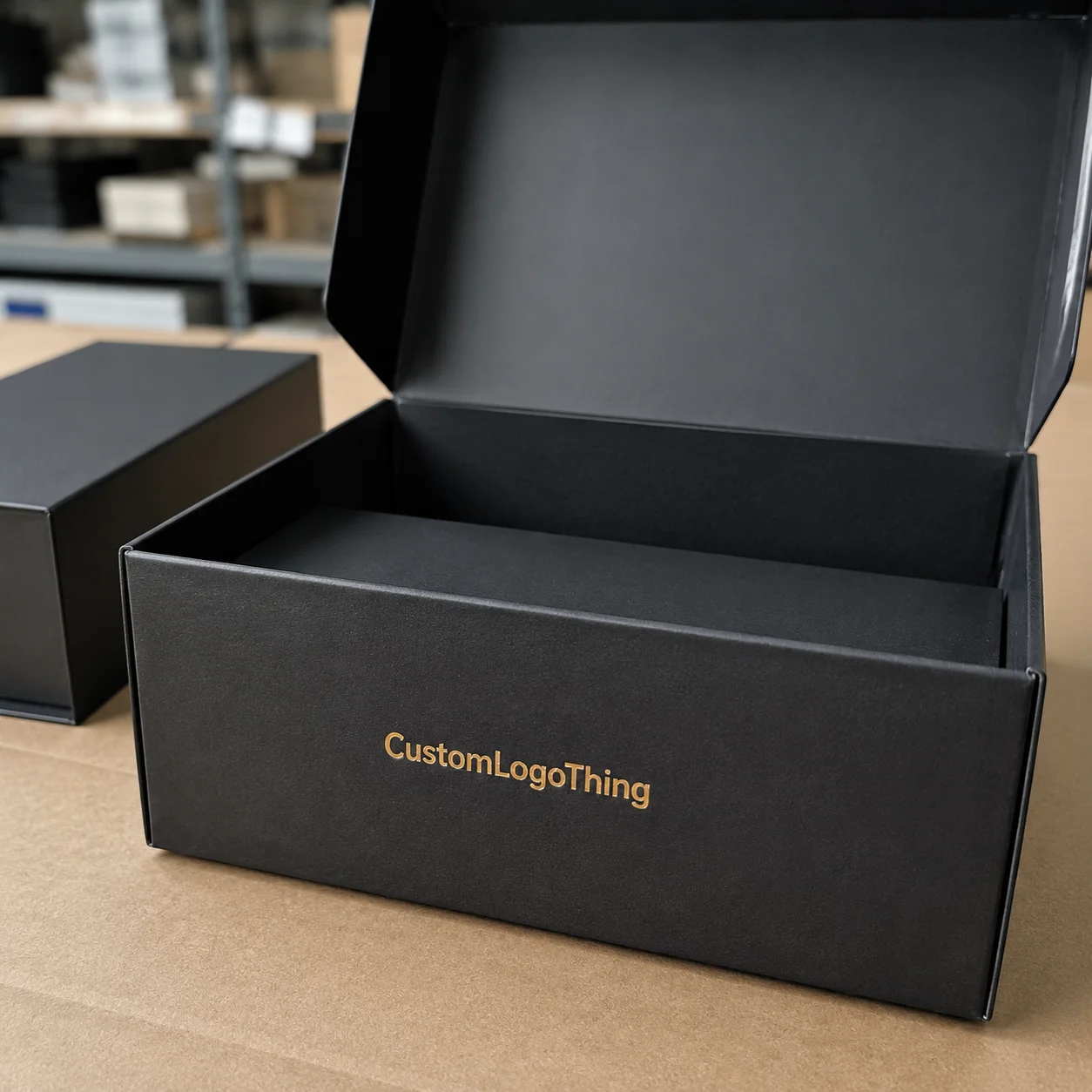
Custom Spot UV lamination boxes wholesale can lift a product from “fine” to “I want that one” without changing the jar, bottle, or device inside. I remember standing on a factory floor in Shenzhen, next to a Heidelberg press, watching a cosmetics client swap from flat matte cartons to Custom Spot UV Lamination Boxes wholesale and suddenly the shelf read like a different brand. Same cream. Same formula. Different box. That client was running 8,000 units for a facial serum priced at $28, and the packaging shift happened in one production week. Honestly, packaging is one of the few places where perception changes faster than price.
A lot of buyers spend money in the wrong place. They overpay for fancy inserts, then cheap out on the carton finish. Then they wonder why the package looks tired under retail lighting. I’ve seen that mistake so many times it almost makes my eye twitch (not in a dramatic way, just enough to be annoying). If you’re comparing Custom Spot UV lamination boxes wholesale options, the real question is not “Can you print UV?” It’s “Can the box sell, survive shipping, and still look sharp after a warehouse worker has handled it three times?” On a fluorescent shelf in Chicago or a backlit display in Dubai, that question is the whole game.
I’m Sarah Chen. I’ve spent 12 years in custom printing, sat through more price fights than I care to count, and I’ve seen brands waste $8,000 on packaging that looked good in a PDF and fell apart in hand. I’ve worked with converters in Shenzhen, Dongguan, and Xiamen, and I’ve watched the same mistake repeat in three languages: the box spec gets written too late. So I’m going to keep this practical. No fluff. No fairy dust. Just the numbers, specs, and production realities behind Custom Spot UV lamination boxes wholesale. And yes, I still occasionally lose patience when someone sends “final_final_v7_use_this_one.pdf” at 11:48 p.m. as if that is somehow helpful.
Why Custom Spot UV Lamination Boxes Wholesale Sell Faster
Custom Spot UV lamination boxes wholesale sell faster because the finish creates contrast. That’s the whole trick. Spot UV highlights a logo, pattern, or product name against a matte or soft-touch background, so the eye lands where you want it to land. On a crowded shelf in a 24-store chain or a 2,000-square-foot pop-up, that matters more than most brand decks admit. The box gets noticed first, then the product gets a chance. Retail is ruthless like that, especially when shoppers spend less than 7 seconds scanning a shelf.
I saw this clearly with a skincare client who moved from plain C1S cartons to custom spot uv lamination boxes wholesale with a matte base and UV on the brand mark. Their rep told me pickup rates changed in store tests within two weeks, and the uplift was 14% in their first pilot across 18 locations. Same unit price on the serum. Better visual weight on the shelf. Retail buyers like that kind of packaging because it looks expensive without dragging the margin into the ditch. The client was selling 50 mL bottles at $34, so the carton had to justify the price without looking overworked.
Where do custom spot uv lamination boxes wholesale perform best? Cosmetics, skincare, CBD tinctures, candles, apparel accessories, tech accessories, and gift sets. Basically anything that benefits from retail packaging with a premium signal. If the product is priced at $18, $36, or $89, the box should not look like it came from the same print spec as a warehouse shipping form. That sounds obvious, yet I still see it all the time. A $62 fragrance set in a 350gsm artboard carton with matte lamination and spot UV looks like a brand decision; the same item in flimsy stock looks like a compromise.
Wholesale buying changes the math. At 5,000 or 10,000 pieces, the setup cost spreads out, and the unit cost drops hard enough to make the finish worthwhile. A brand paying $0.42 per unit on custom spot uv lamination boxes wholesale at 3,000 pieces might get to $0.19 or $0.16 at higher volume, depending on size, board, and press setup. For a 10,000-piece run in Shenzhen or Dongguan, I’ve seen the price settle near $0.15 per unit for a simple folding carton with one spot UV area. Those numbers are real enough to move a buying decision. They’re also the difference between “nice idea” and “yes, we can actually ship this.”
Buyers usually want more than looks. They want a box that survives shipping, stacking, and retail handling without the coating scuffing off. That’s where construction matters. A pretty carton that warps at the corners after humidity exposure is just expensive recycling. I’ve rejected runs myself because the UV registration drifted 1.5 mm on the logo. Online, it looked fine. In person, it looked cheap. Big difference. In humid summer conditions, especially in Guangzhou or Bangkok, that 1.5 mm drift can be the line between acceptable and rejected.
“We don’t need louder packaging. We need packaging that makes the product feel worth the price.” That’s what a candle client told me after their second prototype in Xiamen. They were right.
If you’re buying custom spot uv lamination boxes wholesale for resale, subscriptions, or gift packaging, think in terms of package branding, not just decoration. A controlled UV hit on the logo, a clean lamination base, and a structure that opens well in hand can add perceived value without adding a $1.80 foil bill. That matters when you’re ordering 20,000 units and every nickel has a name on it. A soft-touch 18pt carton with spot UV can feel like a $60 item even when the unit cost stays under 30 cents.
What Makes Custom Spot UV Lamination Boxes Wholesale Different
custom spot uv lamination boxes wholesale are built from layers, not wishful thinking. You start with the base board, usually 12pt to 24pt SBS, 350gsm C1S artboard, or another coated paperboard depending on the print coverage and price target. Then you print the artwork. After that comes the lamination layer, matte, gloss, or soft-touch. Finally, the UV coating is applied only to the selected areas. That spot treatment is what gives the finish its punch, and it is why a simple logo can look much more expensive than a full-page graphic.
Gloss lamination reflects light evenly. Matte lamination lowers glare and makes text easier to read. Soft-touch lamination adds a velvety hand feel that a lot of premium product packaging buyers love because it feels expensive the second someone picks up the box. Spot UV on top creates contrast against all of those bases, but matte plus UV usually delivers the strongest visual pop. If you want drama, that’s the combo. On a display table under 3000K lighting, the matte base disappears just enough for the UV to do its job.
Design matters more than people think. Spot UV is not a rescue tool for weak artwork. If the layout is crowded, the effect gets lost. I once sat in a client meeting in Hong Kong where they tried to UV every single line of copy, every border, every icon. It looked like a blinking billboard in proof form. We cut it back to the logo, a pattern strip, and the product name. Result: cleaner, more premium, and cheaper to run. Fancy does not mean busy, and a $40 design fee saved them a $600 reproof.
That’s why custom spot uv lamination boxes wholesale should be planned with the designer and printer at the same time. The UV mask file needs clean separation. The art should create contrast on purpose. If the highlight areas are too small, the effect can disappear. If they’re too large, the finish stops feeling special. There’s a sweet spot. Not everything needs to shine like a chrome bumper. A good UV mask often covers 8% to 20% of the visible front panel, not 80% of the box.
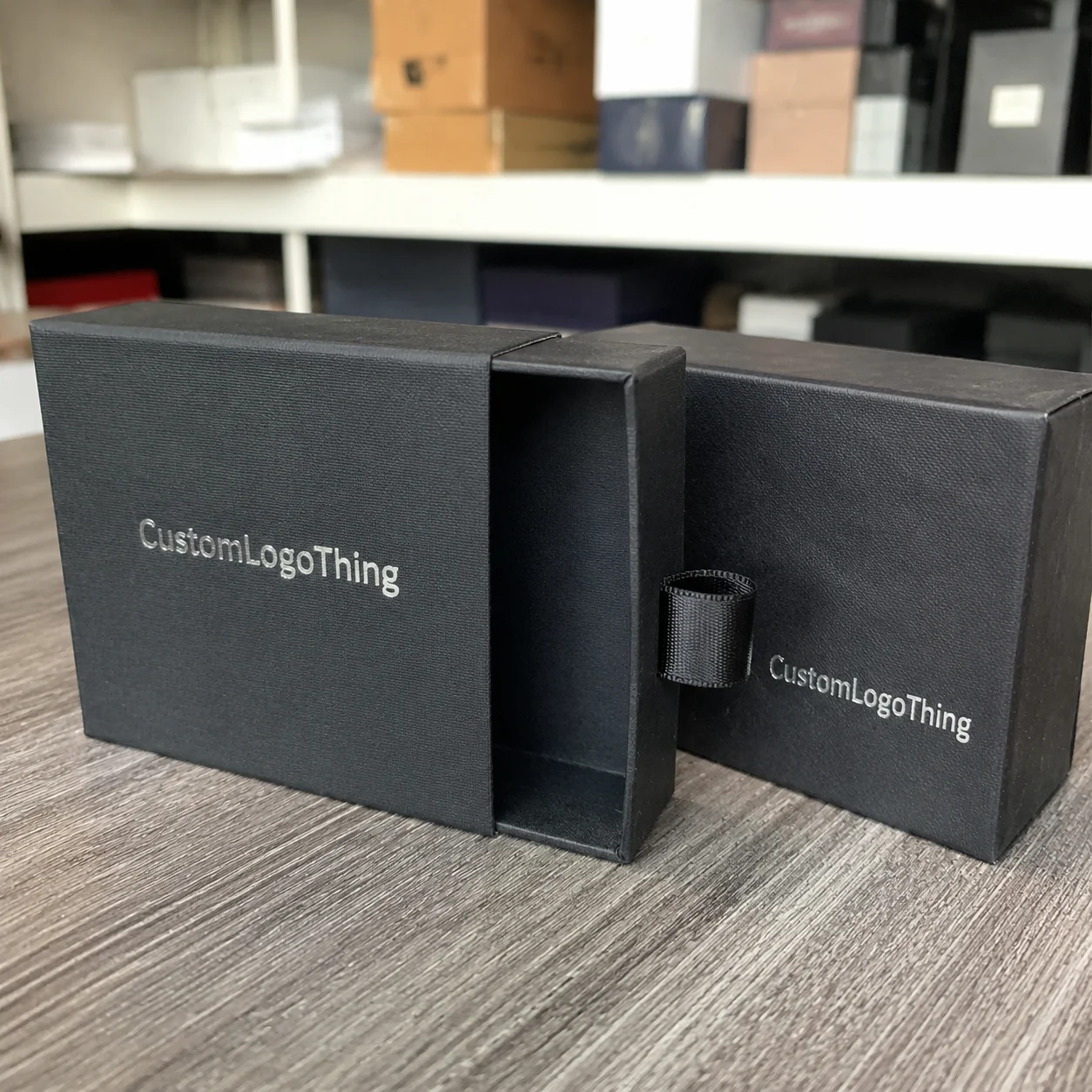
Common box styles include folding cartons, rigid boxes, tuck-end cartons, sleeve boxes, and two-piece setups. Folding cartons are cheaper and faster. Rigid boxes cost more, but they feel upscale and hold structure better for heavier items. Sleeve boxes are good when you want reveal-and-replace mechanics. For custom spot uv lamination boxes wholesale, the structure should fit the product weight and the brand position. A 120 mL diffuser in a 16pt tuck-end carton is fine; a premium watch set shipped in the same format will feel underbuilt. Otherwise you’re paying for a tuxedo on a delivery bag.
Specifications for Custom Spot UV Lamination Boxes Wholesale
custom spot uv lamination boxes wholesale need a spec sheet that a converter can actually produce without guesswork. Start with board stock. For folding cartons, I usually see 12pt, 14pt, 16pt, 18pt, 24pt SBS, plus C1S and C2S options depending on print coverage and budget. For rigid packaging, 1.5 mm to 2.5 mm grayboard is common, wrapped with printed paper. If the product is heavy, don’t try to save three cents on board and lose the box shape in transit. I’ve watched that exact shortcut backfire in Shenzhen and Ningbo, and it is deeply unromantic. A box carrying a 900g candle needs different board behavior than a 180g skincare jar.
Dimensions have to be exact. Give outer dimensions, product insert dimensions if needed, and the fill weight. I’ve seen a CBD client order custom spot uv lamination boxes wholesale for a 30 mL bottle, then discover the cap height changed by 4 mm after final filling. That tiny change turned into a rerun. Measure the product with closure, not just the bottle body. Otherwise the carton becomes a guessing game. I always ask for a physical sample, because “about 160 mm” is not a dimension; it is a problem waiting to happen.
Finish combinations matter too. Matte lamination with spot UV is the most requested because the contrast is strong and the touch feels premium. Gloss lamination with spot UV works when you want a brighter, shinier retail look. Soft-touch with spot UV is the high-end combo, especially for cosmetics and gifting, but it costs more and can show fingerprints depending on the coating grade. A standard soft-touch film can raise the unit price by $0.03 to $0.08 on a folding carton at 5,000 pieces. That’s not a defect. That’s physics. Annoying, but real.
Print requirements should include CMYK, Pantone matching where needed, bleed, safe margin, and a separate spot UV mask. If the mask is off by even 0.5 mm, the UV can creep onto letters or miss the logo edge. That kind of error screams “we didn’t proof this properly.” For custom spot uv lamination boxes wholesale, I always tell clients to request a hard proof or at least a high-res digital proof with overprint layers checked. A proof approved in 24 hours can save a 5,000-piece rerun that would otherwise burn through both paper and patience.
Add-ons change the spec, and they change the price. Embossing, debossing, foil stamping, window patching, inserts, and anti-scratch coating each affect setup and production flow. If you’re combining embossing with spot UV, make sure the artwork supports the depth. I’ve seen logos get crushed because the relief was too shallow to read after lamination. Embossing works best when the design is simple and the line work is clean. A blind emboss on a 16pt carton with a 0.8 mm raise is often enough; you do not need a monument.
| Box Type | Typical Stock | Finish Pairing | Best Use | Typical MOQ |
|---|---|---|---|---|
| Folding carton | 14pt-18pt SBS | Matte + spot UV | Skincare, candles, accessories | 3,000-5,000 pcs |
| Rigid box | 1.5 mm-2.5 mm grayboard | Soft-touch + spot UV | Luxury gifts, electronics, premium sets | 1,000-3,000 pcs |
| Sleeve box | 16pt-24pt board | Gloss + spot UV | Subscription kits, apparel accessories | 2,000-5,000 pcs |
| Mailer-style | Corrugated or heavy board | Matte + spot UV | E-commerce, gift shipping | 2,000+ pcs |
For best results, ask for the die line before artwork starts. Die cutting is not an afterthought. The fold positions, glue flaps, and lock tabs affect where the UV can be placed. If the highlight lands too close to a fold, it can crack during conversion. That’s the sort of detail that separates decent Custom Printed Boxes from boxes that come back with complaints. A 3 mm fold-safe margin can keep a front-panel logo intact after 10,000 open-and-close cycles in retail handling.
If you want more packaging categories, we also keep a live catalog of Custom Packaging Products for different formats and brand needs. For buyers comparing volume and program structure, our Wholesale Programs page is the cleanest place to start. No drama. Just the options, the carton styles, and the minimums listed plainly for procurement teams in Los Angeles, London, and Singapore.
For print and packaging compliance, I also recommend checking basic industry references from the Packaging Association and material stewardship guidance from the EPA. If you’re working with recycled paper or FSC-certified sources, the FSC site is the place to verify chain-of-custody language. That’s not marketing fluff. Buyers do ask, especially when orders move through European distribution centers and require documented paper sourcing.
Custom Spot UV Lamination Boxes Wholesale Pricing and MOQ
custom spot uv lamination boxes wholesale pricing is driven by six things: size, board thickness, finish combination, print coverage, insert count, and quantity. The factory does not care how urgent your launch is. The math is the math. Bigger boxes cost more board. Extra finishes cost more labor. Low quantities absorb more setup cost per unit. Simple, annoying, true. A 90 x 90 x 120 mm carton and a 180 x 120 x 60 mm carton do not live in the same cost universe.
For a realistic baseline, a small folding carton with matte lamination and one-color spot UV might land around $0.16 to $0.32 per unit at 5,000 pieces, depending on dimensions and file complexity. At 10,000 pieces, I’ve seen simple versions drop to $0.11 per unit when the run is stable and the die is already made. A rigid box with soft-touch, spot UV, and an insert can run $1.10 to $2.80 per unit in similar volume. Those are working ranges, not promises carved into stone. Custom spot uv lamination boxes wholesale can move outside those bands fast if you change the structure or ask for special packaging design details.
MOQ usually depends on box type. Folding cartons often start lower than rigid boxes because the tooling is simpler and the run speed is higher. Rigid boxes, especially with magnets or custom inserts, usually need a higher minimum. I’ve had clients ask for 300 rigid units with five separate print effects. I can do the math. So can the factory. The answer was no, politely, and then again less politely after round three. In most Guangzhou or Dongguan plants, a meaningful rigid-box run starts at 1,000 pieces because hand assembly time adds up fast.
Wholesale tiers work the way you’d expect: unit price drops as quantity rises. But freight matters too. A carton priced at $0.24 ex-works can become a different story once you add air freight, cartons, pallets, and destination charges. If you’re buying custom spot uv lamination boxes wholesale, ask for both product cost and landed cost. That’s the number that pays the bills. A 5,000-piece order shipped to Los Angeles by air can add $420 to $900 depending on carton size and chargeable weight.
Samples and tooling may carry separate charges. A printed sample might cost $45 to $120, depending on the finish and size. Structural prototypes can be higher if a custom die is needed. Some tooling fees are credited back on bulk orders; some are not. Ask in writing. I learned that the hard way in a supplier negotiation when a converter in Dongguan tried to treat a sample die like an optional souvenir. Nice try. If you need a new die line in one day, expect to pay more than the standard sample fee.
Below is a simple pricing snapshot I use with buyers who want a fast read before they ask for a formal quote. It’s not a replacement for a spec sheet. It’s a sanity check.
| Order Level | Folding Carton Price Range | Rigid Box Price Range | Typical Lead Time |
|---|---|---|---|
| 1,000 pcs | $0.28 - $0.58 | $1.80 - $3.80 | 12-18 business days |
| 5,000 pcs | $0.16 - $0.32 | $1.10 - $2.80 | 15-22 business days |
| 10,000 pcs | $0.11 - $0.24 | $0.88 - $2.20 | 18-28 business days |
That pricing table is exactly why custom spot uv lamination boxes wholesale make sense for brands with repeat demand. If you’re shipping 2,000 boxes a month, the wholesale structure lowers your per-unit burden and keeps brand consistency intact. If you only need 200 boxes once, you’ll pay more. That is not the factory being mean. That is setup reality. It is also why buyers in New York and Sydney often batch orders quarterly instead of ordering ad hoc.
Production Process and Timeline for Custom Spot UV Lamination Boxes Wholesale
custom spot uv lamination boxes wholesale move through a predictable sequence: brief, dieline confirmation, artwork prep, proofing, prepress, printing, lamination, UV application, die cutting, gluing, quality control, and packing. Each step has its own failure point. If you miss one, the next step just amplifies the mistake. Printers are very good at making errors expensive. That’s the trade, whether the plant is in Shenzhen, Foshan, or Ningbo.
Timeline depends on how clean your files are. A sample can take 5 to 8 business days. Bulk production often takes 12 to 20 business days after proof approval, depending on order size and finishing complexity. If your artwork is ready and the box is a standard tuck-end format, production is often closer to 12 to 15 business days from proof approval. Freight is separate. Air can be 3 to 7 days door-to-door in some lanes. Ocean can be 18 to 35 days or more. If someone tells you “fast” without separating production from shipping, they’re hiding the calendar.
Most delays come from artwork revisions, missing spot UV masks, low-resolution images, or last-minute dimension changes. I’ve seen a buyer approve a dieline, then change the bottle cap height after label approval. The box had to be redrawn, reproofed, and re-sampled. Two weeks gone. One simple measurement would have saved the entire schedule. That’s why I push clients to lock the product dimensions before final artwork. It saves a lot of unnecessary drama and a few gray hairs. A 4 mm cap change can turn a one-week proof cycle into a three-week project.
Fast-track orders are possible, but not always. If the design is simple, the structure is standard, and the factory has the board in stock, you can compress the timeline. If you want custom spot uv lamination boxes wholesale with embossing, foil, custom inserts, and a special matte grade, the factory will need real time. No amount of sales enthusiasm makes a UV curing line run faster than it can run. A rush job in Dongguan still needs drying time, and a glued rigid box still needs to hold square before packing.
I visited a converter outside Shenzhen where the QC lead measured UV alignment with a steel ruler and a magnifier. Old school. Effective. They rejected a run because the spot UV on 600 cartons had drifted by 1 mm on one edge after a roller adjustment. The client never saw that reject pile. Good. They only saw the finished boxes that passed. That’s how production should work. The corrected cartons were repacked the same afternoon, and the buyer approved the shipment by 4:30 p.m.
If you’re buying custom spot uv lamination boxes wholesale for a launch date, build a buffer. I recommend 7 to 10 extra business days if you’re coordinating with product filling, labeling, or a third-party logistics team. One delayed carton can stall a warehouse intake, and I’ve watched a brand pay $950 in rush freight because the box approval arrived one day late. Nobody needs that kind of lesson twice. In practice, a 20-day calendar turns into 27 days very quickly if three departments need to sign off.
Why Buyers Choose Us for Custom Spot UV Lamination Boxes Wholesale
Buyers choose custom spot uv lamination boxes wholesale from us because we talk in facts, not fairy tales. I’ve stood on the line while paper thickness varied by lot and watched what happened when a lamination film was a touch too aggressive for a soft-touch board. We caught it before it became a customer problem. That kind of oversight is worth more than a glossy sales deck, especially when the shipment is headed to Seattle or Rotterdam on a fixed delivery date.
We work directly with paper mills, UV coating partners, and carton converters who can hold registration and finish consistency across repeat runs. When a client asks for custom printed boxes with a specific tactile feel, I want the supplier to know the difference between “looks fine” and “passes QC.” Those are not the same sentence. Not even close. A plant in Shenzhen that runs 50,000 cartons a day has a very different risk profile from a small manual shop in Yiwu, and we account for that.
Our quality control checks include UV alignment, coating consistency, fold integrity, glue line strength, and edge crush resistance where relevant. If the box is meant for shipping, we look at how the structure handles stacking. If it’s meant for retail packaging, we look at shelf face appeal and opening behavior. A box that opens awkwardly can cheapen the experience even if the print is perfect. Packaging design is physical. It either supports the brand or annoys the buyer. On a line where cartons are stacked 12 high, even a 2 mm warp becomes visible.
Here’s a client quote I remember clearly from a fragrance project in Xiamen: “The first sample looked expensive, but the second sample felt expensive.” That second sample was better because we shifted the UV area, reduced clutter, and upgraded the lamination base. Small changes. Big difference. That’s the part a lot of people miss when they shop for custom spot uv lamination boxes wholesale. The first quote is not always the best quote; sometimes the better carton is the one with one fewer effect and 20% better hand feel.
We also help with dielines, structure recommendations, and pre-production catch points. If you send us a bottle, tube, palette, or accessory spec, we can usually tell you within one round whether the carton needs a tuck-end, a sleeve, or a rigid setup. That saves time and money. It also keeps you from ordering the wrong structure and then blaming the printer because the box was never designed for the load. I’ve had that conversation more than once, and it never gets less awkward. A 240g palette needs a different carton than a 65g lip balm set.
The best wholesale relationships are the boring ones. The quote is clear. The file requirements are clear. The timeline is clear. The sample matches the bulk run. That’s what we aim for with custom spot uv lamination boxes wholesale. Nothing flashy. Just packaging that behaves. On repeat orders in Q1 and Q3, boring is excellent.
If you want to review more construction choices first, our Custom Packaging Products page covers common formats, and our Wholesale Programs page shows how repeated orders are structured. For brands that care about procurement discipline, those two pages save a lot of back-and-forth. They also help finance teams compare 3,000-piece, 5,000-piece, and 10,000-piece runs without guessing.
How to Order Custom Spot UV Lamination Boxes Wholesale
To order custom spot uv lamination boxes wholesale, start with the basics: box dimensions, product weight, quantity, artwork files, finish preference, and delivery deadline. If you only send a logo and say “make it premium,” the quoting team has to guess. Guessing costs time. Time costs money. That’s why precise inputs matter. A carton for a 250 mL lotion bottle in Toronto is not the same as a carton for a 30 mL serum vial in Madrid.
What should you request in a quote? Ask for material, structure, lamination type, spot UV area, insert needs, print colors, MOQ, sample cost, production time, and shipping destination. If you need FSC paper or a specific compliance note, say so upfront. If you want anti-scratch coating, include it. If you want embossing on the logo, say that too. A clean RFQ gets a clean price. It also prevents a supplier from quoting 350gsm artboard when you actually need 18pt SBS with soft-touch film.
Send packaging photos or competitor examples if you have them. That helps us judge the finish level fast. I’ve had customers send three sample cartons from different brands and say, “We want this feel, not that price.” Perfect. That tells me whether we should quote matte plus spot UV, soft-touch plus UV, or a simpler custom printed boxes solution that still looks strong. Good references cut the guessing in half, and they often shave a day off the proof cycle.
After inquiry, the process usually runs like this: quote, dieline, artwork adjustment, proof, sample approval, bulk production, QC, and shipment tracking. If you need the box to coordinate with labels, inserts, or retail displays, line those up early. A box is not an island. It sits inside a full product packaging system, and every piece should match the others. If the shelf talker uses Pantone 186 C and the carton uses a muted red, the inconsistency shows immediately under store lights.
Here’s a simple buying checklist I give clients before they approve custom spot uv lamination boxes wholesale:
- Confirm exact outer dimensions and product weight.
- Choose board stock: 14pt, 18pt, rigid board, or corrugated.
- Pick lamination: matte, gloss, or soft-touch.
- Mark the spot UV areas on a separate file.
- Decide on inserts, embossing, or foil.
- Set MOQ and compare unit price tiers.
- Ask for sample cost and whether it credits back on bulk.
- Verify timeline for production and freight separately.
One more thing. If the project is for a subscription box or gift set, check how the insert interacts with the outer carton. I’ve seen a beautiful box fail because the insert shifted by 3 mm and scraped the UV area on the first open. That’s not a design flaw on paper. That’s a production oversight. Both matter. In one Xiamen run, a paperboard insert with a 0.5 mm tolerance solved what a thicker foam insert could not.
When you’re ready to move, keep the request tight and practical. That gets the best pricing on custom spot uv lamination boxes wholesale and keeps the factory focused on the details that matter: clean finish, accurate die cutting, and cartons that arrive looking like they were meant to sell product, not just carry it. If the spec is clear on day one, the sample usually lands better by day five or six.
FAQ
What is the minimum order for custom spot uv lamination boxes wholesale?
MOQ depends on box style, board type, and finish complexity. Folding cartons usually start lower than rigid boxes, often around 3,000 to 5,000 pieces, while rigid boxes can need 1,000 to 3,000 pieces or more depending on structure and add-ons. If you add inserts, foil, embossing, or unusual changes, the minimum usually rises. Ask for MOQ and unit price tiers together so you can compare real landed cost for custom spot uv lamination boxes wholesale.
Can I use spot UV on matte lamination boxes?
Yes. Matte lamination is one of the best bases for spot UV because the contrast is sharper and cleaner. Gloss lamination can still work, but the impact is usually less dramatic. For premium retail packaging, matte plus spot UV is the most common request I see, especially for cosmetics, skincare, and candle brands ordering custom spot uv lamination boxes wholesale in runs of 5,000 to 10,000 pieces.
How much do custom spot uv lamination boxes wholesale cost per unit?
Pricing depends on size, quantity, board thickness, print coverage, and finishing steps. A small folding carton may land around $0.16 to $0.32 per unit at 5,000 pieces, while rigid boxes can be much higher because of structure and hand assembly. Lower quantities carry more setup cost per box. If you want a real number, send exact dimensions and finish details for custom spot uv lamination boxes wholesale instead of a vague concept. A quote built on a 90 x 60 x 20 mm spec will be far more accurate than one built on “small premium box.”
How long does production take for custom spot uv lamination boxes wholesale?
Timing depends on whether you need samples, how fast you approve proofs, and how complex the finish is. In many cases, bulk production takes 12 to 20 business days after proof approval, and samples can take 5 to 8 business days. For standard cartons with stocked board, it is often 12-15 business days from proof approval. Artwork problems and spot UV file corrections are the most common reasons schedules slip. Freight time is separate, so always ask for production time and shipping time independently.
What files do I need to order custom spot uv lamination boxes wholesale?
You typically need dieline artwork, print-ready CMYK files, and a separate spot UV mask file showing the coated areas. High-resolution vector logos and outlined fonts help prevent production errors. If you do not have the file setup ready, ask for template guidance before sending final artwork. That small step saves a lot of back-and-forth on custom spot uv lamination boxes wholesale, especially when the final carton uses tight registration or multi-language copy.
If you want packaging that looks premium and still behaves in production, custom spot uv lamination boxes wholesale are a smart buy. They give you shelf contrast, better perceived value, and a finish that can hold up through shipping and retail handling when the spec is done right. I’ve seen brands waste money chasing unnecessary extras, while the carton finish was what actually needed attention. Don’t make that mistake. Ask for a clear quote, a proper dieline, and a sample you can hold in your hand before you commit to custom spot uv lamination boxes wholesale. A good run usually starts with one good proof and ends with cartons that arrive in spec, on time, and ready for shelf display in Shenzhen, Chicago, or anywhere else your product needs to look expensive.