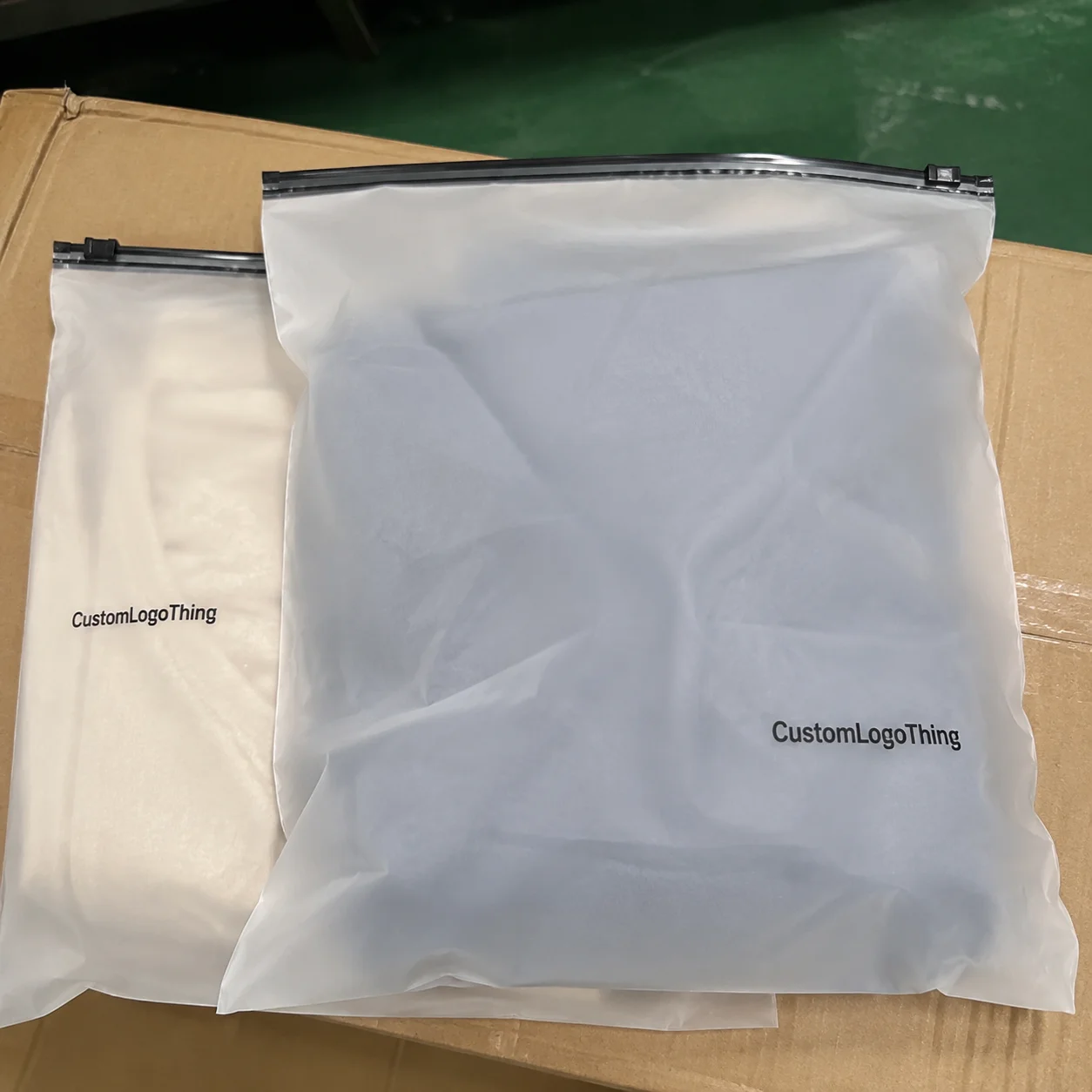
Custom store bags do two jobs at once. They have to survive checkout without tearing, and they have to keep representing the brand after the purchase leaves the counter. That sounds straightforward, but the difference between a bag that feels intentional and one that feels disposable usually comes down to details most buyers only notice after a failure: thickness, handle strength, print clarity, and the way the bag fits the product inside.
If the bag is part of a larger branded packaging system, the standard needs to be even higher. A good bag protects the merchandise, carries comfortably, and gives the customer a clear visual reminder of the store. A weak one becomes a complaint before the customer reaches the parking lot.
What custom store bags actually need to do at checkout
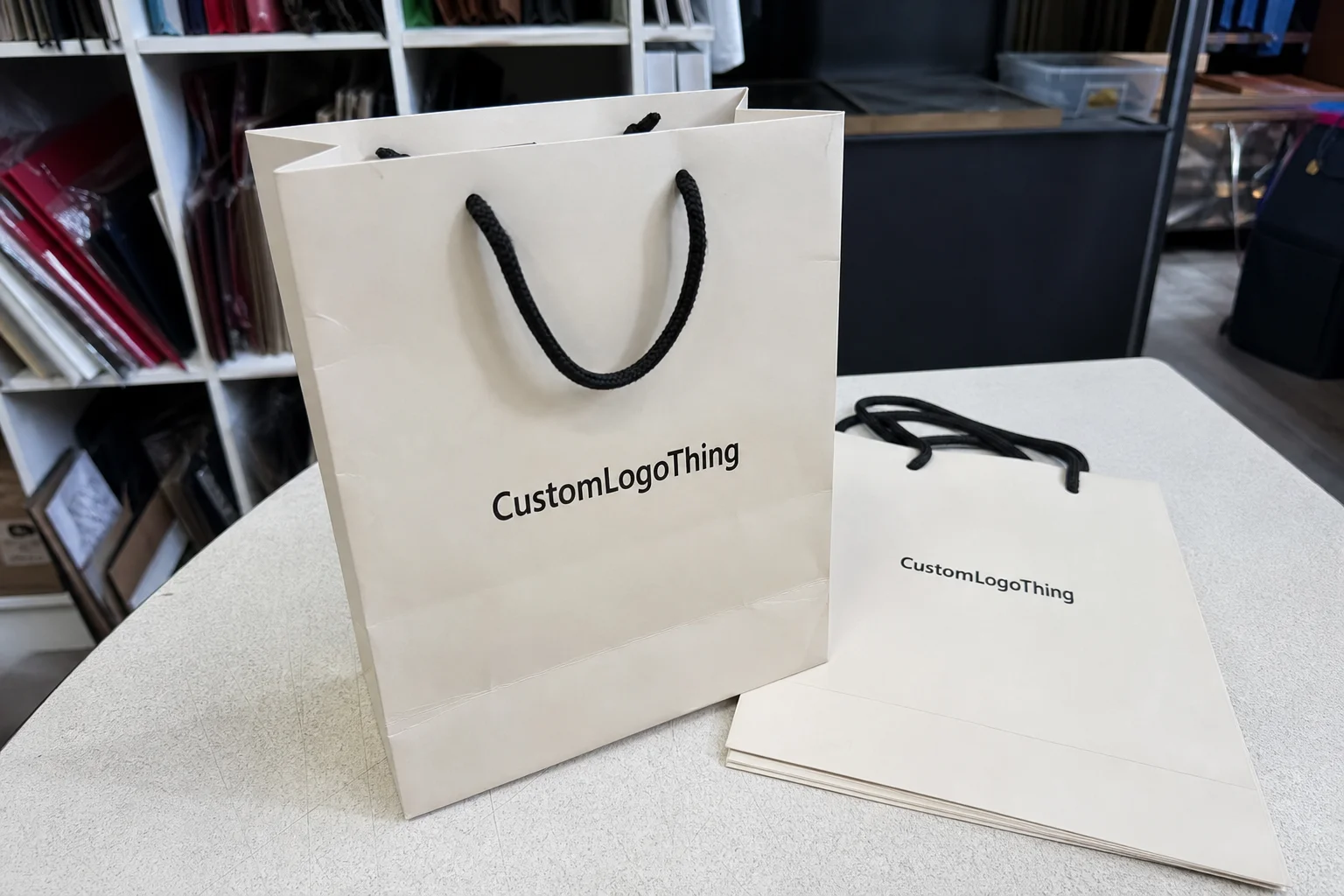
At checkout, a bag has three practical responsibilities. First, it has to hold the product without splitting at the seams or stretching into an awkward shape. Second, it needs to protect the contents from scuffs, light moisture, and the kind of handling that happens when a customer is juggling keys, receipts, and a phone. Third, it should make the purchase feel finished, not rushed.
Retail packaging is often judged in a few seconds. If the bag looks flimsy, that impression attaches to the store whether the product was expensive or not. People rarely think in terms of film gauge or handle reinforcement. They think the shop cheaped out. That is why custom store bags should be specified as functional packaging first and a print surface second.
Plastic bags still make sense in a lot of retail environments. They store compactly, they work well behind a busy counter, and they handle damp weather better than paper. That matters for stores with high traffic or products that vary widely in shape and weight. Apparel, boxed goods, small gift items, and mixed purchases often sit better in plastic when the goal is speed and consistency.
A bag that survives the walk to the car is part of the sale. A bag that fails on the way out turns into a service problem.
That is the practical divide. The bag is not only packaging; it is a moving display for the brand. If the customer reuses it once or twice, the impression travels farther. If the bag fails, the brand message is replaced by irritation. That is why the material and construction should match the product load before anyone worries about artwork placement.
Paper can still be the right choice in some stores. It can feel more substantial, and for certain brands it better matches the visual language of the shop. But paper gives up moisture resistance and compact storage, and the strength you need usually costs more once you move beyond light merchandise. If paper is the direction, ask about FSC certification instead of relying on broad recycled claims. The FSC standard gives a clearer sustainability reference point.
If the packaging program also includes cartons, inserts, or labels, the bag should feel like it belongs to the same family. A bag that clashes with the rest of the package system looks improvised. If you are also sourcing Custom Packaging Products, the visual and material choices should be coordinated early, not patched together at the end.
How the bag structure, print, and handles work
Material choice determines most of the bag’s behavior. HDPE is light, stiff, and usually the lower-cost option. It is common in T-shirt style retail bags because it packs well and handles everyday use without adding much weight or cost. LDPE is softer and more flexible. It tends to feel better in the hand and gives a smoother surface for certain print styles, especially when the bag is meant to feel more premium than utility-grade.
Gauge matters just as much as resin. A 0.8 mil bag and a 2.0 mil bag are not solving the same problem. The thinner bag is fine for lightweight merchandise and high-volume distribution. The thicker bag is better for heavier orders, larger gussets, or stores where customers are likely to reuse the bag. For many retail programs, the practical range sits somewhere around 1.25 to 2.0 mil, but the right number follows the product load, not the mockup.
Bag style changes both appearance and usability:
- T-shirt bags are fast, economical, and easy to store in rolls or stacks.
- Die-cut handle bags have a cleaner look and work well for boutiques and specialty retail.
- Patch-handle bags add reinforcement and improve comfort under load.
- Gusseted carry bags give more usable volume and are better for boxes, apparel, or awkward shapes.
Printing on film has more limits than many buyers expect. Large solid areas, small type, and fine gradients can look different on flexible surfaces than they do on paper or board. Spot colors can work very well if the artwork is disciplined. White ink improves contrast on tinted film, and opaque backing helps readability, but both add cost and setup complexity. If the brand is strict about color, ask specifically how Pantone matching is handled on film rather than assuming a digital proof will match the run.
Handle construction deserves real attention. It affects comfort, weight distribution, and how much trust the customer places in the bag. A handle that cuts into the hand makes the whole package feel cheaper. A reinforced handle with clean attachment points does the opposite. The logo may be identical, but the customer experience is not.
For performance testing, suppliers may reference tensile strength or impact data, but a simple bag test under real product weight is often more revealing. The International Safe Transit Association publishes package testing guidance at ISTA. It is not glamorous, but a bag that fails in transit or in the parking lot is worse.
Cost, pricing, and MOQ: what changes the quote
Pricing for custom store bags usually comes down to five variables: size, material thickness, print colors, handle style, and quantity. More material raises the unit price. More print coverage adds setup work and ink. Reinforced handles, special film, and custom finishing move the number up again. None of that is arbitrary. The cost shifts because the manufacturing steps change.
MOQ matters because setup costs need to be spread across enough units to make the run efficient. At 1,000 bags, a custom spec may look expensive. At 10,000, the same spec often becomes noticeably cheaper per piece. That is not a pricing trick; it is how prepress, material prep, and changeovers work. Smaller orders usually carry a higher per-unit cost because the fixed work does not shrink with the quantity.
Typical planning ranges for medium-volume retail programs look like this:
| Bag Option | Typical Unit Cost | Best Fit | Main Tradeoff |
|---|---|---|---|
| HDPE T-shirt bag, 1-color print | $0.04-$0.09 | High-volume checkout, lightweight products | Lowest cost, but the look is more utilitarian |
| LDPE die-cut handle bag, 1-2 colors | $0.12-$0.28 | Boutiques, specialty retail, giftable purchases | Better feel and print, higher unit cost |
| Reinforced patch-handle bag, heavier gauge | $0.22-$0.45 | Premium retail, heavier merchandise, reuse | Stronger and nicer, but material and setup costs rise |
| Thicker custom printed bag with special color matching | $0.30-$0.60 | Flagship stores, seasonal launches, premium branding | Excellent presentation, but not the cheapest way to bag a small item |
Those figures are for planning, not a quote. Freight, cartons, duties, and packing counts can move the landed cost more than the bag price itself. A low factory price is not automatically a low program cost if the cartons are packed poorly or the shipping mode changes. Ask for landed cost whenever possible, especially if you are comparing suppliers across regions.
Common add-ons that affect pricing quickly include custom Pantone matching, recycled-content resin, heavier gauge film, and rush production. Proofing or plate charges may appear separately depending on the print method. That is normal. What causes problems is a vague spec. If the supplier has to guess at size, construction, or color expectations, the quote is less useful and the production risk goes up.
A useful way to compare options is to request two versions: one value-focused and one upgraded. For example, compare a 1-color HDPE bag against a heavier LDPE version with reinforced handles. That makes the tradeoff visible. The question is no longer whether the more expensive option sounds better in theory, but whether it earns its place in your retail packaging plan.
Production steps and turnaround timeline
The production path is simple on paper and more sensitive in practice. It usually starts with spec intake: size, material, thickness, quantity, color count, and shipping destination. From there, the artwork gets checked for bleed, safe zones, ink coverage, and whether the design will reproduce cleanly on flexible film. Only after the proof is approved should production move forward.
Prepress catches many of the avoidable issues. If the dieline is off, the artwork shifts. If the type is too close to the edge, it can crop awkwardly. If the ink coverage is too heavy for the film, the result may look muddy or wear poorly. Flexible packaging has less forgiveness than a flat print sample, which is why a bag design should be reviewed as packaging, not as a screen graphic.
Once the job reaches the floor, the sequence usually includes material prep, printing, drying or curing, conversion into bag shape, sealing, handle finishing, and carton packing. Extra print colors, special finishes, or reinforced construction stretch the timeline. So does a late-round change to the artwork. That is not a delay so much as a sign that the order is no longer simple.
For standard runs, a realistic timeline is often 12-20 business days after proof approval, with shipping added on top. More complex orders, unusual dimensions, or premium handle styles can push longer. If the bags are tied to a seasonal launch, store opening, or event date, build the buffer before the art is sent. Production speed is one of the easiest parts of the order to underestimate.
One revision can cost several days if approvals stall internally. If the art needs sign-off from multiple people, the order becomes slower even when the supplier is ready. That is usually where schedule pressure starts, not on the press room floor.
How to order the right custom store bags spec the first time
Start with the product, not the artwork. Measure what actually goes into the bag, then choose width, height, and gusset depth from that real dimension. A bag for folded apparel is not the same as a bag for boxed candles, bottles, or flat merchandise. The item should fit without forcing the film into a stretched shape, because over-stretched material looks less polished and usually performs worse.
A simple sizing method is more reliable than guessing from a reference image:
- Measure the widest packaged item first.
- Add clearance for easy insertion and removal.
- Allow enough gusset depth for the item to sit flat.
- Check handle balance so the bag hangs naturally in use.
After that, match material and thickness to the load. A lightweight beauty item does not need the same gauge as a boxed home accessory. A heavier order may need reinforced handles or thicker film so the customer feels confident carrying it. If the bag will be reused often, a better spec can be cheaper in practice than replacing damaged bags or dealing with complaints about failure.
Logo placement should follow visibility, not just symmetry. Where does the customer see the bag in the store? Where does it sit when carried? A centered logo is not always the best solution. Sometimes a slightly higher print zone creates better visibility at arm level and improves the look when the bag is in motion. That is package branding in a practical form, not decoration for its own sake.
If the contents are fragile, premium, or expensive enough to generate a complaint if something goes wrong, ask for a sample or a pre-production proof. Digital approval is useful, but it cannot show how the print behaves on actual film or how the handle feels under load. A physical sample reveals what a screen does not: opacity, print shift, ink density, and the overall balance of the bag.
Lock the ship date only after the spec, quantity, and artwork are aligned internally. Otherwise someone will find a missing approval when the order should already be in motion. That is how rush charges happen. It is also how a simple bag order turns into a problem.
If your store is building a broader packaging system, check how the bag works with tissue, inserts, labels, and the rest of the retail packaging. The whole package should feel deliberate. When the bag fits the system, the customer feels it even if they never say so out loud.
Common mistakes that make store bags look cheap
Oversizing is the most common issue. A bag that is too large lets the product slide around, which looks sloppy and wastes material. It also makes the purchase seem underpacked. Many buyers assume a larger bag feels more generous, but in practice it often feels less considered.
Too many colors can make a small bag feel busy very quickly. Flexible film is less forgiving than rigid stock, and tiny type or thin linework does not always reproduce cleanly. If the logo depends on details that disappear at a distance, simplify the artwork for the bag version. Customers are holding it at arm’s length, not studying it under a lamp.
Handle comfort is another tell. If the handle cuts into the hand or stretches too much, the bag feels cheap within seconds. No amount of glossy printing fixes that. The same is true for the bottom seam and side construction. If the bag sags or looks weak when loaded, the impression drops immediately. Many buyers focus on the front panel and ignore the parts that actually carry the weight.
Mockups can mislead. A screen proof will not fully show opacity issues, print shift, or how bright colors behave on the actual film. Review samples in realistic lighting whenever possible, especially if the store uses warm lights, bright overheads, or mixed daylight. A bag that looks sharp on a laptop can read flat or muddy on the sales floor.
Timing mistakes cause a separate kind of damage. Late ordering usually forces a bad choice: pay for rush shipping, or accept a lower spec just to make the launch date. Both cost more than planning correctly. If the bags are tied to a seasonal reset or opening date, the buffer needs to exist before the artwork goes in.
One more mistake shows up often: treating custom store bags as isolated items. They sit next to boxes, stickers, receipts, and signage. If the bag looks like a separate project, the package story weakens. A coordinated spec makes the whole purchase feel more intentional.
Expert tips for briefing your supplier and moving fast
Send a tight brief. A one-page summary with size, material, color count, quantity, delivery ZIP, target date, and artwork status gives the supplier what they need to quote accurately. Long email threads create gaps. Gaps create clarification rounds. Clarification rounds slow the order and make comparisons harder.
Ask for two quote options every time. One should be the cost-conscious version. The other should be the upgraded version with thicker film, stronger handles, or better print treatment. Once both are in front of you, the decision is much clearer. That is better than trying to infer value from a single line item.
Review samples under store lighting, not only on a desk. Gloss, opacity, and color contrast behave differently beside shelving, glass, and overhead fixtures. Plenty of prints look acceptable in isolation and less convincing in the retail environment. The store is part of the spec.
Keep a reorder plan from the start. If the bag works, repeat it. Reordering a proven spec is usually faster and often cheaper than reinventing custom store bags for every campaign. The more the bag becomes part of the standard retail packaging system, the less it behaves like a one-off project and the more it behaves like an operating tool.
Use the same discipline across bags, cartons, and inserts if the brand is building a broader package branding program. The goal is not to accumulate printed items. The goal is to make the purchase feel deliberate from checkout to carry-out.
Next step: confirm the size, request the quote, approve the proof, and schedule delivery before the launch date becomes the problem. That sequence is not flashy. It works.
Done well, custom store bags are not just containers. They are part of the sale, part of the carry experience, and part of the memory the customer takes home. When the spec matches the product and the printing matches the brand, the bag does exactly what it should without demanding attention from the wrong reasons.
Frequently Asked Questions
How do I choose the right custom store bag size?
Measure the packed product first, then add enough width, height, and gusset depth so the bag does not feel stretched. If one bag needs to cover multiple items, size it around the largest regular SKU and test whether smaller products still sit naturally inside.
What affects custom store bag pricing the most?
Quantity has the biggest effect because setup costs spread across more or fewer bags. Material thickness, print colors, handle style, and special finishes all move the unit price, and freight or duties can change the landed cost more than buyers expect.
How long does a custom retail bag order usually take?
The timeline depends on artwork approval, order complexity, and quantity. Simple orders can move quickly after proof approval, while revised artwork, special colors, or reinforced construction add time before production starts. The buffer is usually the part people forget.
Are plastic custom store bags better than paper for some stores?
Yes, especially when the bag needs to handle moisture, heavier items, or compact storage behind a busy counter. Paper can feel more premium in some settings, but plastic usually wins on durability and cost for high-volume retail use.
What should I send to get an accurate custom store bag quote?
Send the bag size, quantity, material preference, print colors, and delivery destination. Include the target date and whether samples, rush service, or matching an existing spec are required. If you have artwork, send it early so the supplier can check print feasibility before quoting.