Buyer Fit Snapshot
| Best fit | Custom Stretch Wrap Labels projects where brand print, material claims, artwork control, MOQ, and repeat-order consistency need to be specified before quoting. |
|---|---|
| Quote inputs | Share finished size, material target, print colors, finish, packing count, annual reorder estimate, ship-to region, and any compliance wording. |
| Proofing check | Approve dieline scale, logo placement, barcode or warning zones, color tolerance, closure strength, and carton packing before bulk production. |
| Main risk | Vague material claims, crowded artwork, missing packing details, or unclear freight terms can make a low unit price expensive after revisions. |
Fast answer: Custom Stretch Wrap Labels: Material, Adhesive, Artwork, and MOQ should be specified like a repeatable production item. The safest quote records material, print method, finish, artwork proof, packing count, and reorder notes in one written spec.
Production checks before approval
Compare the actual filled-product size with the drawing, then confirm tolerance on folds, seals, hang holes, label areas, and retail display edges. Reserve space for logos, QR codes, warning copy, and material claims before decorative graphics fill the panel.
Quote comparison points
Review material grade, print process, finish, sampling route, tooling charges, carton quantity, and freight assumptions side by side. A quote is only useful when the supplier can repeat the same color, closure quality, and packing count on the next order.
A pallet can arrive in perfect shape and still create trouble if the outer wrap is scuffed, buried under glare, or peeled back at the edge before anyone can identify it. That is where custom stretch wrap labels earn their place, because they turn a plain wrapped load into something a warehouse team can read, route, scan, and trust without slowing the dock down.
For a lot of operations, this is not just about branding. Custom stretch wrap labels sit right where product packaging, warehouse sorting, and package branding meet, which is why they matter in places where a carton label is not enough. The outer wrap is often the first surface a carrier, receiver, or internal transfer team sees, so the label has to stay visible and legible after handling, transit vibration, and the kind of contact that happens when pallets move more than once.
If you already manage Custom Packaging Products across cartons, shipper packs, and pallet loads, you probably know the drill: clean information wins. The same thinking applies to Custom Labels & Tags, except custom stretch wrap labels have to survive the extra pressure of film tension, pallet corners, and warehouse abrasion. In practice, the result is a small piece of print that can affect scan rates, internal routing, customer recognition, and even how polished your branded packaging looks when a shipment lands at receiving.
The best custom stretch wrap labels usually do three jobs at once: they identify the load, they support the line, and they keep the pallet looking organized. That sounds simple, but performance depends on the film type, adhesive choice, print method, pallet condition, and the way the label gets applied. Leave out any one of those pieces and the whole system becomes less dependable. I have stood on enough loading docks to know that a label can look great in a proof and still fail in the real world if the spec is fuzzy.
What Custom Stretch Wrap Labels Are and Why They Stand Out
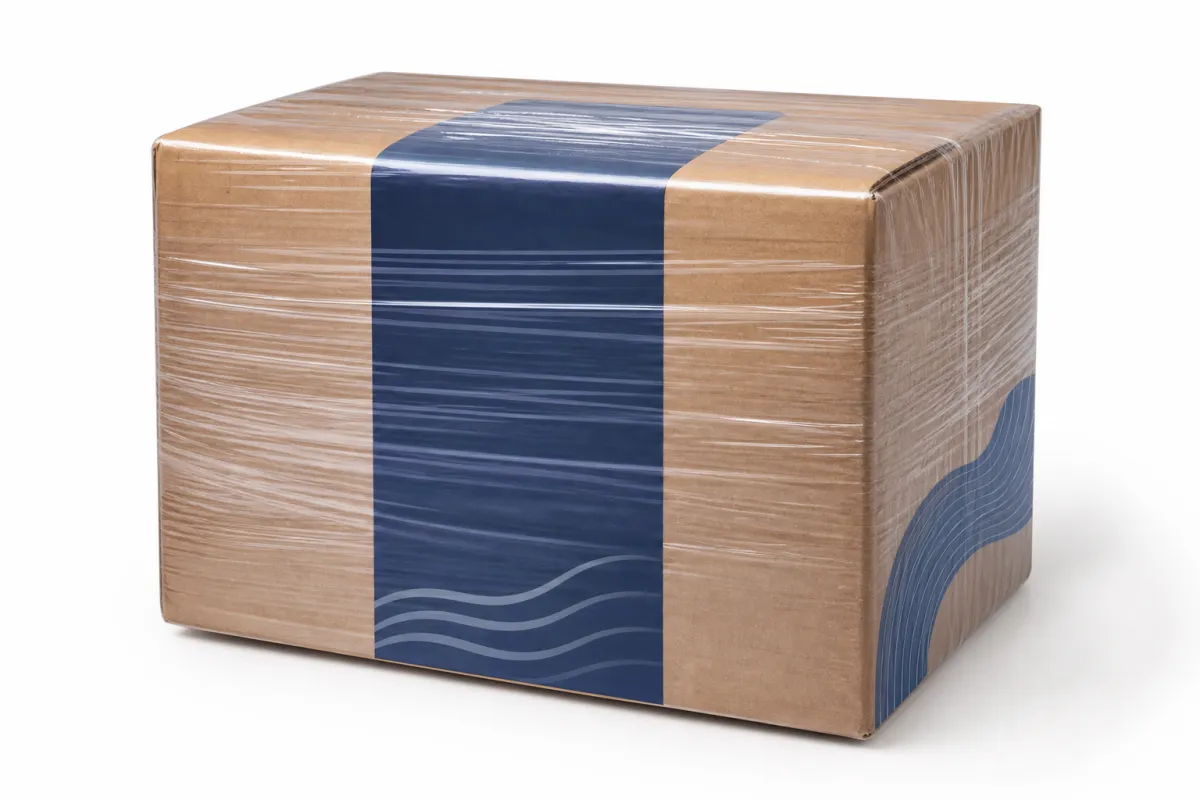
Custom stretch wrap labels are printed labels or branding elements designed to stay readable on a pallet that has been wrapped with stretch film. They can carry shipment data, routing details, barcode information, lot numbers, handling instructions, or a simple brand mark that makes the load easier to recognize at a glance. Some are large and highly visible, while others are smaller and built to fit into an existing warehouse process without forcing a redesign of the whole operation.
The big difference between labeling the carton and labeling the wrapped pallet is visibility. A carton label can be perfect and still disappear once the pallet is wrapped, stacked, or covered on the dock. Custom stretch wrap labels sit on the outer layer, where crews, carriers, and receiving teams actually look first. That makes them especially useful for mixed-SKU shipping, internal transfers, club-store pallet programs, and facilities where multiple teams touch the same load before it leaves the building.
There is also a branding angle that gets overlooked more often than it should. A load wrapped in clear or printed film with a clean, well-placed label looks more organized than one with handwritten notes or faded stickers taped to the side. That matters in retail packaging, distributor programs, and direct-to-business shipments where the pallet itself becomes part of the customer experience. A neat label can reinforce the same visual discipline you put into custom printed boxes, shelf packaging, and other brand-facing formats.
Custom stretch wrap labels are not decoration. They are a working part of the shipping system. When they are specified well, they support scan compliance, reduce misroutes, help teams distinguish similar products, and make it easier to keep outbound freight moving. When they are specified poorly, they peel, blur, hide under the wrap, or end up in the wrong place on the pallet. That is why the details matter so much.
A pallet can be perfectly wrapped and still fail at receiving if nobody can identify it in five seconds.
From a packaging buyer's point of view, the real value of custom stretch wrap labels is consistency. If every shipment follows the same spec, then the warehouse does not have to improvise. If the spec changes from one order to the next, the team ends up chasing errors that should never have made it out of production. That is why a clear standard matters just as much for custom stretch wrap labels as it does for any other part of branded packaging.
How Custom Stretch Wrap Labels Work on the Line
On the line, custom stretch wrap labels need to bond well enough to stay put while the pallet is being wrapped, moved, and handled, but they also need to remain readable after the film has been stretched around a load. In many setups, the label is applied to the outer wrap after the pallet is already dressed, although some operations integrate label placement during or immediately before wrapping so the position stays more consistent from pallet to pallet.
Manual application is the simplest route. An operator places the label by hand, usually in a consistent height range where the mark will remain visible from the dock and easy to scan without bending or repositioning the load. Semi-automatic wrapping systems can improve placement consistency because the operator follows a repeatable routine, and fully automated lines can take that further by applying labels at the same point in the cycle every time. The more automated the process, the more important it becomes to match the label size and adhesive to the machine behavior.
Placement matters as much as the print itself. A label on a seam, a corner, or a heavily stretched zone is more likely to wrinkle, lift, or distort. A label on the flattest visible face of the pallet is usually easier to read and less likely to be damaged by forklift contact. For tall loads, I like to see the primary identifier placed between roughly 36 and 60 inches from the floor whenever the pallet profile allows it, because that is a practical height for both dock-level scanning and visual checks.
Durability is another part of the equation. Custom stretch wrap labels may need to resist abrasion, moisture, condensation, temperature swings, and the pressure created when film is pulled tight around the load. If the pallet spends time in a cooler, travels through humid dock space, or gets staged outdoors, the label spec should reflect that. A nice-looking proof does not tell you much if the label starts to haze or peel when the environment changes.
For that reason, the best custom stretch wrap labels are designed as part of the workflow, not as an afterthought. They should support identification, branding, and operational data without forcing the wrapping process to slow down. If the label requires a complicated application step, the line will eventually find a way to skip it. Packaging design has to work with the floor reality, not just the mockup.
For facilities that care about formal transit testing, references like ISTA can help frame how pallets are expected to perform during handling and transport. For broader material sourcing programs, FSC is useful when paper-based components need to fit a sustainability policy. Those references do not pick the right label for you, but they do help anchor the conversation in standards instead of guesswork.
After the outer wrap is on, the label has one job: remain visible and readable until the load is received. That sounds easy until you factor in stretch force, contact with pallets or straps, dust on the film, and the occasional rough handoff between departments. Good custom stretch wrap labels are built with those conditions in mind from the start.
Key Factors That Shape Custom Stretch Wrap Labels Performance, Cost, and Pricing
The material system has the biggest effect on performance. For indoor, short-haul use, a well-chosen paper or coated stock with a general-purpose adhesive may be enough. For cold storage, condensation, rough handling, or outdoor staging, synthetic stocks like BOPP or polyester usually hold up better, and a higher-tack adhesive can make the difference between a label that stays put and one that curls at the edge. The adhesive matters just as much as the face stock, because a strong print on the wrong adhesive still fails in the field.
Print coverage also changes both visibility and cost. A one-color label with a clean barcode and simple text is easier to produce than a full-color version with tight registration, heavy ink coverage, and multiple variable fields. If the design includes serial numbers, lot codes, or routing data, the production setup has to support those changes cleanly. That is especially true for custom stretch wrap labels used in product packaging programs where scan reliability is non-negotiable.
Line conditions add another layer. Wrap tension, pallet shape, product weight, dust levels, and whether the load is exposed to indoor or outdoor storage all influence what will work best. A square, stable pallet wrapped in a clean dock area gives you more options than an irregular load that gets dragged across rough flooring and then sits in a cold trailer. The label spec should reflect the worst realistic condition, not the best-looking one on the proof sheet.
Here is a simple way to think about pricing: the more custom the label, the more the cost moves. Volume matters, because setup gets spread over more pieces. Size matters, because larger labels use more material. Version count matters, because every additional artwork variation adds proofing and production complexity. Finish, adhesive, color count, and variable data all push the price up or down as well. If someone quotes custom stretch wrap labels without asking about those pieces, the number is probably too vague to rely on.
| Option | Typical Spec | Best For | Rough Unit Price at 5,000 Labels | Trade-Offs |
|---|---|---|---|---|
| Economy indoor label | Paper stock, one-color print, general-purpose adhesive | Dry warehouses, short internal moves, low-abrasion routes | $0.06-$0.10 | Lower material cost, but limited resistance to moisture and rough handling |
| Standard distribution label | Coated or synthetic stock, 2-4 colors, stronger adhesive | Mixed shipping, moderate handling, clearer branded packaging | $0.10-$0.18 | Good balance of price and durability, with more setup detail |
| Premium high-durability label | BOPP or polyester, high-tack adhesive, variable data, barcode focus | Cold chain, outdoor staging, high-touch routes, scan-sensitive loads | $0.18-$0.32 | Higher price, but better legibility and fewer reprints or failed scans |
Those numbers are planning ranges, not a quote, because size, coverage, version count, and finishing details can shift the final price quickly. Still, they give a buyer something useful to work with. If your current program is failing because labels are lifting, smearing, or becoming unreadable, paying more for a better adhesive or a synthetic face stock often costs less than reworking pallets, replacing freight, or dealing with receiving complaints.
There is a similar trade-off on the print side. Better contrast helps barcode readers, cleaner typography helps manual sorting, and a well-chosen finish can reduce scuffing. From an operations standpoint, the cheapest custom stretch wrap labels are not always the least expensive once you count misreads, rejected loads, and the extra labor needed to fix avoidable mistakes. That is where thoughtful packaging design usually pays for itself.
Process and Timeline: From Artwork to Finished Labels
A smooth custom stretch wrap labels order usually follows a predictable sequence. First comes information gathering, where the supplier needs to know the pallet size, wrap type, application method, barcode requirements, color expectations, and storage environment. Then comes artwork review, material selection, proofing, print setup, production, finishing, and shipment. If any one of those steps is unclear, the schedule slips.
- Share the end use and the pallet profile.
- Confirm dimensions, color count, and variable data fields.
- Review the proof for text, barcodes, and placement.
- Approve the spec before production starts.
- Run the order, inspect the first pieces, and pack for shipment.
The information that speeds things up is usually simple. A clean spec sheet with pallet dimensions, wrap film type, application method, brand colors, barcode format, and expected storage conditions gives the production team a better base to work from. If the label has to align with a broader branded packaging system, it helps to know that early too, especially if the same brand family appears on custom printed boxes, shipper cartons, and other outbound materials. The closer those pieces are to one another visually, the more polished the whole shipment feels.
Lead time is usually a function of proof approval speed and artwork readiness. A straightforward run with final artwork and a clear spec can often move in about 7-10 business days after approval. If the order needs specialty materials, multiple versions, barcode validation, or a heavier revision cycle, 12-15 business days is more common, and it can stretch longer if the approval chain is slow. That is not a manufacturing problem so much as a communication problem.
The bottlenecks I see most often are missing file assets, inconsistent logo files, late revisions, and changes after production has already started. If a logo only exists as a low-resolution image, the proof cycle gets slower. If the barcode format is unclear, the production team has to stop and ask. If the order changes after plates or digital setup is underway, or after material allocation has already been reserved, the schedule usually takes the hit.
Here is the practical expectation: a good custom stretch wrap labels order should move from first conversation to approved sample to production with very few surprises. That does not mean the job is rushed. It means the process is disciplined. The cleaner the inputs, the faster the output. In packaging terms, clarity is speed.
Step-by-Step Guide to Specifying and Ordering
Start with the end use. Is the label mainly there to brand a pallet, route inventory, support scanning, or combine all three? That answer changes the size, color strategy, adhesive choice, and even the amount of information that belongs on the face. A label that only needs to identify a shipping lane can stay simple. A label that has to act like a mini control panel for warehouse teams needs a much more deliberate layout.
Next, gather the specs before you request pricing. A good request should include dimensions, application method, environment, print colors, barcode or QR requirements, and any variable data fields. If the pallet loads vary, say so. If the wrap film is already chosen, include that too. The more complete the spec, the fewer assumptions the supplier has to make, and custom stretch wrap labels are a lot easier to quote accurately when the use case is clear from the start.
I always recommend asking for a sample or proof, even for relatively simple jobs. A proof tells you whether the text hierarchy works, but a sample tells you whether the adhesive and placement are behaving in the real world. Check the label on the actual wrap film if you can. Check legibility from several feet away. Check scan performance if the load carries barcodes. If the sample is going onto a pallet that will move through a warehouse, do not stop at the bench test.
Then verify the first production run on the warehouse floor. That is the only place where wrap tension, label height, forklift traffic, and receiving habits all show up at once. I like to see teams look at three things: does the label stay visible, does it scan quickly, and does the pallet still look organized after it has moved through the normal route? If the answer to any of those is no, the spec needs adjustment.
A simple feedback loop keeps the next order better than the last one. Document label size, placement height, scan success, wrap tension, and any issues noticed on the dock or at receiving. The best custom stretch wrap labels programs evolve from that kind of field feedback, not from guesswork. That is also the point where many buyers realize that a small spec adjustment can save a lot of labor later.
- Write down the pallet and route details once, then reuse them.
- Ask for a proof that shows actual barcode size and placement.
- Test the sample in the same conditions the load will face.
- Capture what the warehouse team notices after the first run.
That last step matters more than people think. If the floor team says the label is too high to scan, too close to the corner, or too easy to scuff, believe them. They are the ones who have to live with the result every day. A spec that works on paper but frustrates the operators is not a finished spec yet.
Common Mistakes to Avoid with Custom Stretch Wrap Labels
One of the most common mistakes is choosing a label that looks good in a proof but fails in a dusty, cold, or high-moisture environment. A clean digital file does not tell you how the adhesive will behave on a chilled pallet or how the ink will look after the load sits in a humid dock. If the real route includes rough handling, the spec has to be built for that reality, not for the easiest version of the job.
Placement errors are just as common. A label that lands on a seam, a corner, or a heavily stretched zone is more likely to wrinkle or become unreadable. If the pallet gets over-wrapped, the film can distort the print enough to create scan problems. That is especially frustrating because the artwork may be perfect and still fail simply because the placement was careless. With custom stretch wrap labels, position is part of the performance spec.
Another mistake is underestimating lead time. If the design needs proofing, compliance review, or multiple approvals, the schedule can slip fast. I have seen straightforward custom stretch wrap labels jobs turn into time sinks because someone waited until the last minute to confirm a barcode format or brand color. The more versions involved, the more time you should build in for review. Late changes are where simple orders become stressful.
Trying to save a small amount on material can also cost more later. The cheapest label is not a bargain if it triggers reprints, pallet holds, shipment delays, or a damaged brand presentation. That matters even more if the label is part of a larger package branding system, because the pallet often sits alongside other branded touchpoints such as retail packaging, carton graphics, and customer-facing shipper labels. A weak label makes the whole program look less disciplined.
Inconsistent application is the last big problem, and it is easy to overlook. Even a strong print spec can look unreliable if one operator places the label high, another low, and a third puts it partly over a fold. That kind of inconsistency creates confusion downstream because the receiving team does not know where to look. The label system should be easy enough that the line can repeat it without debate.
The label spec is only as good as the floor behavior behind it.
If you want custom stretch wrap labels to perform, treat them like a process, not a purchase. The difference shows up in scan rates, labor time, and how much cleanup the warehouse has to do after the load leaves the building.
Expert Tips and Next Steps for a Better First Run
My first recommendation is to spec the label for the hardest condition you expect to see, not the easiest one. If the load might go from a cool dock into a warm trailer, build for that transition. If the pallets get bumped during transfer, assume the edges will take some abuse. If the receiving team scans from a distance, make the barcode and key text large enough to read without hunting. Custom stretch wrap labels perform better when they are designed against real stress, not optimistic assumptions.
Second, build one master spec sheet for recurring orders. That sheet should include dimensions, substrate, adhesive, print colors, barcode requirements, application method, and the environmental conditions the load sees. Keep it with the rest of your packaging design records so purchasing, operations, and production all work from the same source. That is one of the simplest ways to keep custom stretch wrap labels consistent from run to run.
Third, run a small pilot before you scale up, especially if the pallet mix, wrap film, or storage environment has changed. A pilot lets you see whether the label stays readable after movement and whether the line can apply it without slowing down. If you are building a broader program that includes custom printed boxes, pallet identification, and other forms of product packaging, this is the safest time to make sure the pieces still fit together.
Fourth, document the results in practical terms. Note the label size, placement height, scan success, wrap tension, and any issues seen on the dock or at receiving. I know that sounds basic, but it is how good programs stay good. The minute the details are left in memory instead of written down, the next reorder starts drifting. That part can feel a little tedious, sure, but it saves a lot of grief later.
For a clean first run, I usually suggest this sequence:
- Gather pallet photos and rough dimensions.
- Confirm where the label needs to sit on the load.
- Ask for a proof that shows text size and barcode placement.
- Approve a sample on the actual wrap film if possible.
- Review the first production pallet before the full run ships.
That process keeps surprises small. It also gives the supplier enough detail to recommend a better stock or adhesive if the original idea needs adjusting. In a good custom stretch wrap labels program, that kind of back-and-forth is not a delay. It is the part that keeps the shipment from becoming a problem later.
My final practical advice: if you can hand your supplier a clean spec, a few pallet photos, and a clear description of the route your loads take, custom stretch wrap labels usually become a dependable part of the shipping system instead of a recurring headache. The label should help the load move, not give the dock one more thing to fix. Start with the toughest handling condition, lock the spec down, and keep the first-run feedback in writing so the next order is easier than the last.
FAQ
How do custom stretch wrap labels stay attached during transit?
They stay attached through the right combination of adhesive strength, proper placement, and a wrap application that does not create excess lift at the edges. For best results, the label should avoid seams, corners, and heavily stretched zones where movement is most likely. If the pallet sees rough handling or cold storage, the adhesive and face stock need to be matched to that environment, not to a light-duty indoor route.
What affects custom stretch wrap labels pricing?
Price usually depends on size, quantity, material, adhesive type, color count, and whether the design includes variable data or special finishing. Orders with multiple versions or a fast turnaround can cost more because they require more setup and proofing. As a planning range, simple indoor labels are often much cheaper than synthetic, high-durability custom stretch wrap labels built for cold chain or high-touch distribution.
How long does custom stretch wrap label production usually take?
Timeline depends on proof approval speed, artwork readiness, and whether the order needs specialty materials or extra testing. A clean spec sheet and quick feedback on proofs usually shorten lead time significantly. For many straightforward jobs, production can move in about 7-10 business days after approval, while specialty custom stretch wrap labels often need 12-15 business days or more if revisions take longer.
Can custom stretch wrap labels be applied by hand or by machine?
Yes, many labels can be designed for either manual application or line-side machine application. The key is matching the adhesive and format to the real application method so the labels stay consistent on every pallet. If the line mixes manual and automated application, the label spec should be tested in both situations so the result stays predictable.
What artwork files work best for custom stretch wrap labels?
Editable vector artwork is usually best because it preserves sharp text, clean barcodes, and accurate brand colors. It also helps the production team proof the file faster and reduce avoidable rework before printing. If you are sending custom stretch wrap labels artwork, a clean vector file and a clear note about barcode content will usually save time and reduce back-and-forth during proofing.

