A shopper usually notices the tag before they study the product. That split second matters. Custom Swing Tags can frame value, explain the basics, and make a product look more considered without adding bulk or changing the item itself.
They are not decoration alone. A good tag sits inside the broader packaging system, alongside retail packaging, branded packaging, and sometimes Custom Labels & Tags or other Custom Packaging Products. If the tag feels disconnected from the rest of the product, the whole presentation loses coherence.
The effect is easy to underestimate. A plain garment, candle, accessory, or gift item can look more expensive with the right stock, finish, and attachment. The reverse is also true. Thin card, crowded copy, and poor hole placement can make even a well-made product feel generic.
What Swing Tags Really Do at the Shelf
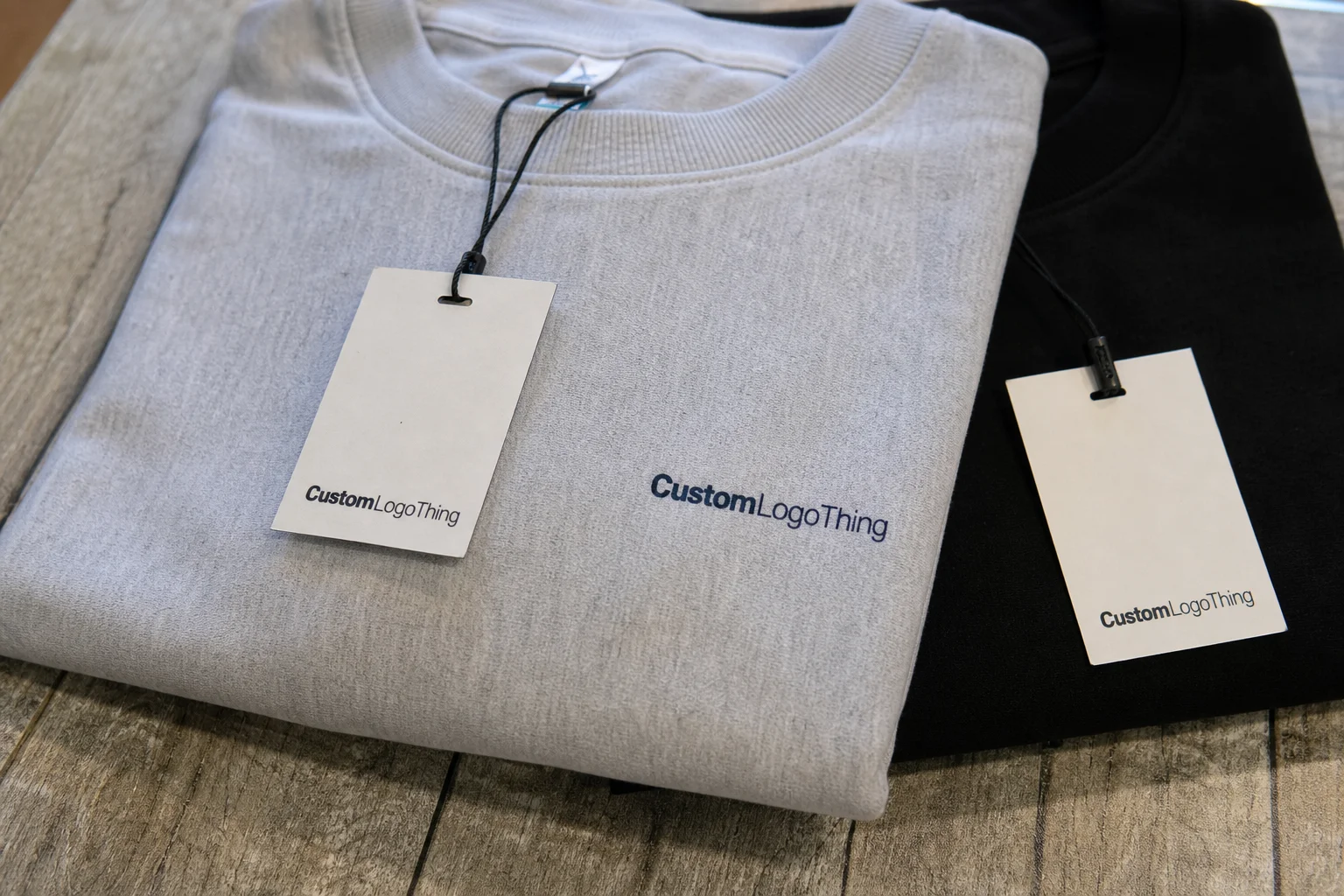
A swing tag is a hangable brand card attached with string, ribbon, twine, plastic loop, or a fastener. Unlike sewn-in labels, woven labels, or adhesive stickers, it is designed to be removed after purchase. That gives it more room to work with pricing, sizing, care instructions, and brand messaging without becoming a permanent part of the product.
The real function depends on the category. Apparel tags often need size, fabric content, care symbols, barcode data, and country of origin. Accessories may only need brand, price, and SKU. Food-adjacent gifts, candles, and stationery often use tags to explain ingredients, warnings, or usage notes. The surface is small, but the brief can be surprisingly dense.
That density is where many designs fail. Buyers try to fit a brochure onto a rectangle the size of a business card. The result is familiar: too many type sizes, too many icons, and no clear reading order. A good tag answers the shopper’s question quickly. Is this worth the price? What is it made of? How should I use it?
A tag that reads cleanly at arm's length usually does more for sales than a tag that tries to say everything.
Custom Swing Tags also carry a quiet but useful consistency test. If they look coherent next to the box, tissue, labels, and shelf display, the brand feels controlled. If they look like an afterthought, the customer notices that too. Packaging rarely gets credit for being subtle, but subtle is often what makes it look expensive.
Production Process and Timeline: From File to Shipment
The production flow is usually simple on paper and messy in the details. A typical run starts with a brief, moves through quoting and artwork setup, then proofing, printing, finishing, cutting, punching, stringing or attachment, packing, and dispatch. The proof stage is where most delays appear, not the press run.
- Brief the supplier with size, quantity, stock preference, print sides, and attachment method.
- Confirm the dieline or tag shape before final artwork is placed.
- Approve a digital or hard proof with final copy, barcode data, and finish notes.
- Print, cut, finish, punch, and assemble the tags.
- Pack flat or pre-strung, then ship.
For standard paper tags, the working lead time is often 7 to 12 business days after proof approval, then shipping on top. Specialty stock, foil, embossing, soft-touch lamination, or custom die cuts can move that to 12 to 20 business days, and larger quantities stretch it further. If tags need variable data, barcode checking, or hand stringing, allow extra time for assembly.
The fastest jobs are usually the least ambiguous. Missing barcode details, undefined finishes, repeated artwork changes, or a file that needs cleanup can slow the job more than production itself. Buyers who send print-ready files and make one clear approval tend to move faster than buyers who revise the brief after each proof.
Standard print vocabulary helps here. The guidance published by Packaging School and packaging resources is useful because it keeps terminology aligned when comparing stocks, finishing options, and production methods across branded packaging projects. That matters more than it sounds. A vague brief can create a quote that looks cheap and becomes expensive later.
Materials, Finishes, and Structural Specs That Change the Result
Material choice changes more than appearance. It changes stiffness, print sharpness, handling, and the way the tag feels in the hand. Coated artboard gives crisp color and strong image reproduction. Uncoated stock feels softer and more tactile. Kraft paper signals a natural or craft-led brand. Textured board adds depth, but it can soften fine details if the typography is too delicate.
Thickness matters because tags spend real time in retail environments. A stock in the 300gsm to 450gsm range is common for a reason: it holds shape, resists bending, and gives better perceived quality than flimsy paper. Very thin stock may save a little on unit cost, but it often looks weak once it is attached to the product.
Finishes influence the tone just as much. Matte finish feels restrained and modern. Gloss boosts saturation and makes color punch harder. Soft-touch lamination adds a velvety surface that often suits premium fashion or beauty products. Foil works best as an accent, not a blanket treatment. Too much of it can make a tag look busy instead of refined. Embossing and debossing add depth without depending entirely on ink, while spot UV can sharpen logos or selective pattern details.
If sustainability is part of the brief, ask for FSC-certified paper stock or recycled board options. The FSC standard is useful because it gives buyers a clearer paper sourcing story, especially if the tag sits inside a broader packaging claim across retail packaging and product packaging.
Structural details affect performance just as much as print. A well-designed tag that tears at the hole punch is not premium. Size, corner radius, hole position, string length, stock thickness, and reinforcement all matter. Heavier items often need an eyelet or reinforced punch to prevent early failure. Smaller accessories may need a compact format so the tag does not overpower the product.
- Small tags suit light accessories and minimal copy.
- Medium tags balance branding, pricing, and product information.
- Large tags work better for storytelling, care details, or multiple SKUs on one piece.
Durability is part of design. A tag that looks premium in a mockup but bends, scuffs, or splits during handling is not really premium at all.
Custom Swing Tags Pricing: What Drives Cost and MOQ
Custom swing tags are priced by more than paper and ink. Quantity, stock thickness, print coverage, finishing complexity, die cutting, variable data, assembly, and packing all affect the quote. MOQ matters because setup costs are fixed, so a small run absorbs more of the prepress and machine preparation cost per unit. That is why 500 tags often look disproportionately expensive next to 5,000 tags.
For a practical comparison, the table below shows how cost and use case usually move together. These are typical ranges for standard production, and they can shift with supplier location, freight, and spec complexity.
| Option | Typical Unit Cost at 5,000 | Best For | Watch-Outs |
|---|---|---|---|
| Single-sided paper tag, 300gsm, one-color print | $0.08-$0.14 | Simple apparel, accessories, and entry-level branded packaging | Limited visual impact if the brand needs a stronger premium cue |
| Double-sided coated tag, full color, standard cut | $0.12-$0.22 | Most retail products needing balanced branding and product information | Needs cleaner artwork and tighter file setup |
| Textured or kraft stock with one specialty finish | $0.18-$0.32 | Natural, craft, or storytelling-led product packaging | Texture can soften small text and fine lines |
| Soft-touch, foil, embossing, or custom die cut | $0.28-$0.60+ | Higher-margin products that need a stronger shelf signal | Higher setup cost, longer lead time, more proofing |
That spread is why quotes should be broken into line items before they are compared. Ask what is included in print, tooling, finishing, assembly, and freight. A low headline price can become expensive after die charges, attachment charges, carton fees, or a separate setup line appears. Clear quotes usually cost less in real terms.
There is also a judgment call on where to save money. Simplifying a tag shape can be smart. Reducing the color count can be smart. Trimming paper weight too far, or removing a finish that supports the brand story, usually is not. Cheap and efficient are not the same thing in packaging.
Step-by-Step Ordering Guide for a Clean First Run
The cleanest first order is the one that removes ambiguity early. Custom swing tags move faster when the buyer decides the function before the decoration. Lock the size, stock, attachment, and copy structure first. Then decide whether premium finishes still make sense for the product price point.
- Define the tag's job. Is it mostly price, brand story, care data, or all three?
- Set a size range. Common formats are compact square cards, slim rectangles, or taller hang tags.
- Choose a stock. Match the material to the product tier and the handling environment.
- Pick the attachment method. String, ribbon, plastic loop, and reinforced hole all feel different in use.
- Prepare the artwork. Keep logos vector, images high resolution, and text readable at arm's length.
- Confirm barcode or variable data early. Bad data is one of the fastest ways to delay production.
- Approve one clean proof. Multiple scattered revisions usually extend the job without improving the result.
A short spec sheet saves time. Include product type, target audience, quantity bands, finish preference, size, brand colors, delivery window, and whether the tags need to arrive flat or pre-strung. That one document reduces revision cycles and makes supplier replies easier to compare. It also helps when several SKUs need similar tags with small differences.
For brands building a wider packaging system, pairing the tag brief with custom printed boxes or other retail packaging elements can tighten the story across the shelf. The tag then stops acting like a standalone object and starts reinforcing the rest of the product packaging.
Before release, check the proof at real viewing distance. Look for legibility, color contrast, trim safety, hole placement, barcode quiet zone, and whether the copy still reads well at 30 to 40 cm. If it feels cramped on screen, it will feel worse in hand.
Common Mistakes That Make Tags Look Cheap or Fail Early
The most common mistake is treating the tag like a miniature poster. That usually leads to too much copy, too many icons, and no visual hierarchy. A strong tag has one clear reading path. A weak one forces the shopper to work for every line, which lowers perceived value.
Production problems are usually less dramatic and more annoying. Low-resolution artwork, missing bleed, wrong color profiles, and text placed too close to the edge can all create avoidable defects. So can a finish that looks strong in a mockup but behaves badly in production. Some coatings mute text. Some foil combinations expose registration issues. Some die cuts look elegant on screen and awkward in hand.
Attachment choices matter more than people expect. A light cotton string can be fine for apparel, but it may feel wrong or fail too early on heavier products. A plastic loop is practical, but it can look too industrial for a premium item. The attachment should match the product weight and the brand tone at the same time.
Handling matters as well. If tags are packed flat, stacked in cartons, or shipped with other components, the finish has to survive normal logistics. That is where shipping and carton handling standards, including the logic behind ISTA testing, become relevant even for a small printed item. A tag that looks great and arrives bent is still a bad tag.
- Do not cram legal copy into the tag if it belongs elsewhere.
- Do not use finishes that hide critical data.
- Do not choose a weak hole punch for a heavy product.
- Do not assume every supplier interprets the same file the same way.
The better question is not whether more can be added. It is what the tag needs to do in three seconds. That framing usually produces cleaner, stronger custom swing tags.
Expert Tips and Next Steps for a Faster Quote
If the goal is a quicker quote and fewer surprises, start with three inputs: final dimensions, quantity range, and attachment preference. Those three details anchor most of the cost. After that, share one reference product or sample style so the supplier understands the visual direction without guessing at the tone.
A more disciplined buyer sequence works better than a broad request for something “premium.” Decide the functional specs first, compare one plain version against one upgraded version, then add premium finishes only if the product can support the higher shelf price. That avoids overbuilding a tag for a modestly priced item.
It also helps to ask for one comparable alternative in the quote process. Compare 350gsm matte card against 400gsm textured board, or a standard cut against a custom die cut. Side-by-side pricing makes the cost of each upgrade visible instead of hiding it inside a single number. Buyers usually make sharper decisions that way.
For most brands, the first run should be a controlled test, not a giant commitment. Order enough custom swing tags to cover the immediate sales window, seasonal demand, or SKU launch, then review how the stock feels, how the print holds up, and whether the information hierarchy actually helps the product sell. Good tags should support the product without drawing attention for the wrong reasons.
If the brief is ready, send the size, quantity, finish preference, attachment style, artwork files, barcode data if needed, and any sample you want matched. That is the shortest route to a realistic production plan for custom swing tags, and it usually produces a better first order than starting with a vague ask for something “premium.”
What should I prepare before ordering custom swing tags?
Have the final tag size, quantity range, artwork files, and attachment preference ready before requesting a quote. If you need barcodes, pricing, or size variants, confirm the data format early so production does not stall at the proof stage.
How long does production usually take for swing tags?
Simple paper tags can move quickly, while premium stocks, special finishes, or custom die cuts usually add time. Approval speed matters as much as print time, so a fast proof review often shortens total turnaround more than any other step.
What affects custom swing tags pricing the most?
Quantity, stock thickness, finish complexity, and whether the order needs assembly or variable data have the biggest impact on unit cost. Freight and packaging can also change the total, so compare quotes on a like-for-like basis instead of looking only at the headline number.
Which material works best for premium swing tags?
Thicker card, textured stock, and uncoated papers often feel more premium because they hold shape and take print well. The best choice depends on the product, but the material should support the brand story and survive normal retail handling.
Can custom swing tags include barcodes or variable data?
Yes, most production setups can handle barcodes, SKU numbers, care copy, or other variable information if the data is supplied clearly. Accuracy matters here, so ask for a proof and confirm scanability before the full run is released.