Custom swing Tags with String are easy to underestimate. On a shelf or hanging from a garment rail, the tag itself is only part of the story. The attachment shapes the first tactile impression, and that is often what buyers notice before they read a word of copy or inspect the product. A tidy loop, the right cord thickness, and a clean punch can make an ordinary tag feel intentional. A sloppy attachment does the opposite, even if the print is excellent.
That is why the tag and the string should be specified together, not as separate afterthoughts. Paper stock, finish, hole size, attachment method, knot style, and pack-out all affect how the finished piece looks, how fast it can be applied, and whether it survives handling through packing, transport, and retail display.
Custom Swing Tags with String: What They Are and Why Buyers Notice
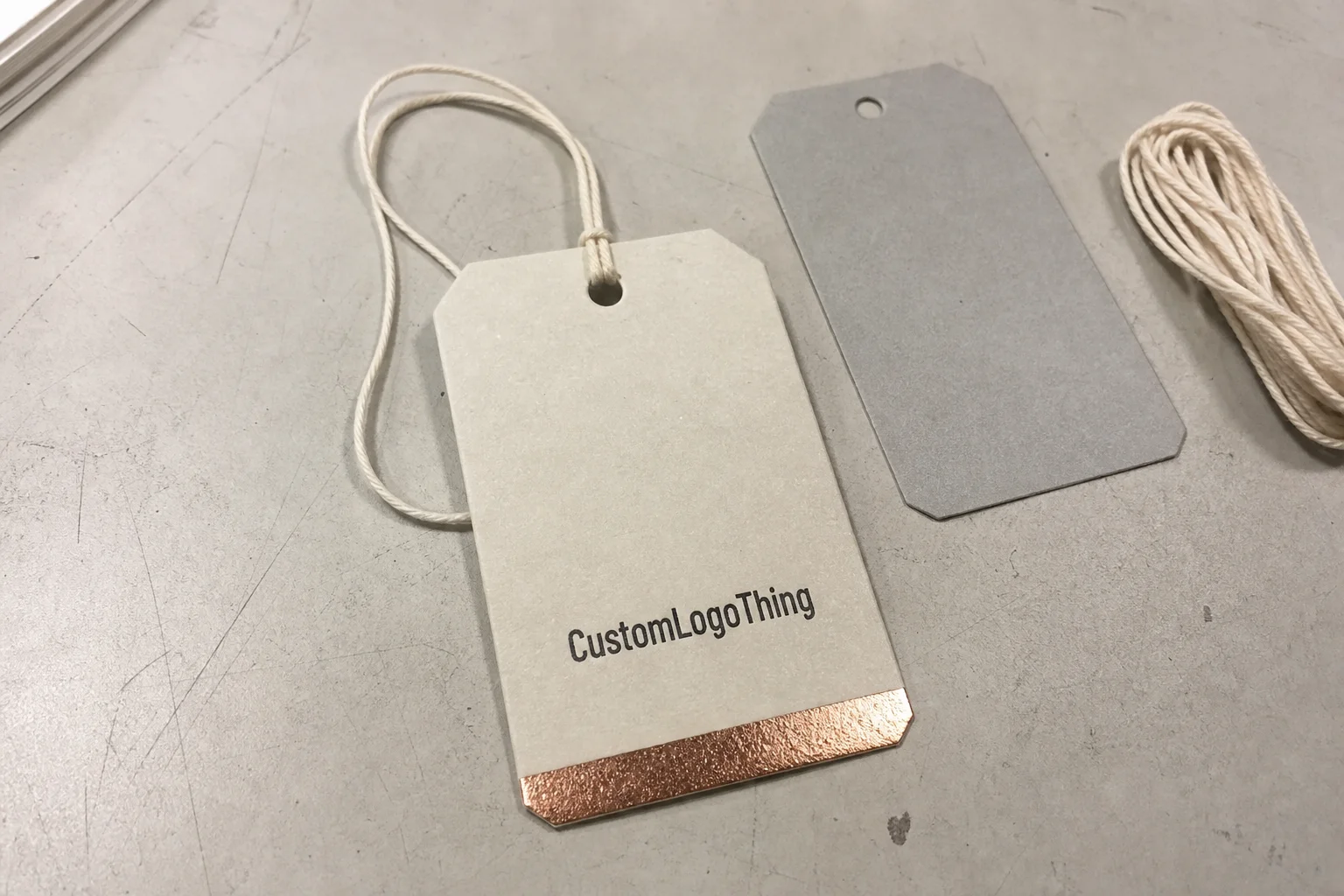
A swing tag is a printed hang tag attached to a product with a string, loop, cord, twine, elastic fastener, or similar fastening. The product category matters less than the handling pattern. Apparel, candles, stationery, accessories, gift goods, and handmade products all rely on tags to communicate price, brand, care information, or a short product story. The string is part of that presentation because it controls how the tag hangs, twists, and sits against the item.
In retail packaging, the tag often gets touched before the product does. That means the attachment has to be practical as well as attractive. It needs to stay secure, look clean from several angles, and avoid snagging on clothing or tearing out of the paper. Buyers who only think about print quality usually miss the point. A great tag with the wrong attachment can still look unfinished.
There is also a production angle that teams underestimate. Store staff and warehouse teams do not care how clever the design concept is if the tags arrive tangled, inconsistent, or hard to apply. They care whether the pieces are counted correctly, the loops are uniform, and the assembly does not slow down the line.
That is why Custom Swing Tags with string are best treated as a small manufacturing system. The paper, the hole, the cord, the length, and the final packing method all need to work together. Get those decisions right and the result looks more expensive than it is. Get them wrong and the whole presentation feels improvised.
How the String Attachment Works in Production
The production flow is simple in theory and more sensitive in practice. Artwork is prepared, the tag is printed, the shape is cut or die-cut, the hole is punched, the string or fastener is attached, and the finished pieces are inspected before packing. If the order is being bundled by SKU, or if the tags must arrive ready for immediate retail use, that part of the spec needs to be locked in early.
The attachment choice changes the final result more than many buyers expect. Cotton string gives a softer, natural appearance. Polyester usually looks cleaner and performs better under abrasion. Twine signals a rustic or handmade style and pairs well with kraft stocks. Satin cord has a smoother, more polished look. Elastic loops and plastic fasteners are often chosen for speed and repeatability on high-volume jobs.
- Cotton string: soft hand feel, natural look, moderate strength.
- Polyester string: cleaner appearance, better abrasion resistance, strong all-round option.
- Twine: rustic, handmade effect, works well with kraft and gift packaging.
- Satin cord: smoother finish, more formal presentation, common in premium retail.
- Elastic loop or fastener: quicker application, useful for repetitive assembly and higher volumes.
There are two common supply models. With pre-attached tags, the supplier delivers the tags already assembled, which saves labor and reduces error on the buyer side. With loose cords, the tags and attachment arrive separately, so final assembly happens in-house. That approach makes sense if product thickness varies across SKUs, if different cord lengths are needed, or if the brand wants to finish everything locally.
Shipping and packing matter too. Loose cords can tangle if they are packed carelessly. Pre-attached tags need controlled bundling because loops can catch on one another in transit. A supplier who understands this will specify bundle orientation, inner packing, carton count, and whether the order needs belly bands or inner bags. Those details are not decorative. They keep the run usable.
Material, Finish, and String Choices That Change the Result
The stock does more than carry the print. It determines the feel of the tag in hand, how the colors reproduce, and how well the hole holds up once the tag is attached. Coated cover gives sharp print and strong color contrast. Uncoated cardstock feels warmer and is easier to write on. Kraft reads natural and works well for artisanal or sustainability-led brands. Textured paper adds depth, although fine text and small logo details can suffer if the texture is too heavy.
Finish changes the mood and the practical performance. Matte finish reduces glare and often reads more restrained. Soft-touch lamination adds a velvety surface, which can feel premium but is not always the best choice for high-handling items because fingerprints and scuffs show differently. Gloss makes color pop, though it can reflect strongly under retail lighting. Foil and spot UV are useful if they support the design hierarchy. If they compete with the content, the tag starts to look busy rather than premium.
There is a technical side to this that buyers should not skip. Small type on a dark glossy tag can become hard to read once it reaches the sales floor. Very textured stock can break up thin lines and reduce clarity. If the tag includes care copy, sizing, or product data, the combination of stock, finish, and ink coverage has to preserve legibility after cutting and punching.
The hole deserves more attention than it gets. If a tag is hanging from a heavier product, the punch may need reinforcement, a larger diameter, or a stronger stock weight around the hole. Without that, tearing starts early, especially if the item is handled repeatedly. Corner style matters too. Rounded corners resist wear better during packing and transit. Sharp corners can look crisp, but they show edge damage sooner.
| Option | Visual Effect | Best Use | Practical Note |
|---|---|---|---|
| Coated cardstock + polyester string | Clean and retail-ready | Apparel, accessories, polished packaging | Good balance of print clarity and durability |
| Kraft stock + twine | Natural and handmade | Gift goods, candles, artisan products | Works best with simple artwork and dark ink |
| Soft-touch laminated tag + satin cord | Premium and tactile | Luxury retail, higher-value packaging | Raises cost, but strong shelf presence |
| Uncoated stock + cotton string | Warm and writable | Made-to-order goods, handmade runs | Useful for notes, sizing, or variable data |
If your sourcing standards include certified paper, the FSC framework is one of the better-known references for responsible forest management claims. It does not replace supplier due diligence, but it gives buyers a clearer baseline for paper-related sustainability claims.
The string itself carries more design meaning than many teams expect. Thin white polyester creates a different impression from thick natural twine, even before the rest of the tag is read. Length matters too. Short loops feel compact and tidy. Longer ones can appear casual or oversized. Knot style is another small but visible detail. A neat knot reads as planned; a bulky or uneven one looks like it was finished in a rush.
Cost, Pricing, and MOQ: What Drives the Quote
Pricing is usually driven by stock, print coverage, finish, attachment method, and pack-out. A plain single-color tag on standard cardstock with loose strings is a much simpler job than a custom shape with foil, soft-touch lamination, reinforced holes, and pre-attached cord. That sounds obvious, yet buyers still compare those quotes as if they were close substitutes. They are not.
The lowest unit price is rarely the best comparison. A quote can look competitive and still leave out setup charges, proofing, assembly, bundling, or freight. The real number to compare is landed cost, plus whether the order arrives in the exact format your team needs. If you need pre-threaded tags and the quote assumes loose cord, the difference is more than cosmetic.
Quantity changes the math as well. Setup and tooling are spread across the run, so small orders almost always cost more per piece than larger runs. That is not a markup problem. It is basic production economics. A 500-piece order has less room to absorb make-ready work than a 10,000-piece run.
| Cost Driver | Typical Impact | Buyer Question to Ask |
|---|---|---|
| Stock choice | Moderate to high | Does the paper weight suit the product and the hole strength? |
| Print coverage | Moderate | Is the design full-bleed or mostly type and logo? |
| Special finish | High | Do foil, UV, or lamination improve the shelf result enough to justify the cost? |
| String attachment labor | Moderate to high | Are strings pre-attached or supplied separately? |
| Hole reinforcement | Moderate | Will the tag hang from light apparel or heavier accessories? |
| Pack-out requirements | Moderate | Do you need bundles, cartons by SKU, or retail-ready counts? |
Minimum order quantities vary by supplier and by complexity. A simple printed tag can often run at a lower MOQ than a custom shape with premium finish and assembled cord. The more operations involved, the harder it is to justify a very small run. If you add specialty cutting, multiple finishes, or tight assembly tolerances, expect the MOQ to rise.
Brands that also order Custom Packaging Products should ask whether tag production can be scheduled alongside box production. That does not always lower the unit price, but it can simplify scheduling, reduce coordination work, and make freight planning easier across a wider packaging program.
A useful quote should answer a few basic questions directly:
- What stock and weight are included?
- Is the string attached or loose?
- How many proof rounds are included?
- Are carton counts and inner packing specified?
- Is freight included or separate?
Production Steps, Lead Time, and Approval Timeline
Most delays happen in the middle, not at the start. A supplier may need exact dimensions, dieline confirmation, Pantone targets, finish approval, and a clear instruction on how the strings should be packed. If any of those points are vague, the schedule stretches. That is usually where projects lose time, not on the actual press run.
A practical lead-time model follows the handoffs. Artwork review comes first. Then the proof. Then any sample or color sign-off. After that, printing, cutting, punching, string attachment, inspection, and packing. Straightforward tags move through those stages predictably. Once the spec includes multiple finishes or custom assembly, the window grows.
Typical timelines vary with complexity and response time. Simple orders can move quickly if artwork is clean and approval is fast. Detailed jobs take longer because finishes need curing time, assembly adds labor, and the final inspection is more involved. Buyers who leave the order late usually pay for it through rush charges or design compromises.
Internal timing matters too. A supplier can finish on schedule and still miss the business need if the brand has no receiving window, no kitting time, or no warehouse capacity for attachment. If the tags are part of a seasonal launch, build in a buffer for packing, transport, and the final handoff to store or fulfillment teams.
A tag can look perfect on screen and still fail in the real world if the hole is too close to the edge, the cord is too weak for the product weight, or the carton pack leaves the strings tangled. The spec has to work in the conditions where the customer actually touches it.
Testing culture from broader packaging work can be useful here. Standards published by ISTA are aimed at packaged goods rather than swing tags specifically, but the thinking translates well: if it moves through a supply chain, it should be checked for handling stress, abrasion, and pack integrity.
A clean approval process protects print accuracy and attachment consistency. Ask for a proof that shows size, hole placement, cord color, and any finish location. If the swing tag sits beside another piece of Custom Labels & Tags, compare proportions before approving the run. Small mismatches vanish on screen and stand out immediately in hand.
Common Mistakes That Create Weak Tags or Delays
Weak artwork causes more trouble than buyers expect. Tiny type, low contrast, and busy backgrounds can look acceptable on a monitor and still fail once the tag is cut and punched. Bleed is another common problem. If the artwork stops too close to the edge, the finished piece can look cramped or inconsistent after trimming.
Choosing the wrong string for the product weight is another frequent error. A delicate cotton loop may work for a lightweight accessory, but not for a heavier garment, a leather item, or a boxed product that gets handled repeatedly. In those cases, polyester cord, thicker twine, or a reinforced attachment is usually the safer call.
Hole placement affects both appearance and durability. If the punch sits too close to the edge, the tag can tear. If it sits too high or off-center, the tag may hang crooked or twist on the rack. On glossy or softer stocks, an aggressive punch can also crack the surface around the hole.
Pack-out mistakes create their own delays. If string length varies too much, warehouse staff lose time sorting pieces. If cartons are overfilled, cords get crushed and tags crease. If the count is unclear, receiving teams have to stop and verify quantities. None of that improves the product. It just burns time.
There is one structural mistake that shows up across tags, labels, and custom printed boxes: treating every component as if it lives alone. It does not. A tag sits beside the garment, carton, hang position, and retail display. If the tag is too large, too glossy, or too fragile for the rest of the system, the presentation feels off even if every individual component looks fine in isolation.
Expert Tips and Next Steps for a Cleaner Order
The cleanest way to specify Custom Swing Tags with string is to start with function and work outward. Begin with the product weight and how the tag will be used. Then choose the stock. Then choose the string style. After that, decide on finish and shape. That order keeps the result practical instead of decorative for the sake of decoration.
If the tags are for retail packaging, ask for a proof that shows final proportions and attachment location. A digital mockup with the actual string color and hole position catches a surprising number of mistakes before the run is approved. If possible, review the tag beside the product or pack sample, not on its own. Proportion changes once it is hanging in context.
Keep a short spec sheet for reorders. It should include stock weight, finish, dimensions, hole size, string type, string length, and pack-out format. Good buyers do not rebuild the spec every season. They document what worked and use it again. That matters even more if a brand manages multiple SKUs or periodic packaging refreshes.
If a company orders across several product categories, consistency helps. Matching color values, similar paper tone, and a consistent attachment style across ranges makes the packaging look more deliberate. One-off decorative tags can be attractive, but consistent tags give the brand a clearer structure.
Before requesting a quote, gather four things: artwork, product dimensions, quantity, and timing. If you know how the swing tag will be applied, include that too. A supplier can quote faster and more accurately when they understand whether the tags arrive pre-attached, loose, or packed for in-house assembly.
That is the practical side of Custom Swing Tags with string. The best version is not just attractive. It is easy to produce, easy to use, and steady enough to keep the presentation consistent from sample to final shipment. Get the stock, attachment, and pack-out right, and the tags do the quiet work they are meant to do.
Are custom swing tags with string better than separate tags and cords?
Pre-attached tags usually speed up packing and reduce handling mistakes because the pieces arrive ready to use. Separate tags and cords can make sense if a brand wants in-house control over final assembly or needs different cord lengths by product line.
What string material is best for custom swing tags with string?
Cotton and twine create a natural, handmade look, while polyester and satin cord feel cleaner and more retail-ready. The best choice depends on product weight, brand style, and whether durability or visual softness matters more.
How do I keep the string from slipping off the tag?
Use the right hole size, a secure knot or fastener, and a string thickness matched to the tag stock. For heavier products, ask for reinforced holes or a fastening method designed for repeated handling.
What affects the price of custom swing tags with string the most?
Quantity, stock choice, print complexity, special finishes, and whether the string is attached during production all affect price. Small runs and premium finishes usually raise unit cost because setup work is spread across fewer pieces.
How long do custom swing tags with string usually take to produce?
Timeline depends on proof approval, stock availability, print method, finishing, and whether assembly is included. Fast approvals and simple specs shorten lead time; custom shapes or specialty finishes add time.
For most buyers, the real goal is not just getting tags printed. It is getting custom swing tags with string that fit the product, survive handling, and support the rest of the retail presentation without creating extra work for the team receiving them.


