Buyer Fit Snapshot
| Best fit | Custom Tube Labels With Logo projects where brand print, material claims, artwork control, MOQ, and repeat-order consistency need to be specified before quoting. |
|---|---|
| Quote inputs | Share finished size, material target, print colors, finish, packing count, annual reorder estimate, ship-to region, and any compliance wording. |
| Proofing check | Approve dieline scale, logo placement, barcode or warning zones, color tolerance, closure strength, and carton packing before bulk production. |
| Main risk | Vague material claims, crowded artwork, missing packing details, or unclear freight terms can make a low unit price expensive after revisions. |
Fast answer: Custom Tube Labels With Logo: Design, Cost, and Steps should be specified like a repeatable production item. The safest quote records material, print method, finish, artwork proof, packing count, and reorder notes in one written spec.
Production checks before approval
Compare the actual filled-product size with the drawing, then confirm tolerance on folds, seals, hang holes, label areas, and retail display edges. Reserve space for logos, QR codes, warning copy, and material claims before decorative graphics fill the panel.
Quote comparison points
Review material grade, print process, finish, sampling route, tooling charges, carton quantity, and freight assumptions side by side. A quote is only useful when the supplier can repeat the same color, closure quality, and packing count on the next order.
Custom tube labels with logo have to earn their keep. Tubes do not sit politely on a shelf with a front panel facing square at the customer. They get twisted in a hand, shoved into trays, half-hidden by caps, and seen in a blur. The logo has to land fast. It also has to survive a curved surface that punishes sloppy design.
Cosmetics, personal care, supplements, and specialty products rely on custom tube labels with logo because the format gives brands a cleaner way to control presentation without blowing up the whole package plan. A label can sharpen the look of a tube, pull a small product into the premium lane, and keep the packaging budget from ballooning. Cheap-looking packaging still looks cheap, even if the formula inside is brilliant. Packaging gets judged first. Fair? No. Real? Absolutely.
The job is not just making something pretty. It is getting custom tube labels with logo that read clearly, hold up under real use, and fit the budget without dragging the project into a swamp of setup charges and overdone finishes. That part sounds simple until the first proof comes back and somebody notices the logo is kissing the seam.
Why custom tube labels with logo matter on shelf
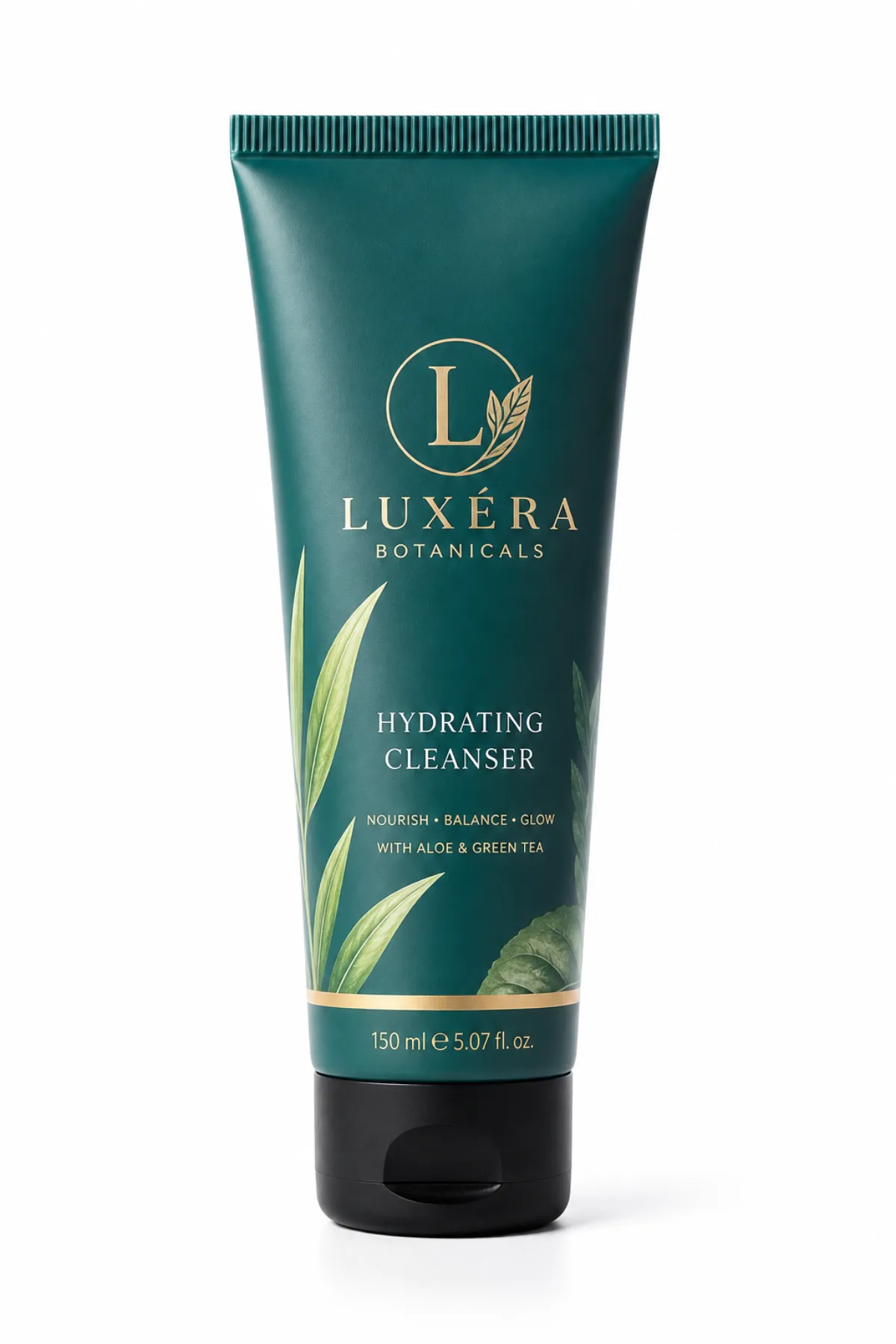
Tubes are strange little sales surfaces. They are often angled, gripped in a way that hides part of the face, or placed where only a strip of the front is visible. In that setting, custom tube labels with logo do something plain direct print cannot always do as flexibly: they put the most recognizable brand mark exactly where the eye lands first.
From a packaging buyer's point of view, the logo is the anchor. Product names shift by SKU. Claims shift by channel. Compliance copy shifts by market. The logo is the constant. That is why custom tube labels with logo show up so often in skincare, lip care, OTC-style personal care, hair treatment, oral care, and nutrient supplements. A tube with the right branded label can look premium even when the formula is basic. A tube with weak branding can look generic even if the product is excellent.
The business value goes beyond looks. Better logo placement can speed recognition, improve product hierarchy across a line, and cut confusion between SKUs that share similar color families. Retail packaging punishes weak hierarchy. E-commerce does too. A label that reads well on a phone screen usually sells better than one that depends on details nobody can see.
I have watched teams spend weeks polishing a product formula, then ship it in packaging that looked like an afterthought. The label was technically correct. The logo was technically present. But nothing about it made the product feel worth the price. That is the whole problem in a nutshell.
"The label looked fine on a flat proof, but once it wrapped the tube, the logo sat too close to the seam and the whole front lost impact."
That is exactly the kind of mistake custom tube labels with logo should help avoid. Some teams still treat the label as decoration. Bad idea. On a simple squeeze tube, the label is often the clearest signal of brand quality. There is not much else competing for attention.
The smarter move is to choose the label structure that gives the product the right mix of durability, print quality, and run efficiency. That is the point where custom tube labels with logo stop being a styling choice and start acting like a packaging system.
How custom tube labels with logo are made and applied
The production path starts before ink touches stock. A label supplier usually checks dimensions, tube type, use conditions, and artwork files, then builds or confirms a dieline that maps printable area, seam allowance, and the spot where the logo needs to live. For custom tube labels with logo, that setup stage is where a lot of pain gets removed early. Logo too close to the wrap edge? Barcode fighting the back panel? Fine text too close to the curve? Catch it now, not after the press has already done the expensive part.
Artwork prep and dieline setup
Artwork should come in vector form whenever possible, with fonts outlined and colors called out cleanly. Simple reason: custom tube labels with logo depend on consistent scale. A low-resolution screenshot is not artwork. It is a future headache. The supplier then has to rebuild it or risk soft edges and pixelation. On a curved tube, both look worse than they do on a flat mockup because the surface already makes readability harder.
Dielines matter more than first-time buyers expect. A tube label is not just width and height. It is a wrap decision, a seam decision, and a clearance decision. A few millimeters can change how the logo reads at arm's length. That is a tiny number with an annoyingly large effect.
Printing, die-cutting, and finishing
Once proofing is done, the label gets printed using digital, flexographic, or hybrid production depending on quantity and finish needs. The label is then die-cut into shape, waste is stripped, and the finished roll or sheet may get varnish, lamination, or a specialty effect. Custom tube labels with logo can be built with a flat matte face, a bright gloss face, or a tactile finish that changes how light hits the brand mark.
Not every effect deserves the money. A metallic patch behind the logo can help visibility, but too much reflectivity can create glare in shelf photos and make small text harder to read. Packaging design rewards discipline. Not everything that can be added should be added. Stunning revelation, I know.
How labels are applied
Short runs are often hand-applied. Not glamorous. Still useful. Hand application fits lower quantities, pilot launches, and products still being tested in market. It also gives teams a way to check placement on a few hundred units before scaling up custom tube labels with logo.
Higher-volume programs usually move to automated application. Machines can place labels with steadier wrap alignment, tighter repeatability, and lower labor cost per unit. The catch is simple. The tube has to feed cleanly and the label stock has to behave at speed. A label that looks fine by hand can fail on a line if the adhesive grabs too soon, if the backing releases unevenly, or if the tube flexes too much.
Tube material changes the equation too. Plastic squeeze tubes, laminate tubes, and coated surfaces can all create adhesion problems, especially on low-surface-energy plastics. That is why proofing should not stop at a PDF. Good suppliers test custom tube labels with logo on the actual tube body, not on a flat sheet that tells half the story.
That testing step is not extra credit. It is standard practice. Packaging teams often borrow from print verification and transport testing, and groups such as packaging.org and ista.org have long treated pack performance as a system, not a single visual asset. Labels live inside that system. Surface energy, squeeze recovery, rub resistance, and shelf presentation all matter.
In practice, the best custom tube labels with logo are the ones that survive both the proofing table and the real tube. If the logo stays centered after application, if the seam does not cut through the brand mark, and if the edges stay down after handling, the label is doing its job.
Key factors that affect adhesion, readability, and finish
Materials, adhesives, and finishing choices are where custom tube labels with logo either become durable brand assets or turn into a steady stream of complaints. The right call depends on moisture, temperature, handling, fill method, and how much of the tube stays visible once the product is on shelf.
Material selection is not one-size-fits-all
Paper labels can work on dry, low-abuse products, but they are rarely the first pick for tubes that may get handled in wet bathrooms or squeezed in transit. Film-based options such as BOPP usually perform better because they resist moisture and flex more comfortably around a curved container. Vinyl and specialty films can add abrasion resistance or a stronger premium feel, though they usually cost more and are not necessary for every line.
For buyers trying to balance sustainability and appearance, the decision gets more layered. FSC-certified paper stocks can support sourcing goals, but only if the product environment lets paper hold up. A recycled or certified stock helps only when it still survives the product's actual shelf life. Sustainable branding loses its shine fast if the label curls, stains, or starts peeling in a damp room.
Material choice also affects the rest of branded packaging. A tube label may need to match custom printed boxes, cartons, shipper inserts, or promotional sleeves, so the surface and finish should fit the wider package branding system instead of being chosen in isolation. Otherwise the tube looks dressed for one event and the rest of the package looks like it missed the memo.
Adhesive has to match the tube, not the mockup
A label can print beautifully and still fail because the adhesive is wrong. Low-surface-energy plastics often need a different adhesive profile than coated paperboard or rigid bottles. Temperature matters too. A label that stays put in a warm warehouse may still lift if the product is chilled, carried through a wet environment, or stored in a bathroom cabinet where humidity swings every day.
For technical buyers, peel and bond values are not abstract. ASTM D3330 peel testing gives a useful way to judge whether an adhesive is holding as expected. That does not mean every tube project needs a lab report. It does mean the supplier should be able to explain why one adhesive beats another for a specific substrate and storage condition.
If a vendor cannot talk clearly about adhesive behavior, I get nervous. And honestly, I should. Adhesion failures are boring right up until they become expensive.
Readability depends on contrast and scale
Beautiful typography can still fail on a tube if the stroke weight is too thin. People scan product packaging in a fraction of a second, and curved surfaces shrink the usable reading zone. Strong contrast between logo and background matters. So does giving the logo room away from claims, ingredient text, and seam edges. In custom tube labels with logo, negative space is not wasted area. It is part of the legibility system.
Here is the hard truth: if the tube is usually seen at arm's length, the logo must work at arm's length. Tiny details, delicate scripts, and low-contrast gray-on-beige treatments may look refined in packaging design software, then vanish once the label bends around the pack. That is especially true for retail packaging under bright store lighting or in compressed online thumbnails. Pretty is nice. Readable is what sells.
Finish choices can help or hurt
Gloss finishes tend to sharpen color saturation, while matte finishes soften glare and can make premium skincare feel calmer and more controlled. Soft-touch coatings create a velvety feel that buyers often associate with high-end product packaging, but they can also mute contrast and make small type harder to read. Metallic effects can lift the logo off the background, though they also raise cost and can make proofing more complicated.
There is no universal best finish for custom tube labels with logo. A bright sunscreen tube may do well in gloss, while a clinical lip treatment may read better in matte with one controlled metallic accent. The mistake is piling every premium effect onto the same label. That usually creates visual noise, not value.
| Label option | Typical use | Approximate cost impact | Main trade-off |
|---|---|---|---|
| Paper stock | Dry products, short runs, low handling | Lowest base cost; often about $0.08-$0.16 per label at mid volumes | Weaker moisture resistance and lower scuff tolerance |
| BOPP film | Cosmetics, body care, supplements, bathroom use | Usually about $0.10-$0.22 per label depending on size and coverage | Needs the right adhesive and can cost more than paper |
| Vinyl or specialty film | High-abuse or premium lines | Often about $0.15-$0.30 per label before added effects | Higher price and sometimes longer lead times |
| Soft-touch or foil finish | Luxury presentation and strong shelf cues | Commonly adds $0.03-$0.12 per label above the base substrate | Can reduce micro-text clarity if overused |
That table is only a starting point, but it shows the pattern most buyers run into. Custom tube labels with logo are rarely priced by the label alone. They are priced by how much risk the supplier has to remove from the job.
Custom tube labels with logo: cost, pricing, and minimums
Pricing for custom tube labels with logo is driven by more variables than many purchase teams expect. Material choice matters. Finish matters. Quantity matters. Artwork complexity matters. Whether the order includes design help, proofing, or a special die shape can move the quote as much as the print run itself.
What changes the price
At a basic level, the supplier is pricing three things: setup, material, and production efficiency. Setup covers file review, die configuration, and proofing. Material covers the stock, adhesive, liner, and any coating or lamination. Production efficiency covers how many labels can run before the machine has to stop, recalibrate, or clear waste.
For smaller orders, setup can dominate the cost. A $250 setup and proofing charge spread across 500 labels adds $0.50 per unit before printing even starts. Spread that same charge across 5,000 labels and it drops to $0.05 per unit. That is why custom tube labels with logo often look expensive in low quantities and surprisingly economical once the run gets larger.
Minimum order quantities matter because labels are usually cut from rolls or sheets with some waste allowance. Custom shapes, tight-tolerance wrap placements, and specialty finishes can increase scrap. A buyer who only looks at the price per label may miss the cost of overrun, proof rounds, or remakes if the first proof does not fit the tube correctly.
How to compare quotes without getting fooled by unit price
The smarter comparison is not unit cost alone. It is delivered value. Two suppliers can quote similar numbers for custom tube labels with logo and still deliver very different outcomes if one includes a press proof, tighter color control, and more accurate finishing while the other charges separately for each step.
Look at the quote through five questions:
- What substrate and adhesive are included?
- Does the price include proofing or sample labels?
- How many color passes or specialty effects are in the quote?
- What is the minimum order quantity and what happens if the run goes short?
- Are shipping, waste allowance, and reprint policies spelled out?
That list is especially useful for teams comparing custom tube labels with logo to other packaging buys such as Custom Labels & Tags or broader Custom Packaging Products. The cheapest line item on paper is not always the cheapest line item in the budget. Paper can lie with a straight face.
Typical cost bands buyers actually see
For a straightforward first run, many projects land in a range that looks like this: small quantities can fall around $0.18-$0.45 per label, mid-volume orders may land around $0.09-$0.22, and larger runs can drop lower when setup is spread across more units. Add specialty finishes, foil, or unusually thick film and the price rises. Add custom die shapes and the price rises again.
That is not a rigid formula. It depends on tube size, artwork coverage, and whether the label must tolerate abrasion, refrigeration, or moisture. Still, those ranges give buyers a practical way to sanity-check quotes and avoid comparing a low-spec label with a premium one as if they were identical.
Custom tube labels with logo should be judged like packaging systems, not stickers. If the job needs better adhesion, better readability, and fewer application failures, paying a little more per unit can be cheaper than paying for rework after launch. Rework always looks cheaper on paper. Then reality shows up.
Step-by-step process and timeline from brief to ship
A smooth order for custom tube labels with logo usually follows a predictable path. Each step depends on the one before it. If the measurement is wrong, the dieline is wrong. If the artwork is unclear, the proof is wrong. If the proof is wrong, production slows down. That chain is why planning matters so much.
- Brief and specs gathering: The buyer shares tube dimensions, material, fill conditions, target quantity, and whether labels are applied by hand or machine.
- Artwork intake: The supplier reviews logo files, copy, claims, regulatory text, and any color references.
- Dieline and proof: A layout is built, then checked for seam placement, wrap area, and legibility at actual size.
- Revisions: If the logo scale, margins, or copy need correction, the proof is updated before production.
- Printing and finishing: The job runs through print, cutting, coating, and inspection.
- Shipping: Labels are packed, labeled, and sent with enough time for receiving and application.
For a simple reorder, the calendar may move quickly once specs are already approved. A first-time custom tube labels with logo project usually takes longer because the supplier is doing the setup work that protects the rest of the run. A realistic planning window is often 7-10 business days for a very simple reorder, 10-15 business days for a new project with proofing, and longer if a sample round or unusual finish is involved.
Delays usually come from the same few places. Missing dimensions. A logo file sent in the wrong format. Last-minute copy changes. A launch date with no cushion for proof revisions. Sometimes the product itself causes the delay because the tube material is not what the buyer thought it was. That is another reason to verify the actual substrate before approving custom tube labels with logo.
Distribution testing can help too. A label may survive application but still show edge lift after shipping, stacking, or temperature swings. The guidance available through ista.org is useful here because it pushes teams to think beyond printing and into the handling environment. If the pack is headed for a hot warehouse, a refrigerated chain, or a long haul, the label should be tested for that path.
A practical launch checklist
Before placing the order, gather these details:
- Tube diameter, length, and printable panel size
- Tube material and surface finish
- Label application method: hand, semi-auto, or automatic
- Quantity, reprint buffer, and target ship date
- Storage and distribution conditions
- Brand color references and approved logo files
With those items in place, custom tube labels with logo move from guesswork to a repeatable production task. That is the difference between a calm launch and a launch that breeds emergency emails by the dozen.
Common mistakes that hurt tube label results
The most common mistake is also the easiest to understand: designing for a flat box instead of a curved tube. On a carton, a logo can sit comfortably across a wide panel. On a tube, that same logo may stretch visually, lose breathing room, or get chopped by a seam. Custom tube labels with logo need to be designed with curvature in mind from the start.
Overcrowded artwork
Many teams try to cram brand story, ingredients, claims, warnings, directions, and every legal requirement into a label that was never built to carry that much text. The result is tiny type and weak hierarchy. If the label has to serve both packaging design and regulatory content, there still needs to be a visual order: logo first, product name second, key claim third, support text after that. A smart label leaves enough white space for the eye to rest.
This matters even more for custom tube labels with logo because the tube itself is already a compromise surface. Too much information makes the pack feel busy, and busy packaging is harder to sell in retail packaging and online. Nobody needs a label that shouts five things at once and says none of them clearly.
Low contrast and weak typography
Thin fonts can disappear. Pale text on metallic backgrounds can vanish. Dark logos on dark panels can look elegant in theory and unreadable in practice. In custom tube labels with logo, contrast is usually more valuable than decorative detail. Buyers often learn this the hard way after a proof looks fine on screen and then falls apart on the actual tube.
One simple rule helps: if a person can only glance at the product for a second, the logo and product name should still read cleanly. Anything that fails that test probably needs to be simplified.
Skipping adhesion testing
Labels that pass a visual check can still fail in the field. Maybe the tube flexes too much. Maybe the adhesive never reaches full bond. Maybe the product is chilled after filling and the label wrinkles. Maybe the container is wiped down during packing and the edge starts lifting. These are not rare events. They happen often enough that custom tube labels with logo should always be tested on the real substrate.
ASTM D3330-style thinking is useful again here. You do not need a formal lab every time, but you do need a repeatable way to judge whether the adhesive and surface combination is stable enough for production.
Ignoring fill and storage conditions
A tube may be filled warm, cooled quickly, shipped through different temperatures, and then stored in a humid bathroom or a dry warehouse. That path is rougher than a static mockup suggests. Labels on cosmetic tubes face a different reality than labels on a shelf sample. The smartest custom tube labels with logo are built for the environment they will actually see, not the one they see in a deck.
Here is the part that tends to surprise buyers: a slightly less dramatic finish often performs better than a flashy one. If the label has to survive rubbing, flexing, and moisture, the durable choice usually wins even if it feels less exciting in the proof stage. Glamour does not peel well.
Next steps for custom tube labels with logo
If you are planning custom tube labels with logo, start by collecting the facts that remove the most risk. Tube size. Surface material. Quantity. Application method. Storage environment. Target ship date. Those six items alone will make a supplier quote more accurate and will help you judge whether the label should be paper, film, or a more specialized option.
Then build a testing plan. Ask for a proof. Check the logo at arm's length. Hold the proof next to the actual tube. Confirm seam placement. If possible, apply a small sample to the real substrate and let it sit long enough to see whether the adhesive holds through handling. That tiny test can save a lot of rework later.
It also helps to create a one-page label brief before requesting quotes. Keep it practical: brand rules, required text, finish preferences, cost ceiling, and the exact role you want the label to play in the wider packaging mix. If the product also needs cartons, display packs, or other branded packaging elements, align the label with the rest of the system so the shelf story feels intentional rather than assembled at random.
A good label brief does one more thing. It forces a decision about what matters most. Is the goal lower unit cost? Better moisture resistance? A more premium look? Faster turnaround? Custom tube labels with logo can support all four, but usually not at the same time without trade-offs. Naming the priority early makes the rest of the decision cleaner. Less guesswork. Fewer surprises. Everybody wins, weirdly enough.
For buyers who want a broader packaging rollout, tube labels can sit comfortably beside Custom Labels & Tags for auxiliary components and other Custom Packaging Products for launch sets. That way the tube is not treated as a one-off item. It becomes part of a coordinated package branding plan.
Practical takeaway: lock the dieline, test the label on the real tube, and choose the material and finish based on how the product will actually be used. If you do those three things before approving custom tube labels with logo, you will avoid most of the expensive mistakes and end up with packaging that looks intentional instead of hopeful.
FAQ
What should I prepare before ordering custom tube labels with logo?
Gather exact tube dimensions, surface material, order quantity, and whether the labels will be hand-applied or machine-applied. Prepare logo files in vector format if possible, plus any copy for ingredients, claims, directions, or warnings that must fit on the label. Share your target launch date early so the supplier can plan proofing and production around it.
Which materials work best for custom tube labels with logo on curved plastic tubes?
BOPP and other film-based labels usually perform better than standard paper when moisture, handling, or flexing are concerns. Choose an adhesive that matches the tube surface and storage environment, especially if the product may be chilled or exposed to humidity. Ask for a sample or proof on the real tube material before approving the full run.
How much do custom tube labels with logo usually cost?
Cost depends on size, quantity, finish, material, and whether the order includes artwork support or special effects. Smaller runs often carry higher setup costs per label, while larger runs reduce the unit price significantly. Comparing quotes by total delivered value is more useful than looking at unit price alone.
How long does it take to produce custom tube labels with logo?
Simple reorders can move quickly once artwork and specs are already approved. New projects usually take longer because proofing, revisions, and sampling may be needed before printing starts. Complex finishes or custom die shapes can add extra time, so build buffer into the schedule.
How do I keep the logo readable on custom tube labels with logo?
Use strong contrast between the logo and background, and avoid overly thin fonts that disappear on a curved surface. Keep the logo away from critical wrap edges and test the design at actual size, not just on a flat screen. Check how the label looks when the tube is squeezed, rotated, and partially obscured on shelf.

