Buyer Fit Snapshot
| Best fit | Custom Tube Mailers Bulk projects where brand print, material claims, artwork control, MOQ, and repeat-order consistency need to be specified before quoting. |
|---|---|
| Quote inputs | Share finished size, material target, print colors, finish, packing count, annual reorder estimate, ship-to region, and any compliance wording. |
| Proofing check | Approve dieline scale, logo placement, barcode or warning zones, color tolerance, closure strength, and carton packing before bulk production. |
| Main risk | Vague material claims, crowded artwork, missing packing details, or unclear freight terms can make a low unit price expensive after revisions. |
Fast answer: Custom Tube Mailers Bulk: Specs, Pricing, and Lead Times should be specified like a repeatable production item. The safest quote records material, print method, finish, artwork proof, packing count, and reorder notes in one written spec.
Production checks before approval
Compare the actual filled-product size with the drawing, then confirm tolerance on folds, seals, hang holes, label areas, and retail display edges. Reserve space for logos, QR codes, warning copy, and material claims before decorative graphics fill the panel.
Quote comparison points
Review material grade, print process, finish, sampling route, tooling charges, carton quantity, and freight assumptions side by side. A quote is only useful when the supplier can repeat the same color, closure quality, and packing count on the next order.
Custom Tube Mailers Bulk: Specs, Pricing, and Lead Times
Long, rigid products are where shipping budgets quietly get shredded. One poor fit, one crushed edge, one carton that is just a little too big, and the cost shows up in freight, labor, and customer complaints all at once. Custom Tube Mailers bulk solves that problem with a repeatable format built for long items, clear branding, and fewer packing surprises. That is the real appeal. Not hype. Not decoration. A shape that matches the product and holds up in transit.
From a packaging buyer’s point of view, custom tube mailers bulk is less about looking polished and more about getting control back. Random box sizes create waste, slow down the pack line, and inflate dimensional weight charges faster than most teams expect. A standard tube format cuts down void fill, trims excess material, and gives the warehouse one process instead of a dozen improvised ones. That alone can change the day-to-day mood on a shipping floor.
If you are comparing formats, think like an operations manager, not a mood board. Narrow retail packaging, print-heavy product packaging, and long promotional kits all benefit from a tube style that protects the item without burying it in extra cardboard. For lighter programs, see our Custom Poly Mailers. For broader packaging design needs, our Custom Packaging Products page gives a wider view. If your team buys the same format again and again, the Wholesale Programs page is worth a look, because bulk planning should save money instead of turning procurement into a weekly puzzle.
Why Custom Tube Mailers Bulk Beat Piecemeal Shipping
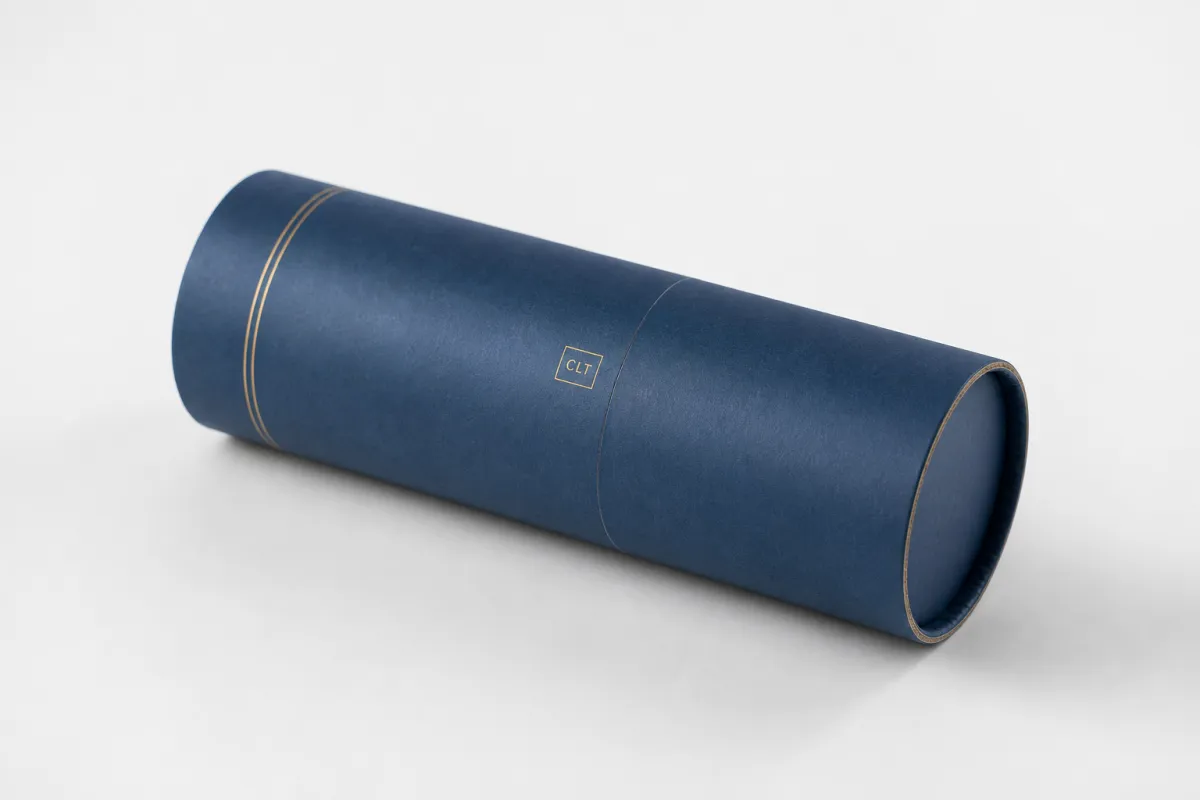
Shipping long, rigid items in mixed carton sizes creates three problems at once: wasted air, weak protection, and slower packing. custom tube mailers bulk fixes those problems by standardizing the outer shell around the actual product dimensions instead of whatever box happened to be sitting nearest the line.
That sounds obvious because it is. The harder part is getting teams to stop improvising. Random carton sizes are not a strategy. They are a tax. Every extra inch adds material cost, every loose interior adds labor, and every crushed corner becomes a service issue later. In a bulk setup, each unit behaves the same way, which means the pack line moves faster and the risk is easier to predict. I once watched a team lose almost an hour a shift because they were hunting for three different “close enough” box sizes. The product was fine. The process was not.
The savings show up in fewer damages, a cleaner presentation, and tighter margin control. custom tube mailers bulk can eliminate much of the filler that makes shipping feel like a cardboard experiment. Less tape. Fewer inserts. Fewer crumpled paper scraps shoved into gaps to make the math work. That kind of cleanup sounds small until you multiply it across thousands of units.
Brands that care about consistency get a second benefit. Tube formats create a steadier visual result than improvised cartons, especially when the packaging lands directly in a customer’s hands. Printed surfaces read cleanly. Logos sit where they should. The package feels deliberate instead of patched together. That matters for poster mailers, subscription kits, product packaging, and any shipment where the box itself is part of the brand story.
"A good tube mailer is boring in the best way: it fits, it ships, and nobody complains about damage."
That is the goal. If the packaging is doing its job, it should not create drama for the pick team, the freight manager, or the person opening the carton at home. custom tube mailers bulk gives buyers one reliable format they can order, stock, and trust without rebuilding the process every cycle.
There is a cash-flow angle too. Piecemeal shipping usually looks cheap on a quote sheet until labor, waste, and damage claims get folded in. Bulk buying spreads setup costs across more units, so the math starts to work once order volume is steady. If demand repeats, locking the format early usually beats re-solving the same packaging problem every month. That is not a sexy answer, but it is the one that usually holds up.
Custom Tube Mailers Bulk Product Details That Matter
The structure is simple on paper: a tube-style mailer that protects long items without forcing them into a square carton. In practice, custom tube mailers bulk can be rigid or semi-rigid depending on the product weight, the shipping route, and how much crush resistance the order needs. The outer face also carries the branding, so the print area has to work without weakening the shell.
The usual use cases are easy to spot. Posters. Art prints. Blueprints. Apparel rolls. Promotional kits. Samples. Narrow retail items. Long stationery sets. custom tube mailers bulk tends to be the right call when the product is slim, valuable enough to protect, and awkward enough to punish a standard carton. If the item bends, scratches, or shifts during transit, a tube often performs better than a box packed with filler.
Print and structure need to be judged together. A flashy exterior with weak walls is a poor trade. A strong shell with muddy print is not much better. Good packaging design keeps both sides in balance. That is why buyers should treat custom tube mailers bulk as product packaging, not as a generic shipping sleeve. The distinction matters more than people think, especially once a brand starts shipping into retail or premium direct-to-consumer channels.
Useful customization options usually include size, diameter, length, board thickness, finish, print coverage, and closure style. Some orders need inserts or dividers if the product includes multiple components. Some need a cleaner retail presentation. Some need a shipping-first build that can take a beating and still show up clean. The right spec depends on the item, not on what looks attractive in a sample book.
Before ordering, check how the product sits inside the tube, how the closure locks, and whether labels can be applied without trouble. A design can look sharp in a mockup and still fail once the warehouse starts handling it, the conveyor starts moving, and the cartons hit a few rough corners in transit. That is where custom tube mailers bulk earns its keep. The sample should tell you whether the idea is real or just pretty.
For buyers comparing branded packaging options, it helps to judge the order in layers:
- Protection - Will the structure prevent bending, denting, or edge crush?
- Presentation - Does the finish support the brand without looking overdone?
- Speed - Can the warehouse pack it without wasting time?
- Cost - Does the format still make sense at scale?
That is the real test. If a tube mailer solves one problem and creates two more, it is the wrong format. custom tube mailers bulk should make the product easier to ship, easier to store, and easier to identify at a glance. Anything less is just packaging noise.
Specifications for Custom Tube Mailers Bulk Orders
The specs that matter most are the ones that affect fit, strength, and freight. Start with inner dimensions. Then check wall strength. Then check the closure. custom tube mailers bulk sounds straightforward until a product is slightly too wide, slightly too heavy, or slightly too fragile for the structure you chose.
Measure the product at its widest point, then add room for any sleeve, tissue, insert, protective wrap, or retail packaging component. Snug is good. Stressed is not. If the item has to flex even a little to enter the tube, the fit is too tight. That mistake gets expensive quickly because once production starts, the full run inherits the problem. Nobody wants to discover that after the order is on the line.
There is always a tradeoff between protection and postage. Heavier board, thicker walls, and stronger edges improve durability, but they also increase weight and can raise dimensional charges. That is why custom tube mailers bulk should be spec'd around the shipping lane, not only the product photo. A tube that feels indestructible on paper can still be the wrong choice if the freight math turns ugly. Packaging is physical, but the budget is physical too.
Size, Board, and Closure
For standard long-format items, buyers usually compare a few practical ranges rather than chasing one perfect number. Board thickness might sit in the 1.5 mm to 3 mm range for lighter promotional orders, then move up for heavier or more valuable products. Length depends on the item, but a bit of extra room for safe insertion is usually better than a tight fit that scrapes corners during packing. In custom tube mailers bulk, a secure closure matters as much as the shell itself because a weak end cap turns a good design into an expensive complaint.
Closure style also changes workflow. A friction fit is fast. A tuck or cap-style closure can feel more secure. An adhesive closure may work better for certain retail or direct-to-consumer packs. The right option depends on how the warehouse packs the item and how the customer opens it. If the opening experience matters, decide that before the quote is approved, not after the first shipment goes out. It is a lot easier to tweak the spec than to explain a busted opening system later.
Finish, Print Zone, and Handling
Surface finish changes both appearance and wear. Matte finishes hide scuffs better. Gloss makes colors hit harder, though it also shows fingerprints and handling marks more easily. Coated or laminated surfaces can improve presentation if the pack sits on a shelf, moves through retail packaging channels, or gets touched repeatedly. If the order is shipping-first, a simpler finish often makes more sense. Fancy is fine. Misapplied fancy is a headache.
Print zones need to be confirmed early. Ask for a dieline. Check the exact area available for logos, copy, barcode placement, and compliance marks. A print file that looks fine on screen can fail in production if key elements land too close to a seam or closure point. That kind of error turns into a rework charge fast. Nobody enjoys that invoice, and nobody enjoys explaining why the barcode is half on the wrap and half in the bend.
If the product will face rougher distribution, ask whether the spec should be checked against test methods like those published by ISTA. For paper sourcing, buyers who care about chain of custody often ask whether the board can align with FSC expectations. Not every order needs that level of review, but the conversation should happen early if the customer base expects it. It is easier to build the requirement in than to retrofit it after approval.
A clean spec sheet for custom tube mailers bulk should include:
- Exact product dimensions and any accessories
- Finished tube dimensions and wall thickness
- Closure type and opening direction
- Print coverage, color count, and finish
- Carrier requirements or test targets
- Any storage or moisture concerns
That list is not busywork. It keeps the project from drifting. Strong specs reduce revision cycles, and fewer revision cycles usually mean fewer delays. In packaging, clarity saves money. Vague requests create rework, and rework is where small margins go to disappear.
Cost, Pricing, and MOQ for Custom Tube Mailers Bulk
Pricing for custom tube mailers bulk usually follows the same pattern as most custom packaging: the unit cost drops as quantity rises, but setup, print coverage, size, finish, and construction all move the final number. Buyers sometimes focus on the lowest quote and ignore the rest of the math. That is how teams end up with a cheap unit price and a more expensive total project.
The main cost drivers are easy to track. Larger formats use more material. More print coverage uses more ink and setup time. Special coatings or premium finishes add cost. Reinforced construction raises the price but may save money on damage claims. Freight matters too, because a bulky tube can cost more to move than a flat pack with the same print value. Bulk packaging only pays off if the total landed cost makes sense. If it does not, the “savings” are mostly cosmetic.
MOQ matters, but not like a magic threshold. Smaller runs help with testing, especially if the product is new or the artwork may still change. Larger runs usually unlock better unit economics, which is why custom tube mailers bulk becomes attractive once demand is steady and the dimensions are stable. If the product still changes every other month, ordering too deep is just inventory risk wearing a nice suit.
| Order Level | Typical Unit Cost Range | Setup Sensitivity | Best Fit |
|---|---|---|---|
| 1,000 pieces | $0.95-$1.65 each | High; setup and print prep are a bigger share of the total | Testing, short campaigns, pilot launches |
| 5,000 pieces | $0.42-$0.88 each | Moderate; the run starts to absorb fixed costs better | Repeat orders, moderate volume retail packaging |
| 10,000 pieces | $0.28-$0.62 each | Lower; pricing usually improves once the line is fully loaded | Stable programs, steady fulfillment, wholesale distribution |
Those ranges are not fantasy numbers. They are the kind of figures buyers actually compare once size, print, and finish are known. A simple tube with light branding will sit near the lower end. A premium tube with heavier board, full coverage, or specialty finish will land higher. The exact quote for custom tube mailers bulk depends on the spec sheet, which is exactly why comparing several quantity breaks matters.
Setup costs can also change the picture. Short-run projects may carry a plate, tooling, or print-prep charge that lands in the $80-$450 range depending on the process and complexity. On a larger run, that cost gets diluted. On a small run, it can dominate the quote. Smart buyers ask for pricing at multiple quantities so they can see where the real break point lives instead of guessing.
There is also a margin check that too many teams skip. If custom tube mailers bulk cuts damage claims by even a small percentage, or saves thirty seconds per pack on the line, the actual cost is often lower than the headline unit price suggests. That is not hype. That is basic operations math. It is also why the cheapest packaging quote is often the most expensive decision in disguise.
For buyers comparing product packaging options, the right question is not "What is the cheapest unit?" It is "What is the cheapest landed solution that still protects the item and supports the brand?" Those are different questions. One leads to a tidy spreadsheet. The other leads to lower complaint volume and fewer remakes.
Process, Timeline, and Lead Time for Custom Tube Mailers Bulk
The path from brief to delivery is usually simple if the information comes in clean. It starts with size confirmation, artwork setup, proofing, sample approval, production, packing, and freight booking. custom tube mailers bulk moves best when the customer sends product dimensions, target quantity, and branding files up front instead of trying to reconstruct the job from a vague email thread.
Simple orders move faster. Complex print, custom sizes, or special finishes slow things down. That is normal. Lead time is not one number; it is a chain of small decisions. If the art file needs correction, the proof waits. If the sample needs adjustment, production waits. If the ship date is tied to a launch, waiting gets expensive fast. So yes, custom tube mailers bulk can be quick, but only when the approval path is tight and the decision chain is short.
Typical lead times often land around 12-18 business days after proof approval for standard production runs, with samples or prototypes taking about 3-7 business days depending on complexity. Freight adds more time. Cross-country shipping adds more. Special handling adds more. The real bottleneck is often not the production line at all. It is the delayed approval sitting in somebody’s inbox while everyone else assumes the order is moving.
Delays usually come from the same few problems: unclear artwork, missing dimensions, late proof approval, and change requests after the job has already entered production. None of that is mysterious. It is just avoidable. If the packaging buyer wants a predictable schedule for custom tube mailers bulk, the best move is to lock the spec before the first proof goes out.
What To Send First
- Exact product dimensions, including any sleeve or insert
- Quantity target and a backup quantity tier
- Artwork files and logo guidelines
- Target ship date and launch date, if there is one
- Closure preference and finish preference
- Any compliance, carrier, or retail packaging requirements
That list speeds the whole job up. It also cuts the odds of rework. A clean brief is cheaper than a long revision cycle. Every time.
For teams that care about branded packaging, this is where package branding decisions need to be practical. Big visual ideas are fine, but they have to survive the physical format. A tube is long and narrow. That changes how logos read, how copy wraps, and where information should sit. A design that ignores the shape will look awkward even if the artwork itself is strong.
One more thing: ask for a physical sample or dieline before approval if the product is fragile, unusually long, or headed to a premium market. custom tube mailers bulk should feel controlled in the hand. If it flexes too much, the print seams feel off, or the closure is awkward, the sample will reveal it before the full run is locked in. That is a cheap place to find a problem.
Why Choose Us for Custom Tube Mailers Bulk
Buyers do not need more packaging noise. They need reliable specs, consistent print quality, straightforward quoting, and packaging that shows up ready to use. That is the basic promise behind custom tube mailers bulk done well. Not inflated talk. Not vague assurances. A clean process and a finished product that matches the brief.
Operational confidence matters most. Clear proofs reduce back-and-forth. Tight tolerances keep the warehouse from fighting the package. Honest lead times let procurement plan instead of guessing. In bulk packaging, small mistakes become expensive very quickly, so support has to be practical. A good supplier should help buyers avoid overspecifying, underordering, or paying for features they do not need.
That is where the service side counts. Responsive communication keeps the order moving. Realistic MOQs keep the buyer from getting stuck with a quantity that does not match demand. Solid spec guidance keeps the project aligned with the product instead of forcing the product to adapt to the packaging. That matters even more for custom tube mailers bulk because fit problems in a tube are obvious the moment the line starts packing.
If your team needs more than one format, it makes sense to look at the rest of the lineup. Some programs move better in Custom Packaging Products. Some lighter shipments are better served by Custom Poly Mailers. And if you are buying continuously, Wholesale Programs can make repeat ordering less painful. Packaging strategy should fit the business model, not the other way around.
Quality control matters too. Good custom tube mailers bulk work should be repeatable. The customer should see the same print color, the same closure feel, and the same structure from run to run. That repeatability matters in retail packaging because customers notice inconsistency even when they cannot explain it. They just know the brand looks off. Once that impression settles in, it is hard to undo.
From a packaging buyer’s point of view, the best supplier is the one that makes the order boring. Boring means predictable. Predictable means easier to plan freight, easier to store, and easier to use. That is what bulk packaging is supposed to do. If the order feels calm from quote to dock receipt, the process is probably doing its job.
Next Steps for Ordering Custom Tube Mailers Bulk
Start with the essentials: product size, target quantity, print goals, closure preference, and whether the order needs shelf appeal or shipping-only durability. Those five points usually tell the whole story for custom tube mailers bulk. Everything else just refines the quote.
Then ask for two or three pricing scenarios. One should match the exact quantity you expect to buy. Another should show the next pricing tier. That gives procurement a clear view of the tradeoff between unit cost and inventory risk. If the next tier saves only a few cents per piece but forces the team to hold months of extra stock, that is not savings. That is warehouse clutter with a clean spreadsheet attached.
Review a physical sample or at least a dieline before production approval, especially if the product is fragile, unusually long, or sold in a premium market. custom tube mailers bulk should protect the item without turning the pack process into a wrestling match. If the sample feels off in the hand, trust that instinct. It usually gets worse once the full run starts.
Move quickly once the spec is right. Approve artwork fast. Confirm ship-to details. Lock the timeline before production starts so the order does not sit in limbo. That is how teams keep a launch on schedule instead of explaining why the packaging missed the shelf date by two weeks. Nobody likes that conversation, and it is usually avoidable.
If you need custom tube mailers bulk that balance protection, branding, and cost, send the actual product specs and get a quote built around the item itself, not a guess. The right tube is the one that fits the product, protects the shipment, and keeps the numbers sane. The practical takeaway: measure first, choose the closure second, and price the full landed cost before you commit to volume. That sequence saves more money than any slogan ever will.
FAQ
What quantity qualifies as custom tube mailers bulk pricing?
Bulk pricing usually starts once the order volume is high enough to spread setup and production costs across more units. The break point changes with size, print coverage, and material grade, so it is smarter to compare quotes at several quantities instead of guessing. If demand is steady, custom tube mailers bulk often lowers unit cost enough to justify the larger run.
How do I choose the right size for custom tube mailers bulk orders?
Measure the product at its widest point, then add room for sleeves, tissue, inserts, or protective wrap. Keep the fit snug enough to stop shifting, but not so tight that the item bends or catches during packing. If the dimensions are unusual, ask for a dieline or sample before approving custom tube mailers bulk. A few millimeters can make the difference between smooth packing and a line full of swearing.
Are custom tube mailers bulk strong enough for shipping?
Yes, if the construction matches the product weight and the closure system is secure. For heavier or more fragile items, thicker walls, reinforced edges, or an added insert are usually the better call. Always test a fully packed unit before approving full production for custom tube mailers bulk.
How long does a custom tube mailers bulk order usually take?
Lead time depends on artwork approval, sample sign-off, material availability, and freight distance. Simple orders with fast proof approval move quicker than jobs with special finishes or custom dimensions. Build in buffer time if custom tube mailers bulk is tied to a launch date or seasonal shipment.
Can I add inserts or special finishes to custom tube mailers bulk packaging?
Yes, inserts, coatings, and other finishes are common if the product needs extra support or a more premium presentation. Each add-on changes pricing and timeline, so confirm it before proof approval. If the goal is lower cost, keep the finish simple and put the budget into the right size and construction first. That is usually the smarter move for custom tube mailers bulk.

