Buyer Fit Snapshot
| Best fit | custom tube mailers for posters packaging for packaging buyers comparing material specs, print proof, MOQ, unit cost, freight, and repeat-order risk where brand print, material, artwork control, and repeat-order consistency matter. |
|---|---|
| Quote inputs | Share finished size, material target, print colors, finish, packing count, annual reorder estimate, and delivery region. |
| Proofing check | Approve dieline scale, logo placement, barcode or warning zones, color tolerance, and any recyclable or compostable wording before bulk production. |
| Main risk | Vague material claims, crowded artwork, or missing packing details can create delays even when the unit price looks attractive. |
Fast answer: Custom Tube Mailers for Posters Packaging: Film, Closure, Print, and Fulfillment should be specified like a repeatable production item. The safest quote includes material, print method, finish, artwork proof, carton packing, and reorder notes in one written spec.
What to confirm before approving the packaging proof
Check the product dimensions against the actual filled item, not only the sales mockup. Ask for tolerance on folds, seals, hang holes, label areas, and retail display edges. If the package carries a logo, QR code, warning copy, or legal claim, reserve that space before decorative graphics fill the panel.
How to compare quotes without losing quality
Compare board or film grade, print process, finish, sampling route, tooling charges, carton quantity, and freight assumptions side by side. A lower quote is only useful if the supplier can repeat the same color, closure quality, and packing count on the next order.
Custom Tube Mailers for posters have one job, and they do not get to be cute about it: keep rolled prints from arriving bent, scuffed, crushed, or marked by the kind of corner damage that makes customers open a support ticket before they even unwrap the piece. Fit is the whole story here. A tube that is too loose lets the print travel. A tube that is too tight turns loading into a small wrestling match and can bruise the leading edge before the package leaves the dock.
Art prints, event posters, retail promos, gallery editions, and architectural drawings all need packaging that behaves like part of the shipping system, not an afterthought someone approved at 4:59 p.m. Wall thickness, diameter, closure style, and print finish all affect the result. Get the spec right and you cut down on damage, speed up packing, and end up with packaging that looks like it was planned by adults.
That matters even more on repeat orders. A clean spec reduces packing errors, lowers replacement shipments, and keeps reorders from turning into a scavenger hunt through old emails. If the same brand also ships custom printed boxes or other retail packaging formats from Custom Packaging Products, the tube should fit the rest of the program without creating a separate set of rules for the warehouse team to memorize.
Custom Tube Mailers for Posters: Why Fit Matters
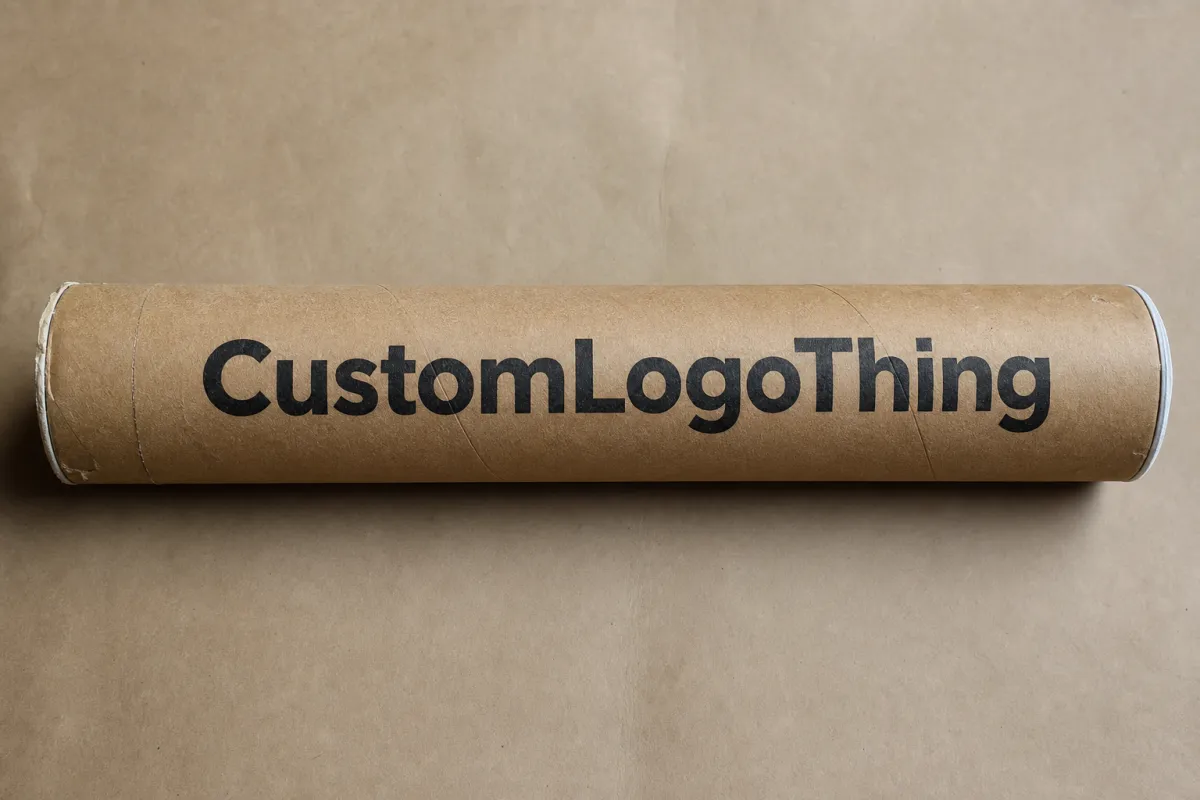
Poster damage usually starts at the edges and corners. The center can survive a lot. The edges are the weak point. That is why custom tube mailers for posters usually outperform generic tubes once the size matches the actual print. If a poster rattles around inside the tube, it can rub against the wall, catch a seam, or shift hard enough to crease the leading edge when a carrier drops the parcel or stacks something heavy on top of it.
The damage is often subtle. Not a dramatic crush. More like a soft bend, a faint crease near the roll, or a glossy surface that comes out looking tired before the customer has even seen it. Buyers sometimes miss that until the second or third shipment, when return costs and support time start showing up in the numbers. The product should drive the spec. Paper thickness, roll memory, tissue wrap, backing sheets, and insert cards all change how the poster behaves once it is inside the tube.
Custom sizing also improves presentation. A tube that holds the print snugly, without dead space, feels intentional when it is opened. Packing tends to go faster too, because the team is not stuffing filler into gaps or re-rolling each print like they are improvising in a warehouse with a stopwatch running. That matters for art prints, film posters, wall graphics, and architectural plans that need to arrive looking organized instead of rushed.
Consistency is the part people forget to budget for. When the tube is built around one stable spec, the pack line repeats the same motion every time. Labels land in the same place. Rework drops. If a team handles multiple formats, that repeatability is worth real money. Attractive packaging is nice. Packaging that performs the same way every single run is better.
A tube that saves a few cents but creates repacking, damage claims, or a bad unboxing usually costs more than the sturdier option.
That is the real role of custom tube mailers for posters. They protect the print, yes. They also keep the shipping process from wobbling, from pack speed to carrier handling to the customer’s first impression when the package opens.
How Custom Tube Mailers for Posters Work in Shipping
At a basic level, a rolled poster goes into a rigid or semi-rigid tube, then the ends are closed with caps, plugs, adhesive seals, or another locking method that keeps the contents from sliding out. The body can be plain kraft board, printed paperboard over board, or a laminated construction if the order needs more strength or a more polished appearance. If the tube is part of a branded packaging program, the outside can carry logos, product names, handling instructions, and color blocking that ties it to the rest of the line.
Wall construction matters more than many first-time buyers expect. A thin wall can work for a local promo poster, but heavier art paper or a longer shipping lane may call for a stiffer build with better crush resistance. Parcel hubs do not handle packages gently. Loads stack unevenly, corners take pressure, and a weak wall can ovalize enough to let the poster move. Once that happens, rubbing starts. The result is usually not dramatic. It is just annoying enough to ruin the piece.
Insert materials can help too. Tissue, glassine, or a light kraft wrap can keep coated prints from scuffing against themselves after unrolling and can reduce surface marks on dense ink coverage. A backing sheet adds enough body to help a poster roll evenly, especially when the order includes more than one sheet. Tiny details, yes. Also the sort of details that keep a customer from opening the tube and immediately spotting a defect.
Label placement should be planned around the shipping network, not guessed at during artwork review. Barcodes, delivery labels, and compliance marks need a clean panel that stays visible after printing. If the tube is heavily decorated, leave a dedicated logistics area so scanning does not get slowed down by dark graphics or a seam sitting in the wrong place. Automated readers move fast. They do not care that the artwork looked great in proof.
Shipping method changes the spec too. Local courier routes do not punish packaging the same way cross-country parcel networks do. Postal lanes with multiple handoffs behave differently again. If the package will see vibration, stacking, or repeated drops, ask the supplier how the tube construction handles those conditions. Many packaging teams use ISTA test methods or an internal drop-and-vibration check before approving a run, because real shipping has no interest in being gentle.
For buyers who source more than one format, it helps to compare the tube against the rest of the packaging lineup. One brand may need poster tubes for rolled items, flat Mailers for Thin sheets, and custom printed boxes for heavier kits or merch bundles. That mix keeps freight under control and gives each product the protection it actually needs.
Cost, Pricing, and MOQ: What Drives the Unit Cost
Pricing for custom tubes usually comes down to a few variables: diameter, length, wall thickness, print coverage, finish, closure style, and whether the order uses a standard format or a fully custom dimension. The more the structure strays from stock sizing, the more likely tooling, proofing, and material handling will shape the final unit cost. Printing on every surface adds setup time too, especially if the design uses multiple colors, white ink, or a specialty coating.
Quantity changes the math quickly. Small runs carry a heavier share of setup costs. Larger runs spread those fixed costs across more pieces and usually bring the unit price down. That is where MOQ comes in. A manufacturer may need a minimum order to justify make-ready time for printing, cutting, scoring, and finishing. The minimum can shift based on board grade, decoration complexity, and how much handling the tube needs before it leaves the plant.
Hidden costs are where many buying decisions go sideways. Oversized dimensions can trigger freight surcharges. A flimsy tube can create damage claims, replacement shipments, and extra labor on the pack line. A closure that is annoying to install can slow fulfillment until the low quote starts looking expensive in the worst possible way. The cheapest piece price is not always the cheapest landed cost. Funny how that works.
Experienced buyers compare the whole number, not just the quote sheet. If one tube costs a little more but ships better, keeps its shape, and cuts the return rate even slightly, it may still be the better buy. Packaging does not win by looking good on a spreadsheet. It wins by protecting margin across the order cycle.
| Tube Option | Best For | Typical MOQ | Estimated Unit Cost | Notes |
|---|---|---|---|---|
| Standard kraft tube with printed label panel | Promotional posters and short local runs | 1,000-3,000 units | $0.38-$0.72 | Lower setup cost, limited branding, good for simple fulfillment |
| Custom printed tube with one- or two-color graphics | Art prints, event posters, retail promotions | 3,000-5,000 units | $0.55-$1.05 | Better presentation, more print setup, usually a good middle ground |
| Heavy-wall custom tube with full coverage print | Longer shipping lanes and higher-value posters | 5,000-10,000 units | $0.85-$1.65 | More crush resistance, more material, better for premium product packaging |
| Laminated retail-ready tube with branded closure details | Display-focused or giftable poster programs | 5,000+ units | $1.10-$2.25 | Strong visual impact, added finishing steps, closer to retail packaging quality |
Those figures are directional, not fixed. Paperboard grade, print coverage, freight distance, and current material pricing all move the final result. Still, the table gives a useful way to compare offers. If two vendors are within a few cents of each other, ask what is included: proofing, samples, caps, inserts, protective wraps, and pallet freight can move the landed cost more than the base quote does.
If sustainability requirements matter, ask for recycled content and chain-of-custody documentation. Many buyers also look for FSC-certified paperboard, especially when the tube sits inside a broader branded packaging system. Certification does not make the tube stronger. It does help procurement teams and customer-facing claims stay aligned without making promises nobody can back up.
For paper and board sourcing, the FSC system is a useful reference point, and it becomes even more relevant when the packaging program spans mailers, cartons, and display packs.
Process and Timeline: From Specs to Production Steps
A clean order usually starts with a clean spec sheet. Before asking for pricing, gather the poster dimensions, the rolled diameter, the required stiffness, the shipping method, the branding goal, and any storage limits in your facility. If the product is a set of prints instead of a single sheet, include the combined thickness of the stack and note whether the contents must stay centered or can float a little inside the tube.
The proof stage is where a lot of future pain can be removed cheaply. Artwork placement, dieline layout, label fields, and closure details should all be checked against the real dimensions before production starts. A logo that looks perfect on screen can end up too close to a seam. A barcode can land under a cap. A nice design can still fail if the loading path never got tested.
Sampling is worth the time on any order that ships often. A physical sample tells you whether the poster slides in cleanly, whether the closure feels secure, and whether the package still looks good after a few handling cycles. It also lets the warehouse team time the pack-out. If the tube adds thirty seconds to every order, that is labor. Not a theory. A line item.
A realistic production timeline usually includes specification review, artwork approval, proof sign-off, manufacturing, finishing, packing, and freight transit. For many custom runs, the manufacturing window may land around 12-20 business days after proof approval, with more complex decoration or special finishes pushing longer. Simple rush jobs can move faster if the design is ready to print and the factory has capacity, but speed usually comes down to how quickly the buyer approves the details.
Scheduling problems usually start before the press ever runs. If the tube width, end style, or print treatment changes three times, the project loses days while everybody waits for a decision. A careful first brief saves time later. Boring? Yes. Useful? Also yes.
- Step 1: Measure the poster and confirm rolled diameter with the actual paper stock.
- Step 2: Decide on board strength, finish, and closure type.
- Step 3: Review a dieline or spec sheet before artwork is locked.
- Step 4: Run a sample or pilot batch if the product ships often.
- Step 5: Approve production only after the pack-out test feels right on the line.
That process sounds methodical because it is. It also saves waste. For buyers building recurring lines, a few extra days up front can spare weeks of correction later. If the tube is meant to sit beside other branded packaging items in your catalog, consistency in artwork, dimensioning, and closure logic is what keeps the whole program from turning into a drawer full of mismatched decisions.
How to Choose Size, Board, Finish, and Closure
Start with the longest poster dimension, then measure the rolled diameter using the actual paper stock you plan to ship. A 24 x 36-inch poster on lighter paper may roll tighter than a laminated or heavier-weight art print, and that difference can change the tube spec. You want enough clearance for loading without giving the print room to move. Too much room causes shifting. Too little makes the opening rough and can wrinkle the leading edge.
As a buying rule, many teams allow just enough space for easy insertion plus a small buffer for the closure style. The exact allowance depends on wall thickness and whether the tube uses caps, plugs, or an adhesive end seal. For a tight art print roll, the buffer can stay modest. For a multi-print set or a poster with a backing sheet, the tube may need a wider inside diameter so the load sits relaxed instead of jammed in place.
Board construction should match the job. Lightweight promotional posters shipping in controlled lanes can use a simpler wall. Higher-value prints or longer delivery routes usually need a thicker wall that resists denting and keeps its round shape when stacked. A thicker wall is not only about damage resistance; it also helps the package keep a neat profile, which matters if it lives on shelving or gets handled several times before the final ship-out.
Finish changes both appearance and performance. Uncoated kraft gives a natural, practical look and works well for shipping-focused programs. Clay-coated or printed surfaces can sharpen color and make the tube feel more branded, while film lamination can help graphics resist scuffing if the package gets handled hard. For a higher-end presentation, the surface should feel deliberate but still stay readable after carrier abuse. Yes, abuse. That is the job.
Closure choice affects speed and security. Friction-fit caps are simple and familiar, but they need the right tolerance so they do not loosen in transit. Adhesive seals can speed the line, though they remove some reusability. Locking or integrated closures can create a cleaner branded experience, but they may add cost or production steps. The best option is the one that fits your pack process without slowing the line or making the customer wrestle with the opening.
Branding decisions should match the job the package has to do. If the tube is a shipping workhorse, clean graphics, a strong logo, and clear handling copy may be enough. If it needs to feel more like retail packaging, then color system, typography, and surface finish deserve more attention. The look should still fit the product. A poster tube does not need to pretend it is a luxury rigid box, but it also should not look like nobody cared.
Many teams coordinate the tube with their wider packaging design system. If the line already includes custom printed boxes, mailers, or inserts, aligning the poster tube with those components helps the whole product packaging program feel connected. The customer may receive one item in a carton and another in a tube, but the brand language should still read as one family.
- Best for lower-cost promotions: uncoated or lightly printed tubes with simple end caps.
- Best for art and poster retail: thicker wall tubes with printed panels and scuff-resistant finish.
- Best for premium presentation: laminated or full-coverage printed tubes with branded closure details.
- Best for fulfillment speed: a closure that can be installed quickly and reliably on the pack line.
Common Mistakes When Ordering Poster Tube Mailers
The first mistake is sizing only by length and ignoring roll diameter. A tube can be long enough and still fail if the inside space is too narrow. It can also be wide enough and still behave badly if the poster slides around inside it. Fit has to match both dimensions. Not one. Both.
A second mistake is overprinting the tube without leaving readable logistics space. If the barcode area sits under a dark image or the handling instructions get crowded by a large logo, warehouse scanning slows down. That frustrates carriers, sure. It also slows your own team when they are processing returns, reroutes, or internal transfers and need the label to behave like a label.
Third, buyers sometimes choose a wall structure that is lighter than the product calls for. Heavy art paper, laminated prints, and multi-piece sets all put more strain on the tube than a thin promotional sheet. A weak wall might look fine on a sample table, then fail after a few parcel impacts or a rough ride through a sort facility.
Fourth, skipping a sample run can cost more than the sample itself. A design can look excellent on the proof, then the real poster gets loaded and suddenly the fit feels too tight, the cap sits crooked, or the print catches on an edge. A small test batch catches those problems before they become an order-wide headache.
Finally, some teams forget about storage and fulfillment. A tube can ship well and still be annoying to stack, label, or pull from inventory. If the format is awkward on the line, the pack team feels it every day. Good packaging does not just survive transit. It has to work inside the building too.
That is why a quote should be judged as part of the full workflow. If the lowest price creates longer pack times, more mispacks, or a higher damage rate, it is not a better business decision. It is just a lower number with better manners.
Expert Tips and Next Steps for a Better Order
Before you request quotes, build a short spec sheet that includes poster size, stock thickness, rolled diameter, quantity, closure preference, branding goals, and any freight or storage limits. You do not need a ten-page document. You need enough detail for the supplier to quote the actual job instead of guessing at it. That one step alone can reduce revision cycles and make comparisons less slippery.
Ask for a physical sample or a short pilot run if the poster ships often or if the artwork is sensitive. A small test tells you whether the tube loads cleanly, whether the closure feels secure, and whether the package survives the handling your carrier network usually delivers. It also gives your team a chance to test real pack speed instead of hoping the stopwatch will be kind later.
Confirm how the tube will be packed, labeled, and stored. A strong tube that is hard to orient or awkward to stack can create more problems than it solves. In some facilities, a slightly longer tube with a better closure actually improves line speed because operators do not have to fight the fit on every order. Small difference. Big annoyance if you ignore it.
Compare suppliers on communication, proof quality, and follow-through, not just the unit price. Packaging work shows itself in the details: how clean the dieline is, how closely the sample matches the proof, and how clearly the vendor explains tradeoffs between board weight, finish, and closure. That is the difference between someone who understands production and someone who just knows how to send a quote.
If you are building a larger branded packaging program, keep the tube aligned with your other SKUs. A poster tube that echoes the color language of your mailers or retail boxes feels more deliberate and easier to manage across the shelf and the ship line. For related formats, review Custom Poly Mailers if some products are better shipped flat, and compare those options with the rest of your Custom Packaging Products to keep the line efficient.
For broader packaging guidance and terminology, industry references can help you talk more precisely with suppliers and internal teams. The Institute of Packaging Professionals is one such reference point for buyers who want a more technical vocabulary around materials, performance, and packaging design.
Once the fit is proven, lock the spec and reuse it. That baseline gives you a known cost, a known lead time, and a known result. From there, custom tube mailers for posters can scale across campaigns, seasons, and product lines without making everyone relearn the same decisions every time.
FAQ
What size custom tube mailers for posters should I choose?
Measure the longest poster dimension first, then check the rolled diameter using the actual paper stock you plan to ship. Add only enough room for easy loading and a secure closure, because too much empty space lets the poster move inside the tube. If you are unsure, test the thickest or heaviest version of the poster so the size works for the hardest case, not the easiest one.
Are custom tube mailers for posters better than flat mailers?
For rolled posters, tube mailers usually provide better crush protection and a more natural unboxing experience. Flat mailers can work for rigid boards or thin items, but they are not always the best option for larger posters that are meant to be rolled. The right choice depends on the product, the carrier path, and whether the package needs to feel premium or simply functional.
How much do custom tube mailers for posters usually cost?
Cost depends on size, wall strength, finish, closure style, and quantity. Smaller runs often carry a higher unit cost because setup and proofing are spread across fewer pieces, while larger orders can lower the per-unit number. A slightly higher price can still be better value if it reduces damage, reprints, or freight surprises later.
What is the typical turnaround for custom tube mailers for posters?
Turnaround usually includes proof approval, production, finishing, and shipping, so the full schedule is longer than the manufacturing step alone. Standard custom runs often move in the range of 12-20 business days after approval, while more complex finishes or larger orders can take longer. Fast approval of artwork and dimensions usually has the biggest effect on the delivery date.
Can custom tube mailers for posters be branded inside and out?
Yes, many tube mailers can carry branding on both the outside and inside. Exterior graphics help with recognition in transit, while interior messaging can support the reveal when the customer opens the tube. The key is to keep barcodes, handling marks, and shipping labels readable so the package still moves cleanly through logistics.
For brands that care about both protection and presentation, custom tube mailers for posters are a practical part of the shipping system when the size is measured carefully and the closure, wall strength, and finish are chosen with real transit in mind. Start with the actual rolled diameter, approve a sample, and lock that spec before ordering at scale. That is how you keep the poster intact and the operations team from becoming the repair department.

