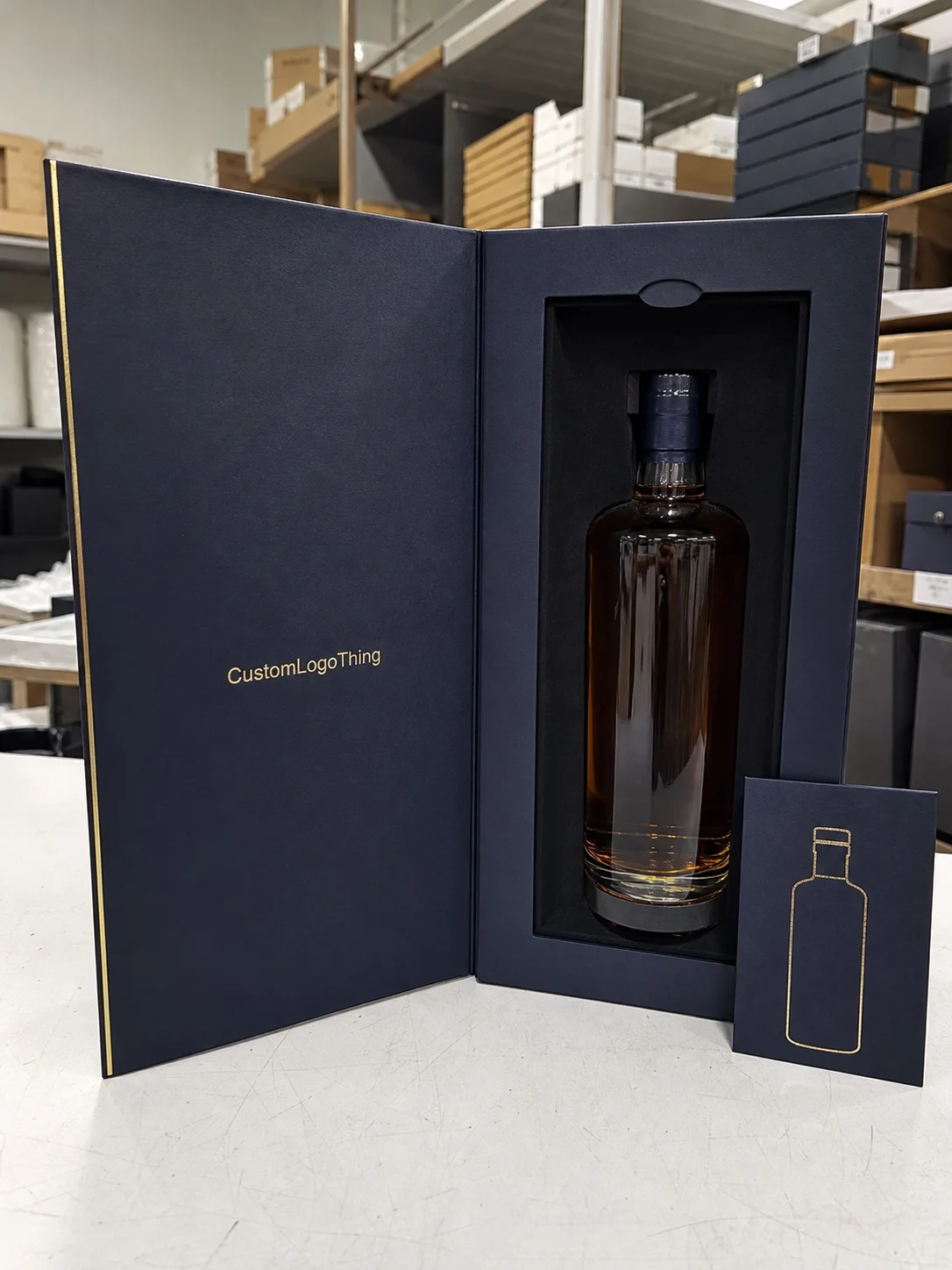
Custom two piece boxes do a simple job with unusual range. They protect a product, shape the first impression, and make the opening moment feel deliberate rather than accidental. That matters for beauty products, candles, apparel accessories, gift sets, and any item that has to look finished before the customer ever touches it.
The structure is familiar: a rigid base holds the product, and a separate lid slides over it. That lid-and-base format creates a cleaner reveal than a folding carton and usually gives the package more weight in the hand. For brands comparing packaging formats, custom two piece boxes often earn their place because they combine presentation with durability instead of forcing a choice between the two.
There is also a practical reason buyers keep returning to them. The surface area is generous, the build accepts inserts well, and the box can be dressed up or kept restrained depending on the brand. A matte wrap with a small foil mark feels very different from a fully printed, high-gloss box, yet both use the same basic construction. That flexibility is part of the appeal.
Why Custom Two Piece Boxes Feel More Premium Than They Look
Premium packaging is rarely about decoration alone. It is about control. A rigid two-piece box opens with a defined motion, closes with a clean edge, and gives the user a sense that the product inside has been handled with care. That sense is not abstract marketing. It is a physical response to structure, weight, texture, and fit.
Two-piece boxes also behave better in storage and display than many buyers expect. They stack neatly, keep their shape under moderate handling, and can carry a stronger visual identity without relying on oversized graphics. In retail packaging, that combination can help a product stand out without looking noisy. In direct-to-consumer packaging, it can make the unboxing feel more expensive than the actual material spend suggests.
The internal space helps too. Because the structure is rigid, the box can be designed around the product instead of simply around shipping dimensions. Inserts can cradle glass jars, compacts, bottles, or small kits. Tissue, sleeves, and message cards can be integrated without the box feeling crowded. That is useful for product packaging that has to do more than sit on a shelf.
A box that opens well often does more for perception than a box that merely prints well. The first five seconds matter because customers notice the motion before they notice the copy.
There is a branding benefit that gets overlooked. A restrained exterior and a more expressive interior can create a stronger impression than a design that tries to fill every panel. Quiet confidence reads as more expensive than overstatement. That is one reason custom two piece boxes are common in premium categories where the package has to support the product rather than compete with it.
How the Two-Piece Box Structure Works in Real Production
The structure looks straightforward from the outside, but production has several moving parts. A rigid board core forms the lid and base. Printed wrap paper is mounted to that board. The lid is sized to overlap the base by a controlled amount, which creates the familiar telescoping fit. If the dimensions are right, the lid glides on with a firm, predictable feel. If they are off, the box feels either loose or frustratingly tight.
Board thickness is one of the first decisions. Common options include 1.5 mm, 2 mm, and 3 mm grayboard or chipboard, selected according to product weight, price point, and desired hand feel. A thicker board adds structure and a more substantial presence. A lighter board can reduce cost and still work well for lighter items, provided the product is not exposed to rough handling.
Wrap material changes the tone of the box. Art paper is common for full-color printing. Textured papers can make the package feel more tactile and less commercial. Kraft-look paper suits natural or eco-led branding. Soft-touch and matte laminations soften the visual noise, though they can behave differently in production and shipping. A finish that looks perfect in a sample room can scuff sooner than expected if the pack-out line is rough.
Typical build choices include:
- Paper-wrapped rigid board for a classic premium appearance.
- Printed outer wraps for brand graphics, product information, and color consistency.
- Interior printing or lining for a stronger reveal and better brand continuity.
- Inserts such as paperboard cradles, EVA foam, or molded pulp where product security matters.
Fit is the part that decides whether the box feels polished or troublesome. Too tight, and the lid can scuff corners, slow packing, or create pressure on the seam. Too loose, and the box loses the crispness that makes rigid packaging worth the cost. Good specs leave room for wrap thickness, assembly variance, and the real dimensions of the packed product, not just the dimensions of the item itself.
Finish should serve the brand position, not fight it. A clean matte wrap with precise foil can look more refined than a box covered in multiple effects. Embossing and debossing add depth, but only if the artwork supports them. The same is true for spot UV. Used carefully, it can define a logo or pattern. Used too broadly, it can make the box feel busy and overworked.
Key Specifications That Decide Quality, Fit, and Appearance
Specs drive the result more than the artwork does. If the board is too light, the corners can dent. If the wrap stock is too thin, the board texture may show through. If the insert is oversized, the product sits too high and the lid will not close cleanly. These problems are small on paper and obvious in the hand.
The starting point should be product size, then clearance, then wall thickness. Buyers often send item dimensions alone, which is not enough for a rigid format. Add the space needed for tissue, sleeves, seals, instruction cards, or protective wrap. A box sized for a bare product can become useless once the actual pack-out is added.
Printing and finishing options should be matched to the artwork. CMYK works well for photographic designs and complex gradients. PMS matching is better when brand colors have to stay consistent across multiple product lines. Matte lamination softens the look. Gloss brings more reflection and contrast. Foil, embossing, and spot UV can add emphasis, but each one raises complexity and should be justified by the design rather than used automatically.
Sustainability is now part of normal packaging spec work, not a side conversation. Many buyers ask for recycled board content, FSC-certified paper where sourcing allows it, and fewer mixed materials so the package is easier to recover. The Forest Stewardship Council is a useful reference for certified sourcing, and the EPA recycling resources can help clarify recovery and waste-reduction decisions. Those choices do not replace performance, but they do shape how credible the packaging feels to buyers and retail partners.
Here is a practical way to compare common build levels:
| Option | Best For | Typical Effect on Cost | Typical Effect on Look |
|---|---|---|---|
| 1.5 mm board, matte wrap | Light to medium products, tighter budgets | Lower | Clean and restrained, but less substantial |
| 2 mm board, printed wrap, no insert | Retail-ready custom printed boxes | Moderate | Balanced premium feel with strong print impact |
| 3 mm board, soft-touch, foil, insert | Luxury, gifting, fragile items | Higher | Heavy hand feel and a more elevated reveal |
| Recycled board, minimal ink, paper insert | Sustainability-focused product packaging | Moderate, sometimes lower | Natural, simple, and materially honest |
The best spec is not always the most decorated one. A lot of buyers spend money on finishes before confirming fit, protection, and assembly speed. That is a weak order of priorities. If the box has to move through a packing line efficiently, the structural choices matter more than a decorative treatment that only looks good in a render.
Cost, Pricing, and MOQ: What Actually Changes the Quote
Pricing for custom two piece boxes usually comes down to a small set of variables: box size, board grade, print coverage, finish complexity, insert style, and order quantity. Each one has a direct effect on material use, labor, setup, and waste. A larger box consumes more board and wrap. A printed interior takes more press time. A foam insert costs more than a simple paperboard cradle.
Minimum order quantity matters because setup costs have to be spread across the run. Printing plates, die cutting, lamination, hand assembly, and insert tooling all have an upfront cost. A run of 500 units has to carry those setup costs in a way a run of 5,000 does not. That is not a penalty. It is the normal economics of rigid packaging.
For planning purposes, simpler rigid boxes can sometimes land around $0.90 to $1.80 per unit at higher volumes. More involved builds with premium finishes, larger formats, or inserts often move into the $2.00 to $4.50 range or higher depending on the spec. Small runs and unusually detailed projects can exceed that. Those are working ranges, not fixed rates, because board thickness, wrap choice, and decoration can change the math quickly.
There are also cost levers that are easy to miss. Foil can be cheap on a small logo and expensive on a large surface. Soft-touch lamination can increase perceived value, but it may also show handling marks more readily during pack-out. A custom insert may add cost, but if it prevents product movement, it may save money by reducing damage and customer complaints. The cheapest box is not the cheapest packaging if it fails in transit.
Useful inputs for a quote include:
- Exact product dimensions, including sleeves, wraps, or seals.
- Target quantity, plus any realistic growth buffer.
- Artwork files or a clear layout direction.
- Finish preferences such as matte, gloss, foil, embossing, or soft-touch.
- Insert requirements, or confirmation that no insert is needed.
- Launch timing and shipping destination so lead time is realistic.
If you are comparing several packaging formats, it can help to review the available Custom Packaging Products as a system rather than ordering one box style in isolation. Buyers often find structural and material efficiencies that do not show up when each package is spec'd separately.
Process and Turnaround: From Dieline to Final Delivery
The production process is predictable if the inputs are clean. It starts with product measurements and pack-out details, then moves to quoting, dieline setup, artwork placement, proofing, sampling, production, finishing, and final packing. Delays usually happen early. If measurements, artwork, or finish choices are vague, every later step slows down.
Artwork revisions are the biggest schedule risk. Changes to panel dimensions, seam placement, logo alignment, or color values can push a job back because rigid packaging has less flexibility than a folding carton. Once board is cut and wrapped, there is very little room to compensate for a late change.
Sampling is usually worth the time, especially for fragile or high-value products. A structural mockup confirms the fit and the lid action. A print proof checks color and text. A pre-production sample combines both and gives the buyer a realistic view of the final result. Treating that sample as optional is risky when the package has to perform in real handling, not just in presentation photos.
Typical lead times vary by spec, but simple builds can move in roughly 12 to 15 business days after proof approval. Specialty finishes, custom inserts, and structural changes often extend that timeline. Tight schedules are where packaging gets expensive in the wrong way. Rush freight can erase any savings earned by choosing a simpler build.
For distribution-heavy programs, packaging testing should not be an afterthought. The ISTA packaging test standards are a useful reference if the box has to survive transport as well as present well on a shelf. A premium package that crushes during shipment is simply a costlier failure.
The workflow is usually best handled in this order:
- Measure the product and define the pack-out.
- Confirm the box style, insert, and finish.
- Review the dieline and artwork placement.
- Approve the proof or sample.
- Run production and finishing.
- Inspect counts, pack-out fit, and transit protection.
Common Spec and Ordering Mistakes to Avoid
The most common mistake is sizing the box to the product alone and forgetting the rest of the pack-out. Tissue, sleeves, instruction cards, shrink bands, and hand-pack variation all matter. A box can be correct on paper and still fail on the line if the internal clearance is too optimistic.
Another issue is choosing a finish based on the sample table rather than the real use case. High-gloss surfaces show fingerprints. Dark matte wraps show abrasion. Soft-touch feels excellent, but it is not always the best choice for boxes that will be stacked, shipped, and handled several times before reaching the end user.
Seam placement deserves more attention than it usually gets. If a logo crosses the wrap seam or sits too close to a fold, the final box can look slightly off even if the artwork file was approved. The flat proof may look centered while the wrapped structure tells a different story. Packaging design and production geometry have to agree.
Common mistakes include:
- Ordering from raw product dimensions without clearance for wrap or inserts.
- Skipping a physical sample for fragile or irregular items.
- Picking heavy decoration before confirming board strength and pack-out.
- Ignoring storage and shipping stress on larger rigid boxes.
- Assuming every finish will wear the same way in real use.
For custom printed boxes, restraint usually works better than excess. A cleaner structure, a sharper logo, and a carefully planned interior often feel more premium than a crowded layout that tries to fill every surface. The package should look finished, not overworked.
Expert Tips for Better Results with Premium Rigid Packaging
Build the box around the opening sequence first. Decide what the customer should see the moment the lid lifts. If the product should be visible immediately, the insert needs to support that. If the reveal should be slower, tissue, a card, or a branded inner panel can create that delay. That choice changes the experience more than most decoration choices do.
Contrast matters. A restrained exterior with a well-planned interior usually produces a stronger reveal than a box that tries to carry the entire brand story on the outside. In premium packaging, white space is useful. It gives the eye a place to rest and lets the product own the moment.
Match the structure to the load. A delicate cosmetic item does not need the same board and insert logic as a candle set or a bundle of accessories. If the box is underbuilt, it fails quickly. If it is overbuilt, you may spend more than necessary without improving the customer experience in a meaningful way.
Comparing samples side by side makes the differences easier to judge:
- Compare board thickness by feel, not only by specification.
- Check lid fit after the insert is installed, not before.
- View matte, gloss, and soft-touch samples under the same light.
- Test whether the box opens smoothly with one hand.
Operationally, the pack-out should be quick enough for the team to repeat without errors. A beautiful box that slows assembly can create bottlenecks and inconsistency. Good custom two piece boxes should support the business as well as the brand image.
One more practical point: if the product will move through retail, mail, and gifting channels, design for the worst handling scenario, not the best one. That approach usually leads to better board selection, more useful inserts, and fewer surprises after launch.
Next Steps for Specing Your Box the Right Way
Start with the product, then work outward. Measure the item with any wrap, sleeve, insert, or protective layer that will be inside the box during shipping or display. Decide whether the primary job is shelf presentation, gifting, protection, subscription delivery, or some combination of those. That decision should guide the structure, finish, and insert choices.
Gather the basics before requesting a quote: dimensions, estimated quantity, artwork or concept files, finish preferences, and launch timing. If the product is fragile, expensive, or oddly shaped, ask for a sample before full production. That small step often saves more money than it costs because it reveals fit issues while they are still easy to correct.
Review the proof like a production person, not just a designer. Check seam placement, bleed, panel orientation, lid depth, and the ease of repeated packing. If the product fits, the branding reads clearly, and the opening sequence feels deliberate, the spec is probably close to right.
Custom two piece boxes work best when presentation, protection, and efficiency sit in the same design. Once those three align, the packaging stops being a separate cost center and starts doing real work for the product inside.
Are custom two piece boxes better than folding cartons for premium products?
Usually, yes, if presentation matters. The rigid lid-and-base structure creates a stronger reveal, better shelf presence, and a more substantial feel in the hand. Folding cartons are often cheaper, but custom two piece boxes usually win when the goal is to make the product feel more premium and more giftable.
What information do I need to request a quote for custom two piece boxes?
Provide exact product dimensions, quantity, artwork files or concept art, preferred finish, and whether you need inserts. It also helps to include shipping or retail display requirements, along with any budget or launch-date pressure, because those details affect material and production choices.
What affects the unit cost the most on rigid two-piece packaging?
Box size, board thickness, print coverage, finish complexity, and insert type are the biggest cost drivers. Quantity matters a lot because setup and tooling costs are spread across more units, and specialty details like foil, embossing, or soft-touch coating can increase pricing quickly.
How long does production usually take after artwork approval?
Timeline depends on the spec. Simple builds can move in roughly 12 to 15 business days after proof approval, while specialty finishes, custom inserts, or structural changes add time. The best way to stay on schedule is to approve measurements and artwork early, then avoid late-stage revisions.
Can custom two piece boxes be made more sustainable?
Yes. They can often be built with recycled board, FSC-certified paper where sourcing allows it, simplified finishes, and fewer mixed materials. A sustainability-focused spec still has to protect the product and keep the premium look intact, because responsible packaging still has to perform in real use.