What Custom Tyvek Labels Are and Why They Hold Up
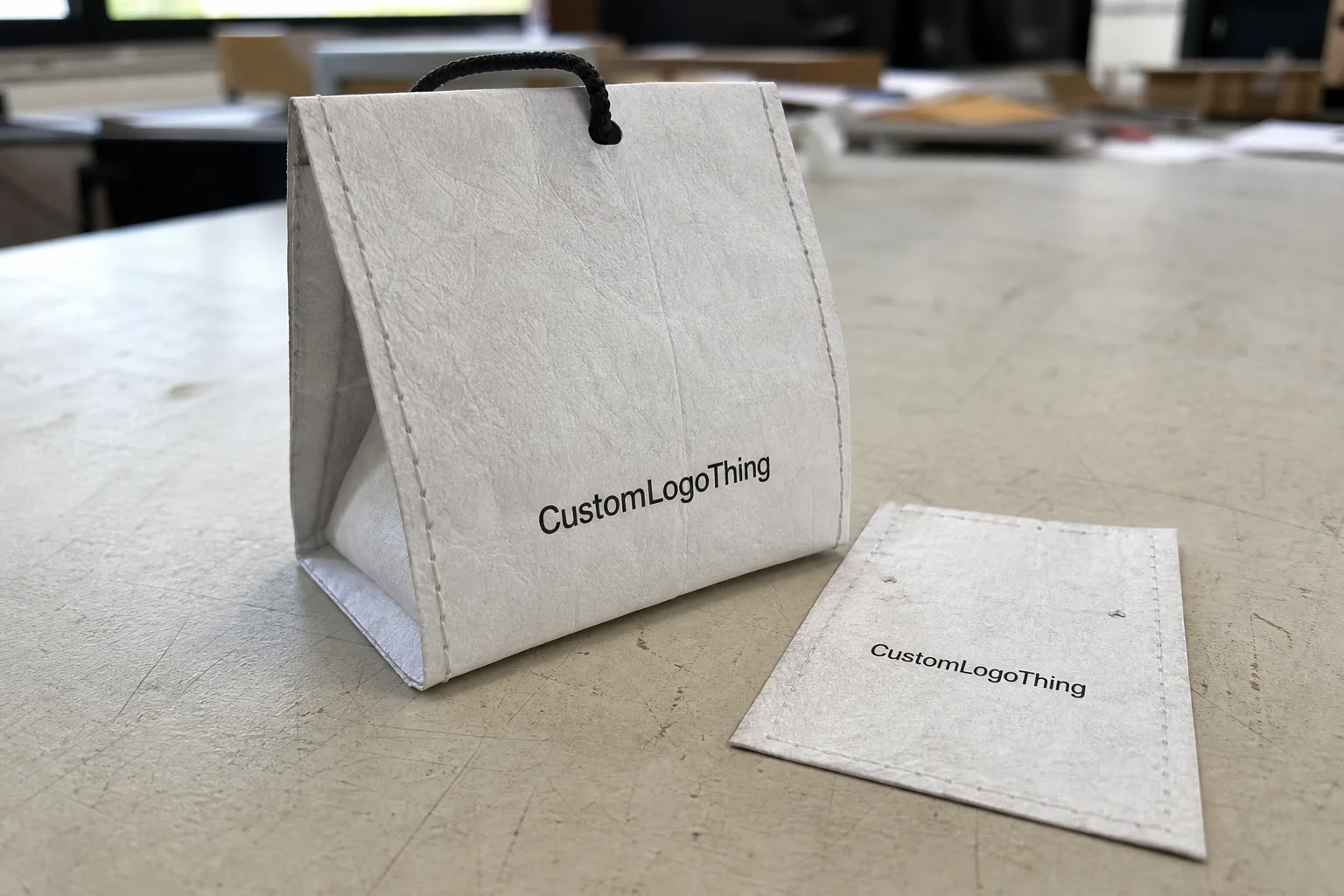
Custom Tyvek labels look simple because the material is meant to be practical, not flashy. That is also why they work. Tyvek resembles paper at a glance, but it behaves more like a synthetic sheet. It resists tearing, handles moisture better than paper stock, and survives the rough treatment that can turn ordinary hang tags into scrap before the product even reaches a shelf or warehouse bin.
For a packaging buyer, durability is not an abstract selling point. Labels carry size information, SKU data, barcode fields, care instructions, bundle notes, and compliance text that have to stay readable while cartons are moved, opened, stacked, sorted, and repacked. If that label fails, the cost is not just a reprint. It is the delay, the relabeling, the added labor, and the risk of a sloppy-looking product packaging system.
Tyvek makes sense where the label has to outlast handling, not where it has to feel soft or decorative. Temporary garment tags, inventory labels, sample tags, bundle markers, and shipping identifiers are common uses. If the job is about tactile finish or premium textile presentation, woven or satin labels may fit better. If the job is about surviving the process, Tyvek is usually the stronger choice.
That distinction matters because many label purchases fail at the brief stage, not the press stage. A supplier can only build the right label if the use case is clear: folded apparel, loose cartons, kitted samples, or warehouse handling. The same material can perform well in one setting and look out of place in another.
If the label is part of a wider system, start with Custom Labels & Tags and keep the Tyvek spec focused on the actual workload. The best label is the one that disappears into the workflow and still does its job.
How Tyvek Labels Work on Garments and Packaging
Tyvek is made from flashspun high-density polyethylene fibers bonded into a sheet. That structure changes the way it behaves. It does not fray like woven fabric, it folds more predictably than brittle paper, and it keeps its shape better under repeated handling. For apparel and packaging operations, that means the label stays legible longer and is less likely to fail at the edges first.
Printing usually falls into three practical buckets. Static artwork can run through digital or flexographic printing, depending on quantity, color count, and setup. Variable-data jobs, such as size tickets, serial numbers, lot codes, or barcodes, often use thermal transfer or data-driven digital workflows. If the label needs to scan reliably at receiving or in a warehouse, the variable-data setup matters more than most buyers expect. A barcode that looks clean in a PDF can still fail if the quiet zone is tight, the bars are too thin, or contrast is weak on the actual stock.
Attachment method matters just as much as the print method. A Tyvek label can be:
- Sewn in for garments that need a longer-lived identifier.
- Punched and tied as a hang tag.
- Stapled or banded for bulk apparel sorting.
- Pressure-sensitive for temporary placement on folded goods or cartons.
- Used as an internal marker in retail packaging or warehouse flow where readability matters more than decoration.
Design should support the use case, not fight it. Strong contrast, simple hierarchy, and enough white space usually beat busy graphics. Small type can look elegant in a mockup and fail on press. A label that carries five jobs at once needs discipline, not ornament.
There is also a practical handling issue that gets ignored. If the label has sharp corners or a poor hole location, it can snag, curl, or wear prematurely even when the stock itself is fine. That is one reason a clean cut path matters as much as the artwork.
Key Specs That Change Performance and Readability
The best spec is usually the simplest one that can survive the real use case. Buyers often overbuild labels because heavier material sounds more premium. Sometimes that is true. Sometimes it just adds cost and makes the label harder to fold, feed, or apply cleanly.
Thickness and stiffness change how the label behaves. A lighter grade is easier to fold and stack, which can help in garment programs or sample kits. A heavier grade feels sturdier and resists wear better, but it can be harder to integrate into tight packing workflows. If the label is going into soft goods, the wrong stiffness can make the finished pack look awkward.
Size and shape affect both cost and usability. Standard rectangles are the easiest to quote, easiest to read, and usually the least expensive to produce. Rounded corners reduce snagging. Perforations help when one section needs to tear away. Custom die-cut shapes can strengthen a branded packaging design system, but they add setup cost and can extend lead time. Sharp corners are a small detail that causes more wear damage than people expect in bulk handling.
Print side and finish matter too. One-sided print keeps the job simple and economical. Two-sided print is useful when one face carries branding and the other carries instructions, compliance data, or barcode information. White Tyvek usually gives the cleanest contrast. Natural-looking stock can work for utilitarian labels, but it typically feels less polished. If the label sits beside custom printed boxes or other retail packaging elements, the visual tone should match the rest of the kit.
Operational data changes the layout quickly. Fiber content, care icons, barcode zones, batch numbers, and SKU fields can turn a good proof into a cramped mess if the label size was chosen without the full data load in mind. That is the moment where a good supplier asks the right questions instead of just printing what was sent.
Here is a practical way to compare common spec choices:
| Spec Choice | Best For | Typical Tradeoff | Buyer Takeaway |
|---|---|---|---|
| Standard rectangle | Size tags, SKU labels, straightforward garment IDs | Least visual flair | Lowest friction, easiest to quote, easiest to read |
| Rounded corners | Labels that move through packing and shipping often | Slightly less edge presence | Better wear resistance where snagging is a concern |
| Perforated sections | Detach-and-keep instruction or tear-off data areas | More setup complexity | Useful when one label has to do two jobs |
| Custom die-cut | Higher-end packaging design or distinctive brand presentation | Tooling cost and longer lead time | Worth it only if the shape supports the brand or workflow |
One more point: print contrast should be judged on the actual stock, not on a monitor. A gray logo can disappear on a warm white sheet, and a barcode that passes on screen can become marginal once it is printed at production scale. Proofing on the right material removes guesswork early.
Production Steps and Timeline From Proof to Delivery
The production path is usually simple, but the details matter. You send artwork and specs. The supplier builds a proof. You review layout, variable data, and any barcode or size fields. You approve. Production starts. Then the job moves to packing and shipment. The part that slows most orders is not the press time; it is the back-and-forth before approval.
Simple custom Tyvek labels with static art and standard sizing often move in about 5 to 8 business days after proof approval. Custom shapes, large quantities, variable data, and specialty finishing usually push that to 10 to 15 business days. Rush work trims the room for corrections. Fewer proof rounds, fewer finishing options, and less tolerance for layout revisions are normal tradeoffs, not hidden surprises.
Common causes of delay are predictable:
- Missing vector artwork or poor-resolution logos.
- Custom die lines that need extra setup.
- Barcode or serial data that arrives in a messy format.
- Color matching across multiple brand assets.
- Slow proof approval on the buyer side.
A live scan test is one of the most useful checkpoints. If the barcode will be scanned at receiving, in a warehouse, or during retail intake, it should be tested with the scanner that will actually be used. That catches spacing, contrast, and sizing problems before the full run is printed.
For shipping-heavy programs, it helps to think in the same way packaging engineers think about distribution stress. The ISTA test methods are a good reference point for handling, vibration, and transport abuse. Labels do not need a lab certificate, but they should survive the kind of movement those tests were designed around.
One practical production note: if the job depends on exact numbering or version control, ask how the supplier handles file reconciliation. A mismatch between the approved proof and the print-ready data is a preventable error, but only if the process is disciplined.
Cost and Pricing Drivers That Change Your Quote
Pricing for custom tyvek labels is usually driven by the same core variables: quantity, size, print coverage, number of colors, and whether the job uses static art or variable data. The cheapest quote is the one with the fewest moving parts. That is not marketing language. It is how production math works.
Smaller runs carry a higher unit cost because setup is spread across fewer pieces. As volume rises, per-label price usually drops, sometimes sharply. But the quote can climb again if the job includes custom shapes, perforations, sewn attachment points, sequential numbering, specialty adhesives, or tight registration demands. The details matter more than the headline quantity.
These planning ranges can help frame budget conversations, though actual pricing varies by supplier, material grade, and finishing requirements:
| Order Profile | Typical Unit Range | What Usually Pushes Cost Up | Best Fit |
|---|---|---|---|
| 500 pieces | $0.30-$0.85 each | Short-run setup, custom art, extra proofing | Samples, launch testing, small capsule drops |
| 5,000 pieces | $0.10-$0.28 each | Variable data, heavy coverage, custom cut lines | Seasonal apparel, steady replenishment, SKU programs |
| 20,000 pieces | $0.05-$0.14 each | Complex finishing, multiple versions, special handling | Large retail programs, warehouse labeling, bundled goods |
Ask for landed cost, not just unit price. Freight, proof corrections, packaging changes, and reprint risk can turn a low quote into the expensive option. A tight spec sheet usually shortens quoting time and improves pricing because the supplier is not forced to guess at the size, attachment method, or print intent.
It also helps to separate print cost from system cost. If the label is part of a launch, compare it against the rest of the spend across Custom Packaging Products. Buyers sometimes spend too much energy trimming a few cents off a label while larger inefficiencies sit elsewhere in the packaging and fulfillment chain.
The other pricing trap is hidden complexity. A label that seems basic can become expensive if it has several versions, special barcode rules, or a lot of small text. That is why a cleaner layout often costs less than a crowded one, even before the press runs.
Common Mistakes That Make Tyvek Labels Look Cheap
The fastest way to make a durable label look disposable is to overload it with text. If the label needs a magnifying glass, it is failing its main job. Keep the hierarchy clear. Brand first. Size or SKU second. Compliance details after that. Everything else should earn its place.
Low-contrast artwork is the next issue. Gray on off-white sounds restrained until it lands on press and disappears. Thin fonts do the same thing. They look delicate in a design file and weak on the actual sheet. Barcode sizing deserves the same discipline. A barcode that is too small, too close to the edge, or cramped by surrounding text is a future problem with a neat proof.
Cut quality matters more than most people admit. Sharp corners, rough edges, or badly placed holes make the label feel flimsy even if the stock itself is strong. That visual mismatch can undermine the rest of the brand presentation, especially if the label sits beside polished custom printed boxes or a cleaner retail packaging system.
Attachment mismatch is another quiet failure. A good Tyvek label can still look wrong if it is tied to the wrong garment weight or packed in a way that causes awkward folding. Lightweight tops, heavy outerwear, folded denim, and bundled accessories do not all need the same attachment logic. Matching the label to the product avoids the appearance of improvisation.
Proofs are often judged too early and too cleanly. On-screen color, scale, and contrast can mislead you. Tyvek prints differently from paper, so a screen-perfect proof is not the same thing as a production-ready label. Material choice changes the visual result, which is why approval on the actual stock is the safer standard.
There is also a compliance issue. If the label carries fiber content, care instructions, or SKU data, small layout errors can create bigger problems than a cosmetic flaw. A crowded label can become unreadable for retailers, receiving teams, or internal inventory staff. That is the kind of mistake that looks minor until it hits operations.
Expert Tips for a Cleaner Order and Better Wear
Keep the layout disciplined. A warehouse associate or retail buyer should be able to identify the label in a couple of seconds. That means a strong visual hierarchy, enough white space, and no decorative clutter pretending to be information. Function is not an excuse for ugly design, but it is the reason the label exists.
A label that looks clever but scans badly is a bad label. The packaging team will remember the headache, not the concept.
Test type size and barcode scale against the smallest real viewing distance. Do not judge readability by zooming in on a monitor. That is how tiny type sneaks into production and then disappoints everyone. For variable-data programs, the smallest code or lowest-contrast field should be the standard, not the best-case example.
Build a material check into approval. Ask for a sample if the run is large, the handling is rough, or the label will sit close to the customer’s hand during unpacking. The feel, stiffness, and tear resistance tell you more than a PDF ever will. That is a practical check, not a luxury.
Keep a buffer in the order. Extra units cover rework, mispacks, returns, and late-stage fixes. Running labels at the exact needed quantity sounds efficient until a packing error burns through the last box and the reprint creates a delay. That is avoidable with basic planning.
Ask the supplier which print method fits the end use. Ink choice, finish, and layout discipline matter more than clever artwork. If the label needs to survive handling and still read cleanly, the technical setup has to be right first. Design can refine the result. It cannot rescue a bad spec.
One final observation: the most polished labels are usually the least complicated. They do not use extra effects to prove they are premium. They use proportion, contrast, and a layout that knows exactly what information belongs on the face of the label.
Next Steps: Turn Your Spec Into a Quote-Ready File
If you want a clean quote, send the supplier a simple spec sheet with size, quantity, print sides, colors, attachment method, data fields, and any compliance text that has to appear on the label. The better the brief, the fewer the revisions. That is not a trick. It is just efficient production.
For artwork, vector files are the safest starting point. Barcode files should be clean and correctly formatted. Minimum font sizes should be stated up front, especially if the label carries care details or a long SKU line. If there are multiple versions, list them clearly so no one has to guess which line belongs to which run.
Before you choose a supplier, compare proof quality, turnaround time, and total landed cost. The lowest quote rarely wins once delay, freight, and reprint risk are counted. A practical order should Fit Your Packaging calendar, your warehouse process, and the brand standard you want customers to see.
Custom tyvek labels work best when the brief is specific and the layout is restrained. They are a sensible choice for apparel, inventory, and packaging programs that need durability without adding visual noise. If the spec is clear, they do their job quietly, which is exactly what a good label should do.
How durable are custom Tyvek labels on clothing?
They resist tearing and handle moisture better than paper labels, so they work well for shipping, storage, and rough handling. Durability still depends on the print method, size, and attachment choice, so the label spec matters if it has to stay readable through repeated use.
Are Tyvek clothing labels better than woven labels?
Tyvek is usually better when you need toughness, faster production, and clear printing for data-heavy labels such as size, SKU, or barcode information. Woven labels are better when the buyer wants a softer, more textile-like feel, so the right choice depends on branding and use case.
What is the typical MOQ for Tyvek garment labels?
MOQ varies by supplier and print method, but smaller runs are possible when the design is simple and the size is standard. Lower quantities usually raise the unit price, so buyers should balance inventory risk against per-label cost before ordering.
Can custom Tyvek labels include barcodes or serial numbers?
Yes, variable-data printing is common when the label needs unique SKUs, serial numbers, lot codes, or scan-ready barcodes. The file needs clean data formatting and enough quiet space around the code so scanners can read it reliably.
How long do Tyvek labels take to produce?
Simple jobs move faster, while custom shapes, proof changes, and variable data add time to the schedule. A clean spec sheet and quick proof approval are the fastest ways to keep the timeline from drifting.