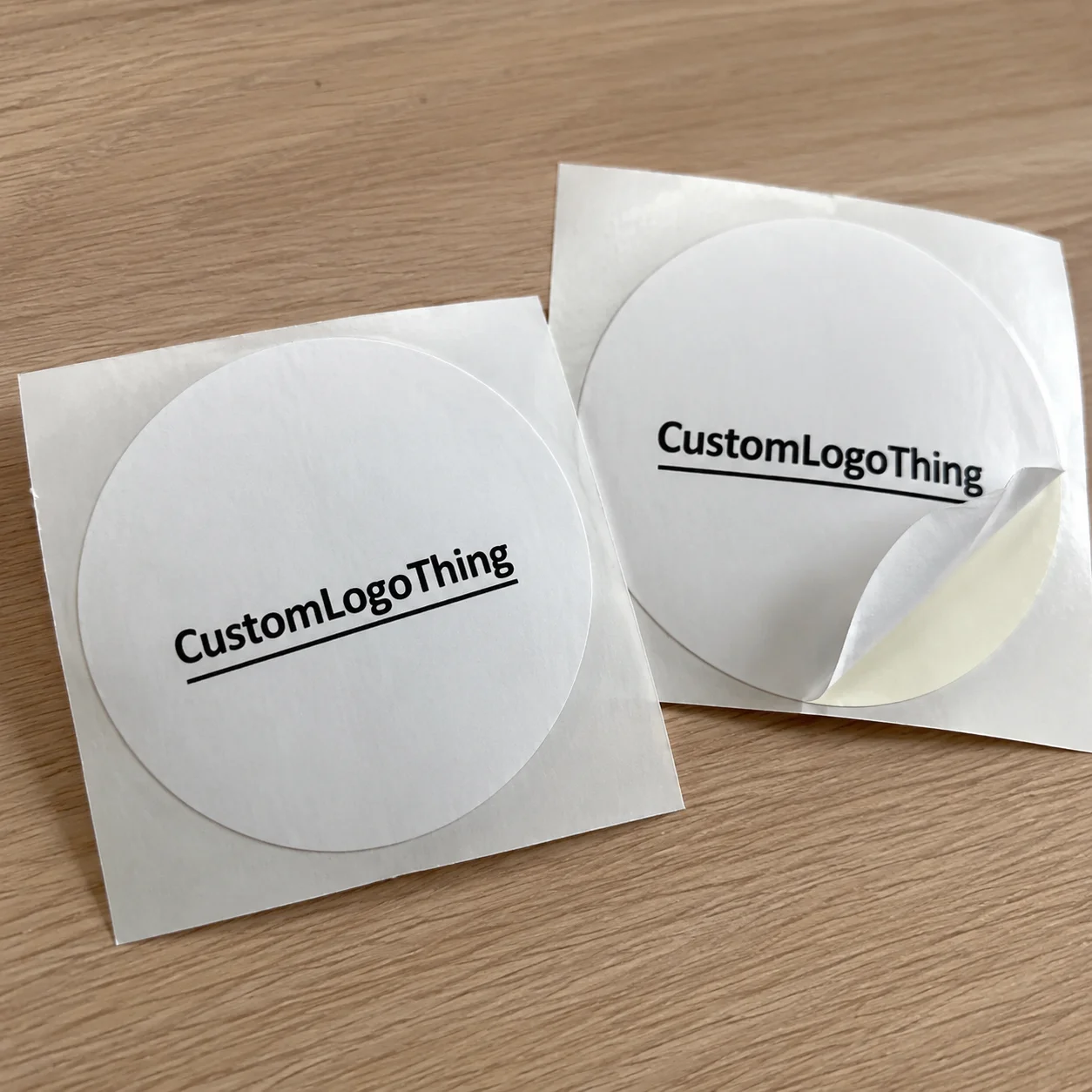
Cold shelves, wet hands, ice buckets, delivery coolers, and a long day of bottle handling will expose weak packaging very quickly. That is why custom plastic Water Bottle Labels are often the better choice when paper would soften, scuff, or curl before the product is even in front of the customer. The label is not just decoration. It has to carry the brand through condensation, abrasion, and storage conditions that are rougher than many buyers expect the first time they source beverage packaging.
Why These Labels Survive Cold Coolers and Constant Handling
Water bottles live a harder life than most printed packages. They get pulled from refrigeration, stacked in ice, passed from one person to another, and set down on damp tables. Sometimes they are handled with wet hands before the label has had much time to settle. That mix of moisture and friction is exactly where standard paper labels begin to fail.
Custom plastic water bottle labels are used because film stocks handle those conditions better. A well-chosen plastic label resists water absorption, edge lift, and surface scuffing far more reliably than an uncoated paper label. The artwork stays readable, corners stay flatter, and the bottle keeps a finished look instead of appearing temporary or rushed.
From a buyer’s perspective, that shows up in small but important ways. The branding looks clean inside coolers. Fine text remains readable after a few hours on ice. Labels do not start peeling at the corners before the event is over. Those details matter whether the bottles are being used for hospitality, retail, conferences, gyms, tastings, or branded giveaways.
There is also a cost-side benefit that gets overlooked. A label that fails early creates waste, and waste is more expensive than the label itself. Replacing damaged bottles, sorting out bad stock, and answering complaints all take time. Better construction usually means fewer exceptions and fewer problems once the order has shipped.
"If a bottle will spend time in a cooler or ice bucket, treat the label like a functional part of the package, not a decorative afterthought."
That is the practical reason packaging teams pay close attention to label construction. For buyers comparing Custom Labels & Tags with other forms of branded packaging, the decision usually comes down to how much moisture, handling, and surface wear the bottle will see before it reaches the end user.
Custom Plastic Water Bottle Labels: Materials, Adhesives, and Finish
The material choice is where most of the performance comes from. Most custom plastic water bottle labels are built on BOPP, short for biaxially oriented polypropylene. The name is technical, but the practical value is straightforward: it is a moisture-resistant film that prints cleanly and behaves well on curved containers. White BOPP is common because it gives strong opacity and keeps colors easy to read. Clear film is useful when a brand wants a transparent or wraparound effect, although the artwork needs to be planned carefully so text does not disappear against the bottle or the liquid inside.
There are also other synthetic stocks for specific looks or use cases. Some are made for extra durability. Others are designed to imitate paper while avoiding paper’s sensitivity to moisture. The right choice depends on whether the bottle is going into retail, a short-term promotion, a premium event setup, or a longer distribution cycle.
Adhesive selection matters just as much. A permanent adhesive is the usual choice when the label needs to stay in place through refrigeration, handling, and display. Removable adhesive makes sense for temporary campaigns or short-lived promotions, but it is not the right fit for every project. Bottle surface also affects performance. Smooth PET generally gives more consistent contact than a heavily textured bottle, and residue from dust or condensation can weaken the bond.
| Material | Typical Use | Moisture Resistance | Visual Result |
|---|---|---|---|
| White BOPP | Retail packaging, events, cold storage | High | Bright, opaque, easy to read |
| Clear Film | Premium branding, wraparound looks | High | Minimal, see-through appearance |
| Synthetic Paper-Look Stock | Short runs, value-focused promo packs | Medium to high | Paper-like but more durable than paper |
Finish is the last layer of the decision. Gloss boosts color and makes graphics pop under retail lighting. Matte softens glare and can improve readability when bottles sit under strong overhead lights. Satin sits between the two and is often a good compromise when the design needs a cleaner, less reflective look without becoming flat. Soft-touch can feel premium, but it is not always the best investment for wet handling or a short campaign. For custom plastic water bottle labels, gloss or satin is usually the safest balance of appearance and day-to-day performance.
Shape also affects the result. A straight-sided bottle gives more room for error than a tapered one. Curved panels, narrow label windows, and pronounced shoulders all influence how the film lays down. A label that is too wide will wrinkle. A label that crosses a severe taper will lift sooner. Good die-cut planning prevents those issues before the press starts.
For teams coordinating broader packaging programs, the same principle applies to Custom Packaging Products: material, adhesive, and finish are not cosmetic extras. They determine whether the package performs the way it was expected to perform in the field.
Design and Bottle Specs That Decide Whether the Label Stays Put
Before artwork is finalized, the bottle itself needs to be measured. Diameter, taper, shoulder shape, seam placement, and the usable label panel all change the layout. A cylindrical bottle is simpler to work with than one with a steep taper. A smooth panel is easier to label than a bottle that changes contour in the middle of the print area.
Condensation is the main stress point, but it is not the only one. Refrigeration creates cold surfaces that collect moisture. Ice storage adds prolonged wet contact. Repeated handoffs create abrasion. Those conditions affect both the adhesive choice and the artwork strategy, which is why custom plastic water bottle labels should be planned as part of the bottle system rather than as a standalone graphic.
Artwork needs discipline. Bleed should extend beyond the cut line so trimming does not leave a white edge. Safe margins keep text away from the edge and from the seam. Barcodes need enough contrast to scan reliably, even if the bottle sweats. Thin fonts can become difficult to read once wrapped around a curved surface, especially if the design uses low-contrast colors or very fine line work.
Content planning matters as well. Some labels need ingredient panels, recycling marks, batch codes, or event-specific messaging. Others need room for an expiration date or lot number. None of that is glamorous, but missing room for required information is a common reason labels get delayed or redesigned after proofing has already started.
That is where the label becomes part of the packaging architecture. If the panel is too small for the information you need, the answer is not to compress the layout until it barely fits. It is to change the label size, simplify the copy, or choose a bottle that supports the content more cleanly.
Process and Timeline: From Artwork Approval to Delivery
A clean order starts with the right specifications. The supplier needs the bottle material, diameter, label panel size, expected quantity, and where the labels will actually be used. Without that, the quote becomes guesswork, and the proof may be based on assumptions that do not match the real bottle.
The production path is usually straightforward:
- Request specs and confirm the label size.
- Choose the material, adhesive, and finish.
- Review a digital proof at actual size.
- Approve artwork after checking text, colors, and placement.
- Print, finish, inspect, and pack.
- Ship to the destination or distribution site.
Most delays happen before the press runs. Missing bottle measurements create back-and-forth. Artwork that arrives without a proper dieline needs correction. A late change to the panel width can require a new proof, which can push the schedule by several days. If the launch date is fixed, say so early. That gives the vendor a chance to Choose the Right production path instead of promising a turnaround that the job cannot realistically support.
Timing depends on complexity. A simple reorder with no changes may move quickly once the proof is approved. A new custom plastic water bottle labels project usually needs more time because the team has to confirm stock, check layout, and complete setup before production begins. A straightforward job is often completed in roughly 12 to 15 business days after proof approval, while more complex orders can take longer if specialty stock, unusual cutting, or additional finishing steps are involved.
For buyers comparing suppliers, it helps to ask whether inspection is included, whether the finish affects the schedule, and whether freight time is built into the estimate. Those details shape the actual delivery date far more than the printed production time alone.
"A useful timeline includes proofing, production, and freight. Print time by itself does not tell you when the labels will arrive."
If the bottles are part of a larger launch kit, coordinate the labels with other branded materials early. Inserts, cartons, and any Custom Packaging Products that need to arrive together should be planned as one package, not as separate orders that each have their own schedule risk.
Cost, Pricing, and MOQ: What Moves the Quote Up or Down
Pricing for custom plastic water bottle labels comes down to a few repeatable factors, and most buyers recognize the pattern after a couple of orders. Quantity matters most. Larger runs spread setup cost across more pieces, so the unit price drops. Small runs cost more per label because the same proofing, setup, and handling work is divided across fewer units.
Size is the next lever. A larger label uses more material and may slow production slightly, which raises cost. Coverage matters too. A simple one-color design on white film is usually less expensive than a full-coverage graphic with multiple colors and tighter registration. Finish choices such as gloss lamination, matte varnish, or specialty coatings can also increase the unit price.
MOQ, or minimum order quantity, varies by supplier and by setup. Standard stock and common dimensions often support lower minimums. A custom die-cut or specialty material may require a higher threshold because the shop has to justify the setup and tooling. The first run is often the most expensive per unit, while repeat runs can come in lower if nothing changes.
| Budget Lever | Lower-Cost Choice | Higher-Cost Choice | Practical Effect |
|---|---|---|---|
| Quantity | 5,000+ labels | Small trial run | Larger runs reduce unit cost |
| Material | White BOPP | Specialty synthetic or clear film | Special materials increase cost and setup |
| Finish | Standard gloss | Soft-touch or specialty coating | Premium feel but higher unit price |
| Shape | Simple rectangle | Custom contour cut | Custom shapes add cutting complexity |
If budget is tight, there are sensible places to simplify. A standard shape is cheaper than a contour cut. Keeping all SKUs on one bottle size reduces setup friction. A clean, high-contrast design can still look premium without requiring expensive decoration. Those choices help control price without making the label feel cheap.
As a rough benchmark, many buyers see standard film labels land around $0.18 to $0.28 per unit at 5,000 pieces, though the actual number can move up or down depending on coverage, adhesive, and finish. Short runs usually sit higher than that. That is normal and usually reflects the reality of setup costs, not a problem with the quote.
It also helps to ask whether the label construction aligns with internal sustainability goals. Groups such as the Flexible Packaging Association and the U.S. Environmental Protection Agency publish useful guidance on packaging materials, recycling behavior, and waste reduction. Not every water bottle label is built for recycling claims, but the broader material context still matters when the brand is making packaging decisions.
Common Mistakes That Cause Lifting, Wrinkles, or Smearing
The first mistake is choosing paper for a wet environment. Paper can work fine on dry shelf packaging, but on chilled bottles it often curls, softens, or scuffs. Once an edge begins to fail, the whole label looks worn even if the print is still intact.
The second mistake is poor surface prep. Even a strong adhesive struggles on a damp, oily, or dusty bottle. If bottles are coming out of cold storage, they may need time to warm slightly before application. If they are handled with gloved or dusty hands, the contact area needs to be clean. Label performance is a system, and surface prep is part of that system.
Artwork creates another set of problems. Small type can become hard to read once the bottle is wrapped and seen through condensation. Weak contrast can disappear under store lighting. Missing bleed can leave unwanted white edges. A design that looks sharp on a monitor can behave very differently on a curved, chilled surface.
Testing is the step that gets skipped too often. A proof tells you the layout is correct, but it does not prove the label will survive ice, rubbing, or repeated handling. A short real-world test with a sample bottle is cheap insurance. Leave it in a cooler. Wipe it down. Handle it with wet hands. If the label survives that, it has a much better chance of surviving the actual use case.
"The label that looks best on screen is not always the label that performs best in a cooler."
For brands building retail packaging or event kits, that is a useful way to frame the decision. The label is one part of the package system, and it should be checked the same way carton fit or insert accuracy would be checked.
Next Steps for a Faster Proof and a Cleaner Quote
Start with the bottle details. Material, diameter, label panel size, taper, and expected quantity are the minimum inputs needed to recommend the right construction. If the bottles will be chilled, displayed in ice, or handled outdoors, say that up front. Those conditions affect adhesive selection and film choice.
Next, send the artwork in the cleanest form you have. Vector logos are best. Copy should be checked for spelling, legal text, and any required recycling or promotional language. If you do not have a final layout yet, a rough mockup still helps because it shows the information hierarchy and the intended label shape.
Ask for a proof at actual size. That catches more issues than most people expect. Fonts that look fine in a thumbnail may be too small in real life. A barcode that appears fine in a PDF may sit too close to a seam. A logo may need more breathing room once the contour cut is applied. For custom plastic water bottle labels, that proof is where the job becomes real.
Before approval, confirm four things: finish, production timeline, ship date, and application method. If the labels are being applied by hand, make sure the team knows how the bottles will be staged. If they are going on a line, make sure the roll format or sheet format matches the equipment. Small mismatches here can delay a launch more than a design issue will.
When those details are clear, the order usually moves faster, the proof is easier to approve, and the finished labels arrive ready for the packaging line instead of requiring workarounds.
For teams comparing branded packaging options, the safest choice is usually the one that matches the real environment first and the visual preference second. That is the difference between labels that only look good and custom plastic water bottle labels that hold up through cold storage, handling, and the full life of the bottle.
How long do custom plastic water bottle labels last in ice buckets?
They can hold up well for event or retail use when the right film and adhesive are matched to cold, wet conditions. Lifespan depends on condensation, handling, and how well the bottles were cleaned before application.
What material is best for plastic water bottle labels that need to resist moisture?
White BOPP is a common choice when you want strong moisture resistance and consistent print quality. Clear film works well for a sleek look, but it needs careful design so text stays readable on the bottle.
Can custom plastic water bottle labels go on curved or tapered bottles?
Yes, but the label size and shape need to match the bottle geometry closely. Tapered bottles usually need tighter measurements and a layout that avoids the seam and high-stress curve areas.
What affects the price of custom plastic water bottle labels most?
Quantity, size, material, finish, and adhesive choice are the biggest cost drivers. Special shapes, short runs, and premium finishes usually raise the unit cost because they add setup or production complexity.
How should I prepare artwork for custom plastic water bottle labels?
Use the correct dieline, keep text inside safe margins, and provide logos in vector format when possible. If the label will be seen in wet or cold environments, check contrast and font size carefully so the message stays readable.