Buyer Fit Snapshot
| Best fit | Custom Window Bag Packaging projects where brand print, material claims, artwork control, MOQ, and repeat-order consistency need to be specified before quoting. |
|---|---|
| Quote inputs | Share finished size, material target, print colors, finish, packing count, annual reorder estimate, ship-to region, and any compliance wording. |
| Proofing check | Approve dieline scale, logo placement, barcode or warning zones, color tolerance, closure strength, and carton packing before bulk production. |
| Main risk | Vague material claims, crowded artwork, missing packing details, or unclear freight terms can make a low unit price expensive after revisions. |
Fast answer: Custom Window Bag Packaging: What It Is and Why It Works should be specified like a repeatable production item. The safest quote records material, print method, finish, artwork proof, packing count, and reorder notes in one written spec.
Production checks before approval
Compare the actual filled-product size with the drawing, then confirm tolerance on folds, seals, hang holes, label areas, and retail display edges. Reserve space for logos, QR codes, warning copy, and material claims before decorative graphics fill the panel.
Quote comparison points
Review material grade, print process, finish, sampling route, tooling charges, carton quantity, and freight assumptions side by side. A quote is only useful when the supplier can repeat the same color, closure quality, and packing count on the next order.
I have watched Custom Window Bag Packaging turn a cautious browser into a buyer in under five seconds, usually in a store aisle where 12 to 18 similar SKUs are all fighting for the same eye level. I have also watched it fail because the window framed the wrong thing, like a bag of granola with the crumbliest corner centered like it belonged on a billboard. Shelf behavior is ruthless in that way. Shoppers scan, compare, hesitate for a beat, and move on. A transparent panel changes the exchange because custom window bag packaging shows proof instead of asking for trust on faith alone.
That is one reason the format keeps showing up in snack aisles, beauty counters, farm shops, and handmade gift displays from Portland to Shenzhen. It sits between a fully printed pouch and a plain clear bag, and that middle ground is commercially useful in a way people sometimes underestimate. The outer surface can carry the brand story, while the window gives the buyer a direct look at what they are actually paying for. For products where texture, color, finish, or shape helps close the sale, that combination matters more than most teams expect, especially when a 50 mm by 70 mm opening can do the work of a much longer pitch.
What Is Custom Window Bag Packaging and Why Does It Work?
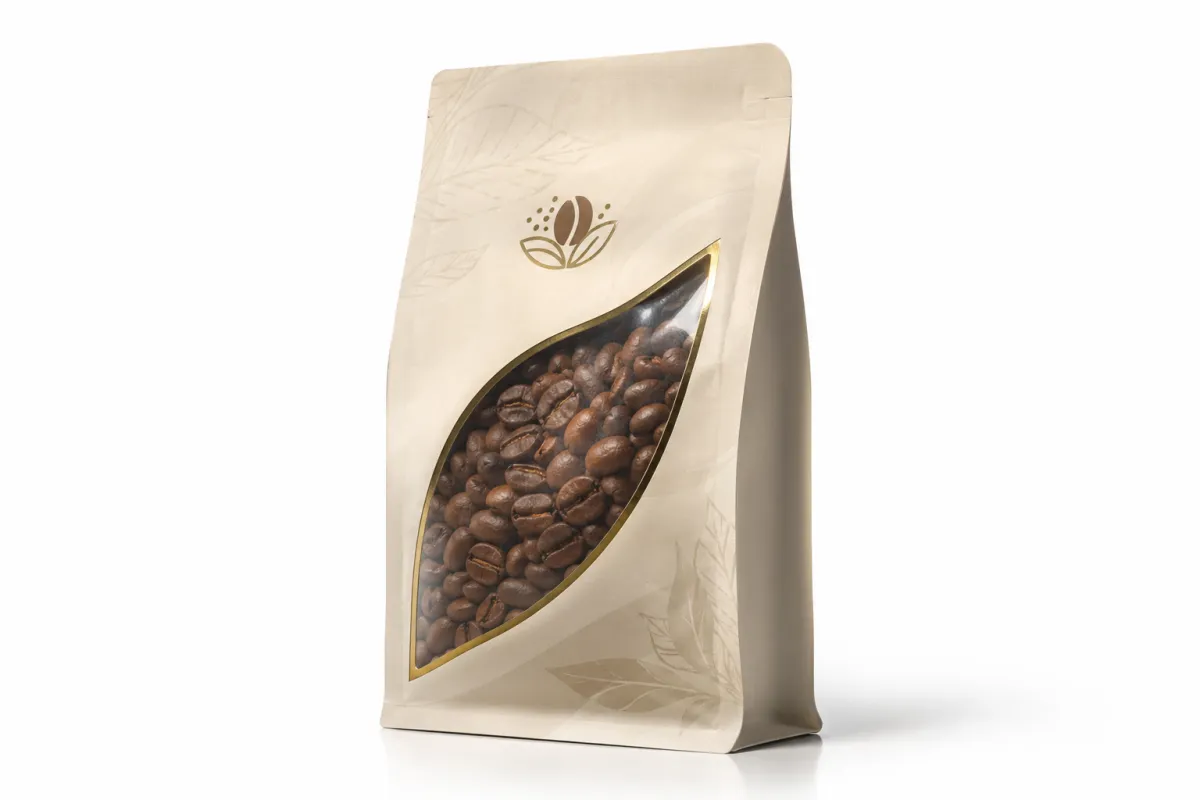
Put simply, Custom Window Bag Packaging is a bag or pouch with a transparent section built into the structure so part of the contents is visible before purchase. The rest of the pack can be printed, laminated, kraft-backed, matte, glossy, or soft-touch, which lets the brand control the look while still revealing the product. A common build uses 18-micron PET for the clear panel and 80 to 120 gsm paper or a 12-micron PE/12-micron PET laminate for the body, depending on barrier needs. Compared with a fully printed bag, a carton, or a standard clear pouch, custom window bag packaging lands in a useful middle zone: more honest than print alone, more branded than full transparency, and less sterile than a generic clear sleeve.
I started paying closer attention to that middle zone during a meeting for a specialty granola brand in Chicago. The owner came in with a polished pitch deck, full of notes about sourcing, roasting, and flavor balance, and the buyer spent less than 90 seconds on the deck before asking whether the oats could be seen through the front panel. That was the whole story. The product was the proof. The window did what a full page of copy could not. Honestly, that is the practical power of Custom Window Bag Packaging for food, cosmetics, accessories, and handmade goods where appearance carries real weight and the packaging has to earn attention in the first 3 seconds.
There is a catch, and it is not a small one. Every square inch devoted to the window is space you cannot use for graphics, compliance copy, or logo visibility. Make the opening too large and the brand can feel thin, while the pouch may lose barrier coverage or structural strength. Make it too small and the window becomes decoration that flatters nobody. Strong custom window bag packaging is not about showing the most. It is about controlling what the shopper sees first and what they get to infer second, which is why a 40 mm by 60 mm cutout behaves very differently from a 120 mm front panel.
Many brands treat the window like a styling detail. That is the wrong lens. It is a commercial decision. A 40 mm by 60 mm window on a snack pouch sends a different signal than a 120 mm panel on a bakery bag or a small die-cut opening on an accessory pack. Those differences matter because the window is part of the promise. Packaging promises are fragile things; if the product does not match the image, the shopper notices before the seal is even broken. And yes, they remember, sometimes long enough to switch to a competitor with a cleaner 30 mm preview and better fill consistency.
When brands compare formats, I usually tell them to look at the package as a system, not a skin. If you are weighing Custom Packaging Products against cartons or wraparound labels, the right answer depends on weight, shelf life, display channel, and how much product truth you want on the shelf. A cosmetic sponge set, for example, may benefit from custom window bag packaging because the buyer wants to confirm shape and color. A rigid gift set may be better served by Custom Printed Boxes made with 350gsm C1S artboard if protection and unboxing matter more than visibility. I have seen brands fall in love with a format first and ask operational questions later, which is backwards, but also very human.
How Does Custom Window Bag Packaging Work on the Shelf?
Structurally, custom window bag packaging often combines an outer film or paper layer, printed graphics, sealed edges, and a transparent window that is either die-cut into the body or inserted as a separate film panel. Closures can include heat seals, zippers, tear notches, or hang holes for peg displays. In one Shenzhen facility I visited, an operator rejected a batch because the seal line sat 2 mm too close to the window edge, and that small shift weakened the laminate enough to wrinkle 600 finished bags during packing. Two millimeters. Packaging has a way of making tiny numbers feel rude.
The window exists to lower uncertainty. Buyers want to judge color, texture, quantity, freshness, and craftsmanship without opening the bag. That is especially true for cookies, coffee beans, tea blends, dried fruit, socks, hair accessories, and soap bars. If the product looks clean and consistent through the panel, custom window bag packaging can shorten the decision cycle because it gives the shopper something physical to inspect. In retail packaging, that kind of proof usually beats the phrase "premium quality," which has been printed on far too many competitors' packs and has lost most of its persuasive power.
Partial visibility often performs better than full visibility. That sounds backwards until you stand in a crowded aisle under 4,000K fluorescent lighting that makes everything look a little sad. A fully clear bag can feel busy or cheap when the contents are irregular, while a partial window lets the brand control the frame. I watched this play out during a buyer review for trail mix: the version with a 35 mm horizontal window outsold the all-clear option by 14% in a six-week test because it showed the mix and hid the less attractive cluster of crumbs at the bottom. Good custom window bag packaging does not show everything; it shows the right thing.
The same logic carries into ecommerce. Product photos, unboxing clips, and repeat orders all shape what the customer expects. A window can reassure the buyer that the item will match the image they saw online, especially when the product is visually stable across batches of 500 or 5,000 units. That does not solve every returns problem - sizing, transit damage, and exaggerated claims still matter - but custom window bag packaging can improve perceived accuracy when the contents are visually consistent. I would not call that magic. I would call it evidence, which is far more useful.
Retail setting changes the equation even further. In a wide aisle with strong lighting, the window is one cue among many. Near a checkout lane, where 20 similar items fight for attention, it becomes a differentiator. The shopper compares logo, claims, price tag, and visible product in the same glance. The best custom window bag packaging supports fast comparison without making the front feel crowded. That is why the window, the typography, and the negative space need to be planned together, not layered in like a last-minute apology.
Key Factors That Shape Performance and Appeal
Material choice is the first major lever in custom window bag packaging. A kraft-backed laminate sends a natural, handmade signal. A clear PET or CPP panel feels cleaner and more modern. Recyclable mono-material structures can support sustainability claims, but only when the local recovery system can actually handle them. I have seen brands pay for a recyclable film and then discover that the curbside program would not accept the finished pack in Toronto or Melbourne. That sort of mismatch is maddening, and it is why I ask for specifics, not slogans. FSC chain-of-custody documentation or similar certifications should be checked against real sourcing and actual collection rules, not assumptions, especially when a paper-based body and a 25-micron clear window are being sold as a single environmental story.
Window size and placement matter just as much. A centered panel becomes the first visual anchor. A low-set window may show quantity but miss the most attractive part of the product. A corner cut can create a more editorial, premium feel. The design choice should answer one question: what should the shopper notice first? With custom window bag packaging, that answer might be color for cosmetic sponges, texture for granola clusters, or craftsmanship for hand-folded accessories. There is no universal best answer, despite how many mockups pretend there is, and a 30% front-panel opening in one category can look generous while a 15% opening looks cleaner in another.
Protection should never be treated as a side issue. Moisture, oxygen, grease, light, and abrasion all affect product quality, and the wrong window structure can compromise one of those defenses. Coffee, tea, freeze-dried fruit, and bakery items usually need stronger barrier performance than soap or apparel accessories. If the product is sensitive, ask for oxygen transmission rate data below 1 cc/m2/day, moisture vapor transmission data under 10 g/m2/day, and seal testing before approving the structure. The right film can save a launch; the wrong film can quietly erase six months of shelf life while still looking lovely in a deck. That is the cruel part.
Brand position should guide the balance between coverage and visibility. A premium wellness brand may want a restrained 20% window with plenty of white space. A playful candy brand may want a larger die-cut with bright color blocking. A technical or ingredient-led brand may need precise labeling and a smaller window so compliance text stays legible. That is where packaging design becomes strategic. custom window bag packaging can feel luxurious, honest, or playful, but it rarely succeeds when it tries to be all three at once. That kind of identity confusion shows up faster than people think, especially when the shopper is comparing 6 facings in a 1.2-meter bay.
Technical requirements can change the build as well. Food-contact rules, tamper evidence, resealability, and retail display hardware all alter the spec. I have had buyers ask for a zipper, a hang hole, a matte finish, and a compostable claim in the same brief. That is not impossible, but it is not simple either. If the brand also wants support for product packaging trials or wants to compare against custom printed boxes made in Dongguan or Suzhou, the smartest move is to request samples from a supplier that can show multiple structures, not just one favorite template. For a broader starting point, our Custom Packaging Products page helps brands compare formats before they lock the dieline.
One more technical note: testing should match the distribution route. If the bag will be shipped in cases, stacked on pallets, and then hung at retail, the pack needs to survive vibration, compression, and handling. I usually ask for an ISTA-style transit check because it exposes weak seals and scuffed windows before launch does. The ISTA resource library is a useful reference point for that kind of planning, especially when the packaging has to perform beyond the shelf. Packaging that survives the warehouse but dies in the aisle is still a failure, just a later one.
Custom Window Bag Packaging Costs and Pricing Drivers
Pricing for custom window bag packaging usually starts with substrate choice, then moves through print method, barrier performance, window complexity, and closure features. A simple paper-look pouch with a small clear panel will cost less than a high-barrier laminated pouch with a zipper, tear notch, hang hole, and spot varnish. In rough terms, a 5,000-piece run might land near $0.15 per unit for a basic build in Guangdong, $0.23 per unit for a mid-tier structure, and $0.31 or more for a premium laminated pack with extra finishing. Those are planning figures, not quotes, because region, material market, and artwork coverage can shift the final number quickly.
Quantity changes the math in a very direct way. Setup, tooling, and proofing costs do not disappear on small runs; they are spread across fewer bags. That is why 1,000 pieces can look expensive while 10,000 pieces suddenly look reasonable. I once sat through a supplier negotiation where the buyer tried to save $0.03 per unit by switching to a thinner film. On paper, the saving looked real. In transit testing, the lighter film scuffed the print and created a $900 scrap problem after only 48 cartons. The lesson was simple: custom window bag packaging should be judged by landed cost and risk, not unit price alone. Cheap is expensive in a hoodie, and it is expensive in a pouch too.
Here is a practical comparison that brands can use as a starting frame:
| Option | Approx. Cost at 5,000 Units | Best For | Tradeoff |
|---|---|---|---|
| Basic kraft-style pouch with small window | $0.15 - $0.22/unit | Tea, snack mixes, handmade goods | Less barrier performance and less premium finish |
| Mid-tier laminated pouch with zipper and hang hole | $0.23 - $0.31/unit | Coffee, dried fruit, cosmetics, accessories | Higher setup complexity and longer approval cycle |
| High-barrier structure with custom print and specialty window | $0.31 - $0.46/unit | Premium food, moisture-sensitive products, retail gifting | More tooling, stricter testing, higher freight weight |
| Folding carton with window cutout | $0.20 - $0.38/unit | Gift sets, cosmetics, small electronics accessories | Usually more shipping volume than a flexible bag |
Hidden expenses matter just as much as the table above. Artwork revisions can add a day or two each round. Samples may cost $40 to $150 depending on structure. Tooling for a new die-cut window or zipper style can add $300 to $900. Rush production can increase the price by 10% to 20%, and freight can swing wildly if the shipment is going by air from Shenzhen to Los Angeles instead of by sea, which can change transit from 22 days to 4 days and change the bill by several hundred dollars. When a team prices custom window bag packaging as if it were a standard stock item, they usually underbudget by 15% to 25% before the first proof even arrives. That gap is not a rounding error; it is a real budget line.
My rule is simple: spend more when shelf life, product protection, or margin depends on the package doing more than looking good. If the bag is only a display wrapper for a short shelf-life item, keep the structure lighter. If the packaging has to preserve aroma, prevent grease migration, or support premium pricing, pay for the barrier and the finish. That is also why Custom Packaging Products should be evaluated alongside your channel strategy, because branded Packaging That Works for retail packaging may not be the best choice for ecommerce fulfillment or club-store bulk sales. Channel assumptions can wreck a budget faster than bad artwork ever could.
Step-by-Step Process and Timeline for Production
The process usually starts with a packaging brief that locks down product dimensions, weight, shelf life, display channel, and handling conditions. If the bag will hold 250 g of coffee, 120 g of trail mix, or a set of three fabric accessories, say so in the first round. A good brief for custom window bag packaging should also include fill method, storage environment, and whether the product is sensitive to light or oxygen. The stronger the brief, the fewer proof cycles you will need later. I wish I could say every brief arrives that way. It does not, and that is why a 2-page spec sheet usually saves more time than a 20-slide deck.
From there, the project moves into concept, then structural sample, then print proof, then approval, production, quality checks, and shipping. A straightforward run can move through those stages in 12 to 15 business days after proof approval, while a custom structure with special window placement or a new zipper can take 3 to 4 weeks. Samples matter because a render cannot show glare, stiffness, seal pull, or how the product settles in the bag. I have seen elegant mockups collapse in the sample room because the pouch looked great on screen and awkward in hand. Screen beauty is cheap; physical reality is not.
The timeline gets tighter when a brand rushes. That is the part people underestimate. A one-week acceleration often removes one review cycle, and removing one review cycle usually increases the odds of a costly mistake. If you need faster delivery, be ready to accept fewer material options, simpler finishing, and less flexibility on window shape. custom window bag packaging can move quickly, but speed always has a cost somewhere in the chain. Someone, somewhere, pays for the shortcut. Usually the sample room, then the receiving dock, then the customer.
Quality testing should match the product and the route to market. I like to see fill tests first, then seal checks, then stack tests, then shipping simulation. If the package is going to be handled like a retail pouch, an ISTA 3A-style transit check is often sensible. If the contents are fragile or the cartonization is unusual, ASTM-style compression or vibration testing can expose weak points, including a weak seal that fails after 30 minutes on a shaker table. None of this guarantees perfection, but it reduces the odds that the first bad data point comes from a disappointed customer.
For brands building a broader range, the production timeline should also account for adjacent formats. If the same launch includes labels, cartons, or display sleeves, the calendar needs a shared proofing window. I have watched teams lose a week because the pouch proof was approved before the carton artwork was final, especially when the cartons were being printed on 350gsm C1S artboard in Suzhou while the pouches were being converted in Dongguan. That kind of mismatch is preventable with a clear launch checklist. For teams comparing multiple product packaging options, the Custom Packaging Products page is a useful planning tool before approvals begin.
Common Mistakes Brands Make With Window Bag Design
The most common mistake is oversizing the window. A huge panel can weaken the visual structure of the bag by reducing space for branding, legal copy, and color blocking. It can also expose product flaws that should have stayed hidden, like uneven fill, crumbs, or inconsistent stitching. I once worked with a tea brand that enlarged the window to 60% of the front panel, only to discover that loose tea leaves settled into an unattractive slope during shipment. They had to redesign after launch, and the correction cost more than the original sampling round. In custom window bag packaging, more visibility is not automatically better. Sometimes it is just more honesty than the product can handle.
Another mistake is choosing a beautiful material that cannot survive the real environment. A matte paper look feels upscale, but if the product sits in a humid warehouse at 28 C and 75% relative humidity, the surface can buckle, stain, or lose adhesion. The same problem shows up with a low-barrier clear panel on a product that needs oxygen protection. The bag may look sharp on day one and disappoint by day forty-five. That is why custom window bag packaging should be tested against the actual storage conditions, not an ideal lab shelf. Real warehouses are not polite places.
Designs that look clean on a screen can become cluttered on shelf. A soft cream background may disappear beside bright competitor packs, while a dark matte finish can hide the product in dim lighting. Retail packaging is a comparison sport. Shelf tags, promotions, and neighboring SKUs all change how a pack reads. One buyer told me a mockup looked "quiet and premium" in the studio but looked "invisible" under store LEDs at 3,500K. She was right. The print file had no chance of compensating for that lighting shift, and I respect how blunt she was about it.
Usability problems surface fast when seals, zippers, or hang holes are placed badly. A zipper too close to the top seal can make the pouch awkward to open. A hang hole above a thick zipper can tear under display load. A tear notch misaligned by 3 mm can frustrate customers and make the package feel cheap even if the print is excellent. I have seen a cosmetics pouch lose its premium feel because the zipper needed two hands to close after 30 uses. That is a packaging design issue, not a user error. Humans are forgiving; packaging often is not.
Skipping physical testing is the final mistake, and it is the one most likely to become expensive. Fill tests tell you whether the bag stands correctly. Stacking tests show whether the window distorts under pressure. Transit tests show whether the seals hold after vibration and compression. If the product is going into stores, warehouses, or subscription boxes, those tests are not optional. In my experience, custom window bag packaging either earns trust before launch or reveals weak points at the worst possible moment. The difference is usually a few sample rounds and a few extra days. That trade is worth making.
Expert Tips and Next Steps for Custom Window Bag Packaging
The best window proves something specific. Freshness, texture, color consistency, or craftsmanship are all good reasons to reveal the product. Random visibility is not. If you are selling biscotti, show the finished edges. If you are selling dried fruit, show the color. If you are selling apparel accessories, show the stitching or finish. That kind of clarity makes custom window bag packaging feel intentional rather than decorative, and it keeps the package branding tied to a real product benefit, not a vague promise that disappears after the first glance.
Keep the graphics focused so the window and the artwork work together instead of fighting each other. A busy label can crowd the transparent panel, and too much copy can make the pack look anxious. I prefer one strong logo position, one clear benefit line, and one support block for legal or ingredient text, usually with the main headline in 14 to 18 pt type and the regulatory copy in 7 or 8 pt. That structure usually works better than trying to say everything on the front. If the line is premium, restrained typography and a modest panel often beat loud color by a wide margin. That is true in custom printed boxes too, but it becomes especially visible in custom window bag packaging because the product itself becomes part of the composition.
Test multiple window sizes with real samples. A 30 mm window might look too small in a design file and feel perfectly balanced in hand. A 70 mm window might seem generous on a monitor and feel awkward once the bag is filled. The product shifts, the laminate folds, and the window reflection changes under lighting. I have seen brands choose the wrong size because they approved a mockup without product inside. The cheapest sample is still the one that teaches you something before the order ships. That sounds obvious after the fact, which is usually how the best lessons arrive.
Build a launch checklist that covers artwork, compliance, sampling, production calendar, freight planning, and warehouse receiving. If food-contact compliance applies, review the material declaration before approval. If the bag will ship on pallets, confirm case counts and carton dimensions, for example 24 bags per inner carton and 48 cartons per pallet. If the product is going into a mixed-channel launch, check whether retail packaging and ecommerce packaging need different fills. That level of planning sounds tedious, but it saves money. In packaging, an extra hour of planning can prevent a week of rework. That is especially true with custom window bag packaging, because the structure touches both branding and product protection.
My final advice is practical: measure the product, gather the specs, shortlist two or three material options, and request samples before you lock the artwork. If you want to compare formats, explore Custom Packaging Products early rather than after the creative team has already fallen in love with one concept. The right choice is usually the one that supports margin, shelf appeal, and real-world handling at the same time. Keep that standard in mind and custom window bag packaging can do more than show the product - it can make the product feel more credible the moment a shopper sees it.
What products are best for custom window bag packaging?
Products that benefit from visual proof work best, especially snacks, bakery items, coffee, tea, small apparel accessories, and handmade goods. I usually recommend custom window bag packaging when color, texture, or quantity influences the purchase more than a long written description, such as a 150 g cookie pouch or a 30-piece accessory set. Avoid oversizing the window for products that need stronger light or moisture protection, because the window should help the sale, not expose weak points.
How much does custom window bag packaging cost?
Price depends on material type, window complexity, print coverage, barrier requirements, and order quantity. A 5,000-piece run can come in around $0.15 to $0.31 per unit depending on whether the build is a basic kraft pouch, a laminated zipper pouch, or a high-barrier spec. Samples, rush timelines, and freight can add meaningful extra cost, so they should be planned early for custom window bag packaging. The quote is only the beginning; the landed cost is the number that actually matters.
Is custom window bag packaging good for food items?
Yes, if the structure is built with the right barrier performance and food-contact materials. It is especially useful for products where freshness, texture, or portion size matters to the buyer, such as coffee roasted within 7 to 14 days or trail mix packed in 120 g portions. The design still needs testing for moisture, oxygen, and light exposure before launch, because custom window bag packaging can only protect what the structure is designed to defend. A pretty bag that spoils the product is still a bad bag.
How long does custom window bag packaging take to produce?
A typical project moves through briefing, proofing, sampling, production, quality checks, and shipping. Simple jobs are faster, but custom structures or special materials add lead time. Rush schedules can shorten review time, which raises the risk of errors or higher costs. In many cases, custom window bag packaging takes 12 to 15 business days after approval, then a bit longer for freight from a plant in Guangdong or Zhejiang. If the schedule looks magically short, I would double-check the assumptions.
Can custom window bag packaging be sustainable?
It can be, but the answer depends on the exact structure, not the word sustainable on the spec sheet. Mono-material options and recyclable films may improve end-of-life outcomes, but local recycling rules still matter. The window material, print coverage, and barrier layer all affect how sustainable the package really is, so custom window bag packaging should be evaluated by the full build, not a single claim. Claims are easy; infrastructure is the hard part.

