Buyer Fit Snapshot
| Best fit | Custom Poly Bags for Small Business projects where brand print, material claims, artwork control, MOQ, and repeat-order consistency need to be specified before quoting. |
|---|---|
| Quote inputs | Share finished size, material target, print colors, finish, packing count, annual reorder estimate, ship-to region, and any compliance wording. |
| Proofing check | Approve dieline scale, logo placement, barcode or warning zones, color tolerance, closure strength, and carton packing before bulk production. |
| Main risk | Vague material claims, crowded artwork, missing packing details, or unclear freight terms can make a low unit price expensive after revisions. |
Fast answer: Custom Poly Bags for Small Business: Material, Print, Proofing, and Reorder Risk should be specified like a repeatable production item. The safest quote records material, print method, finish, artwork proof, packing count, and reorder notes in one written spec.
Production checks before approval
Compare the actual filled-product size with the drawing, then confirm tolerance on folds, seals, hang holes, label areas, and retail display edges. Reserve space for logos, QR codes, warning copy, and material claims before decorative graphics fill the panel.
Quote comparison points
Review material grade, print process, finish, sampling route, tooling charges, carton quantity, and freight assumptions side by side. A quote is only useful when the supplier can repeat the same color, closure quality, and packing count on the next order.
Custom Poly Bags for Small Business: Practical Guide
I remember standing in a cramped fulfillment room in Milwaukee, watching a printed sleeve that cost $0.18 turn a plain tee into something that looked like it belonged on a boutique rack in SoHo. The owner laughed because the first customer photo hit Instagram before the tape gun finished its second pass. That is the strange little power of Custom Poly Bags for small business. A thin layer of packaging can change perception faster than almost any other brand touchpoint, and it does not need to be expensive to do it. A logo, a color field, a size note, or one crisp warning panel can alter the first impression before the buyer has time to second-guess anything.
I have seen the same effect in candle studios in Nashville, jewelry brands in Portland, apparel startups in Los Angeles, and subscription programs shipping from Columbus, Ohio, where the team had to move quickly without making the package feel rushed. Good printed film helps with package branding, keeps dust and scuffs off the product, and gives the packer a clear visual cue at the bench. That is why custom poly Bags for Small business sit right in the middle of retail presentation and shipping protection. They are lighter than cartons, more polished than plain film, and often the difference between a brand that looks improvised and one that looks deliberate.
"The bag should feel like it belongs with the product," a candle maker in Dallas told me during a line review, while pointing at a 2 mil frosted sleeve and a black-on-white label. "Not like I grabbed the cheapest thing on the list and hoped nobody would notice." That line does a better job defining custom poly bags for small business than plenty of packaging brochures I have read.
How do custom poly bags for small business improve branding and packing speed?
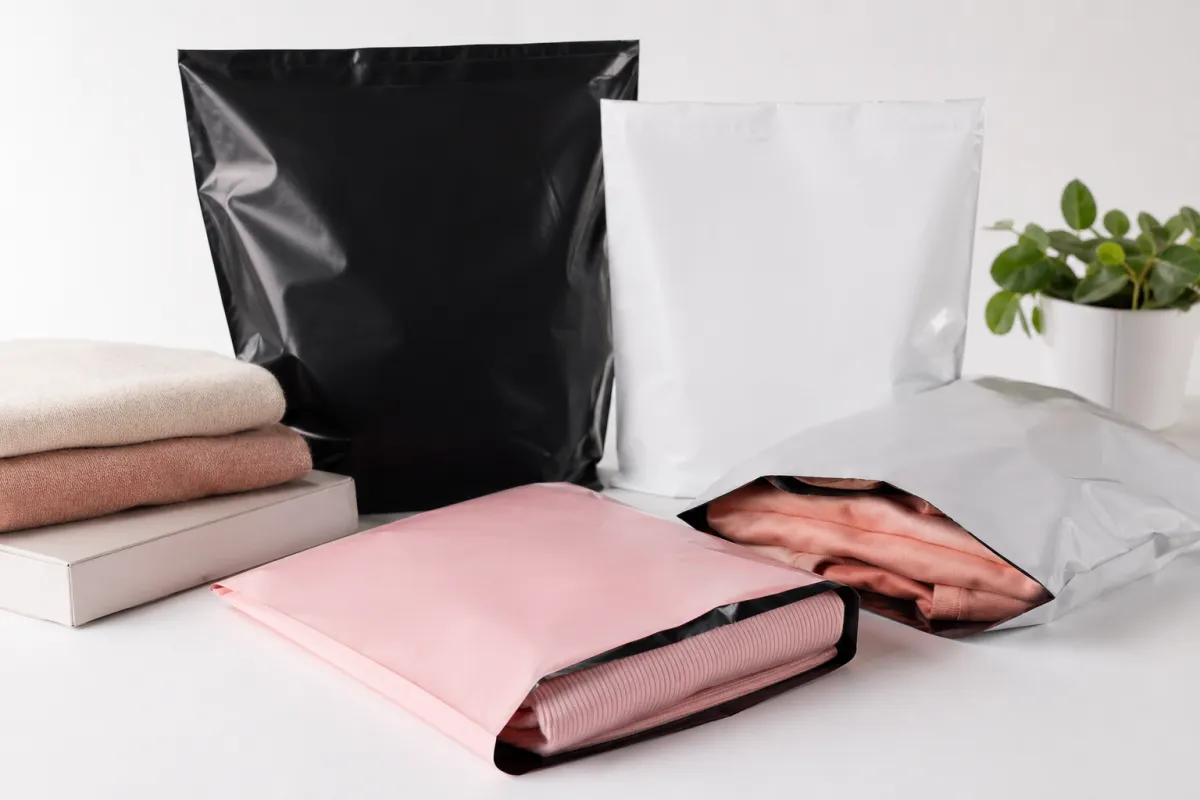
They do both at once, which is why so many small brands keep returning to them after a first trial run. A printed bag gives the customer a visual cue before the product is even fully opened, and it gives the packer a cleaner, faster system on the table. In practice, custom poly bags for small business can reduce sorting errors, make inventory easier to separate, and keep the packaging process more repeatable from one order to the next. That matters whether you are packing from a spare room, a back office, or a warehouse where three people are sharing one label printer and a lot of opinion. The bag is doing brand work and operations work at the same time, which is exactly why it earns its place.
Most founders underestimate how much work a bag can do. If your outer shipper is already a Custom Poly Mailers line, the inner bag can carry the same visual language all the way to the product itself. That matters for apparel, gift sets, accessories, and lightweight retail orders shipped from Atlanta or Reno. The real trick is not buying a fancier film. It is choosing the right size, the right print layout, and the right quantity so the bag speeds up packing instead of slowing it down. Because yes, a beautiful package that causes a bottleneck at the table is just expensive clutter with better typography.
What Are Custom Poly Bags for Small Business?
At the simplest level, custom poly bags for small business are polyethylene bags printed or finished with a logo, color system, sizing details, warning copy, or other brand markers so the bag does more than contain an item. They can be clear, frosted, or opaque. Closure options range from adhesive strips to zipper seals, fold-over tops, and heat-sealed edges, depending on how the product moves through the packing table. A plain bag holds a product. A custom bag does that job and tells the customer who made it before they even touch the item inside. That matters more than some founders want to admit, especially when the bag is a $0.15 line item on a 5,000-piece run.
That is why custom poly bags for small business show up so often for T-shirts, leggings, socks, scarves, candles, notebooks, jewelry cards, and subscription inserts. These products are light enough for polyethylene film and valuable enough that the owner wants them to arrive clean, sorted, and presentable. On a production line, that matters more than people realize. A printed bag creates a visual cue, which cuts down on mix-ups when one table is handling three sizes and two seasonal colors. In one apparel shop outside Atlanta, a switch from plain bags to color-coded printed panels cut mis-picks enough to save roughly 20 minutes on every 500-piece batch. Twenty minutes sounds small until you multiply it by a month of orders and a team already running hot.
The other reason custom poly bags for small business matter is that they live at the intersection of packaging design and operations. A brand that already uses custom printed cartons for hero items can keep the same typeface, icon, or color story in the bag without adding a heavy box around every piece. That is useful for small companies that need presentation, but also need to keep freight weight down. Polyethylene film adds almost no shipping weight and still protects against dust, light moisture, and shelf wear. A 2 mil bag is often enough for soft tees. A 3 mil bag gives more confidence for pieces with zippers, snaps, or rough edges. I am opinionated about this: too many small brands overspend on outer packaging while underthinking the inner layer that customers actually touch first.
One mistake keeps showing up in the field: people treat a printed bag like decoration. It is not decoration alone. It is inventory control, product presentation, and part of the shipping plan. On a supplier floor in Shenzhen, the cleanest programs shared one rule: every piece of packaging had a reason for being there, whether that reason was branding, protection, or speed. That is the mindset that makes custom poly bags for small business work. If the bag is only pretty, it is underperforming. If it is only functional, it is leaving money and brand memory on the table. The sweet spot is annoyingly practical, which I mean as a compliment.
How Custom Poly Bags for Small Business Are Made
The core material is usually polyethylene, most often LDPE or HDPE. LDPE, or low-density polyethylene, has a softer hand and a quieter crinkle, which suits apparel and retail packaging that needs a smoother finish. HDPE, or high-density polyethylene, feels firmer and often offers impressive strength for its gauge, so it fits products with sharper corners or a tougher handling profile. For custom poly bags for small business, thickness matters just as much as resin type. A 1.5 mil bag may be enough for very light items. Two mil is a common sweet spot for shirts and soft goods. Three mil and above starts making sense once the product gets heavier, broader, or more likely to rub against itself during transit. I have watched buyers chase the cheapest spec only to discover that a bag saved two cents and cost them a headache every week after that.
Printing usually happens through flexographic or digital methods, and the choice shapes both cost and finish. Flexo uses plates, so it tends to reward larger runs and repeatable artwork. Digital printing gives more flexibility for short runs or artwork that changes often, though exact capabilities depend on the plant and the film. I once stood beside a press in Ohio where a clean logo on a monitor still needed a file cleanup pass before it could print sharply on 2 mil film. That is normal. Polyethylene stretches, and if the artwork sits too close to a seal line or the type is too thin, the finished bag can look fuzzy or shifted. For custom poly bags for small business, vector files in PDF, AI, or EPS format prevent a lot of pain later. Raster files can work in some cases, but honestly, they are usually the packaging equivalent of bringing a butter knife to a screwdriver job.
Finishes and add-ons can stay simple or get very specific. Some bags need a self-seal adhesive strip for faster packing. Others need a zipper because the customer will open and close the bag multiple times. You may also see suffocation warnings, vent holes, hang holes, frosted film, clear film, or opaque film depending on the product and the sales channel. Hang holes matter more than many buyers expect. A retail peg board can keep a bag neat and upright, while a shelf edge can make the same product look slumped and tired. For custom poly bags for small business, those details turn a generic bag into the right bag. And the right bag is the one your team can use without muttering under its breath all afternoon.
A simple production timeline
Most custom poly bags for small business orders follow the same chain: file review, proofing, production, curing or drying, packing, and shipping. In clean cases, proof approval to finished goods can take about 12 to 15 business days. Complex print, extra revisions, or a busy plant will stretch that window. A workable timeline often looks like this: 1 to 2 days for artwork cleanup, 1 to 3 days for digital or plate proofing, 4 to 7 days for production, 1 to 2 days for inspection and packing, then freight time based on ground or ocean service. Bad files and missing compliance copy add days fast. Most delays are paperwork delays, not press delays. I say that because I have seen people blame the machine when the real villain was a missing line of copy buried in somebody’s inbox.
That is why early proof approval matters. A factory can run film quickly, but nobody wants a press stop because a warning line is missing or the logo sits 3 mm too close to the edge seal. A supplier worth using will say that upfront. A buyer worth keeping will listen. That back-and-forth is part of making custom poly bags for small business look polished instead of hurried. And if the supplier is unusually relaxed about artwork checks, I would treat that as a warning sign, not a perk.
Custom Poly Bags for Small Business Pricing and ROI
Pricing for custom poly bags for small business usually comes down to five levers: bag size, film thickness, number of print colors, total quantity, and special features such as adhesive closures or zipper tops. A small 9 x 12 inch bag in 2 mil LDPE with one-color print is a very different job from a 14 x 20 inch bag in 3 mil frosted film with two colors and a resealable strip. Bigger bags use more material. More colors take more machine time. Flexo jobs also carry plate fees, and those often land somewhere around $80 to $150 per color depending on supplier and artwork complexity. I have seen quotes fall apart because a buyer asked for four colors when a one-color layout would have said the same thing with half the fuss.
The unit price tells only part of the story. A 5,000-piece order may look expensive until you compare it with damaged returns, slower packing, or a brand that looks unfinished in customer photos. In one small apparel account I worked with, a move from plain 2 mil bags to printed 3 mil bags added about $0.06 per unit. The team gained enough speed at the pack bench to lower labor by roughly 10 minutes per 200 orders. That is not glamorous, but it shows up in the monthly P&L. Custom poly bags for small business should be treated as a working asset, not as a line item to shrug at. Honestly, I think that mental shift is half the battle.
Here is a pricing snapshot I have seen in the field. These are planning numbers, not a live quote, but they are useful when you are comparing specs before requesting samples.
| Option | Typical Use | Common Spec | Typical Unit Price at 5,000 | Notes |
|---|---|---|---|---|
| Entry-level printed bag | Soft goods, tees, basics | 2 mil LDPE, 1 color, adhesive flap | $0.15-$0.22 | Low setup, clean branding, useful for high-volume basics |
| Premium retail bag | Gift items, accessories | 2.5 mil frosted LDPE, 1-2 colors, resealable strip | $0.24-$0.34 | Better shelf presentation, slightly higher material cost |
| Heavy-duty printed bag | Items with corners or hardware | 3 mil LDPE or HDPE, 2 colors, adhesive seal | $0.22-$0.31 | More protection, better for repeated handling |
| Special feature bag | Subscription kits, retail sets | 3 mil, vent hole, hang hole, zipper closure | $0.28-$0.42 | Higher setup, strongest merchandising and unboxing value |
ROI gets clearer once you map the bag against monthly sales. Ship 3,000 orders a month and save even one damaged replacement for every 150 orders, and the bag is doing more than holding film. It is reducing refunds, reships, and customer service time. That is especially true in photo-heavy categories like apparel and beauty accessories, where a scuffed sleeve can drag down conversion on social channels. I also like comparing custom poly bags for small business with other packaging line items such as void fill, printed tissue, or a heavier carton. Sometimes the bag lets you remove another material and keep the total package cost close to flat. That kind of swap is where the quiet savings live.
If your brand already buys custom inserts or Custom Printed Boxes, ask whether one standardized bag size can cover several SKUs with only minor folding changes. A jewelry brand I worked with cut inventory cost by nearly 18% after moving three overlapping bag sizes into two standard sizes and widening the adhesive flap for the awkward SKU. That kind of adjustment makes custom poly bags for small business work harder than they look. It also reduces the number of times someone has to squint at the table and guess which bag "should fit, probably." Guessing is not a strategy; it is a stress habit.
Waste and source reduction deserve a place in the math too. The EPA has useful guidance on Reducing Packaging Waste, and the International Safe Transit Association publishes clear testing language for transit performance. Those references help when you need to explain why a heavier gauge or stronger closure is worth the extra cent or two. Their resources are worth reviewing at EPA waste reduction guidance and ISTA packaging test standards. Good custom poly bags for small business are not just about print. They are about the path from packing table to porch, and the path is where bad packaging quietly becomes expensive.
How to Choose the Right Custom Poly Bags for Small Business
Start with the product, not the bag. Measure the item at its widest, tallest, and thickest points, then add the fold or tuck space the packer needs to insert it without forcing the film. Soft goods usually need at least 0.5 to 1 inch of extra width so fabric does not bunch against the seal. Rigid or semi-rigid items may need more room because corners occupy more space than they appear to. That is where custom poly bags for small business pay off: the right size looks tidy, speeds up packing, and avoids the overstuffed look that makes a brand seem careless. I have never met a founder who wanted a crumpled bag but somehow ended up with one anyway.
Gauge selection should stay practical. Thin film can work beautifully for a folded T-shirt, then fail the moment a zipper pouch or metal accessory with sharp edges enters the picture. A 2 mil bag often works for apparel. A 2.5 mil or 3 mil bag brings more confidence when the item is handled several times, stacked in bins, or shipped through a rougher parcel network. I watched a Texas client choose 1.5 mil film for scented sachets, then move to 2 mil after the product corners began poking through the fold line during packing. That tiny gauge change dropped damage claims fast. With custom poly bags for small business, the cheapest spec is not always the smartest spec.
Closure style changes labor more than many buyers expect. An adhesive flap is ideal when speed matters and the bag is opened only once, because the packer can seal it in one motion. A zipper or resealable closure makes sense for items customers may open, store, and reuse, especially in apparel, refill products, and subscription kits. A fold-over top is simple and low cost, but it asks for a steadier hand at the pack station. If your team is moving 800 orders in a shift, the closure style can change labor as much as the print does. That is why custom poly bags for small business are both a design choice and an operations choice. I would argue they are also a morale choice; nobody loves fighting a bag at 4:45 p.m.
Color and print strategy should match the brand experience. Clear film keeps the product itself visible. Frosted film softens the presentation and feels more premium. Opaque film works when privacy, light protection, or bold graphics matter more than visibility. If your company already uses strong logo colors on mailers or product packaging, keep the bag in the same visual family so the customer recognizes the brand in the first second. That is the point of package branding: the package should feel connected, not random. Some brands do best with a clear bag and one black logo. Others need a full-color panel for shelf impact. The right answer depends on the product and the customer expectation. There is no prize for making the packaging more complicated than the buyer can process in two seconds.
- Choose clear film when the product color or texture should stay visible through the pack.
- Choose frosted film when you want a softer premium feel without hiding the contents completely.
- Choose opaque film when privacy, light protection, or bold graphics matter more than visibility.
- Choose a resealable closure when the customer is likely to reuse or store the item.
The best test is simple: place the product in the bag, seal it, and look at it under the same lighting your customers will see, whether that is a warehouse fluorescent strip in Chicago, a retail shelf in Austin, or a phone camera in a bright kitchen in Phoenix. Beautiful files can look flat under bad light. Basic files can look excellent under the right light. Custom poly bags for small business should be judged in context, not in isolation. I have had a bag that looked merely fine on a desk turn into the prettiest thing in the room once the light changed by two feet. Packaging is irritatingly sensitive that way.
Step-by-Step: Ordering Custom Poly Bags for Small Business
Ordering custom poly bags for small business runs more smoothly when you treat it like a production job instead of a casual quote request. I start with product measurements, because a supplier cannot recommend the right flat bag or gusseted style without width, height, and depth. Then I move to artwork, because once the size is set, the print zone can be laid out properly around seals, vents, or zipper lines. The last thing you want is a logo that looks perfect on screen and gets clipped 4 mm by a side seal. That mistake is classic factory-floor material, and it is avoidable. It also tends to show up right after somebody says, "It should be fine." Those are dangerous words in packaging.
- Measure the product at its widest and tallest points, plus the fold space.
- Choose the film by deciding between LDPE, HDPE, clear, frosted, or opaque.
- Pick the closure that fits your packing speed and customer use case.
- Send artwork in vector format with color references and any warning text.
- Review the proof for size, placement, spelling, and barcode or legal copy.
- Approve sample or mockup before the final run if the item is high-value or brand-sensitive.
- Release production only after the spec sheet matches what your fulfillment team can actually use.
Suppliers usually need a specific set of details up front: exact dimensions, gauge preference, print colors, artwork files, closure style, and the expected monthly or annual quantity. Product photos help too, because the supplier can see whether the item is soft, rigid, textured, or likely to snag. That cuts down on back-and-forth email and often prevents the classic mistake of over-ordering a spec that looks nice but is awkward to pack. For custom poly bags for small business, better input usually means a cleaner quote. Less email ping-pong is a gift to everyone involved, including the person who has to reconcile the estimate with a spreadsheet at the end of the week.
Where delays usually happen
Most delays come from artwork corrections and proof approvals, not from the film run itself. I have seen an order stall for five days because the logo file had embedded fonts and the buyer was missing a one-line compliance statement. I have also seen a different order move quickly because the buyer sent a clean AI file, a signed spec sheet, and the final count in the first email. A realistic plan for custom poly bags for small business is 1 to 2 days for file review, 2 to 4 days for proof revisions if needed, 7 to 10 business days for production after approval, then transit time based on freight mode. That is fast enough for most small brands if planning starts before shelves are empty. Wait until the last roll of bags is in use and you will suddenly discover your definition of "urgent" is not the factory's definition.
A short internal checklist keeps the process moving:
- Logo in vector format, not a screenshot.
- Exact bag dimensions in inches or millimeters.
- Target quantity, including a 5% buffer for waste or sampling.
- Any compliance text, such as suffocation warnings or material notes.
- Preferred ship date and receiving address for freight planning.
At one client that switched from plain bags to custom poly bags for small business, the biggest win was not the print itself. The packers stopped guessing. The new spec sheet told them exactly which SKU fit which bag, and that saved time every hour of the shift. Discipline in the order process matters as much as the film. I know that sounds unromantic, but packaging rarely rewards romance.
Common Mistakes With Custom Poly Bags for Small Business
The most common mistake is sizing the bag too tight. A bag that looks fine on a flat mockup can become irritating in production if the product has a hem fold, a tag, a hanger card, or a small box inside it. Once the packer has to wrestle the bag, speed falls and seal quality drops. The opposite problem is going too large, which lets the product slide around and creates a sloppy presentation that looks unfinished in photos. Good custom poly bags for small business should feel tailored, not oversized. Tailored does not mean fussy. It means the bag behaves like it was picked on purpose, which is a nice thing for a customer to subconsciously infer.
Artwork mistakes show up just as often. Low-resolution logos, tiny type, missing bleed, and crowded layouts all cause trouble on film because the print area is unforgiving. I have seen a brand place a beautiful script logo 2 mm from a seal, then discover that press shift made the edge look cropped on every third bag. That is why I push vector files, simple color counts, and enough space around the print zone. If the bag will be heat sealed, keep critical art away from the seal edge. The film will not fix poor layout. Better layout will. That is the difference between good and bad custom poly bags for small business. It is also the difference between "this looks polished" and "who approved this?"
- Wrong gauge: too thin for sharp hardware, too thick for light apparel, and both choices add cost.
- Wrong closure: adhesive for a product that needs reuse, or zipper for a product that never opens again.
- Skipped sample: a full run without a hands-on sample can hide print shift, fit issues, or color mismatch.
- Missing compliance copy: warning text, recycling notes, or retail requirements left until the last minute.
- Poor inventory planning: ordering 12 months of bags for a product line that changes every quarter.
Compliance and consistency carry quiet risk. Depending on your sales channel, packaging may need warnings, material identifiers, or retail-ready copy, and that text should be reviewed before the press starts. I have also seen brands skip samples because speed felt more urgent, then spend twice as long fixing a whole run that was the wrong shade of white or the wrong width by 0.25 inch. That is an expensive lesson. With custom poly bags for small business, a $50 sample set can save a $2,000 mistake. And yes, I have seen people argue over the sample fee while standing next to a much larger production invoice. The irony is never subtle.
One more issue is underestimating how the bag behaves in the real world. A bag that looks fine on a desk may not hold up when the packer drops it into a mailer, stacks it on a cart, or slides it through a heat sealer. If your product has corners, hardware, or repeated handling, choose the gauge as if the bag will meet a rough day, because sometimes it will. That is not pessimism. That is factory math. Packaging has no patience for wishful thinking, which is rude of it, but there it is.
Expert Tips and Next Steps for Custom Poly Bags for Small Business
If you are new to custom poly bags for small business, start with the best-selling product line first. Five sizes and three print styles can wait unless you already know the pack workflow and the monthly sell-through. I like testing one core SKU, reviewing the actual packing result, and expanding from there. That keeps inventory lean and gives real data on whether the bag is too loose, too tight, or just right. In a small candle operation I advised near Charlotte, we started with one 4 x 8 inch bag for a single candle size, then added two more widths only after the first run showed how the label and the dust sleeve behaved together. That kind of restraint feels slow in the moment, but it usually saves money and one or two headaches you did not need anyway.
Request samples early and check them three ways: on a shelf, in a photo, and in your hand during the unboxing moment. Those views tell different stories. The shelf test shows whether the print has enough contrast. The photo test shows whether the camera catches glare on frosted film. The hand test shows whether the closure feels cheap, sturdy, or awkward. If you already use retail packaging or a box line, compare the bag beside your current materials so the brand stays visually consistent. That helps brands selling through Instagram, boutique wholesale, and direct-to-consumer channels at the same time. Consistency sounds boring until you see how much easier it makes the brand feel to people who only gave you five seconds of attention.
Before you ask for a quote, collect three things and the supplier can move much faster: product dimensions, monthly order volume, and artwork files ready for production. Add a short note on packaging goals, such as "better shelf look," "faster packing," or "lower damage risk," because those goals help the supplier choose between 2 mil and 3 mil, clear and frosted, adhesive and zipper. Custom poly bags for small business are easiest to buy well when the brief is specific. Vague asks tend to get vague answers, and vague answers are where budgets go to wander off.
Some products deserve a heavier or better tested package. If the order is moving by parcel and the product has corners, ask whether the spec should align with common transit expectations such as ISTA 3A testing. If your brand is trying to reduce waste in the broader packaging system, the EPA guidance on source reduction can help you explain why one bag replaced two layers elsewhere in the pack-out. If your line includes paper cartons or inserts, ask whether those paper components can carry FSC chain-of-custody certification so the whole system tells a cleaner sourcing story. Customers notice packaging details even when they do not know the standards by name. They may not say "chain-of-custody certification" out loud, but they absolutely notice when a package feels coherent. A 350gsm C1S artboard insert beside a clean poly bag, for example, can make the whole set feel like it came from one disciplined production plan instead of three separate purchasing decisions.
My last piece of advice is simple: compare two material options, request a proof, and finalize the spec sheet before you place the order. That sequence avoids most of the expensive surprises I have seen on factory floors, whether the job was in a small regional converter in Dongguan or a larger plant near Ningbo running multiple lanes. If you do that, custom poly bags for small business stop being a guessing game and become a repeatable part of your package branding system. And honestly, repeatability is one of the loveliest words in operations. Not sexy, but lovely.
For brands that want a broader packaging plan, it helps to review Custom Packaging Products alongside the bag spec so the bag, mailer, and insert cards carry the same visual language. I have watched that kind of consistency make a modest brand look much more established, especially when the same logo sits on the bag, the mailer, and the product label with clean spacing and the same black ink density. That is not just aesthetics. It is operational clarity and customer trust working together. One good system is worth more than three separate packaging decisions made in isolation and regretted in the warehouse.
What size custom poly bags for small business should I order?
Measure the product at its widest and tallest points, then add room for folding, insertion, and a clean final appearance. If the product is soft goods like apparel, allow extra width so the film does not stretch too hard or make the bag look overstuffed. For many garments, a test sample in 2 mil or 3 mil film is the fastest way to confirm the right fit before you place a full order for custom poly bags for small business. I would rather see a sample that feels slightly boring than a bulk order that arrives looking like it was measured with optimism and vibes.
How much do custom poly bags for small business usually cost?
Pricing depends on size, gauge, print colors, and quantity, with setup and minimum order requirements playing a major role. Smaller runs usually cost more per bag, while higher volumes often lower the unit price significantly, especially when the artwork is simple and the film spec is standard. A one-color 2 mil order at 5,000 pieces can land near $0.15 per unit, while a frosted resealable bag is rarely in the same price band, so it helps to compare the spec, not just the headline number, when planning custom poly bags for small business. If a quote looks suspiciously low, I usually ask what got left out.
How long does it take to produce custom poly bags for small business orders?
Timeline depends on artwork readiness, proof approval, material availability, and the print method used. Orders move fastest when the logo file is clean, the dimensions are finalized early, and proofs are approved without revisions. In a straightforward run, I usually expect about 12 to 15 business days from proof approval to finished goods, though freight and seasonal plant load can add more time for custom poly bags for small business. If you need them faster than that, be prepared to pay for urgency or simplify the spec. Packaging, like most manufacturing, dislikes being rushed for free.
Are custom poly bags for small business good for shipping protection?
Yes, they protect lightweight items from dust, scuffs, and light moisture during packing and transit. For sharp, heavy, or fragile products, pair them with the right gauge and additional outer packaging if needed, because the bag is not meant to replace every other layer of protection. The smartest use of custom poly bags for small business is as part of a package system, not as the only defense. I think that distinction matters more than people realize, especially once the product leaves your building and starts living a life you cannot micromanage.
What should I send my supplier for a custom poly bag quote?
Provide product dimensions, estimated quantity, desired material or gauge, print colors, closure style, and artwork files. If possible, share photos of the product and how you want it packed so the supplier can recommend the best spec. That one step helps the quote reflect reality instead of guesses, and it makes it much easier to choose custom poly bags for small business that fit the product, the budget, and the packing line. The more concrete the brief, the less likely you are to end up in a six-email exchange that should have been one well-written paragraph in the first place.

