Buyer Fit Snapshot
| Best fit | Custom Window Carton Boxes Order projects where brand print, material claims, artwork control, MOQ, and repeat-order consistency need to be specified before quoting. |
|---|---|
| Quote inputs | Share finished size, material target, print colors, finish, packing count, annual reorder estimate, ship-to region, and any compliance wording. |
| Proofing check | Approve dieline scale, logo placement, barcode or warning zones, color tolerance, closure strength, and carton packing before bulk production. |
| Main risk | Vague material claims, crowded artwork, missing packing details, or unclear freight terms can make a low unit price expensive after revisions. |
Fast answer: Custom Window Carton Boxes Order: Specs, Pricing & More should be specified like a repeatable production item. The safest quote records material, print method, finish, artwork proof, packing count, and reorder notes in one written spec.
Production checks before approval
Compare the actual filled-product size with the drawing, then confirm tolerance on folds, seals, hang holes, label areas, and retail display edges. Reserve space for logos, QR codes, warning copy, and material claims before decorative graphics fill the panel.
Quote comparison points
Review material grade, print process, finish, sampling route, tooling charges, carton quantity, and freight assumptions side by side. A quote is only useful when the supplier can repeat the same color, closure quality, and packing count on the next order.
A custom window carton boxes order is often the better move when the product can do part of the selling itself. A loaf with a glossy crust, a candle with a clean label, a cosmetic set in a precise shade, a gift bundle that needs no explanation once it is visible through the pack - all of these benefit from a carton that reveals the product instead of hiding it behind ink and decoration. In a store aisle, that visibility changes behavior quickly. Shoppers do not have to imagine the item. They can see it.
I have watched packaging decisions swing on a matter of millimeters. In one plant review, a buyer approved a carton only after the window was shifted slightly higher so the product logo sat inside the opening instead of under the flap. The box did not become more expensive because it looked prettier. It became more effective because the structure and the merchandise were finally speaking the same language. That is the real value of a custom window carton boxes order: it aligns presentation, protection, and shelf clarity without wasting material on decoration that does not move the sale forward.
There is a practical logic behind every good custom window carton boxes order. The job is not to make a carton look luxurious for its own sake. The job is to Choose the Right board, the right opening, and the right structure so the pack protects the product, fits the line, and stays within budget. Packaging teams usually care far more about whether the box survives production, shipping, and retail handling than whether the mockup looked dramatic on screen. That instinct is healthy.
Why a Custom Window Carton Boxes Order Pays Off Fast
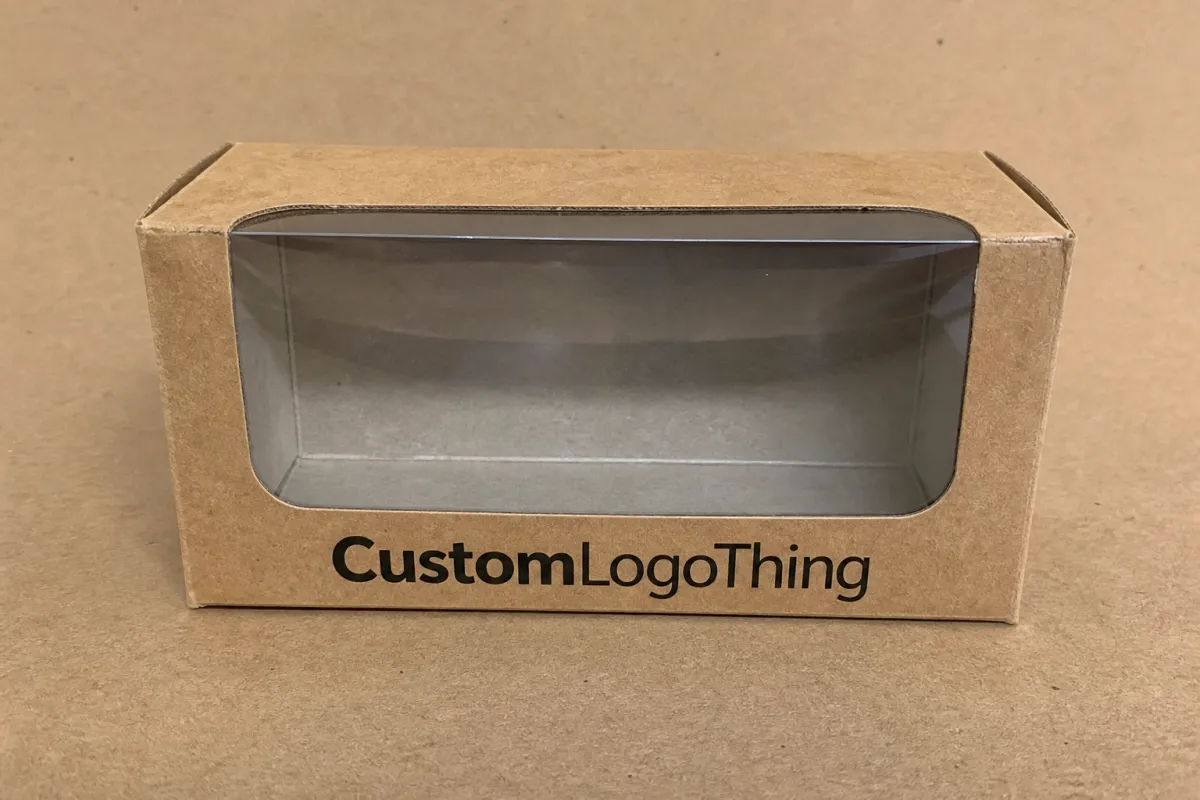
Most products do not need another layer of print. They need exposure. That is why a custom window carton boxes order can pay back quickly. The opening gives customers a direct view of the product's color, texture, fill level, or shape before they even touch the package. On a crowded shelf, that can shave off hesitation. A few seconds may sound minor, but in retail those seconds often decide which SKU leaves with the shopper.
Retail buyers want fast recognition. Shoppers want certainty. A window carton gives both. Bakery items, candles, beauty kits, gift bundles, and small accessories all benefit from that direct look inside. The carton stops asking the shopper to trust the artwork alone. It shows the actual item, which usually carries more weight than another decorative effect. I have seen clean, restrained packs outperform louder ones simply because the product was visible and the wording was easy to read at arm's length.
A custom window carton boxes order also supports package branding because the logo, the product name, and the window can work as one system. There is no need to cover every panel in ink just to prove the carton is custom. A cleaner layout often reads as more premium because it leaves room for the product to do some of the work. That is strong retail packaging, not a box pretending to be upscale.
The commercial upside is straightforward. Window packs often shorten the path from shelf to purchase because the shopper does not have to guess what is inside. That benefit shows up most clearly with:
- Bakery and confectionery packs
- Candles and home fragrance
- Cosmetics and skincare sets
- Apparel accessories like socks, ties, or scarves
- Gifts, sample kits, and seasonal bundles
- Small consumer goods that benefit from visible color or shape
Knowing where a custom window carton boxes order earns its keep matters. Fragile items, light-sensitive products, and packs that need full tamper protection may be poor candidates. A window makes more sense when the product looks stronger through a clear opening and the brand wants retail presence without overbuilding the carton. That tradeoff is not glamorous, but it is useful.
A window carton can lower print complexity while raising perceived value. That sounds simple because it is. Smart packaging design spends where the customer can see the value and trims where the customer cannot. The result is often stronger than a fully covered carton that hides the very thing it is supposed to sell.
Compared with plain folding cartons and Rigid Gift Boxes, the window carton often lands in the middle. It still ships efficiently, still works as a custom printed boxes format, and is generally easier to store than fully assembled premium packaging. For many launches, that middle ground is exactly where the economics start making sense.
Custom Window Carton Boxes Order: Product Details That Matter
Before anyone quotes a custom window carton boxes order, the box has to be defined as a working object. A folding carton with a clear insert is not the same as a sleeve-and-tray structure. A straight tuck box behaves differently from an auto-lock bottom. Structure shapes cost, feel, assembly time, and shipping behavior. Buyers who skip that conversation often pay for revisions later.
Common styles include reverse tuck end, straight tuck end, auto-lock bottom, sleeve and tray, and custom die-cut structures. Each one solves a different problem. Tuck boxes are efficient and ship flat. Auto-lock bottoms improve strength for heavier products. Sleeve-and-tray packs create a more deliberate reveal. A custom die-cut format gives precise control over where the window sits and how the product is framed. The right choice depends on whether the product is meant to feel easy, premium, compact, or all three in sequence.
The window itself can be built in several ways. A custom window carton boxes order may use clear PET for high visibility, PVC for lower-cost runs where permitted, PLA for compostability goals when the supply chain supports it, or a paper-based film when the material story matters more than optical clarity. This choice affects more than appearance. It changes rigidity, clarity, and the claims the pack can reasonably make on shelf. I would not treat one film as a universal default; the better answer depends on market rules, disposal expectations, and product sensitivity.
Window shape changes the message. Full-panel cutouts show a lot, but they also remove more board from the face of the carton. Small oval or square windows preserve more strength. Product-shaped windows can be memorable, though they raise tooling complexity and increase the risk of tolerance issues. Clever shapes only work when they are tied to the product and the brand, not when they are added because a mockup looked attractive on a screen.
The best custom window carton boxes order usually balances three things: visibility, board strength, and packing efficiency. If the product moves through a line quickly, a simpler window can save labor. If the cartons are hand-packed, the opening can be more decorative. The right choice depends on how the order will actually be filled, stored, and shipped, not on how it looks in a render. That point sounds obvious, yet it is where many projects drift off course.
Visual merchandising has real weight here. A customer compares SKUs faster when the packaging lets them see the item. That matters in stores where color, fill level, or shape drives the purchase. A window also lowers friction for first-time buyers who do not know the brand yet. They see the product. They recognize it. The sale becomes easier.
For a brand building a line, a custom window carton boxes order can keep the range visually consistent. The same carton style can be used across products with different window sizes, which keeps the shelf presentation orderly and the reordering process less chaotic. That is one of the easiest ways to make product packaging look organized without adding complexity to production.
A good window carton does not shout. It removes clutter, frames the product, and gives the buyer a reason to trust the first glance. That is what strong branded packaging does best.
Specifications for Size, Board, Window Film, and Finish
A strong custom window carton boxes order starts with measurements, not mood boards. Share the exact product dimensions: length, width, depth, and weight. If the item has a top flap, a fragile corner, a hanging insert, or a curved profile, that should be on the brief too. The factory needs to know how the product enters the carton and how much room it needs so the box does not crush, bow, or force the item sideways during packing.
Board selection comes next. SBS is common for crisp white print and sharp graphics. C1S gives coated print on one side and a more practical interior. C2S works when both sides need a clean presentation. Kraft suits earthy branding and certain eco-forward lines, though print vibrancy changes. For heavier products, some buyers pair folding carton outer shells with corrugated inserts or trays. That is not excessive when the item needs more support or the shipping conditions are rough. It is simply the cost of protecting the contents with less drama later.
Window size changes more than visibility. A wider opening exposes more of the product, but it also removes more board from the front panel. A smaller window keeps the carton stronger and can make the item feel more curated. For a custom window carton boxes order, the right answer depends on product weight and on how the carton will behave during packing, warehousing, and transit. A heavy candle in a large cutout can sag or flex in ways that are invisible in a mockup but obvious on a warehouse floor.
Finish choices should support the product, not compete with it. CMYK suits most artwork. PMS matters when brand color has to stay consistent across production runs. Matte lamination gives a quieter, more refined feel. Gloss reads brighter and often works well in mass retail. Soft-touch fits beauty, gifting, and other branded packaging where the customer will hold the box. Foil, embossing, and spot UV can sharpen the design, but they also raise cost and setup time. I have seen teams add three finishes to a carton that already had a strong window, only to make the pack feel overworked.
The practical rule is simple: do not stack finishes just to make the quote look more complex. In a custom window carton boxes order, the window already carries part of the visual weight. Add finishing only where it improves shelf appeal or strengthens the brand story. If the pack is doing its job, restraint usually looks better than excess.
| Option | Best For | Typical MOQ | Typical Unit Cost | Notes |
|---|---|---|---|---|
| Straight tuck carton with PET window | Light retail items, cosmetics, accessories | 500-1,000 pcs | $0.18-$0.35 | Lower setup cost, quick production, simple assembly |
| Auto-lock bottom carton with window | Heavier candles, jars, small gift items | 1,000-2,000 pcs | $0.26-$0.48 | Better base strength, slightly higher conversion cost |
| Sleeve and tray with window cutout | Premium presentation, gifting, bundle kits | 1,000-3,000 pcs | $0.38-$0.75 | More material and labor, stronger unboxing feel |
| Custom die-cut format with special finish | Launches, seasonal packaging, high-value SKUs | 2,000+ pcs | $0.45-$1.20 | Best visual impact, but tooling and revisions cost more |
Those numbers are not fixed, and they should not be treated as a menu. A custom window carton boxes order can move up or down based on board grade, print coverage, window shape, packing method, and order quantity. Even so, the table gives a realistic starting point instead of vague talk about "affordable" packaging. Affordable compared with what, exactly?
Compliance should be handled early. If the carton touches food, ask for food-safe materials and coatings suited to the use case. If the product will be shipped as part of an e-commerce bundle, check whether the pack should pass transit tests such as ISTA transit testing methods. If fiber sourcing matters, confirm the paperboard under FSC certification standards. Those decisions affect trust, not just print.
Recyclability needs a straight answer. Some windows are easier to recycle than others. Some coatings improve handling but complicate disposal. A custom window carton boxes order should be designed with the end of the pack in mind, not just the image on the sales sheet. If your brand promises responsible product packaging, the material stack should support that promise.
One operational detail matters more than many teams expect: ask whether the box ships flat or pre-glued. Flat shipping saves freight and warehouse space. Pre-glued cartons speed up assembly. The correct choice depends on labor cost, packing line speed, and order volume. A smart custom window carton boxes order begins with that question, not with the artwork file.
Custom Window Carton Boxes Order: Cost, Pricing, and MOQ
Price in a custom window carton boxes order comes down to board grade, size, print coverage, window shape, finishing, and total quantity. That is the core of the math. Larger runs spread setup cost across more units. More complex boxes raise tooling and labor. None of that is mysterious; it just gets buried behind vague quoting when nobody asks the right questions.
MOQ depends on the production route. Standard structures with simple print often begin at lower quantities, sometimes around 500 to 1,000 pieces. Custom die-cut shapes, special finishes, or more demanding window placements usually start at 2,000 pieces or more. A custom window carton boxes order built around a straight tuck structure is often easier to open at smaller quantities than a sleeve-and-tray pack with a custom insert. That difference matters when a launch is still testing demand.
There are hidden costs that catch buyers off guard. Die tooling is one. Sample builds are another. Window film upgrades can change the price if you move from a basic clear film to a higher-clarity or specialty material. Freight matters too, especially when the shipment is bulky. Inserts, glue work, and hand assembly can also push the price up once the design grows beyond the first quote. This is why the cheapest line item rarely tells the whole story.
A useful rule of thumb: on small runs, setup cost matters more than paper cost. On larger runs, material and finishing begin to matter more because the tooling spreads out over more units. That is why a custom window carton boxes order should always be quoted in at least two versions: one practical version and one upgraded version. If you only request one, you are guessing at the tradeoffs.
The cheapest quote is not always the right quote. The better quote is the one that balances appearance, protection, and margin. A box that saves three cents but damages the product or weakens shelf appeal is not a saving. It is a future expense with a tidy spreadsheet attached.
Ask for comparison pricing with controlled variables. Request the same dieline with two different window films, or the same board with two different finishes. A custom window carton boxes order becomes easier to approve when you can see exactly what gloss lamination adds, or how much foil stamping changes the unit economics. Concrete comparisons beat vague approvals every time.
Packaging design and cost are tied together in a less obvious way. A larger window does not always raise the price per piece, but it can increase waste and reduce structural efficiency. That matters on heavier items. For a light product, the larger opening may be fine. For a heavier one, a smaller window and stronger board often make more sense. The better quote should reflect that reality instead of pretending every carton behaves the same way.
Here is a practical pricing framework for a custom window carton boxes order:
- Low-complexity packs: lower MOQ, lower setup, lower unit price.
- Mid-tier retail packs: moderate finishing, moderate MOQ, balanced cost.
- Premium presentation packs: higher setup, higher MOQ, stronger shelf impact.
If you want a cleaner estimate, ask for both a budget version and a premium version of the same custom window carton boxes order. That makes the tradeoff easy to read. Soft-touch may be worth it for one launch and unnecessary for another. Either choice works if it is backed by numbers rather than wishful thinking.
Production Process, Timeline, and Lead Time
A custom window carton boxes order usually moves through a predictable chain: quote, dieline, artwork check, proof approval, sampling, production, inspection, packing, and shipment. If a supplier skips one of those steps, the issue usually shows up later in the process. Strong vendors do not rush past the dull parts. The dull parts prevent expensive mistakes.
Delays usually come from the same places. Missing dimensions. Wrong file formats. Window placement that clashes with the product shape. Too many rounds of revision. Slow signoff from the buyer side. Those problems are ordinary, which is exactly why they cause so much trouble. A clean custom window carton boxes order depends on tidy information from the start.
Timeline varies with complexity. Simple runs can move quickly, while custom die-cuts, specialty coatings, or large-volume orders take longer. A realistic production window for a straightforward custom window carton boxes order is often around 12-18 business days after proof approval, not counting freight. More complex work can run longer, especially if a physical sample is required and revisions follow. That estimate is useful only if the approval chain is disciplined.
Sampling becomes more valuable when the window fit is critical. A flat digital mockup can show artwork, but it will not show how the product sits in the carton, whether the cutout lines up with the label, or whether the box flexes in hand. When structure matters, ask for a physical proof. That is not being difficult. That is avoiding a bad launch.
Lead time also depends on buyer response time. The factory can only move as quickly as approvals allow. If a dieline sits for five days waiting on review, the schedule shifts. One person should own the timeline for a custom window carton boxes order. More hands in the approval chain usually means more delay, especially when legal, marketing, and operations all want a final say.
Shipping time has to be counted separately. A production run may finish on schedule, yet the cartons still need freight transit and customs clearance before they reach the warehouse or co-packer. Buyers often use "lead time" as if it includes everything. It does not. A proper schedule separates factory time from transit time and customs time.
If the order is tied to a launch, leave room for changes. Not because the factory cannot produce on time, but because packaging projects tend to pick up late adjustments. A logo shifts. A barcode changes. Legal copy gets edited. Someone decides the window should move a few millimeters. That is normal. A custom window carton boxes order with a hard launch date needs slack built into the calendar.
For e-commerce brands, the testing question looks different. If the carton has to survive parcel handling, ask whether it should be checked against transit standards. That does not mean overengineering every line. It means matching the pack to the route it will actually take. A window carton made for shelf display is not automatically the same carton you would use for a mailer.
Here is the cleanest way to manage the calendar:
- Approve dimensions and structure first.
- Confirm window size before artwork is finalized.
- Review proofs with real product measurements beside you.
- Lock the finish and film choice before sampling starts.
- Reserve freight time, not just production time.
Handled well, a custom window carton boxes order feels controlled. Handled poorly, it becomes a chain of avoidable revisions. The difference usually comes down to whether the buyer gave the supplier the right information early enough.
Why Choose Us for Custom Window Carton Boxes
We focus on the parts of a custom window carton boxes order that reduce mistakes and protect margin. Clean cutting matters. Window alignment matters. Stable color matters. Reorders matter too, because a packaging line is not the place for random changes in print quality or cut placement. If the first batch worked, the next one should work the same way.
Support begins before production. We help with dieline guidance, artwork checks, material recommendations, and quote options that fit the budget you actually have. That should not be unusual. It should be normal. Too many packaging suppliers treat a simple measurement request like a favor. It is not. It is part of the job.
A reliable custom window carton boxes order should include quality checkpoints at the material stage, the print stage, and the final packing stage. That means checking board thickness, verifying artwork placement, confirming the window cut, and reviewing the assembled carton before shipment. Skip one of those checks and the reject risk climbs fast. There is no drama in that, just process and physics.
Communication speed matters as much as print quality. Buyers need direct answers on MOQ, lead time, carton style, and what changes the price. If you ask whether a larger window will weaken the carton, you should get a straight answer, not a sales pitch. That matters even more for branded packaging and retail packaging, where the carton is part of the product story, not an afterthought.
We also help buyers compare options without padding the quote. Want a plain version and an upgraded version? Fine. Need a lower MOQ with a simpler structure? Fine. Need the window shifted so it protects a fragile label? Also fine. A custom window carton boxes order should be built around the product instead of forcing the product into a supplier-friendly template.
The value is plain: fewer mistakes, fewer revisions, fewer surprises. If the sample fits, the production run should match it. If the carton needs a change, you should know the cost before it is made. Good service in this category mostly means refusing to waste the buyer's time.
For brands that want a broader packaging system, we also support related formats through our Custom Packaging Products page and help teams compare bulk options through our Wholesale Programs. If you need general ordering help, our FAQ page covers the usual questions without the fluff.
What to Do Before You Place the Order
Before you place a custom window carton boxes order, gather the facts. Exact product dimensions. Target quantity. Artwork files. Finish preference. Window material choice. If you already know whether the box must be shelf-ready, gift-ready, or shipping-ready, include that too. A concrete brief leads to a sharper quote.
Then decide what matters most. Lower cost? Stronger retail presentation? A more premium unboxing feel? Usually you get two of those, not all three at the same price point. That is not a flaw in packaging. It is production math. If the goal of the custom window carton boxes order is to protect margin, make the priority clear before the first proof is drawn.
Check whether the product needs inserts, trays, or other support. A loose product inside a window carton looks careless. Worse, it can move during transit and rub against the film or panel. If the product is delicate or oddly shaped, ask for a fit check. A smarter custom window carton boxes order includes the internal support plan, not just the outer print.
It also helps to think about the outer shipping carton. Retail packaging covers only part of the job if the boxes arrive damaged. Ask how the finished cartons will be packed, how many units go into each export carton, and whether palletization changes the freight plan. That is the unglamorous part, and it is often where profit is either protected or lost.
If you are comparing suppliers, request two quote paths: one standard and one upgraded. Compare unit cost, MOQ, finish, and sample time. A custom window carton boxes order is much easier to approve when the options are laid out clearly. No fog. No sales theater. Just numbers and structure.
My advice is direct: confirm the dieline, approve the proof, review the sample, and move the job into production only after the window placement and fit are right. Then you are managing the launch instead of gambling with it.
Before any purchase order is signed, use this checklist for the custom window carton boxes order:
- Lock the product size, weight, and insertion direction.
- Choose the board grade and confirm whether the carton ships flat.
- Decide the window shape and film based on visibility and strength.
- Review the artwork on the dieline, not in a generic mockup.
- Test the sample with the actual product and the actual packing method.
If you complete those five steps first, the order is far less likely to drift into revisions, missed deadlines, or unnecessary cost. That is the practical takeaway: define the box around the product, not the other way around. A well-planned custom window carton boxes order is not just a packaging purchase; it is a control point for brand presentation, warehouse efficiency, and shelf performance.
FAQ
What is the MOQ for a custom window carton boxes order?
MOQ depends on size, board type, print complexity, and whether the structure needs a custom die. Standard styles usually allow lower minimums than highly customized window shapes or premium finishes. If you need a small run, ask for a standard dieline or simplified print to reduce setup costs. In many cases, that single change does more for budget control than trimming a finish option.
How much does a custom window carton boxes order cost per unit?
Unit price is driven by quantity, board grade, window film, print coverage, and finishing. Setup cost matters more on small orders, while larger runs spread those costs across more boxes. Ask for both a budget quote and a premium quote so you can compare price against presentation. The gap between them usually explains where the real spending pressure sits.
How long is the lead time for a custom window carton boxes order?
Lead time usually depends on proof approval, sampling needs, and the complexity of the box design. Simple orders move faster than custom die-cuts, special coatings, or large-volume runs. Shipping time should be counted separately so the real delivery date is clear. If the launch date is fixed, build in a cushion for last-minute artwork or compliance changes.
Can I customize the window shape in a custom window carton boxes order?
Yes, the window can be round, square, oval, product-shaped, or fully custom cut. More complex shapes can raise tooling cost and extend production time. The shape should support both visibility and structural strength, not just look clever. A shape that looks good in a mockup but weakens the front panel is usually a bad trade.
What files do you need to start a custom window carton boxes order?
Send product dimensions, quantity, artwork files, finish preferences, and any required compliance notes. A dieline or rough layout helps the factory confirm fit and window placement faster. If you do not have a dieline, ask the supplier to create one before production starts. That first setup step saves more time than most revisions.

