Buyer Fit Snapshot
| Best fit | Custom Die Cut Box Inserts projects where brand print, material claims, artwork control, MOQ, and repeat-order consistency need to be specified before quoting. |
|---|---|
| Quote inputs | Share finished size, material target, print colors, finish, packing count, annual reorder estimate, ship-to region, and any compliance wording. |
| Proofing check | Approve dieline scale, logo placement, barcode or warning zones, color tolerance, closure strength, and carton packing before bulk production. |
| Main risk | Vague material claims, crowded artwork, missing packing details, or unclear freight terms can make a low unit price expensive after revisions. |
Fast answer: Custom Die Cut Box Inserts: Board, Finish, Dieline, and Unit Cost should be specified like a repeatable production item. The safest quote records material, print method, finish, artwork proof, packing count, and reorder notes in one written spec.
Production checks before approval
Compare the actual filled-product size with the drawing, then confirm tolerance on folds, seals, hang holes, label areas, and retail display edges. Reserve space for logos, QR codes, warning copy, and material claims before decorative graphics fill the panel.
Quote comparison points
Review material grade, print process, finish, sampling route, tooling charges, carton quantity, and freight assumptions side by side. A quote is only useful when the supplier can repeat the same color, closure quality, and packing count on the next order.
Custom Die Cut box inserts are easy to dismiss until the first return lands on a desk with a cracked closure, a scuffed finish, or a product that has been rattling against the walls of its carton for three days straight. I have opened enough damaged samples over the years to know the pattern: the outer box still looks respectable, but the interior tells the truth. A good insert stops that drift, holds the item in place, and removes the empty space that turns a package into a percussion instrument. It is a small component with an outsized effect.
For brands that care about product packaging and package branding, the insert is not extra trim. It changes how the item ships, how it opens, how it feels in the hand, and how much filler ends up in the bin. Custom Die Cut box inserts also have a direct effect on material use. When they are sized well, they can reduce dead air, reduce the outer box size, and cut down on waste that would otherwise be stuffed around the product to keep it still. That matters for brands trying to make sustainability claims that survive contact with the warehouse, not just the pitch deck.
Brands balancing branded packaging, freight cost, and damage rates tend to discover the same thing: the insert is where the economics show up. A polished mockup tells one story. Parcel handling tells another. Custom die cut box inserts sit in the middle, translating design intent into something that can survive motion, compression, and a conveyor belt with no patience for cosmetic issues. I have seen a premium candle arrive looking expensive on the outside and oddly cheap inside, all because the insert let the jar wander half an inch during transit. Half an inch is not a lot in a design file. In a box, it can be the difference between polish and a return label.
Custom Die Cut Box Inserts: Why Loose Packaging Fails Fast
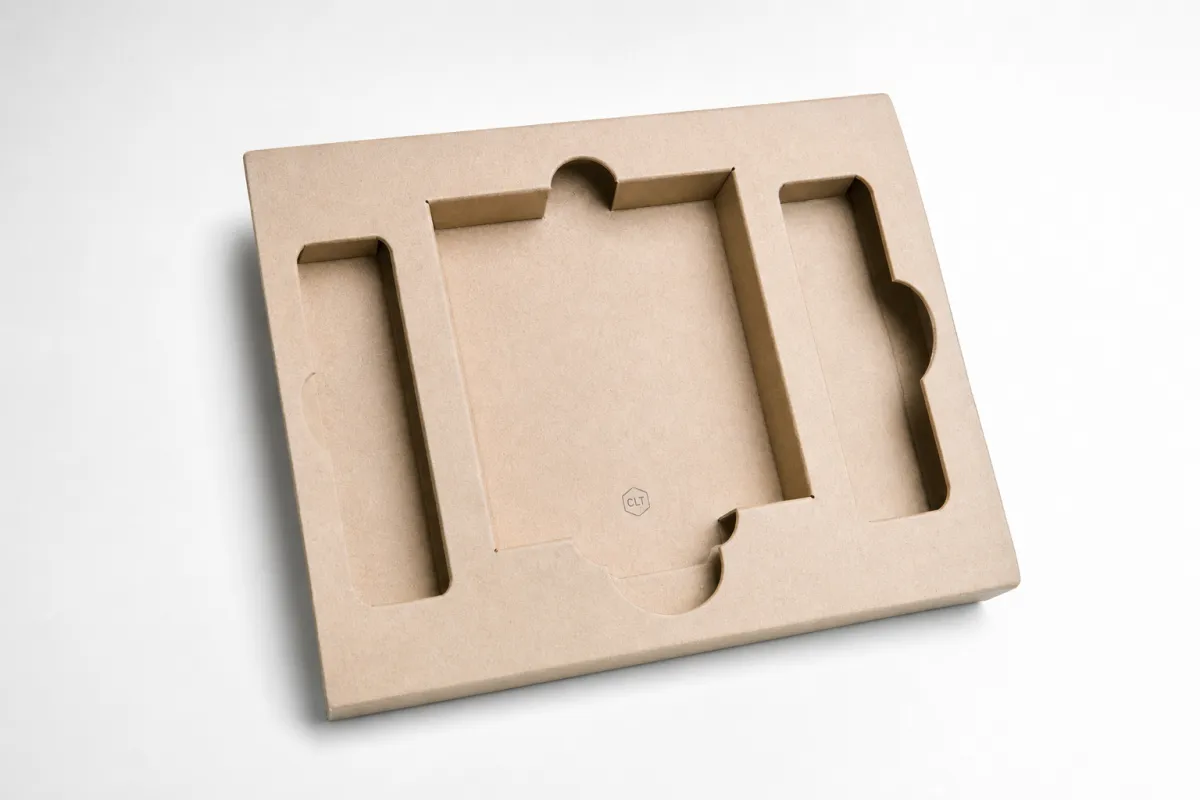
Loose packaging breaks down in familiar ways. The tape holds, the outer carton survives the trip, and the customer opens the box to find a chipped lid, a dented corner, or an accessory wedged into a corner like it was packed by somebody who ran out of time. The shipper did its job. The interior did not. Custom die cut box inserts solve that problem by giving the product a shaped home instead of asking loose filler to do structural work it was never built for.
Plain version: custom die cut box inserts are engineered pieces of board, corrugated stock, or fiber that lock a product or product set into a fixed position. They are cut to match the footprint, height, and clearance of the item so the pack does not depend on crumpled paper, loose foam, or an insert that only fits if the operator presses hard enough to bend the board. In premium retail packaging, that difference is obvious the moment the box opens. A product that shifts even a little can make the whole package feel careless. Paying for elegance and hearing a rattle is not a good trade.
There is a waste story here that goes beyond talking points. Custom die cut box inserts can reduce the amount of filler used, and in some layouts they can reduce the size of the outer carton as well. Less unused space means less material, smaller boxes, and often fewer headaches in warehousing and shipping. If the insert is doing its job, paper is not being shoved into dead air just to keep the item from moving. That is useful, not decorative. Useful usually wins.
“If the product can move, it can get damaged. If it can rattle, it will.”
That sentence sounds blunt because packaging damage is blunt. The real question is not whether the sample looks neat on a table. It is whether custom die cut box inserts protect the item after vibration, compression, drops, stacking, and repeated handling. A package can pass a quick visual check and still fail in a parcel network. For e-commerce and replenishment programs, that gap between appearance and performance is where the cost leaks out.
Premium custom printed boxes usually pair structure with presentation. The product lands in a defined position, and the reveal feels deliberate instead of improvised. Commodity packs often chase speed and low unit cost, which works until the item is expensive enough that one loose corner makes the entire shipment feel sloppy. Custom die cut box inserts bridge that gap. They hold the item still and give the package a finished look without loading it up with filler that only serves to take up space.
One practical benefit gets overlooked: a well-designed insert may keep the box from having to grow. Smaller dimensions can lower freight cost, improve pallet density, and simplify storage. That is not glamorous. It is just a better way to spend money.
If you need a broader packaging system beyond the insert itself, the team behind Custom Packaging Products can help map the full packout so the insert, outer carton, and printed graphics all work together instead of fighting for space.
How Custom Die Cut Box Inserts Work Inside the Box
Custom die cut box inserts work by converting a flat substrate into a controlled cavity. The die cuts the profile, the scores define the folds, and the structure creates pressure points that keep the product from drifting around inside the carton. A well-made insert has to do three things at once: support the weight, absorb shock, and limit movement without squeezing the item so hard that it scuffs the finish or turns assembly into a nuisance.
The geometry matters more than most teams expect. Standard foam blocks or off-the-shelf pulp trays can get close, but custom die cut box inserts can match the product’s actual footprint, height, and tolerance stack. That lets you account for cap overhangs, cord loops, label bulges, recessed buttons, nozzle tops, and any detail that changes the real shape of the item. Those small features decide whether the insert feels clean or whether the product has to be forced into place. One millimeter of arrogance in the drawing room can turn into a squeak, a scratch, or a box that only closes if somebody presses too hard.
Most buyers end up comparing a few familiar structures. A one-piece paperboard tray works well for lighter items and a cleaner presentation. A folded corrugated holder adds stiffness and suits heavier products or packages that need to survive stronger compression. Layered pads can separate items in a kit. Hybrid structures pair a presentation face with a stronger inner support, which is common in higher-end retail packaging and subscription kits. Custom die cut box inserts can also be designed as nested systems, with one piece holding the hero product and another keeping accessories from rolling around.
- Paperboard trays are best for light to medium products, cleaner print, and slimmer packouts.
- Corrugated inserts add rigidity and suit heavier items or stronger compression needs.
- Molded fiber helps when impact resistance and recycled content matter more than a crisp visual reveal.
- Hybrid inserts balance presentation and protection, especially for custom packaging used in retail and e-commerce.
The customer experience changes with the structure. A well-fit insert speeds up the unboxing because the product is centered, visible, and easy to lift out. Accessories stay in their place. Nothing falls into the bottom of the box. The package feels designed, not patched together at the last minute. That is why custom die cut box inserts show up so often in branded packaging programs; the insert does the quiet work while the outer carton carries the visual story.
The sustainability angle is easy to miss if you only look at the insert line item. When custom die cut box inserts reduce dead air, they can also reduce the outer box size. Smaller ship dimensions often mean lower freight charges and better pallet efficiency. Less board, less void fill, less wasted space. That is not a marketing flourish. It is just better packaging math.
If the insert needs to fit into a larger retail or shipping system, the full packout should be designed as one structure rather than a pile of parts. Custom die cut box inserts are strongest when the carton, insert, and graphics all agree about what the package is supposed to do.
Key Factors That Shape Sustainable Fit and Performance
Good fit starts with measurements, and not the convenient ones from a product catalog. Measure the widest point, the tallest point, and the deepest point. Measure again with closures, labels, cords, caps, handles, and surface finishes that protrude or compress under load. Custom die cut box inserts are built around real dimensions, not optimistic ones. A product that measures 90 mm on paper may need 96 mm of cavity clearance once the label seam, lid detail, or shrink band is included.
Weight matters just as much as size. A light cosmetic item can sit comfortably in recycled paperboard, while a dense glass bottle or electronics kit may need corrugated reinforcement or a thicker board grade. That is not a moral decision. It is a physical one. Materials are a tradeoff, not a slogan. Recycled paperboard is often ideal for lighter products and a clean presentation. Corrugated adds stiffness. Molded fiber can absorb impact well, though it brings its own tooling and finish considerations. Custom die cut box inserts should match the product’s stress points, not the mood board.
Movement tolerance is the variable teams skip because it sounds abstract. It is not abstract. You need a defined threshold for how much movement can happen before the product marks, rattles, or fails. A matte carton sleeve may show wear from a millimeter of motion. A sturdy jar may tolerate more. A glass bottle or printed device may not. Good packaging design does not just hold the item. It controls how the item behaves during vibration, drop impact, and repeated handling. In practical terms, that means the insert has to do more than look snug in a render. It has to feel stable when the box is shaken, tilted, and loaded by a tired person at speed.
Sustainability only holds up if the whole packout supports it. Recycled content helps. FSC-certified board can help too, where that sourcing choice fits the program. Then people add oversized cartons, heavy adhesives, multilayer laminations, or excess ink coverage that makes recycling harder. The benefit starts to disappear at that point. The EPA recycling guidance is a useful reminder that cleaner material streams tend to create fewer downstream problems. The same rule applies to custom die cut box inserts: fewer mixed materials usually means fewer headaches later.
Branding should reinforce function instead of burying it. A premium insert can make the reveal feel thoughtful, especially when paired with custom printed boxes or a restrained internal print treatment. I still see brands add extra layers because they want the package to feel elevated. That choice usually backfires if the extra layers add cost, weight, assembly time, or recycling friction without improving performance. The best custom die cut box inserts tend to look restrained. They do their work without noise.
Substrate selection should come from use case, not general claims. A recycled board insert may be perfect for a light skincare set. A corrugated insert may be the smarter option for a candle kit that ships by parcel. Molded fiber can make sense for heavier protection, but only if the finish, cost, and tooling all fit the rest of the program. That is the kind of judgment that separates disciplined retail packaging from expensive guessing.
Test for the channel the box will actually travel through. Parcel shipments face vibration, drops, and rough handling. Palletized freight creates different pressures. If the package will move through distribution networks, look at relevant test methods from ISTA and related protocols such as ISTA 3A or ASTM D4169 where appropriate. Standards will not rescue a weak design, but they do give buyers a cleaner way to compare options before committing to production. They also keep the conversation honest, which is handy when everyone is tempted to trust a pretty sample a little too much.
Custom Die Cut Box Inserts Cost, Pricing, MOQ, and Unit Economics
Pricing for custom die cut box inserts usually comes down to material, thickness, cut complexity, print coverage, finishing, and how many pieces fit efficiently on a sheet. A simple one-piece paperboard insert with a single cavity costs less than a multi-slot structure with tight cutouts and fold locks. More cuts mean more tooling complexity and more waste during setup. That is why two inserts can look nearly identical and still price very differently. The eye sees form. The quote sees labor, scrap, and setup.
MOQ behavior is plain once you strip away the sales language. Smaller quantities carry a higher unit cost because setup, proofing, die use, and waste are spread across fewer pieces. Larger orders flatten the cost curve. For custom die cut box inserts, prototype runs can still be worth paying for because a wrong fit on a first production run costs more than the sample ever will. It is cheaper to pay for one accurate sample than to pay for a warehouse full of incorrect packaging. That sounds obvious, but plenty of teams learn it the expensive way.
For planning purposes, I would use the following ranges as a buyer’s starting point rather than a fixed promise. At around 5,000 units, simple recycled paperboard custom die cut box inserts often land near $0.18-$0.35 each, depending on size and coverage. Folded corrugated versions commonly fall around $0.28-$0.65 each. More specialized molded fiber solutions can run roughly $0.40-$0.90 or more, especially when tooling, cavity count, or drying time adds complexity. Shorter runs can be far higher per unit. Larger runs can come down. That is unit economics in action, and it rarely flatters a tiny order.
| Insert Type | Typical Use | Typical Unit Range | Tradeoff |
|---|---|---|---|
| Paperboard die cut tray | Lightweight cosmetics, candles, small accessories | $0.18-$0.35 | Best visual presentation, lighter protection |
| Corrugated folded insert | Heavier products, shipping-focused retail packaging | $0.28-$0.65 | Stronger support, slightly bulkier packout |
| Molded fiber insert | Impact-sensitive items, recycled-content programs | $0.40-$0.90+ | Solid protection, tooling and finish can add cost |
| Hybrid structure | Premium custom packaging with a presentation layer | $0.35-$0.85+ | Balanced reveal and strength, more parts to assemble |
Piece price is only part of the equation. A slightly more expensive insert may save more money if it reduces breakage, replacement shipments, and customer service time. That matters a lot for glass, electronics, cosmetics with fragile closures, and subscription kits with multiple components. I would rather spend a few cents more on custom die cut box inserts than keep paying for preventable returns. Damage creates costs that never appear on the packaging line item until later, and that is exactly why bad packaging tends to stay hidden for too long.
Tooling also deserves attention. Simple structures can require modest setup, while more complex designs with tighter tolerances or multiple cavities need more investment. A short-run prototype makes sense when the product shape is still changing. Once the dimensions settle, production pricing usually improves. Good suppliers will show the break point instead of pretending every quote is equally "competitive." The numbers tell the truth faster than any sales language does.
Think in total landed value, not just piece cost. Custom die cut box inserts are supposed to protect the product, reduce waste, and support the brand. If a cheaper insert fails on arrival, it was not cheaper. It was simply hiding its cost in returns, rework, and lost trust. I've seen programs save a little on the insert and lose much more on second shipments. The spreadsheet is only honest if the damage column exists.
Process and Timeline: From Spec Sheet to Production
The production process for custom die cut box inserts usually starts with the product itself rather than the artwork. First comes the measurement review: dimensions, weight, fragile points, and any accessories that need separate support. Then comes the concept stage, where the supplier sketches cavity shapes and checks whether the product needs a snug hold, a floating cradle, or a wider clearance zone for easier packing. Fit comes first. Repeatability comes second. Assembly ease comes third, because no line should have to wrestle a box into shape before lunch.
After that, dielines are built and samples are cut. That is where the real answers show up. A good sample tells you whether the product loads cleanly, whether corners rub, whether the cavity is too tight, and whether the assembly sequence is practical for the people who will actually use it. One clean sample round usually tells you more than several rounds of guesswork. Custom die cut box inserts tend to make sense once you handle them, not just once you render them. A render can hide a lot. A sample cannot.
Lead time depends on complexity. Simple paperboard custom die cut box inserts can move quickly once dimensions are locked. More complex structures, added print, multi-piece assembly, or specialty finishes take longer. A rough planning range would put simple sampling at about 5-10 business days and final production at roughly 12-20 business days after approval. Complex jobs, fresh tooling, or finishing delays can stretch that. If your launch date matters, give the schedule room. Packaging has a habit of absorbing every optimistic assumption placed in front of it.
- Product review: Confirm dimensions, weight, finish, and fragile areas.
- Insert concept: Decide whether the goal is protection, display, or both.
- Dieline development: Map cut lines, fold lines, and assembly points.
- Sample approval: Load the real product and test motion, abrasion, and fit.
- Production: Finalize quantities, print, and packout instructions.
Operational details can change the timeline fast. If the supplier already has compatible tooling, work moves faster. If a new die has to be made, that adds time. If the artwork is still changing, the clock keeps running. If the product itself is still changing, stop and lock that first. Custom die cut box inserts should support a stable product spec, not chase one that shifts every week because someone wants to "just tweak a small thing." Small tweaks are how deadlines disappear.
Testing should reflect the shipping route. A package that moves through direct-to-consumer parcel distribution faces vibration, drop impact, and repeated handling. A kit destined for retail shelves may care more about display and stacked storage. The strongest custom die cut box inserts reflect the actual path the package takes, not the ideal path from design to approval. A desk mockup is useful. It is not enough. Load it, shake it, drop test it if needed, then decide whether the structure deserves a production order.
Strong packaging teams also document the spec cleanly: product orientation, acceptable movement, assembly steps, carton size, board grade, and any print notes for the insert itself. That record becomes the reference when the reorder happens. It saves time and reduces the odds that a later production run slowly drifts away from the approved fit.
Common Mistakes With Custom Die Cut Box Inserts
The first mistake is measuring only the main body and ignoring everything around it. Closures, labels, cords, caps, seals, and surface finishes change the true dimensions. If custom die cut box inserts are built around a clean rectangle that does not match the real item, the fit will be off by just enough to create damage or annoyance. Packaging failures rarely look dramatic in a design file. They show up as tiny mismatches that become customer complaints.
The second mistake is overcomplication. Too many folds, slots, and tabs can make the insert harder to pack and more expensive to produce. That extra complexity can slow fulfillment too. Custom die cut box inserts should not become a puzzle. If a line worker needs both thumbs, a twist, and a hopeful push to load the product, the design is asking for trouble. Clean packaging design beats clever packaging design in most real production settings.
The third mistake is declaring a package sustainable because one material changed while the rest of the system got worse. I have seen brands swap to recycled board and then bury the win under oversized cartons, heavy adhesives, laminated finishes, and extra printed layers. That is not a sustainable packaging strategy. That is a recycling headache with better copy. If the material shift is real, keep the rest of the pack simple enough that the benefit survives the full system.
The fourth mistake is trusting the render too much. A visual mockup can make custom die cut box inserts look flawless even when the actual product compresses differently, catches on one side, or slides during handling. Physical testing matters because cardboard, coatings, adhesives, and product finishes all behave differently in the real world. Glossy items, fragile items, cylindrical items, and oddly weighted items carry hidden risks that a screen cannot reveal. The package needs to be judged in hand, not just admired on a monitor.
Common failure modes are consistent:
- Compression marks on lids, corners, or printed surfaces.
- Drop impact damage at the base or around fragile closures.
- Corner crush from over-tight cavities or weak board selection.
- Repeated opening wear in subscription or retail packaging that gets handled often.
If the product is customer-facing, repeated opening is not an edge case. It is part of the experience. Custom die cut box inserts that work once and then collapse into a sad stack of board fragments are not doing their job. The package should remain readable, functional, and neat after multiple touches, not only during the first reveal.
This is also where standards help. A package meant to travel should be evaluated against the kind of abuse it will actually see. FSC can support responsible sourcing goals, while transport standards help define performance expectations. Use both where they fit. Nice materials do not excuse poor structure. Structure does not excuse sloppy sourcing. Custom die cut box inserts should support both sides of the brief.
Next Steps for Custom Die Cut Box Inserts That Actually Work
The practical path is straightforward: measure the product, define the protection goal, choose the substrate, and decide whether the insert should prioritize presentation, shipping strength, or both. That sounds basic because it is basic. The hard part is doing those steps in the correct order and not changing the rules midway through the project. Custom die cut box inserts perform best when the brief stays stable from the start.
Before approving a full run, test a physical sample with the real product inside the real outer box. Shake it. Tilt it. Check for rattle, abrasion, and movement. Load it the way fulfillment will load it, not the way the designer hoped it would be loaded. If assembly takes too long, fix that too. Speed on the line matters. A beautiful insert that slows packing is expensive packaging with good posture.
Compare at least two or three options if the product deserves the attention. A lighter recycled board version may be enough for one item. A stronger corrugated version may be better for shipping. A premium presentation version may make sense if the box is part of the sale rather than just the transport. That is the honest way to evaluate custom die cut box inserts. Choose based on use, not ego. The spreadsheet should reflect that choice instead of pretending every option is equally fine.
What should you send a packaging partner? Product dimensions, product weight, photos from multiple angles, target box size, branding needs, order quantity, and launch date. If you already know the shipping channel, include that as well. A supplier can build better custom die cut box inserts when they can see the product and understand the conditions around it. Vague briefs lead to vague results. Specific briefs lead to specific answers.
The short version is simple: custom die cut box inserts work best when they are designed around the product, the budget, and the shipping reality instead of wishful thinking. That is true whether you are building branded packaging for retail, designing custom printed boxes for e-commerce, or trying to stop a delicate item from arriving in pieces. The insert is small. The effect is not.
Lock the real product dimensions, choose the simplest structure that survives the actual shipping route, and approve the design only after a physical test with the finished carton. That is the cleanest path to custom die cut box inserts that protect the item, keep the packout tidy, and avoid paying twice for the same mistake. Good packaging is usually less dramatic than people expect. It just fits, holds, and arrives intact.
FAQ
What are custom die cut box inserts used for?
They hold products in place so items do not move, rub, or hit the box walls during shipping. They also improve presentation by giving the product a fixed, cleaner unboxing position instead of loose filler. Custom die cut box inserts are common for cosmetics, candles, electronics, glassware, subscription kits, and multi-item sets.
Which material is best for sustainable custom die cut box inserts?
Recycled paperboard works well for lighter products and a clean presentation. Corrugated is better when the item needs more rigidity or stacking strength. Molded fiber can be a strong option for heavier protection needs, but the right choice depends on product weight, finish, and recyclability goals. The best custom die cut box inserts are the ones that fit the product and the route it takes.
How much do custom die cut box inserts usually cost?
Cost depends on material thickness, die complexity, print, finishing, and quantity. Short runs and prototypes usually cost more per unit because setup is spread across fewer pieces. Unit price drops as volume rises, so pricing should be judged against damage reduction and lower return risk, not just the insert alone. For many buyers, custom die cut box inserts pay for themselves by reducing avoidable breakage.
What is the typical lead time for custom die cut box inserts?
Lead time depends on whether the design is simple or highly engineered and whether the supplier needs to build a sample first. Artwork changes and fit revisions can add time fast, so clean specs help. If the insert must align with a product launch or fulfillment date, build in buffer time for testing and approval. That is especially true for custom die cut box inserts with multiple cavities or special finishing.
How do I measure products for custom die cut box inserts?
Measure the widest, tallest, and deepest points, not just the neat main body dimensions. Account for closures, labels, cords, and any parts that stick out or compress under pressure. Share product samples or photos with the packaging supplier so the insert can be built around real-world tolerances. That is the fastest route to custom die cut box inserts that actually fit the first time.

