Buyer Fit Snapshot
| Best fit | Custom Wine Gift Boxes Branding projects where brand print, material claims, artwork control, MOQ, and repeat-order consistency need to be specified before quoting. |
|---|---|
| Quote inputs | Share finished size, material target, print colors, finish, packing count, annual reorder estimate, ship-to region, and any compliance wording. |
| Proofing check | Approve dieline scale, logo placement, barcode or warning zones, color tolerance, closure strength, and carton packing before bulk production. |
| Main risk | Vague material claims, crowded artwork, missing packing details, or unclear freight terms can make a low unit price expensive after revisions. |
Fast answer: Custom Wine Gift Boxes Branding: What Actually Sells should be specified like a repeatable production item. The safest quote records material, print method, finish, artwork proof, packing count, and reorder notes in one written spec.
Production checks before approval
Compare the actual filled-product size with the drawing, then confirm tolerance on folds, seals, hang holes, label areas, and retail display edges. Reserve space for logos, QR codes, warning copy, and material claims before decorative graphics fill the panel.
Quote comparison points
Review material grade, print process, finish, sampling route, tooling charges, carton quantity, and freight assumptions side by side. A quote is only useful when the supplier can repeat the same color, closure quality, and packing count on the next order.
Custom Wine Gift Boxes Branding: What Actually Sells
Custom wine gift boxes branding does something a label rarely manages on its own: it makes the bottle feel premium before the cork is ever pulled. Buyers notice the stiffness of the board, the way the lid meets the base, the finish under the light, and whether the insert keeps the bottle steady. Those signals land before aroma, before taste, and often before the recipient has even read the label.
That is why custom wine gift boxes branding is more than decoration. It is part of the product's selling power. In real buying situations, a strong box can change how a corporate buyer judges a holiday gift, how a retailer positions a higher-end bottle, and how a winery presents a limited release. The outer package becomes the first proof of value, and that proof can tip a decision pretty fast.
Packaging buyers feel the tension right away, because branding and production are never separate for long. The visual story matters, but so do the board stock, the print method, the closure style, and the amount of hand assembly the box needs. A design can look beautiful on a screen and still fall apart once a glass bottle, a courier lane, and a seasonal deadline enter the picture.
"A good wine box should feel like the invite, not the afterthought."
That line explains a lot of buying behavior around custom wine gift boxes branding. The package sets the tone for the occasion, builds anticipation, and gives the giver a way to look thoughtful without changing the wine itself. It also supports shelf presence, direct mail, hospitality gifting, and seasonal promotions, where the product has only a few seconds to earn attention.
If you are comparing Custom Packaging Products, the more useful question is not only, “What does the box look like?” It is also, “What job does the box need to do?” A retail shelf box can tell a different story than a corporate thank-you box. A one-bottle rigid case does not need the same structure as a two-bottle presentation set. Custom wine gift boxes branding works best when those choices are made together instead of one at a time.
Custom wine gift boxes branding: why the box matters first
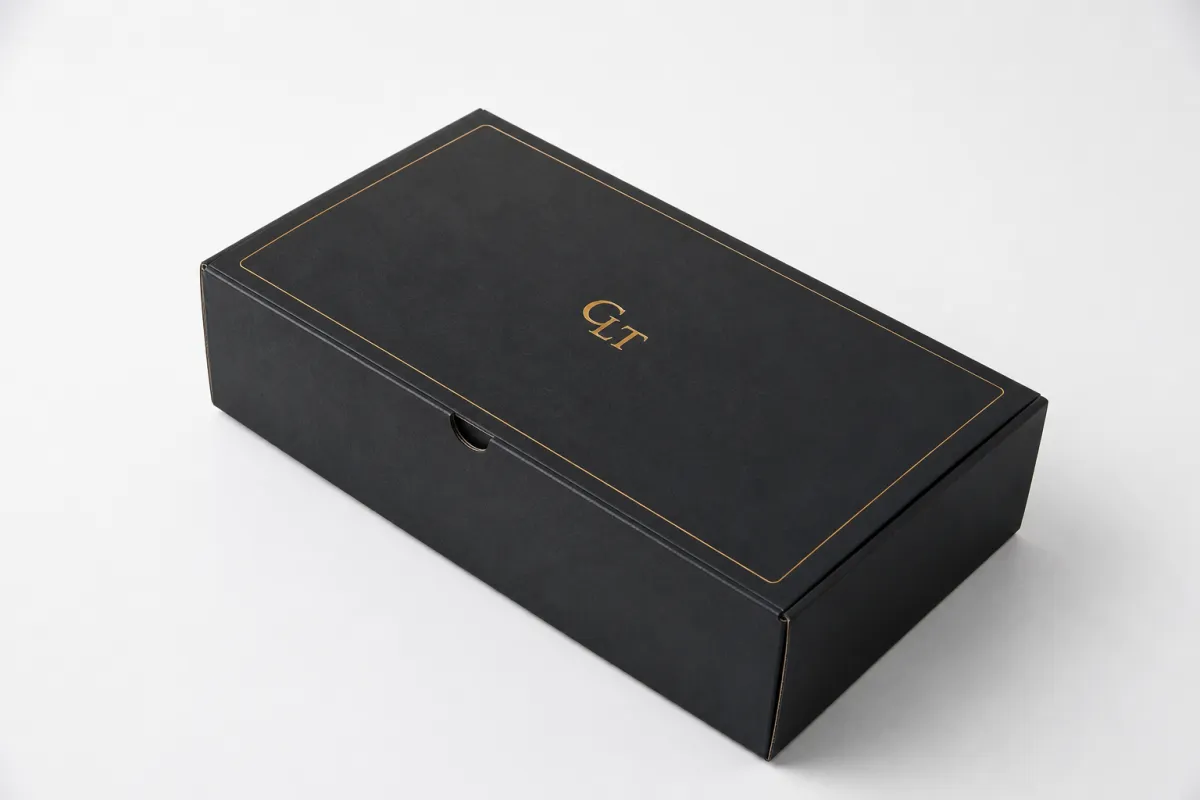
Wine is one of those categories where the container carries almost as much meaning as the contents. That sounds obvious, yet many teams still treat custom wine gift boxes branding like a label extension. It is not. The box has its own sightlines, its own touch points, and its own unboxing rhythm. A consumer may notice the lid first, then the side panel, then the interior message, and only then the bottle. Each stage can strengthen the brand or make it feel less deliberate.
The box also handles the emotional side of the purchase. A holiday gift, a wedding favor, a client appreciation package, and a direct-to-consumer reserve release all ask for a different tone. Soft-touch lamination can feel restrained and modern. Foil stamping can feel ceremonial. Debossing can feel quiet and expensive. A matte black rigid box with a white foil logo gives a very different impression from a natural kraft sleeve with a single-color mark. That is the practical side of custom wine gift boxes branding: visual choices shape meaning.
From a business standpoint, the box can lift perceived price without touching the liquid inside. Buyers often connect heavier packaging with higher value, and that association affects conversion. In retail packaging, stronger presentation can improve sell-through because customers feel more confident choosing something giftable. In corporate gifting, it helps the package avoid looking generic. In hospitality, it supports a higher menu or takeaway price. Those effects are modest on their own, yet they stack quickly across a season.
There is another reason the box matters first. It gives the brand a second chance to speak. The wine label may be small. The box is not. That larger surface can carry origin cues, tasting notes, a short brand story, or a discreet message. It can also support package branding in a way that the bottle alone cannot. Done well, custom wine gift boxes branding turns a purchase into a memory, and memory is what gets repeated in conversations and reorder decisions.
Think about the difference between a plain carton and a rigid presentation box. One protects. The other protects and performs. That performance matters because the recipient is not comparing the box with a shipping mailer. They are comparing it with other gifts, other brands, and other experiences. A strong box says the sender cared. A weak box says the process stopped at the bottle.
For teams building branded packaging for the first time, the best starting point is usually the occasion, not the artwork. Is the product meant for seasonal gifting, corporate mailers, shelf display, or a luxury reserve line? Once that is clear, the rest of custom wine gift boxes branding gets a lot easier to judge.
How custom wine gift boxes branding works from concept to shelf
Every good project starts with use case. One bottle and two bottles are not the same problem. A corporate gifting box and a retail shelf box are not the same problem either. The more clearly you define the role of the package, the better custom wine gift boxes branding performs in production and in market. A short-run holiday promotion may tolerate a simpler build. A core item that repeats year after year usually needs consistency, lower unit cost, and a structure that can be reproduced without surprises.
The next layer is the visual system. A package should not rely on a logo alone. It needs hierarchy. That means deciding what gets the strongest voice: color, typography, finish, closure, or illustration. A premium box might use one strong mark, a quiet tone-on-tone pattern, and a single foil hit. A more festive version might use a brighter palette, a message panel, and a ribbon or lift tab. The point is not to fill every surface. The point is to create an intentional Brand Identity That reads clearly from every angle.
Structural choice matters just as much as graphics. Rigid boxes wrapped over greyboard create a heavy, gift-ready impression. Folding cartons are lighter and often better for retail packaging or higher-volume programs. Sleeve-and-tray constructions create a strong reveal, because the outer sleeve hides the bottle until the moment of opening. Magnetic closures add ceremony, though they also add cost and assembly complexity. Molded pulp or die-cut inserts keep the glass stable, which becomes important if the box is moving through mail or warehouse systems.
Printing and finishing turn the idea into an object people can hold. Offset printing is often the workhorse for larger runs with tight color control. Digital printing can make sense for shorter runs or highly variable artwork. Embossing and debossing add physical depth. Spot UV creates contrast. Soft-touch lamination changes the feel immediately. Foil stamping can signal celebration or prestige, but too much of it can make the package look noisy rather than premium. That is where experienced packaging design earns its keep: choosing the few details that matter most.
Fit and compliance close the loop. The box has to accommodate bottle shape, neck height, base diameter, and closure type. Some wine formats use standard Bordeaux or Burgundy dimensions. Others are wider, taller, or unusually heavy. The insert must hold the bottle snugly without scuffing the label. If legal copy, origin information, or tasting notes need to appear on the package, the layout has to make room for that too. Good custom wine gift boxes branding is as much about fit as it is about image.
In packaging reviews I have sat through, the boxes that get approved fastest are the ones that pass the hand test. They open cleanly, the bottle stays put, and nothing feels fussy. That is not glamorous, but it is real. If a box can survive a real supply chain without feeling fragile, you are in the right zone.
Custom wine gift boxes branding cost: what changes the quote
The first surprise for many buyers is that artwork rarely drives price as much as structure does. A simple logo on a premium box is not expensive because the logo is simple. It is expensive or affordable because of material grade, board thickness, print coverage, finish choices, and assembly. That is why custom wine gift boxes branding can move from practical to premium very quickly.
For a realistic planning frame, a printed folding carton for a one-bottle wine package might land around $0.38-$0.85 per unit at higher quantities, depending on board, ink coverage, and whether the design uses one or four colors. A rigid presentation box with a wrapped exterior often moves into the $1.25-$2.90 per unit range at larger runs. Add a magnetic closure, custom insert, foil, and specialty lamination, and the box can reach $1.80-$4.20 per unit or more. At lower quantities, those figures climb because setup costs are spread over fewer pieces. These are planning ranges, not quotes, and region, tooling, and freight can shift them a bit.
Minimum order quantity changes the math more than many teams expect. A supplier may quote a better per-unit rate at 5,000 pieces than at 1,000, even if the artwork is identical, because prepress, tooling, and press setup cost nearly the same either way. That is why custom wine gift boxes branding should be planned with forecast volume in mind. If the box is seasonal and one-time, small-batch pricing may be acceptable. If the design will repeat, the economics improve fast once the run size grows.
| Box style | Typical unit cost at 1,000 pcs | Typical unit cost at 5,000 pcs | Best use case |
|---|---|---|---|
| Printed folding carton | $0.85-$1.75 | $0.38-$0.72 | Retail packaging, lighter budgets, higher volume |
| Sleeve and tray | $1.10-$2.20 | $0.55-$1.05 | Gift launches, strong reveal sequence, moderate protection |
| Rigid one-bottle box with insert | $2.40-$5.50 | $1.25-$2.90 | Premium gifting, corporate sets, higher perceived value |
| Magnetic-closure rigid box with foil and deboss | $3.10-$7.50 | $1.80-$4.20 | Luxury positioning, collectible presentation, high-impact unboxing experience |
Hidden variables can matter just as much as the line-item price. Oversized dimensions raise freight. Heavy board increases shipping weight. Extra proof rounds add time and cost. A custom insert can be inexpensive if it is a simple paperboard cradle, or much more expensive if it needs EVA foam, molded pulp, or a die-cut fit for an unusual bottle shape. Even assembly can change the quote if hand work is required.
There is also a value question that many buyers skip. A box that supports giftability, repeat order rate, or retail conversion can be cheaper in business terms than a lower-cost version that feels generic. That is the part of custom wine gift boxes branding finance teams sometimes overlook. A difference of $0.40 per unit may look large on paper. If the box helps the product sell at a higher price point, it may pay for itself quickly.
Comparing options against the final use case usually helps. If you are deciding between a value version and a premium version, ask whether the extra finish improves brand recall, display value, or the perceived quality of the wine. If it does not, you may be paying for decoration instead of performance. If you need examples of how other packaging formats are built, the project library in Case Studies can help separate nice-looking concepts from practical ones.
For sustainability-minded programs, material selection can also change the quote. FSC-certified board may cost more in some runs, but it supports sourcing goals and procurement requirements. The key is to ask early. Custom wine gift boxes branding gets easier to budget once the structure, finish, and certification needs are visible together.
Custom wine gift boxes branding process and timeline: step-by-step
A strong process keeps the project from drifting into endless revisions. The clearest briefs usually start with five things: bottle dimensions, quantity, budget range, audience, and delivery deadline. Those are the non-negotiables. Once they are set, custom wine gift boxes branding becomes a series of controlled decisions rather than guesswork.
Step 1: define the brief. The supplier needs to know whether the box is for one bottle, two bottles, or a mixed set. They also need to know if it is for retail packaging, seasonal gifting, hospitality, or direct mail. A 750 ml Bordeaux bottle and a wider Burgundy bottle may look similar from a distance, but the insert and interior clearance are not the same. If the project is a limited release, it also helps to say whether the package needs to feel collectible or simply polished.
Step 2: build the structure and concept. This is where dielines, board samples, and rough mockups matter. A PDF can hide awkward folds, weak closure points, or excess interior movement. A physical sample usually reveals those issues immediately. Good custom wine gift boxes branding should be checked in hand, not only on screen. If you are coordinating with Custom Labels & Tags, this is a good time to align the bottle label and the package so the whole presentation feels coherent.
Step 3: approve artwork and finish details. Logos, type, legal copy, color standards, and special effects should all be confirmed before production begins. If the project uses foil, spot UV, or embossing, ask for a clear map of where each effect lives. The goal is to avoid late changes after plates or dies have already been prepared. That is where schedules usually slip.
Step 4: sample, print, cut, and finish. Typical production can include prepress, proofing, offset or digital printing, die cutting, lamination, foil stamping, insert manufacturing, and hand assembly. Simple folding cartons may move through faster. Rigid boxes with multiple finishes take longer. For transit-sensitive projects, ask whether the supplier can test against relevant standards such as ISTA methods or similar distribution testing protocols. For supply chain and fiber sourcing, confirm whether FSC options are available at the board level through FSC.
Step 5: build in buffer time. Wine gifting has awkward deadlines. Holiday launches, wedding seasons, harvest events, and corporate campaigns leave very little room for delay. A project that looks safe on paper can still lose days to proof corrections, freight congestion, or a late approval from marketing. In practice, custom wine gift boxes branding needs a modest buffer even when everything is moving normally.
Typical timelines depend on complexity, but a simple carton project may take roughly 10-15 business days after proof approval, while a rigid presentation box with custom insert may take 15-25 business days or longer. Sampling can add several days before that. If you are working toward a fixed launch, work backward from the delivery date and treat each step as a checkpoint.
That disciplined timeline does more than protect the schedule. It protects the brand. Nothing weakens custom wine gift boxes branding faster than a rushed approval that forces a compromise on fit, finish, or color. A box that arrives late and feels off by a shade or two will not support the story the marketing team thought they approved.
Common mistakes in custom wine gift boxes branding
The most common mistake is treating the box like a flat graphic exercise. A wine package is a physical object with top, side, and interior surfaces, and the unboxing experience unfolds in sequence. If the exterior is loud but the interior is empty, the brand feels unbalanced. If the interior is beautiful but the closure feels flimsy, the package loses authority. Custom wine gift boxes branding works best when the whole object has one clear point of view.
Another mistake is choosing finishes because they look dramatic in a mockup. A heavy foil treatment or glossy lamination can look impressive on a screen and still feel wrong in person. The finish has to match the category, audience, and lighting environment. A corporate buyer may prefer restraint. A celebratory retail item may welcome more sparkle. The answer is not “more finish.” The answer is the right finish.
Fit problems are more expensive than most teams expect. If a bottle moves inside the box, the insert is too loose. If the corner crushes, the board is too light or the outer carton is too thin. If the closure pops open during handling, the structure needs to be rethought. These are not cosmetic issues. They are packaging failures, and they can damage the wine, the label, or both. For any program built around custom wine gift boxes branding, bottle security is non-negotiable.
Overdesign creates another trap. It is easy to load the box with metallic ink, foil, embossing, ribbon, and multiple panels of copy. The result can feel crowded, expensive, and oddly forgettable all at once. A better box often uses one hero element. Maybe it is a textured panel. Maybe it is a bold opening mechanism. Maybe it is a single foil logo on a quiet background. The strongest branded packaging usually shows restraint rather than excess.
Lead time mistakes are common too. Teams sometimes request a rush, then discover that mockups, sampling, and revisions take longer than expected. That is especially true when the project needs structural development. A tight deadline can push the supplier into a simpler solution, which may reduce the impact of the final box. Custom wine gift boxes branding should not be forced into a timeline that leaves no room for proofing.
One more issue deserves mention: ignoring the broader package ecosystem. The wine box may need to sit beside shipping cartons, outer mailers, shelf talkers, or inserts. If those elements do not match, the presentation feels fragmented. Packaging design works better as a system. When the box, labels, tags, and supporting materials all speak the same visual language, the brand feels more deliberate and more trustworthy.
Expert tips for stronger custom wine gift boxes branding
One strong rule saves a lot of grief: pick a single hero element and let it carry the design. That hero can be a tactile panel, a foil mark, a structural reveal, or a color block that anchors the whole package. Trying to make every surface memorable usually backfires. Custom wine gift boxes branding benefits from editing, because the recipient only has a few seconds to register the box before opening it.
Design for the sequence, not just the surface. The experience should move from outside to inside in a way that feels deliberate. Exterior promise. Interior reveal. Bottle presentation. Final message. That sequence is what gives the package emotional shape. In premium packaging, the sequence matters as much as the artwork.
Match the architecture to the position of the wine. A boutique reserve does not need the same visual language as a corporate thank-you gift or a high-volume holiday promotion. A reserve box can handle more space, quieter typography, and a heavier board. A promotional box may need stronger shelf visibility and a cleaner cost structure. If the package is meant to be reused, the construction should support that. Reusable boxes often justify stronger board, cleaner corners, and closures that stay aligned after opening.
Ask for samples early, and ask for them physically. Color, texture, and structure are much easier to judge in hand than in a PDF. Soft-touch surfaces can feel more elegant but also collect marks more easily. A deep black finish can feel rich but may show scuffs in transit. A white box can feel clean but reveal handling dirt faster. Small details like these shape the success of custom wine gift boxes branding more than people expect.
Do not skip the practical test. Can the box be packed efficiently? Can it be stored without deformation? Does the insert require too much hand assembly? Can the closure be opened smoothly without tearing the paper wrap? These questions matter because good branding has to survive real operations. A beautiful box that slows down fulfillment is not a win.
There is also a sustainability angle worth treating seriously rather than as a marketing layer. FSC-certified board, paper-based inserts, and reduced plastic content can all support better sourcing decisions. That does not mean every premium box should be plain kraft. It means the materials should align with the brand promise and the supply chain goals. In many cases, custom wine gift boxes branding can be both premium and responsible if the structure is planned with intent.
Finally, think about reusability and display value. A box that people keep on a shelf, repurpose for storage, or use again for gifting extends brand exposure after the first opening. That is an underappreciated asset in package branding. The package keeps working long after the bottle is gone.
If you want to see how these choices translate into real projects, Case Studies is a useful place to compare structure, finish, and business outcome side by side.
Actionable next steps for your custom wine gift boxes branding
Start with a one-page brief. Keep it practical. List the bottle size, quantity, audience, target price point, delivery date, and the role the box must play in the buying journey. If the package is for gifting, say so. If it is for retail, say so. If it needs to support a premium reveal, say that clearly. A supplier can work faster and more accurately when the brief describes the job of custom wine gift boxes branding rather than just the artwork.
Then collect three references: one for structure, one for finish, and one for tone. That separates taste from function. A team might like a magnetic-closure box, a soft-touch finish, and a minimalist layout, but those preferences are not the same as bottle protection, shipping performance, or assembly cost. Good packaging design keeps those layers distinct.
Request at least two quote paths. A value version and a premium version are often enough to expose the cost drivers quickly. Ask what changes between them: board thickness, closure style, insert material, print coverage, and finishing. You may find that one upgrade adds little cost while another changes the quote dramatically. That is useful information. It helps you spend on what buyers actually notice in custom wine gift boxes branding.
Ask for a sample or prototype before full production, especially if the bottle shape is unusual. Bottles with wide shoulders, long necks, or heavier bases can create fit issues that only show up in real samples. A prototype also tells you whether the unboxing moment feels right. The package might protect the bottle perfectly and still feel too stiff, too loose, or too ordinary. That is why physical review matters.
Work backward from the delivery date and leave room for proofing, revisions, and freight. Holiday season capacity can tighten fast. So can corporate gifting windows and event launches. A little time cushion protects both quality and morale. It also gives the supplier room to make the box better rather than merely making it possible.
One final step helps more than people expect: align the box with the rest of the brand system. The wine label, the insert card, the outer mailer, and even the tags should feel like they belong to the same family. If you need supporting materials, Custom Labels & Tags can help keep the presentation coherent across touchpoints.
The most practical takeaway is simple: lock the bottle dimensions, target unit cost, closure style, and one clear hero finish before anyone approves artwork. Do that first, ask for a physical sample second, and you will avoid most of the expensive surprises that slow down custom wine gift boxes branding. That is what sells. Not just a pretty box, but a box that does its job every time.
How does custom wine gift boxes branding increase perceived value?
It changes the buyer's expectation before the bottle is opened. A rigid structure, a considered finish, and a clean insert make the package feel more deliberate, which often supports a higher perceived price. In retail and corporate gifting, that first impression can matter more than the label alone. Strong custom wine gift boxes branding gives the wine a stronger stage to stand on.
What is the best box style for custom wine gift boxes branding?
Rigid boxes usually create the strongest premium impression, while folding cartons work well for lighter budgets and larger volumes. A sleeve-and-tray format can be effective if the reveal is part of the story. The best style depends on bottle count, shipping needs, and how much protection the package has to provide. There is no universal answer, but there is usually a right answer for the use case.
How do I estimate custom wine gift boxes branding cost before requesting a quote?
Start with quantity, box type, board material, print coverage, finishing, and insert complexity. Lower quantities, more colors, and specialty finishes usually push the price up. If you can share bottle dimensions and the intended audience, a supplier can usually narrow the estimate quickly. That makes custom wine gift boxes branding easier to budget before the formal quote arrives.
What timeline should I expect for custom wine gift boxes branding?
Simple printed cartons can move faster than rigid presentation boxes with custom inserts or multiple finish layers. Sampling, proof approval, and current production load are the main timing variables. A straightforward run may take around 10-15 business days after approval, while a more complex project may need 15-25 business days or more. If the project is tied to a holiday or event, add buffer time early.
What should I send a packaging supplier for the first custom wine gift boxes branding discussion?
Send bottle dimensions, quantity, budget range, target audience, brand assets, and your preferred delivery date. Include inspiration images if possible, but separate style references from structural needs. The clearer the brief, the faster the supplier can recommend a box format, finish, and production path. Good custom wine gift boxes branding starts with a clear brief and ends with a box that feels right in hand.
If the goal is to make the wine feel more valuable, more giftable, and more memorable, custom wine gift boxes branding is one of the few packaging investments that can influence perception, margin, and repeat ordering at the same time.

