A hoodie with a clean woven label feels different the moment someone handles it, and Custom Woven Clothing Labels for corporate gifting are often the fastest way to move a plain sweatshirt, tote, or beanie into retail territory without changing the garment itself. That small strip of thread does more than identify a brand. It sharpens presentation, adds permanence, and keeps the mark visible long after the box is opened.
Buyers tend to underestimate labels until they see them sewn in. A simple garment can suddenly feel closer to retail packaging, branded packaging, and package branding all at once because the product itself now carries a finished, durable identity. That is useful in corporate gifting, where the item is rarely just an item. It may represent an employer, a client relationship, an internal milestone, or a sponsor presence at an event.
“The strongest gifts rarely shout. They look considered because the details were planned before production started.”
Woven labels are not expensive theater. They are a practical finishing choice with a high visual return, which is why they show up so often in premium apparel programs. The best versions are quiet, durable, and easy to live with after the gift leaves the room.
Why woven labels change the feel of a corporate gift
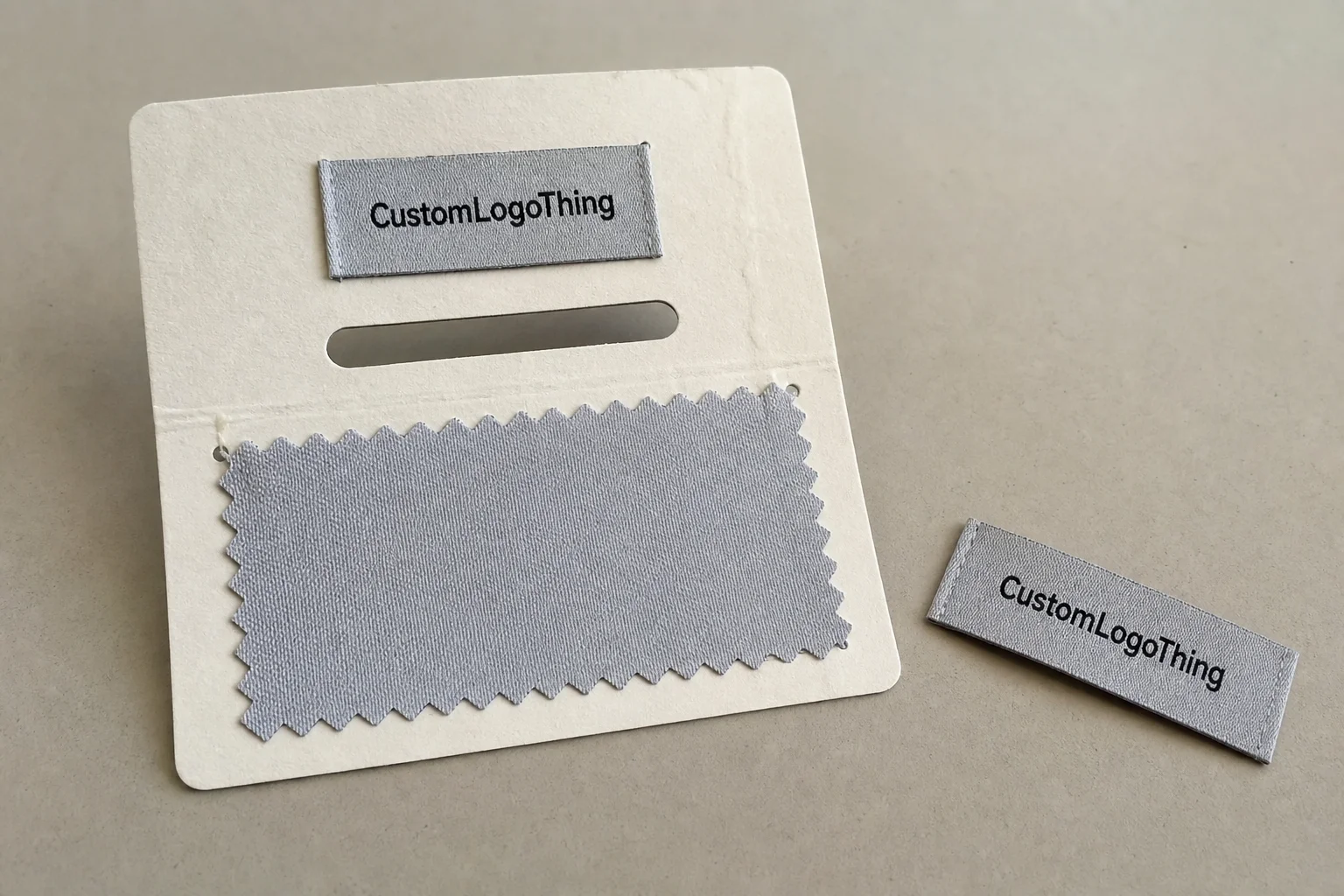
Put a woven label on a basic hoodie, tote, or beanie and the whole item reads differently. The garment does not need louder graphics or more decoration; it needs one precise finishing point that signals the piece was made with intention. That single cue can do more for perceived value than a much larger print run.
In corporate gifting, presentation is part of the message. A label tells the recipient that someone thought about wear, placement, and durability instead of only the logo size. That matters for employee apparel, client welcome kits, milestone gifts, and event merchandise, because the item is carrying a relationship as much as a brand.
The longer-term value is even more practical. Packaging gets discarded. Labels stay on the garment through wear, photos, and repeated washing. Every time a hoodie comes back out of a closet or a tote gets used in public, the brand gets another impression without asking for one.
Labels also work well alongside product packaging and custom printed boxes. The box creates the first impression, but the woven label keeps the brand present on the item itself. If the wider gift includes tissue, inserts, or a hang tag, the label becomes the anchor that ties those elements together.
That is why the detail is worth attention even on a modest budget. A few cents spent well can make a standard garment feel finished, and in gifting, “finished” usually beats “busy.”
How the label is built: artwork, weave, and finishing
The production path starts with artwork, but not every logo file is ready to become thread. Clean vector art is the safest starting point because the outlines stay crisp when translated into a weave pattern. A flat JPEG or low-resolution PNG can work for a proof, but it usually needs cleanup before production begins.
There are hard limits to what a woven label can hold. Thin lines, tiny text, and subtle gradients often need simplification so the final piece does not blur together at label scale. The smaller the label, the more disciplined the artwork needs to be. A serif font that looks refined on a screen can turn muddy once it is woven at a few centimeters wide.
Most suppliers will provide a digital proof or strike-off before bulk weaving begins. That stage matters because it is where the buyer checks spelling, line weight, thread colors, fold style, and final size relationship to the garment. Approval is not only about the logo. It is also about how the label will sit on the seam, hem, cuff, or neckline once sewn in.
Common finishing styles include:
- End fold, which tucks neatly into seams and is common for shirts and outerwear.
- Center fold, which works well when the label needs to fold over a neck seam or sit cleanly on a loop.
- Loop fold, useful for visible brand placement without a flat sew-down look.
- Straight cut, which is the simplest format when the label will be sewn into a defined position.
The right finish depends on the garment, not just the logo. A label that works on a heavyweight sweatshirt may feel awkward on a lightweight polo, and a visible outer placement changes the brand tone entirely. For many projects, the safest route is to choose placement first and then tune the artwork to that shape.
Experienced buyers ask for a proof on the actual garment type, not only on a floating mockup. On paper, most labels look acceptable. In the real world, stitch placement, scale, seam tension, and fabric texture decide whether they feel premium or merely attached.
Specs that control the look and feel of the finished label
Size is the first decision, but it is not the only one. A 20 mm by 50 mm label and a 30 mm by 70 mm label can carry the same logo, yet they will feel very different once sewn in. The smaller version reads as understated; the larger one becomes part of the garment’s visual identity.
Weave density controls detail. Higher density holds sharper edges and more legible text, while lower density suits simpler marks with fewer fine lines. If the artwork includes a tight icon or small lettering, the weave has to be selected with that detail in mind. Otherwise, the logo loses clarity at the exact moment it should look most polished.
Thread color count also affects the finish. More colors can improve the match to brand standards, but more colors add complexity and can raise cost. Some of the best labels use only two or three colors because the artwork was simplified well enough that the weave did the heavy lifting.
Backing and edge treatment matter for comfort. A label that sits against the neck needs a soft hand, clean cut edges, and a fold that will not scratch. For items meant to be worn repeatedly, that small comfort detail matters more than many buyers expect, especially if the gift is a premium hoodie, a knit cap, or a polo worn for long stretches.
Placement changes perception as much as construction does. A side-seam label feels discreet. A cuff label feels deliberate. A neck label feels traditional. The same brand can read sporty, elegant, or corporate depending on where the label lands on the garment.
If the project also includes paper inserts or care cards, it helps to keep those materials visually aligned. FSC-certified paper stock, for example, can support a cleaner sourcing story without competing with the garment itself. For outer packs that travel through a distribution network, some teams also review carton performance against the distribution-testing concepts described by ISTA, which is a practical reference point for mail-outs and kit shipments.
Custom woven clothing labels for corporate gifting: cost, MOQ, and quote factors
Cost is driven by five things more than anything else: label size, weave complexity, thread color count, finishing method, and total quantity. If a buyer wants a high-detail logo on a small label with a special fold, the price climbs. If the artwork is simple and the run is larger, the unit cost usually drops in a way that is easy to justify.
MOQ is where corporate buyers often feel the first friction. Small runs can be done, but the unit price tends to be higher because setup and weaving time are spread across fewer pieces. That does not make a short run a bad decision. For executive gifts, client welcome kits, or a limited employee launch, paying more per label can still be the right answer if the presentation needs to be exact.
Here is a practical pricing frame. These are typical ranges, not promises, because artwork and finishing always move the number around.
| Label option | Typical MOQ | Approx. unit cost | Best use |
|---|---|---|---|
| Simple end-fold woven label | 500 to 1,000 pieces | $0.10 to $0.22 each | Employee apparel, hoodies, standard totes |
| Center-fold or loop-fold woven label | 500 to 1,000 pieces | $0.12 to $0.26 each | Outerwear, visible branding, premium kit items |
| High-detail damask-style weave | 1,000+ pieces | $0.14 to $0.30 each | Small text, cleaner logos, higher perceived value |
| Short-run sample or pre-production strike-off | 1 set or small proof run | $25 to $85 one-time | Approval before a launch, event, or VIP send-out |
There may also be a setup or digitizing charge, especially if the artwork needs cleanup before weaving starts. That cost is usually worth paying because it catches problems before the bulk run begins. A $40 proof step is cheaper than discovering that the logo reads poorly after 2,000 labels have already been made.
One way companies reduce spend without weakening the result is by standardizing a single label spec across multiple apparel SKUs. If the same brand mark works on a hoodie, beanie, and tote, there is little value in rebuilding the label for each item. A consistent spec also helps with inventory planning, which matters when a gifting program runs across departments or regions.
For broader packaging programs, the same logic applies to Custom Labels & Tags and to the rest of the kit. A clean label spec can be reused across garments, hang tags, and supporting inserts, while a mismatched spec forces extra approvals and adds avoidable friction. Teams often save more time by standardizing than by chasing small theoretical savings on each individual piece.
Process and timeline: from proof to production shipment
The usual sequence is straightforward, but every step has a place where a project can slow down. It starts with artwork review, then moves into a digital proof, then a sample or strike-off if the project needs one, followed by approval, weaving, finishing, packing, and shipment.
- Artwork review to clean up file format, size, and color references.
- Digital proof to show how the weave will translate the logo.
- Sample or strike-off when detail or timing makes a physical check worthwhile.
- Approval so bulk weaving can begin without uncertainty.
- Weaving and finishing where the label is produced and folded.
- Packing and shipment so the labels arrive in time for garment kitting.
Delays usually come from weak files or slow decision-making, not from the loom itself. If a logo file is low resolution, if brand colors are referenced loosely, or if multiple stakeholders need to sign off one by one, the timeline stretches. Clear specs keep the project moving.
A simple run with a clean file set can often move from proof approval to shipment in roughly 7 to 10 business days. More detailed color matching, special folds, or sample approval can push that to 12 to 15 business days, sometimes longer if the order is large or the delivery window is tight. If the labels need to land before an event, the safe move is to schedule them before final garment production, not after.
That timing also needs to match the rest of the packaging flow. If the apparel is being placed into custom printed boxes, kit mailers, or retail packaging, the label schedule should sit upstream of kitting so nobody is waiting on one small component at the end. For projects that include broader product packaging, you can keep the whole program tidy by lining up garment production, insert cards, and Custom Packaging Products under the same delivery calendar.
For shipments that will travel through carrier networks or distribution hubs, the outer pack should still be treated like a transport object, not only a presentation object. That is where ISTA-style thinking helps: the gift has to arrive looking good, not just look good on a mockup.
It also helps to build in one decision window before bulk production starts. If the proof is approved in a hurry and the artwork still needs a small correction, the entire schedule can wobble. A short pause at the front end usually saves time at the back end.
Common mistakes that weaken premium gifting
The most common mistake is overstuffing the label. Too many words, too many colors, and too much small type usually turn into a cluttered result once woven. A label is not a billboard. It is a textile signpost, and it works best when the message is tight.
The second mistake is ignoring scale. A design that feels balanced on screen can crowd the garment once sewn in, especially near a neck seam or cuff. If the label size fights the silhouette of the apparel, the whole piece feels less intentional.
Another issue is choosing the wrong backing or finish for the fabric weight. A label that feels fine on a dense sweatshirt can irritate on a thin polo or lightweight tee. If the garment will be worn for long periods, comfort should carry as much weight as visual presentation.
Approval without a real-world check is a quiet source of trouble. Buyers often sign off on a proof that looks neat but never compare it against the actual garment or seam placement. That is how a clean concept turns into a crooked or over-scaled final application. The better habit is to review the label at full size, in context, before bulk production begins.
Another weak spot is treating the label as separate from the rest of the package. That usually lowers the perceived quality of the gift. The label should sit comfortably beside garment choice, box design, insert card layout, and print finish. If any of those pieces feel unrelated, the gift reads less like a curated program and more like a stack of parts.
If a project also needs neck labels, size tabs, or care labels, it is usually cleaner to group them under Custom Labels & Tags rather than spec each piece in a different style. Consistency saves time, and it makes the final presentation feel more deliberate.
Expert tips and next steps for a cleaner rollout
Start with one spec sheet for the whole gifting program. List the garment types, the label size, the fold, the thread colors, the placement, and the delivery date. That single page reduces confusion when the same item needs to work across shirts, outerwear, accessories, or boxed sets.
Order a sample when the gift is tied to a launch, a client moment, or a large internal milestone. A small pre-production check can catch placement or readability issues that a proof does not show well. It is a modest expense that can prevent a much more visible mistake.
Keep the label aligned with the rest of the presentation. If the box is matte and restrained, a bright label can feel out of place. If the garment is sporty, a heavy formal label may feel stiff. Good package branding is not about making every part identical; it is about making the parts feel like they belong together.
For teams building a broader kit, the better move is to coordinate the garment label with the inserts, the box, and any supporting print pieces. That is where branded packaging starts to feel controlled instead of assembled. A consistent label spec, a clean insert, and the right outer pack usually say more about the company than a louder logo ever will.
Before quoting, gather the logo files, the label dimensions, the fold style, the quantity, and the ship date. If the order is part of a seasonal gift or a client-facing rollout, confirm timing before the garments enter final production. That is the cleanest path to a result that feels finished rather than rushed.
For teams that want the gift to hold up outside the presentation moment, this detail is worth the effort. The right label does not try to carry the entire brand story. It just makes the garment feel credible, and credibility is what most premium gifts are really buying.
What label fold works best for custom woven clothing labels for corporate gifting?
End folds and center folds are the most common choices because they sew cleanly into seams and look finished on shirts, beanies, and outerwear. Loop or hanging styles can work when the label needs to stay visible, but they should not get in the way of comfort or wearability. The best fold depends on where the label will sit and how much of the logo must remain readable after stitching.
How much do custom woven clothing labels for corporate gifting usually cost?
Price depends on size, weave detail, color count, finishing, and total quantity. Smaller orders usually cost more per piece because setup is spread across fewer labels. The cleanest way to estimate pricing is to Request a Quote with exact dimensions, artwork, quantity, and delivery timing.
How long does the process take for corporate gifting label orders?
The timeline usually begins with artwork review and proof approval, then moves into weaving, finishing, packing, and shipment. Simple designs with clear files usually move faster, while low-resolution logos or color changes add time because they need extra proofing. If the labels are tied to a launch, event, or holiday shipment, plan the label schedule before garments enter final production.
What artwork is best for woven labels used in corporate gifting?
Clean vector art is the best choice because it preserves edges and lettering when translated into thread. Small type, thin lines, and gradients should be simplified so the woven result stays legible at label size. If the logo is complex, ask for a proof that shows how much detail will actually survive the weave.
Should woven labels or printed labels be used for premium corporate gifts?
Woven labels usually feel more durable and more premium, especially when the gift is meant to be worn repeatedly. Printed labels can work for very detailed art or short-run needs, but they do not always deliver the same tactile finish. For corporate gifting, the better choice is the one that matches the garment, budget, and presentation goal.


