Finding custom woven clothing Labels Low MOQ is often the difference between a garment that looks almost ready and one that feels finished the moment it comes off the hanger. A well-made hoodie, tee, or dress can still feel incomplete if the neck label is scratchy, faded, or inconsistent across a small run, and buyers notice that quickly, especially once the product is photographed, packed, and handled more than once.
For startups, limited drops, sampling programs, and seasonal collections, low minimums matter because cash flow is real and leftover inventory is expensive. Woven labels can still look polished and hold up through wash cycles when the artwork, yarn selection, and loom setup are handled correctly. Low MOQ does not mean low quality; it simply means the production plan has been adapted for smaller, more realistic orders.
There is also a practical branding reason to care. A woven label is one of the few garment details customers touch every time they wear the piece. That repeated contact makes it more influential than a hangtag and more durable than most paper-based inserts. If the rest of the presentation includes Custom Packaging Products or Custom Labels & Tags, the label becomes part of the same visual system instead of an afterthought.
Why low-MOQ woven labels make small production runs feel finished
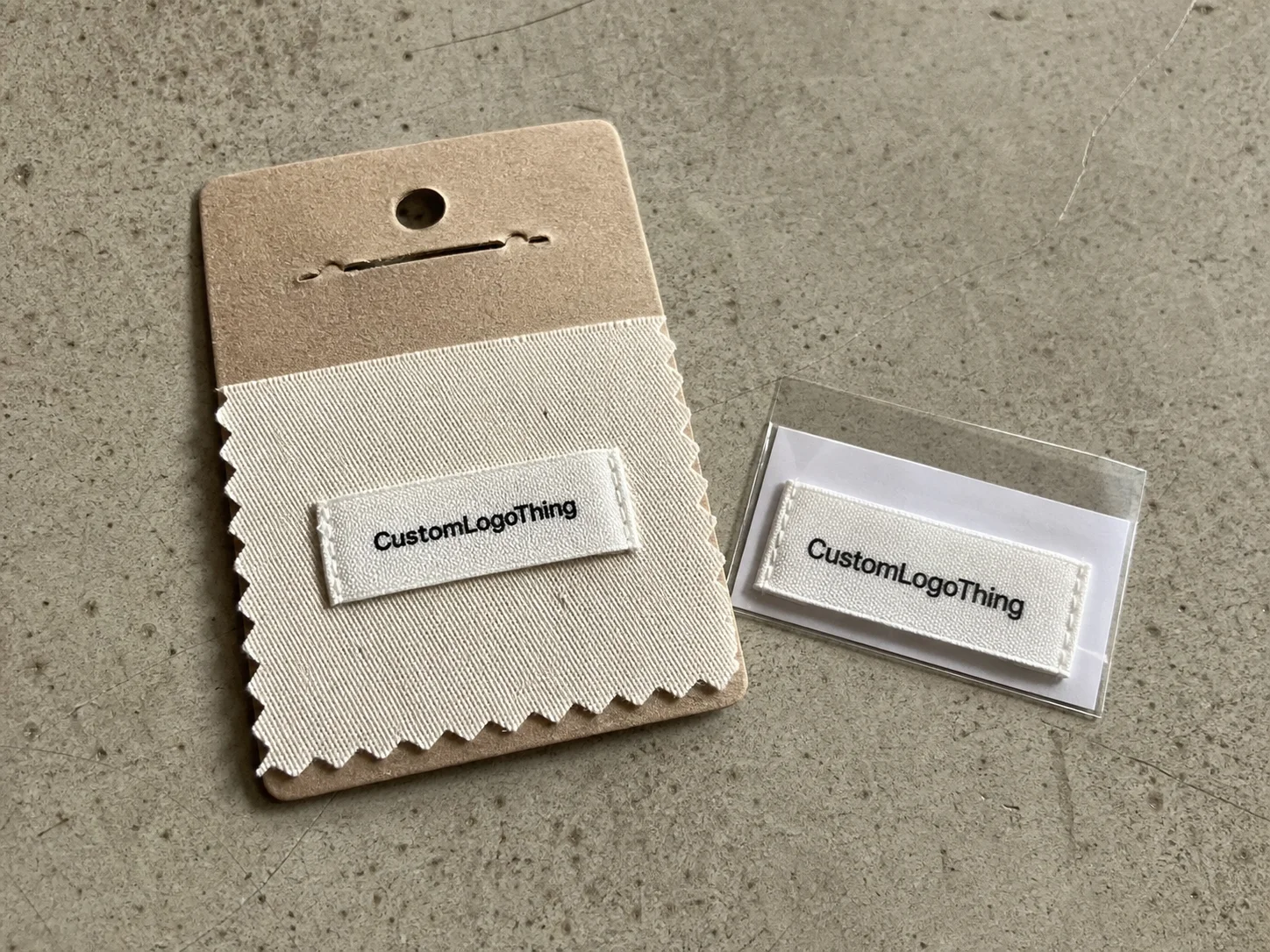
Small apparel runs expose weak spots faster than large ones. A garment may fit well, the stitching may be clean, and the hangtag may look sharp, but if the woven neck label is fuzzy or the side seam tag peels out after a few washes, the whole piece feels less intentional. That is why Custom Woven Clothing Labels low moq has become such a practical search term for smaller brands that need the product to look retail-ready without committing to bulk quantities.
From a buyer’s point of view, low MOQ protects cash and preserves flexibility. You can test a new logo, a different fold style, or a seasonal message without locking up money in thousands of labels that may never be used. For a 100-piece or 500-piece drop, that flexibility often matters more than shaving a few cents off the unit cost.
Woven labels also create a tactile, permanent brand cue that printed paper inserts cannot always match. The customer may never read the care card, but they will feel the label every time they put the garment on. That makes the label part of the product, not just part of the packaging. In retail and ecommerce, that distinction matters.
Practical truth: low MOQ is not about cutting corners. It is about matching order size to the actual sales plan while keeping the brand presentation clean and durable.
For small brands comparing branding formats, the real question is usually not whether to brand at all. It is which branding format makes sense at this order size. Woven labels are attractive because they are compact, durable, and easy to integrate into necklines, side seams, hems, and exterior branding details without adding much weight or bulk.
Woven label styles, folds, and materials that affect the final look
Not all woven labels feel the same. The material, weave density, and finishing style change how the label looks in the hand and how clearly the artwork reads. Buyers usually compare three common constructions: damask, satin, and taffeta.
Damask is the strongest option for fine detail. It has a tight weave, a smooth surface, and strong readability for logos, small text, and sharp line work. If the design includes thin letters or a small icon, damask usually gives the cleanest result. Satin feels softer and has a smoother sheen, which can work well for neck labels or luxury apparel, though the shine can make very small details less crisp. Taffeta is usually the more economical choice and has a slightly more textured feel, which is fine for simple branding but less effective for tiny typography.
Fold style matters almost as much as weave type. A center fold is common for neck labels because it tucks into the back neckline and lets the brand mark sit neatly on one visible side. An end fold works well for side seam branding or exterior accents because the folded ends hide the raw edge and help the label lie flat. A loop fold is useful when the label needs to be folded and sewn into a seam, while a straight cut is typically used when the edges will be finished elsewhere in the garment construction.
Thread density affects legibility more than many first-time buyers expect. Higher density means more yarn packed into the same area, which usually improves the definition of letters, borders, and small icons. There is a limit, though. If the artwork is too detailed for the finished size, even a well-set loom cannot rescue it. Woven labels need to be designed for weaving, not simply reduced from a print file.
Where woven labels perform best
Woven labels are a strong fit for neck branding, side seams, hem tags, exterior branding accents, care branding, and limited-edition garment identifiers. They are also useful when the rest of the product packaging is already polished, because they carry the same brand tone from the outer box to the garment itself. For brands using FAQ pages to answer customer questions about care and materials, a woven label can support that information in a more durable format than a paper insert.
Artwork, sizing, and finish specifications buyers should confirm first
Before requesting custom woven clothing labels low moq, confirm the finished size you actually need. A 1 inch by 2.5 inch label can hold a logo, size indicator, and perhaps one line of text. A smaller label may look neat, but it might not leave enough room for the weave to resolve the artwork cleanly. Finished dimensions, seam allowance, and fold style should all be decided together because each one changes how much visible space remains after sewing.
One of the most common mistakes is sending artwork that looks good on screen but is too detailed for weaving. Clean vector files are ideal because they preserve line quality when the design is converted into a weave-ready layout. If a logo has tiny serifs, hairline strokes, or micro text, those details may blur or close up in the woven structure. A supplier that knows the production side will usually flag this early rather than pretending it will work.
Color matching needs the same kind of realism. Woven labels use yarn colors, not ink, so Pantone references are translated into the closest available thread matches. The result can be very close, but not exact in the way a coated print job might be. For most brands, the practical goal is a consistent, brand-safe color rather than a laboratory-perfect match. If the label has to sit beside custom printed boxes, hangtags, or other branded packaging, share those references early so the color story stays coherent.
There are also finish details worth confirming before the quote is locked in:
- Heat cut for clean synthetic edge finishing.
- Merrow edge for a stitched border look on some label styles.
- Laser cut when the application needs precise edge trimming.
- Adhesive backing for temporary or sample applications, where available.
Those finishes are not interchangeable. A side seam tag and a neck label have different wear patterns, and the wrong finish can make the label feel bulky, irritate the skin, or sit awkwardly on the garment. The best construction depends on the fabric, the wash expectations, and how visible the label should be in the final presentation.
It helps to think in terms of use case first and decoration second. A label sewn into a heavyweight hoodie tolerates different construction than a label used in a soft tee or stretch garment. The more delicate the fabric, the more careful the finish choice becomes.
Cost, pricing, MOQ, and what changes your unit price
Pricing for woven labels is rarely based on one factor alone. Setup time, weave complexity, size, number of colors, fold style, finishing, and packaging all affect the quote. A simple one-color taffeta label will usually cost less than a multi-color damask label with a center fold and specialty trimming, because each added variable increases production handling and inspection time.
Low MOQ typically raises the unit cost compared with a larger run. That is normal. Fixed setup work is being spread across fewer pieces, so the math changes quickly once you move away from bulk quantities. The tradeoff is that you reduce inventory risk, avoid over-ordering, and can test the market before placing a larger repeat order. For small brands, that often makes more sense than chasing the lowest per-unit number.
Think of the order in practical terms. If you need 1,000 labels and the design is simple, the unit cost may be noticeably lower than a 200-piece order with the same artwork. But if the 200-piece order is enough for a limited collection, then a slightly higher unit cost may still be the better financial decision because it preserves cash and keeps storage light. That is especially true for brands balancing branded packaging, ecommerce shipments, and evolving sizing or logo decisions.
| Label type | Typical use | Detail level | Indicative unit cost range | Best for |
|---|---|---|---|---|
| Simple taffeta woven label | Basic branding or internal tags | Low to moderate | $0.08-$0.18 | Very small brands testing a first run |
| Damask woven label | Premium neck labels or hem tags | Moderate to high | $0.12-$0.28 | Sharper logos and finer text |
| Satin woven label | Soft-feel branding for apparel | Moderate | $0.10-$0.24 | Fashion items and comfort-focused garments |
| Custom fold and finishing | Retail-ready sewn-in tags | Depends on fold and trim | Adds $0.02-$0.08 | Brands needing a finished presentation |
When requesting a quote, ask for the full picture rather than only the base label price. A clear quote should cover label size, fold style, quantity, artwork complexity, backing if any, and packaging preferences. That helps you compare suppliers fairly and avoid surprises later. A quote that looks low at first can become expensive once trimming, folding, and individual packaging are added.
Also ask whether the supplier recommends a simpler weave for better value. Sometimes reducing one color, slightly enlarging the artwork, or adjusting the fold can bring the price down without sacrificing the overall brand effect. That kind of guidance is worth more than a generic low-price claim because it improves both the unit cost and the end result.
Buyer rule of thumb: the best value is not the cheapest label; it is the label that keeps the design readable, the brand identity clear, and the MOQ aligned with your actual sales plan.
Production steps, proofing, and lead time from artwork to delivery
The production flow is usually straightforward, but each step matters. First comes artwork review, where the supplier checks the file, size, fold preference, and color expectations. Then the design is digitized or converted into a weave-ready layout. After that, a digital proof is prepared for approval. Once approved, weaving begins, followed by finishing, inspection, packing, and shipping.
Most delays happen before the loom ever starts. Low-resolution artwork, missing color references, unclear sizing, or a fold style that was never specified can slow the job down quickly. The proof stage is the control point, and it should be treated seriously. If the proof shows a spelling issue, a spacing problem, or a logo proportion that looks off, fix it before approval. After production begins, changes are harder and usually increase cost.
A sensible lead time for small label orders is often around 12 to 15 business days after proof approval, though this depends on capacity, quantity, and finishing. Rush options may exist, but they are not guaranteed and usually depend on whether the production line can absorb them without affecting quality. For a launch, restock, or sample run, the safer approach is to plan ahead and leave a little margin in the schedule.
Quality control should be visible in the process. The supplier should inspect weave accuracy, trim quality, color consistency, and fold accuracy before shipment. Those checks matter even more if the labels are going into retail packaging or wholesale cartons where uniformity is obvious. A single inconsistent label can make the batch look less polished, even if the garments themselves are excellent.
Lead time also changes with order complexity. A simple label with one or two colors can move faster than a dense design with a high stitch count and special finishing. In many cases, the most efficient orders are not the ones with the biggest budget; they are the ones with clear files, realistic dimensions, and a straightforward production brief.
For brands that care about sustainability claims or responsible sourcing, materials and supply-chain choices can matter too. If recycled yarns or certified sources are part of the packaging design brief, ask whether the supplier can document that. For general packaging guidance and material responsibility topics, organizations like the EPA recycling resources and FSC can be useful references, especially when the label program is part of a wider packaging and compliance conversation.
What makes a reliable woven label supplier for small brands
For small brands, reliability shows up in the details. Fast responses help, but clear responses help more. A good supplier explains what the artwork can realistically achieve, which weave style fits the design, and how the fold or finishing choice affects the final look. That guidance is useful when the order is part of a broader branded packaging program and every component has to look like it belongs to the same brand.
Look for proof clarity. The digital proof should show the label size, fold style, color references, and any special finishing notes. It should not leave you guessing. A supplier that handles custom woven clothing labels low moq well will usually be comfortable talking through tradeoffs instead of pushing you into a one-size-fits-all spec.
Quality control is another sign of a dependable partner. Before shipment, the supplier should verify:
- Weave accuracy against the approved proof
- Trim quality and clean edges
- Color consistency across the run
- Fold accuracy and label alignment
- Packaging count and quantity verification
There is also value in a supplier who understands the practical side of apparel branding. If you are coordinating labels with hangtags, inserts, or Custom Labels & Tags, the supplier should be able to keep the label spec aligned with the rest of the package experience. That is the difference between a label vendor and a packaging partner.
Honest caveats matter here. A reliable supplier should say when a logo is too small, when the fabric choice may affect how a label sits, or when a lower MOQ will reduce options in finishing or color complexity. That kind of honesty saves time on both sides and usually leads to a better final piece.
Next steps to order custom woven clothing labels low MOQ
If you are ready to order custom woven clothing labels low moq, gather the key specs before requesting pricing. Start with the finished label dimensions, target quantity, logo file, fold preference, color references, and garment application. If the label is going into a neck seam, side seam, or outside hem, say that upfront because the construction may need to change.
Then send everything together in one request. A quote based on incomplete information often comes back with assumptions, and assumptions cost time. The more complete the brief, the more accurate the pricing will be the first time. That matters when you are balancing MOQ, unit cost, and launch timing.
Before approving production, review the digital proof carefully. Check spelling, spacing, logo proportions, and whether the weave detail is readable at the chosen size. If the proof looks crowded, ask whether a slightly larger label or a simpler artwork layout would improve the final result. A small adjustment at this stage can save the batch from looking compressed or hard to read.
If the order supports a launch, restock, or sampling program, treat the label like any other production component: define the spec, verify the proof, and approve only when the label matches the garment and the brand story. That is usually the most efficient route for small runs, because it keeps both quality and budget in line without forcing a large inventory commitment.
To move ahead, prepare your specs, request a sample-friendly quote, confirm turnaround, and proceed once the proof is approved. If you are comparing woven labels with other branded packaging components, you can also review Custom Packaging Products for a fuller picture of how the garment presentation will come together. The goal is simple: make the clothes feel complete without forcing a bulk order you do not need.
Frequently asked questions
What is the minimum order for custom woven clothing labels low MOQ?
Minimums vary by size, weave complexity, and finishing, but low-MOQ programs are built for smaller runs rather than bulk commitments. The exact MOQ should always be confirmed in the quote because label dimensions and color count can change the production threshold.
Are woven labels better than printed labels for small apparel runs?
Woven labels usually provide a more premium, durable finish and hold up well through repeated washing. Printed labels can work for very fine detail or short-term use, but woven labels are often preferred for long-term branding and retail packaging.
How many colors can I use without raising the cost too much?
Each added color can increase setup complexity and price, so the best approach is to keep the design simple and intentional. A strong logo with fewer thread colors usually gives the cleanest balance between cost and readability.
How long does production usually take after artwork approval?
Lead time depends on order size, finishing, and current production load, but the timeline starts only after proof approval. Fast approvals and complete specs help keep the schedule on track.
What file do I need to get an accurate quote for woven labels?
A vector logo file is best, along with the desired size, fold style, quantity, and color references. If vector artwork is not available, a clear high-resolution file can still help with quoting and proofing.