Buyer Fit Snapshot
| Best fit | Custom Wraparound Labels for Bottles projects where brand print, material claims, artwork control, MOQ, and repeat-order consistency need to be specified before quoting. |
|---|---|
| Quote inputs | Share finished size, material target, print colors, finish, packing count, annual reorder estimate, ship-to region, and any compliance wording. |
| Proofing check | Approve dieline scale, logo placement, barcode or warning zones, color tolerance, closure strength, and carton packing before bulk production. |
| Main risk | Vague material claims, crowded artwork, missing packing details, or unclear freight terms can make a low unit price expensive after revisions. |
Fast answer: Custom Wraparound Labels for Bottles: Fit, Cost, Steps should be specified like a repeatable production item. The safest quote records material, print method, finish, artwork proof, packing count, and reorder notes in one written spec.
Production checks before approval
Compare the actual filled-product size with the drawing, then confirm tolerance on folds, seals, hang holes, label areas, and retail display edges. Reserve space for logos, QR codes, warning copy, and material claims before decorative graphics fill the panel.
Quote comparison points
Review material grade, print process, finish, sampling route, tooling charges, carton quantity, and freight assumptions side by side. A quote is only useful when the supplier can repeat the same color, closure quality, and packing count on the next order.
Custom wraparound labels for bottles sound straightforward until the first prototype shows up crooked, wrinkled, or drifting off center. A bottle can look round enough on a shelf and still change diameter near the shoulder, which is exactly where custom wraparound labels for bottles start acting up if the panel is even a little off. From a packaging buyer's point of view, the label is not decoration with a deadline. It is a fit problem, an adhesion problem, a print problem, and a production problem packed into one order.
That is why custom wraparound labels for bottles need more attention than a quick upload and a hopeful proof approval. The right label adds brand space without changing the container, which is usually cheaper than new glass or a new mold. The wrong label burns time, creates application headaches, and makes strong product packaging look rushed. If you care about branded packaging, retail packaging, and package branding that still holds up after the line, you need to think about measurements, finish, material, and application before the order goes out. I have seen too many teams learn that lesson the hard way.
The tricky part is that the label has to look good, feed well, and survive the real world. That means chilled storage, condensation, shipping vibration, shelf abrasion, and the occasional operator who is moving faster than the equipment should allow. A label that survives the sales meeting but fails in the warehouse is not doing its job. It is just pretending.
What Are Custom Wraparound Labels for Bottles?
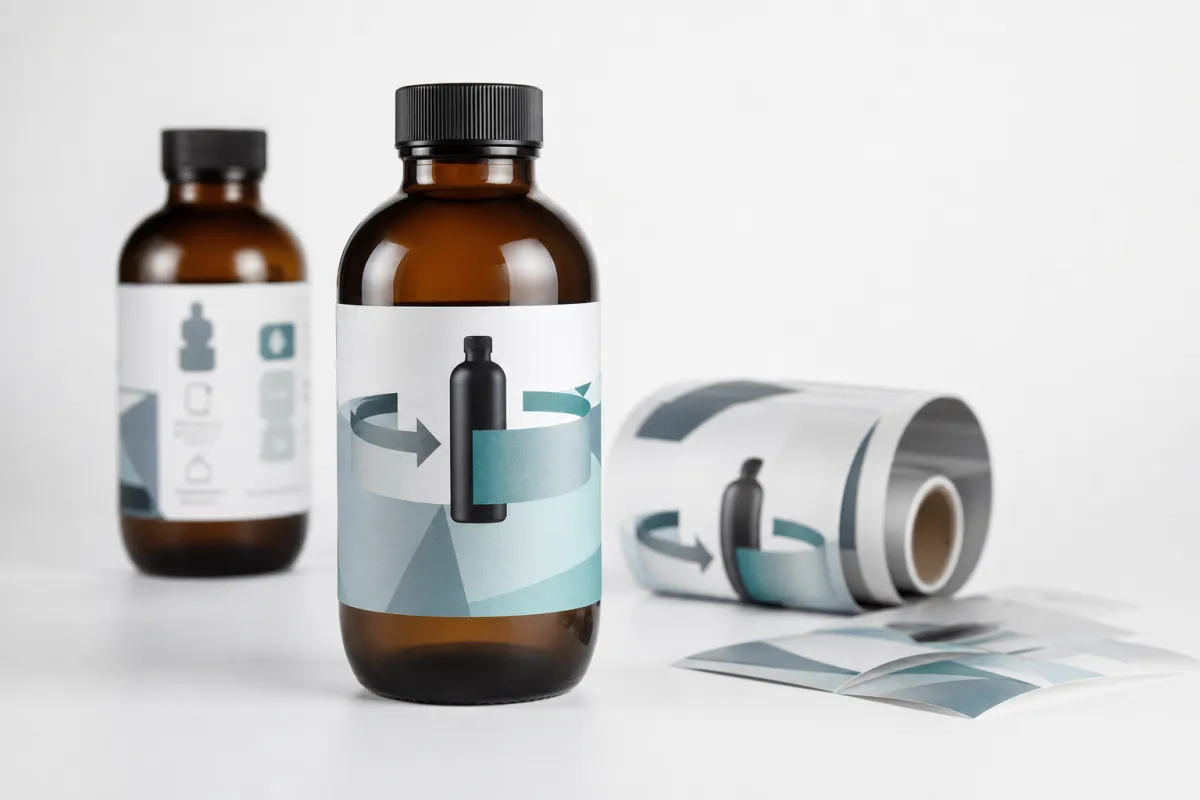
Custom wraparound labels for bottles are pressure-sensitive labels built to cover most or all of the bottle circumference in one continuous branded panel. Instead of a small front label and a separate back panel, the artwork wraps around the container and gives you room for storytelling, ingredients, directions, barcodes, and regulatory copy. That is not just a design flourish. One label can turn a plain bottle into something that feels finished on the shelf.
These labels show up everywhere. Beverage, cosmetic, personal care, wellness, sauce, syrup, and specialty product brands all use them. You see them on glass bottles, PET bottles, squeezable containers, and rigid plastic packaging. The format works across a lot of product packaging types without changing the bottle itself. For brands still testing volume, that matters. A new label spec costs a lot less than a new container spec.
The value is not only visual. Custom wraparound labels for bottles create space for brand graphics, ingredients, compliance language, and UPC placement without cramming everything into a tiny front panel. That matters in retail packaging, where a bottle has to sell fast from a distance and still survive a close look. You are balancing shelf impact with real-world information, and that is where packaging design stops being theoretical.
There is a catch. Custom wraparound labels for bottles have to match bottle diameter, surface texture, curvature, fill conditions, and what happens after labeling. Tapered, ribbed, cold-filled, or squeezable bottles all change the spec. Miss the fit and you get wrinkles, seam lift, edge curl, or a label that slowly walks out of alignment. Pretty artwork cannot rescue a bad dieline. Sorry, but it cannot.
Practical rule: if the bottle shape changes near the label zone, measure the label zone, not the marketing sketch. The sketch lies. The container does not.
For a lot of brands, custom wraparound labels for bottles are the fastest route to stronger package branding. They make it easy to update flavors, refresh a line, or add compliance details without reworking the whole container system. That flexibility is why many teams use them alongside Custom Labels & Tags and broader Custom Packaging Products instead of treating labels as an afterthought. The label is part of the product experience, not a sticker you toss on at the end.
Cost matters, sure. A cheap label that fails after refrigeration, condensation, or shipping is not cheap. It is just a smaller invoice for a bigger mistake. People forget that part, then act surprised when the pallet starts shedding corners.
How Custom Wraparound Labels for Bottles Work
Custom wraparound labels for bottles work because several layers have to behave at the same time: the face stock, the adhesive, the liner, and the printed design. The face stock is the visible material, usually paper or film. The adhesive decides whether the label stays put on glass, PET, or coated plastic. The liner carries the label through printing and application. The design has to respect the physical wrap so the seam does not cut through a logo, barcode, or legal line that matters.
The measuring process starts with the bottle circumference at the exact label zone, not the widest part of the bottle unless that is truly where the label sits. After that, check the label height against the shoulder and base curves. A bottle can lose usable label area fast if it tapers, and that taper is where custom wraparound labels for bottles start misbehaving. A good dieline leaves room for overlap or a controlled seam, depending on whether the label is full wrap or partial wrap.
Full wrap labels cover nearly the entire usable circumference. Partial wrap labels leave a visible gap or window, which helps if you want to show the contents or lower material cost. Either way, custom wraparound labels for bottles need a calm layout. Seams can hide behind the back panel, become part of the design, or act as a practical splice point for machine application. They just should not surprise anyone.
Application method changes the spec more than people expect. Hand-applied labels can tolerate a bit more forgiveness in liner choice and roll direction. Semi-automatic and fully automatic applicators are less forgiving because unwind direction, core size, dispense speed, and adhesive tack all affect placement. If the stock feeds badly, the line slows down. If the label grabs too early, you get skew. If it grabs too late, you get bubbles or edge lift. Custom wraparound labels for bottles are only as good as the way they move through the actual production setup.
Bottle shape matters more than the mockup suggests. Straight-sided bottles are the easiest. Oval bottles demand tighter measurement control. Tapered bottles need a smarter dieline because the wrap width shifts as the bottle narrows. Ribbed or textured bottles can create micro-gaps that weaken adhesion. Squeezable bottles flex in use, so the label needs enough film strength to move with the container rather than crack or wrinkle. Custom wraparound labels for bottles are not just about print quality; they are about physical compatibility.
If you want a quick quality check, ask three questions: Does the label fit the bottle, does the bottle fit the application method, and does the label survive the storage environment? If any answer is no, the project is not ready. That is the difference between decent packaging design and expensive rework.
One more thing: the line matters. A label spec that looks fine in a designer's file can still fail if the application head is fussy, the line speed is too high, or the release liner is wrong for the machine. That is not bad luck. That is bad planning.
Custom Wraparound Labels for Bottles: Materials, Fit, and Pricing
Material choice is where custom wraparound labels for bottles either make sense or turn into a headache. Paper stocks are common for dry products, short-life launches, and lower-cost runs where moisture is not a major issue. Film stocks such as BOPP or PET usually fit better for chilled products, condensation, abrasion, or frequent handling. Specialty stocks can add texture, a premium feel, or a more distinctive shelf look, but they also push unit cost up and often need more careful application. Custom wraparound labels for bottles need the right face stock for the actual use case, not the prettiest sample on the table.
Adhesive selection matters just as much. A permanent adhesive is standard for many retail bottles because brands usually want the label to stay on. A removable adhesive can help with short-term promotions or returnable packaging. Freezer-grade or moisture-resistant adhesives become important if the bottle will be chilled, stored cold, or exposed to condensation. With custom wraparound labels for bottles, the adhesive often decides whether the job succeeds in the warehouse, on the shelf, and after a customer handles it a few times.
Pricing depends on material, print method, finish, label size, quantity, and how hard the shape is to label. Smaller runs cost more per label because setup gets spread over fewer pieces. Once a run reaches the mid-hundreds or low thousands, the unit price usually improves enough to matter. That is why custom wraparound labels for bottles are often quoted in tiers. The right quote is not just the lowest number; it is the one that reflects the real fit, finish, and production load.
For a practical buying frame, here is a rough comparison. These are not universal prices because bottle size, coverage, and finish change everything, but they are useful for budgeting.
| Material / Finish | Best For | Typical Unit Range | Tradeoff |
|---|---|---|---|
| Paper, matte or gloss | Dry products, short runs, cost-sensitive launches | $0.05-$0.18 each at mid-volume | Lower moisture resistance |
| BOPP film, gloss or matte | Beverage, personal care, chilled bottles | $0.08-$0.28 each at mid-volume | Usually a little higher cost |
| PET film, clear or white | Durability, abrasion resistance, premium appearance | $0.10-$0.35 each at mid-volume | Can be more demanding in application |
| Specialty stock with foil or soft-touch finish | Premium retail packaging, giftable products | $0.18-$0.55 each at mid-volume | Higher material and finishing cost |
Those numbers move around a lot. A small order of custom wraparound labels for bottles can land much higher per unit because setup dominates the price. A larger order can drop the cost quickly, especially if the label size is efficient and the finish is simple. Add foil, embossing, or extra varnish, and the cost rises. Normal. Fancy things cost money. Printing still has gravity.
Fit changes pricing in a less obvious way. A label that needs tight registration, narrow tolerances, or careful seam placement takes more setup and more proofing. If the bottle is tapered or highly curved, the die may need more testing. If the bottle surface is textured, the adhesive may need tuning. All of that makes custom wraparound labels for bottles more expensive than a generic rectangular label, but it also reduces waste and reprints. A label that runs correctly the first time is cheaper than a bargain label that fails on the line.
Finish decisions matter too. Gloss brings strong shelf shine and deeper color saturation. Matte reads more restrained and can cut glare in photography. Soft-touch feels premium, though it can add cost and sometimes scuff differently during shipment. Foil grabs attention, but it should be used with discipline so the design does not get busy. In branded packaging, the best finish fits the product's price point and handling conditions. Custom wraparound labels for bottles should look good from one meter away and still hold up after the bottle has been touched, shipped, chilled, and stocked.
If your product line also uses custom printed boxes, keep the label system and box system aligned. The typography, color palette, and legal voice should feel like one family. Otherwise the package branding starts to look like three different teams argued in public and nobody won. Harsh, but true.
For sustainability choices, paper sourcing and adhesives matter too. If you need responsibly sourced paper, ask about FSC-certified stock and request documentation where it applies. If distribution testing matters, ask whether the label should survive shipping conditions similar to those described by ISTA protocols. A label that looks fine in the studio but fails in transit is not a design win. It is just an expensive screenshot.
Step-by-Step Process and Timeline for Custom Wraparound Labels for Bottles
Custom wraparound labels for bottles move faster when the input is clear. Start with a spec sheet that includes bottle drawing, exact measurements, fill conditions, application method, storage environment, target quantity, and any regulatory copy that must appear on the label. If the bottle changes by even 1 to 2 mm in the label zone, note it. That small difference can change the dieline enough to matter. A good spec sheet keeps the project out of guesswork.
Next comes artwork setup. Build to the dieline, not the other way around. Keep critical text away from the seam, and leave a safe area for barcodes, variable codes, and legal copy. If the barcode sits too close to the wrap edge, scanning can become a problem. If tiny text crosses the seam, readability drops fast. Custom wraparound labels for bottles need design discipline because the bottle turns a flat layout into something curved and partly hidden.
Proofing should happen in layers. A digital proof checks layout, spacing, and copy. A material sample tells you whether the label feels right and whether the adhesive behaves properly on the actual bottle surface. A press proof or color target may be worth it if the brand color is sensitive, especially for deep reds, metallics, blacks, or pale neutrals that shift under different inks and coatings. Custom wraparound labels for bottles should not move forward on a screen mockup alone if the stakes are high.
Here is a practical timeline range that many teams can plan around:
- Design and dieline review: 1-3 business days if measurements are ready.
- Proofing and revision: 2-5 business days, depending on copy and artwork changes.
- Sampling: 3-7 business days for standard materials, longer for specialty stocks.
- Production: often 7-15 business days after final approval.
- Special testing or custom finishing: add several days if the job needs extra validation.
Those ranges are realistic, not magical. Custom wraparound labels for bottles can move quicker if the files are clean, the bottle shape is simple, and the finish is standard. They can also stretch if the job includes a new mold, an unusual adhesive, cold-chain conditions, or a launch date that gets moved up by someone who thinks printing follows wishful thinking. It does not.
Production handoff is the last place avoidable errors show up. Confirm roll direction, unwind direction, core size, maximum roll diameter, and application speed before the print run starts. If the labels are going on an automated line, confirm whether the applicator needs a certain release level or label gap. If the labels are hand-applied, make sure the format is comfortable to handle and strip. Custom wraparound labels for bottles should feed the line, not fight it.
A wrapped mockup is a useful part of the process. Flat proofs help, but a bottle wrapped with the actual label stock tells the truth about seam placement, legibility, and visual balance. That matters even more for custom wraparound labels for bottles with thin type, metallic effects, or dark backgrounds. A mockup can save a reorder. It can also expose a bad decision before you print ten thousand of them.
If you need outside standards, look at FSC for paper sourcing and ISTA for distribution concerns. If the product is going through rough shipping or temperature changes, you want more than a pretty proof. You want evidence that the label system can take a bit of abuse and still look like it belongs on the shelf.
And yes, that extra sample is worth the time. Skipping it to save two days is kinda the kind of shortcut that costs two weeks later.
Common Mistakes That Wreck Bottle Wrap Labels
The first mistake is measuring the bottle like it is a cylinder from a textbook. It usually is not. Many bottles narrow near the shoulder, flare near the base, or change diameter along the label zone. When that happens, custom wraparound labels for bottles either leave a gap, overlap too much, or wrinkle at the edges. People often measure only the front panel and assume the rest will sort itself out. It will not.
The second mistake is putting the wrong artwork in the wrong place. Tiny text at the seam is hard to read. A barcode too close to a curve may fail scanning. Decorative elements can break when they wrap around a tight radius. If the design was built for a flat carton instead of a curved bottle, the problem shows up fast. Custom wraparound labels for bottles need a layout built for the actual container, not a desktop fantasy.
Material mismatch is another expensive one. Paper on a condensation-prone bottle is asking for trouble. A weak adhesive on a cold-storage product may lift after a few hours. A glossy film can be annoying on a hand-applied line if the bottle is hard to grip. Custom wraparound labels for bottles should match the environment first, then the visual brief. This is packaging, not mood boarding.
Application issues are common too. Dusty bottles, poor surface prep, rushed alignment, and inconsistent pressure all create visible defects. Even a good label can fail if the bottle surface is contaminated or the applicator is not set up correctly. When the label edge lifts, the conversation usually turns to print quality, but the root cause is often in handling. Custom wraparound labels for bottles need clean surfaces and a repeatable process.
Procurement mistakes cause their own mess:
- Ordering too few labels and forgetting setup waste.
- Skipping samples because the first quote looked attractive.
- Approving color from a screen instead of a printed proof.
- Changing bottle suppliers after label approval without rechecking fit.
- Assuming the same label spec will work for a new finish or new fill temperature.
That last one catches people more often than they expect. A bottle supplier changes a mold by a fraction, and suddenly custom wraparound labels for bottles no longer sit the same way. The label did not get worse. The container changed. Good label buying means tracking the container as closely as you track the artwork.
Another problem is ignoring the long tail of production. Maybe the first batch applies fine, but the second batch uses a slightly different material roll, or the adhesive settings drift, or the room humidity changes enough to matter. That is why repeatability matters. A smart packaging buyer asks for consistent material specs and keeps records of what worked. That habit saves money later.
One more nuisance: people approve a label based on one bottle in one room, then ship it into a warehouse with different temperature and humidity. That is how small problems become expensive returns. Packaging is not abstract. It lives where the product lives.
Expert Tips for Cleaner, Faster Bottle Label Runs
Use the bottle as the starting point, not the design as an afterthought. Custom wraparound labels for bottles work best when label width, height, finish, and adhesive come from the container outward. If the bottle is narrow and tall, a wide horizontal band may feel awkward. If the bottle is squat, a tall label can overpower it. Good packaging design respects proportion.
Give the seam a safe home. Keep logos, faces, and critical copy away from that zone so the label looks intentional after wrapping. The same goes for legal copy, QR codes, and variable data. A little breathing room is not wasted space. It is insurance. Custom wraparound labels for bottles often look better and run better when the design has a quiet back panel or a clear overlap zone.
Choose the finish based on handling, not just appearance. A pretty mockup means nothing if the bottle is grabbed, chilled, stacked, or rubbed against other packages. If the product sees moisture, use a film stock and a moisture-tolerant adhesive. If the product sits in dry retail packaging and price is tight, paper may be enough. Custom wraparound labels for bottles should survive the supply chain, not just the presentation board.
Match the roll spec to the applicator before production. That includes core size, unwind direction, label gap, and roll outer diameter. If the labels are wrong for the machine, line speed drops and the operator starts compensating by hand. That is how small mistakes become big ones. Custom wraparound labels for bottles should feed cleanly enough that the line barely notices them.
Ask for a sample run if the bottle is textured, curved, refrigerated, or squeezeable. Those are the cases where surprises show up fast. A sample can reveal whether the adhesive is too aggressive, whether the seam is visible, or whether the label wants to lift at the edge after a temperature change. In practice, a short sample run costs less than a reprint. That math is not subtle.
Build a reorder plan before the first batch ships. Save the die line, material spec, adhesive spec, and approved color target. If the next order uses a different stock or a slightly different artwork file, the line can drift in a way that is hard to see until the bottles are on a shelf. Custom wraparound labels for bottles reward consistency. Brands that keep records usually spend less over time.
Here is a simple quality checklist worth using before approval:
- Confirm the exact bottle circumference at the label zone.
- Check the label height against shoulder and base curves.
- Verify seam placement and barcode quiet zones.
- Approve the finish based on handling, not the screen render.
- Lock the adhesive, roll specs, and application method.
That checklist sounds basic because it is basic. The catch is that basic things are often the ones people skip. Custom wraparound labels for bottles do not need more hype. They need fewer surprises.
When teams get these details right, production gets quieter. Fewer stops. Fewer reprints. Fewer awkward conversations with the bottling line. That alone is worth the boring prep work.
Next Steps: Getting Custom Wraparound Labels for Bottles Right
Before you ask for quotes, gather the practical details: bottle dimensions, exact label zone, fill conditions, storage environment, application method, artwork files, target quantity, and any special finish you want. The more complete the spec, the easier it is to compare quotes that are actually comparable. Custom wraparound labels for bottles are one of those jobs where vague inputs create vague pricing, and vague pricing leads to bad decisions.
Ask for two pricing scenarios if you can: one for the exact quantity you need and one for the next break point. That shows you where unit cost drops and whether it is worth ordering a little more. For custom wraparound labels for bottles, a slightly higher order can sometimes lower the unit price enough to pay for itself. Sometimes it cannot. The numbers will tell you.
If moisture, refrigeration, or abrasion are part of the job, compare at least one paper option and one film option. The difference in look and handling can be bigger than the difference in price. Also ask for a sample wrap on the actual bottle, not just a flat proof. A flat proof is useful. A wrapped bottle tells the truth. Custom wraparound labels for bottles should be judged in the same shape they will live in.
Approve the dieline only after checking seam placement, barcode placement, and legal copy on an actual wrapped mockup. That step catches a lot of expensive errors. It is also a good time to verify the label still feels aligned with the rest of your product packaging, especially if you are matching it to custom printed boxes or other branded packaging elements. Consistency is not glamorous, but it sells.
Here is the cleanest action plan:
- Collect bottle specs and application details.
- Request material and finish options with real quantity breaks.
- Review a proof and a wrapped sample before final approval.
- Lock the timeline, then place the order.
If you do those four things, custom wraparound labels for bottles become a controlled project instead of a gamble. That is the point. A good label should help the bottle do its job, not create new ones.
For brands that want their packaging to look sharp, survive handling, and stay put, custom wraparound labels for bottles are a practical upgrade. They give you more room, more flexibility, and a stronger shelf presence without forcing a new container investment. Get the fit right, choose the material honestly, and print from a real proof. That is how custom wraparound labels for bottles earn their keep.
The most useful takeaway is simple: treat the bottle, the adhesive, and the application line as one system. If any part changes, recheck the label spec before you print. That habit saves money, time, and a lot of grumbling later.
FAQ
How do I measure custom wraparound labels for bottles correctly?
Measure the exact circumference where the label will sit, not the widest part of the bottle unless that is the true label zone. Then check the height against the shoulder and base curves so the design does not land on a taper. Always confirm overlap allowance and seam placement before approving the dieline. Custom wraparound labels for bottles live or die on those three details.
What material is best for custom wraparound labels for bottles?
Film is usually the safer choice for moisture, refrigeration, or frequent handling because it tolerates abuse better than paper. Paper can work well for dry environments or shorter-life products where cost matters more than durability. If the bottle will sweat, chill, or rub against other surfaces, prioritize adhesive and finish as much as the face stock. Custom wraparound labels for bottles need the right material for the actual environment, not the prettiest sample.
How much do custom wraparound labels for bottles cost?
Price depends on material, size, finish, quantity, and whether the bottle shape needs tight registration. Small runs usually cost more per label because setup gets spread over fewer pieces. A quote should also account for sampling, special finishes, and application method if the labels need to run on a machine. Custom wraparound labels for bottles can move a lot in price, so compare like for like.
How long does production take for custom wraparound labels for bottles?
Simple jobs can move quickly after artwork approval, but proofing still needs time if the fit is tight. Special materials, cold-chain testing, or custom finishes can add extra days to the schedule. The fastest way to avoid delays is to lock the bottle specs, artwork, and quantity before requesting a final quote. Custom wraparound labels for bottles are faster when the input is clean.
Can custom wraparound labels for bottles work on curved or tapered bottles?
Yes, but the label size and material need to match the curve instead of copying a straight-sided bottle. Tapered bottles often need a more careful dieline, a shorter wrap width, or a more flexible film. A sample wrap is worth it because the problem usually shows up on the real bottle, not on the flat artwork file. Custom wraparound labels for bottles can work very well on curved containers if the spec respects the shape.
Do I need a sample before final approval?
If the bottle shape is simple and the material is standard, a digital proof may be enough for an early pass. But once you add refrigeration, unusual curves, textured plastic, or a machine applicator, a real sample is the smarter move. It catches seam placement issues, adhesion problems, and color surprises that a screen proof will miss. Skipping that step is how easy jobs become annoying ones.

