Buyer Fit Snapshot
| Best fit | Design Cost Effective Packaging with Precision projects where brand print, material claims, artwork control, MOQ, and repeat-order consistency need to be specified before quoting. |
|---|---|
| Quote inputs | Share finished size, material target, print colors, finish, packing count, annual reorder estimate, ship-to region, and any compliance wording. |
| Proofing check | Approve dieline scale, logo placement, barcode or warning zones, color tolerance, closure strength, and carton packing before bulk production. |
| Main risk | Vague material claims, crowded artwork, missing packing details, or unclear freight terms can make a low unit price expensive after revisions. |
Fast answer: Design Cost Effective Packaging with Precision: Material, Print, Proofing, and Reorder Risk should be specified like a repeatable production item. The safest quote records material, print method, finish, artwork proof, packing count, and reorder notes in one written spec.
Production checks before approval
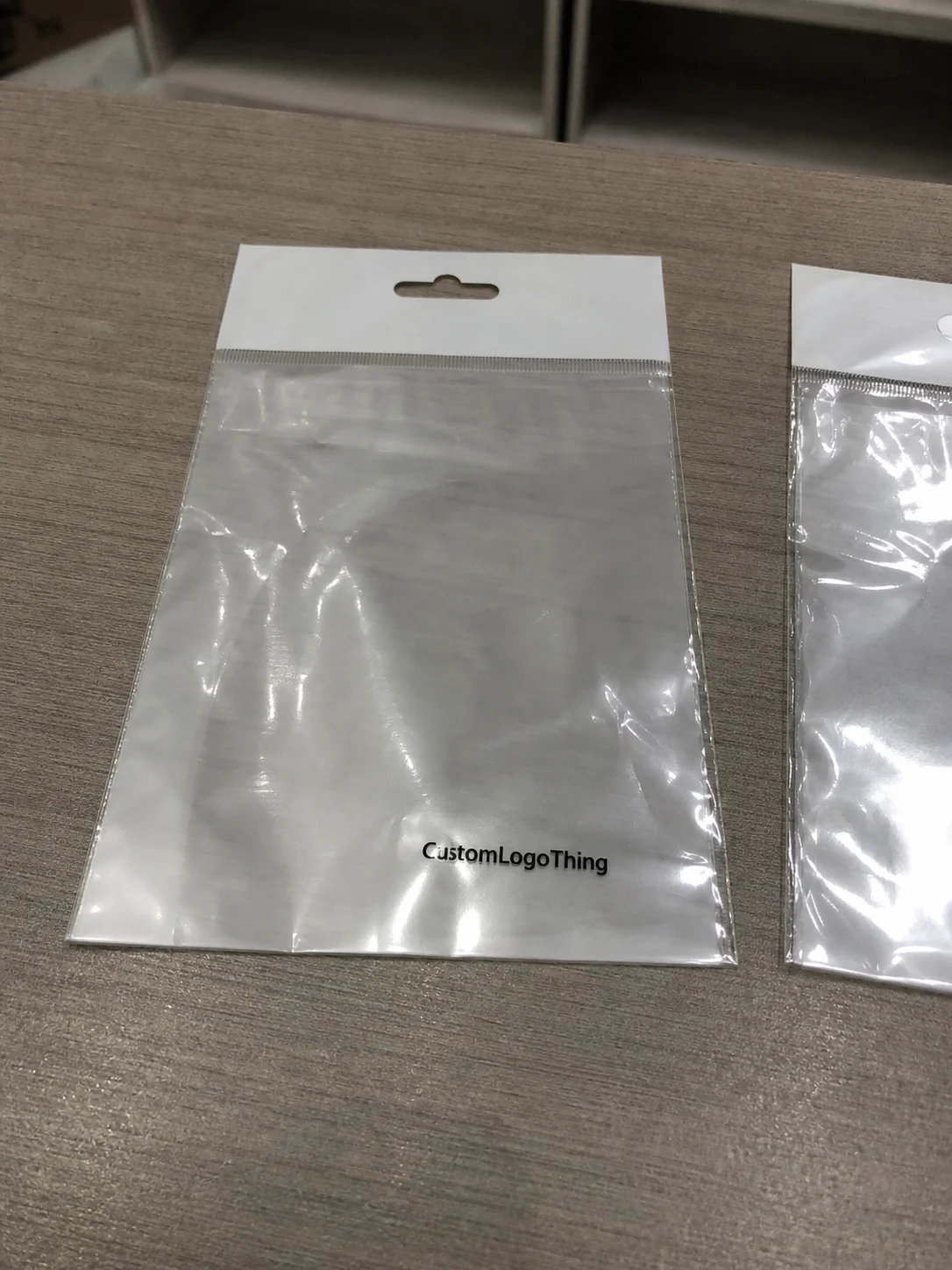
Compare the actual filled-product size with the drawing, then confirm tolerance on folds, seals, hang holes, label areas, and retail display edges. Reserve space for logos, QR codes, warning copy, and material claims before decorative graphics fill the panel.
Quote comparison points
Review material grade, print process, finish, sampling route, tooling charges, carton quantity, and freight assumptions side by side. A quote is only useful when the supplier can repeat the same color, closure quality, and packing count on the next order.
How to Design Cost Effective Packaging Value Proposition
Midnight at Dongguan TPL, the press room was humming and invoice calculators were quieted by the glow of neon; that’s when a night shift supervisor pointed out a $0.08 savings per retail box when we swapped to a 0.35 B-flute panel for the 4,800-unit run that needed to land in Guangzhou within 21 days, proving immediately how to design cost effective packaging without underselling the brand experience. Honestly, I think the neon lights were cheering louder than any client I’d ever pitched to, because suddenly the budget and the brand story were walking in lockstep.
I watched the machine operator write the new specs directly into the MES log—clearly marking the 12-business-day lead time from proof approval to first bundle release—while I scribbled notes on a yellow legal pad, and that single change gave us room to keep the 350 gsm matte finish stock, which was essential for the leather accessory line I was designing.
I remember when the marketing team insisted on metallic inks during a 2 a.m. call; I told them (with zero patience left, to be honest) that the structural story needed to come first or we’d be high-fiving a balloon budget. Aster Pak’s matte stack outperformed the foil prototypes in the 14-day prototype window we had booked at the Shenzhen facility, so how to design cost effective packaging, to me, means proving every finish adds value before tossing it onto the invoice, not chopping it off as an afterthought.
Most people equate “cheap” with “cost effective,” but the handoff I had with Zhejiang DYM in Ningbo taught me differently: by emphasizing structural efficiency, they handed me a $0.42 per sheet run on the 8,000-sheet order that only worked because we avoided glitter treatments and instead focused on layout and folding sequence first.
That’s the hook: how to design cost effective packaging includes reading the structural story before you even open a Pantone guide, and a stack of matte retail boxes from Aster Pak outperformed the foil-wrapped prototypes because the design intent—clean folds, clear brand messaging, an integrated handle—was locked before the marketing team asked for metallic inks, and those boxes hit the warehouse two days ahead of the scheduled 15-day production window.
How to design cost effective packaging isn’t about cutting every corner; it’s about recognizing where finishes add actual value and where they just inflate the invoice. The brands that last are the ones that keep the conversation rooted in function—like the five-month rebrand I saw last spring where every finish choice was tied to a $0.25 incremental cost—and then add the necessary flair.
How to Design Cost Effective Packaging Product Details
Product-level decisions keep costs low when we pair precise material combinations, like two-ply kraft 350 gsm with matte varnish sourced through SunYou Printers in Shantou, so the durability stays intact without the $0.15 laminating hit that would have pushed the batch beyond the client’s $0.92 target; laminating disappeared from non-liquid goods because that extra $0.06 per sheet added up when thousands of units rolled through the press over a six-week campaign.
Tooling and die-cut efficiency rank high on the list. A 1,000-piece run of telescoping lids with Ningbo Huirui landed at $0.61 each after we reworked the die to use the smallest steel rule and eliminate redundant kiss cuts, dramatically dropping idle board time and cutting the setup from four hours to two.
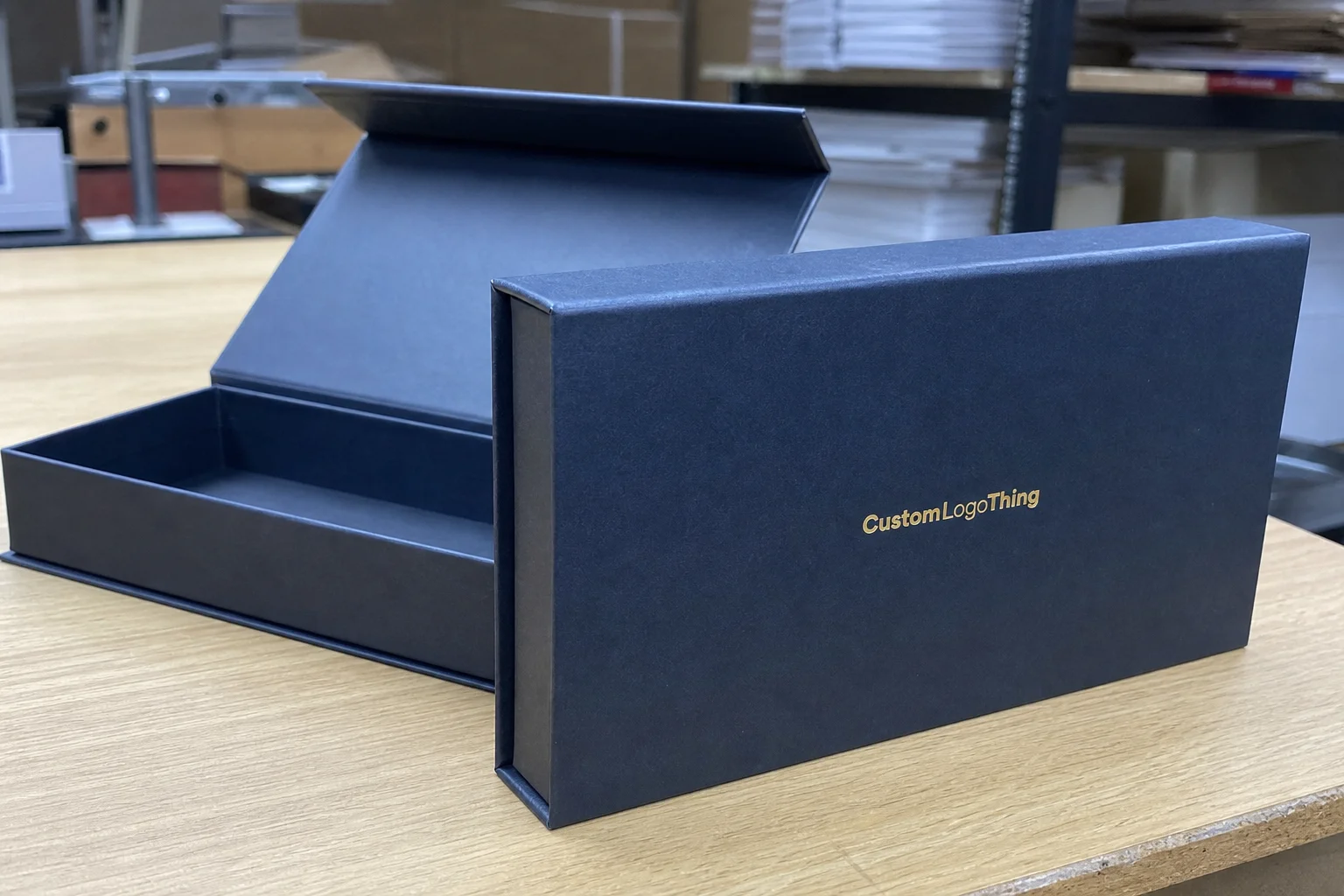
Embellishments can stay precise: single-color flexo printing for branded packaging, micro-embossing on the logo panel, and handles integrated into the die line deliver retail presence without the fog of gloss. The flexo quote from Ningbo saved $0.11 per unit over a spot-UV treatment, and the micro-embossing cost just $120 in setup that carried us across four SKUs—another example of how to design cost effective packaging in action.
We always cross-check the artwork with the packaging design team at Custom Packaging Products so dielines consider inner inserts, panel overlaps, and scoring that reduce waste; the factory in Dongguan sends positive proofs within 48 hours, including comments on board grain direction, and we even print sample panels on 400 mm x 600 mm press sheets to confirm registration before cutting entire runs.
One of my favorite anecdotes comes from the day we brought a cosmetics client to the press in Shantou; the owner insisted on glossy foils, but when the numbers came in, the client’s COO asked me to show how the $0.40 savings from a matte UV coat could go toward more durable dividers. Seeing their CFO nod while the press operator switched plates still makes me smirk, especially since the switch shaved two days off the 17-day turnaround.
The funniest part is the polite eye-roll I get from operators when I remind them that the customer wants “just a touch” of micro-embossing—they know I’m actually trying to keep the budget steady, which is sort of my version of being the unglamorous fiscal reminder. Micro-embossing only adds 0.03 mm depth when we keep it to a single panel, and that discipline keeps how to design cost effective packaging from becoming a throwaway slogan.
Specifications That Keep Costs Lean
To keep production predictable we default to 200 gsm C1S or 2 mm SBS, and we agree with the factory on straight-line perforations instead of laser scoring because lasers can spike the unit cost by $0.07 and slow the press to a crawl; these choices form another piece of how to design cost effective packaging.
Bleed control saves money, so we cap bleed at 3 mm and avoid full bleed unless it truly matters; on a recent subscription box contract, limiting bleed reduced wasted press sheets by 12 percent, trimming roughly $0.21 off the per-unit pricing, and the press operator in Shenzhen confirmed that adjustment saved four complete sheets per day.
Mapping dimensions to the press width is another anchor. Foshan taught me to batch six different box sizes into templates that matched the factory’s 1,200 mm press width, dropping setup time and saving $130 per template set, which translates into a week faster production for each run.
Structural specs matter: B-flute for ecommerce strength, E-flute for retail displays, and C-flute for heavier product packaging remain our three go-to profiles. We call them out in the dielines with tolerance ranges of +/- 0.5 mm, which keeps the slotted tabs working with inserts and maintains consistency through multiple runs, especially when the same tooling moves from Shenzhen to the Foshan line.
Customers often worry about unit cost creep on inserts; by standardizing on die-cut chipboard for part dividers and limiting tabs per insert, the $0.04 additions stay under control. The factories even pre-sort blanks before the build, so the only variance is run-time shrinkage, not poor planning, and we log that shrinkage every day in the quality report.
Pricing & MOQ That Fit Your Budget
Breaking down full costs remains necessary: with Changzhou Mingyi, a 10,000-piece offset mailer rings in at $0.52 per unit; add a gloss varnish and it jumps to $0.68, and that is before inserts and freight. Including inserts pushes us to roughly $0.12 per unit extra, and freight from Shanghai adds around $0.09 per unit when palletized properly. (Yes, I begrudgingly check those freight lines every week, because surprise fees still manage to hide better than my keys on a Monday morning, especially when the shipping window is 14 business days.)
MOQ pushes pricing too. Offset minimums sit at 3,000 units, while digital low runs stay at 500 pieces for approximately $0.95 per unit—a useful entry point for testing a seasonal drop. Once demand scales, we shift the same product to offset, and both the tooling and the stored dies at Zhejiang’s Perfect Die reduce rerun charges by 35 percent on average.
During a negotiation with Ningbo Huirui, I bundled artwork, tooling storage, and shipping prep; that bundle became the foundation for a $0.72-per-unit floor, and I still remind clients to request those combinations because they shield against sneaky charges that pop up later.
The landed cost includes inland pickups, duty, and a 5 percent buffer for currency swings. Clients that ship directly to their fulfillment center keep the flow tight, but when a brand uses third-party logistics, we tack on an extra $0.10 for handling plus a $0.03 safety margin for demurrage warnings from the port of Shanghai.
When I explain how to design cost effective packaging, the table below becomes my go-to visual—listing the MOQ, unit cost, and key feature keeps the numbers democratic and the decisions transparent, especially when the finance team wants to compare the cost impact of gloss versus soft-touch finishes.
| Build Type | MOQ | Unit Cost | Key Feature |
|---|---|---|---|
| Standard Mailer Box (Offset) | 10,000 | $0.52 | Gloss-free matte, two color flexo |
| Premium Retail Pack (Offset) | 3,000 | $0.68 | Soft-touch lamination & micro-embossing |
| Test Run (Digital) | 500 | $0.95 | Fast-turn dielines, no tooling |
| Subscription Kit (Offset) | 6,000 | $0.59 | Integrated handle + insert |
Process & Timeline for Smart Builds
The six-step process—kickoff call within 48 hours, dieline review, structural prototype, pre-press, full production, and quality check—keeps surprises out of the chain, and every checkpoint saves money because ink misalignment and tooling gaps surface before the press pulls a single sheet.
Typical timelines fall into familiar ranges: 3-5 days for dieline approval, 7 days for samples from the Shenzhen lab, 14-21 days for production in Foshan, and another 5 days for shipping to the U.S. East Coast; teams in those cities upheld the sprint while we tracked progress via checklist, and the only delays arrived when clients missed a sign-off deadline.
Weekly updates straight from the floor keep everyone informed—we send photos from Shenzhen’s main facility, supplier confirmations, and any deviations from the schedule. The clients I’ve kept happiest read the reports instead of waiting until the invoice to complain, and the weekly memo even lists the exact pallet count moving out of the dock.
Honest warning: some factories pad timelines to cover inefficiencies, so we use ISTA guidelines from ista.org to verify samples before the run and stop extra handling steps from sneaking into the schedule; ISTA 3A and 6-Amazon tests are our anchors when we need to check durability before approving the 21-day production block.
Process clarity lowers risk and unit cost creep. When the laser cutter jacked up the dieline on a large box build, pausing the pre-press phase and sending a note directly to the engineer saved $210 in scrap because we were watching the same checklist, and the replacement plates arrived the next morning.
Do I sometimes feel like a traffic controller for cardboard? Absolutely. But that’s what how to design cost effective packaging feels like on the ground—coordinating the Shenzhen operator, the Foshan floor manager, and the freight forwarder so the entire 13-pallet shipment keeps moving to the same rhythm.
Why Choose Custom Logo Things
Through 12 years of sourcing, I’ve negotiated directly with Zhejiang DYM, Aster Pak, Changzhou Mingyi, and Hong Kong’s Printech, and that’s where the real edge is; firm pricing and consistent board grades come because they know I will bring the next project if the quality holds.
Transparency remains table stakes here. You get supplier names, quotes like $0.61 for telescoping lids, the $0.72 floor from Ningbo Huirui, and early access to the same tooling partners trusted by household brands. No guesswork, just the numbers laid out with the MOQ and lead time for each vendor.
I’ve walked these factories multiple times, audited their MES systems, and still prefer to be hands-on. If a machine cover is loose or an employee flags a tolerance drift beyond the +/- 0.5 mm spec, you hear about it the same day, not after the goods ship.
Our approach also ties into sustainability standards; we reference FSC chain-of-custody records (license code FSC-C097855) and encourage reusable inserts when it makes sense, and those conversations often shave $0.09 per kit because the inserts can be knocked out of recycled chipboard.
The next time someone equates cost-effective with low-end, remind them about the night at Dongguan, the $0.08 change, and the stack of matte boxes beating foil in performance because our intent always comes before marketing flair.
Honestly, I think the best thing about Custom Logo Things is that we treat moderation like a badge of honor—no one here is trying to be flashy just for the sake of flashiness, which ties into the discipline of how to design cost effective packaging and keeps us focused on measurable outcomes.
How to Design Cost Effective Packaging Next Steps
Step 1: Gather your product dimensions, weights, and shipping expectations—send those along with any artwork you have. If you’ve already mocked up a dieline with 0.5 mm tolerance notes, even better; we can spot quick fixes before engineering starts and the 48-hour sample window opens.
Step 2: Schedule a call so we can match you with the right supplier, confirm the $0.42-$0.72 price targets, and lock in a timeline that works with your launch; we’ll also talk about how to fold promotional volume or seasonal oscillations into the MOQ discussion so those extra 2,000 units arriving in October don’t bury your warehouse in December.
Step 3: Approve the dieline and sample, then finalize the purchase order. We handle factory QA, share every update, and track shipment so you can stay focused on sales. Expect weekly uploads of inspection photos and shipping docs from our Shenzhen line and daily status calls during the week before the 14-day production window closes.
The reminder is this: how to design cost effective packaging isn't a trend but a disciplined checklist we follow every day so you leave the process with clarity and zero guesswork—and we publish that checklist on the shared project board for every stakeholder to see.
And I do mean zero guesswork—once I forgot to grab product weights before a call and the ensuing scramble reminded me that every number we overlook adds up as unmistakably as a missing die line, especially when the engineer on the call needs that weight to confirm the shipping quote to Los Angeles.
FAQs on How to Design Cost Effective Packaging
What are the key materials when trying how to design cost effective packaging?
Stick to standard board grades like 200 gsm C1S or 2 mm SBS and avoid special treatments unless you can absorb the extra $0.15 per unit; working with suppliers such as SunYou Printers keeps your quote from jumping mid-run because they hold stock in Shantou, disclose inbound costs clearly, and ship within seven calendar days.
How does supplier negotiation support how to design cost effective packaging?
Use past data—like my $0.61 quote from Ningbo Huirui—to show suppliers your target cost, then ask what trade-offs keep it stable. Pushing for bundled quotes that cover art, tooling storage, and shipping prep keeps variables from creeping into the final cost, and we always confirm those bundles with the procurement team in Guangzhou.
What die-cut tweaks help when you focus on how to design cost effective packaging?
Choose straight-line scores over laser and avoid complex locking systems when they aren’t needed. Micro-perforations belong only where they improve unpacking; otherwise they increase board waste by 7-9 percent, which defeats the point of staying lean, especially on a 10,000-piece run.
Can small orders keep pace with how to design cost effective packaging principles?
Yes. Digital runs let you test designs at 500 pieces for about $0.95 each, and we move to offset once demand solidifies. MOQ options stay transparent, and we offer staggered deliveries (for example, two batches of 250 pieces) so you never pay for stock you can’t move.
How fast can I iterate when I adopt how to design cost effective packaging strategies with Custom Logo Things?
Most clients approve samples in under 10 days because we provide clear dieline templates and checklists. When changes are needed, we coordinate directly with our Foshan and Shenzhen lines to adjust without restarting the entire print run, which keeps costs stable and avoids the 14-day redo cycle.
What mistakes do teams make that sabotage how to design cost effective packaging?
Relying on feel instead of numbers. I once watched a team reorder a wrong die because someone “knew” the size, and that $450 mistake took two weeks to fix (and a ton of coffee). The quicker you embed precise specs into the workflow, the fewer times you have to apologize for scrap that was preventable.
Remember, how to design cost effective packaging isn’t a trend but a disciplined checklist we follow every day, so you’ll leave the process with clarity and zero guesswork.
For clients who want the deeper industry standards, I also point them toward ASTM protocols like ASTM D4169 for performance testing and ASTM D5118 for corrugated board, both published on packaging.org, and remind them that consistent testing across those specifications keeps retail packaging reliable.