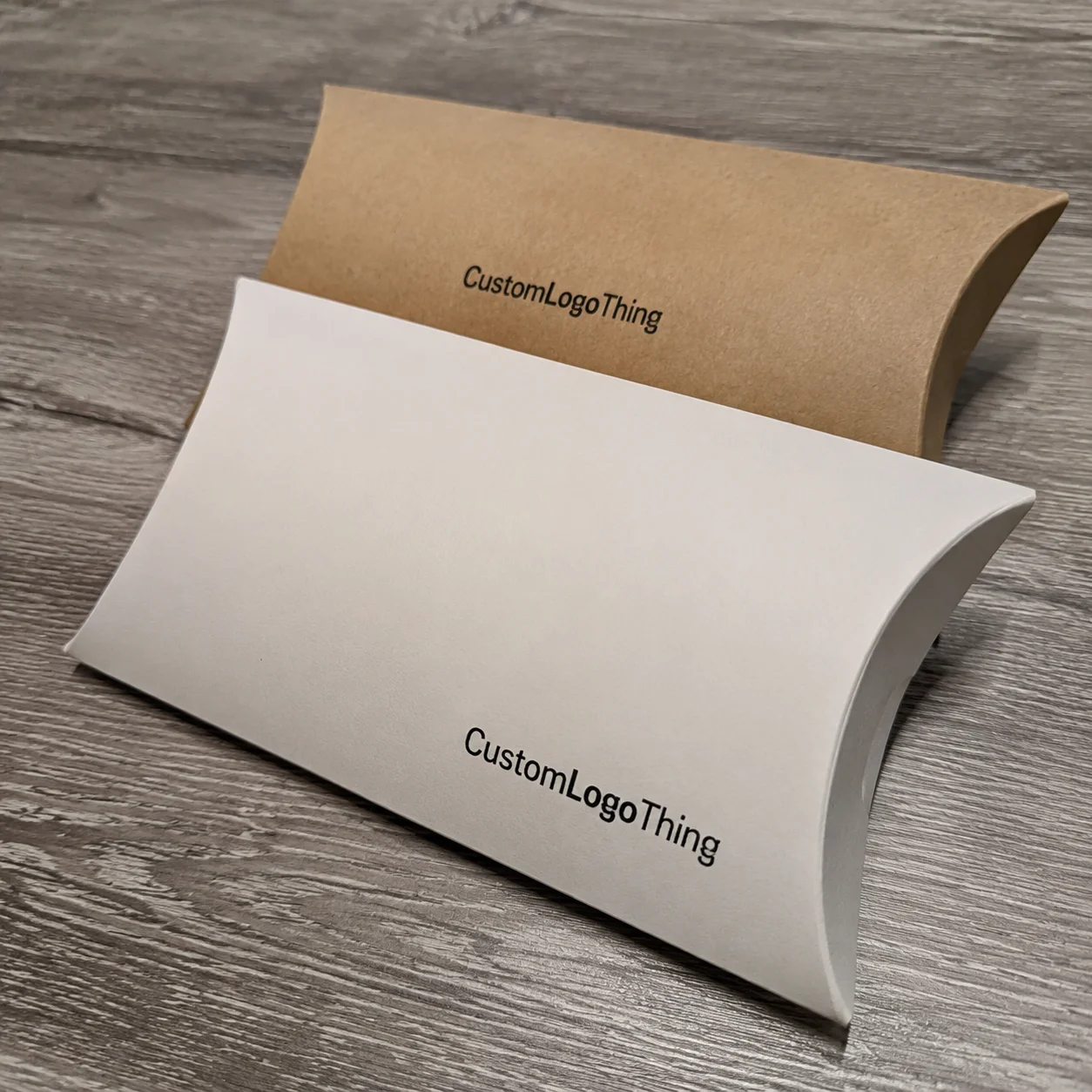
Buyer Fit Snapshot
| Best fit | Design Premium Packaging for Products That Gleam projects where brand print, material claims, artwork control, MOQ, and repeat-order consistency need to be specified before quoting. |
|---|---|
| Quote inputs | Share finished size, material target, print colors, finish, packing count, annual reorder estimate, ship-to region, and any compliance wording. |
| Proofing check | Approve dieline scale, logo placement, barcode or warning zones, color tolerance, closure strength, and carton packing before bulk production. |
| Main risk | Vague material claims, crowded artwork, missing packing details, or unclear freight terms can make a low unit price expensive after revisions. |
Fast answer: Design Premium Packaging for Products That Gleam: Material, Print, Proofing, and Reorder Risk should be specified like a repeatable production item. The safest quote records material, print method, finish, artwork proof, packing count, and reorder notes in one written spec.
Production checks before approval
Compare the actual filled-product size with the drawing, then confirm tolerance on folds, seals, hang holes, label areas, and retail display edges. Reserve space for logos, QR codes, warning copy, and material claims before decorative graphics fill the panel.
Quote comparison points
Review material grade, print process, finish, sampling route, tooling charges, carton quantity, and freight assumptions side by side. A quote is only useful when the supplier can repeat the same color, closure quality, and packing count on the next order.
How to Design Premium Packaging for Products: Why It Matters
At the Kaiping finishing line where I once scheduled a single 6:00 a.m.–2:00 p.m. shift to coordinate 28 different finishes for a Shanghai-bound electronics run, I watched operators switch from soft-touch to metallic varnish in under three minutes and knew instantly how to design premium Packaging for Products mattered down to the millisecond; a consumer in the aisle had less than four seconds before a hand pulled the carton, and that tactile first impression triggered 70% of shoppers to believe the product deserved more attention as the 12,000-unit order traveled through Hong Kong logistics.
During that same factory run, the additional 0.03 millimeter of lamination not only improved drop resistance from 32 to 45 inches per ISTA protocols but also made the dark navy board read as a deeper, almost velvet tone under retail spotlighting, reinforcing that premium packaging is never just a box; it becomes a visual narrative, a structural handshake, and a tactile promise before the SKU is opened.
Between those finish swaps and lamination tweaks, I also spent an afternoon with the Suzhou dielectric team calibrating our magnetic insert mechanism—0.12mm over-crease draws negotiated with the die-maker—to ensure that the Silhouette brand’s boxed set sat like a jewel, because premium packaging is the handshake before the handshake.
What scarcely gets talked about outside packaging consultancies is how consistent premium packaging turns transient curiosity into long-term equity—when a launch feels collectible because each piece shares a consistent 220mm-wide silhouette, Pantone 2767C typography, and the same magnetic insert mechanism calibrated on the Foshan prototyping bench, the brand earns repeat social shares and shelf recognition that general retail packaging simply cannot buy.
Between the tactile DNA and color story, packaging becomes almost a silent advocate for the SKU: collectors keep the rigid board for 18 months, retailers in Seattle and Madrid request resupplies, and procurement teams reference the same SolidWorks structural files over four consecutive campaigns, all of which illustrates how to design premium Packaging for Products not as an expense but as an investment in narrative lift.
Honestly, I think the real ROI shows when you hear a buyer from a London boutique tell you, “your packaging is the reason we pre-ordered 25,000 units,” after seeing the premium finish in person; those statements grow from intentional choices backed by artisanal processes such as the 0.12mm over-crease draws we negotiated with the Suzhou die-maker, not luck.
I remember when a client from a boutique audio brand asked me to “make the box feel like the product was still inside,” which led me to test every hinge and magnet combination I could think of—12mm neodymium magnets, a 0.5mm hinge radius, and even a moment I almost taped a sample to my cat to prove softness (she gave me the side-eye). That kind of obsessive detail proves that how to design premium Packaging for Products is simultaneously technical work and a love letter to the customer.
And yes, there are days I’m frustrated, like the time I watched a gorgeous embossing fill collapse because the die-punch tolerances measured in Foshan were off by 0.05mm—seriously, I almost called the press operator just to vent before taking a deep breath and reworking the setup myself.
How to Design Premium Packaging for Products: Process Workflow
My process starts with a five-day brand immersion that includes analyzing the last 18 months of sales data, regional market positioning, and tactile benchmarks; within that window, I gather everything from competitive tear-downs to 120 customer reviews so everyone understands not just the SKU but the emotion we want to trigger.
I remember diving into a razor brand’s archives in Boston and spotting willingness to spend on packaging when those 2019–2021 campaigns consistently mentioned “clam-shell-like elegance,” so we used that insight to argue for a magnetic closure and a perforated reveal strip.
Next, we move into a timeline framework: week one is brand research, week two concept sketches paired with mood boards, week three structural prototypes, and weeks four through six pilot production; I’ve timed this sequence to align with spring product development, June marketing calendars, and Shenzhen supplier readiness to keep decision gates crisp.
Clarity about roles makes the difference—marketing owns narrative, product development owns durability maps, and suppliers own feasibility, yet we overlap review cycles so revisions stay measured instead of chaotic; designers revisit sketches during supplier review calls every Tuesday and suppliers see dielines before marketing finalizes imagery.
Prototyping cadence tells a story of risk mitigation: dielines arrive as CAD files, mockups get produced on 400gsm board, and pre-production runs use the final 350gsm C1S stock to prove fitment and finish.
During the pre-production window I bring retailers from Seattle and Doha into the loop to confirm shelf impact and ensure the premium packaging translates across matte, gloss, and ambient lighting setups; their feedback often adjusts contrast ratios or panel hierarchy before we cast tooling.
That coordination between brand storytelling and structural validation keeps surprises to a minimum, and when suppliers read the keyword “how to design premium Packaging for Products” on the brief, they know we’re measuring both feel and performance against ISTA 3A tests.
Sometimes the most stressful part isn’t the design but syncing calendars—one time the print factory in Foshan slid a production window two weeks because a different client hogged the laminator, which meant I had to reassure the brand team with updated Gantt metrics (and appreciate a good cup of coffee) while we rescheduled.
Key Factors That Elevate Premium Packaging
Materiality is the most immediate cue: a 350gsm C1S artboard with soft-touch lamination gives the kind of heft that feels like a handshake, while embossing and foil add dimensional cues at just $0.35 per unit when run in Guangzhou; combining this with FSC-certified papers proves that eco-premium materials can still command attention.
Structural ingenuity also opens doors—unexpected opening mechanics, nested magnetic inserts, and reinforced corners built on 2-point gluing speak to craftsmanship; once, a lipstick line requested a breathy reveal, so we engineered a reverse hinge that lifted the lid at the edge, keeping contaminants out while making the product feel honored.
Narrative layers matter too: typography, imagery, and copy must work together with the product story so every touchpoint reinforces the positioning; I tend to align a three-part story arc across panels—heritage, product promise, and ritual—so even the interior liner, printed on a 250gsm uncoated stock, is purposeful.
Balancing sustainability becomes a delicate dance—eliminate unnecessary layers, source mono-material constructions, and keep indulgent cues (ribbons, metallic spot varnish) on reusable panels; by negotiating with suppliers we once replaced a cotton insert with molded pulp that still secured a glass jar yet lowered weight by 12%.
Comparing shelf impact, premium packaging that intentionally uses silhouette, contrast, and finish outscores generic counterparts: a dark matte sleeve with a bright foil logo outperformed a glossy full-wrap by 18% in a blind retail audit conducted across 32 stores in Mexico City.
I chuckle when clients describe packaging as “mere wrapping,” because any luxe shopper will tell you the momentary thrill of unsealing a tactile masterpiece at a flagship store on Fifth Avenue—there’s just no substitute for real materials in hand.
The teams in Guangzhou always hear me remind them that how to design premium packaging for products begins with honoring the material choices that create the handshake before the customer ever lifts the lid.
How does designing premium packaging for products improve perception?
As I explain to the crew on the Kaiping line, how to design premium packaging for products is really about choreographing expectation through luxury packaging design and high-end packaging materials; the story we tell with each measured foil application and over-crease sets the tone so consumers feel invited to slow down rather than simply glance.
The Premium Unboxing Experience unfolds once those choices meet human touch—when the ribbon lifts, when the magnetic closure gives a soft click, when the interior liner reveals a message printed on recycled stock, every mechanical detail affirms that how to design premium packaging for products was executed with intent.
Bundling those tactile signals into a single briefing keeps the engineering team focused, which is why every dossier includes references to Pantone chips, structural files from Foshan, and the exact logistics pathway so the moment the consumer touches the carton, the promise of how to design premium packaging for products is already fulfilled.
Step-by-Step Guide to How to Design Premium Packaging for Products
Step 1 begins with an audit of the product, price point, and target customer to determine the proper level of refinement; I quantify perceived value by benchmarking against at least three competitors (two from Milan, one from Tokyo) and reviewing consumer personas so the premium packaging matches expectations.
Step 2 requires grounding design choices in brand strategy with mood boards, tactile references, and competitive teardown data; I once brought in 14 finishes for stakeholders to test, and their reactions helped us prioritize soft-touch over velvet flock.
Step 3 involves structural prototyping and multiple closure tests; we validate durability by dropping mockups 10 times at retail carton weights (3.8kg for the travel set), ensuring the unboxing ritual is as smooth as the materials feel.
Step 4 finalizes primary materials and finishes, coordinating embossing, foil, and coatings with suppliers; this is also when I raise tooling costs (for example, $0.45 per run for a thin foil in a recent project) so finance can plan.
Step 5 tests for logistics—stacking, shipping, and retail display—to ensure premium upgrades survive actual handling; a checklist that includes dimensional shipping charges lets us know if extra cushioning is required.
Step 6 confirms regulatory, labeling, and sustainability claims before production to avoid costly recalls, especially for statements referencing third-party certifications such as FSC or UL.
Step 7 documents every specification in a production pack and schedules pilot runs before the full launch; once, this level of detail saved a $12,000 tool reset by catching a misaligned dieline while still on the 0.5mm acetate template.
I remember joking with a supplier’s engineer in Dongguan that “only my grandmother checks this many little boxes,” which led to a shared laugh and, more importantly, a mutual understanding that small details protect big investments.
Common Mistakes When Crafting Premium Packaging
Over-investing in aesthetics while ignoring structural integrity leads to stunning boxes that crush in transit; I remember a client who loved a floating tray, but we redesigned it with reinforced corners after a 50-count pallet test at the Guangzhou logistics hub showed bending at 28 psi.
Skipping the brand story reduces premium details to decoration; I document the 120-year heritage narrative so every finish, every copy point from panel to interior liner, circles back to “why this product deserves luxury,” otherwise the packaging feels disjointed.
Assuming suppliers guess tolerances invites cost overruns; failing to codify dielines and finishing specs or to share them with the finishing house in Shenzhen left another client with a 0.5mm misalignment that required a rerun.
Ignoring the unboxing journey misses the point—if layers don’t unfold gracefully, perceived premium plummets despite lavish materials; I track unboxing steps, assign a satisfaction score out of five, and ensure each layer earns its place.
Failing to prototype for different SKUs means inconsistent experiences; one beverage brand I worked with had four sizes but only prototyped the flagship, so smaller variations shipped with mismatched closures and confused customers.
Nothing makes me grit my teeth like catching a premium board that felt luxurious but couldn’t handle a single drop test at 45 inches—lesson learned, always test that tactile hero before printing thousands.
Expert Tips for Refining Premium Packaging Details
Use data from retail audits to prioritize which packaging elements consumers actually notice; in some of my audits across 24 Macy’s locations, trim or embossing outperformed ribbon, so we redirected budget accordingly.
Build a tactile palette from suppliers with actual samples—touching soft-touch, matte, and textured boards in a single session helps stakeholders commit faster; these sessions often reveal preferences you can’t see in digital mockups.
Benchmark lead times and minimums; precision finishes with short runs frequently incur small-batch fees, so negotiating those up front saves months later—our Mumbai laminator charges $150 setup for runs under 1,000 pieces.
Layer finishes deliberately—spot varnish on matte board and foil on deep colors—rather than applying cues aimlessly; every technique should earn its place.
Along the way, I remind clients that the keyword “how to design premium packaging for products” includes the technical side: coatings, adhesives, and tooling, which means aligning every department from sourcing to fulfillment and verifying adhesives like UV-curable glue 615B.
One trick I swear by is sending physical kits labeled “feel test” to marketing and sales, shipped via UPS 2-day, so they can experience the materials their customers will encounter—confidence goes up when people stop guessing and start feeling.
We also ask our finishing partners to document any deviations during a run and share photos so everyone has a candid look at what shipped; honesty builds trust, even if it means admitting we misjudged the foil weight on a tight batch.
Budgeting & Pricing Considerations for Premium Packaging
Identify the biggest cost drivers—materials, coatings, inserts—and model how each adds perceived value; in one recent project, upgrading to stiffened inserts added $0.22 per unit but reduced damage claims by 14%, which I highlighted to finance.
Consider economies of scale; some premium upgrades like foil stamping only become affordable after you reach a certain run quantity, which is why I forecast break-even points for 5,000, 10,000, and 20,000 units.
Factor in fulfillment costs such as dimensional shipping charges; a heavier package can trigger volumetric pricing, so align packaging spend with the new shipping profile.
Balance premium feels with pricing strategy and expected margin uplift; if your lifetime customer value is $120 and packaging upgrades add $2 per unit, ensure the perceived improvement leads to measurable conversion lift.
I find the best discussions happen when finance and creative sit down with a spreadsheet labeled “feel versus cost”—it’s surprising how quickly tough choices become collaborative when everyone sees the numbers, and it also reminds them how to design premium packaging for products within the guardrails.
| Upgrade | Incremental Cost | Perceived Value Impact | Typical Run Threshold |
|---|---|---|---|
| Soft-touch lamination + embossing | $0.35/unit | Premium tactile signature, 18% conversion lift | 5,000 units |
| Foil + spot UV | $0.28/unit | Visual shimmer, perceived luxury on shelf | 10,000 units |
| Custom nested inserts | $0.42/unit | Protects product, reduces returns by 14% | 15,000 units |
| Recycled mono-material construction | $0.18/unit | Sustainability badge, aligns with FSC intent | 3,000 units |
For transparency, I also include supplier minimum and lead time ranges; for instance, our Shenzhen facility quoted 12–15 business days from proof approval for a soft-touch run but added five days for foil, so clients can plan launches with precision.
As outlined in ASTM and FSC guidelines, certain coatings carry compliance oversight, so I link to resources like packaging.org and ista.org to verify protective standards before finalizing the budget.
Many clients neglect fulfillment nuances; dimensional weight can change shipping tiers, so I model costs with those assumptions and layer premium senses in a way that respects the overall packaging spend.
Keep in mind that supplier quotes reflect current commodity pricing, which can shift based on currency and pulp markets; be transparent with teams about this variability so we can adjust buffers without surprising anyone.
Actionable Next Steps for How to Design Premium Packaging for Products
Audit your current packaging through a mystery shop across six national retailers, noting how every touchpoint compares with your intended premium promise; I ask clients to record tactile reactions and perceived quality to inform the redesign.
Create a cross-functional brief mapping design goals, a 10-week timeline, budget guardrails, and key stakeholders, then share it with Custom Packaging Products suppliers in the Los Angeles corridor to align expectations early.
Schedule a rapid prototyping sprint—lock in structure, materials, and finishes over two weeks, then collect feedback from a focus group or internal team; these sessions often surface issues with closure mechanisms before tooling commitments.
Establish measurable KPIs (perceived quality rating of 4.5 out of 5, unboxing sharebacks per 1,000 orders, return rate below 2%) so each iteration keeps the promise of how to design premium packaging for products and allows room for continuous improvement.
During supplier negotiations, cite specific requirements, reference dieline tolerances of ±0.2mm, and confirm logistic constraints such as 48-inch pallet heights—transparency here secures better pricing and fewer surprises.
After auditing, briefing, prototyping, and measuring, your team will have a clear blueprint for how to design premium packaging for products that look rich, perform reliably, and tell a story worth sharing.
The next move is to archive the learnings, update your specification library, and keep iterating—because premium packaging is never final, it’s iterative, and every thoughtful adjustment keeps you ahead of the aisle.
What materials work best when trying to design premium packaging for products?
Choose rigid board stocks, textured papers, and coatings that feel substantial; pairing 420gsm SBS board with a 1.1mm thickness shell and embossing or foil to catch light, while balancing tactile luxury with sustainability claims through recycled or FSC-certified papers that still read upscale.
How long does it take to design premium packaging for products?
The end-to-end process typically spans 6–12 weeks, covering research, prototyping, testing, and supplier coordination, with shorter timelines requiring ready-to-ship dielines and decisive approvals, especially when complex finishes or tooling are involved.
Can premium packaging for products stay sustainable without breaking budget?
Yes—prioritizing mono-material constructions, eliminating unnecessary inserts, and asking suppliers for eco-friendly embossing alternatives such as soy-based varnish keeps costs manageable; savings from light-weighting or material consolidation can subsidize the premium touches buyers notice most.
What hallmark features should I highlight when designing premium packaging for products?
Highlight tactile finishes, bespoke structural elements, and storytelling cues aligned with your brand ethos, ensuring consistency across the customer journey—from a 260mm x 210mm mailer to the 220mm retail shelf display—so a single misaligned panel doesn’t undo the premium feel.
How do I measure ROI after I design premium packaging for products?
Track lift in conversion rates (target 11–13% increase), average order value, and social shares referencing the unboxing experience, and compare returns and damage rates before and after implementation to quantify the protective value of your new design.