Buyer Fit Snapshot
| Best fit | Die Cut Cardboard Sleeves Wholesale for Sustainable Brands projects where brand print, material claims, artwork control, MOQ, and repeat-order consistency need to be specified before quoting. |
|---|---|
| Quote inputs | Share finished size, material target, print colors, finish, packing count, annual reorder estimate, ship-to region, and any compliance wording. |
| Proofing check | Approve dieline scale, logo placement, barcode or warning zones, color tolerance, closure strength, and carton packing before bulk production. |
| Main risk | Vague material claims, crowded artwork, missing packing details, or unclear freight terms can make a low unit price expensive after revisions. |
Fast answer: Die Cut Cardboard Sleeves Wholesale for Sustainable Brands should be specified like a repeatable production item. The safest quote records material, print method, finish, artwork proof, packing count, and reorder notes in one written spec.
Production checks before approval
Compare the actual filled-product size with the drawing, then confirm tolerance on folds, seals, hang holes, label areas, and retail display edges. Reserve space for logos, QR codes, warning copy, and material claims before decorative graphics fill the panel.
Quote comparison points
Review material grade, print process, finish, sampling route, tooling charges, carton quantity, and freight assumptions side by side. A quote is only useful when the supplier can repeat the same color, closure quality, and packing count on the next order.
Die Cut Cardboard Sleeves Wholesale for Sustainable Brands
A plain carton can carry a product, but die cut cardboard sleeves wholesale can turn that same carton into something that feels ready for a retail shelf, a subscription box, or a premium gift set without forcing the brand into a heavy rigid package. That small wrap does a lot of work in practice: it adds graphics, protects the edges, helps the item feel finished, and gives procurement teams a clean wholesale format that ships flat and stores efficiently.
Why Die Cut Cardboard Sleeves Wholesale Solve a Real Retail Problem
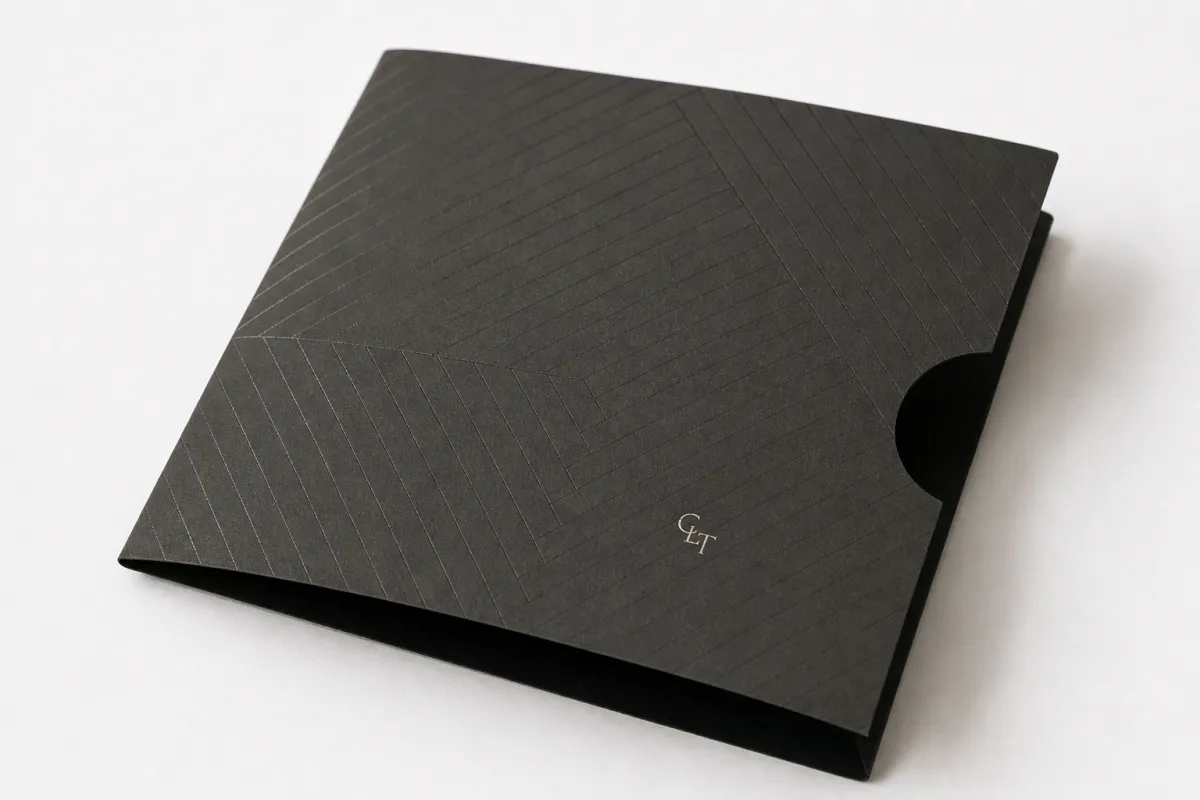
Retail buyers do not always need a full custom box. Sometimes they need a package that looks intentional, lands at a sensible unit cost, and still works with an existing carton or tray. That is exactly why die cut cardboard sleeves wholesale remain so practical. A sleeve can convert a plain base package into a branded display piece with a clean front panel, a back panel for legal copy, and enough structure to keep corners from looking sloppy on the shelf.
There is a logistics advantage here that often gets overlooked. Die cut cardboard sleeves wholesale are usually shipped flat, so pallet space goes further, receiving is easier, and a packing line can assemble them as needed rather than dealing with bulky pre-built cartons. That matters in real operations. A sleeve that arrives nested flat can reduce freight cost, free up storage racks, and make labor planning more predictable during launch weeks or seasonal peaks.
From a sustainability point of view, the format is easy to defend when it is designed with restraint. A sleeve uses less paperboard than a full rigid box, and it can often replace extra wraps, fillers, or overbuilt inserts. For brands trying to keep their footprint lower, die cut cardboard sleeves wholesale can be a smart middle ground: enough print area to carry the message, enough structure to protect edges, and enough restraint to avoid unnecessary material. I have seen packaging teams save a surprising amount of material simply by stripping away one extra component and letting the sleeve do the work.
The format shows up across a wide range of products because it solves a common tension between presentation and cost. Cosmetics, candles, soaps, supplements, apparel accessories, and gift sets all benefit from a branded outer layer that does not require a complete package redesign. The same buying pattern comes up over and over: the customer wants the shelf impact of a custom package, but they also want a unit cost that still works in wholesale quantities. Die cut cardboard sleeves wholesale fit that brief well, and they do it without making the pack look stripped down or cheap.
Here is the business case in plain language. A sleeve has to fit correctly, print cleanly, and assemble without friction. If it misses on any of those points, the savings disappear fast. Good die cut cardboard sleeves wholesale programs are built around a few core facts: the final carton size, the artwork coverage, the board grade, and the expected quantity. That keeps quoting faster and reduces the odds of surprises later in the run.
For brands that also need a shipping component, it often makes sense to pair sleeves with a carton program instead of forcing one package to do every job. Our Custom Shipping Boxes page is a useful reference point if the sleeve is part of a broader retail and fulfillment package system. And if the business buys packaging on a recurring basis, the ordering structure on our Wholesale Programs page helps clarify how repeat runs are usually handled.
Product Details: How Die Cut Cardboard Sleeves Are Built
At its simplest, a die cut sleeve is a scored and cut paperboard wrap that partially or fully encases a product, carton, tray, or bundle. The die defines the folds, the tabs, the cutouts, and the locking points, while the print applies the graphics where they belong so the finished piece lines up properly after assembly. For die cut cardboard sleeves wholesale, repeatability matters as much as appearance. If the scores are inaccurate or the cuts drift, the sleeve looks crooked and the fit becomes inconsistent from unit to unit.
The most common construction styles are straightforward. Some sleeves are open-ended bands that slide over a base carton. Others use tuck tabs or friction locks to stay in place without adhesive. Wrap-around belly bands are common for lighter items or bundled products, and display sleeves may include a hang tab or window when the package needs merchandising support. Die cut cardboard sleeves wholesale can be built to do very little, or they can be asked to carry more function than buyers first expect.
Why does die cutting matter so much? Because it gives you clean edges, tight registration, and folds that behave the same way on every piece. A simple hand-cut wrap may be fine for samples, but wholesale production needs a proper die so the scores and cuts stay consistent. That consistency helps the sleeve sit squarely around the box and keeps the printed panels aligned. In real production, that makes a visible difference.
Substrate choice is another major decision. Buyers usually compare SBS, CCNB, kraft, recycled board, and heavier paperboard grades when they need more stiffness. SBS gives a clean print surface and is often chosen for cosmetics or premium retail items. Kraft has a more natural look and can support a more understated brand story. Recycled board can help with environmental goals, but the print and finishing need to be selected carefully so the final piece still feels intentional. For die cut cardboard sleeves wholesale, the board should match the item, not just the design concept.
Finishing should earn its place. An aqueous coating protects the print without adding too much complexity. Matte and gloss varnish change the feel and the visual contrast. Embossing, foil, and spot UV can add strong shelf impact, but they also raise cost and may work against a simple recycling path. The best sleeve is not the one with the most effects; it is the one that carries the brand cleanly and performs well in the supply chain. That is especially true for die cut cardboard sleeves wholesale, where buyers usually care about a reliable production run more than a dramatic sample board.
For material sourcing and recovery standards, it helps to look at recognized industry guidance. FSC certification details are published by the Forest Stewardship Council, and transit testing frameworks such as ISTA are used widely when a package needs to survive distribution stress. Those standards do not solve every packaging problem, but they give a buyer a clearer language for comparing suppliers and materials.
Specifications That Affect Fit, Print, and Performance
Good sleeve design starts with measurement, not artwork. The dimensions that matter most are panel width, wrap length, product depth, score allowances, and the tolerance you can live with during assembly. A sleeve that looks perfect in a mockup can still feel wrong if the board thickness was not included in the fold calculation. With die cut cardboard sleeves wholesale, a few millimeters can decide whether the package feels crisp or frustrating.
Artwork placement needs to respect the physical realities of the fold. Bleed, trim, folds, barcode quiet zones, legal copy, and any area that will be hidden by a tuck or overlap should be planned before the file goes to press. Text near a score line can distort. Fine rules or thin type can break up if the board is heavily textured. From a packaging buyer’s point of view, this is where a clean dieline saves time. Die cut cardboard sleeves wholesale look much better when the art is built around the structure rather than forced onto it.
Board weight and thickness affect both feel and function. A sleeve that is too light can wrinkle during assembly or handling. A sleeve that is too heavy can feel overbuilt, drive freight cost higher, and make folding slower on the line. A common sweet spot is a paperboard grade that gives enough stiffness for retail presentation without becoming difficult to score or store. For many die cut cardboard sleeves wholesale programs, that balance is more valuable than chasing the thickest stock available.
Functional options deserve attention only if they solve a real need. Friction fit can work well when the sleeve must stay in place without glue. A glue-only seam can speed assembly for higher runs. Tear strips make opening easier for consumer goods or promotions. Perforations help with removable sections or promotional reveals. Hang tabs support display hooks in some retail environments. A sleeve does not need every feature; it needs the right ones. That simple discipline keeps die cut cardboard sleeves wholesale easier to quote and easier to produce.
Sustainability specs should be written clearly in the brief. If FSC paperboard is required, say so. If recycled content matters, define the target percentage. If the goal is curbside recyclability, avoid unnecessary lamination and choose coatings that support the preferred recycling route. In practical terms, a well-planned paper sleeve can align with corporate sustainability goals without making the package look bare. That is one reason die cut cardboard sleeves wholesale stay popular with brands that want cleaner material choices.
Transit performance is another practical layer. If the sleeve is part of a kit that will ship through parcel networks or distribution centers, the structure should be checked against handling stress, corner crush, and scuff risk. Standards like ISTA help buyers frame that conversation. For higher-value goods, a light structural test is often worth the time before the full production run. It is cheaper to correct a fit issue during sampling than after 20,000 sleeves are printed.
Some buyers ask whether a sleeve can do too much. The answer is yes, if the feature list gets crowded. The best wholesale sleeve usually keeps the structure simple, the print deliberate, and the measurements exact. That is the sweet spot for die cut cardboard sleeves wholesale: enough detail to support the brand, not so much complexity that the order becomes hard to control.
Cost, Pricing, MOQ, and Quote Basics for Die Cut Cardboard Sleeves Wholesale
Pricing is driven by a combination of size, board grade, print coverage, coatings, finishing, and order quantity. The fact that the product is a sleeve does not make it cheap by default. A small, simple wrap with one-color print is a very different job from a full-color sleeve with foil and a custom die. For die cut cardboard sleeves wholesale, the quote should reflect the actual build, not just the word “sleeve.”
The main cost drivers are usually easy to trace. Die creation is one of them, and so is plate count if the print method requires plates. Setup time matters because the press has to be prepared and checked. Inspection and finishing steps add labor. Special features such as windows, embossing, perforations, or multiple folds raise complexity. If the sleeve needs precise registration across several print areas, the price can rise faster than a buyer expects. That is normal. It is also why accurate specs matter so much for die cut cardboard sleeves wholesale.
A practical pricing range for simple runs might land around $0.14-$0.24 per unit at 5,000 pieces for a basic paperboard sleeve with straightforward print, while more involved jobs with full-color coverage, specialty coatings, or premium finishing can move into roughly $0.25-$0.55 per unit or more depending on the structure. Those are working ranges, not promises. Quantity, board grade, and decoration choices can move the number quickly. Still, they give buyers a realistic starting point when comparing die cut cardboard sleeves wholesale quotes.
MOQ logic is tied to setup efficiency. A digitally printed sleeve often supports a lower minimum because there are fewer setup steps. Offset printing and complex finishing typically need a higher quantity to spread tooling and press time across more units. If the order is seasonal or a product launch with a short shelf life, it may be worth paying a little more per unit to keep the minimum manageable. That tradeoff is common in die cut cardboard sleeves wholesale programs.
| Option | Best Fit | Typical Unit Cost Impact | Practical Notes |
|---|---|---|---|
| 18pt SBS with 1-color print | Simple retail sleeves and promotional wraps | Lowest | Clean print surface, good for straightforward die cut cardboard sleeves wholesale jobs |
| Kraft board with minimal coating | Natural or eco-forward branding | Low to moderate | Works well when the design embraces a rawer paper look |
| Full-color print with aqueous coating | Cosmetics, candles, and gift sets | Moderate | Good balance of protection and shelf appeal for die cut cardboard sleeves wholesale |
| Foil, embossing, or spot UV | Premium launch packaging | Higher | Strong visual impact, but the additional steps raise tooling and setup cost |
| Recycled board with simple graphics | Sustainability-focused brands | Low to moderate | Good choice when environmental claims and material efficiency matter most |
Requesting the right quote is half the battle. Exact dimensions, quantity, ship-to location, target launch date, artwork status, and finish preferences should all be in the first request. That keeps the comparison honest. If one supplier prices a sleeve based on a guessed size and another quotes a verified dieline, the numbers are not comparable. The same goes for freight. A low ex-works price can become the expensive choice once shipping, handling, and rework are included. Procurement teams know this well when they buy die cut cardboard sleeves wholesale.
Look at the full cost picture, not just the unit price. A slightly higher sleeve cost may still be the better decision if it reduces assembly labor, minimizes warehouse space, or avoids a separate insert. That is the kind of landed-cost thinking that keeps packaging budgets honest. For many buyers, die cut cardboard sleeves wholesale are attractive precisely because they can replace extra components with one well-made wrap.
Process, Timeline, and Lead Time for Wholesale Orders
The production flow is usually straightforward, but every step matters. It begins with the inquiry, where the supplier receives dimensions, quantity, substrate preference, and the artwork brief. Next comes the dieline or structural layout, followed by art review and proofing. After approval, the job moves into manufacturing. That sequence is standard for die cut cardboard sleeves wholesale, and it works best when the buyer supplies clean information up front.
Lead time depends on more than the calendar. Artwork readiness matters. So do proof revisions, tooling needs, print method, finishing complexity, and order size. A simple sleeve with a fast-turn digital build may move much quicker than a full-color offset job that needs coatings and special finishing. For a typical wholesale run, production often lands in the neighborhood of 12-15 business days after proof approval, though complex jobs can take longer. Die cut cardboard sleeves wholesale are easiest to schedule when the supplier is not waiting on missing files or late measurement changes.
The sample stages serve different purposes, and buyers should treat them that way. A digital mockup checks artwork placement and helps the team see the visual hierarchy. A structural prototype checks fit, fold behavior, and whether the sleeve stays square around the carton. A pre-production proof checks the final build before the full run is released. Skipping a sample step can save a few days, but it can also create expensive corrections later. That tradeoff is real in die cut cardboard sleeves wholesale projects.
Some of the fastest jobs are not the simplest ones; they are the best documented. If the buyer sends final vector artwork, an accurate carton measurement, a realistic quantity, and a clear finish request, the schedule stays cleaner. The plant can quote sooner, the artwork team can build the dieline sooner, and proof revisions are less likely to drag. For die cut cardboard sleeves wholesale, clarity is a production tool.
Packing and shipping should also be part of the plan. Once the sleeves are printed, cut, and inspected, they are counted, bundled, boxed, palletized, and prepared for dispatch. Receiving teams care about bundle counts, carton labels, pallet configuration, and whether the shipment is clearly identified by SKU or size. A good wholesale supplier does not stop at print quality; the supplier also thinks about how the order will land at the warehouse. That is especially useful for die cut cardboard sleeves wholesale orders that support a launch date or a replenishment window.
If the project has a hard deadline, say so early. A sleeve for a marketing campaign is not the same as a replenishment run with flexible timing. The earlier the launch date appears in the brief, the easier it is to choose a production path that fits the schedule without forcing awkward compromises. In many cases, die cut cardboard sleeves wholesale can move efficiently if the buyer and supplier agree on the structure before artwork goes too far.
For brands that need transit confidence as well, package testing can be a smart add-on. ISTA or similar distribution testing helps confirm that the finished package survives realistic handling conditions. It does not need to be elaborate. Even a modest test plan can reveal whether the sleeve scuffs, shifts, or loosens in ways that matter at retail. That kind of practical check is a smart companion to die cut cardboard sleeves wholesale production.
Why Choose Us for Die Cut Cardboard Sleeves Wholesale
Custom Logo Things is a good fit for brands that want a practical manufacturing partner, not a pile of vague claims. The focus stays on fit, print clarity, and repeatability. That matters because die cut cardboard sleeves wholesale only work well when the size is right and the build is consistent from the first pallet to the last.
Material choice is part of that conversation. A supplier should be able to explain how SBS, kraft, recycled board, and coated stocks behave during scoring, folding, and packing. A sleeve can look perfect on a screen and still misbehave if the score depth or board stiffness is wrong. In my experience, the best wholesale conversations are the ones that deal with those realities early instead of trying to fix them after proofs are already approved. That is how die cut cardboard sleeves wholesale stay on budget and on spec.
Clear communication is another reason buyers stick with a good partner. A clean quote, a realistic schedule, and an early warning when the structure needs a correction are worth more than a flashy promise. Wholesale packaging buyers do not want surprises in the middle of a production run. They want a supplier who can explain the tradeoffs plainly: thinner stock for lower freight, heavier stock for better shelf feel, simpler finishing for easier recyclability, or more decoration for a premium retail presentation. Those are the decisions that define die cut cardboard sleeves wholesale programs.
"A sleeve should never be the thing that slows the line. It should fit, print cleanly, and get out of the way while still making the product look ready for retail."
That line captures the real value of this format. A sleeve is not there to impress a designer in isolation. It is there to support production, merchandising, and the customer’s first impression at the shelf. When the structure is right, die cut cardboard sleeves wholesale can do all three without wasting material or complicating fulfillment.
We also understand that many brands are trying to tighten their packaging architecture. They want fewer components, fewer touchpoints, and better material efficiency. A sleeve can help with that, especially if the brand already has a dependable carton or tray and only needs stronger presentation. If the project also calls for a shipper or a display carton, it helps to coordinate the program instead of buying each piece in isolation. That is one reason our Wholesale Programs and custom packaging options work well together.
For buyers comparing suppliers, the real test is simple: can the team deliver a sleeve that matches the approved proof, lands at a reasonable wholesale price, and assembles without drama? If the answer is yes, then die cut cardboard sleeves wholesale become a reliable part of the packaging mix rather than a one-off experiment. That is the standard worth holding.
Next Steps to Order Die Cut Cardboard Sleeves Wholesale
The fastest way to get an accurate quote is to gather the essentials before reaching out. Have the product or carton dimensions ready, along with the quantity, print file, preferred substrate, finishing request, and delivery deadline. Those five or six details let a supplier price die cut cardboard sleeves wholesale on real production terms rather than guessing at the structure.
If the sleeve has to fit an existing box, ask for a structural review. A few millimeters can separate a clean fit from a loose wrap or a sleeve that is too tight to assemble efficiently. That is especially true if the board is thicker than expected or the product has unusual corners. A structural check is a small step that can prevent a bigger problem later. With die cut cardboard sleeves wholesale, accuracy up front saves money downstream.
It also helps to request a sample or digital proof first when the artwork is new, the finish is premium, or the launch date leaves little room for error. A digital proof is good for layout. A structural sample is good for fit. A pre-production proof is good for confirming the final build. Buyers who separate those stages tend to make cleaner approvals and fewer rushed changes. That leads to smoother die cut cardboard sleeves wholesale orders overall.
Compare quotes on the same basis. Look at board grade, print method, finishing, tooling, freight, and MOQ. If one proposal includes a heavier board or a better coating, the unit price may appear higher but still be the better business choice. Quote comparison only works when the specs are aligned. That is true in almost every packaging category, and it is especially true with die cut cardboard sleeves wholesale.
From there, move from the spec sheet to the quote request. A well-documented sleeve project gets cleaner pricing, fewer revision cycles, and a much better chance of landing on time. If the package is part of a larger retail system, coordinate it with your box, insert, and shipper planning so the whole line works together. That is the practical path for die cut cardboard sleeves wholesale: document the structure, confirm the material, approve the proof, and let the production line do its job.
For brands that value simple, shelf-ready presentation with sensible material use, die cut cardboard sleeves wholesale remain one of the most efficient options in the packaging mix. When the spec is clear and the supplier understands the work, the sleeve does what it should: it supports the product, presents the brand well, and keeps the whole operation easier to manage.
The most useful takeaway is also the simplest: lock the dimensions first, choose the board next, and only then finalize the artwork. If you do that, the sleeve is far more likely to fit cleanly, price accurately, and show up on time. That sequence keeps the project grounded and, honestly, saves a lot of headaches.
FAQ
What sizes work best for die cut cardboard sleeves wholesale orders?
Measure the finished carton or product after assembly, then build in the wrap and score allowances so the sleeve fits cleanly. If the fit is tight or the corners are unusual, ask for a structural check before approving artwork. That small step helps avoid rework on die cut cardboard sleeves wholesale runs.
Can die cut cardboard sleeves wholesale be made from recycled board?
Yes, recycled-content and FSC options are commonly available when the print and finish choices stay compatible with the recycling path. If recyclability matters, avoid unnecessary lamination and choose coatings only when they add real performance value. Many die cut cardboard sleeves wholesale buyers use this approach for cleaner sustainability claims.
What affects the price of custom cardboard sleeves?
Size, board thickness, print coverage, coatings, and special die features are the biggest pricing drivers. Higher quantities usually lower the unit cost because setup and tooling are spread across more pieces. That is why exact specs matter so much in die cut cardboard sleeves wholesale quoting.
How long does production usually take after approval?
Lead time depends on proof revisions, tooling, print method, finishing, and the total order size. Submitting final artwork and exact specs early is the fastest way to keep the schedule on track, and it helps the supplier move die cut cardboard sleeves wholesale jobs into production without delays.
Do die cut cardboard sleeves wholesale orders need a MOQ?
Most wholesale programs have a minimum because setup, die cutting, and press time must be recovered. The MOQ is usually lower for simple digital jobs and higher for more complex offset projects, which is normal for die cut cardboard sleeves wholesale production.


