Buy Acrylic Winter Hats Wholesale for Trade Show Booths
Source acrylic winter hats for trade shows with clear MOQ, decoration options, packing specs, and delivery timing built around real booth deadlines.
Why Trade Show Buyers Order Winter Hats Before the Weather Turns
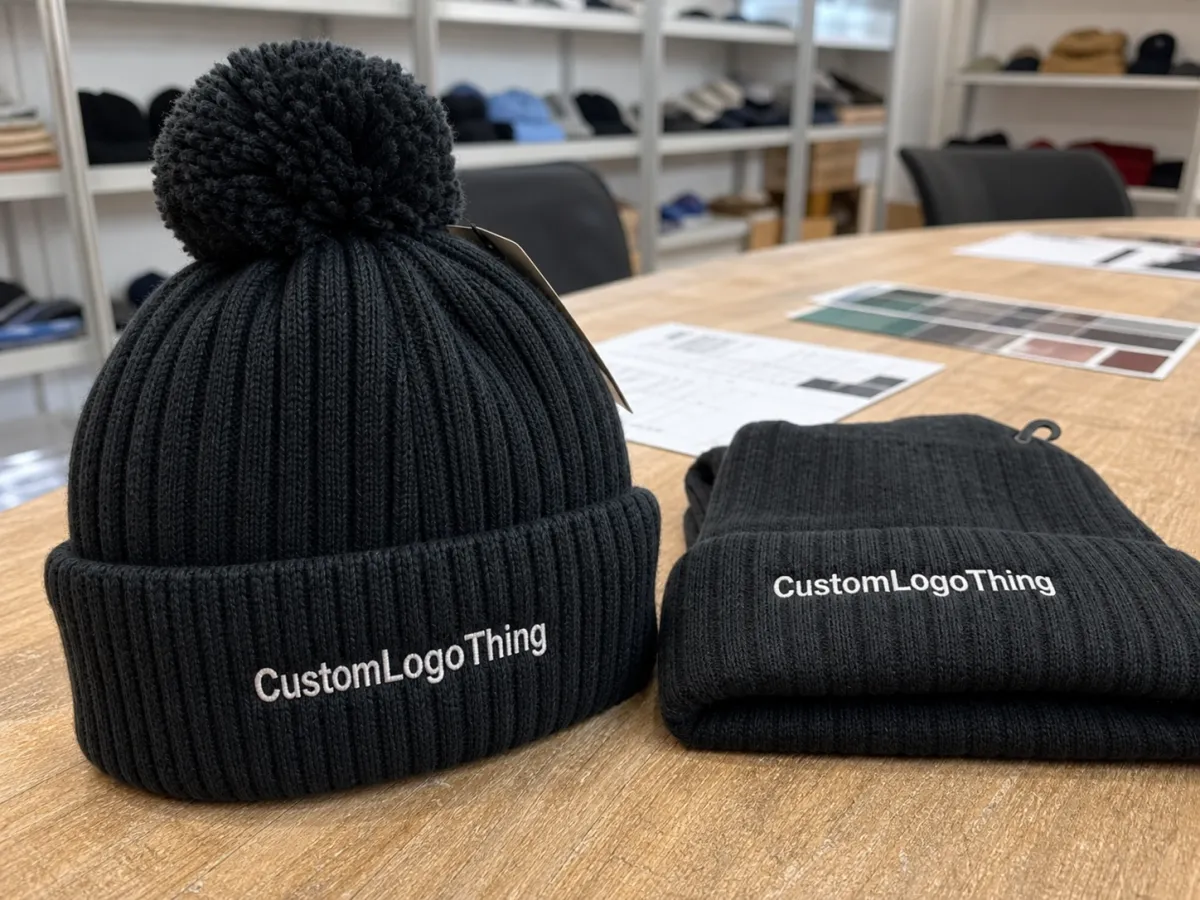
A warm beanie has a longer working life than most booth literature. Custom Logo Things works as an acrylic winter hats wholesale supplier for trade show buyers who need reliable decoration, clear packing instructions, and delivery dates that do not depend on wishful thinking.
Brochures get scanned, folded, and tossed into tote bags. Some make it back to the office. Plenty do not. A useful acrylic winter hat may sit in a truck console, jobsite locker, campus backpack, retail breakroom, or desk drawer for months. That is why branded beanies keep showing up in cold-season event plans for construction, logistics, outdoor recreation, municipal programs, distributor meetings, school events, and sponsor giveaways.
Acrylic knit hats work well in bulk because the material is light to ship, consistent in color, and forgiving across a broad audience. A typical adult one-size beanie weighs only a few ounces, so a carton of 100 or 144 pieces is still manageable for booth teams, warehouse crews, and advance receiving docks. The fabric also gives decorators a stable base for embroidery, woven patches, leatherette patches, sewn labels, and other logo applications.
For a trade show buyer, the order is rarely just “buy hats.” You may be balancing booth traffic goals, sponsor visibility, per-piece budget, carton handling, sales team distribution, and a fixed event deadline. The supplier should be able to discuss yarn weight, cuff height, decoration limits, MOQ, proof timing, and freight before the purchase order is approved. If those answers stay vague, the risk usually lands on the buyer later. Funny how that works.
Practical rule: if the hats need to reach an advance warehouse, hotel dock, booth builder, or distributor office, plan the project around that receiving date, not the first morning of the show.
Use this buying outline to compare beanie styles, Choose the Right decoration method, understand price drivers, and prepare quote details before the calendar gets tight. Good planning does not make the product fancy. It makes the order predictable.
Product Details That Matter in Acrylic Knit Beanies
Acrylic winter hats start with synthetic yarn selected for softness, color consistency, stretch, and recovery. Most promotional styles use rib knit construction because it stretches well and returns to shape after wear. A smoother jersey-style knit can feel cleaner and more retail. A heavier rib knit gives a more substantial hand feel for workwear, outdoor programs, and giveaways meant to feel less disposable.
Single-layer acrylic beanies are lighter and often better for budget-sensitive booth programs. Double-layer bodies add warmth and structure, especially in cuffed beanies where the front logo area needs to hold shape. Cuff height matters more than buyers expect. A 2.5-inch cuff may limit logo height, while a 3-inch or 3.5-inch cuff gives embroidery or a patch more breathing room.
Acrylic is common for wholesale promotional beanies because it holds dyed color well, dries faster than many natural fibers, resists everyday wear, and gives decorators a consistent surface. It is not always the warmest fiber available, and it does not have the same natural hand feel as wool. For bulk branded hats, though, acrylic hits a useful balance of cost, durability, availability, and reorder consistency.
- Cuffed beanies: the standard trade show choice, usually best for front logo embroidery or a centered patch.
- Slouch beanies: a more casual retail shape, often better for lifestyle, campus, and outdoor brands.
- Pom beanies: higher visual impact, useful for sports, school, resort, or fan programs.
- Skull caps: lower profile and tighter fitting, often preferred for crews, service teams, or under-helmet use where allowed.
- Reflective or safety-color styles: practical for logistics, utility, municipal, construction, and roadside audiences.
Fit should be confirmed early. One-size adult sizing covers most recipients, but youth sizing, extended depth, or tighter workwear fits may suit certain campaigns better. If the audience includes field crews wearing hard hats, warehouse employees, or outdoor sales reps, ask whether the beanie depth and cuff structure match that use. A hat that looks good flat on a table may sit strangely once it is worn. That is not a decoration problem. That is a product selection problem.
Decoration placement deserves the same attention. Front cuff embroidery is familiar and cost-effective for bold logos. Side placement can feel more retail and less like a standard giveaway. Patches create a cleaner surface for small lettering, thin outlines, and brand marks that would not stitch cleanly directly into rib knit.
Packing choices affect the booth team, too. Buyers can request individual poly bags, color sorting, case packs of 50 or 100, insert cards, or carton labels that match booth kits, sponsor groups, or regional sales teams. None of these details are complicated. They just need to be decided before the order is packed.
Specifications to Confirm Before You Approve the Order
Before production starts, lock the basic specification sheet. It should include beanie style, yarn content, knit pattern, cuff height, finished dimensions, decoration method, logo size, thread colors or patch colors, quantity by hat color, packing format, and ship-to instructions. A clean spec sheet prevents the kind of small confusion that turns into rework.
The biggest miss in bulk beanie buying is judging quality from a flat product image. A hat can look fine on screen and still feel thin in hand if the yarn gauge or knit density is too light for the campaign. If the order is for a premium sponsor package or a high-value booth meeting, ask about sample availability or request a finished weight range before committing.
For embroidered beanies, vector artwork is preferred. AI, EPS, or clean production-ready PDF files usually give the digitizer enough information to translate the logo into stitches. Small text needs careful review because rib knit moves under the needle. A letter that looks crisp on a business card may close up on fabric. Stitch count also affects cost. A simple 6,000-stitch logo usually prices more cleanly than a dense 14,000-stitch filled mark.
Patch programs need their own details. A woven patch can handle finer type and tighter detail. An embroidered patch has texture and a traditional branded-apparel look. PVC patches can suit outdoor, utility, and industrial themes. Leatherette patches create a warmer retail feel for lifestyle promotions. Confirm patch shape, border style, backing, stitch-down method, and size. A 2.5-inch-wide patch often sits better on a cuff than an oversized rectangle fighting the curve of the hat.
Color control depends on whether the order uses stock or custom production. Stock hat colors are faster, less expensive, and easier to reorder. Custom-dyed yarn can be useful for brand-specific colors, but it usually requires higher quantities, lab dip approval, and added lead time. Screen color is not yarn color. Provide Pantone references when color matters, and expect some tolerance because textiles are not coated paper.
Quality checks should be practical, not theatrical. Review decoration alignment, logo legibility, loose threads, patch orientation, shade consistency, cuff fold, and carton labels. For embroidery, check whether the stitching puckers the knit or makes the cuff feel stiff. For patches, check whether corners lift, borders sit flat, and the patch placement stays consistent across colors.
A sensible proofing sequence is simple: review the digital mockup first, confirm logo scale against actual hat dimensions, then request a pre-production sample if the timeline and order value justify it. For larger sponsor programs, that extra approval step can save far more than it costs.
Cost, Pricing, and MOQ for Wholesale Winter Hats
Pricing for custom acrylic beanies is driven by more than the blank hat. Quantity, style, yarn weight, number of hat colors, decoration method, stitch count, patch type, number of logo locations, packing, and freight all move the final unit cost. A plain stock cuffed beanie with one-location embroidery is a different project from a double-layer pom beanie with a woven patch, custom label, and individual bagging.
As a practical range, stock acrylic beanies with standard embroidery may begin around 144 to 288 pieces, depending on the style and current inventory. Custom knit patterns, private-label tags, custom yarn colors, or complex patch programs generally need higher quantities, sometimes 500, 1,000, or more. Exact MOQ depends on production routing and material availability, so confirm it before building the event budget.
Trade show buyers should evaluate landed cost, not only the blank hat price. Setup charges, digitizing, sample fees, rush charges, individual bagging, carton sorting, inbound freight, outbound freight, and advance warehouse receiving fees can all change the true cost per handout. A $4.25 decorated beanie can become a very different number once special packing and expedited freight are added.
Embroidery is often cost-effective for simple logos, moderate stitch counts, and front cuff placement. Large filled logos increase thread time and can make the cuff feel stiff. Tiny lettering can lose legibility. Patch-based decoration may carry more setup work, but it can improve detail, support small type, and give a more retail-grade appearance for premium booth giveaways.
| Option | Best Use | Typical MOQ Range | Cost Notes |
|---|---|---|---|
| Stock cuffed beanie with embroidery | Standard trade show giveaway | 144-288 pieces | Lower setup burden; stitch count affects final price |
| Stock beanie with woven patch | Detailed logos or small lettering | 200-500 pieces | Patch setup adds cost but improves detail control |
| Pom beanie with patch or embroidery | Sports, school, resort, or fan events | 144-500 pieces | Higher blank cost and larger carton volume |
| Custom yarn color or private label | Sponsor programs and brand-specific campaigns | 500-1,000+ pieces | Longer approval path; lab dips or label proofs may apply |
Ask for tiered pricing at realistic quantities. A show minimum, a mid-volume reorder level, and a full distributor or sponsor program quantity will show where the price breaks actually land. If the buyer is comparing an acrylic winter hats wholesale supplier for trade show buyers against a general promo catalog, that tiered quote makes the difference easier to see.
Also ask what is included. Some quotes include digitizing and a digital proof. Others separate every charge. Neither approach is automatically wrong, but unclear pricing wastes time. Clean quotes identify the blank, decoration, setup, packing, freight assumptions, lead time, and expiration date for inventory or pricing.
Process and Timeline From Artwork to Booth-Ready Cartons
The cleanest beanie orders follow a steady sequence: quote request, product selection, artwork review, decoration recommendation, digital proof, sample approval if needed, bulk production, quality checks, packing, freight booking, and delivery confirmation. Skipping steps may feel faster at the start. Usually it just pushes risk toward the shipping date.
Lead time depends heavily on the path chosen. Stock decorated beanies are generally faster because the hat body already exists. Custom yarn colors, sewn labels, private-label packaging, and special patch programs add material ordering and approval steps. For many standard stock embroidery orders, buyers should allow roughly 10-15 business days after proof approval, plus transit. More complex orders may need several weeks.
Artwork timing is often the real bottleneck. Delays come from low-resolution logos, unclear color callouts, missing event deadlines, or changes after proof approval more often than from the knitting itself. If you only have a JPEG pulled from a website, send it early, but plan to provide vector art before production. A good supplier can review the mark and say whether embroidery, woven patch, leatherette patch, or another method is the better fit.
Proofing should not be treated as a formality. Confirm logo size, placement, thread colors, patch shape, cuff fold height, and packing instructions before bulk decoration begins. Once hundreds or thousands of hats are stitched, a one-quarter-inch placement issue is no longer a small issue. It is a pile of hats with the same mistake.
Trade show delivery adds another layer. Cartons may need to ship to a warehouse, advance receiving facility, hotel dock, booth builder, distributor office, or company headquarters. Each destination can have its own label format, receiving window, dock hours, and penalty structure. For larger shipments, review carton count, case pack, gross weight, and dimensions before freight is booked.
Industry transit testing and packaging standards can guide the conversation for larger programs. The International Safe Transit Association publishes test procedures used to evaluate packaged-product distribution, and those ideas matter if hats are kitted with displays, literature, or fragile sponsor items. For paper-based tags, mailers, or inserts, buyers may also ask about responsibly sourced board, including references such as FSC certification when applicable.
Build in buffer time for carrier transit, show receiving windows, weather delays, and internal review. A project that depends on perfect last-day delivery is not well planned. That is especially true when the order involves carton labeling, sponsor separation, or delivery to multiple locations.
How Custom Logo Things Supports Trade Show Beanie Orders
Custom Logo Things supports branded packaging and promotional product Buyers Who Need clear specifications, straight answers, and dependable execution. The work is not just finding a beanie that looks good in a catalog image. It is matching the hat, decoration, packing, and delivery plan to the way the trade show order will actually be used.
For buyers comparing decoration options, the consultative part matters. A simple two-color logo may be ideal for direct embroidery. A detailed sponsor mark with small lettering may need a woven patch. A premium outdoor program may look better with a leatherette patch. A tight-deadline booth giveaway may need a stock cuffed beanie with standard thread colors instead of custom-dyed yarn.
Custom Logo Things can help buyers review acrylic knit options, cuff styles, decoration limits, color availability, proofing requirements, and carton packing before a purchase order is placed. That early clarity keeps the order grounded. If something costs extra, such as individual bagging or sorted cartons, it should be visible in the quote rather than discovered after approval.
Quality control starts with the artwork. The logo has to fit the decoration method, and the decoration method has to fit the hat surface. Placement needs to be confirmed against the cuff, especially if the beanie will be worn folded at different heights. Bulk consistency also matters: thread colors, patch orientation, and carton labeling should stay controlled across the run.
Trade show support often includes details that are not glamorous but are very useful on the receiving end. Cartons can be labeled by booth, color, sponsor, region, sales team, or kit number. Orders can be planned around show move-in dates. Packing lists can be structured so a warehouse team can identify the right cartons without opening every case on the floor.
If your company already manages recurring event merchandise or distributor programs, the Wholesale Programs page is a good fit for reviewing broader sourcing needs. Many buyers ordering beanies also need branded boxes, insert cards, hang tags, mailers, or other support materials that travel with the giveaway.
Here is the plain sales point: Custom Logo Things is a fit for buyers who value a supplier that can explain what is possible, what costs extra, and what needs to be decided early. That is the kind of support an acrylic winter hats wholesale supplier for trade show buyers should provide.
Next Steps for Getting an Accurate Beanie Quote
The fastest way to get a useful quote is to send complete project details at the start. You do not need every answer locked, but the more information you provide, the less guessing the supplier has to do. Guessing creates weak quotes.
- Target quantity, including any likely reorder quantity.
- Preferred beanie style, such as cuffed, slouch, pom, skull cap, or reflective.
- Hat colors and quantity by color.
- Logo artwork, preferably AI, EPS, or production-ready PDF.
- Decoration preference, such as embroidery, woven patch, leatherette patch, PVC patch, or sewn label.
- Event date and the actual required delivery date.
- Ship-to address, including advance warehouse or booth receiving rules if available.
- Packing needs, such as individual bags, color sorting, sponsor sorting, or cartons by sales rep.
- Sample requirement, especially for higher-volume or premium programs.
Vector files are best for production, but a high-resolution PNG can help start the conversation while final art is gathered. If the logo has gradients, fine outlines, tiny text, metallic effects, or more than four colors, ask for decoration guidance before assuming embroidery is the answer. The right method can save cost and improve the finished look.
Give the real deadline. If cartons must arrive at an advance warehouse ten business days before the show opens, that is the date that belongs on the quote request. The first day of the event is useful context, but it is not the operational deadline for shipping.
Also explain how the hats will be distributed. Loose bulk cartons are simple. Individually bagged pieces take more labor and material. Packing by sales rep, sponsor, region, or booth kit requires clear instructions and usually a little more time. None of that is a problem if it is planned before production finishes.
If you are sourcing multiple event items, combine the discussion with broader Wholesale Programs planning so carton labels, delivery dates, and kit packing stay aligned. For buyers managing recurring shows, sponsor activations, or distributor campaigns, that coordination can reduce rework across the full program.
When you need an acrylic winter hats wholesale supplier for trade show buyers, send the project details early so pricing, proofing, production, and delivery can be planned with confidence. Custom Logo Things can help compare styles, confirm decoration limits, and prepare booth-ready cartons that arrive labeled, counted, and ready for the event team.
FAQ
What should trade show buyers ask an acrylic winter hat wholesale supplier before ordering?
Ask for stock style options, yarn content, decoration methods, MOQ, setup charges, proof timing, production lead time, packing format, and freight estimates. Share the event date, receiving address, logo file, target quantity, and any booth or sponsor packing requirements so the supplier can quote accurately.
What is the typical MOQ for custom acrylic beanies for trade shows?
MOQ depends on the beanie style and decoration method. Stock acrylic beanies with embroidery usually allow lower quantities than custom-knit, custom-dyed, or private-label programs. Many stock programs start around 144-288 pieces, while custom yarn, specialty patches, woven labels, or individual retail packaging may require higher quantities.
Is embroidery or a patch better for wholesale acrylic winter hats?
Embroidery is often best for clean, bold logos with limited fine detail and a traditional promotional look. Woven, embroidered, leatherette, or PVC patches can work better for small lettering, complex marks, premium styling, or designs that need a defined edge on the cuff.
How early should trade show buyers order acrylic winter hats in bulk?
Order once the event date, logo, and quantity are known, especially if the hats need custom colors, samples, special packing, or delivery to an advance warehouse. Standard stock embroidery orders may take about 10-15 business days after proof approval plus transit, while custom programs can take several weeks.
Can an acrylic winter hats supplier pack orders for booth distribution?
Yes, orders can often be packed by color, size category, sales team, sponsor, location, or booth kit depending on the project requirements. Provide clear carton labeling instructions, case pack preferences, and receiving rules before production finishes so packing does not slow down shipment.