Buyer Fit Snapshot
| Best fit | Document Poly Mailers Bulk projects where brand print, material claims, artwork control, MOQ, and repeat-order consistency need to be specified before quoting. |
|---|---|
| Quote inputs | Share finished size, material target, print colors, finish, packing count, annual reorder estimate, ship-to region, and any compliance wording. |
| Proofing check | Approve dieline scale, logo placement, barcode or warning zones, color tolerance, closure strength, and carton packing before bulk production. |
| Main risk | Vague material claims, crowded artwork, missing packing details, or unclear freight terms can make a low unit price expensive after revisions. |
Fast answer: Document Poly Mailers Bulk: Specs, Pricing, and More should be specified like a repeatable production item. The safest quote records material, print method, finish, artwork proof, packing count, and reorder notes in one written spec.
Production checks before approval
Compare the actual filled-product size with the drawing, then confirm tolerance on folds, seals, hang holes, label areas, and retail display edges. Reserve space for logos, QR codes, warning copy, and material claims before decorative graphics fill the panel.
Quote comparison points
Review material grade, print process, finish, sampling route, tooling charges, carton quantity, and freight assumptions side by side. A quote is only useful when the supplier can repeat the same color, closure quality, and packing count on the next order.
Document Poly Mailers Bulk purchases can look straightforward on a quote sheet, yet they often reshape shipping economics in a way that is easy to miss until the first few replenishment cycles are done. A flat stack of invoices, contracts, returns paperwork, medical forms, or compliance packets does not need a box filled with air; it needs a mailer that fits the job, closes cleanly, and keeps the outbound table moving without wasting material or adding dimensional weight. That is why document Poly Mailers Bulk Buying tends to deliver more value once volumes rise beyond occasional sends.
For Custom Logo Things, the real buying question is not whether document poly mailers bulk are useful. It is which specification gives the best mix of fit, print clarity, throughput, and landed cost. A buyer who understands film weight, minimum order quantity, seal style, and lead time usually ends up with fewer surprises and a smoother reorder path the next time the shelves run low.
I have seen more than one shipping room lose time over a package that seemed "close enough" on paper but was a little too loose, a little too thin, or a little too awkward to load. Those small misses add up fast. Document poly mailers bulk work best when the spec is matched to the actual pack-out, not to the most convenient line item on a spreadsheet.
There is a practical waste reduction angle too. Fewer cubic inches in transit usually means less carrier exposure, fewer corrugated components, and less time spent packing the same shipment. When document poly mailers bulk are selected well, they cut touch points, keep documents flatter, and help a shipping team move faster without turning the mail room into a bottleneck.
Why Document Poly Mailers Bulk Cuts Waste Fast
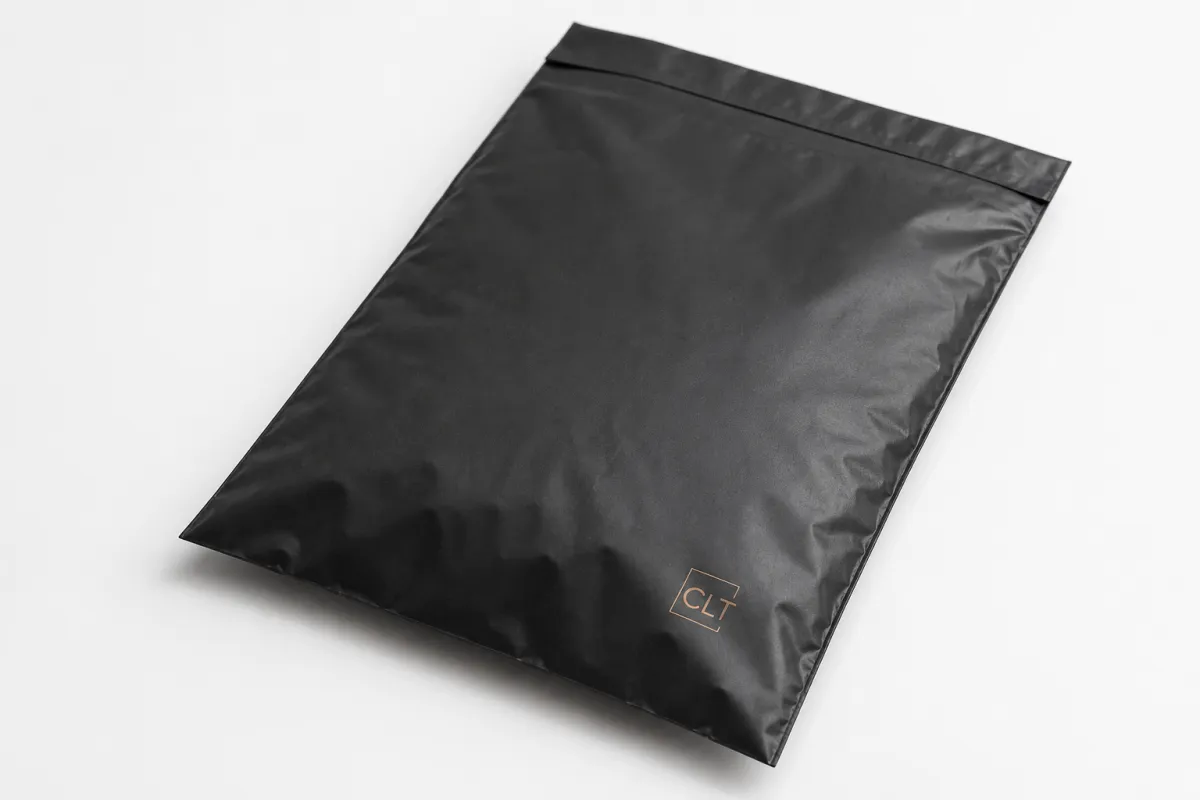
Picture a common shipping task: a team needs to send letter-size documents, maybe with a signed agreement, a cover sheet, or a return slip tucked inside. A carton will protect that bundle, yet it also creates extra void space, extra filler decisions, and extra billed volume if the carrier prices the shipment by dimensional weight. Document poly mailers bulk address that problem by matching the package to the payload.
The idea sounds simple, but the savings can be meaningful. Carrier pricing formulas often punish air more than weight, especially for flat shipments that do not need crush resistance. A slim mailer reduces the outer footprint, trims the material count, and makes the shipment easier to stage on a shelf or conveyor. For a business moving hundreds or thousands of document orders each week, document poly mailers bulk can remove friction from the process in a way that is hard to ignore.
Speed matters just as much. A mailer with the right width and flap layout loads faster than a box, tape, and filler combination. That difference compounds in busy shipping rooms where workers are batching invoices, order packets, claims paperwork, or internal transfer forms. A few seconds per unit is minor on one order and very real after a few hundred pieces. Document poly mailers bulk are not about flash. They are about keeping the line moving and the work predictable.
Buyer reality: if the contents are flat, dry, and already protected by the document itself, a mailer often makes more sense than a box. The strongest choice is usually the one that removes steps, not the one that looks heavier on a desk.
The waste-reduction logic runs deeper than packaging aesthetics. Source reduction is generally better than fixing a packaging problem after material has already been used. The U.S. EPA discusses waste prevention and recycling hierarchy principles on its recycling and waste reduction resources, and that same thinking applies neatly to shipping operations. If document poly mailers bulk can replace unnecessary corrugated material, the shift deserves serious attention.
From a packaging buyer's point of view, the decision is easier to measure when it is tied to outcomes:
- Postage efficiency: lower dimensional weight exposure on flat shipments.
- Labor savings: fewer steps per pack-out than a box-based shipping flow.
- Storage efficiency: document poly mailers bulk take up far less warehouse space than cartons and void fill.
- Consistency: the same format can handle routine document traffic, which shortens training time.
- Brand control: printed mailers can carry logos, return instructions, or compliance text without separate labels.
That last point gets overlooked more often than it should. A branded mailer is not only a marketing surface; it can also carry handling notes, privacy language, or internal routing cues. In document poly mailers bulk programs, the package itself can do work that would otherwise require an extra insert or a handwritten label.
When the whole workflow is mapped out, the real appeal becomes obvious. Less filler. Less space wasted. Less time chasing the same package through a busy outbound area. That is the kind of change that sounds small in a meeting and feels pretty big on the floor.
Document Poly Mailers Bulk: Product Details and Use Cases
In plain terms, document poly mailers bulk are lightweight polyethylene mailers made for flat items. They usually have a sealed body, a flap with pressure-sensitive adhesive, and a surface that can stay plain or accept printing. The material is chosen for toughness relative to its weight, resistance to light moisture, and ease of handling in a high-volume shipping environment.
The product fits a wide range of shipping tasks. It is not a padded mailer, and it should never be described as one. It works best for documents and other slim, non-fragile contents that need privacy, weather resistance, and a controlled footprint. That includes invoices, contracts, catalogs, educational packets, sample sheets, internal transfer forms, and return paperwork. Document poly mailers bulk also make sense for businesses that want a uniform look across recurring document shipments.
Where Document Poly Mailers Bulk Fit Best
Document poly mailers bulk are strongest in workflows where the contents already have a defined shape. A stack of forms, a printed packet, or a slim folder travels well in poly because the item itself provides the profile. The mailer simply keeps the bundle together and shields it from light rain, dust, and handling wear.
They are also a practical choice for organizations that ship a lot of flat materials across different sites. Schools, law offices, insurance teams, manufacturers, and distributors all benefit from keeping documents flat and easy to identify. When the receiving side sees document poly mailers bulk every time, unpacking becomes a familiar routine instead of a guessing game.
What They Are Not
They are not the right answer for heavy binders, hard goods, or anything that can puncture film easily. That seems obvious, yet it is where a lot of quote requests go off track. A buyer assumes a mailer is a mailer, then the contents arrive with corners, clips, or sharp edges that call for a stronger format. Honest specification control matters. If the payload is awkward, document poly mailers bulk may still be the right product family, but the gauge, size, or construction has to change.
There is also a privacy question. Many document poly mailers bulk options are opaque enough for ordinary business use, but not every film build hides the contents equally well. If the shipper handles medical forms, financial records, or confidential job packets, opacity becomes part of the buying decision, not an afterthought.
Compare the format with two familiar alternatives:
- Paper envelopes: often lower cost for simple mail, but more vulnerable to moisture and tearing.
- Corrugated mailers: stronger and more rigid, but heavier, thicker, and usually more expensive to move in bulk.
Document poly mailers bulk sit between those two options for many jobs. They are slimmer than corrugated mailers and tougher than many paper envelopes. That balance is why they keep showing up in operational buying conversations. The buyer is not trying to overbuild the package. The buyer is trying to ship a flat item efficiently and keep the process steady.
Branding matters here as well. Printed document poly mailers bulk can carry a logo, a return address, or simple instructions without adding a separate label system. That can reduce misroutes and make the shipment feel more intentional. A clean printed mailer often reads as more organized than a generic envelope, even before the recipient opens it.
It is also worth saying plainly that not every job needs custom print. If the shipment is internal, low-risk, or short-lived, plain stock can be the smarter buy. The best packaging choice is not the most dressed-up one; it is the one that matches the task without padding the bill.
Sizes, Film Weights, and Print Specs to Compare
The spec sheet is where document poly mailers bulk buying either gets disciplined or gets messy. Buyers should not approve an order based on a product name alone. Ask for finished dimensions, usable interior dimensions, film thickness, seal type, print coverage, and carton pack count. Those details determine whether the mailer works in the real shipping room, not just in a sample image.
For flat shipments, size is the first filter. A letter-size stack does not need excess slack, but it does need enough room to slide in without stretching the seam or wrinkling the flap. Oversizing seems harmless until it starts creating extra bulk, awkward handling, and wasted film. Undersizing is worse, because it slows pack-out and can weaken the seal. Document poly mailers bulk should fit the product, not fight it.
Common Size Logic
Many buyers start with the document itself and add a little room for a cover sheet, folder, or insert. That is usually the right instinct. Standard office materials often fit into common mailer formats such as 9 x 12, 10 x 13, or slightly larger custom dimensions. If the stack includes branded folders or multi-page packets, a little extra clearance can save the shipping team from wrestling with the flap each time.
The real goal is a clean insertion. If the pack slides in smoothly and the adhesive flap closes without strain, throughput stays high. If the pack catches at the opening, the line slows down. Document poly mailers bulk are meant to remove friction. The size should support that, not create a new problem.
Film Weight and Feel
Film thickness affects both performance and price. A lighter gauge can lower cost and reduce material use, but it may feel softer and offer less puncture resistance. A heavier gauge usually costs more, yet it gives a more substantial hand feel and better tolerance for rough sorting or mixed freight. The right answer depends on the contents and the route.
Typical polyethylene mailers may range from around 1.5 mil to 3 mil or more, depending on construction and use. For very flat, internal, or low-risk document shipments, lighter films can make sense. For document poly mailers bulk that travel through busier carrier networks or cross-dock environments, a heavier gauge is often the safer choice. There is no magic number. The film needs to match the handling conditions.
Print and Layout Details That Matter
Print spec is more than logo placement. Buyers should check front and back print areas, return-address panels, barcode zones, seam boundaries, and any space reserved for routing labels. One-color printing can be clean and cost-effective, while full coverage raises setup complexity and unit price. If the artwork includes fine text, confirm that the font stays legible after production and folding.
Document poly mailers bulk with printing should also be reviewed for color consistency and ink placement. A logo that runs too close to a seam can distort once the mailer is sealed and filled. That is a preventable issue if the proof is reviewed carefully. Printing is most useful when it supports the workflow, not when it gets in the way of it.
Use this checklist before approving a spec:
- Finished size and usable interior dimensions.
- Film gauge or thickness.
- Seal style and adhesive strength.
- Opacity level for privacy requirements.
- Print coverage and artwork placement.
- Carton count and pallet configuration.
- Any need for return-address or barcode space.
A useful way to compare document poly mailers bulk options is to line up the sizes against the gauge and the print load. The price difference between two mailers that look nearly identical can come from a few small variables that are easy to miss if you only read the product title. Buyers who ask for the full spec usually get better reordering behavior later.
| Option | Typical Fit | Film Weight | Best Use |
|---|---|---|---|
| Plain stock mailer | Standard letter or legal documents | 1.5-2.0 mil | Lowest-cost document poly mailers bulk for routine internal or low-risk shipments |
| Printed stock mailer | Flat document packs with branding needs | 2.0-2.5 mil | Uses a known size with logo, return panel, or handling text |
| Custom size + print | Special folders, inserts, or nonstandard stacks | 2.5-3.0 mil | Document poly mailers bulk for tighter fit control and stronger presentation |
For distribution testing, it helps to think beyond the spec sheet and ask how the finished mailer behaves in transit. Industry groups such as the International Safe Transit Association focus on packaged-product distribution testing, and that perspective is useful here. If the shipment sees drop, vibration, or compression exposure, the gauge and seal need to be selected with that reality in mind.
One practical rule I have leaned on for years: if the contents are flat, the route is predictable, and the package does not need extra crush resistance, do not overbuild the mailer just to feel safer. That is kinda how waste and postage creep in unnoticed.
Document Poly Mailers Bulk Pricing, MOQ, and Quote Basics
Document poly mailers bulk pricing comes down to a short list of variables, and none of them are mysterious. Size, film weight, print complexity, quantity, carton count, and whether the run uses stock tooling or custom production all shape the number. The price may look simple on a quote sheet, but the landed cost only becomes clear when freight, setup, and labor are included.
For first-time buyers, MOQ is often the first surprise. A lower minimum can help with testing, but it may also carry a higher unit price. Larger document poly mailers bulk runs usually lower the per-unit cost, yet they increase inventory exposure. The right balance depends on monthly ship volume and how often the artwork or specs are likely to change.
In practical terms, many buyers should ask for pricing at several tiers before choosing a quantity. A quote at 5,000 pieces can look very different from 10,000 or 25,000 pieces. That gap can justify buying slightly more than planned if the warehouse has room and the product is stable. Document poly mailers bulk should be priced by real usage, not by a guess that feels comfortable in the moment.
Here is a simple way to compare quotes:
- Unit price at each quantity tier.
- Setup or plate charges, if any.
- Proofing or artwork correction fees.
- Freight estimate to your dock.
- Carton pack count and pallet count.
- Reorder terms if the same spec is repeated.
One point gets overlooked constantly: the cheapest line item is not always the best deal. A mailer that slows packing, fails seal tests, or arrives in inconsistent sizes can cost more after labor is added back in. That is why document poly mailers bulk should be evaluated by cost per shipped order, not only by cost per piece. The best quote is the one that holds up in production.
Quote discipline matters: ask for the cost structure in writing, then compare the price on the page with the work the mailer actually saves. A lower unit price is useful only if the product keeps moving smoothly through receiving, packing, and outbound freight.
Typical market ranges can help as a reality check. For plain stock document poly mailers bulk at moderate volume, a buyer may see unit pricing in the rough range of $0.08-$0.18 depending on size and gauge. Printed stock mailers often move into the $0.12-$0.28 range. Fully custom size-and-print programs can sit higher, especially if the run is small or the print coverage is extensive. Those are not promises. They are the kind of ranges a buyer can use to spot a quote that is too low to be credible or too high to justify itself.
Pricing is also shaped by inventory behavior. A lower MOQ can help avoid overbuying, but if the unit cost jumps too much, it may be smarter to step up to a larger tier. Document poly mailers bulk often reward buyers who think beyond the first order and plan for repeat usage. If the mailer becomes a standard shipping input, the per-order economics usually improve quickly.
There is a helpful middle ground here. If you are unsure, compare one small test run against one repeatable production run, then watch what happens to pack speed, scrap, and freight over a few weeks. That tells you more than a polished quote ever will.
Process and Timeline: From Artwork to Delivery
The cleanest document poly mailers bulk order starts with complete inputs. The buyer should provide finished size, estimated volume, print needs, color targets, delivery location, and any special handling requirements. If those details are clear at the beginning, the rest of the process usually becomes much easier. If they are not, the schedule tends to slip.
Production usually follows a familiar sequence: request specs, confirm construction, review artwork, approve a proof, run the order, then package and ship. That sounds linear, but approval issues can add days or even longer if artwork is not ready. The fastest document poly mailers bulk order is rarely the one with the most urgency. It is the one with the fewest corrections.
Where Lead Time Usually Moves
Stock mailers usually move faster because the size and film are already established. Custom printed document poly mailers bulk take longer because artwork and proofing must be checked before the run starts. A new size or a new gauge can extend the timeline again if tooling or material sourcing changes. Buyers who want fewer surprises should ask for lead time in business days, not vague language.
A realistic planning window for many custom jobs is often 12-15 business days from proof approval, though that depends on quantity, complexity, and plant workload. Add freight time on top of that. Add receiving time too, because the warehouse rarely unloads itself. A buyer who needs document poly mailers bulk for a peak period should plan backward from the ship date, not forward from the purchase order.
Approval Checkpoints Worth Watching
Artwork corrections are the most common delay. Color confirmation, logo placement, barcode legibility, and seam clearance all need a second look. If the mailer includes a return address or instructions, those details should be checked at proof stage, not after the full run has already been completed. A proof is there to remove uncertainty.
Some buyers also ask for a sample before the production quantity is released. That can be useful if the seal needs a specific feel, if opacity is critical, or if the insert stack is tight. Document poly mailers bulk are simple products, but simple does not mean disposable. A small sample check can save a very expensive correction.
For teams that value quality control, the strongest process is usually the one that treats the mailer as a working production item, not a generic supply. That is where standards and testing thinking help. Packaging buyers who already follow distribution-test logic from organizations like ISTA are usually better prepared to match the mailer to the route, the carrier, and the contents.
The EPA also reminds manufacturers and buyers to think about waste prevention before end-of-pipe fixes. That principle matters for document poly mailers bulk because the right format can reduce extra material from the start. Less waste in the build often means less waste in the warehouse, too.
As a practical matter, it helps to keep one person accountable for proof review and one person accountable for receiving the shipment. That avoids the "I thought someone else checked it" problem that can stall a launch for days.
Why Choose Us for Document Poly Mailers Bulk
Custom Logo Things approaches document poly mailers bulk from the buyer's side of the desk. The focus is on specification control, repeatability, and straightforward pricing. That means clear dimensions, consistent print output, and enough documentation to make the next reorder easier than the first one. A good packaging partner should reduce decisions, not create more of them.
Reliability shows up in small ways. Carton counts need to stay stable. Seal performance needs to be predictable. Print placement needs to stay within tolerance. Those are not flashy talking points, but they matter more than polished language. Document poly mailers bulk are used in operations where delay is expensive and inconsistency is visible right away.
There is also a difference between a vendor that sells a product and a partner that helps you avoid a poor fit. If the mailer is too small, pack-out slows down. If the gauge is too light, damage risk rises. If the artwork crosses a seam, the brand presentation slips. A knowledgeable team catches those issues before the order goes live, which is exactly where the value sits.
That is why buyers often want three paths open at once:
- Custom Poly Mailers for branded document and flat-item shipping.
- Custom Packaging Products when the program includes more than one format.
- Wholesale Programs for broader supply planning across higher volumes.
If you are comparing suppliers, ask whether they can handle plain stock supply, printed runs, and private-label presentation with the same level of attention. Document poly mailers bulk buyers usually need more than a polished proof. They need a repeatable specification that can be reordered without starting over each time. That is where the real commercial value sits.
What most teams get wrong: they compare the mailer quote, not the shipping system. If document poly mailers bulk cut pack-out time, reduce dimensional weight, and lower error rates, the right choice can outperform a cheaper-looking alternative by a wide margin.
We also know that many buyers need a supplier conversation that stays grounded. No inflated claims. No vague promises. Just a clear path from sample to approval to delivery, with enough technical detail to keep the operation safe. For document poly mailers bulk, that discipline matters because the product is simple enough to underestimate and important enough to get right.
That honesty matters when a shipment has privacy requirements or a hard deadline. If a spec needs a heavier film or a tighter opacity range, say so up front. If the shipment can tolerate a lighter stock, say that too. The best result usually comes from telling the truth about the route, not from dressing the order up in fancy language.
Next Steps for Document Poly Mailers Bulk Orders
The smartest first step is to gather three inputs: finished size, expected monthly quantity, and print requirement. With those in hand, document poly mailers bulk pricing becomes much easier to compare. If you do not know the exact size, measure the current stack with a little clearance for loading and sealing. If you do not know the quantity, start from the monthly ship count and add a buffer for peaks.
Next, compare the current shipping method against the proposed mailer. Ask a simple question: how much labor, material, and carrier cost changes if the shipment moves into a slimmer format? That answer often makes the decision obvious. Document poly mailers bulk are a better fit when the package is flat, the contents are stable, and the team wants a cleaner path through fulfillment.
If color, opacity, or seal performance matters, request samples or a printed proof. That is especially useful for branded programs, compliance packets, and recurring order inserts. A sample will not tell you everything, but it can reveal whether the mailer handles the actual workload without strain. The earlier that problem is caught, the cheaper it is to fix.
It also helps to confirm reordering logic before the first purchase. Who will approve the next run? What reorder point triggers a new quote? How much storage space is available? Document poly mailers bulk can create an inventory headache if the operation buys too much too soon. A clear reorder plan avoids that trap.
Finally, check whether the mailer supports your broader waste and packaging goals. The EPA's guidance on source reduction and recycling keeps pointing back to the same principle: prevent waste where possible instead of compensating for it later. In practical packaging terms, that often means choosing the smaller, lighter format that still does the job. For document poly mailers bulk, that is usually the whole story.
Choosing document poly mailers bulk is not about chasing the lowest number on a quote sheet. It is about balancing protection, cost, throughput, and presentation in one spec. Make that balance explicit, then place the order with enough lead time to keep the shipping line steady.
If you need one practical rule to carry forward, use this: lock the size, the film weight, and the print area before you compare prices. Once those three pieces are set, the quotes become easier to read and the reorder path gets a lot less messy.
How many document poly mailers bulk should I order for a first run?
Use your monthly ship count as the baseline, then add a buffer for reprints, seasonal spikes, and sample testing. If you are new to document poly mailers bulk, a one- to three-month supply is usually enough to confirm fit, seal performance, and packing speed without tying up too much cash in inventory. It also gives you room to compare unit pricing at more than one quantity tier.
What size document poly mailers bulk works for standard letter-size sheets?
Choose a finished size that comfortably fits a stacked letter-size insert without forcing the seal to stretch. That usually means allowing room for a cover sheet, a small bundle of pages, or a folder if your process includes one. Always confirm usable interior dimensions, not only the outside listing, before approving document poly mailers bulk for production.
Are printed document poly mailers bulk more expensive than plain ones?
Yes, printed mailers usually cost more because of setup, proofing, and artwork handling. The premium can still be worthwhile if the mailer replaces separate branding, return labeling, or instruction inserts. For document poly mailers bulk, the right comparison is not plain versus printed on paper alone; it is total cost per shipped order.
What film thickness is best for document poly mailers bulk?
A lighter gauge can work well when the contents are strictly flat and the goal is to keep material cost low. A heavier gauge is better when the mailers travel through rough handling, mixed freight, or repeated sorting. If the route is uncertain, ask for sample options and test seal strength, tear resistance, and handling feel before buying document poly mailers bulk in volume.
How long does a document poly mailers bulk order usually take?
Stock orders are typically faster than custom printed runs because they skip artwork approval and tooling steps. Lead time depends on quantity, print complexity, and how quickly proofs are approved. Build in extra time for freight and receiving so document poly mailers bulk arrive before you hit a reorder deadline.
For buyers who want the cleanest outcome, document poly mailers bulk work best when the spec is locked early, the artwork is approved without delay, and the inventory plan is clear. That combination is what keeps the order efficient from quote to delivery.


