Drawstring Plastic Bags Factory Quote Checklist: What Buyers Miss First
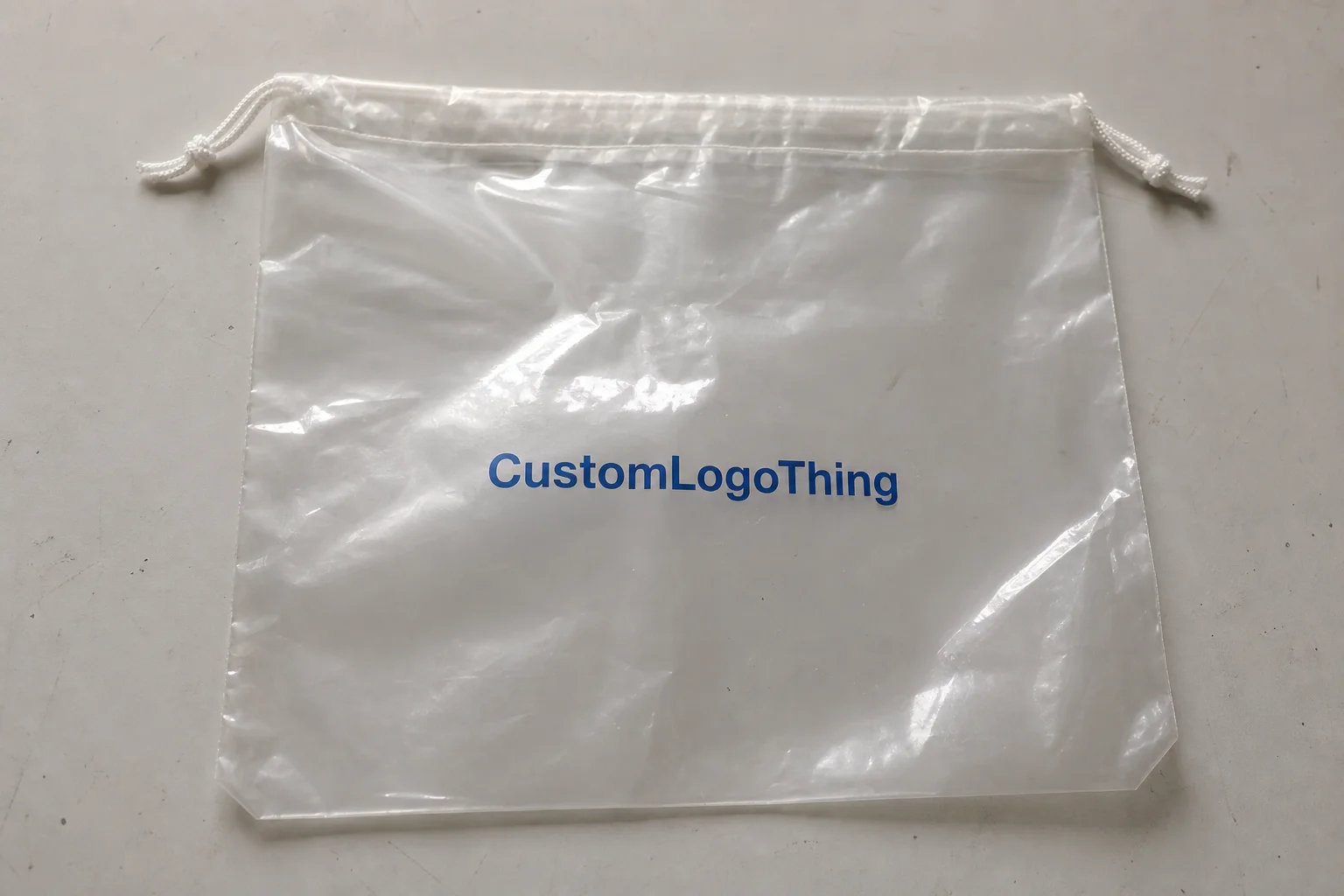
Two quotes can both show $0.16 per bag. One uses lighter film, a narrow cord channel, loose thickness tolerance, and cartons that inflate freight. The other includes heavier resin, better pull resistance, and delivery terms that match the buyer's warehouse plan. Same visible unit price. Very different risk.
A drawstring plastic Bags Factory Quote checklist keeps the comparison from collapsing into one misleading number. It forces the quote to show resin type, thickness, drawstring construction, printing setup, packing format, sample process, and freight basis. That is where cost hides.
Drawstring bags look simple because the user sees only a pouch and a cord. Production is less forgiving. A 3 mm opening difference can affect how folded apparel slides into the bag. A thin cord may save a fraction of a cent and make the package feel cheap the moment someone pulls it closed. A bottom seal can look clean on a desk and still fail under 2 kg of product if film gauge, heat, pressure, or dwell time is wrong.
A factory quote should do three jobs before a purchase order is issued. It should make the bag measurable: width, height, thickness, print area, drawstring style, and packing count are defined. It should make the order repeatable: the next run can match the approved sample. It should make the cost commercially predictable: setup fees, sample charges, carton volume, payment terms, and shipping assumptions are visible before approval.
Many buyers lose control because they treat the quote as a price document. It is also a risk document. A reliable quote tells you what the factory will make, how closely it will match the approval sample, and which assumptions are built into the number.
Buyer rule: if a factory cannot confirm film type, thickness range, drawstring construction, print method, packing count, and freight basis, the unit price is not ready for comparison.
Product Details That Change Bag Performance
Custom drawstring plastic bags are used for apparel, footwear, retail kits, event packs, accessories, hotel amenities, promotional bundles, and light industrial parts. The format may be similar. The construction should not be.
A folded T-shirt does not create the same stress as a boxed electronics accessory. A giveaway bag handled for one afternoon does not need the same finish as retail packaging that sits on a shelf, gets opened, reclosed, packed, and shipped. This is the first practical split buyers should make: what does the bag need to survive?
A quote-ready product description should cover the bag body, material, drawstring type, cord channel, bottom seal, side seal, print area, opening style, and packing format. Leave one blank and the factory will usually fill it with its own standard. Sometimes that standard is fine. Often it is simply convenient for production.
Material choice is the first performance lever. LDPE is softer and more flexible, with the smoother hand feel many Retail and Apparel buyers prefer. HDPE is crisper, often stronger at lower gauges, and can feel more utilitarian. Co-extruded film can combine layers for opacity, puncture resistance, or improved print behavior, although it usually needs tighter specification control and may raise minimum order quantities.
Finish changes both appearance and function. Clear film shows the product. Frosted film hides minor scuffs and can look more premium for fashion accessories. Opaque white or tinted film improves logo contrast and product privacy. Recycled-content blends may be available depending on film structure and local sourcing, but they are not always ideal for high clarity, exact color matching, or luxury retail presentation.
Drawstring construction is easy to underestimate. A strong film still fails if the cord channel splits. A cord that slides too freely can loosen during handling. A weak channel seal can tear after repeated cinching, especially near the side edges. For custom poly drawstring bags, the cord channel is not decoration. It is one of the highest-stress parts of the package.
- Will the bag hang? The channel and cord need stronger pull resistance.
- Will it sit flat in a carton? Gusset design, packing count, and film memory matter.
- Will it carry apparel? Softness, opacity, and anti-scuff performance may matter more than maximum tensile strength.
- Will it be used as a branded giveaway? Print position, ink coverage, and hand feel become part of perceived value.
The practical lesson is blunt: confirm construction before negotiating price. Small design choices can shift tooling, labor time, scrap rate, film yield, and production speed.
Specifications to Confirm Before Requesting a Quote
Start with dimensions. Width and height should be stated in millimeters or inches, with the measurement direction clear. If a gusset is needed, specify side gusset or bottom gusset and include the depth. Usable internal space deserves its own note because the drawstring channel consumes part of the bag height. A 400 mm tall bag does not provide 400 mm of product space.
Tolerance also belongs in the quote request. A quote that says 60 microns without tolerance is incomplete. Factories may work within +/-5% or +/-10% depending on resin, extrusion control, film width, and order size. One supplier quoting 55 to 60 microns and another quoting 60 to 65 microns may look close on paper. The resin weight difference can affect strength, feel, and price.
For U.S. buyers, thickness may be discussed in mils. One mil equals 0.001 inch, or about 25.4 microns. A 2 mil bag is roughly 50.8 microns. Retail apparel drawstring bags often sit around 50 to 80 microns. Heavier promotional, footwear, or kit packaging may need 80 to 120 microns depending on size and load. Larger bags with sharp product corners need more margin than small soft-goods bags.
Film finish should be written plainly: clear, frosted, glossy, matte, tinted, opaque, or recycled-content blend where available. If color is involved, provide a Pantone target or a physical reference. Plastic film color shifts with opacity, resin, thickness, and lighting. A screen image is a weak control point.
Printing variables can move the quote more than buyers expect. Specify the number of colors, logo placement, one-side or two-side print, print size, Pantone matching, ink coverage, and whether a white underbase is needed. A red logo on clear film is one job. A four-color design printed on frosted film with white ink underneath is another.
Drawstring options should be part of the first request, not a later upgrade. Plastic cord, cotton-style cord, ribbon pulls, color-matched cord, and reinforced channel construction each affect unit price and production handling. For retail presentation, a softer drawstring may justify the extra cost. For a parts kit, simple plastic cord may do the job.
Packing specifications need the same discipline. Include pieces per inner pack, pieces per export carton, carton dimensions if required, gross weight limits, carton labels, barcodes, pallet height, and warehouse receiving rules. Carton yield can change landed cost sharply. A bag that saves $0.01 in production but increases carton volume by 18% may lose the savings in freight.
If you have product samples, reference photos, or dielines, send them early. Visual assumptions are one of the most common causes of quote revision. A photo of the preferred cord channel or matte finish can eliminate three rounds of email.
| Specification | What to Send | Why It Changes the Quote |
|---|---|---|
| Bag size | Width, height, gusset, usable space | Controls film weight, carton count, and machine setup |
| Thickness | Microns or mils plus tolerance | Directly affects resin cost and load performance |
| Material | LDPE, HDPE, co-extruded, or recycled-content preference | Changes softness, clarity, strength, and print behavior |
| Printing | Vector artwork, Pantone colors, print size, sides printed | Affects plate cost, ink use, setup time, and rejection risk |
| Packing | Inner pack count, carton count, labels, pallet needs | Impacts labor, warehouse handling, and freight volume |
Pricing, MOQ, and Unit Cost Drivers
Unit cost is shaped by material weight, bag size, film thickness, print complexity, drawstring material, packing labor, waste allowance, and freight method. Resin is usually the largest technical cost driver. On smaller runs, print setup and packing labor can dominate.
MOQ is not only a sales preference. Factories set minimums around extrusion runs, printing setup, labor batching, and carton efficiency. If the film requires a custom color, the minimum may rise. If the print requires plates or a long setup, a 1,000-piece order may make little production sense because setup time overwhelms running time.
For planning, buyers often ask for price breaks at 5,000, 10,000, 25,000, and 50,000 pieces. That range gives a useful cost curve without forcing a warehouse full of slow-moving packaging. A basic one-color LDPE drawstring bag will not price like a thick frosted bag with two-side printing and ribbon pulls. As a rough commercial example, a small custom printed bag may fall around $0.12 to $0.35 per unit at moderate quantities. Larger or heavier retail bags can move above that range once packing and freight are included. Exact pricing depends on specification, resin markets, and shipment terms.
The dangerous comparison is low unit price versus all-in landed estimate. A quote at $0.145 per bag can lose to a $0.165 quote if the lower quote excludes freight, uses bulky cartons, carries higher defect risk, or requires paid rework after artwork review. Ask every supplier to quote on the same freight basis: EXW, FOB, delivered, or another agreed term. The International Safe Transit Association provides useful context on distribution testing and transport risk at ista.org, especially for buyers shipping filled or case-packed goods through demanding networks.
A clean quote separates plate fees, sample fees, production price, packing details, freight terms, payment terms, tax or duty assumptions, and quote validity. Quote validity matters because resin and freight can move. A number held for 7 days is not the same as one held for 30 days.
Vague phrases create bad comparisons. "Standard thickness" can mean 40 microns to one factory and 60 microns to another. "Normal drawstring" can mean thin plastic cord, soft cotton-style cord, or whatever is already staged near the machine. The checklist forces those assumptions into writing.
Process and Timeline From Artwork to Delivery
The buying sequence is predictable when the specification is controlled: requirement review, specification confirmation, artwork check, formal quote, sample or proof approval, deposit, production, quality inspection, packing, and shipment. Skip the early steps and the later ones become expensive.
Timing depends on artwork readiness, sample requirements, print complexity, material availability, order quantity, and shipping mode. A digital proof may be prepared quickly if the logo is clean vector art. A physical pre-production sample takes longer because material preparation, print setup, conversion, and sample shipping all enter the schedule.
Buyers often combine sample lead time, production lead time, and transit time into one unrealistic deadline. Keep them separate. Sample lead time covers prototype or proof preparation. Production lead time starts after approval and deposit, not after the first inquiry. Transit time starts after goods are packed, inspected, and released.
A typical custom bag order might need 3 to 7 business days for artwork review and digital proofing, 7 to 12 business days for a sample when required, and 15 to 30 business days for bulk production after approval. These are planning ranges, not promises. Heavy print coverage, custom film color, special cord, larger quantity, or a crowded production schedule can extend timing.
Send the right details at the quote stage: vector artwork, Pantone references, bag dimensions, material preference, quantity range, packing instructions, delivery location, and target arrival date. A buyer who sends all of that in the first request can often remove several days of clarification. A buyer who sends a low-resolution PNG and "need ASAP" usually cannot.
Approval checkpoints should be named before production begins. For simple one-color work, a digital proof may be enough. For retail launch packaging or color-sensitive logos, a pre-production sample is safer. Printed film approval can catch color or registration issues before conversion. Final carton label confirmation protects receiving accuracy, especially for multi-SKU programs.
Rush timelines are possible only when specifications are locked early. Late changes to size, artwork, packing count, or carton labeling can reset the production clock because they affect film yield, plate setup, labor planning, and inspection criteria. Fast buying is mostly clean inputs.
Quality Checks That Separate Similar Factory Quotes
Appearance is only the first screen. A bag can look acceptable and still fail during use. Evaluate film thickness consistency, seal strength, drawstring pull resistance, print registration, ink adhesion, odor, clarity, and carton integrity.
Drawstring bags fail in predictable places: the cord channel, the bottom seal, and high-stress corners where product weight concentrates. A lightweight scarf and a boxed accessory stress different areas. That is why intended product weight belongs in the inquiry. Even a 1 kg difference can change the sensible thickness or reinforcement choice for larger bags.
Sample testing should be practical. Load the bag with the intended product. Pull the cord 20 to 30 times. Let the packed bag hang for several minutes if hanging is part of real use. Rub the printed logo with a dry cloth and, if relevant, a slightly damp cloth. Inspect the seals under strong light. Smell the bag after opening the pack; odor complaints can damage retail presentation even when the bag is structurally sound.
Ask direct production questions. What tolerance is used for size and thickness? How is print color checked? Is inspection done before packing or only after cartons are sealed? Can production photos or inspection records be provided? For shipments moving through parcel or mixed freight networks, packaging review can also reference procedures from organizations such as the U.S. Environmental Protection Agency when buyers are reviewing material reduction and waste priorities.
Samples and proofs are risk-control tools. A proof aligns artwork. A sample checks hand feel and construction. A carton label confirmation prevents warehouse errors. Each step removes a different type of failure.
Cost and quality are linked, but not always in a straight line. A stronger channel or heavier film may add $0.01 to $0.04 per bag depending on size and volume. That can be cheap insurance if it prevents returns, repacking labor, split bags in transit, or poor retail presentation. Overbuilding a bag for a light event giveaway wastes budget and storage space. The correct target is fit for use.
| Quality Check | Simple Test | Buyer Risk Reduced |
|---|---|---|
| Film thickness | Confirm microns or mils against agreed tolerance | Weak bags, inconsistent feel, quote mismatch |
| Seal strength | Load with intended product and inspect bottom seal | Product drops, returns, repacking labor |
| Drawstring channel | Pull and cinch repeatedly before approval | Tearing, poor user experience, retail complaints |
| Print adhesion | Rub logo area and check ink transfer | Scuffed branding, failed presentation standards |
| Carton integrity | Check carton count, weight, labeling, and stacking | Receiving errors, crushed cartons, freight disputes |
What Should a Drawstring Plastic Bags Factory Quote Checklist Include?
A drawstring plastic bags factory quote checklist should include bag size, usable internal space, material, thickness tolerance, film finish, drawstring construction, print method, artwork format, quantity, MOQ, packing method, sample process, inspection criteria, lead time, freight terms, payment terms, and quote validity. That is the short answer. The better answer: every checklist item should connect to a real buying risk.
Size connects to fit. Thickness connects to strength and resin cost. Material connects to hand feel, clarity, and durability. Print method connects to setup fees and brand accuracy. Packing connects to freight volume and warehouse receiving. Freight terms connect to landed cost. Quote validity connects to market movement. A checklist is useful only if it makes these tradeoffs visible before the purchase order is signed.
For wholesale drawstring bags, the checklist also protects repeat orders. A buyer may approve 10,000 bags in March, reorder 25,000 in July, and assume the second production run will match. It may not, unless the approved sample, film gauge, cord color, print file, carton count, and tolerance are documented. Repeatability is not luck. It is paperwork tied to production control.
Next Steps to Prepare a Quote-Ready Request
A quote-ready request does not need to be long. It needs to be specific. Confirm bag size, intended product weight, material preference, thickness target, print details, drawstring style, quantity, delivery location, and deadline. Those nine details beat a polished but vague brief.
Photos help. Samples help more. Send a picture of a bag you like, then mark what should change: softer film, stronger cord, wider opening, better opacity, different logo position, lower gloss, or tighter carton packing. A supplier can quote faster when the target is visible.
Decide the buying priority before asking for price. Do you need the lowest opening cost, the best retail presentation, the most durable construction, or the fastest replenishment path? Those goals can conflict. A thicker frosted LDPE bag with color-matched cord may look excellent for apparel, but it will not beat a simple HDPE option on unit price. A faster replenishment plan may require standard material and fewer custom variables.
For Custom Logo Things, the cleanest inquiry includes a vector logo file, Pantone colors, quantity range, shipping address or port, packing requirements, and any compliance or labeling needs. AI, EPS, or editable PDF files are preferred because they keep logo edges sharp and allow proper color separation. If only a PNG is available, send it early so artwork conversion can be discussed before timing is promised.
A useful request might read like this: "We need 10,000 and 25,000-piece price breaks for frosted LDPE drawstring bags, 300 mm wide by 400 mm high, 70 microns target thickness, one-color front logo, black plastic cord, packed 100 per inner pack and 500 per carton, delivered to our warehouse." That is not fancy. It is quote-ready. The factory can price the same defined product at two quantities.
Buyers with repeat programs should also ask about reorder control. Can the factory reference the previous approved sample? Will color, thickness, cord, and carton count be held constant? Are artwork files archived under the buyer's item code? Repeatability is where a good first quote becomes a stable packaging supply process.
If you are preparing a retail, event, apparel, or promotional packaging order, send the details to Contact Us at Custom Logo Things for a specification-based quote. A tighter request gives the factory fewer assumptions to make and gives you a better basis for comparing options. Use the checklist to challenge vague pricing, compare factories on equal terms, and move from inquiry to purchase order with fewer surprises.
FAQ
What should a drawstring plastic bags factory quote checklist include?
It should include bag dimensions, usable internal space, material, thickness tolerance, drawstring type, print colors, artwork format, quantity, packing method, lead time, freight terms, sample needs, inspection criteria, and quote validity. Ask the factory to separate unit price, setup fees, sample fees, freight, and optional upgrades so comparisons are clean.
How does MOQ affect a custom drawstring plastic bag quote?
MOQ is usually driven by material runs, printing setup, labor batching, and packing efficiency. Higher quantities often reduce unit cost, but buyers should compare price breaks against storage cost, forecast accuracy, warehouse space, and cash flow. A 50,000-piece price may look attractive until slow inventory ties up budget for six months.
What artwork files are needed for printed drawstring plastic bags?
Vector files such as AI, EPS, or editable PDF are preferred because they keep logos sharp and allow clean color separation. Include Pantone references, logo placement instructions, print size, and notes on one-side or two-side printing. For color-sensitive branding, a physical reference or approved printed sample is stronger than a screen image.
How long does factory production take for drawstring plastic bags?
Timing depends on artwork approval, sample requirements, order quantity, print complexity, material availability, and shipping method. Buyers should separate sample lead time, bulk production lead time, and transit time when planning launch or replenishment dates. Late artwork changes can restart proofing and delay production release.
Why do drawstring plastic bag prices vary between factories?
Prices vary because factories may quote different film thicknesses, materials, tolerances, drawstring constructions, ink coverage, packing formats, and freight assumptions. A reliable comparison requires the same specifications across every supplier quote. A clear checklist exposes those differences before a purchase order is signed.