Buyer Fit Snapshot
| Best fit | Dual Adhesive Mailing Bags Quote projects where brand print, material claims, artwork control, MOQ, and repeat-order consistency need to be specified before quoting. |
|---|---|
| Quote inputs | Share finished size, material target, print colors, finish, packing count, annual reorder estimate, ship-to region, and any compliance wording. |
| Proofing check | Approve dieline scale, logo placement, barcode or warning zones, color tolerance, closure strength, and carton packing before bulk production. |
| Main risk | Vague material claims, crowded artwork, missing packing details, or unclear freight terms can make a low unit price expensive after revisions. |
Fast answer: Dual Adhesive Mailing Bags Quote: Specs, Price, Timeline should be specified like a repeatable production item. The safest quote records material, print method, finish, artwork proof, packing count, and reorder notes in one written spec.
Production checks before approval
Compare the actual filled-product size with the drawing, then confirm tolerance on folds, seals, hang holes, label areas, and retail display edges. Reserve space for logos, QR codes, warning copy, and material claims before decorative graphics fill the panel.
Quote comparison points
Review material grade, print process, finish, sampling route, tooling charges, carton quantity, and freight assumptions side by side. A quote is only useful when the supplier can repeat the same color, closure quality, and packing count on the next order.
A good dual adhesive mailing bags quote does more than spit out a unit price. It should show how the bag performs in pack-out, how the second seal behaves after opening, and whether the landed cost still makes sense once freight, printing, sampling, and setup are added. For brands shipping apparel, accessories, and subscription items, the right build can remove a second packing step and keep the line moving without making returns annoying for the customer.
That is why buyers comparing custom mailers should ignore the shiny headline number and look at the build, the print, and the actual shipping workflow. A bag that looks cheap but creates rework is not cheap. It is just delayed pain with a better spreadsheet label. If you are pricing another format for a different program, our Custom Poly Mailers page is a useful reference point, and our Contact Us page is the fastest way to start a spec-based quote request.
A mailer should earn its keep twice. If the return path is clumsy, the bag is only doing half the job.
From a packaging buyer's point of view, the value is not just the adhesive strip. It is the fewer touchpoints, the lower rework, and the cleaner customer experience when exchanges or returns are part of normal business. That matters most when speed, handling, and brand presentation all have to live in the same bag. A mailer that opens badly or reseals badly gets remembered for the wrong reasons.
Why a dual adhesive bag can remove a second packing step
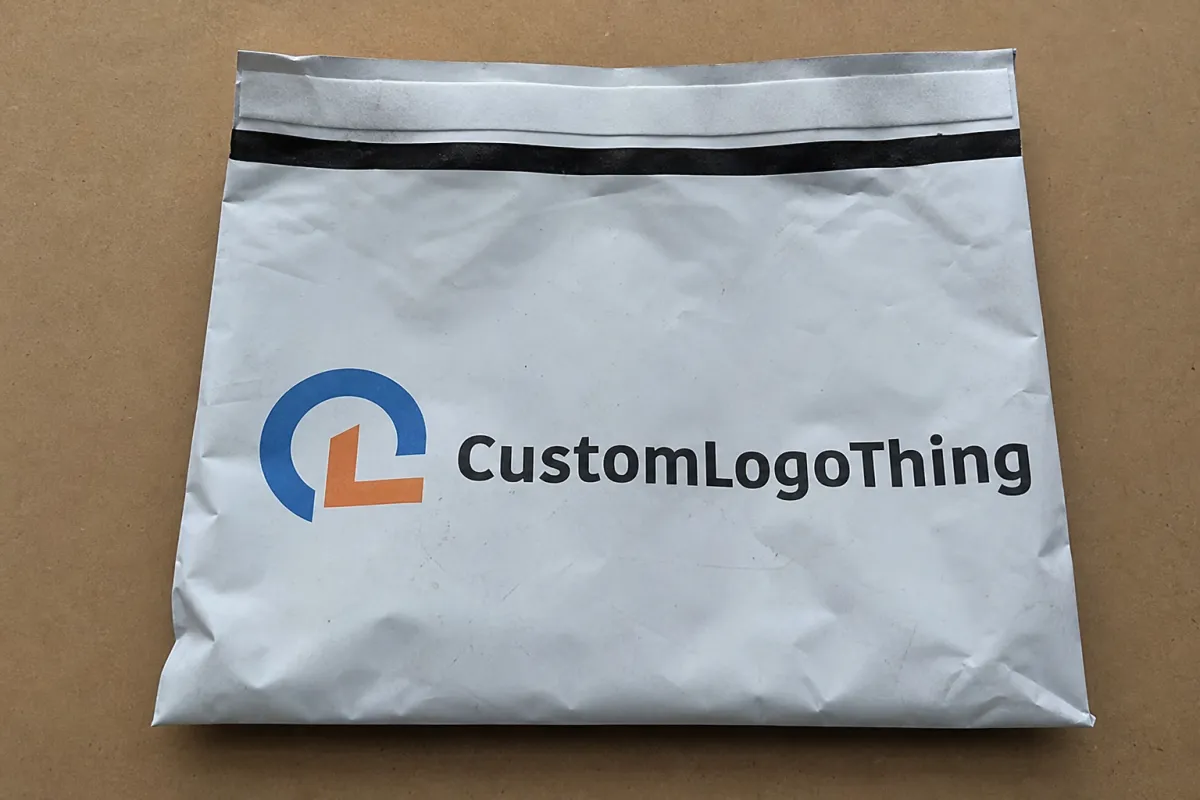
Packing teams lose more time than they admit on small repeat tasks that never look expensive on a spreadsheet. Someone re-bags an item after inspection. Someone adds an insert in a separate pocket. Someone tapes over a closure that was never meant to be reopened. Someone switches to a different mailer because the outgoing bag does not support a return path. None of that looks dramatic. Together, it eats labor and creates inconsistency.
A dual adhesive design cuts that friction by giving the bag two jobs. One strip handles the outbound shipment. The second gives the customer a clean way to reseal the mailer after opening. That matters in apparel, footwear accessories, cosmetics tools, small electronics, and subscription orders where returns or exchanges are common enough that the pack-out process should plan for them from day one. If a fulfillment team ships 2,000 units a day and saves even 10 to 15 seconds per order, that is several labor hours back every shift.
The win is not just speed. It is consistency. A built-in return path lowers the odds that someone improvises with tape, sends out the wrong closure instructions, or ships a bag that feels cheap because the customer has to guess how it opens and closes. If the brand wants a tighter unboxing experience and a more controlled return process, the dual adhesive structure does more work than a standard single-seal mailer without adding much complexity for the person packing it.
There is also a total-cost argument procurement should not shrug off. If the bag reduces rework, shortens handling time, and lowers the odds of a damaged or awkward return, the savings can beat a slightly higher unit price. That is especially true where order values are modest and margins are thin, because a bad packaging choice can wipe out the margin earned on the sale. A decent quote should account for the full process, not just the film cost.
For buyers with mixed programs, dual adhesive bags can sit inside a broader mailer strategy. A standard poly mailer may still work for low-return SKUs. A dual-adhesive version usually makes more sense for items that get exchanged often. The point is to match the closure system to the real shipping and return behavior instead of pretending one mailer fits every item in the catalog.
What a dual adhesive mailing bags quote should include
Not every quote uses the same assumptions. That is where comparison mistakes start. Two suppliers can quote what looks like the same bag, then one is using a lighter film, another is using a different adhesive layout, and both may be assuming different freight terms. If the buyer does not normalize those details, the cheapest line item can turn into the most expensive order once the bags hit the floor.
A useful dual adhesive mailing bags quote should spell out the basics in plain language. That means bag dimensions, film type, thickness, the number and position of adhesive strips, print method, print coverage, and whether the bag supports first use only, return use only, or both. If the quote skips one of those pieces, it is not ready for procurement comparison yet.
It should also show any one-time charges that change first-order economics. Setup charges, plate costs, cylinder fees, sample charges, prototype costs, and artwork correction fees belong in the quote if they are going to show up on the invoice later. Buyers often stare at the unit price and then get blindsided when the first order costs more than expected because startup charges were buried or left out. That is not a pricing strategy. It is a surprise.
Freight terms deserve the same scrutiny. A quote that looks sharp at the factory gate can lose its edge after ocean freight, domestic delivery, duties, or pallet charges are included. The quote needs to name the shipping terms and destination assumptions clearly enough that a buyer can compare one offer to another on the same basis. If one supplier is quoting EXW and another is quoting delivered pricing, the numbers are not comparable.
Artwork and proofing belong in the estimate too. If the bag needs a logo, product instructions, a return seal message, or a barcode area, the supplier should state how proofs will be handled, how many revisions are included, and what file format is expected. A quote that skips that detail may be cheap, but it is incomplete. A better one removes friction before production starts, which is exactly where delays like to hide.
Here is a practical way to break the quote into comparable pieces:
- Bag size: finished width, length, and any gusset or usable depth.
- Film construction: LDPE, co-extruded polyethylene, or another specified build.
- Thickness: microns or mils, with the equivalent called out if needed.
- Adhesive layout: placement of the first seal and the return seal.
- Printing: one-color, multi-color, full-coverage, or no print.
- Setup costs: plates, cylinders, tooling, and artwork prep.
- Logistics: freight term, destination, palletization, and transit estimate.
- Approval path: digital proof, physical sample, or production signoff.
Once those pieces are visible, the buyer can compare quotes honestly instead of guessing what is hiding behind the numbers.
Material and construction details that affect performance
The film itself is usually the first place to look. For lighter apparel and accessories, a thinner poly construction can be enough and keeps shipping cost under control. For heavier items, sharp-edged packaging, or routes where puncture resistance matters more, moving to a heavier gauge is usually the safer call. In the market, that often means comparing something in the 50 to 60 micron range against a 75 to 80 micron build, which roughly maps from about 2 mil to around 3 mil depending on the material and conversion method.
Polyethylene is common because it balances cost, flexibility, and printability well. Co-extruded films can improve opacity or stiffness, while a basic LDPE build may be enough if the product is soft and the shipping environment is forgiving. The material name is only part of the story. What matters is how the bag feels, stretches, seals, and resists scuffing once it is filled and stacked with other parcels. A buyer should care about how the bag behaves on the line, not just how it looks in a sample photo.
The two adhesive strips matter just as much as the film. The primary seal needs enough grab to stay closed through handling and transit. The secondary strip needs clean release and re-close behavior so the customer can use it without tearing the flap or leaving adhesive exposed. Not every adhesive formulation handles that well. Humidity, dust, cold storage, and rough handling all change real-world performance, so a sample tested in your own packing area will tell you more than a polished brochure ever will.
Construction quality around the edges matters too. Strong side welds, even trimming, and a neat top seal help the bag resist splitting under load. A good adhesive cannot rescue a weak weld or a sloppy cut. If the edges are uneven, if the seal band is too narrow, or if the film necks down at the weld, the failure point usually shows up in transit, which is the most annoying place to find out.
Opacity and appearance also affect buying decisions. Some programs need privacy for branded apparel or medical-adjacent products. Others want enough visibility that the contents can be identified fast. A white exterior with a dark inner layer can provide privacy without looking heavy. A full-color printed exterior can feel more premium. The right choice depends on handling, branding, and how much of the contents should stay hidden.
Printing options can change the final result too. One-color branding is often enough for fulfillment programs and keeps cost lower. Full-coverage graphics, instructions, or barcode placement add complexity and may need tighter registration control. If the supplier is using flexographic printing, gravure, or another process, the quote should say so clearly, because print method affects both price and visual consistency. It also affects the kind of proof the buyer should ask for.
Some buyers ask for extras such as tear notches, warning text, return instructions, matte finishes, or anti-slip treatment. Those features can help, but they should not be thrown in casually. Each one changes the conversion path, the setup, or the visual layout, and each one should earn its place with a real shipping need. A clean bag with the right adhesive and the right thickness usually beats an overloaded design that tries to do everything.
If product testing is part of your internal approval process, standards such as ASTM D882 for tensile properties or ASTM D1894 for coefficient of friction can be useful references for film behavior. For transit validation, many buyers align pack-out or shipment tests with ISTA methods, and the International Safe Transit Association publishes useful guidance at ista.org. If your program includes cartons or paper inserts, FSC-certified paper can matter too; that is where fsc.org becomes relevant to the wider packaging system.
Specifications to confirm before you request pricing
The best quotes usually come from the clearest briefs. Before you ask for pricing, gather the exact dimensions of the product load, the desired thickness, the print requirements, and the destination. A supplier can estimate from a vague description, but an estimate is not a reliable quote, especially if the job will be printed or custom-sized. The more guesswork you leave in the request, the more likely the supplier is to protect themselves with a wide pricing band.
Dimensions should be measured for the packed product, not just the item itself. Folded apparel, a small box, bundled accessories, or a soft goods set can all change the amount of usable space required. Width, length, and any needed depth should be stated plainly, and it helps to note whether the product is expected to slide in flat or needs a little extra room for loading on the line. That detail matters when the bag is being packed by hand at speed.
Thickness should be stated in microns or mils, and the same unit should be used across all supplier inquiries. A buyer comparing a 50 micron bag against a 75 micron bag is really comparing two different levels of puncture resistance, stiffness, and handling feel. Even when the bag size is identical, thickness can move the quoted price enough to matter at scale. It also changes how the finished bag folds, which affects packing speed more than most people expect.
Printing details need the same care. If the bag needs a logo, a color block, return instructions, a barcode window, or a shipping message, the art should be defined before the quote is finalized. One-color print on a limited area is a very different job from a full-coverage branded design. Suppliers price those jobs differently because setup, ink use, inspection effort, and reject risk are not the same.
It also helps to decide whether the order should be stock size or custom size. Stock dimensions usually give more room on MOQ and lead time, while custom sizing may require more setup and a higher minimum. That does not mean custom is wrong. It just means the procurement team should know whether the fit, presentation, or workflow justifies the extra cost. If the bag is too small, the pack-out suffers. If it is too large, freight and material cost creep up for no reason.
Packaging preferences are worth stating too. Some buyers want bulk packed Cartons for Warehouse work, others want palletized delivery for inbound dock handling, and some need retail-ready packaging so the cartons can go straight into distribution. If the quote does not reflect that detail, the landed cost may look attractive while the receiving process becomes a headache. Receiving teams notice the difference immediately, and they are usually the ones left to deal with it.
- Product load: what the bag must hold, folded or boxed.
- Exact size: finished dimensions, not a rough estimate.
- Thickness: microns or mils, with a target range if needed.
- Print intent: logo, messaging, instructions, or plain film.
- Order quantity: test run, production run, or annual volume.
- Destination: shipping address, country, and preferred freight terms.
The clearer the brief, the easier it is for a supplier to build a quote that can actually be approved.
Dual adhesive mailing bags quote: cost, MOQ, and unit pricing
Unit price is only one piece of the buying decision, but it is usually the number people notice first. For a custom printed mailer, pricing is affected by film cost, print method, order quantity, adhesive configuration, and whether the bag is a stock dimension or a fully custom size. The quote may also shift depending on pack count per carton, palletization, and how the order ships. A clean unit price without that context can be misleading.
As a practical planning range, many buyers will see smaller custom runs priced higher per piece and larger runs priced lower. A plain stock dual-adhesive mailer might land in a lower band, while a heavier custom printed version can climb quickly once setup and print coverage are added. Those ranges are not fixed, because resin markets, regional freight, and supplier capacity all move the final number. They are still useful for budgeting and for deciding whether a program belongs in stock, semi-custom, or fully custom territory.
The minimum order quantity, or MOQ, tends to follow production economics. A printer or converter needs enough volume to spread setup costs across the run, which is why printed custom bags often require more volume than unprinted stock bags. In many sourcing scenarios, a custom order may start around 5,000 to 10,000 pieces, while larger branded programs often see better unit economics at 20,000 pieces and above. That depends on size, print complexity, and the supplier's production line.
To make comparison easier, here is a simple reference table with indicative pricing and typical use cases. These are broad planning ranges, not binding quotes.
| Option | Typical MOQ | Indicative unit price | Best fit |
|---|---|---|---|
| Plain stock dual adhesive mailer | 1,000-5,000 pcs | $0.12-$0.22 | Low-complexity shipping where print is not needed |
| Single-color custom logo bag | 5,000-10,000 pcs | $0.18-$0.35 | Branded apparel, accessories, and subscription mailings |
| Full-coverage printed mailer | 10,000-20,000 pcs | $0.28-$0.55 | Premium presentation, instructions, or stronger shelf impact |
| Heavy-duty custom size, higher gauge film | 10,000-25,000 pcs | $0.30-$0.65 | Heavier items, rougher handling, or improved puncture resistance |
The biggest price drivers are easy to list once you know what to look for. Raw resin cost affects every bag, but print complexity, adhesive placement, and finish detail can swing the price more sharply. A clean one-color layout is usually easier to produce than a multi-panel design with instructions, reverse print, and tight color matching. A standard bag size also usually costs less than a custom size that needs different converting settings.
Freight and duties can change the real landed cost enough to alter the buying decision. A bag that looks a few cents cheaper at origin can end up more expensive after international shipping, carton charges, and local delivery are added. That is why procurement teams should compare offers on the same terms. If one supplier quotes factory pickup and another quotes delivered to your warehouse, the lower number is not automatically the better deal.
There are commercial tools that can help, but only if they are explained clearly. Tiered pricing can reward larger volumes. Sample credits can reduce first-order risk. Reprint discounts can matter if your brand reorders the same bag several times a year. The point is to ask how those programs work before the order goes out, not after the first invoice lands.
A buyer can improve quote quality by normalizing every offer before making a final choice:
- Match the bag dimensions and thickness exactly.
- Confirm the same print area and number of colors.
- Compare the same freight term and destination.
- Check whether setup, plates, and sampling are included.
- Verify whether the quoted MOQ is a hard minimum or a preferred run size.
That keeps the discussion grounded in the real economics of the package instead of the first number on the page.
Process and timeline from quote to shipment
The quote-to-shipment path is usually straightforward if the brief is complete. It starts with an RFQ review, where the supplier checks dimensions, film choice, print detail, quantity, and destination. If something is missing, the first round of questions should focus on those gaps. A good supplier will want to confirm the build before quoting because a few millimeters or a different print method can move the price in a real way.
After the initial review comes artwork and proofing. Some orders can move from a digital proof to production-ready approval very quickly, while others need a physical sample if the adhesive position or print placement has to be checked by the buyer's operations team. A digital proof works for layout confirmation. A sample works better when closure behavior or film feel matters to the final decision. I would never trust a pretty proof alone for a closure system that needs to work on a live packing line.
Once the artwork is approved, the production sequence usually includes film conversion, printing, adhesive application, cutting, sealing, inspection, and packing. If the bag is custom printed, curing or drying time may also be part of the process. The exact order can vary by factory and print method, but the basic point holds: every step adds time if it is not already part of a stocked run.
For a straightforward custom job, many buyers can expect production to take roughly 12 to 20 business days after final approval, though larger or more complex runs can take longer. If the order involves a new size, heavier gauge film, multiple colors, or a fresh adhesive layout, it is smart to add a little buffer. Seasonality can stretch the schedule too, especially before promotional periods or peak shipping months.
Transit time should be counted separately. A domestic order may arrive in a few business days once it leaves the warehouse, while an international shipment can take much longer depending on route, transport mode, and customs handling. A quote that does not separate production time and transit time can make the schedule look better than it really is. That is how teams end up blaming the factory for a freight delay.
Quality control is the last step buyers should care about, even if they never see it directly. At minimum, that means checking seal placement, print register, bag dimensions, bond strength, and carton counts. For more demanding programs, some buyers ask for sample retention, batch labeling, or photo confirmation before shipment. That is not overkill when the bag is tied to a launch date or a high-volume retail program.
For teams that need more predictable rollout planning, it helps to ask the supplier to split the schedule into these milestones:
- RFQ review: one to two business days for a complete spec sheet.
- Proofing: digital proof or sample approval window.
- Production: often 12-20 business days after signoff.
- Dispatch: packing, palletizing, and handoff to the freight carrier.
- Transit: varies by destination and shipping method.
That structure keeps expectations realistic and lowers the chance of surprises after the order is already approved.
How to turn a quote into a clean first order
The cleanest first order usually starts with one complete spec sheet. That sheet should include size, thickness, film type, print requirements, quantity, destination, freight term, and any special packaging instructions. If the supplier gets a complete brief, the quote is more likely to hold up through production and shipment without last-minute fixes. That is where a lot of good-looking quotes fall apart.
It is also smart to ask for two comparable options instead of one. For example, a buyer might request a standard build and a heavier-duty version, or a plain stock size and a printed custom size. That makes the tradeoff visible in a way that procurement, operations, and finance can actually discuss. The cheapest bag is not always the best one if the heavier option cuts damage or improves the return path.
Samples matter more than many first-time buyers expect. A digital proof can confirm artwork, but it cannot tell you how the bag feels in hand or how the adhesive behaves after the first opening. If the mailer is going into a customer-facing program, ask for a sample and test it in the real workflow. Load the actual product. Seal the bag. Open it. Reseal it. Use the same conditions your customer will face. If the bag fails in your warehouse, it will fail in a customer home too.
Before issuing a purchase order, confirm deadlines for proof approval, artwork revisions, and sample signoff. If the program is tied to a product launch or seasonal promotion, build in extra time for the one or two small corrections that always seem to appear late in the process. Most delays are not dramatic. They come from a missing dimension, a file that needs cleanup, or a freight address that was never fully confirmed.
Reorder planning is another place where buyers can save time and stress. A bag with a 3-week manufacturing window should not be reordered only when the last carton is already gone. Set a reorder point based on monthly consumption, lead time, and the buffer you want to keep on hand. That turns the package from a panic purchase into a routine supply item.
If the program might expand later into another shipping format, look at the broader mailer line now instead of after the first order closes. Comparing a dual-adhesive build with a standard mailer or an alternate custom format can show where the best economics sit for each SKU family. In that stage, a quick discussion through Contact Us usually saves time because the supplier can see whether the request belongs with a stock build, a custom print run, or a different packing configuration entirely.
A practical first order checklist looks like this:
- Send one full spec sheet with measured dimensions.
- Ask for the bag thickness in microns or mils.
- State whether the order is plain, logo printed, or fully custom.
- Request unit pricing at two or three quantities.
- Confirm freight terms and destination before approving the quote.
- Schedule sample approval before production starts.
With that sequence in place, the order is easier to manage and the supplier is less likely to come back with a correction that changes the economics after approval. That is the difference between a clean buy and a messy one.
Frequently Asked Questions
What information should I send for a dual adhesive mailing bags quote?
Send exact bag dimensions, the desired film thickness, your print requirements, and the target quantity. It also helps to include the destination ZIP or country, the freight term you want quoted, and whether the bags should be cartoned, palletized, or packed for a specific warehouse workflow. If the bags are needed for a launch, seasonal drop, or scheduled promotion, add that deadline so the supplier can work backward from the delivery date.
Are dual adhesive mailing bags suitable for returns?
Yes, the second adhesive strip is designed to support a cleaner return or reseal after opening. They work best when the closure area is kept clear and the customer can understand the reseal step without reading a long instruction panel. If repeated reuse matters to your program, ask for a sample and test the adhesive under your real handling conditions, including temperature and storage exposure. A return seal that only works in a perfect climate is not much help.
What MOQ is normal for custom dual adhesive mailing bags?
MOQ depends on size, print complexity, and whether the bags are stock or fully custom. Printed custom runs usually need more volume than plain stock bags because the setup costs have to be spread across the order. A supplier should be able to explain whether a smaller test run is possible and how that changes unit price, freight method, and lead time. If the answer is vague, the quote is not ready.
Can I print branding on dual adhesive mailing bags?
Yes, most suppliers can add logos, color blocks, return instructions, or shipping guidance. Ask which print method is being used and how many colors are included in the quoted price, because that can change both the visual result and the cost structure. You should also confirm the safe print area so the artwork does not interfere with the adhesive zones or the opening edge. A nice design is useless if it blocks the seal.
How long does production take after approval?
Lead time starts after artwork and specifications are approved, not when the first email is sent. Custom printed orders usually take longer than stock bags because printing, curing, and packing all have to be finished before shipment. Ask for the production window, the sample timing, and the estimated transit time together so the schedule is realistic from the start. That prevents the classic "we thought it was already in transit" problem.
If you want the cleanest buying path, start with one complete spec sheet, compare one standard option against one heavier-duty option, and request a dual adhesive mailing bags quote that includes pricing, freight, proofing, and lead time in the same document. That gives your team a fair basis for decision-making and keeps the order moving without avoidable back-and-forth. It also makes the first order much easier to judge against the actual job, not the sales pitch.

