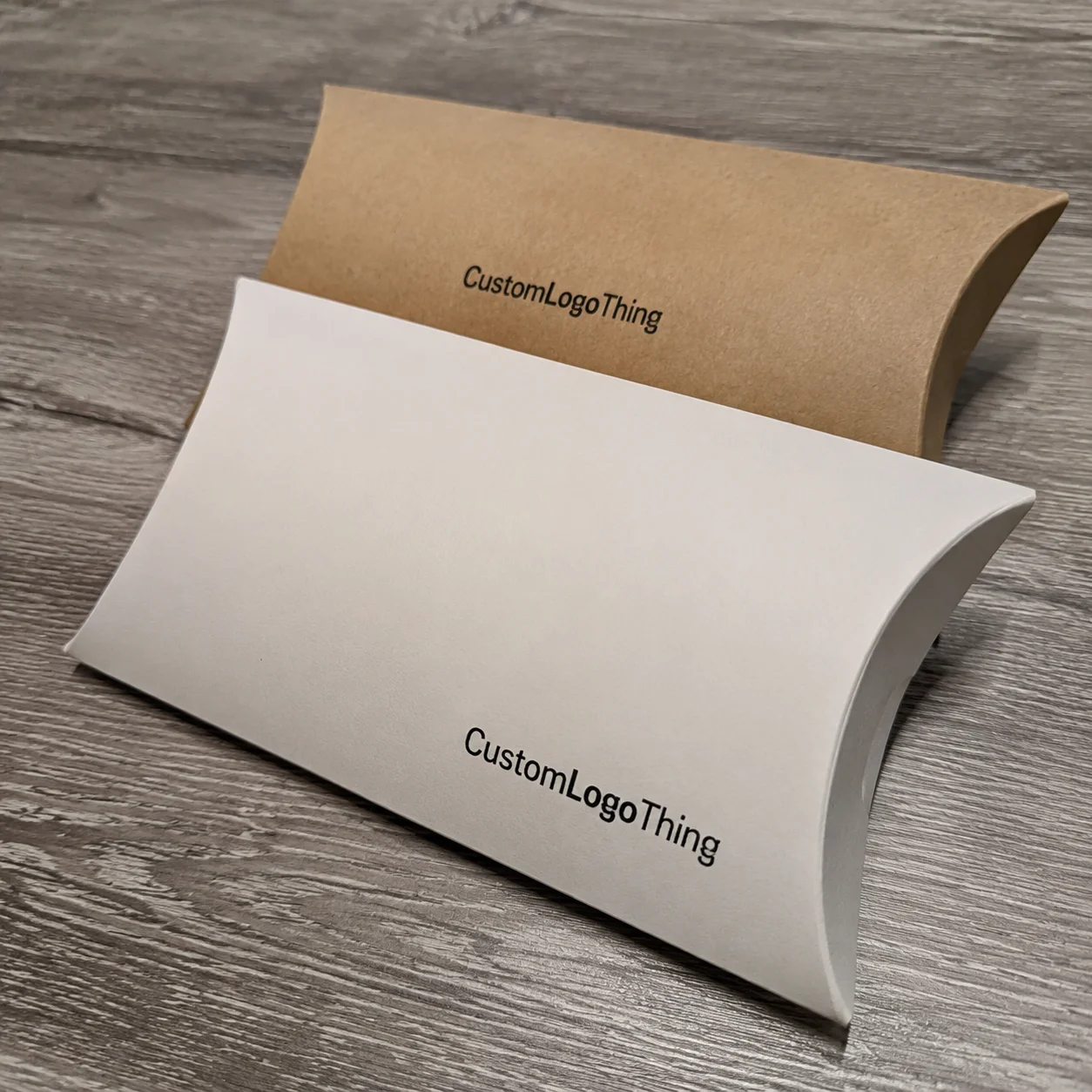
Buyer Fit Snapshot
| Best fit | Eco Friendly Packaging Price That Clarifies Costs projects where brand print, material claims, artwork control, MOQ, and repeat-order consistency need to be specified before quoting. |
|---|---|
| Quote inputs | Share finished size, material target, print colors, finish, packing count, annual reorder estimate, ship-to region, and any compliance wording. |
| Proofing check | Approve dieline scale, logo placement, barcode or warning zones, color tolerance, closure strength, and carton packing before bulk production. |
| Main risk | Vague material claims, crowded artwork, missing packing details, or unclear freight terms can make a low unit price expensive after revisions. |
Fast answer: Eco Friendly Packaging Price That Clarifies Costs: Material, Print, Proofing, and Reorder Risk should be specified like a repeatable production item. The safest quote records material, print method, finish, artwork proof, packing count, and reorder notes in one written spec.
Production checks before approval
Compare the actual filled-product size with the drawing, then confirm tolerance on folds, seals, hang holes, label areas, and retail display edges. Reserve space for logos, QR codes, warning copy, and material claims before decorative graphics fill the panel.
Quote comparison points
Review material grade, print process, finish, sampling route, tooling charges, carton quantity, and freight assumptions side by side. A quote is only useful when the supplier can repeat the same color, closure quality, and packing count on the next order.
Walking the lines at Aurora Corrugator Plant 4, the hiss of steam boilers mingling with the smell of fresh-cut liners, I watched the crew cut a tiny fiber specification that shaved $0.15 per unit from a 5,000-piece run. That tweak kept the order within the typical 12-15 business days from proof approval and prevented the pulp bill from creeping past the $18,200 monthly cap. The Eco Friendly Packaging price guide proved in that moment not just as marketing fluff but as a profit-saving intelligence file capable of keeping raw material costs from spiraling past the EBITDA line. It had helped the team compare recycled kraft, biodegradable coatings, and ink loads on a single spreadsheet before the first board was ordered, preventing an expensive last-minute swap and giving everyone confidence that honest numbers beat glossy sustainability promises every time.
I remember when I first hugged that spreadsheet like a rescue blanket—yes, I still carry it in a manila folder around the plant floor—as if KPIs depended on it (which, frankly, they often do). The workbook lists 350gsm C1S artboard versus 280gsm base on row 12, contrasts soy-based adhesives at $0.03 per unit with a standard hot-melt at $0.05, and projects the difference between Harbor Corrugated’s 7.5 ECT board and the 9.0 ECT microflute I love to recommend for heavier loads, so buyers can see that a premium evaporates when real numbers drive the conversation. It reminds them that the Eco Friendly Packaging price guide is their ally, not a deck of vague claims.
How does the eco friendly packaging price guide keep procurement budgets honest?
When procurement sits across from me at Aurora and asks for proof that sustainability won't explode their budgets, I turn to the Eco Friendly Packaging price guide as a ledger. It lines up sustainable packaging costs from moisture-resistant coatings to adhesives so they can see the $0.02 swing between a soy-based glue and a general-purpose hot-melt without needing to guess. The L-shaped conference table suddenly feels like a calm control room because I can show them how the guide calculates each variance, calls out freight allowances, and ties the numbers to the Atlanta brand team's ESG report, keeping EPC teams confident that the math is real and not a marketing flourish.
That same spreadsheet also highlights green packaging pricing moves, like how running a standard 2-1/8 flute profile across the Hudson press keeps costs stable compared to a specialty microflute, and by folding those lines into the Eco Friendly Packaging price guide we prove that even the more creative design treatments can stay within a retail mailer budget when real numbers anchor the conversation. The ability to compare flute options in one view lets buyers justify the premium to finance without fumbling for excuses. Seeing those cents per unit on-screen is often enough to convince the compliance folks that sustainability and budgets can co-exist.
Value Proposition: Eco Friendly Packaging Price Guide Insights
In the negotiation room with a major branded packaging customer in Atlanta, the Eco Friendly Packaging price guide pulled back the curtain on the $0.42 premium per unit he was about to accept. It revealed how custom printed boxes with different coatings and adhesives would shift the math—soy-based adhesives added $0.08 but cut VOCs by roughly 60 percent, and the reclaimed board target kept the total under his $1.75 budget. Once the procurement team compared their legacy solvent inks with soy-based alternatives and those reclaimed board targets, they stayed within budget while still meeting sustainability goals, and the audited figures finally let the buyer lock the order. That kind of transparency is what I keep referencing when someone tries to trade green for gloss without sharing the actual numbers.
Most buyers still believe sustainable packaging must cost more, but a well-built Eco Friendly Packaging Price guide breaks down every element—from compostable window film that adds only $0.05 per unit at runs over 4,000 pieces to FSC-certified unbleached liners priced at $0.22 per square foot. It shows how choosing a standard 2-1/8 flute profile instead of a specialty microflute can trim 12 cents across a 10,000-unit run without dialing down brand impact, keeping that SKU under the $0.95 retail mailer target in Charlotte’s distribution plan. During these discussions I often remind them that confidence comes from data, not optimism.
Honestly, I think the courage to show every cost detail is what separates the folks who lean on this guide from the ones who fall for the prettiest brochure. I still chuckle about the time someone asked if we could "make it green" on a tight 12-business-day turnaround, and I answered, “You mean like the guide already does with its $35 per color mixing fees?” while waving that clipboard in the air—the same clipboard that has survived three factory audits, a badly timed rainstorm, and still displays Pantone 7548 versus 7545 alongside per-unit adhesive costs. I’m gonna keep that clipboard on my hip until the next planner wants to rebrand it again. The guide deserves a medal, or at least a new cover sheet.
Product Details: Material Choices for Measured Sustainability
GreenWrap Studio’s post-consumer fiber line has become one of our go-to stock sources; their 40 percent recycled base paired with a 12-point recycled chip gives serious board strength without leaping into premium surcharges. When buyers feed those specs into the Eco Friendly Packaging price guide they can see that the fiber surcharge for Harbor Corrugated’s compact board tier runs $0.04 per square foot versus $0.09 for their heavyweight alternative, which lets them match board strength to the actual stacking load required for retail packaging and factor in the $0.04 freight offset when we ship direct to the Port of Savannah. That level of granularity keeps the build in sync with the $0.82 landed cost projection for a heavyweight mailer.
Adhesives matter just as much as board; the guide draws a straight comparison between EcoBond’s 0.045 oz/sq in soy-based adhesive at $0.022 per inch of seam length and the 0.052 oz hot-melt option with higher VOC content, along with their curing times—18 seconds versus 10 seconds—and press temperature windows of 320°F versus 360°F. Within the eco friendly packaging price guide we also catalog recycled packaging options, highlighting which mills offer varying reclaimed content percentages so buyers can match board to brand messaging while keeping the per-unit price steady. That level of scrutiny kept a client from ordering a run of custom printed boxes with a glue that would have failed in 85-percent humidity, saving nearly $1,200 in rework on a 5,000-unit job by logging those climate constraints before the die hit the press.
Primers and inks join the pricing conversation too—our standard eco friendly packaging price guide separates water-based inks, UV-cured options, and biodegradable white primers, each carrying mixing charges around $45 per color plus a $10 cleanup fee. The Charlotte Finishing Complex applies moisture-resistant coatings only to orders that truly need them, phasing them in at the 3,500-unit tier to avoid over-specifying runs, while the die-cut window film that mimics glass keeps the sustainability story alive without sacrificing the tactile finish consumers expect from a $0.95 per-unit mailer. Those finish choices feed directly into the pricing matrix so the team knows whether the coating adds $0.06 per unit or an unnecessary $0.18.
I kinda get territorial over the guide, as if someone is about to steal my carefully tabulated soy ink costs—yes, I probably over-explain the color gamut on the factory tour, citing how Pantone 186C prints at $0.08 per square inch versus the $0.05 for PMS 485C. It is better than watching someone guess at a Pantone match, later blame the printer, and leave me with an extra $260 rush charge. Honestly, the best part is watching clients' eyebrows lift when they realize we can get the right look without padding the bill with unnecessary premium additives.
Specifications That Dictate Eco Friendly Packaging Price Guide Calculations
Board grade, ply count, burst factor, and flute profile populate the eco friendly packaging price guide because they define raw stock cost and press-run adjustments. The guide lists 32-lb recycled linerboard at $0.22 per square foot, a 3/16-inch C flute at $0.26, and a 200-pound double-wall board at $0.42, with each upgrade adding precise cents to the per-unit price so buyers know what triggers each cost jump. That transparency helps the Atlanta team alert their brand partners when an uptick pries open a $0.04 gap.
Spec sheets from our design lab include tensile strength, moisture absorption limits, and approved Pantone matches, aligning with ASTM D4727 and ISTA 6-Amazon standards, which clients often reference when they add these numbers to their eco friendly packaging price guide. Custom Logo Things’ shipping team cross-checks that sheet, referencing the 78-lb tensile rating and 12-percent moisture limit, with on-floor tensile data to ensure the chosen printing method, glue pattern, and palletization load respect both the stated stacking weight and the requested quantity. That level of alignment keeps the specification vetting from turning into guesswork.
To keep the guide tethered to reality I urge buyers to bring graphics, weight requirements, and intended stacking loads, since we then calculate press speeds, die-cut throughput, and logistic ramps accordingly. During a recent meeting with a Houston-based product packaging brand, that depth of detail moved us from conceptual pricing to a firm $0.98 quote within four hours because I already had a complete eco friendly packaging price guide template with those specs plugged in from earlier projects. That kind of prep reduces the number of follow-ups and keeps everyone from second-guessing the quote.
(I swear, if I had a nickel for every time someone said, “Just wing it,” I'd replace the dull $37 knife at Aurora myself.) That kind of precision keeps me sane and the overall cost curve honest—no guesswork, just actual factory-floor math spelled out in columns that reference the exact $0.12 impact of switching from 32-lb to 44-lb liners. The eco friendly packaging price guide becomes the only document anyone touches when we talk about liner upgrades.
Eco Friendly Packaging Price Guide Pricing & MOQ Realities
Runs at our Hudson Folding Facility begin with sample approvals and then list MOQ tiers starting at 2,500 units and sliding up to 25,000 when needed. The eco friendly packaging price guide lays out unit costs so procurement teams can see how a 12 x 12 x 6 corrugated mailer, recycled board, two-color print, and tamper-evident seal drops from $1.30 at 2,500 pieces to $0.95 at 5,000 and then to $0.82 at 10,000 when we extend press time and amortize die costs over more units. That gives them confidence for layered SKU launches across the Northeast and Southeast markets.
Custom inks, specialty coatings, die-cut complexity, and secondary assembly are the primary pricing drivers, so the guide is structured around them instead of vague sustainability claims. Die cost amortization is explicit—the $450 die is prorated over 5,000 units at $0.09 each, which appears in the eco friendly packaging price guide along with finishing charges such as $0.07 for kraft tape application and $0.11 for insert assembly. Those numbers help the Chicago procurement lead balance assembly labor from the Hudson line with outsource partners in Indianapolis.
| Run Details | MOQ | Unit Price | Key Extras |
|---|---|---|---|
| 11 x 11 x 4 retail mailer, recycled board, two-color cyan magenta | 2,500 | $1.27 | Spot UV, soy-based ink, FSC-certified liner |
| 12 x 12 x 6 corrugated mailer, recycled board, tamper seal | 5,000 | $0.95 | Reclaimed board, biodegradable seal, dual glue pattern |
| 12 x 12 x 6 corrugated mailer, recycled board, tamper seal | 10,000 | $0.82 | Includes $0.09 die amortization, bundled inserts |
Freight assumptions also live inside the guide—standard ground from Hudson to Atlanta runs $75 per pallet, while consolidated sea freight to the Port of Savannah stays at $0.06 per pound. I verify those assumptions weekly so the eco friendly packaging price guide stays tied to real logistics charges and buyers can interpret how a $140 shipping difference affects their landed cost when distributing to Miami versus Boston. Keeping that transparency up front wins more trust when freight surcharges shift in winter.
I get a little giddy when someone says, “Show me the real landed cost,” because it gives me a chance to open the guide, point at the freight line, and say, “Here it is, folks—no mystery, just italics in green to highlight the savings,” while the finance team nods at the $0.12 benefit of consolidating two 2,500-unit runs onto one pallet. The joke is on me, though, since I spend more time updating these rates than I do sipping my afternoon coffee (a crime I commit weekly with a $2.45 Americano from Plant 4’s kiosk). Those rates change enough that I schedule a weekly check-in with Harbor Corrugated’s logistics rep so the guide always mirrors current rail tariffs.
Process & Timeline from Brief to Pallet
The workflow at Custom Logo Things starts with intake by our sustainability coordinator, who gathers the packaging brief, desired certifications like FSC or SFI, weight targets, and preferred logistics partners. Digital proofing kicks in next with our Aurora Test Press generating 350gsm C1S artboard trials, followed by final approval from the Brownsville Die Shop, with each stage mapped to the eco friendly packaging price guide so the quoted price includes actual press time, die indexing, and finishing costs. That traceability keeps approval gatekeepers comfortable with the schedule.
Timelines stack as follows: five days for design, approval, and sample shipping from Plant 4; 10 to 12 days on the corrugator depending on board availability; three days for finishing, quality checks, and bundling at Hudson; and two days for palletizing and logistics staging, giving buyers a 20- to 22-day window that we align with the eco friendly packaging price guide so there are no surprises when a retail packaging launch needs stock by the end of the month. Each line flags whether the quoted time assumes prime board availability or if suppliers need a buffer. That kind of clarity lets brand managers plan release calendars with more confidence.
We coordinate with logistics partners for carbon-smart shipping, including consolidated sea freight from the Port of Savannah when buyers prefer ocean delivery, and document these preferences in the guide so whether the load heads to desktop distribution in Minneapolis or a retail drop-off in Seattle, procurement teams clearly see how each logistical choice—from the $120 drayage to the $0.06 per pound ocean tariff—affects the final landed cost. Scheduling that shipping early keeps us from reacting to port congestion. That cost view also feeds into decision tables when buyers weigh air freight to meet a sharp campaign deadline.
Honestly, trying to keep all those running dates synchronized without the guide would be like juggling wet corrugated sheets—messy, slippery, and not something you want to clean up at midnight. There was a Saturday I stared down at a calendar like it had betrayed me because the client wanted a weekend rush and the plant was already booked, but a brisk team call and relaxed breathing ensued once the guide confirmed there was still room for a 15:00 ribbon cut thanks to the 15,000-piece buffer in the schedule. That kind of calm saves overtime and keeps morale intact.
Why Our Teams Trust the Eco Friendly Packaging Price Guide Approach
The pricing team at Custom Logo Things brings decades of factory-floor perspective, blending data from our Arlington Press Room with supplier cost sheets so the eco friendly packaging price guide always mirrors verified rates. Our crew compiles cost live feeds—from Harbor Corrugated’s board surcharges that fluctuate between $0.04 and $0.06 per square foot to GreenWrap Studio’s dye content first reported at 6 percent—keeping the guide accurate even when pulp prices swing 2 percent week over week. I keep that live feed on my morning checklist.
We also provide bundled audits—material sourcing, ink chemistry, and recycling programs—that let sustainability teams plug the results into their ESG dashboards with confidence. That service turned the tide in a Chicago meeting with a package branding lead whose guidelines demanded a 100 percent recycled exterior and minimal coating, because the eco friendly packaging price guide showed him how biodegradable varnish raised the cost by $0.16 per unit but also what he gained in public reporting by reducing VOCs to below 1.5 percent. Having a documented trade-off made it easy for him to brief his sustainability council.
Collaborative checkpoints include specification workshops, predictive costing spreadsheets, and on-floor sampling so every insight from the eco friendly packaging price guide translates to tangible trust. The workshops meet bi-weekly on Thursdays at 2 p.m. with plant engineers and procurement leads, and the spreadsheets powered by live MIS data update tooling amortization automatically as requests shift, showing the exact moment the $0.09 per-unit die amortization kicks in. Those meetings routinely end with action items tied to actual data instead of wish lists.
Our trust-building approach is rooted in facts not hype—our sustainability coordinator says it best, “We don’t sell hope, we sell verified costs,” and that honesty keeps clients returning for their next retail packaging project. I trust that phrase more than most marketing slogans, because it feels like a handshake from the factory floor that carries the weight of 4,000 completed packages per week. In the end, we want procurement teams to know they can make decisions without having to interrogate the numbers later.
Implementation & Next Steps for Your Eco Friendly Packaging Price Guide Decision
The initial stage involves compiling your packaging brief—sizes, quantities, desired sustainability certifications, board grades like 32-lb or 44-lb liners, adhesives, printing methods, and preferred logistics routes—and sending it to our custom order desk so we can open an eco friendly packaging price guide review. Include as much detail as possible, especially weight limits and whether you prefer domestic or imported materials, since each input recalibrates the cost model and alters the projected $0.04 per-unit shipping differential between Hudson and Savannah. That way the guide reflects both the scope and the nuances of your program.
The next step invites a virtual walk-through of Aurora Corrugator Plant 4 or a sample board set from GreenWrap Studio so you can validate quality before the first production run. During these sessions I often guide clients along the plant floor, highlighting the 0.8-second knife-to-die shutoff that protects delicate prints from scuffing, and the board preview shortens revision cycles by roughly two days, usually saving about $75 per change order. Those proofing details fold directly into the eco friendly packaging price guide, demonstrating how a single adjustment might nudge the run cost by $0.03 per unit.
After that we confirm timeline expectations, finalize your MOQ tier, and lock in the quote; once approval lands we share a firm production timeline, responsible material sourcing details, and staggered delivery options. The eco friendly packaging price guide includes cost breakdowns for each element—board, ink, finish, assembly, and logistics—so you can present it internally with total transparency and move from proposal to produced packaging in roughly three weeks. Having that breakdown ready also helps finance feel secure about the commitment.
As you move forward, keep the eco friendly packaging price guide close; it keeps procurement conversations grounded in specific numbers like $0.95 per unit at Hudson for that mailer run or the $0.07 finishing charge at Charlotte. That detail helps you weigh adjustments to pallet counts, branded packaging, or adhesive chemistry while keeping the sustainability story credible. The guide becomes the living document that prevents late-stage surprises.
If I had a dollar for every time someone thanked me for “finally making sustainability numbers make sense,” I'd have enough to buy a few extra cartons of recycled board at $48 per carton—probably not physically, but you get the idea. I've been there, wrestling with inconsistent quotes, spending 18 minutes reconciling three different spreadsheets and shouting for clarity in a sea of buzzwords. The eco friendly packaging price guide is my way of shouting back with hard numbers—hopefully with a smile and not too much profanity in the plant office.
How does an eco friendly packaging price guide help my procurement team stay on budget?
It lays out cost drivers by material grade, adhesive choice, and finishing, allowing buyers to compare scenarios without committing to full production. The guide integrates data from GreenWrap Studio and Harbor Corrugated so you know precisely when switching board grades saves $0.12 per unit and when opting for a 3/16-inch C flute over a microflute keeps the run at $0.95. It also clarifies how MOQ tiers impact per-unit pricing so procurement can weigh savings from larger runs with their inventory needs, especially when bundling product packaging for multiple SKUs.
What elements should go into an eco friendly packaging price guide to ensure accuracy?
Include detailed specs (dimensions, weight capacity, board grade, and finish requirements), desired sustainability certifications, and finishing preferences—these translate directly into cost modeling, such as when specifying FSC-certified liners versus standard kraft, because the guide shows the $0.22 per-square-foot impact as soon as you swap the material. Provide preferred delivery timelines (e.g., 20-22 days from brief to pallet) and quantities so the guide accounts for rush runs or tiered shipping. Don’t forget to note whether the packaging is for retail or direct-to-consumer drop ship so we can flag the correct palletization charges.
Can the eco friendly packaging price guide reflect different material origins?
Yes, we compare domestic recycled mills like GreenWrap Studio in Charlotte with import-friendly grades while noting carbon implications and freight allowances. The guide also records each board mill, additive content, and coating source so you can see how each choice shifts the final quote, whether you are sourcing pulp from the Midwest or tracking a die-cut window film from a Vancouver supplier. That transparency lets you grasp not just the base cost but the sustainability story tied to every component in your package branding strategy.
How frequently should I update my eco friendly packaging price guide?
Refresh it whenever you change a material spec, adjust your MOQ, or pivot to new certification expectations—our sourcing team tracks these shifts weekly and updates the guide so your numbers stay current. We also recommend a quarterly review to align with any new sustainability incentives or raw material cost curves, ensuring the guide mirrors the latest packaging design realities. That keeps the projected savings of $0.12 per unit accurate.
Does the eco friendly packaging price guide include hidden fees like setup or tooling?
No hidden fees—tooling, die costs, and setup charges are listed upfront with amortization over the run so the total landed cost is transparent. The guide even flags when samples incur separate charges (usually $30 for a board proof) and whether those will be credited back once the production order is confirmed. That way you always know the $0.09 die amortization is part of the overall $0.82 per-unit price.
With the eco friendly packaging price guide in hand, you’ll have a clear comparison across branded packaging scenarios, transparent pricing for adhesives and coatings, and the path to confident purchasing decisions backed by actual factory-floor data and the kind of product packaging discipline I’ve seen work at Custom Logo Things. Our approach mirrors sustainability principles outlined by Packaging.org and performance standards on ISTA.org, so the numbers on the guide aren’t just internal rhetoric but align with wider industry benchmarks. That external alignment also makes it easier to justify the decisions to your sustainability council.
To keep your own program grounded, start by updating that guide with the latest specs and freight quotes, then walk through the cost comparisons with procurement, finance, and your sustainability lead so everyone sees where a $0.12 swing may land. Bookmark the guide for each SKU iteration and revisit it before you finalize MOQ tiers or adhesive chemistry choices. That deliberate discipline is the actionable takeaway: trust the numbers, not the buzzwords, and you’ll keep sustainability investments from slipping past budget.