Custom Frosted Zipper Bags for skincare brands do more than hold product. They shape the first impression of a line before a customer reads claims, compares ingredients, or even touches the formula. A serum kit can feel clinical, a botanical set can feel calm, and a travel bundle can feel priced with intention, all from the way the packaging handles light and structure.
That early signal matters in both retail and e-commerce. On a shelf, the bag has to read quickly. In product photography, it has to keep the contents visible without turning the frame into visual clutter. The best versions do both, which is why Frosted Zipper Bags are used so often for skincare minis, samples, subscription sets, and premium promotional packs.
Why frosted zipper bags outperform plain pouches in skincare
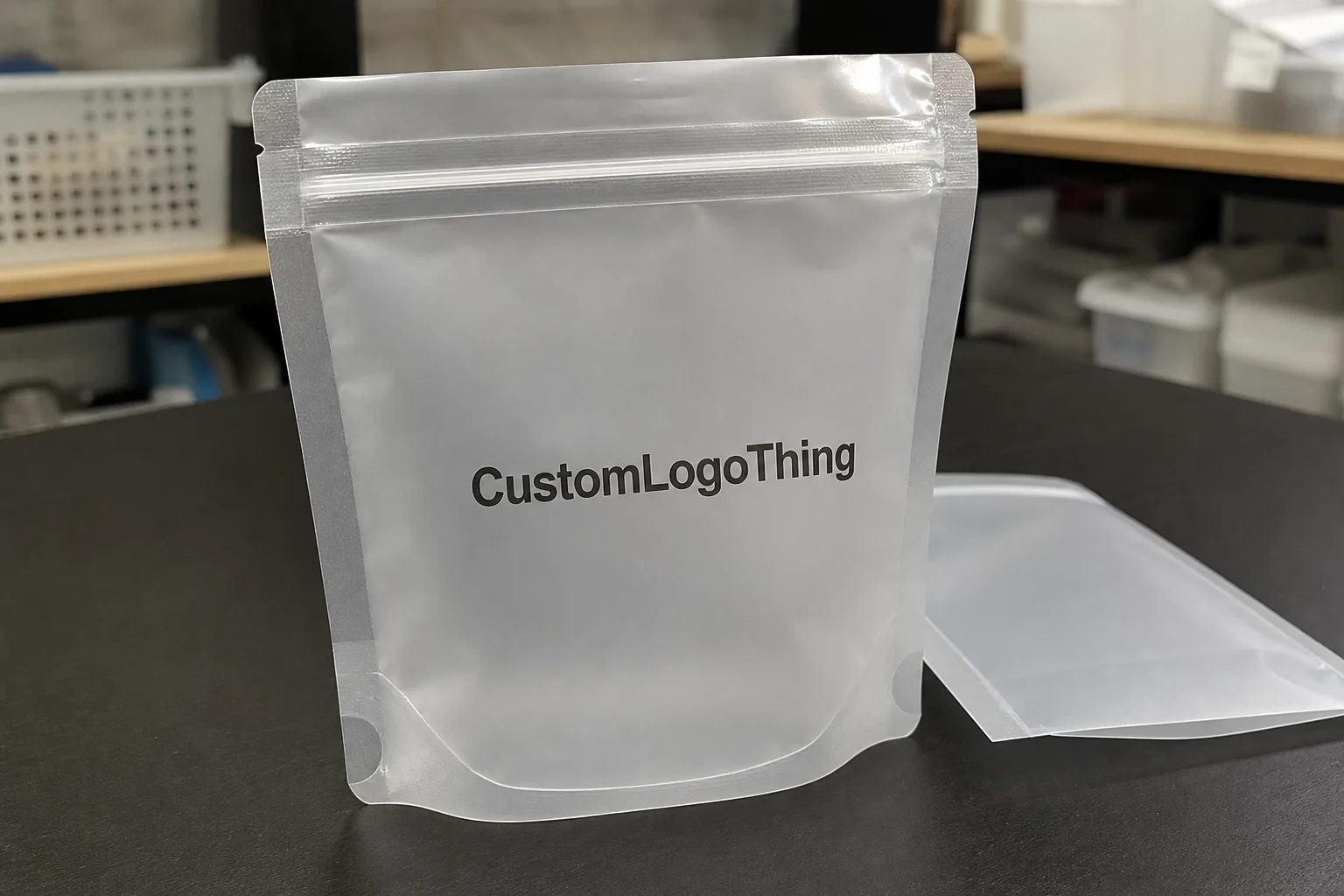
A bag can act like a quiet sales rep. In a crowded category, Custom Frosted Zipper Bags for skincare brands often communicate clean, modern, and premium faster than plain clear pouches or glossy plastic ever will. The frosted surface softens reflections, reduces the harshness of mixed labels and bottle shapes, and gives the package a more controlled look.
What sets them apart is the balance between visibility and restraint. A fully clear pouch shows everything, including seams, label edges, and any less-than-perfect alignment inside the pack. A fully opaque bag hides too much and can feel less transparent in a category where trust matters. Frosted packaging sits between those extremes, which is why it works so well for minimalist skincare, dermatology-inspired lines, botanical brands, and higher-end routines that rely on calm rather than visual noise.
There are also day-to-day practical benefits. The matte appearance stacks more neatly on shelves, hides minor scuffs better than a glossy finish, and tends to photograph with less glare. For unboxing, it feels considered instead of disposable. Those details do not sound dramatic on paper, but they affect how the product line is judged in the first few seconds.
For brands building a broader packaging system, the pouch should feel related to the rest of the line. When the label hierarchy, carton finish, and pouch style all speak the same visual language, the whole range appears more deliberate. That consistency is often what makes a packaging program look established rather than assembled.
How the frosted finish, zipper, and bag structure work together
Frosted Zipper Bags are not just clear pouches with a matte look. Their performance comes from several layers working together: the film material, the frosted appearance, the closure style, and the overall shape. A flat bag behaves differently from a gusseted one, and a pouch with a hang hole has different retail requirements than a simple resealable bag.
The frost effect itself may come from the resin blend, a surface treatment, or the film construction. That affects print behavior more than many teams expect. A stable, even frosted base usually holds logos and fine type better. If the surface is inconsistent or too soft, small text can blur, edges can look muddy, and the final pack can appear less precise than the design file suggested.
The zipper is not a decorative extra. It affects usability, repeat opening, travel convenience, and the customer’s sense of value. For sheet masks, sample kits, balms, and small bottles, a resealable closure says the pouch is meant to be used again, not opened once and discarded. In some cases, a tear seal or security label can add tamper evidence, which matters for retail confidence.
What skincare formats fit best
The strongest matches are usually:
- Sheet masks and ampoule sets
- Mini bottles and travel-size cleansers
- Balms, facial oils, and cleansing bars
- Sample packs and influencer mailers
- Subscription kits and promotional bundles
These pouches are useful for splash resistance, dust protection, and basic containment around oils or strongly scented products. They are not the right answer for every formula, and they should not be treated as a substitute for a true barrier system when a product is moisture-sensitive or needs stronger environmental protection. For fragrance-heavy or volatile ingredients, the seal quality deserves actual testing, not a quick visual approval.
Key material, print, and size factors that change performance
Three choices usually decide whether a pouch feels polished or merely acceptable: film thickness, clarity level, and stiffness. A thinner film reduces cost, but it may wrinkle more easily, feel less substantial in hand, and show more distortion along the zipper line. A heavier film improves structure and shipping durability, though it can raise unit price and make the bag less forgiving for very small formats.
Print selection matters just as much. On a frosted base, a single-color logo can look crisp and restrained if the contrast is strong enough. Full-color artwork can work beautifully, but it generally needs more careful ink planning, and a white underprint is often necessary if the brand wants accurate color and stronger visibility. Matte inks usually feel quieter and more refined, while metallic accents can add a luxury cue without turning the pack loud.
Size is where many packaging projects drift off course. The pouch should be designed around the actual product set, not guessed from a stock dimension that seems close. Too much empty space makes the contents slide around and can make the package look wasteful. Too little room causes bulging, zipper stress, and an awkward final shape. Measure the finished set, then allow for insertion tolerance, closure allowance, and any secondary inserts.
Useful add-ons include tear notches, hang holes, euro slots, custom zipper pulls, and, where appropriate, child-resistant closures. If the pouch will sit on retail shelves, confirm that there is room for a barcode, ingredient information, batch code, or any compliance copy needed by the channel. Those practical details rarely get the design spotlight, yet they are usually the things that delay production if they are missed.
Transport testing also deserves some attention. A skincare pouch does not always need formal transit certification, but it should be considered in the same practical way packaging teams think about distribution and shipping damage. If the bag will move through a fulfillment network, mixed cartons, or subscription fulfillment, it is worth checking the basic expectations used in transit testing standards such as those published by the International Safe Transit Association.
| Spec choice | Best for | Typical effect | Trade-off |
|---|---|---|---|
| Thin frosted film | Samples, light kits | Lower cost, softer hand | Less structure, more wrinkling |
| Mid-weight film | Retail sets, minis | Balanced feel and durability | Moderate pricing |
| Heavier structured film | Premium kits, shipping | Better shelf presence | Higher unit cost |
| One-color logo print | Minimal brands | Clean and readable | Limited visual impact |
| Full-color print with white underprint | Luxe or botanical lines | Stronger contrast and branding | Higher setup complexity |
Custom frosted zipper bags for skincare brands: process and lead time
The production path is straightforward, but the project usually succeeds or stalls in proofing. A typical run moves through brief, artwork, proof review, sampling, approval, manufacturing, finishing, and shipping. The fewer unresolved details at the start, the less likely the schedule is to drift later.
For custom Frosted Zipper Bags for skincare brands, proof rounds often take longer than expected because teams are checking multiple variables at once: opacity, logo placement, readable type size, zipper position, and how the bag frames the contents when filled. A layout that looks balanced on a screen can feel too small once the pouch is packed. A color that looks elegant in a digital proof can disappear against the frosted base.
Lead time depends on the material, print count, and order size, but many custom runs fall around 12 to 15 business days after proof approval. More complex graphics, special finishes, or larger quantities can extend that window. Sampling, freight, and artwork revisions can add more time, so launch calendars should be built backward from the actual delivery date rather than the order date.
A practical planning rhythm helps avoid surprises:
- Lock the launch date first.
- Work backward by at least 4 to 8 weeks.
- Reserve time for sample review and one revision round.
- Confirm final artwork before production begins.
- Keep buffer time for freight, especially for seasonal drops or influencer kits.
That buffer matters more than teams sometimes admit. If the bags support a monthly subscription calendar or a coordinated launch with cartons and inserts, a delayed pouch shipment can disrupt the whole fulfillment sequence. The cost of scrambling a secondary pack plan is usually higher than the cost of scheduling a realistic lead time in the first place.
“The cleanest packaging decision is usually the one approved with the fewest surprises: the right size, clear print, and a pouch that actually fits the set.”
Cost, pricing, and MOQ: what buyers should expect
Pricing depends on size, film thickness, print coverage, zipper style, quantity, and add-ons such as hang holes or custom pulls. A heavier film or a more complex print generally raises the unit cost. That is predictable. What catches buyers off guard is how quickly setup, sampling, freight, and rush fees can change the landed price.
Small prototype runs are almost always expensive on a per-unit basis because the setup cost is spread over fewer pieces. As volume increases, the unit cost drops. That pattern is common across packaging categories, whether the project involves pouches, cartons, or custom printed boxes. The rule of thumb is simple: use small runs to test fit and presentation, then scale once the spec is stable.
For budgeting, it helps to think in tiers rather than chasing a single “right” price.
| Order type | Typical unit behavior | Best use | Watch-outs |
|---|---|---|---|
| Low MOQ sample run | Higher per-unit cost | Testing fit and shelf appeal | Setup fees can dominate total spend |
| Mid-volume production | Better unit economics | Launches and limited retail drops | Artwork changes become more expensive |
| Large production run | Lowest per-unit cost | Core product lines | More inventory risk if specs change |
Exact quotes vary by supplier and print setup, but it is common to see a clear jump from a simple one-color pouch to a fully printed premium version. Freight, plate fees, sampling, and expedited production are often the hidden variables in the quote. If you are comparing suppliers, ask for a landed estimate rather than only a piece price.
The most useful buying discipline is to prioritize the features that customers will actually notice. A better zipper often does more for perceived quality than extra artwork. Strong contrast in the logo usually matters more than a decorative pattern that gets lost once the bag is filled.
For broader sustainability or materials context, the EPA offers practical guidance on plastics and waste reduction at epa.gov. If your packaging program includes paper cartons or inserts, FSC certification guidance is available at fsc.org.
Common mistakes that make frosted zipper bags feel cheap
The first mistake is oversizing the pouch. Small skincare items floating in a large frosted bag look unstable and underfilled, which weakens the premium impression right away. The second is weak logo contrast. If the artwork is too pale or poorly placed, the brand mark disappears into the frosted surface instead of standing forward.
Film thickness is another common problem. Too thin, and the bag wrinkles or feels flimsy. Too soft, and the zipper line may warp. Too stiff, and the pouch can resist closing neatly around compact sets. There is no universal spec that works for every line, which is why sample testing matters more than guesswork.
Poor artwork quality creates a different kind of problem. Frosted film is less forgiving than many teams expect when the design is crowded, stretched, or built from tiny type. Blurry text or weak line work makes a package feel rushed, even if the formula inside is excellent. In skincare, packaging quality often becomes a proxy for formula trust.
Operational mistakes show up too. Teams sometimes approve the pack before checking zipper closure, scent retention, or the exact fit of the product set. Then production arrives and a serum bottle is too tall, balm tins scuff each other, or the kit rattles too much during transit. Those are the kinds of issues a physical sample catches quickly, while a slide deck usually misses them.
Expert tips for making the packaging sell the skincare story
The strongest packaging usually starts with one clear promise. Is the line clinical and reassuring? Botanical and calming? Luxe and ritual-driven? Travel-focused and practical? If the answer is fuzzy, the packaging tends to look fuzzy too. Specificity gives the bag a role in the story instead of leaving it as a generic container.
Use the frosted transparency with restraint. A partial view of a bottle neck, a stack of masks, or the shape of a cleanser bar can create curiosity without making the pack look busy. That balance works because it reveals enough to build interest, but not so much that the contents start competing with the brand.
Label hierarchy matters more than decoration. The brand mark should be read first, then the product type, then any supporting claim if there is room. If the pouch sits alongside cartons, inserts, and other primary packs, keep that hierarchy consistent across the line so the whole system feels connected.
Smart upgrades that actually earn their keep
- Spot gloss on the logo for contrast against the matte frost
- Metallic ink for premium accent branding
- QR codes linked to ingredient education or routine guidance
- Short care messages that improve perceived value
- Test packs under real lighting for shelf, web, and social visuals
The best test is still a physical one. Put the bag under warm retail lighting, daylight, and phone flash. Photograph it flat and filled. Hold it beside the rest of the range. If it still reads clearly as premium in those conditions, the spec is probably on track. If it falls apart visually, revise before committing to volume.
Examples from Case Studies can also be useful because they show how structural decisions affect the finished package, not just the artwork concept.
Next steps to choose the right bag spec for your launch
Start with the product mix. List every item that needs to fit in the pouch, along with exact dimensions and whether the bag needs retail display, shipping protection, or both. That one step prevents more rework than almost any other part of the process.
Next, write a brief that covers finish, zipper style, print colors, quantity, target budget, and any compliance needs. If the pouch is part of a higher-end launch, say so clearly. If the cost target is strict, say that too. Honest constraints usually produce better quotes and fewer wrong assumptions.
Order a sample or prototype and test it with the real skincare items. Check fit, seal strength, visual impact, and product movement inside the pouch. Compare at least two specs: one built for lower unit cost and one built for stronger shelf presence. Once those are seen side by side, the right direction is usually easier to judge.
Before final approval, confirm artwork placement, timeline, and replenishment needs. If the pouch will sit within a coordinated packaging system, make sure it works with labels, cartons, and any secondary pack components. That becomes especially relevant for custom frosted zipper bags for skincare brands launching with multiple SKUs at once.
Done well, these pouches do more than contain a product. They help the customer understand the line sooner, trust the formula faster, and remember the brand after the first touch. That is the practical value of a well-made frosted zipper bag: it gives the packaging real selling power without shouting for attention.
FAQ
What makes custom frosted zipper bags for skincare brands better than clear bags?
They create a softer premium look while still showing enough of the product to build trust. The frosted surface also reduces visual clutter, which can make branding feel more refined and easier to read.
What skincare products work best in frosted zipper pouches?
They work well for minis, sample sets, sheet masks, cleanser bars, balms, and travel kits. They are especially useful when the pack needs resealability or a polished retail presentation.
How do I choose the right size for a skincare zipper bag?
Measure the finished product set, then add room for closure, insertion, and a clean presentation. Avoid guessing from stock sizes because oversized bags can make products look cheap or unstable.
What affects pricing the most for frosted zipper bags?
Size, thickness, print coverage, zipper style, quantity, and any added features all influence cost. MOQ and artwork complexity also affect the quote and the final unit price.
How long does production usually take for custom frosted zipper bags?
Timeline depends on sampling, proof approvals, print complexity, and order volume. Planning backward from launch is the safest way to avoid rush fees and missed release dates.


